The registry
Bayliner Registry: Models, Builds & Photos
Bayliner Marine Corporation is an American recreational powerboat builder founded in 1957 by Orin Edson in Seattle, Washington. Edson built the company on a single insight: sell fiberglass boats as complete, pre-rigged packages of hull, engine, and trailer at prices ordinary families could afford. Through vertical integration under his U.S. Marine holding company, including the Force outboard line acquired from Chrysler, Bayliner became the largest-volume pleasure-boat builder in the world by the early 1980s. In 1986 Edson sold Bayliner to Brunswick Corporation for roughly $425 million, one of the largest transactions in marine-industry history. The brand survived the 2008-2009 recreational-boating collapse through consolidation inside Brunswick Boat Group and remains active today, headquartered in Knoxville, Tennessee, still positioned as Brunswick's entry-level runabout and deck-boat line.
Pick your model
Key facts
| Founded | 1957, Seattle, Washington, USA |
|---|---|
| Founders | Orin Edson |
| Headquarters | Knoxville, Tennessee, USA |
| Parent/successor | Brunswick Corporation (Brunswick Boat Group), since 1986 |
| Fate/status | Active; sold to Brunswick in 1986 for roughly $425 million and still built as Brunswick's entry-level runabout and deck-boat line |
| Best known for | Capri runabouts, Ciera cruisers, Element deck boats |
| Registry presence | 9 vehicles / 46 photos documented by owners on SuperMotors |
1957-1968: Orin Edson Turns a Seattle Boat Shop into a Fiberglass Bet
In 1957 a young Seattle boat dealer named Orin Edson started the business that became Bayliner Marine Corporation with almost no capital and a conviction that boating was priced out of reach of the people who most wanted it. Edson had been trading used outboards and project boats on a Seattle lot since the mid-1950s, and he began as a retailer, not a builder, selling small boats in the Puget Sound market at a moment when the industry was crossing from plywood and lapstrake construction into molded fiberglass. Even the famous name was a bargain: around 1960 Edson bought the Bayliner brand from a small Tacoma-area builder for a reported $100. What he learned behind the sales counter shaped everything the company later did: customers walked away not because they disliked boats but because the total cost of getting on the water, a bare hull plus a separately purchased outboard plus a trailer plus rigging labor, was opaque and punishing.
Edson's answer was to control more of that chain himself. Through the 1960s the operation moved from retailing into manufacturing, and by 1966 Edson was building his first fiberglass Bayliners, reportedly starting in a barn on a berry farm in Marysville, Washington. Fiberglass tooling allowed identical hulls to be pulled from a mold by semi-skilled labor rather than shaped plank by plank by craftsmen, and it rewarded exactly the kind of company Edson was building: one obsessed with volume, repeatability, and cost per unit rather than yard-built prestige. Seattle and the surrounding Washington towns supplied both a workforce and a proving ground of cold, choppy water that kept the early hulls honest.
The company that emerged from this first decade had none of the glamour of the East Coast yards, and that was deliberate. Bayliner Marine Corporation was organized from the start as a price-led industrial manufacturer in an industry that still thought of itself as a craft trade, and the tension between those two identities defined the brand for the next fifty years.
1968-1977: U.S. Marine, Arlington, and the Road to the Package Boat
Through the 1970s Orin Edson pushed Bayliner Marine Corporation toward the idea that made it famous: the package boat, a complete hull, engine, and trailer sold at a single advertised price. The concept matured over the decade as Bayliner pre-rigged more of each boat before it left the factory, and it was formalized at the start of the 1980s when the 1982 Capri debuted as the Total Value Package, marketed as the industry's first fully integrated boat, motor, and trailer combination. The package attacked the industry's worst customer experience. A first-time buyer no longer negotiated three purchases and hoped a dealer rigged them correctly; the buyer paid one number and towed the boat home the same day. Competitors dismissed the approach as down-market. Dealers loved it, because it turned boat selling into something closer to car selling, with predictable margins and floor-planned inventory that moved.
Edson organized the growing enterprise under a holding structure, U.S. Marine Corporation, which gave him the vehicle to integrate vertically instead of paying markups to suppliers. Production concentrated in western Washington after Edson moved manufacturing in 1968 into a former World War II hangar-and-airstrip complex in Arlington, Washington; the first assembly plant opened there in 1969, and Arlington remained the company's production center for the next four decades, growing into one of the largest boat-manufacturing sites in the country. The factories were run on principles closer to Detroit than to traditional boatyards: standardized hull families, shared deck molds across model lengths, and purchasing leverage on resin, glass, and hardware that no small builder could match.
The product strategy followed the manufacturing strategy. Bayliner did not chase the performance or luxury buyer; it chased the family stepping up from renting, offering runabouts and small cruisers with more interior volume per dollar than anyone else would build. The company even ran a sideline in sail, building Buccaneer and US Yachts sailboats from 1970 until 1984, though sail never fit the volume formula and was eventually dropped. Period boating-press and enthusiast reviews criticized the light layup schedules and spartan hardware. The company was not selling to those critics; it was selling to households comparing a boat payment against a second-car payment, and on that comparison Bayliner won constantly. By the end of the 1970s the company had outgrown its regional identity and was distributing nationally through one of the largest dealer networks in the marine business.
1977-1984: Volume Leadership and the Cheap-Cruiser Formula
Between the late 1970s and the early 1980s Bayliner Marine Corporation became, by unit volume, the largest builder of pleasure boats in the world, passing Sea Ray for the title, and it did so during years that bankrupted much of its competition. The 1979-1982 period of oil shocks, 20 percent interest rates, and recession gutted discretionary marine spending; builders positioned on prestige and performance saw orders evaporate. Bayliner's cost structure let it keep cutting price and still ship boats, and every failed competitor handed it dealers and customers.
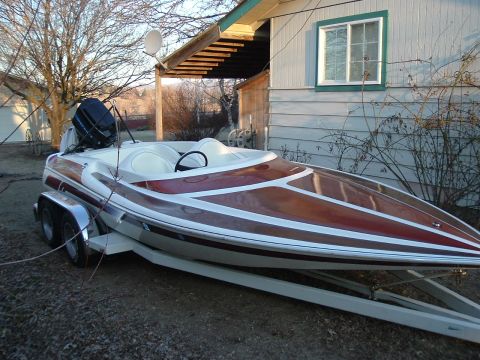
The formula of the era was the affordable cabin boat. Bayliner pushed genuine sleep-aboard cruisers, flying-bridge boats, and family runabouts down to price points the industry had considered impossible, and the strategy pulled hundreds of thousands of first-time owners into boating. The company's marketing hammered a single message: the number on the window sticker. The figures tell the story: at its peak the U.S. Marine group ran plants around the clock, at times rolling out as many as a thousand boats a week, and by 1986 Bayliner shipped a reported 43,000 boats in a single year, a scale no other builder approached.
The 1982 Capri distilled the strategy into a single product. Sold as the Total Value Package, the Capri runabout bundled hull, engine, and trailer into one fully rigged, single-sticker purchase, and it became the cheapest credible way into fiberglass boating in America. It was the plainest boat in the catalog and the most important: the Capri was the machine that converted renters and window-shoppers into owners, and it anchored the bottom of the Bayliner ladder for the next two decades.
Growth at this pace strained quality, and the trade press said so. Warranty complaints and the light-construction reputation followed the brand through the decade. Orin Edson's organization treated the criticism as a cost of the strategy rather than a flaw in it, betting correctly that the market for a first boat at a car price was far larger than the market for approval from surveyors.
1984-1986: The Force Outboard Gamble and the $425 Million Sale to Brunswick
In January 1984 Orin Edson made his boldest vertical-integration move, acquiring the outboard-motor operations of Chrysler Corporation, in a deal reported at just under $15 million, as Chrysler shed non-automotive businesses during its post-bailout restructuring, and relaunching the engines under the Force name within U.S. Marine. The logic was pure Bayliner: the engine was the most expensive component in every package boat, and owning the engine plant meant owning the margin. Force outboards were simple, inexpensive two-strokes, and they let Bayliner advertise package prices that competitors buying engines from Mercury or OMC could not touch.
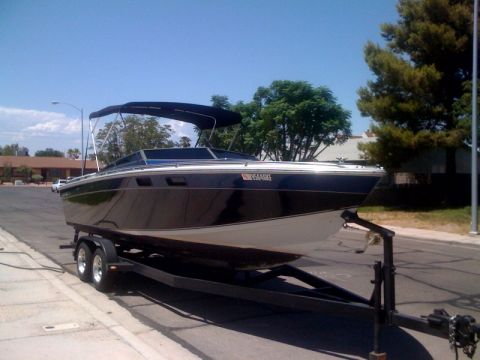
The move also made Edson's company strategically dangerous to the engine giants. Brunswick Corporation, owner of Mercury Marine, watched its largest potential boat customer become a self-supplying competitor, and the broader industry was consolidating fast as engine makers concluded they needed captive boat brands to guarantee engine volume. In 1986 Brunswick resolved the problem by buying it, acquiring Bayliner and the U.S. Marine operations from Edson for roughly $425 million in cash and stock. In the same period Brunswick also bought Sea Ray for about $350 million, instantly making the Chicago-area conglomerate the dominant boat builder in the world, with Bayliner as its volume entry brand and Sea Ray positioned above it.
For Edson, who had started with a small Seattle operation twenty-nine years earlier, the sale was one of the great founder exits in American manufacturing, and it made him one of the wealthiest private individuals in Washington state. He did not leave boating; he later invested in the yacht business, including a majority stake in Westport, at the opposite end of the market from the company he had built. For Bayliner, the sale ended the founder era. The brand's identity, methods, and price discipline were Edson's creation, and everything after 1986 was a corporate custodianship of that creation inside Brunswick.
1986-2000: Brunswick's Volume Brand, Capri and Ciera, and the Discipline of a Conglomerate
After the 1986 acquisition, Bayliner Marine Corporation became the high-volume foundation of Brunswick Corporation's marine empire, and its job inside the conglomerate was explicit: feed Mercury engine production and own the entry-level buyer. The Force outboard line Edson had built came along in the deal and was folded into Mercury's orbit before Brunswick discontinued Force outright in 1999, since the parent had no need for two outboard brands once the integration logic reversed.
Product-wise, the era belonged to two names. The Capri line of small runabouts, introduced under Edson in 1982, served its corporate purpose as the cheapest credible entry into the Brunswick family, the boat a dealer could advertise to pull first-time buyers onto the lot. The Ciera line of small and mid-size cruisers did the same work one rung up, keeping the affordable sleep-aboard formula of the 1980s alive and giving Capri owners somewhere to trade up without leaving the brand. Together they preserved the ladder Edson had designed, now with Sea Ray waiting at the top of it inside the same parent company.
Sport models carried the brand's aspirational edge. The Cobra series, launched in 1987 on the heels of the Brunswick sale, gave the lineup a sharper, performance-flavored runabout; boats like the Bayliner 2250 Cobra existed to prove that a budget builder could put a stylish, fast-looking boat in the driveway of a buyer who might otherwise have stretched for a premium brand. It was image insurance for a company whose bread and butter was the plain family package, and the line lasted only a few model years before the brand retreated to its core.
The early 1990s tested the model. The 1990-1992 recession and the 10 percent federal luxury tax enacted in 1990 crushed U.S. boat sales, and Brunswick responded with plant closures and consolidation across its brands. Bayliner survived the purge precisely because of its positioning; when buyers trade down, the cheapest brand in the portfolio is the last one a conglomerate kills. Manufacturing gradually migrated away from the original Washington footprint toward lower-cost plants, part of a long Brunswick pattern of rationalizing acquired factories. Bayliner ended the 1990s as it began them, the largest-selling boat brand in the world by units, profitable, unglamorous, and strategically indispensable to its parent.
2000-2010: Brunswick Boat Group, the Knoxville Consolidation, and the 2008 Near-Death of the Industry
In 2000 Brunswick Corporation reorganized its dozens of boat brands into the Brunswick Boat Group, headquartered in Knoxville, Tennessee, and Bayliner's remaining independence as a standalone operating company effectively ended there. Design, purchasing, and plant allocation became group-level decisions; Bayliner became a brand and a price point rather than a self-contained manufacturer. The old Washington-centric production world faded as work shifted among shared Brunswick plants, including facilities in Tennessee and low-cost international sites; Bayliner's largest motoryachts were spun off into Brunswick's new Meridian brand in the early 2000s, and the original Arlington, Washington plant spent its final years building Meridians before closing for good in 2008. A conglomerate optimizing dozens of brands has no sentimental attachment to any single factory.
Then came the collapse. The 2008-2009 financial crisis was the worst event in the history of the American recreational-boat industry; U.S. powerboat sales fell by roughly half from mid-decade peaks, and entry-level fiberglass boats, Bayliner's entire reason for existing, fell hardest, because the first-time buyer with a stretched budget was exactly the customer who vanished when consumer credit froze. Brunswick's response was brutal triage: the company shut or idled the majority of its boat plants, eliminated thousands of jobs, and killed or shelved multiple brands outright.
Bayliner lived, again for the structural reason that had saved it in 1991: it was the volume brand, the one whose tooling and dealer network Brunswick would need first whenever buyers returned. But it emerged smaller and narrower. The sprawling range of cruisers that had defined the Ciera era was largely cut, since small cruisers were the single worst-hit segment of the market, and the brand contracted toward simple outboard-friendly runabouts and deck boats. The Bayliner that exited the crisis was a leaner instrument of Brunswick strategy, stripped of most of what remained of the old Edson-era breadth.
2010-Today: Element, the Outboard Pivot, and Survival as Brunswick's Entry Brand
Since roughly 2010, Bayliner's story under Brunswick Boat Group has been a deliberate reinvention around the same idea Orin Edson started with in 1957: the cheapest honest path onto the water. The clearest expression came in 2013 with the Element, a 16-foot outboard runabout unveiled at the New York and Toronto boat shows, built on a stable M-shaped hull with sponson-like outer sections and priced aggressively below conventional fiberglass bowriders, with a target sticker under $14,000. The Element's corporate purpose was explicit and openly discussed by Brunswick: rebuild the entry-level pipeline that the 2008 collapse had destroyed, and convert first-time buyers who might otherwise choose a personal watercraft or an aluminum boat. It worked well enough to spawn a whole Element family and to re-anchor the brand's identity.
The other defining shift of the era was propulsion. The industry moved decisively from sterndrives to outboards through the 2010s, and Bayliner followed, which suited its parent perfectly since every outboard transom was another Mercury engine sale. The brand also revived nameplates from its past, reintroducing Ciera as a compact cruiser line and later adding modern deck-boat and bowrider ranges, some engineered around Brunswick's European operations in Portugal for overseas markets, reflecting how global the group's manufacturing footprint had become.
Bayliner today remains active as Brunswick Boat Group's value brand, run from Knoxville, Tennessee, with none of the founder-era independence but with its market role intact after nearly seventy years. Orin Edson, who died in August 2019 at 87 after a second career in yachting and substantial philanthropy in Seattle and Phoenix, outlived his company's independence by three decades but not its formula. The package boat, the single sticker price, and the first-time family buyer still define what a Bayliner is today, a survival few defunct marques can claim: the founder's idea persisting inside someone else's corporation.
Leadership
| Leader | Tenure | Legacy |
|---|---|---|
| Orin Edson | 1957-1986 (founder and owner) | Invented the pre-rigged package-boat formula of hull, engine, and trailer at a fixed retail price, and built Bayliner into the world's largest-volume pleasure-boat maker before selling to Brunswick for roughly $425 million. |
| Jack Reichert | 1982-1995 (Brunswick CEO, later chairman) | Drove Brunswick's 1986 acquisitions of Bayliner and Sea Ray, folding the volume leader into a marine conglomerate that paired boat brands with Mercury engines. |
| Dustan McCoy | 2005-2016 (Brunswick chairman and CEO; president of Brunswick Boat Group 2000-2005) | Consolidated Bayliner operations within Brunswick Boat Group and led Brunswick as CEO through the 2008-09 downturn, during which the company closed plants and cut capacity. |
Timeline
| Year | Event or model | Note |
|---|---|---|
| 1957 | Company founded | Orin Edson, who had been dealing used boats and outboards in Seattle since the mid-1950s, founds the business that becomes Bayliner; he buys the Bayliner name itself around 1960 for a reported $100. |
| 1966 | Shift to fiberglass production | Edson begins building his first fiberglass Bayliners, positioning the company for low-cost volume manufacturing as wood construction fades. |
| 1968 | Production moves to Arlington, Washington | Manufacturing relocates to a former World War II hangar-and-airstrip complex in Arlington; the first assembly plant opens in 1969 and Arlington remains the production center for four decades. |
| 1970s | U.S. Marine holding structure; sailboat sideline | Edson organizes boat, engine, and trailer operations under his U.S. Marine holding company; Buccaneer and US Yachts sailboat lines run from 1970 to 1984. |
| Early 1980s | World volume leadership | Bayliner passes Sea Ray to become the largest-volume pleasure-boat builder in the world, shipping a reported 43,000 boats in 1986 alone. |
| 1982 | Capri launched as the Total Value Package | The Capri runabout debuts as a fully integrated boat, motor, and trailer sold at one advertised price, formalizing the package-boat formula. |
| 1984 | Force outboards acquired from Chrysler | U.S. Marine buys Chrysler's outboard-motor business in January 1984 and rebrands it Force, giving Bayliner a captive low-cost engine supply. |
| 1986 | Sale to Brunswick Corporation | Edson sells Bayliner and U.S. Marine to Brunswick for roughly $425 million in cash and stock, one of the largest marine-industry transactions on record. |
| Late 1980s | Capri and Ciera lines anchor the range | Under Brunswick, the Capri runabouts (introduced 1982) and Ciera cruisers carry on as Bayliner's core high-volume nameplates. |
| 1987-1989 | 2250 Cobra era | The Cobra sport series, launched in 1987, gives Bayliner a performance-flavored take on the affordable runabout; the 2250 Cobra is its mid-size flagship. |
| 2000 | Brunswick Boat Group formed; Knoxville consolidation | Brunswick reorganizes its boat brands into Brunswick Boat Group, headquartered in Knoxville, Tennessee, absorbing Bayliner's administration. |
| 2008-2009 | Recreational-boating collapse | The recession cuts U.S. powerboat sales roughly in half; Brunswick closes plants, including the original Arlington, Washington site in 2008, and slashes Bayliner's model range. |
| 2013 | Element introduced | Bayliner launches the Element, a low-cost outboard-powered 16-footer with an M-shaped hull, resetting the brand around entry-level outboard boats. |
| 2019 | Death of Orin Edson | Founder Orin Edson dies in August 2019 at 87; his philanthropy in Arizona and Washington reflects the fortune the 1986 sale created. |
| Today | Active Brunswick entry brand | Bayliner remains in production as Brunswick's entry-level runabout and deck-boat line, headquartered in Knoxville, Tennessee. |
Asked all the time
Who founded Bayliner?
Orin Edson founded Bayliner in Seattle, Washington in 1957, after starting out trading used boats and outboards in the mid-1950s. He built the company on selling fiberglass boats as complete pre-rigged packages of hull, engine, and trailer at prices ordinary families could afford, and he owned it until selling to Brunswick in 1986.
Did Bayliner shut down?
No. Bayliner is still active as part of Brunswick Boat Group, headquartered in Knoxville, Tennessee, positioned as Brunswick's entry-level runabout and deck-boat brand.
Who owns Bayliner today?
Brunswick Corporation has owned Bayliner since 1986, when founder Orin Edson sold the company for roughly $425 million. Bayliner operates within Brunswick Boat Group alongside brands such as Sea Ray and Boston Whaler.
Why was Bayliner so cheap compared to other boat brands?
Founder Orin Edson's business model was vertical integration and volume. U.S. Marine built hulls at scale in Arlington, Washington, acquired the Force outboard line from Chrysler in 1984 for captive engine supply, and sold boats as fixed-price packages, so Bayliner undercut competitors on sticker price rather than fittings or finish.
What happened to Bayliner during the 2008 recession?
The 2008-2009 collapse roughly halved U.S. powerboat sales. Brunswick closed plants, cut capacity across its boat brands, and trimmed Bayliner's model range sharply. The brand survived through consolidation inside Brunswick Boat Group and later rebuilt around the outboard-powered Element line.
Is Bayliner still owned by the family of its founder?
No. Orin Edson sold Bayliner to Brunswick Corporation in 1986 and retained no ownership. Edson died in 2019; the brand has been a Brunswick property for nearly four decades.
What is Bayliner best known for?
Bayliner is best known for being the largest-volume pleasure-boat builder in the world by the early 1980s, and for nameplates like the Capri runabouts, Ciera cruisers, and the modern Element deck boats that defined affordable family boating.
The wall
The most-documented Bayliner vehicles in the registry, every photo by the owner.