The registry
Buell Registry: Models, Builds & Photos
Buell Motorcycle Company was founded by former Harley-Davidson engineer and roadracer Erik Buell in 1983 in Wisconsin, and it built American sportbikes around Harley V-twin power for most of its life. Harley-Davidson bought into the company in 1993, took near-full control in 1998, and shut the brand down in October 2009. Along the way Buell put ideas into production that nobody else was selling, including fuel carried inside the frame, oil carried in the swingarm, and a perimeter front brake rotor mounted to the wheel rim.
Pick your model
Where Buell Came From
Erik Buell left an engineering job at Harley-Davidson in 1983 to build racing motorcycles. His first machine was the RW750, a two-stroke square-four built for the AMA's Formula 1 class. When the AMA killed that class in the mid 1980s the market for the bike went with it, so he pivoted to street bikes powered by Harley V-twins, beginning with the RR1000 Battletwin in 1987. Harley-Davidson bought 49 percent of the company in 1993, raised its stake to 98 percent in 1998, and completed the buyout in 2003. On October 15, 2009, in the middle of the recession, Harley announced it was discontinuing Buell to concentrate on its core brand. The last of 136,923 Buells came off the East Troy, Wisconsin line on October 30 of that year, and Erik Buell formed Erik Buell Racing, a separate company, that November.
The Tube-Frame Era: Lightning, Thunderbolt, Cyclone
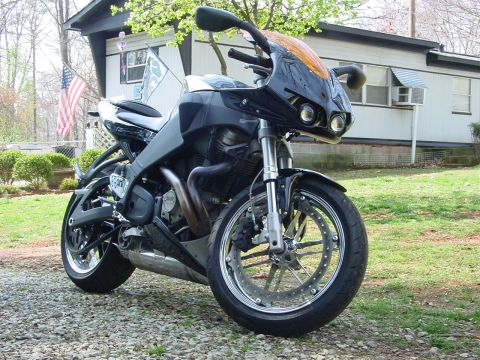
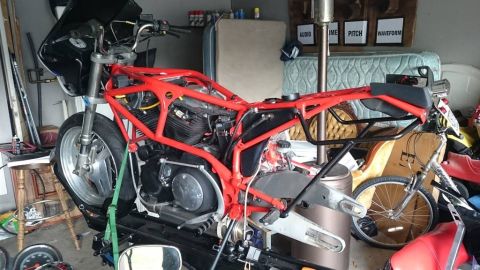
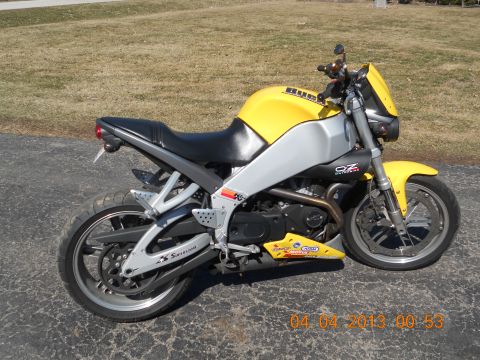
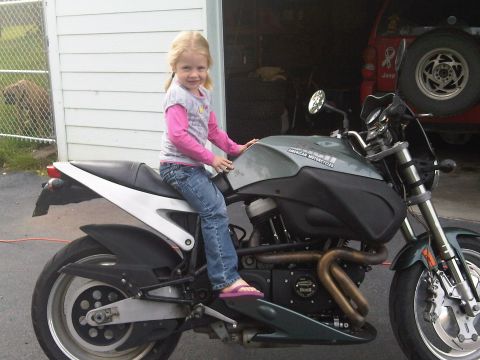
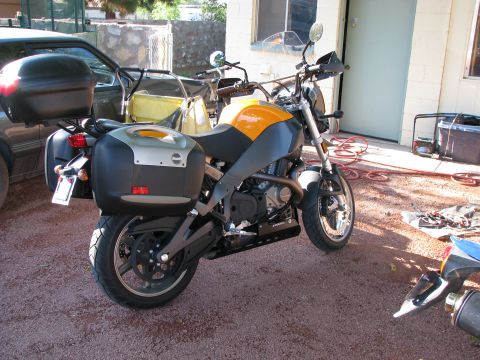
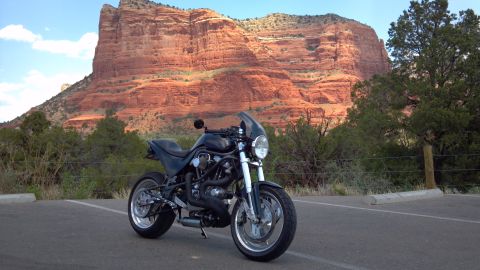
The tube-frame models are built around a 1,203cc air-cooled Sportster-derived V-twin, tuned well past stock Sportster output. The S1 Lightning arrived for 1996 as the stripped-down streetfighter of the line, with the Uniplanar rubber engine-mount system that let the big twin shake at idle but smooth out under way. The X1 Lightning replaced it for 1999 with fuel injection and ran through 2002. Plenty of Lightnings wear fairings, some factory bodywork and some owner-fitted. The S3 Thunderbolt was the half-faired sport-tourer, built 1997-2002, and the S3T added hard bags and taller bars for genuine distance work and ran through 2000. The M2 Cyclone filled the middle of the range as the plainer naked bike.
The XB Era: Firebolt, Lightning, Ulysses
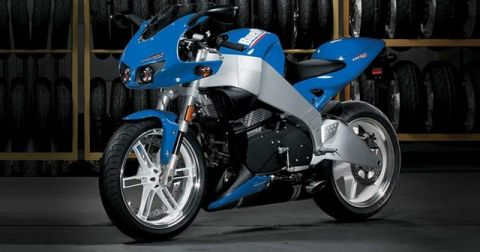
The XB series, launched in 2002, is where Buell's engineering got radical. The aluminum frame doubles as the fuel tank, the swingarm holds the engine oil, and the front brake is a single rim-mounted perimeter rotor (Buell called it ZTL), all in service of mass centralization and a short 52-inch wheelbase. The XB9R Firebolt carried a 984cc version of the pushrod twin, and the XB9S Lightning put flat bars on the same chassis for 2003. The 1,203cc engine arrived for 2004 in the XB12R and XB12S, and the XB12X Ulysses stretched the platform into a long-travel adventure bike for 2006. The final act was the 1125R of 2008-2009, which dropped the Harley engine for a liquid-cooled 1,125cc Rotax V-twin rated at 146 horsepower.
Owning One Now
On the tube-frame bikes the engine is a Sportster 1200 bottom end with Buell cams and tuning, so bottom-end parts interchange heavily and are easy to source. XB engines share the Sportster architecture, and pieces like pistons, cylinders, and cams can cross over with some machine work, but the crankcases and oil routing are Buell-specific. Buell-only parts (bodywork, ZTL rotors, XB frame components) take patience and a parts-bike network. The owner community is small and technical, and it is used to solving its own problems.
Asked all the time
What years were Buell motorcycles made?
Buell built motorcycles from 1983 through late 2009. The racing RW750 came first, street production started with the RR1000 in 1987, and Harley-Davidson discontinued the Buell brand in October 2009 after 136,923 machines.
What is the difference between tube-frame and XB-era Buells?
Tube-frame Buells (S1 and X1 Lightning, S2 and S3 Thunderbolt, M2 Cyclone) use a steel chassis with a rubber-mounted 1,203cc Sportster-based twin. XB-era Buells (2002 onward) use an aluminum frame that stores the fuel, a swingarm that holds the oil, and a rim-mounted perimeter front brake.
Do Buell engines share parts with Harley-Davidson Sportsters?
Yes, with an era split. Tube-frame Buells run an engine built on the actual Sportster 1200 bottom end, so cases, internals, and service knowledge carry over directly. XB engines share the Sportster architecture, and parts such as pistons, cylinders, and cams can cross over with modification, but XB crankcases and oil routing are Buell-specific. The Blast single and the Rotax-powered 1125 models are separate designs.
Why did Buell go out of business?
Harley-Davidson, which owned Buell outright by 2003, shut the brand down in October 2009 during the recession to focus spending on the Harley-Davidson brand. It was a corporate decision, not a bankruptcy of Buell itself.
Are parts still available for Buell motorcycles?
Engine parts shared with Sportsters remain easy to get, especially for tube-frame bikes. Buell-specific items such as bodywork, XB frame components, and ZTL perimeter brake rotors come from a shrinking pool of new-old-stock, specialist vendors, and parts bikes, so the active owner community matters when you own one.
The wall
The most-documented Buell vehicles in the registry, every photo by the owner.