The registry
Cadillac Registry: Models, Builds & Photos
Cadillac, today the Cadillac Motor Car Division of General Motors, was founded on August 22, 1902 in Detroit, Michigan by precision machinist Henry M. Leland with financiers William Murphy and Lemuel Bowen, rising from the remains of Henry Ford's failed second company. It built its name on interchangeable parts and engineering firsts, including the electric self-starter in 1912 and the mass-produced V8 in 1915. General Motors bought Cadillac in 1909 for $4.5 million and made it the corporation's flagship luxury marque, a position it held as "the Standard of the World" through the tailfin 1950s. Badge engineering and quality collapses eroded it from the 1970s through the 1990s, but Cadillac survived, reinvented itself with the CTS and Escalade, and remains GM's active luxury division, now leading its electric transition.
Pick your model
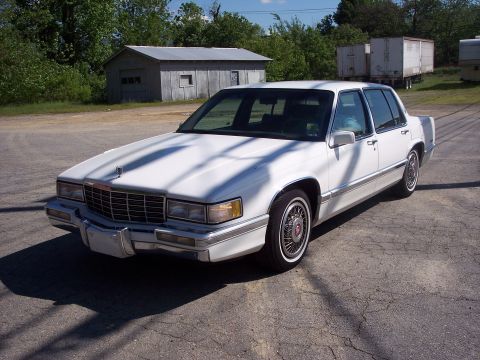
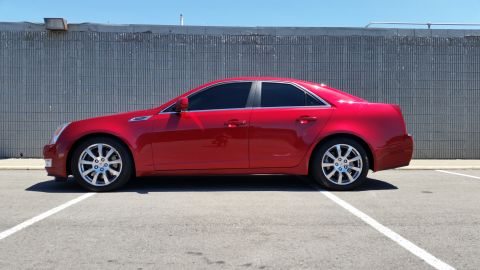
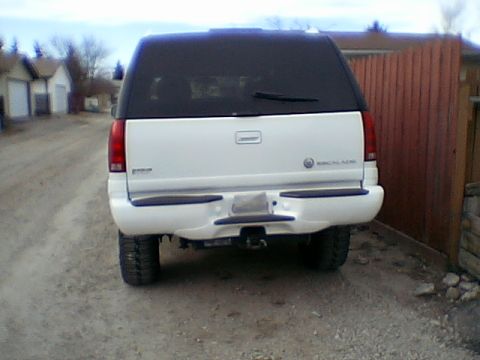
Key facts
| Fact | Detail |
|---|---|
| Founded | August 22, 1902, Detroit, Michigan, USA |
| Founders | Henry M. Leland, William Murphy, Lemuel Bowen |
| Headquarters | Warren, Michigan, USA |
| Parent/successor | General Motors (acquired 1909 for $4.5 million) |
| Fate/status | Active; remains GM's luxury division and lead brand for its electric transition |
| Best known for | Eldorado, DeVille, Escalade |
| Registry presence | 33 vehicles / 669 photos documented by owners on SuperMotors |
1902-1908: Henry Leland, the Ford Wreckage, and the Dewar Trophy
Cadillac was born on August 22, 1902 out of the liquidation of Henry Ford's second failed company, when master machinist Henry M. Leland persuaded investors William Murphy and Lemuel Bowen to keep the Detroit works alive rather than scrap it. Ford had walked out of the Henry Ford Company after quarreling with Murphy and Bowen over his preference for racing over production; the directors called in Leland, of the precision machine shop Leland & Faulconer, to appraise the plant for sale. Leland arrived instead with a single-cylinder engine of his own and an argument: build cars with it. The reorganized firm took the name Cadillac Automobile Company, after Antoine de la Mothe Cadillac, the French officer who founded Detroit in 1701.
Leland's obsession was interchangeability, a discipline he had absorbed making firearms at Colt and gears for Olds. At a time when most car parts were hand-fitted, Cadillac machined components to tolerances fine enough that any part would fit any car. The proof came in 1908, when the Royal Automobile Club in England disassembled three Cadillacs at Brooklands, scrambled the parts, reassembled the cars, and ran them 500 miles. Cadillac won the Dewar Trophy for the feat, and the company adopted the slogan that defined it for half a century: Standard of the World. The single-cylinder Model A had sold well, over 2,000 cars in 1903 alone, but it was the Dewar demonstration that separated Cadillac from the hundreds of fragile American car ventures and made it an acquisition target for the empire-builder circling Detroit.
1909-1920: Billy Durant's $4.5 Million Purchase, the Self-Starter, and the V8
In July 1909 William C. Durant bought Cadillac for General Motors for $4.5 million, and it immediately became the most profitable and most disciplined property in his chaotic holding company. Durant, who had assembled GM from Buick, Olds, and Oakland in a debt-fueled rush, needed Cadillac's earnings and its reputation; crucially, he left Henry Leland and his son Wilfred in operational control, one of the few sound management decisions of Durant's first GM reign.
Under Leland, Cadillac delivered the two innovations that anchored its engineering reputation. In 1912 it introduced Charles Kettering's electric self-starter on the Model Thirty, eliminating the hand crank that had killed and maimed motorists, a development spurred by the death of Leland's friend Byron Carter, who died in 1908 after a crank-kickback injury. The starter won Cadillac an unprecedented second Dewar Trophy. In 1915 Cadillac launched the Type 51 with the first mass-produced V8 engine, a 90-degree unit that set the template for American luxury power for the rest of the century.
The Leland era ended over the First World War. In 1917 Henry Leland, then 74, demanded that Cadillac build Liberty aircraft engines; Durant, a pacifist at the time, refused. The Lelands resigned, took the aircraft contract independently, and founded Lincoln, the company that would become Cadillac's great domestic rival under Ford ownership. Cadillac stayed profitable through the war building V8 staff cars for the U.S. Army, but it had lost its founder to a matter of principle, and its future would be shaped by GM men rather than the machinist who created it.
1921-1940: Alfred Sloan's Ladder, Harley Earl's LaSalle, and the V16 Gamble
Alfred P. Sloan's 1921 product policy, a car for every purse and purpose, fixed Cadillac at the summit of General Motors and defined its role for the next sixty years. After Durant's second ouster in 1920, Sloan rationalized GM's overlapping divisions into a price ladder, Chevrolet to Cadillac, in which Cadillac's job was to be the aspiration the other rungs climbed toward. Under division head Lawrence Fisher, that assignment produced the industry's first styling department. Fisher had seen the custom bodywork of Los Angeles coachbuilder Harley Earl and hired him in 1926 to design a companion car; the 1927 LaSalle was the first mass-produced American car styled by a designer rather than engineered into a shape. Its success led Sloan to create the Art and Colour Section under Earl, institutionalizing design as a corporate function across GM.
Cadillac answered the multi-cylinder wars of the classic era with the 1930 V16, a 452-cubic-inch overhead-valve masterpiece developed in secret by engineer Owen Nacker. Launched three months after the 1929 crash, it was commercially doomed, but Sloan kept it in production through 1940 because its prestige halo justified the losses. The Depression nearly killed the division anyway; Cadillac sales fell from over 41,000 in 1928 to roughly 6,700 in 1933, and a GM committee weighed shutting it down. Nicholas Dreystadt, the division's German-born service manager, saved it, famously arguing, in an account preserved by Peter Drucker, that Cadillac should stop refusing to sell to Black customers, a de facto policy dealers enforced, and then driving costs down as general manager. By 1940 Cadillac was profitable again, the LaSalle was retired, and the 60 Special, Bill Mitchell's crisp 1938 design without running boards, had pointed the way toward modern postwar styling.
1941-1958: Tank Plants, the Tailfin, and the Standard of the Postwar World
Cadillac emerged from the Second World War with the strongest hand in American luxury, having spent 1942 to 1945 building M5 and M24 light tanks powered by pairs of its own V8s and Hydra-Matic transmissions. The war work hardened Cadillac's manufacturing and validated its drivetrain under abuse no customer could match, and the division converted back to cars faster than Packard, its prewar peer, which never recovered its exclusivity after diluting the brand with mid-priced models.
Two 1948-1949 decisions cemented dominance. Harley Earl's studio, inspired by the twin-tail Lockheed P-38 Lightning that designer Frank Hershey had studied during a wartime preview, put small fins on the 1948 Cadillac, launching the defining American styling motif of the era. Then in 1949 Cadillac introduced its 331-cubic-inch overhead-valve V8, lighter and more powerful than the flathead it replaced, an engine so good it powered the Briggs Cunningham entries at Le Mans in 1950, where a near-stock Series 61 coupe finished tenth overall. Sales that year passed 100,000 for the first time.
The 1950s were Cadillac's imperial decade. The Eldorado, launched as a limited 1953 halo convertible, existed to carry Earl's most extravagant ideas into showrooms and to mark the top of the Sloan ladder's top rung. The DeVille name, introduced on the 1949 Coupe de Ville hardtop, became the volume heart of the lineup, while Fleetwood, the name of GM's in-house coachbuilding shop, denoted the formal flagships. The excess peaked with the 1959 model's towering fins, the last Cadillac shaped under Earl before Bill Mitchell succeeded him, just as the styling tide turned against them.
1959-1970: Bill Mitchell's Restraint and the Front-Drive Eldorado
When Bill Mitchell succeeded Harley Earl as GM design chief in 1958, he spent the next decade walking Cadillac back from the 1959 fin extravagance toward creased, linear formality, and the market rewarded him. The fins shrank annually until they vanished, replaced by the knife-edged look of the 1963-1964 cars and the long, low 1965 restyle. Cadillac sales grew through the decade, passing 200,000 in 1968, and the division's share of the U.S. luxury market ran near 70 percent, with Lincoln and Imperial dividing the remainder.
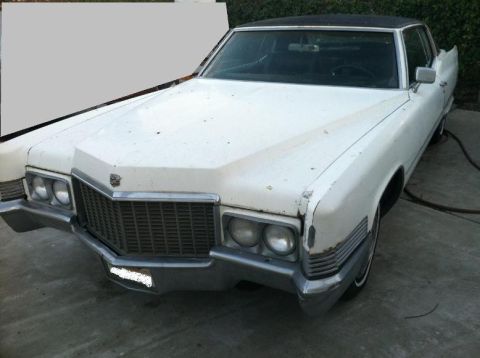
The engineering event of the era was the 1967 Eldorado, reborn as a front-wheel-drive personal luxury coupe on the E-body platform shared with the Oldsmobile Toronado. Championed inside GM as proof that Cadillac could still lead technically rather than merely decorate, it put 429 cubic inches through the front wheels with poise that surprised the press, and it gave Cadillac a credible answer to Ford's Thunderbird-derived Continental Mark III. The Brougham name, attached to the plushest Fleetwood models from 1966, signaled where the division's center of gravity was drifting: toward padded roofs, loose-cushion interiors, and isolation as the definition of luxury.
The prosperity concealed a structural problem. Cadillac's engineering independence was shrinking as GM centralized platforms and components across divisions to cut costs, a process that would accelerate under the corporation's 1970s reorganizations. The division that had invented the self-starter was becoming, organizationally, a styling and marketing operation atop shared corporate hardware, and the 1970s would expose what that meant.
1971-1988: Downsizing, the V8-6-4, the Cimarron, and the Price of Badge Engineering
Between 1971 and 1988 Cadillac converted the strongest luxury franchise in the world into a case study in brand destruction, and every wound was corporate and self-inflicted. The 1970s actually began well: the Seville, launched in mid-1975 as a trim international-sized sedan priced above the big cars, was a genuinely shrewd response to Mercedes-Benz, and the 1977 downsizing of the full-size line under GM president Pete Estes was executed skillfully. Cadillac built over 350,000 cars in 1978, and the 1979 model year set the division's all-time record at more than 380,000.
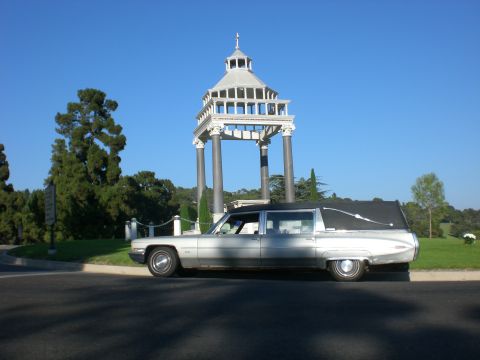
Then the fuel crises and GM's cost accountants took over. The 1981 V8-6-4 cylinder-deactivation engine, rushed to meet fuel-economy rules with 1970s electronics, failed so often dealers disabled it. Its successor, the aluminum HT4100 V8, was underpowered and fragile. The 1982 Cimarron was the nadir: a Chevrolet Cavalier with leather and a wreath-and-crest badge, priced at nearly double the Cavalier, built because division management needed a small car immediately and GM's J-platform was what the corporation offered. Cadillac's own product director later kept its photo on his office wall captioned "Lest we forget"; inside GM it became shorthand for badge engineering's costs. Roger Smith's 1984 reorganization dissolved Cadillac's remaining engineering autonomy into big front-drive groups, and the shrunken, look-alike 1985-1986 C-body DeVille and Seville followed, luxury cars buyers could not distinguish from an Oldsmobile at twenty feet.
German and Japanese rivals harvested the wreckage. Mercedes and BMW took the prestige buyers, and the 1989 launches of Lexus and Infiniti took the rest. Cadillac's median buyer age climbed into the 60s. The traditional rear-drive Brougham soldiered on for loyalists, but by 1988 the division that had owned 70 percent of American luxury was fighting to explain why it should exist.
1989-2001: The Northstar Rally, the Lexus Shock, and the Truck That Changed Everything
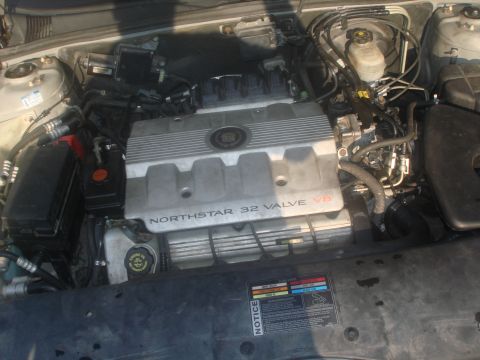
Cadillac spent the 1990s proving it could still engineer a world-class car and discovering that engineering alone could not win back a generation lost to Lexus and BMW. The 1992 Seville STS, styled under GM design chief Chuck Jordan, drew honest praise from European critics, and the 1993 Northstar 4.6-liter double-overhead-cam V8 was Cadillac's most ambitious engine since the 1949 unit. The STS badge, for Seville Touring Sedan, marked the division's attempt to sell handling rather than isolation. It worked with reviewers and largely failed with buyers; Cadillac's U.S. sales, over 350,000 in 1978, ran around 180,000 by the late 1990s while Lexus, a brand ten years old, was passing it in retail luxury sales.

Salvation arrived from an unplanned direction. When Lincoln's 1998 Navigator, a luxury version of the Ford Expedition, started printing money, GM ordered a response in under a year. The 1999 Escalade was a hastily retrimmed GMC Yukon Denali, exactly the badge engineering that had produced the Cimarron, yet the second-generation 2002 model, with real differentiation and the bold new Art and Science styling, became a cultural phenomenon. Hip-hop adopted it, profit per unit dwarfed the sedans, and the Escalade did what no Northstar sedan had done: it made Cadillac desirable to people under 50.
Meanwhile the old guard was retired piece by piece. The rear-drive Fleetwood ended in 1996 when GM converted its Arlington, Texas plant to trucks, a capital-allocation decision that said plainly where the money was. By 2001 Cadillac leadership under GM product czar Bob Lutz's ascendant regime had committed roughly $4 billion to a renaissance plan built on rear-wheel drive and the new Sigma architecture.
2002-2016: Art and Science, the CTS, the Nürburgring, and the 2009 Bankruptcy
The 2003 CTS, the first car on GM's rear-drive Sigma platform and the first full expression of the angular Art and Science design language, was Cadillac's declaration that it would fight BMW on BMW's terms. Developed with chassis tuning at the Nürburgring and launched with a memorable chase sequence in The Matrix Reloaded, the CTS replaced the forgettable Catera, a rebadged Opel Omega whose "Caddy that zigs" campaign had failed. The CTS-V variants, stuffed with Corvette-derived V8s from 2004 onward, gave Cadillac its first credible performance sub-brand, and the second-generation 2008 CTS won Motor Trend Car of the Year. Racing mattered here as marketing proof: CTS-V race cars ran in SCCA World Challenge, and a V-Series 556-horsepower sedan lapping the Nürburgring rewrote what the wreath and crest stood for.
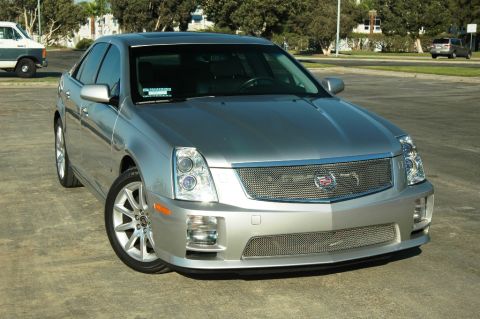
Then the parent nearly died. General Motors, losing tens of billions through 2007-2008, filed for Chapter 11 bankruptcy on June 1, 2009 and was restructured with U.S. Treasury financing. In the triage that killed Pontiac, Saturn, Hummer, and Saab, Cadillac survived alongside Chevrolet, Buick, and GMC because it was the corporation's only credible margin-rich global luxury play, particularly in China, which was becoming Cadillac's largest growth market. The DeVille's successor DTS and the STS were consolidated into the 2013 XTS. Cadillac formalized the CT/XT alphanumeric naming system in 2015 under CMO Uwe Ellinghaus, extending a move toward alphanumerics that had begun earlier (CTS 2003, XTS 2013).
In 2014 GM CEO Mary Barra hired Audi of America veteran Johan de Nysschen to run Cadillac as a quasi-independent unit headquartered in New York's SoHo, a deliberate attempt to separate the brand's culture from Detroit. The sedans he championed, the ATS and the acclaimed CT6, won reviews and lost the sales war to the market's wholesale shift toward SUVs, and de Nysschen was out by 2018 with the headquarters returning to Michigan.
2017-2026: Mary Barra's Electric Bet, the Lyriq, and Le Mans Again
In January 2019 General Motors CEO Mary Barra designated Cadillac the corporation's lead electric brand, making the division's fourth reinvention its most consequential since Alfred Sloan put it atop the GM ladder in 1921. The logic was corporate: GM's Ultium battery architecture needed a margin-rich showcase, and Cadillac's identity had always rested on technical firsts, from the self-starter to the V16. The 2023 Lyriq crossover launched the program, followed by the Celestiq, a hand-built flagship assembled at GM's Warren, Michigan technical center at a price above $300,000, an explicit attempt to reclaim the bespoke territory of the 1930s V16 era, plus the Escalade IQ, which electrified the Escalade, widely described in the trade press as one of Cadillac's most profitable nameplates (GM has not disclosed the figures).
The gasoline business remained the financial floor. The Escalade continued as the segment's dominant seller, and the CT4-V and CT5-V Blackwing sedans, topped by a supercharged 668-horsepower V8, gave enthusiasts a closing chapter of internal-combustion Cadillac that critics ranked above the German competition. Racing returned to the center of brand strategy: Cadillac's V-Series.R hypercar program took the marque back to the 24 Hours of Le Mans in 2023, its first appearance there since the factory Northstar LMP program ended in 2002 and only its second return since the privateer Cunningham-entered Cadillacs of 1950, and in 2026 Cadillac entered Formula 1 as the grid's eleventh team.
Cadillac in 2026 remains what it became in 1909: the Cadillac Motor Car Division of General Motors, headquartered in Warren, Michigan, an active luxury marque whose survival through the badge-engineering collapse of the 1980s and the 2009 bankruptcy owed less to sentiment than to a recurring corporate calculation that GM needs a flagship, and that the name Henry Leland attached to Detroit's founder in 1902 is still the most valuable one the corporation owns.
Leadership
| Leader | Tenure | Legacy |
|---|---|---|
| Henry M. Leland | 1902-1917 | Founded Cadillac on precision interchangeable parts, winning the 1908 Dewar Trophy, then left to found Lincoln. |
| William C. Durant | 1909-1910, 1916-1920 (GM president) | Bought Cadillac for General Motors in 1909 for $4.5 million and made it the corporation's flagship. |
| Charles F. Kettering | 1909-1947 (Delco/GM Research) | His electric self-starter debuted on the 1912 Cadillac and reshaped the entire industry. |
| Alfred P. Sloan Jr. | 1923-1956 (GM president/chairman) | Positioned Cadillac at the top of GM's price ladder, "a car for every purse and purpose." |
| Lawrence P. Fisher | 1925-1934 (division general manager) | Hired Harley Earl and launched the 1927 LaSalle and the 1930 V16. |
| Harley Earl | 1927-1958 (GM styling chief) | Invented the styled Cadillac, from the LaSalle to the 1948 tailfin. |
| Nicholas Dreystadt | 1934-1946 (division general manager) | Saved Cadillac in the Depression, opened sales to Black customers, and ran wartime tank production. |
| Bill Mitchell | 1958-1977 (GM styling chief) | Cleaned up the tailfin excess and shaped the crisp 1960s Cadillacs and the 1967 front-drive Eldorado. |
| John F. Smith | reportedly 1997-1999 (division general manager) | Greenlit the Escalade in ten months as an answer to the Lincoln Navigator. |
| Johan de Nysschen | 2014-2018 (Cadillac president) | Ran Cadillac as a quasi-independent brand from New York; championed the ATS and CT6 before the market's shift to SUVs ended his tenure. |
| Mary Barra | 2014-present (GM CEO) | Made Cadillac GM's lead electric brand, starting with the 2023 Lyriq. |
Timeline
| Year | Event |
|---|---|
| 1902 | Henry M. Leland, with investors William Murphy and Lemuel Bowen, founds the Cadillac Automobile Company on August 22 from the remains of the Henry Ford Company. |
| 1908 | Cadillac wins the Dewar Trophy after the Royal Automobile Club's interchangeable-parts test at Brooklands; "Standard of the World" is born. |
| 1909 | General Motors under William C. Durant buys Cadillac for $4.5 million on July 29; the Lelands stay on to run it. |
| 1912 | Charles Kettering's electric self-starter debuts on the Cadillac Model Thirty, earning a second Dewar Trophy in 1913. |
| 1915 | The Type 51 introduces the first mass-produced V8 engine. |
| 1917 | Henry and Wilfred Leland resign over Durant's refusal to build Liberty aircraft engines and found Lincoln. |
| 1927 | The Harley Earl-styled LaSalle launches, leading GM to create the industry's first design department, the Art and Colour Section. |
| 1930 | The 452-cubic-inch V16 debuts, months after the 1929 crash; Sloan keeps the prestige flagship alive through 1940. |
| 1938 | Bill Mitchell's 60 Special points the way to modern postwar styling. |
| 1942-1945 | Civilian production halts in February 1942; Cadillac builds M5 and M24 light tanks powered by paired Cadillac V8s and Hydra-Matic transmissions. |
| 1948-1949 | The first tailfins appear, inspired by the Lockheed P-38; the 331-cubic-inch overhead-valve V8 follows, and the Coupe de Ville debuts. |
| 1950 | Briggs Cunningham enters two Cadillacs at Le Mans; the near-stock Series 61 coupe finishes tenth overall. Annual sales pass 100,000 for the first time. |
| 1953 | The Eldorado launches as a limited halo convertible. |
| 1959 | Tailfins peak on the 1959 models, the last shaped under Harley Earl. |
| 1967 | The front-wheel-drive Eldorado debuts on the E-body platform. |
| 1975 | The internationally sized Seville launches as Cadillac's answer to Mercedes-Benz. |
| 1979 | Cadillac's all-time record model year: more than 380,000 cars built. |
| 1981-1982 | The failure-prone V8-6-4 engine and the Cavalier-based Cimarron open the badge-engineering nadir. |
| 1993 | The Northstar 4.6-liter DOHC V8 arrives, Cadillac's most ambitious engine since 1949. |
| 1996 | The rear-drive Fleetwood ends as GM converts the Arlington, Texas plant to trucks. |
| 1999 | The first Escalade launches, developed in roughly ten months to answer the Lincoln Navigator. |
| 2003 | The CTS debuts Art and Science styling on the rear-drive Sigma platform, tuned at the Nürburgring. |
| 2009 | GM files for Chapter 11 on June 1; Cadillac survives as one of four retained core brands. |
| 2019 | GM names Cadillac its lead electric vehicle brand in January. |
| 2023 | The Lyriq launches Cadillac's EV era; the V-Series.R returns the marque to the 24 Hours of Le Mans. |
| 2026 | Cadillac enters Formula 1 as the grid's eleventh team. |
Asked all the time
Who founded Cadillac?
Precision machinist Henry M. Leland founded Cadillac on August 22, 1902 in Detroit with financiers William Murphy and Lemuel Bowen, reorganizing the remains of Henry Ford's failed Henry Ford Company. Leland named it for Antoine de la Mothe Cadillac, the French officer who founded Detroit in 1701.
Is Cadillac still in business?
Yes. Cadillac has operated continuously since 1902 and remains General Motors' luxury division, headquartered in Warren, Michigan. It survived the 2009 GM bankruptcy as one of four retained core brands and now leads GM's electric transition.
When did General Motors buy Cadillac?
General Motors, under William C. Durant, bought Cadillac in July 1909 for $4.5 million. Henry Leland and his son Wilfred stayed on to run it until 1917, when they left over a wartime dispute with Durant and founded Lincoln.
Why was Cadillac called the Standard of the World?
The slogan grew out of Cadillac's 1908 Dewar Trophy win, in which three cars were disassembled at Brooklands, their parts scrambled, reassembled, and driven, proving fully interchangeable manufacture for the first time in the industry. Cadillac won a second Dewar Trophy in 1913 for the electric self-starter.
What went wrong with Cadillac in the 1980s?
A run of quality and product failures eroded the brand: the unreliable V8-6-4 cylinder-deactivation engine of 1981, the troubled HT4100 V8, and the 1982 Cimarron, a lightly disguised Chevrolet Cavalier sold at nearly double the Chevrolet's price. Buyers defected to Mercedes-Benz, BMW, and later Lexus.
How did Cadillac recover from its decline?
Cadillac rebuilt on three moves: the 1993 Northstar V8 restored engineering credibility, the 1999 Escalade gave the brand a hugely profitable truck, and the 2003 CTS launched the angular Art and Science design language with chassis tuning done on the Nurburgring.
What was Cadillac's role in World War II?
Cadillac stopped civilian car production in February 1942 and built M5 Stuart light tanks, M24 Chaffee tanks, and precision parts for Allison aircraft engines, using two Cadillac V8s and Hydra-Matic transmissions in the tanks.
What is Cadillac doing about electric vehicles?
Under GM CEO Mary Barra, Cadillac was named the corporation's lead electric brand in January 2019. The Lyriq crossover launched on GM's Ultium platform in 2023, followed by the hand-built Celestiq flagship and the Escalade IQ, alongside a factory return to the 24 Hours of Le Mans in 2023.
The wall
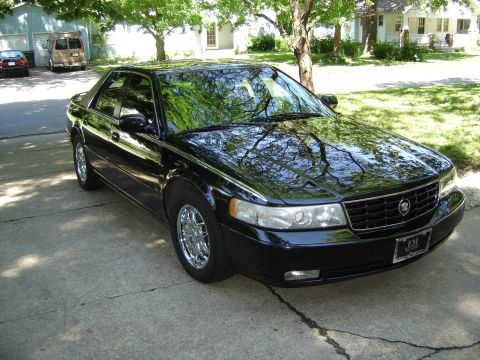
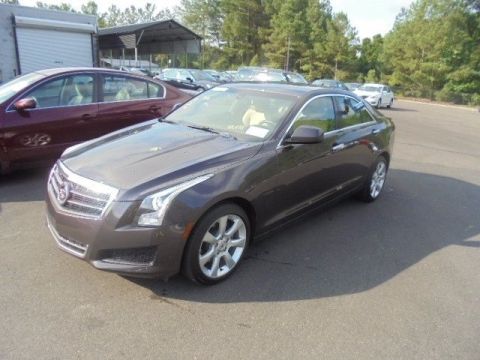
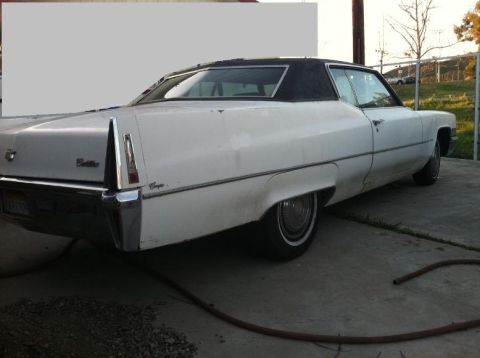
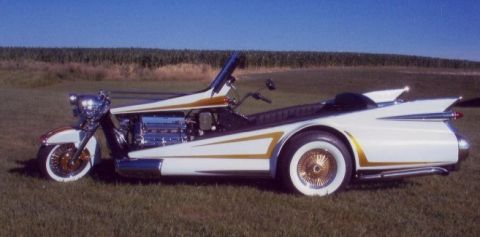
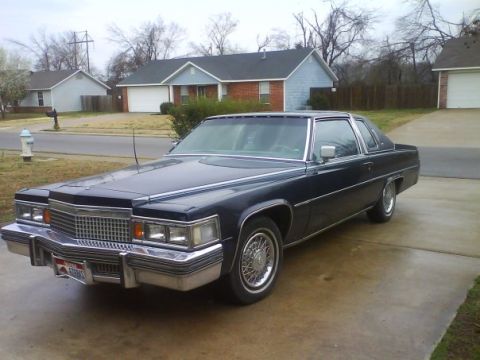
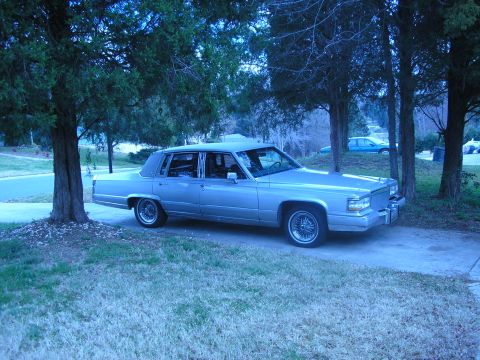
The most-documented Cadillac vehicles in the registry, every photo by the owner.