The registry
Citroen Registry: Models, Builds & Photos
Citroen was founded in Paris in 1919 by Andre Citroen, who converted his WWI munitions plant into Europe's first mass-production car factory. The company built its name on engineering gambles that worked: the unitary-body front-wheel-drive Traction Avant in 1934, the 2CV in 1948, and the hydropneumatic self-leveling suspension that reached production on the 1954 Traction 15-Six H and made the DS famous a year later. A 1974 bankruptcy put Citroen under Peugeot control, forming PSA in 1976, and the marque continues today inside Stellantis.
Pick your model
Founding and the engineering years
Andre Citroen started building the Type A in 1919 on the Quai de Javel in Paris, applying American-style mass production to European cars. The 1934 Traction Avant combined front-wheel drive, unitary construction, and torsion-bar suspension in one car when most of the industry still bolted bodies to ladder frames. The cost of developing it bankrupted the company in December 1934, and tire maker Michelin, already the largest creditor, took control within the month. Under Michelin ownership Citroen produced the 2CV (1948-1990, over 3.8 million saloons built) and the DS (1955-1975). Hydropneumatic suspension reached series production in 1954 on the rear axle of the Traction Avant 15-Six H, and the DS carried the full four-wheel system from launch in 1955.
Bankruptcy and the Peugeot era
Citroen went bankrupt again in 1974, dragged down by the oil crisis and expensive projects like the Wankel-engined GS Birotor and the Maserati-engined SM. The French government brokered a takeover by Peugeot, which bought 38.2 percent of Citroen in December 1974 and raised its stake to just under 90 percent in April 1976, creating PSA Peugeot Citroen. Citroen never went defunct; it survives today as a Stellantis brand following the 2021 PSA-FCA merger. Post-1976 cars increasingly shared Peugeot platforms and engines, though the hydropneumatic suspension lived on until the last C5 in 2017.
Key model lines
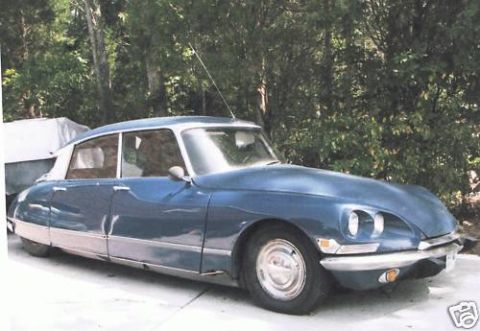
- DS (1955-1975): Hydropneumatic suspension, high-pressure hydraulics running the brakes and steering, and inboard front disc brakes on a mainstream sedan in 1955. Nearly 1.5 million built. The system self-levels regardless of load, and a healthy one rises off its bump stops at startup.
- Xantia (1992-2001): Bertone-styled replacement for the BX, running Hydractive computer-controlled hydropneumatics. French production ran through 2001, and Iranian carmaker SAIPA kept building it under license until 2010. The Xantia Activa variant added active anti-roll bars and set an 85 km/h moose-test speed that nothing beat for 26 years. Diesel HDi versions are known for very long engine life.
- Xsara (1997-2006): Conventionally sprung hatchback, coupe, and wagon on PSA underpinnings, sharing its platform and engines with the Peugeot 306. Mechanically simple by Citroen standards, with the 2.0 HDi diesel the strong pick. Its rally version won the WRC manufacturers title three years running (2003-2005) with Sebastien Loeb driving.
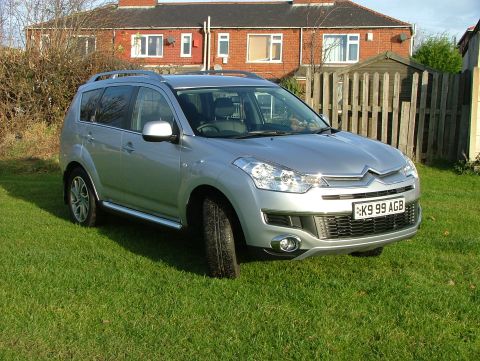
- C-Crosser (2007-2012): Citroen's first SUV, a rebadged Mitsubishi Outlander built by Mitsubishi in Japan, sold with a PSA 2.2 HDi diesel in Europe. Seven seats, on-demand four-wheel drive, and Mitsubishi mechanicals mean parts sourcing often goes through the Outlander catalog.
Living with the hydraulics
Hydropneumatic Citroens (DS through Xantia and beyond) need sphere regassing or replacement every few years and clean LHM fluid (green, mineral-based) or LDS on later Hydractive 3 cars. Mixing fluids ruins seals. A sagging Citroen usually means tired spheres, not a broken car.
Asked all the time
When was the Citroen DS made and what makes it different?
The Citroen DS was built from 1955 to 1975, with close to 1.5 million produced. Its high-pressure hydraulic system runs the self-leveling suspension, brakes, and power steering, and it used inboard front disc brakes, a first for a mass-production sedan. A running DS rises on its suspension when started.
Is the Citroen C-Crosser really a Mitsubishi?
Yes. The Citroen C-Crosser (2007-2012) is a rebadged Mitsubishi Outlander built by Mitsubishi in Japan, with Citroen front-end styling and a PSA 2.2 HDi diesel option in Europe. Most mechanical parts cross-reference to the Outlander and the Peugeot 4007, which widens the parts pool considerably.
Are Citroen hydropneumatic cars expensive to maintain?
Not if you stay ahead of the spheres. On a Citroen Xantia or DS, the nitrogen spheres need regassing or replacement periodically (a few years of use), and the system needs the correct fluid: LHM on classics and Hydractive cars, LDS on later ones. Sphere and pump parts are still available through Citroen specialists, and a well-kept system is reliable.
Did Citroen go out of business?
No. Citroen went bankrupt twice, in 1934 (rescued by Michelin) and 1974 (rescued by Peugeot, forming PSA in 1976), but the marque never stopped production. Citroen is currently part of Stellantis after the 2021 merger of PSA and Fiat Chrysler.
What years was the Citroen Xsara built and what is it like to own?
The Citroen Xsara ran from 1997 to 2006 as a hatchback, coupe, and wagon on PSA mechanicals shared with the Peugeot 306. It uses conventional steel springs, not hydropneumatics, so upkeep is ordinary. The HDi diesels are durable, and parts are cheap and plentiful across Europe.
The wall
The most-documented Citroen vehicles in the registry, every photo by the owner.