The registry
Dodge Registry: Models, Builds & Photos
Dodge is an American automobile brand, today a division of Stellantis N.V., founded in Detroit in 1900 by brothers John Francis Dodge and Horace Elgin Dodge as the Dodge Brothers Company, a precision machine shop that built transmissions for Olds and engines, transmissions, and chassis for Ford before launching its own car, the all-steel Dodge Brothers Model 30, in 1914. Both brothers died in 1920; their widows sold the company to the investment bank Dillon, Read & Co. in 1925, which sold it to Walter Chrysler in 1928. Dodge then spent nearly a century as Chrysler's volume and performance division, building trucks, Hemi-powered muscle cars, and the minivan through ownership by Daimler, Cerberus, Fiat, and finally Stellantis. The truck line split off as the separate Ram brand in 2010, and Dodge survives today as Stellantis's performance brand, transitioning its Charger nameplate to electric power.
Pick your model
Key facts
| Fact | Detail |
|---|---|
| Founded | 1900, Detroit, Michigan, as the Dodge Brothers Company machine shop |
| Founders | John Francis Dodge and Horace Elgin Dodge |
| Headquarters | Auburn Hills, Michigan, USA |
| Parent / successor | Stellantis N.V. (via Dillon, Read 1925, Chrysler 1928, Daimler 1998, Cerberus 2007, Fiat 2009-2014, Stellantis 2021) |
| Fate / status | Active; acquired by Chrysler Corporation in 1928, operates today as Stellantis's performance brand |
| Best known for | Charger, Challenger, Viper |
| Registry presence | 352 vehicles / 9,119 photos documented by owners on SuperMotors |
1900-1913: John and Horace Dodge Build the Machine Shop That Built Ford
In 1900 the Dodge Brothers Company opened in Detroit as a machine shop, and within a decade it had become the most important parts supplier in the American auto industry. John Francis Dodge handled the business and Horace Elgin Dodge, a gifted machinist who had earlier patented a dirt-proof bicycle bearing, ran the shop floor. Their first major automotive contract came from Ransom Olds, for whom they built transmissions for the curved-dash Oldsmobile. In 1903 they took a larger gamble: Henry Ford, twice-failed and cash-poor, needed engines, transmissions, and axles for his new Ford Motor Company. The Dodges agreed to supply running gear on credit and took 100 shares, a ten percent stake, in payment.
That decision made them rich. As Ford's Model T volume exploded after 1908, the Dodge Brothers plant in Hamtramck, opened in 1910, ran almost entirely on Ford work, and the brothers collected millions in Ford dividends on top of supplier profits. But dependence on a single customer worried John Dodge, who reportedly told associates he was tired of being carried around in Henry Ford's vest pocket. Ford was also building his own supplier capacity at Highland Park, which meant the contract work would eventually vanish. In 1913 the brothers gave Ford one year's notice that they would stop supplying parts and announced they would build a car of their own. The machine shop era ended with the Dodges holding two assets almost no startup automaker ever had: a fully equipped modern factory and a workforce that already knew how to build cars at scale.
1914-1919: The All-Steel Model 30, the War Department, and the Lawsuit That Stung Henry Ford
On November 14, 1914, the first Dodge Brothers Model 30 touring car left the Hamtramck plant, and it immediately redefined what a mid-priced American car could be. Where the Model T used wood-framed bodies, a 20 horsepower engine, and a planetary transmission, the Dodge offered an all-steel welded body built by Budd, a 35 horsepower four, a conventional sliding-gear transmission, and 12-volt electrics, at roughly $785 against the Ford's cut-rate pricing. Dealers besieged the company; Dodge Brothers sold about 45,000 cars in its first full year, 1915, and by 1916 stood among the top four American producers. The car's durability became a military legend when General John Pershing's 1916 Punitive Expedition into Mexico used Dodge touring cars in the raid at which Lieutenant George S. Patton fought his first motorized engagement. The U.S. Army ordered thousands of Dodge staff cars, ambulances, and light trucks in the First World War, planting the truck DNA that would define the brand for a century.
The brothers simultaneously fought their old customer in court. Henry Ford had suspended special dividends to fund the River Rouge plant, starving the Dodges of the Ford income financing their own expansion. They sued, and in 1919 the Michigan Supreme Court's decision in Dodge v. Ford Motor Company ordered a dividend paid, establishing a shareholder-primacy precedent still taught in law schools. Ford responded by buying out all minority holders; the Dodge brothers' original $10,000 credit-and-stock gamble returned roughly $25 million in the buyout plus dividends collected along the way. Dodge Brothers entered 1920 debt-light, profitable, and second only to Ford in some monthly sales tallies.
1920-1925: Two Funerals, Frederick Haynes, and the Widows' Record-Breaking Sale to Dillon, Read
Nineteen twenty destroyed the founding family in eleven months and left the second-largest independent automaker in the hands of two widows. In January, John Dodge died of pneumonia in the influenza era's aftermath at age 55; in December, Horace, devastated and drinking heavily, followed him at 52. Company veteran Frederick Haynes, a Dodge employee since the machine-shop days, took over as president and ran the firm competently but cautiously. Dodge Brothers stayed profitable, and its 1921 agreement making Graham Brothers trucks its exclusive commercial line, sold through Dodge dealers with Dodge running gear, deepened the truck business. But the product barely changed while Chevrolet, Hudson, and a resurgent industry innovated around it, and the four-cylinder-only lineup aged.
The widows, Matilda Dodge and Anna Dodge, had no interest in running an automaker, and in 1925 they accepted an offer from the New York investment bank Dillon, Read & Co. of $146 million in cash, at that time the largest cash transaction in American industrial history. Dillon, Read was a financial buyer, not an operator. It recapitalized the company, sold securities to the public at a healthy markup, kept Haynes on as president, and in November 1926 set Edward G. Wilmer, a finance man who had previously run Goodyear through its own Dillon, Read-era reorganization, over him as board chairman. Sales slipped to fifth place in 1925 and kept falling as product decisions drifted, all the way to thirteenth by 1927. Within three years the bankers concluded what bankers usually conclude: the asset was worth more sold than run. The buyer waiting was Walter P. Chrysler, who had launched his own car company in 1924 and needed exactly what Dodge had.
1925-1928: Walter Chrysler Swallows a Company Five Times His Size
When Walter P. Chrysler acquired Dodge Brothers on July 31, 1928, in a stock transaction valued around $170 million, observers said the minnow had swallowed the whale, and Chrysler himself called it the best deal of his life. Chrysler Corporation, incorporated only in 1925 out of the wreckage of Maxwell, had engineering talent, the famous trio of Fred Zeder, Owen Skelton, and Carl Breer, but lacked manufacturing capacity, a foundry, a forge, and a national dealer network. Dodge had all four: the vast Hamtramck complex, then one of the largest factories on earth, and roughly 4,600 dealers. Dillon, Read wanted out, and Clarence Dillon negotiated the sale personally with Chrysler over days of meetings at the Ritz-Carlton in New York.
The acquisition let Chrysler execute a General Motors-style brand ladder overnight. In the weeks surrounding the closing he launched Plymouth as the low-priced entry and DeSoto in the middle, with Dodge positioned above them as the solid, upper-middle value brand and Chrysler on top. Dodge's Graham Brothers truck operation became Dodge Trucks outright, giving the corporation a commercial line it would never abandon. K.T. Keller, Chrysler's toughest production man, was sent to run Hamtramck and integrate the plants; the story that he had new signage up before the ink dried captures the speed of the takeover. The Dodge Brothers name and interlocked-deltas emblem faded to just Dodge over the next decade. As an independent company Dodge Brothers was finished; as the volume backbone of the new Chrysler Corporation, it was about to matter more than ever.
1929-1941: K.T. Keller's Dependable Dodge Rides Out the Depression
Dodge survived the Depression that killed dozens of automakers because Walter Chrysler and K.T. Keller ran it as the corporation's conservative profit center rather than its showcase. When the 1929 crash arrived, Chrysler Corporation cut costs ruthlessly, kept engineering spending alive, and let Plymouth chase volume in the low-price field while Dodge held the step-up slot with six- and straight-eight-powered cars marketed on durability, the Dependability theme that had followed the brand since the Pershing expedition. The strategy worked: Chrysler Corporation passed Ford to become America's number two producer by the mid-1930s, and Dodge regularly ran fourth or fifth in industry sales. The corporation's one radical bet of the era, the 1934 Airflow, was wisely kept away from Dodge, sold as a Chrysler and DeSoto; when the streamliner flopped, Dodge's bread-and-butter styling left the division unscathed, a lesson in risk placement that shaped Keller's product conservatism for twenty years.
Two structural developments in these years mattered more than any model. First, trucks: Dodge opened the dedicated Warren, Michigan truck plant in 1938, and its light commercial line, including the 1939 job-rated trucks, made Dodge the corporation's permanent truck brand. Second, labor: Dodge Main in Hamtramck, with tens of thousands of workers, became a stronghold of the United Auto Workers after the 1937 sit-down strikes, and UAW Dodge Local 3 grew into one of the most powerful locals in the country, a force in every Chrysler labor confrontation into the 1970s. When war orders began arriving in 1940 and 1941, Dodge was, by design, the Chrysler division best equipped to build rugged things in enormous numbers.
1942-1945: WC Power Wagons for Patton, B-29 Engines in Chicago
Between February 1942 and the summer of 1945 Dodge built no civilian cars and became one of the arsenal of democracy's most prolific suppliers. Its signature product was the WC series of four-wheel-drive military trucks, weapons carriers, command cars, and ambulances in half-ton and later three-quarter-ton form; Dodge built roughly a quarter million of them, and they served on every front, prized for the same over-engineered toughness the brand had sold since 1914. The six-wheel WC-62/63 variants hauled squads across Europe, and Soviet forces received tens of thousands under Lend-Lease. General George Patton, who had ridden Dodges into Mexico in 1916, commanded armies moved and supplied substantially by Dodge trucks.
The corporation's single most audacious wartime undertaking also wore the Dodge name. The Dodge Chicago plant, a government-financed complex of about 6.3 million square feet at 76th and Cicero, was built from a cornfield starting in 1942 to mass-produce the Wright R-3350 Duplex-Cyclone, the troubled 18-cylinder engine of the Boeing B-29 Superfortress. Chrysler's production engineers tamed a design that had been failing in service, and by war's end Dodge Chicago had delivered more than 18,000 R-3350s. The plant later became the Tucker and then Ford aircraft-engine site, but the managerial lesson stayed home: Dodge could industrialize almost anything. The war's most durable commercial legacy arrived immediately afterward, when Dodge civilianized the military chassis as the 1946 Power Wagon, the first mass-produced civilian four-wheel-drive truck, ancestor in spirit of every Power Ram and Ram 4x4 since.
1946-1959: The Red Ram Hemi, Virgil Exner's Forward Look, and the 1957 Quality Disaster
Postwar Dodge began the 1950s as the frumpiest brand in a booming market and ended the decade as one of the flashiest, a whiplash that traced directly to two men, K.T. Keller and Virgil Exner. Keller, now Chrysler Corporation president, insisted on tall, boxy three-box bodies a man could wear a hat in, and Dodge's warmed-over 1949 to 1952 models lost ground to slinkier Fords and Chevrolets even in a seller's market. The engineering side moved faster than the styling side: in 1953 Dodge received its own version of the corporation's hemispherical-head V8, the 241 cubic inch Red Ram, and Dodge Hemis promptly set records at Bonneville and gave the division a performance identity it has never relinquished.
Exner, hired from Studebaker and elevated to styling chief, delivered the counterstrike. His 1955 Forward Look and especially the 1957 Swept-Wing Dodges, low, finned, and dramatic under the slogan Suddenly it's 1960, made GM's designs look old overnight; Chrysler Corporation's market share jumped nearly four points for 1957. Then the bet collapsed. The 1957 cars had been rushed to production, and they rusted, leaked, and rattled so notoriously that the corporation's quality reputation was damaged for a decade, while the 1958 recession gutted the mid-priced field where Dodge lived. Dodge's answer to the shrinking middle market, badge politics as much as product, was to push downward into Plymouth's territory with the 1960 Dart line, a move that sold cars but helped set up the fratricide that would eventually kill DeSoto, which was discontinued in November 1960 partly because Dodge and Chrysler had squeezed it from both sides.
1960-1967: The 1962 Downsizing Blunder, the Compact Dart, and the Charger Answer to the Ponycar
Dodge's 1960s began with one of the most famous product-planning mistakes in industry history and ended with the division firmly established as Chrysler's performance brand. Acting on a garbled report, the corridor legend says an overheard remark at a party, that Chevrolet was radically downsizing for 1962, Chrysler president William Newberg ordered the full-size Dodge and Plymouth lines crash-shrunk. Chevrolet did no such thing; the smaller, oddly styled 1962 Dodges were shunned by buyers wanting full-size cars, and sales cratered. Newberg was already gone in a conflict-of-interest scandal, Virgil Exner was eased out, and the shakeout brought in president Lynn Townsend and, from Ford, design chief Elwood Engel, whose cleaner, crisper styling defined Dodge for the rest of the decade. The blunder had an accidental upside: the trim 1962 B-body, stuffed with big wedge and later Hemi V8s, was an ideal drag-strip and NASCAR weapon, and the 426 race Hemi of 1964 swept the Daytona 500's top three places, all of them Hemi Plymouths behind Richard Petty.
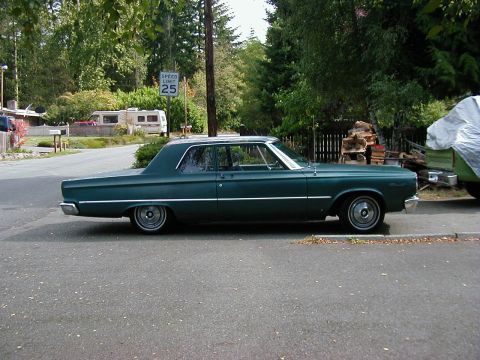
Product recovery came on two fronts. The compact Dart, moved onto the A-body for 1963, became Dodge's durable volume anchor, selling in the hundreds of thousands annually into the 1970s and funding everything else. The mid-size Coronet name returned for 1965 as the B-body mainstream car and Hemi homologation host. And when the Ford Mustang exposed Dodge's lack of a youth car, Townsend approved a fastback derivative of the Coronet platform: the 1966 Charger, championed by Dodge general manager Byron Nichols and product planner Burton Bouwkamp as a specialty car Dodge dealers, then agitating publicly for something to fight the ponycar wave, could sell on image. The Dodge Rebellion advertising campaign of 1966 completed the repositioning: Dodge was no longer your uncle's dependable sedan brand.
1968-1971: Scat Pack Muscle, the Winged Daytona, and the Challenger's Late Arrival
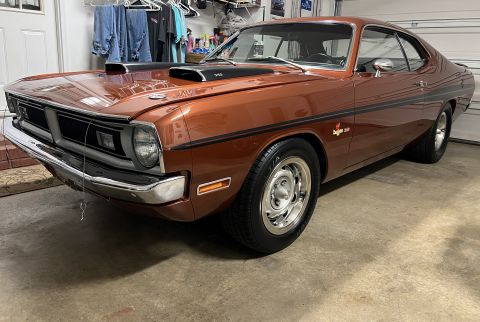
For four model years beginning in 1968, Dodge built its modern identity, and the second-generation Charger of 1968, styled under Elwood Engel's studios with Richard Sias's double-diamond fuselage, was its centerpiece, selling roughly 96,000 units in its first year against projections around 35,000. Dodge marketed its performance models as the Scat Pack, bumblebee stripes and all, and priced the ferocious Super Bee to fight Plymouth's Road Runner in a purely internal war that showed how thoroughly Chrysler let its two volume divisions duplicate each other. NASCAR drove the era's most extreme engineering: when the standard Charger proved aerodynamically dirty at Daytona, Dodge built the flush-nosed Charger 500 and then the 1969 Charger Daytona, whose 18-inch nose cone and towering rear wing came from Chrysler missile-division engineers including John Pointer and Gary Romberg. Buddy Baker took a Daytona past 200 mph at Talladega in March 1970, the first closed-course lap over that mark, before NASCAR effectively legislated the winged cars out.
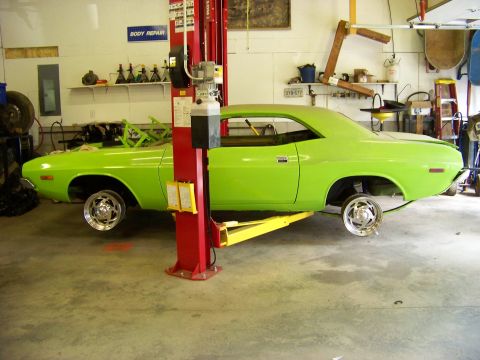
Dodge's true ponycar arrived last. The 1970 Challenger, on the new E-body shared with Plymouth's Barracuda, was approved because Dodge dealers had watched Mustang and Camaro profits for five years; it offered everything from a slant six to the 426 Hemi and gave Sam Posey a memorable Trans-Am campaign. But the timing was terrible. Insurance surcharges on supercars, tightening federal emissions rules, and a softening market hit just as the E-body launched, and Challenger sales fell by more than half in 1971. The muscle era that made Dodge's name lasted barely four seasons, and the corporation that had funded it was already sliding toward the financial crisis of the 1970s.
1971-1979: Oil Shocks, Mitsubishi Captives, and the Slide Toward Bankruptcy's Edge
The 1970s hollowed Dodge out, because Chrysler Corporation under Lynn Townsend and then John Riccardo had bet its capital on big cars and overseas expansion at exactly the wrong moment. The 1973 OPEC embargo detonated demand for the full-size C-bodies, including the Monaco, just as they had been redesigned larger; the second oil shock in 1979 finished the job. Dodge had no homegrown small car, so the corporation bought one: its 15 percent stake in Mitsubishi, taken in 1971, brought the Dodge Colt as a captive import, an admission that Detroit's number three could no longer afford to engineer its own subcompact. The mid-size line decayed into rebadging, and quality problems, the corporation's chronic practice of building cars for a sales bank and discounting them later, and a bloated break-even point ate the balance sheet. Two bright spots were real: Dodge trucks, refreshed in 1972 and marketed with the Adult Toys campaign including the Warlock and the 1978 Li'l Red Express, and the B-series vans, launched for 1971, that dominated the decade's van craze. The 1976 Aspen compact, launched to replace the faithful Dart, was so recall-plagued that it damaged the brand it was supposed to save.
The endgame came fast. Riccardo recruited Lee Iacocca, freshly fired by Henry Ford II, in November 1978, and Iacocca found the company far sicker than advertised. With losses running over a billion dollars in 1979, then the largest corporate loss in American history, Chrysler petitioned Washington, and the Chrysler Corporation Loan Guarantee Act of 1979, signed by President Carter in January 1980, provided $1.5 billion in federal loan guarantees. Dodge's survival now depended entirely on one platform that did not yet exist in showrooms: the K-car.
1980-1987: Iacocca's K-Car Salvation, the Minivan Masterstroke, and Carroll Shelby's Front-Drive Hot Rods
Lee Iacocca saved Dodge with a front-wheel-drive box, and the 1981 Aries, the Dodge half of the K-car program engineered under Hal Sperlich, carried the entire weight of the federal loan guarantees on its six-passenger, 25-plus-mpg back. The K-cars sold, Chrysler returned to profit, and in 1983 Iacocca repaid the guaranteed loans seven years early, a moment he turned into the best advertising the corporation ever had. The K-platform then became the corporate skeleton: the 600, the Daytona sports coupe, and eventually the Dynasty sedan all stretched from it, a capital-efficient strategy that kept Dodge alive but sowed a late-1980s sameness problem.
The era's genuine revolution arrived in November 1983. The Caravan, the minivan Sperlich had pitched at Ford and been refused, invented a segment; Dodge and Plymouth minivans owned it for a decade, and the extended Grand Caravan of 1987 became the default American family vehicle. Dodge also mined performance from unlikely metal. Iacocca hired his old Ford collaborator Carroll Shelby, whose Shelby-badged turbocharged Omnis and Chargers, the GLH line, gave the brand a cheeky front-drive hot-rod identity, while the L-body Rampage car-pickup and the 1987 Dakota, the industry's first mid-size pickup, showed a division probing every niche it could afford. Flush with cash, Iacocca bought AMC from Renault in 1987, mostly for Jeep, a deal that brought Dodge future engineering leadership and, less happily, one last rebadge, the Eagle Premier-based Monaco revival. By decade's end the question was whether Dodge could ever again design something that was not a K-car derivative.
1988-1998: Bob Lutz, Tom Gale, the Viper, and the Cab-Forward Comeback
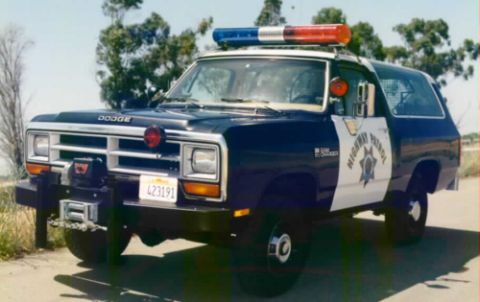
Between 1988 and 1994 Dodge executed one of the most complete image reversals any American brand has managed, driven by president Bob Lutz, design chief Tom Gale, engineering head François Castaing from the AMC acquisition, and the platform-team system they built as Iacocca's long goodbye played out and Bob Eaton arrived from GM in 1992 to take over as CEO. The statement car came first: the Viper, an 8-liter V10 roadster conceived by Lutz and Gale in 1988 with Carroll Shelby as spiritual godfather, reached production in 1992 and told the market Dodge had a pulse. The volume proof followed. The 1993 Intrepid, on the LH platform derived from AMC's Eagle Premier work, introduced cab-forward proportions that made every competing sedan look cramped, and the 1995 Stratus, 1995 Avenger coupe, and 1995 Neon, launched with the friendly Hi. campaign, filled out a lineup in which, for the first time since the 1960s, nothing was a rebadge or a relic. The early-1990s Stealth, a Mitsubishi-built sports coupe, was the last gasp of the captive-import habit the new regime was outgrowing.
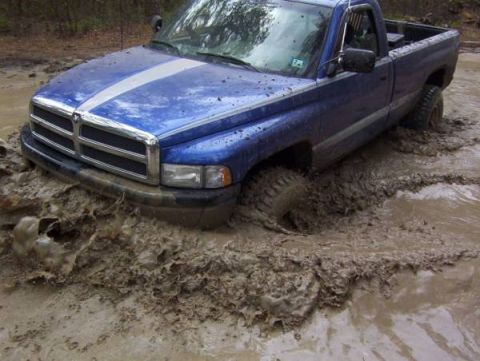
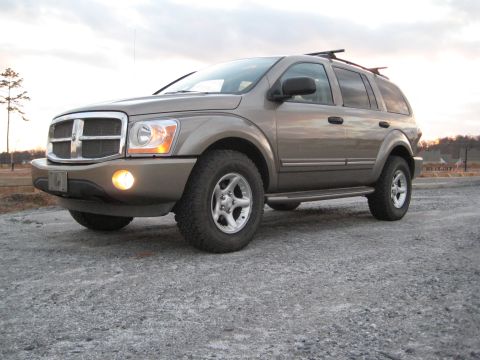
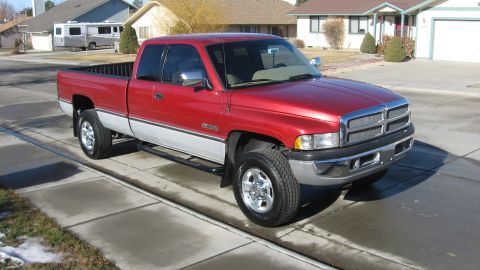
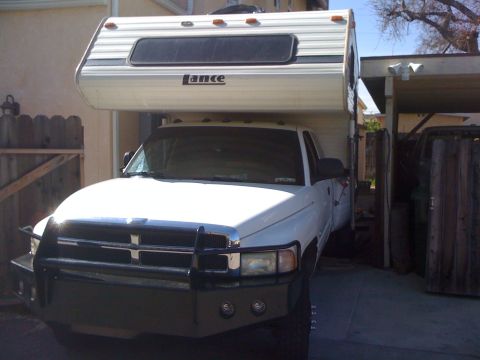
The most consequential product was the truck. The 1994 Ram, styled under Gale with a big-rig face after clinic research said buyers would either love or hate it, exploded Dodge's full-size truck sales from about 78,000 in 1993 to over 400,000 by 1996, establishing the Ram 1500, 2500, and 3500 lines, the Cummins turbodiesel option already aboard since 1989, as a genuine third force against Ford and Chevrolet. Lean platform teams made Chrysler the most profitable automaker per vehicle in America by mid-decade, and the 1998 Durango, a Dakota-based SUV, cashed in on the truck boom. That very profitability made the corporation, and Dodge with it, an acquisition target.
1998-2007: The DaimlerChrysler Merger of Equals, SRT Performance, and the Rear-Drive LX Gamble
The May 1998 merger of equals between Chrysler Corporation and Daimler-Benz, a $36 billion deal, put Dodge under Stuttgart's control for nine turbulent years. In a 2000 Financial Times interview, Schrempp made remarks widely read as conceding the "merger of equals" had really been a takeover, comments his lawyers later said were mischaracterized, and which figured in the Tracinda/Kerkorian suit Daimler ultimately won. The American executives who had built the 1990s renaissance, Lutz already gone, Gale and others following, departed in waves; a profit collapse in 2000 brought Dieter Zetsche and Wolfgang Bernhard from Germany to run Chrysler Group, cutting 26,000 jobs. Dodge's product story in these years was a barbell. At the cheap end sat cost-squeezed entries like the 2006 Caliber, the Neon's unloved replacement, and the Nitro SUV, cars whose interior economics reflected merger-era cost extraction and damaged the brand's standing with reviewers. At the performance end, the newly consolidated SRT skunkworks produced the turbocharged Neon-based SRT-4 in 2003, at launch the cheapest genuinely fast car in America, and Viper development continued.

The big bet paid off. Using selected Mercedes E-Class componentry, Chrysler engineered the rear-drive LX platform, and Dodge received the 2005 Magnum wagon and the 2006 Charger sedan, both available with the new 5.7 Hemi V8, the third-generation engine reviving the brand's most valuable word. Purists howled that the Charger had four doors; buyers did not care, and the LX cars gave Dodge a rear-drive V8 franchise every other American brand had abandoned. Daimler, though, had run out of patience with Chrysler's cyclical losses, and in May 2007 it sold 80.1 percent of Chrysler to the private-equity firm Cerberus Capital Management for $7.4 billion, most of which never reached Daimler. Dodge now belonged to a hedge fund, months before the American car market fell off a cliff.
2007-2013: Cerberus, Chapter 11, Sergio Marchionne, and the Amputation of Ram
Dodge's second near-death arrived in 2009, and this time the rescue reshaped what the brand even was. Cerberus installed Home Depot's Bob Nardelli as CEO in 2007, but the credit crisis and the collapse of truck and SUV demand overwhelmed a company with no cash cushion and a thin product pipeline. Chrysler LLC filed Chapter 11 on April 30, 2009; the Obama administration's auto task force financed a managed bankruptcy in which a new Chrysler Group emerged in June 2009 with Fiat S.p.A. as operating partner, the UAW retiree trust as majority owner, and Fiat chief Sergio Marchionne as CEO. Marchionne's first structural act touching Dodge came in October 2009: he split the trucks into a standalone Ram brand for 2010, arguing that Dodge could not simultaneously mean family cars, muscle cars, and work trucks. Dodge loyalists saw amputation; Marchionne saw focus, and Ram's subsequent growth largely vindicated him, though it left Dodge a smaller brand searching for a reason to exist.
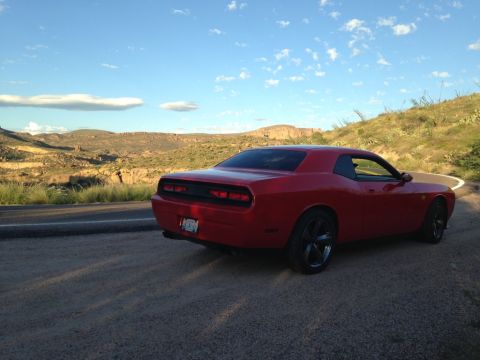
The search produced mixed results. A crash refresh program rehabilitated the worst Daimler-Cerberus interiors, and the 2011 Charger and Challenger updates plus a new Durango on Jeep Grand Cherokee bones kept showrooms alive. Fiat integration's showcase compact, the 2013 Dart, revived a beloved nameplate on an Alfa Romeo Giulietta-derived platform built in Belvidere, Illinois; Marchionne personally hyped it, but launch powertrain gaps and a market stampeding toward crossovers doomed it to modest sales and a 2016 discontinuation. By 2013 Fiat was buying out the UAW trust's shares on the way to full ownership, and Dodge's future inside the coming Fiat Chrysler Automobiles depended on finding something no other brand in the portfolio could claim. The answer turned out to be horsepower.
2014-2026: Tim Kuniskis, the Hellcat Brotherhood of Muscle, and the Electric Charger Gamble Under Stellantis
In 2014 Dodge stopped apologizing for being a muscle-car brand and started monetizing it, a strategy authored largely by Tim Kuniskis, Dodge's brand chief since 2013, under Sergio Marchionne's portfolio logic at Fiat Chrysler Automobiles. The 707 horsepower supercharged Hellcat V8, launched in the 2015 Challenger and Charger, cost comparatively little to engineer on platforms dating to 2005 yet generated outsized margins and cultural presence; escalations followed through the drag-strip Demon of 2018 and beyond, marketed as the Brotherhood of Muscle to a customer base Detroit's marketers had otherwise abandoned. The approach let ancient platforms outsell newer rivals, with the Challenger at times topping Mustang and Camaro in monthly sales, and it carried Dodge through Marchionne's death in 2018, Mike Manley's interim leadership, and the January 2021 merger of FCA with PSA Group that created Stellantis N.V., which placed Dodge among fourteen brands under CEO Carlos Tavares and then, after his December 2024 resignation, under Antonio Filosa, the Americas chief who became Stellantis CEO in June 2025.
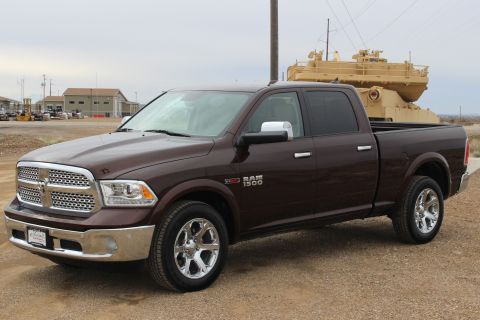
The combustion era's formal ending came in December 2023, when the last Challenger and the last Hemi Charger left the Brampton, Ontario line, closing out the third-generation Hemi era with special Last Call editions. Dodge's replacement bet is the most radical in its history: the 2024 Charger Daytona, an electric muscle car on the STLA Large platform built in Windsor, complete with a synthesized Fratzonic exhaust note, with turbocharged Hurricane six-cylinder Charger variants following for buyers unready for batteries. Early EV sales proved soft, the Alfa-based Hornet compact crossover struggled, and Kuniskis retired in mid-2024, handing the brand to sales chief Matt McAlear, only to return that December to run Ram and, from 2025, Stellantis's American-brands strategy. That leaves Dodge, a 126-year-old brand on its seventh corporate parent, once more betting survival on the proposition that attitude sells regardless of what powers it.
Leadership
| Leader | Tenure | Legacy |
|---|---|---|
| John Francis Dodge | 1900-1920 | Co-founder and business head; took the brothers from Ford supplier to independent automaker with the 1914 Model 30. |
| Horace Elgin Dodge | 1900-1920 | Co-founder and engineering genius behind the all-steel body and the durable four-cylinder that built the Dodge reputation. |
| Frederick Haynes | 1920-1928 | President after the founders' deaths, under the widows and then Dillon, Read; steadied the company through the interregnum and struck the Graham Brothers truck deal. |
| Walter P. Chrysler | 1928-1935 | Bought Dodge from Dillon, Read in 1928 and slotted it as Chrysler Corporation's volume division, the position it held for decades. |
| K.T. Keller | 1929-1956 | Chrysler's production chief who integrated Dodge after the 1928 takeover, ran the Dodge division 1929-1935, then all of Chrysler as president and chairman; his engineering-first conservatism defined "Dependable Dodge" through Depression and war. |
| Virgil Exner | 1949-1961 | Chrysler design chief whose 1957 Forward Look gave Dodge tailfins and swagger, before the quality collapse undercut it. |
| Lynn Townsend | 1961-1975 | Chrysler president and chairman whose 1960s recovery gave Dodge the Charger, the 426 Hemi program, and the Dodge Rebellion repositioning, then bet the 1970s on big cars at exactly the wrong moment. |
| Lee Iacocca | 1978-1992 | Chrysler chairman who saved the corporation with federal loan guarantees, the K-car, and the 1984 Dodge Caravan minivan. |
| Bob Lutz | 1986-1998 | Chrysler president who championed the Viper and the cab-forward Intrepid, restoring Dodge's performance credibility. |
| Tom Gale | 1985-2000 | Design chief behind the Viper, Ram's 1994 big-rig face, and the cab-forward sedans that remade the brand's image. |
| Sergio Marchionne | 2009-2018 | Fiat CEO who took Chrysler through Chapter 11, split Ram trucks from Dodge in 2010, and refocused Dodge on performance. |
| Tim Kuniskis | 2013-2024 | Dodge brand CEO who built the Hellcat era and set the electric Charger Daytona strategy; retired in 2024, then returned to Stellantis to lead Ram and, from 2025, its American brands. |
| Matt McAlear | 2024-present | Dodge brand CEO since June 2024, charged with landing the electric and Hurricane-powered Charger transition. |
Timeline
| Year | Event or model | Note |
|---|---|---|
| 1900 | Dodge Brothers Company founded | John and Horace Dodge open a precision machine shop in Detroit, soon supplying transmissions to Olds and engines, transmissions, and chassis to Ford. |
| 1914 | Dodge Brothers Model 30 | The brothers launch their own car, a 35-horsepower four with an all-steel body, and sell 45,000 in the first full year. |
| 1919 | Dodge v. Ford verdict | The Michigan Supreme Court forces Ford to pay dividends, funding the brothers' expansion; Henry Ford buys out all minority shareholders in response. |
| 1920 | Both founders die | John Dodge dies of influenza-pneumonia in January, Horace in December; their widows inherit the company. |
| 1925 | Sale to Dillon, Read & Co. | The widows sell Dodge Brothers to the investment bank for $146 million, then the largest cash transaction in American business. |
| 1928 | Chrysler acquires Dodge | Walter Chrysler buys Dodge Brothers in a stock deal valued around $170 million, gaining its dealers and foundries overnight. |
| 1942 | WC-series trucks and war production | Dodge builds roughly a quarter-million WC military trucks and, at its Chicago plant, engines for the B-29 bomber. |
| 1946 | Power Wagon | Dodge civilianizes its military 4x4 as the Power Wagon, the ancestor of registry trucks like the Power Ram. |
| 1953 | Red Ram Hemi | Dodge gets its own 241-cubic-inch hemispherical-head V8, planting the performance flag it never lowered. |
| 1960 | Dart introduced | Launched as a full-size value line, the Dart becomes Dodge's long-running compact from 1963. |
| 1965 | Coronet returns; Monaco debuts | The revived intermediate Coronet carries Dodge's midsize muscle, while the Monaco tops the full-size line. |
| 1966 | Charger introduced | Dodge answers the ponycar boom with a fastback on the Coronet platform; the 1968 second generation becomes the definitive muscle Dodge. |
| 1969 | Charger Daytona | The winged, nose-coned Daytona is built to win NASCAR superspeedways and does, at Talladega's inaugural race. |
| 1970 | Challenger introduced | Dodge's true ponycar arrives on the E-body just as the muscle market peaks and insurance rates bite. |
| 1981 | Aries K-car launches | The front-drive Aries and its Plymouth twin repay Chrysler's federally guaranteed loans and save the corporation. |
| 1984 | Caravan introduced | Dodge invents the modern minivan, a segment Chrysler dominates for two decades; the stretched Grand Caravan follows in 1987. |
| 1984 | Daytona introduced | The front-drive Daytona, later in Carroll Shelby-tuned turbo form, is Dodge's 1980s sports coupe. |
| 1987 | Dakota introduced | Dodge creates the mid-size pickup class, sized between compacts and full-size trucks. |
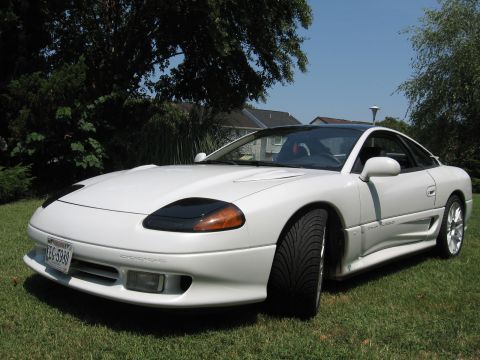
| 1991 | Stealth introduced | A Mitsubishi 3000GT-based captive gives Dodge a high-tech sports car while the Viper gestates. |
| 1992 | Viper introduced | Bob Lutz and Tom Gale's V10 roadster, its truck engine reworked into aluminum with help from Chrysler-owned Lamborghini, restores Dodge's outrageous streak. |
| 1993 | Intrepid introduced | The cab-forward LH sedan leads Chrysler's design comeback and critical acclaim. |
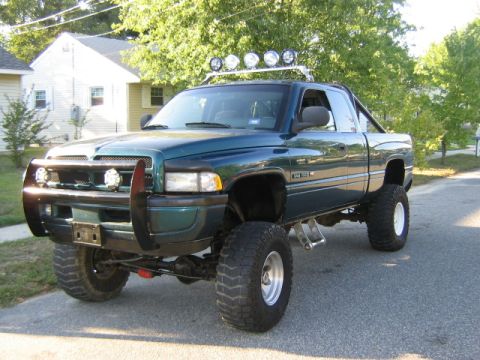
| 1994 | Ram 1500/2500/3500 redesign | The big-rig-styled second-generation Ram triples Dodge's truck share and adds the Cummins-powered heavy-duty lines to driveways nationwide. |
| 1995 | Neon introduced | The friendly-faced compact says "Hi." and later spawns the turbocharged SRT-4 in 2003. |
| 1998 | DaimlerChrysler merger; Durango debuts | Daimler-Benz absorbs Chrysler in the "merger of equals" the same year the Dakota-based Durango SUV arrives. |
| 2005 | Magnum and Charger revival | The rear-drive LX platform brings back the Hemi V8 in a wagon and, in 2006, a four-door Charger. |
| 2007 | Cerberus buys Chrysler; Nitro and Caliber era | Daimler sells 80.1 percent of Chrysler to Cerberus Capital as Dodge fields the Nitro SUV and Caliber hatchback. |
| 2009 | Chapter 11 and Fiat | Chrysler files for bankruptcy in April 2009 and emerges under Fiat management led by Sergio Marchionne. |
| 2010 | Ram brand split | Marchionne spins the truck line off as the separate Ram brand, leaving Dodge as the car and performance marque. |
| 2015 | Hellcat era | The 707-horsepower supercharged Hellcat Charger and Challenger define Tim Kuniskis's "Brotherhood of Muscle" Dodge. |
| 2021 | Stellantis formed | Fiat Chrysler merges with PSA Group to create Stellantis N.V., Dodge's current parent. |
| 2024 | Electric Charger Daytona | Having built its last Hemi Challenger and Charger at Brampton in December 2023, Dodge launches the battery-electric Charger Daytona, its biggest gamble since the Viper. |
Asked all the time
Who founded Dodge?
Brothers John Francis Dodge and Horace Elgin Dodge founded the Dodge Brothers Company in Detroit in 1900 as a precision machine shop. They supplied transmissions to Olds and engines, transmissions, and chassis to Ford before building their own car, the all-steel Model 30, in 1914.
Is Dodge still in business?
Yes. Dodge operates today as the performance brand of Stellantis N.V., headquartered in Auburn Hills, Michigan. It has never been dissolved, though its truck line was split off as the separate Ram brand in 2010.
Who owns Dodge today?
Stellantis N.V., the multinational formed in 2021 by the merger of Fiat Chrysler Automobiles and France's PSA Group. Before that, Dodge passed through Chrysler (1928), Daimler (1998), Cerberus Capital (2007), and Fiat (2009).
How did Chrysler end up owning Dodge?
After John and Horace Dodge both died in 1920, their widows sold the company to the investment bank Dillon, Read & Co. in 1925 for $146 million. Three years later, in 1928, Dillon, Read sold Dodge Brothers to Walter Chrysler, whose young corporation was roughly a fifth of Dodge's size at the time of the deal.
What is the connection between Dodge and Ford?
The Dodge brothers were Henry Ford's most important early suppliers, building engines, transmissions, and chassis for the original Ford Motor Company, and they held Ford stock. When Ford withheld dividends to fund the Rouge plant, they sued; the 1919 Dodge v. Ford Motor Co. decision forced Ford to pay out, and the money helped bankroll Dodge Brothers' expansion.
Why did Dodge stop making trucks?
It didn't stop; the trucks changed badges. In 2010 Sergio Marchionne separated the Ram pickup line into its own brand so Dodge could focus on cars and performance. Trucks sold before 2010, including the 1500, 2500, and 3500, are Dodges; later ones are Rams.
What did Dodge build during World War II?
Dodge built roughly a quarter-million WC-series military trucks, the ancestors of the Power Wagon, and its Chicago plant produced Wright R-3350 engines for the B-29 Superfortress bomber.
What is Dodge best known for?
Muscle and trucks: the Charger and Challenger, the V10 Viper, the Hemi V8, the minivan it invented in 1984, and the Cummins-diesel Ram pickups it sold before the 2010 brand split. SuperMotors members have documented 352 Dodge vehicles with 9,119 photos in the registry.
The wall
The most-documented Dodge vehicles in the registry, every photo by the owner.