The registry
GMC Registry: Models, Builds & Photos
GMC is the truck and SUV division of General Motors, formally organized as the General Motors Truck Company on July 22, 1911, in Detroit, Michigan, when GM founder William C. Durant merged two acquired truck makers, Rapid Motor Vehicle Company and Reliance Motor Car Company, into a single commercial-vehicle operation. The GMC badge appeared on trucks in 1912. For over a century GMC has built trucks, buses, military vehicles, vans, pickups, and sport-utility vehicles, evolving from a heavy commercial-truck manufacturer into GM's premium light-truck brand. It survived GM's 2009 bankruptcy as one of four retained core brands and remains active today under General Motors LLC, headquartered in Detroit, selling trucks and SUVs such as the Sierra and Yukon, including electric models under the Hummer EV name.
Pick your model
Key facts
| Founded | July 22, 1911, Detroit, Michigan |
|---|---|
| Founders | William C. Durant, merging the Rapid Motor Vehicle Company (founded by Max Grabowsky) and the Reliance Motor Car Company |
| Headquarters | Detroit, Michigan, USA |
| Parent / successor | General Motors (today General Motors LLC) |
| Fate / status | Active; one of the four core brands GM retained through its 2009 bankruptcy |
| Best known for | Sierra pickups, Yukon full-size SUVs, and the Denali luxury sub-brand |
| Registry presence | 100 vehicles / 1,757 photos documented by owners on SuperMotors |
1900-1911: Max Grabowsky, the Rapid Motor Vehicle Company, and Durant's Truck Consolidation
The company that became GMC began not with William Durant but with a Detroit machinist named Max Grabowsky, who built a one-cylinder commercial delivery wagon in 1900 and organized the Rapid Motor Vehicle Company in Pontiac, Michigan, in 1902. Rapid was among the first American firms to treat the motor truck as a business proposition rather than a novelty, and by 1909 a Rapid truck had become the first motor truck to climb Pikes Peak, a publicity feat that mattered in an era when buyers doubted machines could replace horses. A rival, the Reliance Motor Car Company of Owosso, Michigan, was building heavier trucks over the same years.
William C. Durant, the carriage magnate who had incorporated General Motors in September 1908 and was buying companies at a furious pace, acquired the Reliance operation in 1908 and control of Rapid in 1909. The logic was straightforward: Durant was assembling a full-line combine, and Buick, Oldsmobile, Cadillac, and Oakland gave him passenger cars but no serious commercial-vehicle arm. On July 22, 1911, General Motors merged the two truck makers into a new subsidiary, the General Motors Truck Company, headquartered in Detroit. Durant himself was forced out of GM by his bankers in 1910, so the truck company was organized under the banker-controlled regime that followed him, but the consolidation was the direct product of his acquisition spree. The three-letter GMC badge was first applied to trucks shown at the New York Auto Show in 1912, and the Rapid and Reliance names were dropped in favor of the new badge that same year. From the outset the enterprise was a commercial-truck business, a fact that shaped its identity for the next half century.
1912-1929: Pontiac Production, the Yellow Coach Merger, and John D. Hertz
In its first two decades the General Motors Truck Company earned its reputation the way early truck makers had to, through demonstrated endurance. In 1916 a GMC truck driven by William Warwick made the first transcontinental delivery of commercial freight by truck, hauling Carnation evaporated milk from Seattle to New York; the one-way run took about seventy days rather than the thirty its sponsors had hoped for, and Warwick then drove the truck home again, a round trip of more than 9,500 miles. During the First World War GMC supplied the U.S. Army with thousands of trucks, including ambulances; roughly ninety percent of GMC's wartime output went to the military. Production was centered in Pontiac, Michigan, on the old Rapid grounds.
The defining corporate event of the 1920s came in 1925, when General Motors under Alfred P. Sloan purchased a controlling interest in the Yellow Coach Manufacturing Company of Chicago, the bus-building arm of the taxi empire built by John D. Hertz. GM merged its truck operations into the business as the Yellow Truck and Coach Manufacturing Company, with GM holding control and Hertz initially serving as chairman. The reasoning was Sloan-era portfolio logic: buses and heavy trucks required different engineering and different customers than passenger cars, and Yellow Coach brought scale, an established transit-bus business, and Hertz's commercial relationships. For the next eighteen years GMC trucks were technically built by this partly-owned affiliate rather than by GM directly, an arrangement that made GMC one of the country's dominant producers of buses as well as trucks. GM did not buy out the remaining Yellow Truck and Coach shares until 1943, when the operation was folded back in as the GMC Truck and Coach Division.
1930-1945: Depression Survival, Diesel Pioneering, and the DUKW at War
The Depression nearly halved the American truck industry, and Yellow Truck and Coach, the GM-controlled builder of GMC trucks, survived the early 1930s on the strength of its bus business and GM's balance sheet while independent truck makers failed around it. The decade also produced real engineering distinction: GM's development of the two-stroke Detroit Diesel engine line under research chief Charles Kettering in the late 1930s gave GMC trucks and coaches a diesel advantage, and Yellow Coach's transit buses came to dominate American city streets.
The Second World War made GMC a strategic asset. The company built more than 500,000 military trucks between 1940 and 1945, most famously the CCKW two-and-a-half-ton six-by-six, the "Deuce and a Half" that carried Allied supply on the Red Ball Express across France after D-Day. GMC also built the DUKW amphibious truck, an adaptation of the CCKW that swam ashore at Normandy, Sicily, and across the Pacific. For this output the division received Army-Navy "E" production awards. In 1943 General Motors purchased the outstanding public shares of Yellow Truck and Coach and reorganized the whole operation as the GMC Truck and Coach Division, ending the affiliate structure and making GMC, for the first time since 1925, a wholly owned and directly managed division of General Motors. The war left GMC with enormous manufacturing capacity in Pontiac and a reputation, second only to its wartime output, as the truck arm of the world's largest industrial company.
1946-1959: The Postwar Boom, Harley Earl's Cabs, and the Rise of the Personal Pickup
Postwar prosperity converted the pickup truck from pure work tool into something ordinary Americans bought, and GMC Truck and Coach rode that shift while remaining a heavy-truck and bus power. The 1947 light trucks, the generation Chevrolet called "Advance Design" and GMC marketed as its "New Design," were styled under GM design chief Harley Earl's staff and gave GMC its first genuinely modern postwar pickups; GMC versions were differentiated by their own engines and trim rather than separate bodies, establishing the shared-body, distinct-identity formula the division would follow for the rest of its life. The 1955 "Blue Chip" trucks brought passenger-car styling cues, wraparound windshields, and optional V8 power to the line.
The bus side remained nationally important. GMC's postwar transit and intercity coaches, including the Scenicruiser built for Greyhound from 1954, made the division the dominant American bus builder, a position that later drew antitrust scrutiny. Corporate politics inside GM in this era fixed GMC's role: Chevrolet was the volume truck brand sold through the largest dealer network, while GMC trucks were sold through Pontiac, Buick, and Oldsmobile dealers who needed trucks to sell. That dealer-channel logic, more than any engineering distinction, is a major reason GMC survived as a separate badge, and it explains most of the badge-engineering decisions of the following fifty years.
1960-1980: Chevrolet Twins, the C/K and Jimmy, and the Suburban Formula
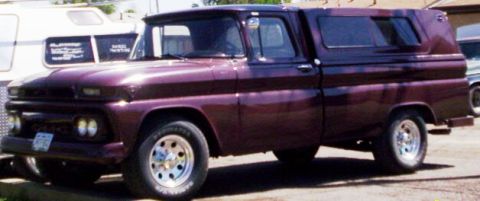
By 1960 GMC's light trucks had become engineered twins of Chevrolet's, and the division's story in these decades is the story of what shared platforms did for and to the brand. The C/K pickup line introduced for 1960, with independent front suspension and a lower, car-like stance, was the platform on which GMC built its light-truck business for nearly forty years across four generations; GMC's version existed chiefly so GM's non-Chevrolet dealer channels had a truck to sell, and the division marketed it on a heavier-duty, more professional image. The Jimmy arrived for 1970 as GMC's version of the Chevrolet Blazer, a short-wheelbase sport-utility built off the pickup frame, and gave the division its entry into the recreational four-wheel-drive market just as that market was being invented. GMC likewise sold its own Suburban, the long-roof truck wagon whose nameplate GM had used since the 1930s, and the Vandura full-size van, launched for 1971, which became a fleet and tradesman staple and, in the 1980s, a television fixture as the A-Team's van.
The era also brought real engineering swagger and real retrenchment. The 1973 GMC Motorhome, a front-wheel-drive aluminum-bodied coach built in Pontiac using the Oldsmobile Toronado drivetrain, was one of the very few motorhomes ever designed and built complete by a major automaker, and 12,921 were made before GM killed it in 1978. Heavy trucks continued under GMC's own General and Brigadier badges, and the transit-bus business, having faced a federal antitrust consent decree in 1965 over its dominance, entered a long decline against new competitors. The strategic direction was already visible: GMC's future was light trucks.
1981-1998: Truck Boom, the Sierra Name, and the Exit from Heavy Trucks and Buses
The 1980s forced GMC to choose what kind of truck company it would be, and it chose the personal-use light truck. The compact S-15 pickup arrived for 1982 as GMC's twin to the Chevrolet S-10, answering the small Japanese pickups that had taken a quarter of the U.S. truck market; it was later renamed Sonoma in 1991. The Safari minivan of 1985, a rear-drive twin of the Chevrolet Astro, was GM's truck-based answer to Chrysler's minivans. On the full-size side, the GMT400-generation trucks launched for 1988 carried the Sierra name that would eventually replace C/K badging entirely, and one emblematic program showed GMC groping toward a distinct identity: the 1991 Syclone, a turbocharged all-wheel-drive compact pickup that outran contemporary sports cars, followed by the Typhoon SUV, low-volume halo trucks meant to prove GMC could mean something beyond a badge.

The same years saw GMC amputate its historic businesses. Transit-bus production ended in 1987 with the RTS line sold off, motorhome-era ambitions were long gone, and in 1988 GM folded its heavy-truck operations into a joint venture with Volvo, exiting the Class 8 market that had been GMC's founding purpose. In 1992 GMC launched the Yukon, its renamed full-size SUV, and in 1996 the Savana replaced the Vandura. Reflecting the shift toward premium light trucks, the division was briefly marketed as GMC Truck and, from 1996, simply GMC, with the tagline era that followed pitching professional-grade aspiration rather than commercial haulage.
1999-2009: Denali Luxury, SUV Profits, and Survival Through GM's Bankruptcy
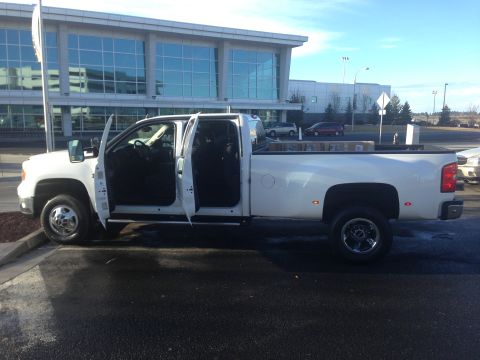
The Denali trim, introduced on the 1999 Yukon, transformed GMC from a badge-engineering question mark into one of General Motors' most profitable brands. By loading Yukons and Sierra pickups with luxury equipment and charging near-Cadillac prices for them, GMC found the formula that justified its existence: the premium truck. The Envoy mid-size SUV, relaunched on the GMT360 platform for 2002, and the heavy-duty Sierra 2500 and Sierra 3500 pickups, fitted from 2001 with the Duramax diesel developed with Isuzu, rounded out a lineup that was almost entirely SUVs and trucks at exactly the moment American buyers wanted nothing else.
That dependence cut both ways. When fuel prices spiked in 2008 and the financial crisis collapsed vehicle credit, GM's truck-heavy profit engine seized, and the corporation entered Chapter 11 bankruptcy on June 1, 2009, restructured with U.S. Treasury financing. The decisive fact for GMC is that it survived the triage. GM killed or sold Pontiac, Saturn, Hummer, and Saab, and kept exactly four brands: Chevrolet, Cadillac, Buick, and GMC. The internal logic was dealer economics and margin: GMC's per-vehicle profits were among the company's best, and the Buick-GMC dealer channel could not stand on Buick alone. A division often derided as a rebadge exercise emerged from the American auto industry's worst year as one of its four indispensable brands.
2010-Today: Professional Grade, the AT4 and Denali Ultimate, and the Hummer EV Reinvention
Since General Motors' 2010 recovery GMC has run one play, moving relentlessly upmarket, and it has worked. Under GM chief executive Mary Barra, who took over in 2014, and a succession of GMC brand chiefs led for much of the era by Duncan Aldred, the division layered AT4 off-road trims from 2019 and Denali Ultimate flagships atop the Sierra 1500 and Yukon lines, pushing average transaction prices far above industry norms; Denali-badged vehicles came to account for roughly a third of GMC retail sales. Innovations like the 2019 MultiPro six-way tailgate were launched on GMC first, and when GM's Super Cruise hands-free driving system, introduced at Cadillac in 2017, reached pickups, the Sierra was in the first wave to offer it, deliberate signals that the brand was no longer Chevrolet's shadow.
The boldest move was resurrecting Hummer, the brand GM had killed in 2010, as a GMC sub-brand and an electric one. The GMC Hummer EV pickup, revealed in October 2020 and built at GM's Factory ZERO plant straddling Detroit and Hamtramck, launched in late 2021 with about 1,000 horsepower as the first vehicle on GM's Ultium battery architecture, followed by the Sierra EV. The reasoning was brand chemistry: electrification could be sold to truck buyers only as excess, and GMC was the GM brand priced to absorb six-figure stickers. More than a century after William Durant merged Rapid and Reliance into the General Motors Truck Company in 1911, GMC remains an active division of General Motors LLC, headquartered in Detroit, selling nothing but trucks and SUVs, which is to say, selling exactly what it was founded to sell, at prices its founders would not have believed.
Leadership
| Leader | Tenure | Legacy |
|---|---|---|
| Max Grabowsky | 1900-1908 (Rapid Motor Vehicle Co.) | Built the one-cylinder Rapid delivery wagon in Detroit that became one of the two rootstocks of GMC. |
| William C. Durant | 1908-1910, 1916-1920 (GM founder/president) | Bought Rapid and Reliance for General Motors and consolidated them into the General Motors Truck Company in 1911. |
| John D. Hertz | from 1925 (chairman, Yellow Truck & Coach) | Brought his Yellow Coach bus operation into GM's truck business, making GMC a dominant bus builder for decades. |
| Harley Earl | 1927-1958 (GM VP of design) | His Art and Colour studio brought styled cabs and brightwork to GMC trucks, helping turn work vehicles into consumer products in the 1950s. |
| Roger Kyes | 1950-1953 (GM Truck & Coach general manager) | Ran the division through the Korean War military-contract era before leaving to become Deputy Secretary of Defense. |
| Mary Barra | 2014-present (GM CEO) | Pushed GMC upmarket with Denali Ultimate and AT4 trims and revived Hummer as a GMC electric sub-brand in 2020. |
| Duncan Aldred | 2014-2024 (global VP, Buick-GMC) | Ran GMC's decade of upmarket transformation, launching the AT4 sub-brand and record Denali sales mix before being named GM's President, North America. |
Timeline
| Year | Event | Detail |
|---|---|---|
| 1900 | Rapid Motor Vehicle Company origins | Max Grabowsky begins building one-cylinder delivery trucks in Detroit, incorporating the Rapid Motor Vehicle Company in 1902. |
| 1908 | Reliance acquired | William C. Durant's new General Motors buys the Reliance Motor Car Company of Owosso, Michigan, followed by Rapid in 1909. |
| 1911 | General Motors Truck Company organized | GM merges Rapid and Reliance into a single commercial-vehicle operation on July 22, 1911, in Detroit. |
| 1912 | GMC badge debuts | The GMC name first appears on trucks shown at the New York Auto Show. |
| 1916 | Cross-country proof run | A GMC truck driven by William Warwick crosses the United States from Seattle to New York carrying a load of Carnation milk, the first transcontinental freight delivery by truck. |
| 1925 | Yellow Coach merger | GM combines its truck operations with John D. Hertz's Yellow Cab and coach business as Yellow Truck & Coach Manufacturing, based in Pontiac, Michigan. |
| 1930s | Diesel and bus expansion | GMC pioneers two-stroke diesel power in trucks and coaches while surviving the Depression on commercial contracts. |
| 1942 | DUKW and CCKW war production | GMC builds roughly 560,000 CCKW-series trucks in World War II, including the 6x6 "Deuce and a Half" and some 21,000 of its amphibious DUKW derivative. |
| 1943 | GM buys out Yellow Truck & Coach | General Motors acquires the remaining shares and renames the operation GMC Truck & Coach Division. |
| 1955 | Styled postwar pickups | GMC's Blue Chip series brings Harley Earl-era styling, wraparound glass, and V8 power to the light-truck line. |
| 1960 | C/K Pickup introduced | GMC adopts the C/K designation for its full-size pickups, shared with Chevrolet, launching a platform that runs through 2000. |
| 1967 | Suburban carries the GMC badge in its modern form | GMC's version of GM's long-running carryall wagon continues alongside Chevrolet's through 1999; for the 2000 model year the GMC version is renamed Yukon XL. |
| 1970 | Jimmy introduced | GMC launches the full-size Jimmy, its twin to the Chevrolet Blazer, as a short-wheelbase open-top 4x4. |
| 1971 | Vandura introduced | The G-series Vandura full-size van begins a 25-year run and later gains television fame as the A-Team van. |
| 1982 | S15 compact pickup introduced | GMC enters the compact-truck market with the S15, twin to the Chevrolet S-10. |
| 1985 | Safari introduced | The rear-drive Safari minivan, twin to the Chevrolet Astro, gives GMC an entry in the van boom of the 1980s. |
| 1987-1988 | Exit from buses and heavy trucks | GM sells its RTS transit-bus business to Transportation Manufacturing Corporation in 1987, then folds its heavy-truck business into the Volvo GM joint venture that begins operating January 1, 1988, ending GMC's Class 8 era. |
| 1988 | Sierra name adopted for full-size pickups | GMC's redesigned GMT400 full-size pickups take the Sierra name, splitting the brand's identity from Chevrolet's C/K badging; today's Sierra 1500, Sierra 2500, and Sierra 3500 descend from it. |
| 1991 | Sonoma name replaces S15 | GMC's compact pickup is renamed Sonoma, running through 2004. |
| 1992 | Yukon introduced | GMC renames its full-size Jimmy the Yukon, the nameplate that becomes the brand's SUV flagship. |
| 1996 | Savana Van introduced | The Savana replaces the Vandura as GMC's full-size van. |
| 1998 | Envoy introduced | The Envoy debuts as an upscale mid-size SUV, becoming a standalone GMT360 model in 2002. |
| 1999 | Denali sub-brand launched | The Yukon Denali, introduced for the 1999 model year, creates the luxury trim line that comes to account for an outsized share of GMC profits. |
| 2009 | GM bankruptcy; GMC retained | General Motors enters Chapter 11 on June 1, 2009, and keeps GMC as one of four core brands alongside Chevrolet, Cadillac, and Buick. |
| 2019 | AT4 off-road trim launched | GMC rolls out the AT4 off-road trim across its lineup, pairing it with Denali as the brand's two-pillar strategy. |
| 2020 | Hummer EV revealed | GMC revives Hummer as an electric sub-brand, with the Hummer EV pickup reaching customers in late 2021. |
| 2022 | Denali Ultimate introduced | GMC adds a Denali Ultimate tier atop the Sierra and Yukon lines, pushing transaction prices further upmarket. |
Asked all the time
Who founded GMC?
GMC was organized by General Motors founder William C. Durant on July 22, 1911, when he merged two truck makers GM had acquired, the Rapid Motor Vehicle Company started by Max Grabowsky and the Reliance Motor Car Company, into the General Motors Truck Company in Detroit.
Is GMC still in business?
Yes. GMC survived General Motors' 2009 bankruptcy as one of four retained core brands and operates today as GM's truck and SUV division, headquartered in Detroit and selling models such as the Sierra, Yukon, and Hummer EV.
What does GMC stand for?
GMC originally stood for General Motors Company, the badge applied when GM's Rapid and Reliance truck operations were unified; the division was long known as GMC Truck & Coach and today GMC is used as a standalone brand name.
How is GMC different from Chevrolet trucks?
Since the 1960s most GMC trucks have shared engineering and factories with Chevrolet equivalents, but GMC is positioned as the premium truck brand, a strategy formalized with the Denali luxury trim introduced for 1999 and the AT4 off-road line in 2019.
Why did GMC stop building big trucks and buses?
GM sold its RTS transit-bus business in 1987 and folded its heavy-truck business into a joint venture with Volvo that began operating in 1988, exiting Class 8 trucks to concentrate GMC on the more profitable pickup, van, and SUV markets.
What did GMC build during World War II?
GMC produced roughly 560,000 military trucks during World War II, most famously the CCKW 6x6 cargo truck known as the Deuce and a Half and its amphibious derivative the DUKW, which served in the D-Day landings and the Pacific.
When did GMC start using the Sierra name?
Sierra appeared as a trim level on GMC pickups in the 1970s and became the model name for the brand's full-size pickups with the redesigned GMT400 trucks introduced for 1988.
The wall
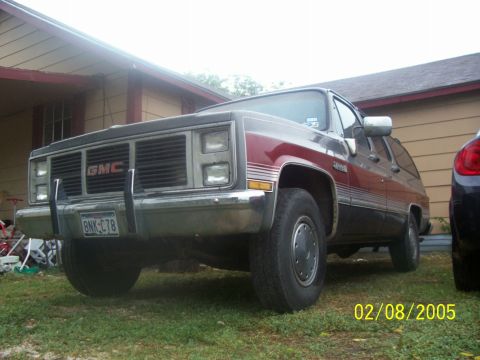
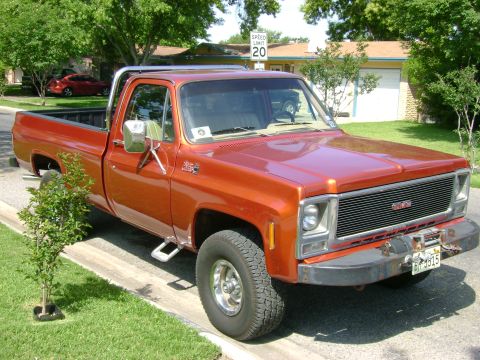
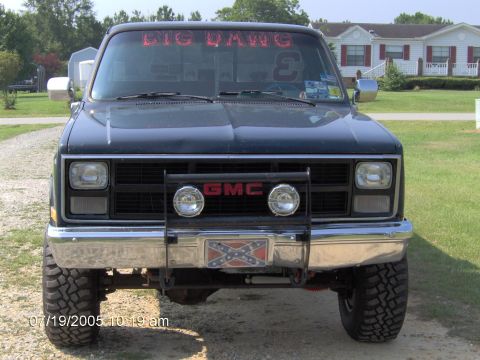
The most-documented GMC vehicles in the registry, every photo by the owner.