The registry
Isuzu Registry: Models, Builds & Photos
Isuzu traces back to 1916, when Tokyo Ishikawajima Shipbuilding and Engineering partnered with Tokyo Gas and Electric to build automobiles in Japan. The Isuzu name first appeared in 1934 on a truck, and the company itself became Isuzu Motors in 1949. General Motors took a 34 percent stake under a capital agreement signed in 1971, which set up decades of badge sharing that ran in both directions, from the Chevrolet LUV to the Isuzu Hombre. Isuzu sold passenger vehicles in the US from 1981 until January 2009, then went back to what it always did best: it remains one of the world's largest builders of medium duty trucks and diesel engines.
Pick your model
Where Isuzu Came From
The company that became Isuzu started building cars in 1916 under a partnership between Tokyo Ishikawajima Shipbuilding and Tokyo Gas and Electric, initially assembling Wolseley models under license. The Isuzu name arrived in 1934 on a truck, borrowed from the Isuzu River that flows past the Ise Grand Shrine; the company did not rename itself Isuzu Motors until 1949. Diesel work started early, including an air cooled diesel in 1936, and by the postwar years Isuzu was Japan's diesel truck specialist. General Motors took a 34 percent stake under a capital agreement signed in 1971, opening the pipeline that sent Isuzu built pickups to America as the Chevrolet LUV starting in 1972. Isuzu began selling under its own badge in the US in 1981 and pulled out of the American passenger market in January 2009, after SUV sales collapsed. The company never died; it kept doing what it had done since the 1930s, and today builds the N-Series (NPR) trucks you see everywhere in commercial fleets.
The SUV Era
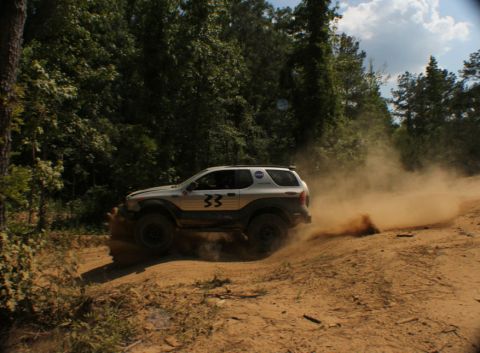
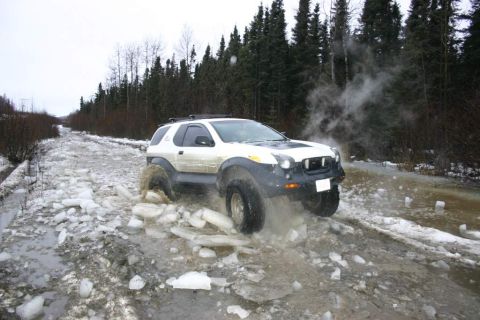
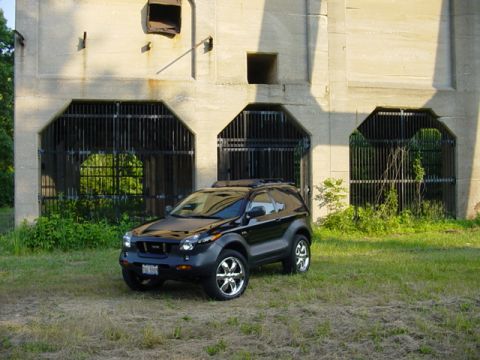
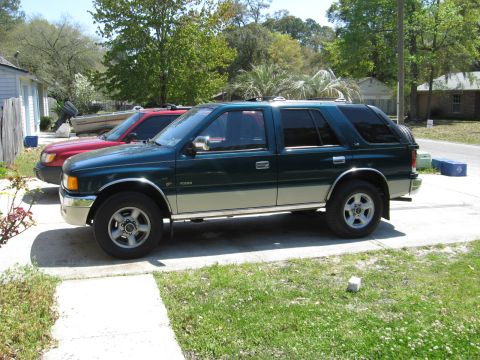
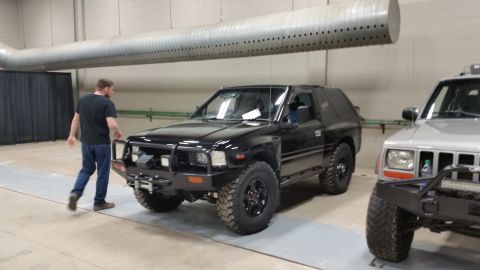
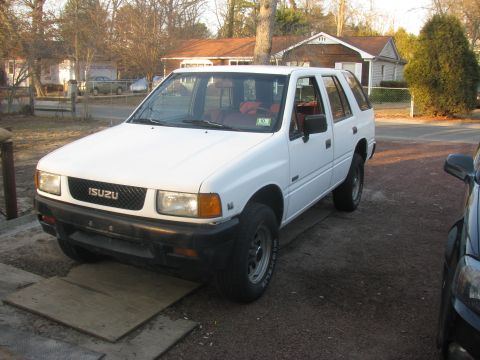
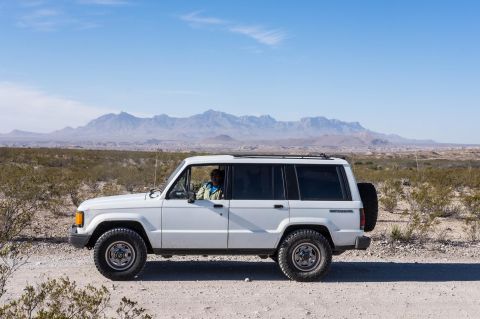
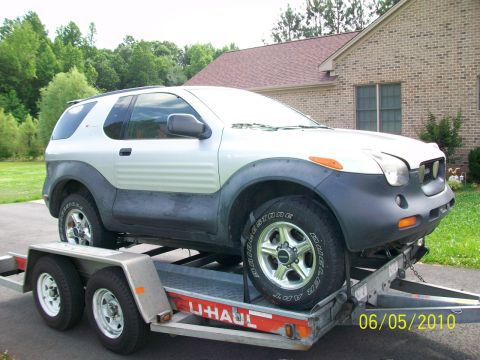
The Trooper ran from 1981 to 2002 across two generations. The first generation (1981-1991) was a simple boxy body on frame 4x4 with solid axle underpinnings out back; the second (1992-2002) grew wider and gained the 3.2L and, from 1998, the 3.5L V6. The Rodeo, built 1991 to 2004 in Lafayette, Indiana at the Subaru Isuzu joint venture plant, was Isuzu's volume seller, and the same vehicle wore a Honda Passport badge from 1994 to 2002. The Amigo was the short wheelbase two door with a removable soft rear top; it sold from 1989 to 1994, took a few years off, came back for 1998, and was renamed Rodeo Sport for 2001 through 2003. The VehiCROSS (1997-2001, US sales 1999-2001) was the oddball flagship: 5,958 built worldwide, Trooper derived running gear, a torque on demand full time 4WD system developed with Borg-Warner, and body cladding stamped from low cost ceramic dies that wore out faster than steel tooling, because production volume was never meant to be high.
Cars and Pickups
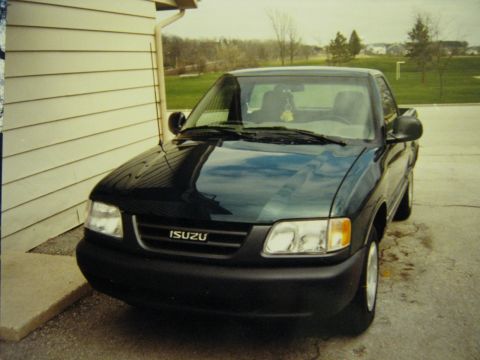
The Impulse (1983-1992) was the US name for the Piazza, a Giugiaro styled coupe; later versions carried Handling by Lotus suspension tuning. The second generation (1990-1992) shared its platform with the Geo Storm, and the 1991 Impulse RS added a turbocharged 1.6L four and all wheel drive. The I-Mark compact (Gemini overseas) sold through 1989, with the second generation switching to front wheel drive in 1985. The Hombre pickup (1996-2000) reversed the usual arrangement: it was a Chevrolet S-10 built in Shreveport, Louisiana wearing Isuzu sheetmetal on the front clip.
Owning One Now
Mechanical parts interchange is the saving grace. Rodeo and Passport, Hombre and S-10, Trooper and its Acura SLX twin (1996-1999) all share hardware. The 3.2L and 3.5L V6s are known for oil consumption if neglected, so check history and compression before buying. VehiCROSS specific trim and cladding is the hardest stuff to source.
Asked all the time
When did Isuzu stop selling vehicles in the United States?
Isuzu withdrew from the US passenger vehicle market on January 31, 2009, after the 2008 model year Ascender and i-Series pickups. Isuzu did not go out of business; it still builds commercial trucks (the N-Series cabovers) and diesel engines, and Isuzu Commercial Truck of America continues to operate.
What years was the Isuzu VehiCROSS made, and why is it collectible?
The Isuzu VehiCROSS was built from 1997 to 2001, with US sales from 1999 to 2001, and total production was only 5,958 units, 4,153 of them sold in the United States and 1,805 in Japan. It uses Trooper derived running gear with a torque on demand full time 4WD system, so drivetrain parts are reasonably available, but VehiCROSS specific body cladding and interior trim are scarce.
Are Isuzu parts hard to find now?
Mechanically, no, because so many Isuzus were badge shared. The Isuzu Rodeo is a Honda Passport (1994-2002), the Hombre is a Chevrolet S-10 underneath, and the second generation Trooper was also sold as the Acura SLX. Engine, driveline, and chassis parts cross over. Model specific body panels and interior trim, especially for the VehiCROSS and Impulse, are the hard part.
What is the difference between the Isuzu Amigo and the Rodeo?
The Isuzu Amigo is the short wheelbase two door with a removable soft rear top, sold in the US from 1989 to 1994 and again from 1998 to 2000; the Rodeo (1991-2004) is the longer four door wagon built on related architecture at the Lafayette, Indiana plant. For 2001 Isuzu renamed the Amigo the Rodeo Sport, which ran through 2003.
Which Isuzu engines have known problems?
The 3.2L and 3.5L V6s used in the Isuzu Trooper, Rodeo, Amigo, and VehiCROSS have a reputation for oil consumption, usually tied to ring deposits from inadequate oil ring drain back on 1998-2001 pistons plus neglected oil changes. They will run a long time if the oil level is watched. Check compression and service history on any high mileage example.
The wall
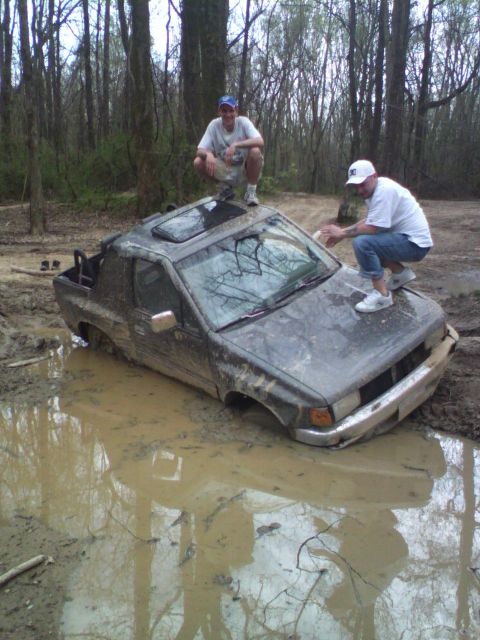
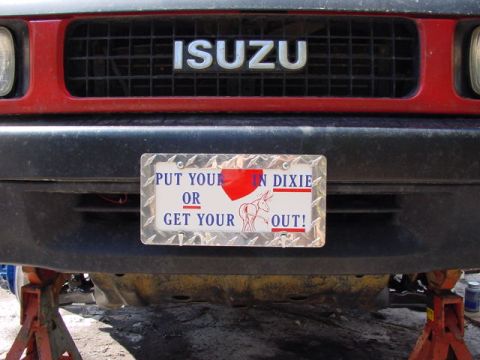
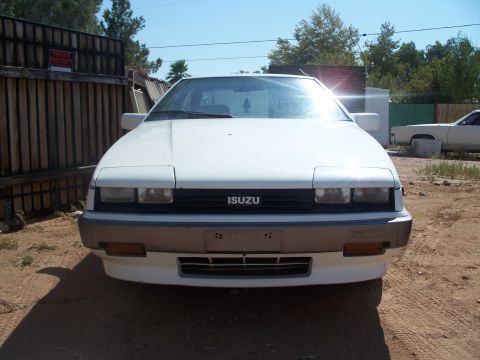
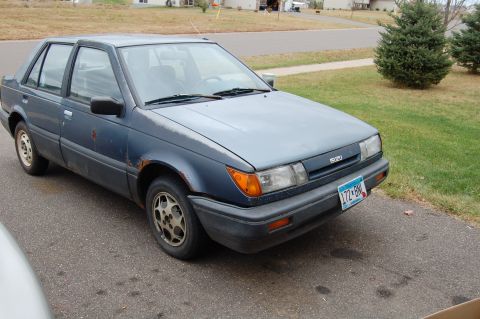
The most-documented Isuzu vehicles in the registry, every photo by the owner.