The registry
Jeep Registry: Models, Builds & Photos
Jeep is an American four-wheel-drive vehicle brand, today a division of Stellantis N.V., born from the U.S. Army's 1940 request for a quarter-ton reconnaissance car. Willys-Overland Motors of Toledo, Ohio won the production contract and filed to trademark "Jeep" in 1943 (the registration was granted in 1950), building on prototypes from American Bantam and its own engineer Delmar "Barney" Roos. After building over 360,000 wartime MBs, Willys converted the design into the civilian CJ, creating the off-road vehicle category and, with the 1946 all-steel Willys wagon, arguably the first SUV. The brand survived five ownership changes: Kaiser (1953), American Motors (1970), Chrysler (1987), Fiat Chrysler (2014), and Stellantis (2021), each time acting as its parent's most valuable asset. Jeep remains headquartered in Toledo and builds Wrangler, Grand Cherokee, and a global SUV lineup.
Pick your model
Key facts
| Fact | Detail |
|---|---|
| Founded | 1941 as a wartime product of Willys-Overland Motors, Toledo, Ohio; "Jeep" trademark filed in 1943 and registered in 1950 |
| Founders | Willys-Overland Motors, building on prototypes by American Bantam Car Company and engineering by Delmar "Barney" Roos |
| Headquarters | Toledo, Ohio, USA |
| Parent / successor | Stellantis N.V. (via Kaiser 1953, AMC 1970, Chrysler 1987, Fiat Chrysler 2014, Stellantis 2021) |
| Fate / status | Active brand; never dissolved through five ownership changes |
| Best known for | Wrangler, Grand Cherokee, CJ series |
| Registry presence | 473 vehicles / 28,858 photos documented by owners on SuperMotors |
1940-1941: Bantam's Blueprint, Willys's Engine, and the Army's 49-Day Deadline
The Jeep began in June 1940 as U.S. Army Quartermaster specification for a quarter-ton, four-wheel-drive reconnaissance car, issued to 135 manufacturers with a 49-day deadline for a running prototype. Only tiny American Bantam of Butler, Pennsylvania met it, delivering the Karl Probst-designed pilot car on September 23, 1940. The Army, doubting Bantam's production capacity, circulated Bantam's drawings to Willys-Overland and Ford, an act still argued over by historians. Willys-Overland, a Toledo, Ohio company that had been America's second-largest automaker in the 1910s under John North Willys but was near insolvency by the late 1930s, answered with the Quad prototype. Its decisive advantage was chief engineer Delmar "Barney" Roos's 60-horsepower "Go Devil" four-cylinder, far stronger than Bantam's or Ford's engines. When the Army standardized the design in 1941, the Willys MB won the main contract, with Ford building the license-built GPW to identical drawings. Bantam, the true originator, was shut out of production and faded away, the first casualty of the vehicle it invented.
1941-1945: The Willys MB, Ford GPW, and 640,000 Wartime Jeeps
Between 1941 and 1945 Willys-Overland built roughly 363,000 MBs and Ford about 280,000 GPWs, and the combined fleet became, in a line widely attributed to General George Marshall, "America's greatest contribution to modern warfare." The quarter-ton truck served on every front, towing anti-tank guns, evacuating wounded, and carrying Eisenhower, who is often credited with listing it among the tools that won the war. The name "jeep" itself is contested: soldiers' slang, the Popeye character Eugene the Jeep, or a slurring of Ford's "GP" designation have all been proposed, and the record supports no single origin. What is certain is that Willys-Overland, under president Joseph W. Frazer and chairman Ward Canaday, saw the commercial value early. The company ran wartime advertising claiming credit for the design, drawing a Federal Trade Commission complaint over Bantam's role, and filed for the Jeep trademark in 1943, though opposition from Bantam meant the registration was not granted until 1950. That legal move, not the invention itself, is why the brand exists: Willys set about converting a government design shared among three builders into private property before the war even ended.
1945-1953: The Civilian CJ, the All-Steel Wagon, and Willys's Reinvention
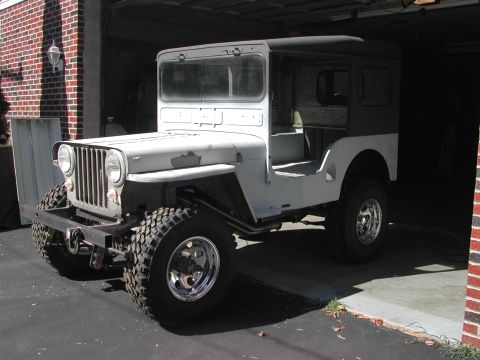
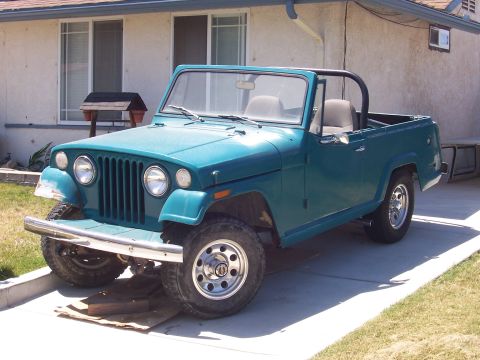
In 1945 Willys-Overland made a bet no other automaker matched: instead of returning to passenger cars, it would sell the war vehicle to civilians. The CJ-2A, launched that year as an "agricultural tractor that could drive to town," targeted farmers with a power take-off and drawbar, creating the civilian four-wheel-drive market from nothing. In 1946 industrial designer Brooks Stevens shaped the all-steel Willys Station Wagon, which gained four-wheel drive in 1949 and stakes a strong claim as the first sport-utility vehicle; his 1948 Jeepster phaeton tried, less successfully, to make the platform fashionable. The Willys badge in this era covered wagons, pickups, and the CJ line, all riding on the Go Devil four and its Hurricane successor. Ward Canaday's strategy worked commercially but left Willys-Overland subscale, a niche maker in an industry consolidating around the Big Three, which set up the sale that closed the founding chapter.
1953-1963: Henry J. Kaiser Buys Toledo and Bets Everything on Four-Wheel Drive
In April 1953 shipbuilding and steel magnate Henry J. Kaiser bought Willys-Overland for about $62 million, folding it into Kaiser Motors and renaming it Willys Motors. The logic was blunt: Kaiser's own Kaiser-Frazer passenger cars were losing to the Big Three's price war, and Willys owned the one market segment Detroit ignored. By 1955 Kaiser killed passenger-car production in the United States entirely, shipping the tooling to Argentina and Brazil, and concentrated Toledo on utility vehicles. The 1954 CJ5, derived from the Korean War M38A1 with Roos-era mechanicals under softer styling, became the longest-lived Jeep ever, staying in production for 29 years. Kaiser also pushed exports and license production aggressively, building on the license Willys had granted Mahindra in India in 1947 and adding assembly in Spain and South America, which is why "Jeep" became a generic word for off-roader on five continents. The company that emerged was small, profitable in good years, and entirely dependent on a single idea.
1963-1970: Brooks Stevens's Wagoneer, the Gladiator Trucks, and Kaiser Jeep's Ceiling
The 1963 Wagoneer, styled by Brooks Stevens and launched under newly renamed Kaiser Jeep Corporation, invented the luxury four-wheel-drive station wagon two decades before the term SUV existed. It offered an overhead-cam six, optional automatic transmission and independent front suspension with four-wheel drive, a combination nothing else on the market had, and its SJ platform would survive until 1991. The companion Gladiator pickups, later badged J10 and J20, shared the platform and kept Toledo's truck lines busy, while the 1966 Super Wagoneer added leather and a 327 V8 as arguably the first premium SUV. Yet Kaiser Jeep could not fund the engineering a growing lineup demanded; it bought engines from Buick and AMC and leaned on military contracts (the M715 truck and, through its General Products division, M151 work) for cash flow. Edgar Kaiser, running the empire after his father's death in 1967, concluded the auto business needed a bigger parent and began shopping the company.
1970-1978: Roy D. Chapin Jr. Buys Jeep for AMC and the Quadra-Trac Boom
American Motors chairman Roy D. Chapin Jr. paid Kaiser Industries roughly $70 million in early 1970 for Kaiser Jeep, a deal Wall Street mocked and which became one of the shrewdest acquisitions in Detroit history. AMC, the perpetual fourth-place automaker built from the 1954 Nash-Hudson merger, got a product line with no Big Three competition; Jeep got AMC's straight-six and V8 engines, dealer network, and volume purchasing. Chapin and president William Luneburg spun the military business off as AM General and poured money into the civilian line: full-time Quadra-Trac four-wheel drive in 1973, the CJ7 in 1976 with an automatic-capable longer wheelbase, and the Cherokee name first applied to a sporty two-door SJ in 1974. Jeep volume roughly tripled during the 1970s as the recreational four-wheel-drive market exploded, and the division's profits repeatedly carried AMC's money-losing passenger cars, establishing the pattern every later owner would repeat: Jeep as the crown jewel propping up a weak parent.
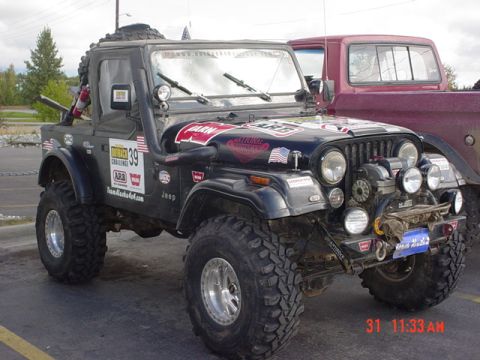
1978-1987: Renault Money, François Castaing, and the XJ Cherokee Revolution
The 1984 XJ Cherokee is the pivot on which the entire modern SUV industry turns, and it exists because AMC was too broke to do things conventionally. Gerald Meyers, AMC's chairman after Chapin, sold a controlling stake to Renault between 1979 and 1982 to survive the second oil shock and a CJ rollover controversy fanned by a December 21, 1980 60 Minutes segment whose Insurance Institute testing AMC disputed as rigged. Renault money and engineers, led by François Castaing, produced the XJ: unibody construction where every four-wheel-drive wagon had body-on-frame, roughly 1,000 pounds lighter and 21 inches shorter than the SJ it ran alongside, yet with usable interior space. It sold beyond forecasts and forced Ford (Explorer) and GM to respond, effectively creating the compact SUV segment. The 1986 Comanche pickup and the 1987 4.0-liter six followed from the same program, and the 1986 Wrangler replaced the CJ after the rollover litigation made the old name a liability. Renault, bleeding at home and traumatized by the 1986 assassination of chairman Georges Besse, wanted out, and Chrysler's Lee Iacocca was waiting.
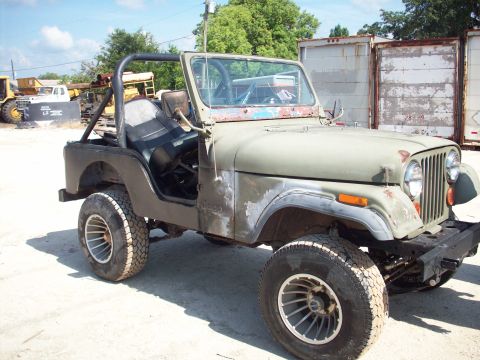
1987-1998: Iacocca's $1.5 Billion Prize and Bob Lutz's Grand Cherokee
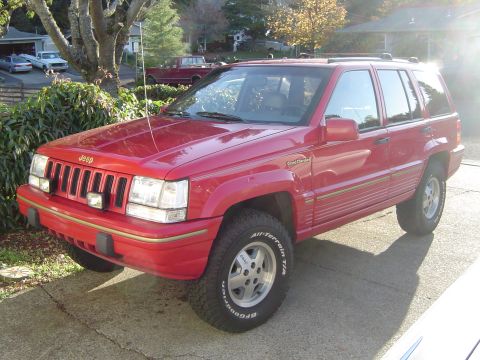
Chrysler bought AMC from Renault in 1987 for about $1.5 billion, and Lee Iacocca said plainly that Jeep was the reason; the AMC passenger-car business was an afterthought that became the short-lived Eagle brand. The deal also imported AMC's lean platform-team engineering culture under François Castaing, which reshaped how all of Chrysler developed cars. The 1993 ZJ Grand Cherokee, a program begun at AMC, was launched by president Bob Lutz driving one up the steps and through a plate-glass window at the 1992 Detroit show; it moved Jeep decisively upmarket and became one of Chrysler's most profitable vehicles, funding the company's 1990s resurgence. Chrysler kept faith with Toledo, breaking ground in 1997 on the Toledo North plant that seeded today's Toledo Assembly Complex (Wrangler production itself left the ancient Parkway plant only in 2006), and the 1997 TJ Wrangler restored round headlights and added coil springs, quieting purists angered by the YJ's square lamps. By 1998 Jeep was a global brand strong enough to be a headline asset in the biggest industrial merger ever attempted.
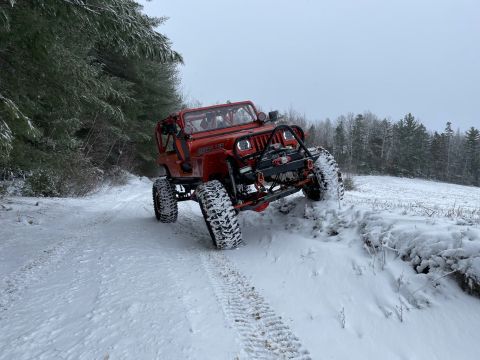
1998-2007: DaimlerChrysler, the Liberty Gamble, and a Cost-Cutting Era
The 1998 "merger of equals" between Daimler-Benz and Chrysler, engineered by Jürgen Schrempp and Bob Eaton in a $36 billion deal, put Jeep inside a Stuttgart-run empire that never quite knew what to do with it. Amid the intense cost pressure of the early-2000s Daimler era, Jeep chased volume: the 2002 KJ Liberty replaced the XJ Cherokee with independent front suspension and softer manners, selling well but alienating the brand's core, and the 2007 Compass and Patriot stretched the badge onto a front-drive car platform, the first Jeeps that could not credibly claim off-road capability. The same era produced genuine substance, including the 2005 Grand Cherokee with Mercedes-derived hardware and the 2007 four-door JK Wrangler Unlimited, the single most commercially important Jeep decision of the modern era because it doubled Wrangler's addressable market. Daimler, disillusioned with Chrysler's losses, sold 80 percent to Cerberus Capital Management in May 2007 for $7.4 billion, dropping Jeep into private-equity hands on the eve of a financial collapse.

2007-2014: Bankruptcy, Sergio Marchionne, and Fiat's Rescue Built on Jeep
Chrysler filed Chapter 11 on April 30, 2009, and the U.S. Treasury-brokered rescue handed operational control to Fiat and its chief executive Sergio Marchionne, who understood immediately that Jeep was the asset that justified the whole gamble. Cerberus-era product starvation had left the lineup thin, but the 2011 WK2 Grand Cherokee, developed on a shared Mercedes-derived architecture before the split, arrived as proof the company could still build a class competitor and became the turnaround's flagship. Marchionne globalized the brand at speed: Renegade production started at Melfi in Italy in 2014, with new plants following in 2015 in China (with partner GAC) and at Goiana in Brazil's Pernambuco state, while worldwide sales roughly tripled from about 340,000 in 2009 to over a million by 2014. The 2014 KL Cherokee brought the Cherokee name back on a Fiat-derived front-drive-based platform, controversial styling and all, because Marchionne needed Jeep volume to amortize Fiat architectures. When Fiat completed its buyout and formed Fiat Chrysler Automobiles in 2014, analysts routinely valued Jeep at more than the entire merged company's market capitalization.
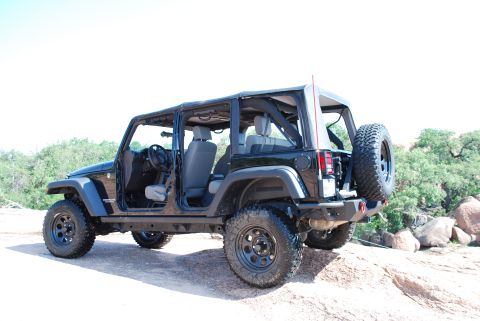
2014-2021: Mike Manley's Million-Plus Brand and the Return of Wagoneer
Under brand chief Mike Manley, Jeep passed 1.4 million annual global sales by 2016 and carried Fiat Chrysler Automobiles so completely that Marchionne's successors openly called it one of only two FCA brands (with Ram) that earned its capital cost. The 2018 JL Wrangler modernized the franchise without breaking its solid-axle formula, and the Gladiator pickup of 2019 returned Jeep to the truck market it had abandoned when the Comanche died in 1992. Manley became FCA chief executive on Marchionne's sudden death in July 2018, a succession that itself showed where the company's center of gravity lay. The era's strategic move upmarket culminated in the 2021 revival of the Grand Wagoneer as a body-on-frame flagship priced against Cadillac and Lincoln, chasing the high-margin full-size SUV profits Jeep had walked away from in 1991. Meanwhile John Elkann and Carlos Tavares negotiated the FCA-PSA merger, completed in January 2021, that created Stellantis N.V. and gave Jeep its sixth corporate parent.
2021-Today: Stellantis, the 4xe Pivot, and Toledo's Unbroken Line
Inside Stellantis, formed in January 2021 from Fiat Chrysler and Peugeot's PSA under chief executive Carlos Tavares, Jeep remains the group's most valuable global brand and its chosen spearhead into electrification. The Wrangler 4xe plug-in hybrid became America's best-selling PHEV shortly after launch, the small Avenger EV won 2023 European Car of the Year as the first battery-electric Jeep, and the Wagoneer S launched the brand's first North American EV in 2024. The record has not been smooth: North American inventory gluts and pricing missteps in 2023-2024 contributed to Tavares's December 2024 resignation, and Jeep cycled through several brand CEOs while recalibrating between electric ambition and the internal-combustion demand that still pays the bills. Through all of it, Wrangler production continues in Toledo, Ohio, the same city where Willys-Overland built the MB, an unbroken 85-year manufacturing lineage no other American nameplate can match. Six owners in, the pattern holds: parents change, and Jeep is the reason each new one wanted the deal.
Leadership
| Leader | Tenure | Legacy |
|---|---|---|
| Delmar "Barney" Roos | Willys chief engineer, 1938-1953 | Reworked the Willys "Go Devil" four-cylinder to win the Army contract, giving the MB its decisive 60-horsepower advantage. |
| Joseph W. Frazer | Willys-Overland president, 1939-1944 | Steered a near-bankrupt Willys into the Army jeep program and pushed the Jeep name toward trademark status. |
| James D. Mooney | Willys-Overland chairman and president, 1946-1949 | Presided over the postwar pivot to the CJ and the 1946 all-steel station wagon, the civilian product line that kept the brand alive. |
| Henry J. Kaiser | Owner, Kaiser era, 1953-1967 | Bought Willys-Overland for roughly $62 million in 1953 and bet the company on four-wheel drive after his passenger cars failed. |
| Brooks Stevens | Consulting designer, 1940s-1960s | Styled the 1946 Willys wagon and shaped the design language that led to the 1963 Wagoneer. |
| Roy D. Chapin Jr. | AMC chairman and CEO, 1967-1977 | Bought Kaiser Jeep for AMC in 1970 and turned Jeep from a utility maker into a recreational four-wheel-drive brand with Quadra-Trac. |
| François Castaing | AMC/Jeep VP of engineering, 1980s; Chrysler engineering chief after 1987 | Led development of the unibody 1984 XJ Cherokee, the template for the modern SUV. |
| Lee Iacocca | Chrysler chairman, 1979-1992 | Paid roughly $1.5 billion for AMC in 1987 chiefly to acquire Jeep, calling it the crown jewel of the deal. |
| Bob Lutz | Chrysler president, 1991-1996 | Championed the 1992 ZJ Grand Cherokee, launched by driving one through a Cobo Hall window at the Detroit show. |
| Dieter Zetsche | Chrysler Group CEO, 2000-2005 | Ran the DaimlerChrysler cost-cutting era that produced the Liberty and the compromise-heavy 2007 four-door product wave. |
| Sergio Marchionne | Fiat/FCA CEO, 2009-2018 | Built Fiat Chrysler's recovery on Jeep, expanding it into a global brand with production on four continents. |
| Mike Manley | Jeep brand CEO 2009-2018; FCA CEO 2018-2021 | Grew Jeep past one million annual global sales in 2014 and revived the Wagoneer nameplate. |
| Christian Meunier | Jeep brand CEO, 2019-2023 | Ran Jeep's electrification turn, launching the Wrangler 4xe, the Avenger EV, and the revived Wagoneer and Grand Wagoneer. |
| Antonio Filosa | Jeep brand CEO 2023-2025; Stellantis CEO from 2025 | Steered the brand through the 2023-2024 North American inventory and pricing reset before rising to lead all of Stellantis. |
Timeline
| Year | Event | Notes |
|---|---|---|
| 1940 | Army issues quarter-ton reconnaissance car spec | American Bantam delivers the first prototype in 49 days; Willys and Ford receive the Bantam plans and build competing pilots. |
| 1941 | Willys MB enters production in Toledo | Willys-Overland wins the standardized contract on the strength of Barney Roos's Go Devil engine; Ford builds the near-identical GPW under license. |
| 1941-1945 | Wartime production | Willys and Ford build roughly 640,000 jeeps for the Allied war effort, over 360,000 of them Willys MBs. |
| 1943 | "Jeep" trademark application filed | Willys-Overland files to register the Jeep name; Bantam and the FTC contest Willys's claims, and the registration is finally granted in 1950. |
| 1945 | CJ-2A introduced | The first mass-produced civilian Jeep converts the MB for farm and utility work, creating the off-road vehicle category. (See the Willys registry.) |
| 1946 | All-steel Willys station wagon | Brooks Stevens's wagon, arguably the first SUV, gives Willys a passenger product without stamped-wood bodywork. |
| 1948 | Jeepster introduced | Willys's open phaeton aims the Jeep chassis at boulevard buyers; it lasts only through 1950. |
| 1953 | Kaiser buys Willys-Overland | Henry J. Kaiser pays about $62 million for the Toledo company; the firm becomes Willys Motors, later Kaiser Jeep. |
| 1954 | CJ5 introduced | Based on the Korean War M38A1, the CJ5 stays in production for three decades, the longest-lived CJ. |
| 1963 | Wagoneer and Gladiator launched | Brooks Stevens's SJ Wagoneer pairs wagon comfort with four-wheel drive; the Gladiator pickups share its platform. |
| 1966 | Super Wagoneer introduced | Kaiser Jeep sells the first luxury four-wheel-drive wagon, a decade ahead of the market. |
| 1970 | AMC buys Kaiser Jeep | Roy D. Chapin Jr.'s American Motors pays about $70 million ($10 million of it cash, the balance in notes and stock) for a brand Kaiser could not scale. |
| 1972 | AMC engines and Commando refresh | AMC re-engines the line and widens the CJ; full-size trucks become the J10 and J20 in 1974. |
| 1973 | Quadra-Trac full-time four-wheel drive | AMC's automatic four-wheel-drive system helps push Jeep sales through the 1970s recreational boom. |
| 1976 | CJ7 introduced | A longer wheelbase and optional automatic broaden the CJ's appeal. |
| 1979 | Renault alliance begins | Cash-starved AMC sells a stake to Renault, whose money funds the next-generation compact Jeep. |
| 1984 | XJ Cherokee launched | François Castaing's unibody Cherokee, roughly 1,000 pounds lighter than the SJ, defines the modern compact SUV. |
| 1984 | Grand Wagoneer nameplate | The 1963-vintage SJ soldiers on as AMC's luxury flagship through 1991. |
| 1986 | Comanche pickup introduced | The XJ-based MJ pickup runs through 1992. |
| 1987 | Chrysler buys AMC; YJ Wrangler debuts | Lee Iacocca pays roughly $1.5 billion for AMC to get Jeep; the Wrangler replaces the CJ7 the same year. |
| 1992 | ZJ Grand Cherokee unveiled | Bob Lutz drives one through a plate-glass window at the Detroit show; production begins at the new Jefferson North plant. |
| 1998 | DaimlerChrysler merger | Daimler-Benz's $36 billion "merger of equals" puts Jeep under German ownership. |
| 2001 | Liberty replaces the XJ Cherokee | The KJ Liberty gambles on independent front suspension and softer styling for the compact segment. |
| 2006 | Four-door Wrangler Unlimited (JK) | The first four-door Wrangler, launched for 2007, becomes the volume engine of the modern brand. |
| 2009 | Chrysler bankruptcy; Fiat takes control | Sergio Marchionne's Fiat receives Chrysler and Jeep through the government-managed Chapter 11. |
| 2014 | FCA formed; Jeep tops one million sales | Fiat Chrysler Automobiles incorporates, and Jeep passes one million global sales for the first time under Mike Manley. |
| 2021 | Stellantis formed; Wagoneer returns | The FCA-PSA merger creates Stellantis, and the Wagoneer and Grand Wagoneer nameplates return as full-size luxury SUVs. |
| 2021 | Wrangler 4xe plug-in hybrid | The 4xe becomes the best-selling plug-in hybrid in the United States, anchoring Jeep's electrification pivot. |
| 2024 | Wagoneer S revealed | Jeep's first global battery-electric SUV extends the lineup while Toledo keeps building the Wrangler and Gladiator. |
Asked all the time
Who founded Jeep?
No single founder exists. American Bantam Car Company built the first prototype in 1940 to the U.S. Army's specification, but Willys-Overland Motors of Toledo, Ohio won the standardized production contract in 1941 and filed to trademark the Jeep name in 1943 (the registration was granted in 1950), making Willys the corporate parent of the brand.
Did Jeep ever shut down?
No. Jeep has been in continuous production since 1941 and is the only nameplate to survive intact through Willys-Overland, Kaiser, American Motors, Chrysler, DaimlerChrysler, Fiat Chrysler, and Stellantis, plus the 2009 Chrysler bankruptcy.
Who owns Jeep today?
Stellantis N.V., the company formed by the January 2021 merger of Fiat Chrysler Automobiles and France's Groupe PSA. Jeep remains headquartered in Toledo, Ohio.
Why has Jeep changed owners so many times?
Jeep was consistently more valuable than its parents. Kaiser bought Willys in 1953 after its own cars failed, AMC bought Kaiser Jeep in 1970 for growth, Chrysler paid about $1.5 billion for AMC in 1987 chiefly to get Jeep, and Fiat built its 2009 Chrysler rescue around Jeep's global potential.
Where does Jeep build its vehicles?
The historic home is Toledo, Ohio, where the Toledo Assembly Complex still builds the Wrangler and Gladiator on ground Willys-Overland occupied. Grand Cherokees come from Detroit, and Stellantis builds Jeeps for world markets in Italy, Brazil, Mexico, China, and India.
Where did the Jeep name come from?
The origin is disputed. The most common explanations are a slurring of Ford's "GP" designation and the Popeye character Eugene the Jeep; wartime press coverage popularized the name, and Willys-Overland filed to register it as a trademark in 1943 over objections from Bantam, finally winning the registration in 1950.
How did Jeep invent the SUV?
Two ways: the 1945 civilian CJ-2A created the recreational off-road category, and the 1946 all-steel Willys station wagon, followed by the 1963 Wagoneer and 1984 XJ Cherokee, established the passenger-comfort four-wheel-drive wagon that became the modern SUV.
How big is Jeep today?
Jeep first passed one million annual global sales in 2014 under brand chief Mike Manley and remains Stellantis's most valuable brand, selling the Wrangler, Grand Cherokee, Compass, and a global SUV lineup on four continents.
The wall
The most-documented Jeep vehicles in the registry, every photo by the owner.