The registry
Kawasaki Registry: Models, Builds & Photos
Kawasaki Motors, Ltd. is the motorcycle, ATV, and personal watercraft arm of Kawasaki Heavy Industries, the Kobe shipbuilding and aerospace conglomerate founded by Shozo Kawasaki in 1878. The motorcycle business began in 1953, when Kawasaki's aircraft engine division in Akashi, Japan, idled by Japan's postwar aviation ban, started building small motorcycle engines. It absorbed the Meguro motorcycle works in the early 1960s, then built a global brand on aggressive performance machines: the 1969 H1 Mach III two-stroke triple, the 1972 Z1 900 four, and the 1984 Ninja line, plus the Jet Ski, which it invented in 1973. Kawasaki survived where dozens of Japanese rivals died because it could subsidize motorcycles with heavy-industry profits. In October 2021 Kawasaki Heavy Industries spun the business off as Kawasaki Motors, Ltd., a wholly owned subsidiary that remains active today, headquartered in Akashi, Hyogo, Japan.
Pick your model
Key facts
| Founded | 1878, Tokyo (shipyard); motorcycle engine production began 1953 in Akashi, Japan |
|---|---|
| Founders | Shozo Kawasaki (Kawasaki Heavy Industries); the motorcycle business grew out of KHI's aircraft engine division |
| Headquarters | Akashi, Hyogo, Japan |
| Parent / successor | Kawasaki Heavy Industries, Ltd.; spun off October 2021 as Kawasaki Motors, Ltd., a wholly owned KHI subsidiary |
| Fate / status | Active. Builds motorcycles, ATVs, and personal watercraft as Kawasaki Motors, Ltd. |
| Best known for | Z1 900, Ninja sportbikes, Jet Ski personal watercraft |
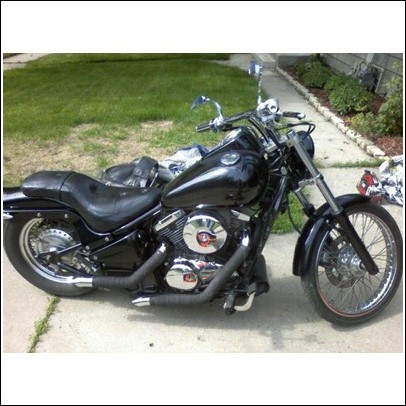
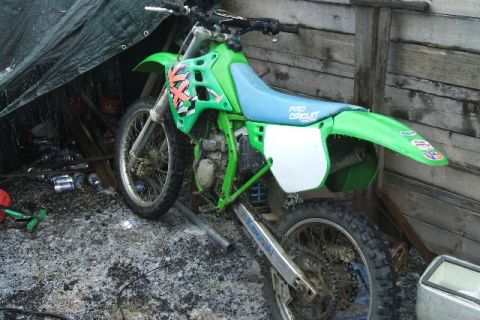
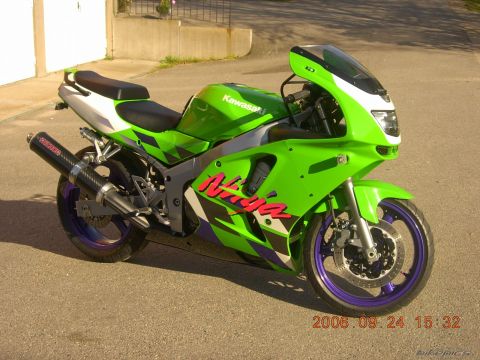
| Registry presence | 101 vehicles / 3,011 photos documented by owners on SuperMotors |
1878-1945: Shozo Kawasaki's Shipyard and the Aircraft Engine Inheritance
Every Kawasaki motorcycle traces its engineering bloodline to a Tokyo shipyard opened in 1878 by Shozo Kawasaki, a Kagoshima-born merchant who had survived a shipwreck and concluded that Japan needed modern Western-style vessels. Kawasaki Tsukiji Shipyard, reorganized as Kawasaki Dockyard Co. in 1896 under president Kojiro Matsukata, grew with Japan's industrialization into one of the country's great heavy-industrial combines: ships, locomotives, rolling stock, bridges, and, from the 1918 founding of its aircraft operations, airplanes and aero engines built at Kobe and later Akashi.
The aircraft business is the causal hinge of the whole motorcycle story. Kawasaki Aircraft, spun out as a subsidiary in 1937, built fighters for the Imperial Japanese Army through the Second World War, most famously the Ki-61 Hien, the only mass-produced Japanese fighter of the war with a liquid-cooled inverted-V engine. That work created something no scooter startup possessed: a deep bench of engineers trained in high-output engine metallurgy, precision machining, and thermodynamics, plus the Akashi engine plant itself. When Allied occupation authorities banned Japanese aircraft production in 1945, those engineers and that factory sat idle. The company needed civilian products that used engine expertise, and postwar Japan, its rail network bombed and its people desperate for cheap transport, needed small motors. The aircraft ban, not any love of motorcycles, is why Kawasaki entered the business.
1945-1960: The Akashi Engine Works Turns Aircraft Engineers Into Motorcycle Suppliers
Kawasaki's first motorcycle product, in 1953, was not a motorcycle at all but a 148 cc overhead-valve engine called the KE-1, designed by former aircraft-engine men at the Akashi works and sold to other manufacturers. Kawasaki Aircraft's machinery division treated the engine as a way to keep its workforce and machine tools employed while the aviation ban held, and Japanese assemblers, more than a hundred small motorcycle firms operated in early-1950s Japan, provided a ready market for a proven engine from a heavy-industry name.
By 1954 the company was assembling complete machines under the Meihatsu brand through an affiliate, and in the late 1950s it experimented with scooters against the dominant Fuji Rabbit and Mitsubishi Silver Pigeon. None of it distinguished the company. What the decade actually accomplished was Darwinian: Japan's motorcycle industry collapsed from roughly 120 makers to a handful as Honda, Suzuki, and Yamaha scaled up, and Kawasaki survived the cull only because motorcycle losses were rounding errors against shipbuilding and rolling-stock profits. That corporate cushion, the ability to lose money in motorcycles indefinitely, became Kawasaki's permanent structural advantage over every standalone rival, and it explains most of the aggressive product gambles that followed.
1960-1968: The Meguro Absorption and the Decision to Sell Speed in America
In 1960 Kawasaki made the decision that turned an engine supplier into a motorcycle marque: it took control of Meguro Manufacturing, one of Japan's oldest and most prestigious motorcycle builders, a firm dating to 1937 whose big British-style twins supplied police and enthusiasts but whose finances had failed. Meguro gave Kawasaki what Akashi's engine men lacked, complete-motorcycle chassis know-how and a large-displacement four-stroke line, and the merger was completed in 1963 with machines badged Kawasaki. The Meguro K-series twin evolved into the Kawasaki W1 of 1966, at 624 cc the largest-displacement motorcycle then built in Japan.
The same era fixed Kawasaki's commercial geography. The home market belonged to Honda, so Kawasaki aimed at the United States, establishing its American sales operation in Chicago in 1966 (the company that became Kawasaki Motors Corp., U.S.A.). Early results taught a brutal lesson: the W1, styled like a BSA, was dismissed by Americans as an imitation, while the light, quick two-stroke A1 Samurai 250 sold on pure performance. Management in Akashi drew the conclusion that defined the brand for thirty years: Kawasaki could not out-Honda Honda on refinement or volume, so it would win by being the fastest thing in the showroom, whatever the compromises. That decision was already in motion as the N100 project, a 500 cc two-stroke triple aimed squarely at the American quarter-mile.
1969-1975: The H1 Mach III, the Z1 'New York Steak,' and the Making of a Performance Brand
In September 1968 Kawasaki showed the 500 cc H1 Mach III, and with it purchased a reputation no advertising budget could buy: the most feral motorcycle money could get. The two-stroke triple delivered roughly 60 horsepower in a light, flexible chassis, ran the quarter-mile quicker than anything near its price, and handled badly enough to earn the nickname "widow-maker." Kawasaki's American arm understood that notoriety was marketing, and the H1 and its 750 cc successor H2 made Kawasaki the default choice for riders who wanted maximum acceleration per dollar.
The masterstroke came next. Kawasaki had been developing a 750 cc four-stroke four under the project name "New York Steak" when Honda unveiled its CB750 in 1968. Rather than launch a me-too machine, Kawasaki withdrew, enlarged the design to 903 cc, and in 1972 released the Z1, a double-overhead-cam four that immediately became the fastest mass-produced motorcycle in the world. The Z1 set an FIM 24-hour speed record at Daytona in 1973, and its architecture carried the company for a decade: descendants such as the Z1B and the KZ1000 anchored the range, put Kawasaki under American police riders, and starred in the television series CHiPs. In the same stretch Kawasaki opened a corporate second front: engineer Clayton Jacobson II's stand-up watercraft concept became the 1973 Jet Ski, a trademark so dominant it became the generic name for the category. By mid-decade the once-anonymous engine supplier owned two franchises, big-bore speed and personal watercraft, both built on the same aircraft-derived engine competence.
1974-1983: The Lincoln Plant, the KZ Decade, and Surviving the Superbike Price Wars
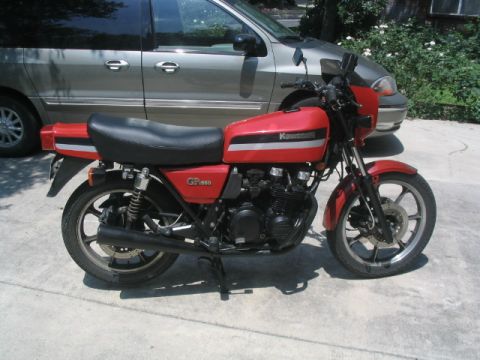
Kawasaki opened a plant in Lincoln, Nebraska in 1974, and in January 1975 a royal-blue KZ400 rolled off its line, the first complete vehicle built in the United States by a Japanese manufacturer, four years before Honda's Marysville motorcycles made transplant production fashionable. The move hedged currency risk and trade politics, and Lincoln assembled the bread-and-butter machines of the KZ era, mid-size fours and twins such as the KZ650 and KZ750, plus the factory-custom LTD line that Kawasaki pioneered in 1976 to catch the American cruiser wave before Harley-Davidson's lawyers ever heard the word "clone."
The late 1970s also armed Kawasaki for the dirt. Its KX motocross line, backed by the works team that carried Jeff Ward to multiple AMA championships in the 1980s, and enduro machines like the KDX200 gave the brand off-road credibility it had lacked against Yamaha and Honda. But the era ended in crisis. The early-1980s recession collided with a savage Honda-Yamaha production war that flooded the American market with discounted motorcycles; inventories rotted on dealer floors, and in 1983 Washington imposed a 45 percent tariff on big imported bikes after a U.S. International Trade Commission case pressed by Harley-Davidson. Kawasaki's Lincoln plant helped limit its exposure to the tariff, an advantage it shared with Honda's U.S. production, while import-reliant rivals faced the full duty. The company answered the glut the only way its culture knew: with a technological escalation that would rename the brand itself.
1984-1990: The GPZ900R Ninja, Top Gun, and the Liquid-Cooled Reinvention
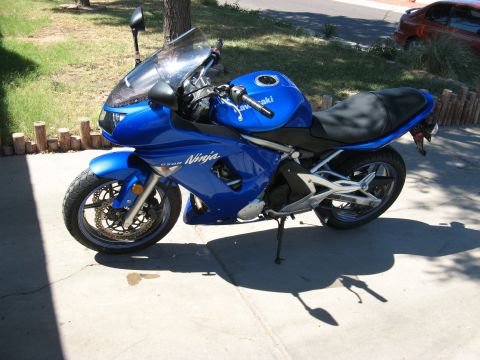
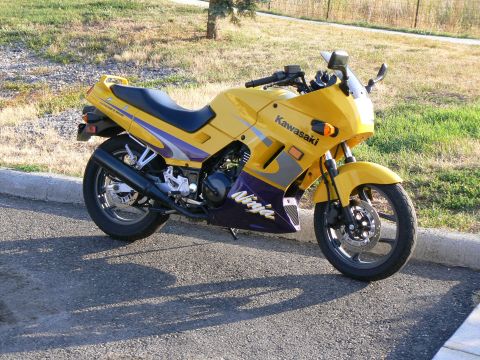
The 1984 GPZ900R was Kawasaki betting that a new engine architecture, not more displacement, would restore its fastest-in-the-world claim, and the bet paid off completely. Six years in development, the liquid-cooled 908 cc four pushed the machine past 150 mph, the first stock motorcycle to do so, while Kawasaki's U.S. marketing arm insisted on a name the factory resisted: Ninja. When Tom Cruise rode a GPZ900R in the 1986 film Top Gun, the name became one of the most valuable in motorcycling, and Kawasaki has applied it to sporting machines ever since, down to the entry-level Ninja 250R that introduced a generation of Americans to sport riding.
The same product blitz diversified the lineup for the demographic reality that pure speed buyers were aging. The shaft-drive Voyager tourer chased the Gold Wing market, the Concours of 1986 created the sport-touring hybrid, the Vulcan line launched Kawasaki's V-twin cruiser franchise in 1985, and the KLR650 of 1987 became a thirty-year fixture as the do-everything dual-sport, eventually adopted by the U.S. military in diesel form. On water, the sit-down X-2 and successors broadened Jet Ski beyond stand-up athletes. The strategy was explicit: keep the Ninja as the halo, and let it pull a full-line company behind it.
1990-2005: ATVs, the Prairie, and Heavy-Industry Ballast Through Japan's Lost Decade
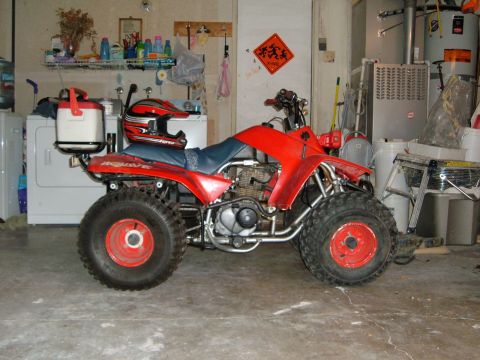
Kawasaki spent the 1990s proving that the division's survival depended on everything except sportbikes. Japan's bubble collapse and a strong yen crushed home-market demand, and the U.S. sportbike segment matured into a four-way knife fight with thin margins. The Lincoln, Nebraska plant's growing role in ATVs and utility vehicles became the profit center: Kawasaki had been in utility four-wheelers since its 1985 Bayou line, machines like the Bayou 220 selling steadily to farmers and hunters for fifteen years, and the 1997 Prairie line pushed into high-performance four-wheel drive. The Mule side-by-side, launched back in 1988, quietly became one of the company's best businesses. On water, the Ultra 150 of 1999 kept Jet Ski credible against Yamaha and Bombardier as the category went to big sit-down runabouts.
Corporate structure mattered more than any product. Kawasaki Heavy Industries, the parent since the 1969 three-way merger that created it from Kawasaki Aircraft, Kawasaki Dockyard, and Kawasaki Rolling Stock, treated Consumer Products as one division among gas turbines, ships, and Shinkansen trains, and its balance sheet absorbed the lean years. The clearest sign of the division's constraints came in 2001, when Kawasaki and Suzuki formed a cost-sharing alliance under which the two firms cross-badged models, the KFX 400 sport ATV was a rebadged Suzuki. The alliance wound down in 2004 and was gone by 2006 as both companies recovered.
2005-2021: The ZX-14 and H2 Halo Era, the 2008 Crash, and the Long Road to Spin-Off
Kawasaki entered the 2000s' second half doing what it had always done when cornered, building the fastest thing available, but the business underneath was changing shape. The 2006 ZX-14 took the outright performance crown, and in 2015 the supercharged Ninja H2, its compressor designed by Kawasaki Heavy Industries' gas-turbine aerospace engineers, made the parent company's technology base a marketing weapon; roughly 200 horsepower in street trim, it was the clearest statement since the Z1 that Kawasaki's identity was engineering excess. Racing finally delivered on the biggest stage too: after the grand prix world titles Kork Ballington and Anton Mang collected for Kawasaki from 1978 to 1982 and decades of intermittent effort since, Kawasaki's World Superbike program with Tom Sykes (2013 champion) and Jonathan Rea, who won six consecutive titles from 2015 to 2020, gave the green machines their most dominant era ever.

The money, though, came from four wheels and the 2008 financial crisis proved it. U.S. motorcycle sales roughly halved after 2008 and never fully recovered; Kawasaki responded by shifting Lincoln's output toward the Mule and the Teryx sport side-by-sides it had launched for 2008, chasing the one powersports segment that kept growing. Inside Kawasaki Heavy Industries, the consumer business's volatility sat awkwardly beside long-cycle ship and rail contracts, and KHI's own struggles, including losses in shipbuilding and the pandemic's devastation of its aerospace-supplier business, pushed management toward restructuring. The spin-off, announced in 2021 as part of KHI's group restructuring under president Yasuhiko Hashimoto, gave the motorcycle division its own legal life.
2021-Today: Kawasaki Motors, Ltd. Stands Alone Under Akashi Leadership
On October 1, 2021, sixty-eight years after the Akashi works built its first motorcycle engine, the business became Kawasaki Motors, Ltd., a wholly owned subsidiary of Kawasaki Heavy Industries with its own president, Hiroshi Ito, and headquarters at the same Akashi, Hyogo plant where the story began. The spin-off's logic was speed and accountability: as an internal division, motorcycles competed for capital against gas turbines and rolling stock; as a standalone company it could set its own investment pace, pursue partnerships, and be measured on its own results. KHI framed it as part of a group-wide restructuring, and the new company promptly published a strategy through 2035 committing to hybrid and electric motorcycles, hydrogen combustion research drawing on KHI's hydrogen-transport work, and continued growth in the U.S. off-road business built around the Lincoln, Nebraska plant and a newer Mexican facility.
The first standalone years validated the structure. Kawasaki Motors unveiled the Ninja 7 Hybrid in 2023 and put it on sale in 2024, the world's first strong-hybrid production motorcycle from a major maker, revived retro lines trading on the Z1 and W1 heritage, and kept the side-by-side business expanding while Jonathan Rea's departure to Yamaha for the 2024 season closed the great World Superbike era. The company that exists today is the same organism that survived 1950s Japan's hundred-maker shakeout, and for the same reason: it was never only a motorcycle company. Aircraft engineering gave it birth, heavy-industry money kept it alive, and a spin-off finally gave it a name of its own.
Leadership
| Leader | Tenure | Legacy |
|---|---|---|
| Shozo Kawasaki | 1878-1896 | Founded the Tokyo shipyard that became Kawasaki Heavy Industries, the conglomerate whose aircraft engine works later birthed the motorcycle business. |
| Kojiro Matsukata | 1896-1928 | First president of Kawasaki Dockyard Co.; diversified the firm into rolling stock, steel, and aircraft, the industrial base the Akashi engine works drew on. |
| Gyoichi "Ben" Inamura | c. 1967-1972 | Led the "New York Steak" project that produced the 1972 Z1 900, the 903cc four that made Kawasaki a first-tier motorcycle maker in America. |
| Yasuhiko Hashimoto | 2020-present (KHI) | Kawasaki Heavy Industries president whose group-wide restructuring spun the motorcycle business off as Kawasaki Motors, Ltd. in October 2021. |
| Hiroshi Ito | 2021-present | First president of the spun-off Kawasaki Motors, Ltd., running the motorcycle, ATV, and watercraft business as a standalone company from Akashi. |
Timeline
| Year | Event or model | Detail |
|---|---|---|
| 1878 | Kawasaki Tsukiji Shipyard founded | Shozo Kawasaki opens the Tokyo shipyard that grows into Kawasaki Heavy Industries. |
| 1896 | Kawasaki Dockyard Co. incorporated | Kojiro Matsukata takes the presidency and diversifies the firm beyond ships. |
| 1937 | Kawasaki Aircraft Co. formed | The aircraft business, centered on Akashi, builds the engineering staff that later designs motorcycle engines. |
| 1945 | Postwar aviation ban | Occupation authorities bar Japanese aircraft production, idling the Akashi engine works. |
| 1953 | First motorcycle engine (KE-1) | Kawasaki's Akashi aircraft engineers begin building small four-stroke motorcycle engines for other assemblers. |
| 1963 | Meguro absorption | Kawasaki absorbs the Meguro motorcycle works, gaining a complete-motorcycle lineage and larger-displacement know-how. |
| 1966 | Kawasaki Motors Corp., U.S.A. and the W1 | Kawasaki sets up American distribution and ships the 650cc W1, its first big bike for the U.S. market. |
| 1969 | H1 Mach III | The 500cc two-stroke triple establishes Kawasaki's straight-line performance reputation in America. |
| 1972 | Z1 900 | The 903cc DOHC four, developed under the "New York Steak" codename, outguns Honda's CB750 and defines the brand. |
| 1972 | H2 Mach IV 750 | The 750cc two-stroke triple caps Kawasaki's two-stroke performance line. |
| 1973 | Jet Ski introduced | Kawasaki invents the stand-up personal watercraft category with its first 400cc Jet Ski models; the mass-produced JS400 follows in 1976. |
| 1974 | Lincoln, Nebraska plant opens | Kawasaki becomes the first Japanese vehicle maker to build a U.S. assembly plant; the first machine, a KZ400, rolls off the line in January 1975. |
| 1977 | KZ1000 | The Z1's 1,015cc successor anchors the KZ four-stroke decade and U.S. police fleets. |
| 1984 | GPZ900R Ninja | The liquid-cooled 908cc four launches the Ninja nameplate and appears in the film Top Gun in 1986. |
| 1985 | Vulcan 750 | Kawasaki enters the American cruiser market with its liquid-cooled Vulcan V-twin, sold as a 699cc Vulcan 700 in the tariff-era U.S. for 1985 and as a 749cc model from 1986. |
| 1986 | Concours | The Ninja-derived sport-tourer begins a two-decade production run largely unchanged. |
| 1987 | KLR650 | The single-cylinder dual-sport becomes one of the longest-lived models in the catalog. |
| 2002 | Prairie 650 | Kawasaki fields the industry's first V-twin ATV as the Prairie line leads its four-wheel push. |
| 2006 | ZX-14 | The 1,352cc flagship contests the open-class speed crown against Suzuki's Hayabusa. |
| 2015 | Ninja H2 | The supercharged 998cc four revives the H2 name as a halo machine built in-house down to the blower. |
| 2021 | Kawasaki Motors, Ltd. spin-off | In October 2021 KHI spins the motorcycle and engine business into a standalone wholly owned subsidiary headquartered in Akashi. |
Asked all the time
Who founded Kawasaki?
Shozo Kawasaki founded the original Tokyo shipyard in 1878. The motorcycle business itself has no single founder; it emerged in 1953 from Kawasaki Heavy Industries' aircraft engine division in Akashi, Japan, whose engineers turned to motorcycle engines after the postwar aviation ban.
Is Kawasaki still in business?
Yes. Kawasaki Motors, Ltd. is an active maker of motorcycles, ATVs, and personal watercraft, headquartered in Akashi, Hyogo, Japan, operating since October 2021 as a wholly owned subsidiary of Kawasaki Heavy Industries.
Why did Kawasaki start making motorcycles?
Japan's postwar aviation ban idled Kawasaki's aircraft engine works in Akashi. In 1953 those engineers put their precision engine expertise into small motorcycle engines, first supplying other assemblers, then building complete machines after absorbing Meguro in 1963.
Is Kawasaki the same company that builds ships and trains?
They share a parent. Kawasaki Heavy Industries builds ships, rolling stock, and aerospace hardware; Kawasaki Motors, Ltd., spun off from KHI in October 2021, builds the motorcycles, ATVs, and watercraft. Heavy-industry profits helped the motorcycle arm survive downturns that killed dozens of Japanese rivals.
Why did Kawasaki Heavy Industries spin off its motorcycle business?
After the 2008 financial crisis hammered powersports sales, KHI restructured, and in October 2021 it made the motorcycle and engine business a standalone subsidiary, Kawasaki Motors, Ltd., so the consumer business could invest and move at its own pace.
How did Kawasaki get its performance reputation?
Deliberately, in the American market. The 1969 H1 Mach III two-stroke triple was built to be the quickest thing at its price, the 1972 Z1 900 out-displaced Honda's CB750, and the 1984 GPZ900R launched the Ninja line. Speed was the brand strategy from the late 1960s on.
Did Kawasaki invent the Jet Ski?
Yes. Kawasaki created the stand-up personal watercraft category in 1973 with its first 400cc models; the mass-produced JS400 followed in 1976, and Jet Ski remains Kawasaki's trademark for its watercraft line.
Where are Kawasaki motorcycles built?
Primary production is in Akashi, Japan, with U.S. production at the Lincoln, Nebraska plant Kawasaki opened in 1974, the first American assembly plant built by a Japanese vehicle maker.
The wall
The most-documented Kawasaki vehicles in the registry, every photo by the owner.