The registry
Kia Registry: Models, Builds & Photos
Kia is South Korea's oldest car company, founded in 1944 as Kyungsung Precision Industry, a maker of steel tubing and bicycle parts in Seoul. It built Korea's first complete domestic bicycle in 1952, assembled its first passenger car, the Mazda-based Brisa, in 1974, and entered the United States in 1994 with the Sephia sedan. The company went bankrupt in the 1997 Asian financial crisis and was bought by Hyundai in 1998, so most Kias built since about 2000 share platforms, engines, and parts with equivalent Hyundais.
Pick your model
From bicycle parts to a car company
Kia started in 1944 as Kyungsung Precision Industry, machining bicycle parts under Japanese occupation. It took the Kia name in 1952, the same year it finished the Samchully, Korea's first complete domestically built bicycle. Motorcycles followed in 1957 under Honda license, then three-wheeled Mazda-licensed trucks in 1962. The Brisa of 1974, built on Mazda Familia running gear at the new Sohari plant, was its first passenger car. Government industry consolidation forced Kia out of passenger cars from 1981 to 1986, so it built light trucks, then came back with the Mazda-designed Pride, sold in North America as the Ford Festiva and in some markets as the Mazda 121.
Bankruptcy and the Hyundai era
Kia collapsed in the 1997 Asian financial crisis and Hyundai outbid Ford for control in 1998. Kia survived as a separate brand, but from the early 2000s onward its cars sit on shared Hyundai platforms with shared engines and transmissions. That matters at the parts counter: a lot of sensors, powertrain parts, and hardware cross-reference directly to the equivalent Hyundai.
The models owners actually run
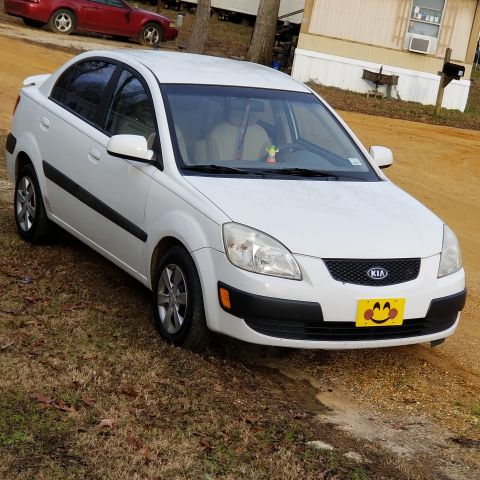
- Rio (2001 model year on in the US): Kia's subcompact, launched as the cheapest new car sold in America. First-generation cars (2001-2005 model years) used a 1.5L four, then a 1.6L from 2003; the 2006-2011 second generation moved to the Hyundai Accent platform with the 1.6L Alpha II engine, which is where parts interchange with Hyundai gets easy.
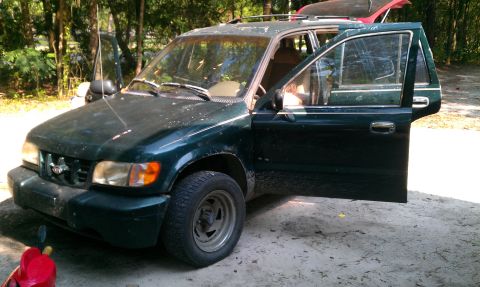
- Sportage (1993 on): the first generation, sold in the US from 1995 to 2002, was a genuine body-on-frame compact 4x4 with an available low-range transfer case, developed on a Mazda-derived platform with Mazda running gear. Later generations went unibody and car-based, so the early trucks are the ones off-road owners keep.
- Sedona (1998 on, US from 2002): Kia's minivan, launched with a 3.5L V6 and known for being heavy for its class. Early US vans (2002-2005) need their timing belts done on schedule; the V6 is an interference engine.
- Optima (2000 on): the midsize sedan, sharing the Hyundai Sonata platform in every generation. The 2011-2014 cars with the 2.4L Theta II direct-injection four fall under the Hyundai/Kia engine recall for rod-bearing failure, and later warranty-extension campaigns reach beyond those years, so check any candidate car by VIN before buying.
- Spectra (2000-2009 in the US): the compact that replaced the Sephia, moving to the Hyundai Elantra platform and 2.0L Beta II engine with the mid-2004 redesign. Cheap, plentiful, and simple to wrench on.
What to know as an owner
Pre-2000 Kias lean on Mazda and Ford parts networks. Post-2000 cars lean on Hyundai. The 10-year, 100,000-mile powertrain warranty Kia added for the 2001 model year only applies to the original owner at full term, which shapes used prices more than most buyers expect.
Asked all the time
When did Kia start selling cars in the United States?
Kia entered the US market in February 1994 with the Sephia compact sedan, sold at first through a handful of Oregon dealerships, followed by the Sportage 4x4 for 1995. Kia sold cars in North America earlier without its own badge, since the Ford Festiva of 1988-1993 was a Kia-built Pride.
Is Kia the same company as Hyundai?
Kia went bankrupt in the 1997 Asian financial crisis and Hyundai outbid Ford to acquire a controlling stake in 1998. Kia remains a separate brand with its own dealers, but from the early 2000s onward Kia and Hyundai share platforms, engines, and transmissions, and many parts cross-reference directly between the two.
What separates the early Kia Sportage from later ones?
The first-generation Kia Sportage (US model years 1995-2002) was body-on-frame with an available low-range transfer case, which makes it the only Sportage with real off-road hardware. Every Sportage generation from 2005 onward is a unibody, car-based crossover.
Are Kia parts hard to find for older models?
For pre-2000 Kias, the Mazda connection helps, since models like the Pride and first-generation Sportage used Mazda-derived running gear. For 2000-and-later Kias, checking the Hyundai equivalent (Accent for Rio, Sonata for Optima, Elantra for Spectra) often turns up the same part cheaper or in stock.
Which Kia engines have known problems?
The 2.4L and 2.0L turbo Theta II direct-injection engines are covered by the big Hyundai/Kia rod-bearing recall, which for Kia means the 2011-2014 Optima, 2012-2014 Sorento, and 2011-2013 Sportage, with warranty-extension campaigns reaching additional years, so check any car's VIN for open campaigns. Early Kia Sedona 3.5L V6s are interference engines that need timing belt service on schedule.
The wall
The most-documented Kia vehicles in the registry, every photo by the owner.