The registry
Lamborghini Registry: Models, Builds & Photos
Lamborghini has built cars in Sant'Agata Bolognese, Italy since 1963, when tractor manufacturer Ferruccio Lamborghini founded the company to compete directly with Ferrari. The marque put the mid-engine V12 supercar template on the map with the 1966 Miura, then spent decades refining it through the Countach, Diablo, and Murcielago lines. After stretches under Chrysler (1987-1994) and Indonesian investors, Lamborghini has been owned by Audi (Volkswagen Group) since 1998 and remains in production today.
Pick your model
Founding and early years
Ferruccio Lamborghini made his money building tractors from surplus military hardware after World War II. In 1963 he opened Automobili Lamborghini in Sant'Agata Bolognese, reportedly after Enzo Ferrari brushed off his complaints about clutch problems in his own Ferrari. The first car, the 350 GT of 1964, used a four-cam 3.5 liter V12 designed by Giotto Bizzarrini. That basic V12 architecture, enlarged and revised, stayed in production in one form or another until the Murcielago era ended in 2010.
Corporate history
The company hit financial trouble in the early 1970s and Ferruccio sold out completely by 1974. Lamborghini went bankrupt in 1978, passed through the Mimran brothers, was bought by Chrysler in 1987, sold to Indonesian investors (MegaTech) in 1994, and finally landed with Audi AG in 1998. Audi ownership funded the Murcielago and everything since. The marque is active, not defunct.
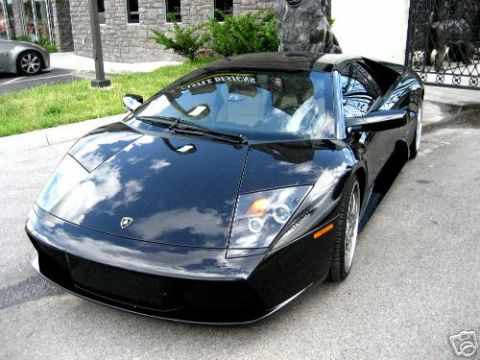
Murcielago (2001-2010)
The Murcielago was the first all-new Lamborghini developed under Audi. It launched with a 6.2 liter version of the classic V12 making 572 hp, enlarged to 6.5 liters and 631 hp in the 2006 LP640 update. All Murcielagos ran viscous-coupling all-wheel drive, a steel tube frame with mostly carbon fiber body panels (the roof stayed steel), and the scissor doors. Owners should know the single-plate clutch on e-gear cars wears fast in traffic. A gated six-speed manual was offered for the whole run; it is common enough on the 6.2 cars and rare on the LP640, and either way the manual has become the sought-after spec. Exactly 4,099 were built before the Aventador replaced it in 2011.
Countach (1974-1990)
The Countach defined the wedge supercar. Marcello Gandini's design went into production in 1974 as the LP400 with a 4.0 liter V12 mounted longitudinally, gearbox ahead of the engine between the seats. The LP400 S of 1978 kept that engine but added fat Pirelli P7s and fender flares; displacement then grew to 4.75 liters in the 1982 LP500 S and 5.2 liters in the four-valve 5000 QV of 1985. The final 25th Anniversary cars ran through 1990, with some titled as later model years. About 1,983 Countachs were built across all series. Rear visibility is famously poor enough that reversing while sitting on the door sill is a period-correct technique.
Other significant lines
- Miura (1966-1973): transverse mid-mounted V12, widely credited as the first modern supercar.
- Diablo (1990-2001): bridged Countach and Murcielago, introduced all-wheel drive to the flagship with the 1993 VT.
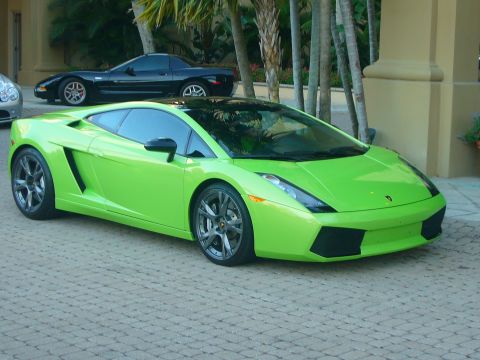
- Gallardo (2003-2013): 5.0 and later 5.2 liter V10, the best-selling Lamborghini of its day at 14,022 units.
- Modern era (2011 on): the Aventador carried the V12 flagship line from 2011 to 2022 with an all-new engine, the V10 Huracan arrived in 2014, the Urus SUV in 2018 became the volume leader, and the Revuelto V12 plug-in hybrid took over the flagship slot in 2023.
Asked all the time
What years was the Lamborghini Countach made?
Lamborghini built the Countach from 1974 through 1990, moving through LP400, LP400 S, LP500 S, 5000 QV, and 25th Anniversary series. Some late 25th Anniversary cars were titled as 1990 or later model years depending on when they were sold.
What years was the Lamborghini Murcielago made?
Lamborghini produced the Murcielago from 2001 to 2010. Early cars (2001-2006) used a 6.2 liter V12 with an available gated manual; the LP640 update in 2006 brought a 6.5 liter engine and 631 hp. The Aventador replaced it in 2011.
Is Lamborghini still an independent Italian company?
Lamborghini still builds cars in Sant'Agata Bolognese, but it has not been independent since the 1970s. Ownership passed through the Mimran brothers, Chrysler (1987), and MegaTech (1994) before Audi AG bought the company in 1998. It remains part of the Volkswagen Group.
How hard is it to get parts for older Lamborghinis?
Parts support varies sharply by era. Audi-era Lamborghinis like the Murcielago share some electronics and switchgear with VW Group cars, and factory support is decent. Countach and earlier Lamborghini parts often mean specialist suppliers, used parts, or fabrication, and prices reflect low production volumes.
What distinguishes the different eras of Lamborghini flagships?
The pattern is one V12 flagship per era: Miura (1966-1973, transverse mid engine), Countach (1974-1990, longitudinal V12 with forward-mounted gearbox), Diablo (1990-2001, first flagship with AWD), Murcielago (2001-2010, first Audi-era car), then Aventador (2011-2022) and the hybrid Revuelto. Lamborghini used descendants of the same Bizzarrini V12 from 1963 to 2010.
The wall
The most-documented Lamborghini vehicles in the registry, every photo by the owner.