The registry
Mercedes-Benz Registry: Models, Builds & Photos
Mercedes-Benz traces to the 1926 merger of Daimler-Motoren-Gesellschaft and Benz & Cie, the two firms that built the first practical automobiles in 1886. The marque introduced the first series-production diesel passenger car (the 260 D, 1936), crumple zones (1959 W111), and the first modern electronic anti-lock brakes (Bosch ABS, W116 S-Class, 1978). Today it operates as the core brand of Mercedes-Benz Group AG, the name Daimler AG adopted in February 2022 after spinning off its truck business in late 2021.
Pick your model
Two companies, one badge
Karl Benz patented his Motorwagen in January 1886, and Gottlieb Daimler ran his motorized carriage the same year a few dozen miles away. The two companies merged in June 1926 under economic pressure in Weimar Germany, taking the Mercedes name from a 1901 Daimler model and the three-pointed star from Daimler's 1909 trademark. Postwar, the W120 "Ponton" (1953) and the fuel-injected 300SL Gullwing (1954-1957) rebuilt the brand, and the engineering-first culture ran through the 1980s. Cost cutting that started in the mid 1990s and ran through the DaimlerChrysler years (1998-2007) hurt build quality for roughly a decade, a divide owners still price into the used market.
The diesels: 200D through 300D
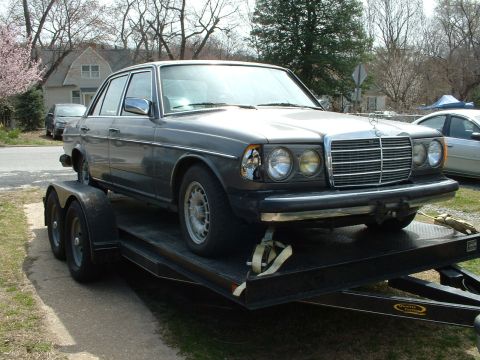
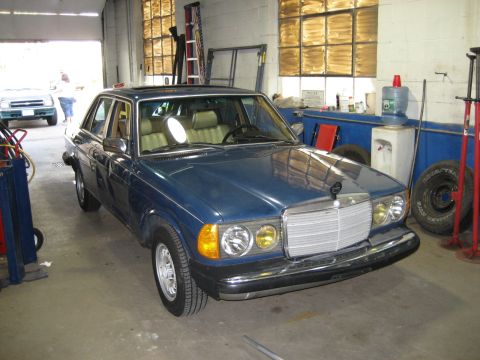
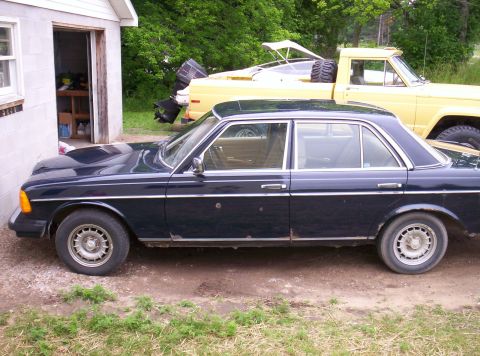
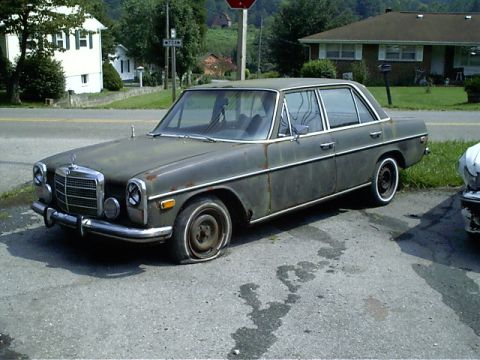
The compact diesel sedans are the marque's durability legend in practice. The W114/W115 range (1968-1976) offered the 220D on the OM615 and, from 1973, the 240D on the larger OM616; the W123 (1976-1985) carried the 240D forward and added the five-cylinder OM617 in the 300D. These iron-block engines routinely run past 400,000 miles. The 1978 300SD brought the OM617 turbodiesel to the US S-Class, the first production turbodiesel sedan. Parts support for these cars remains excellent through Mercedes Classic and the aftermarket.
Core model lines
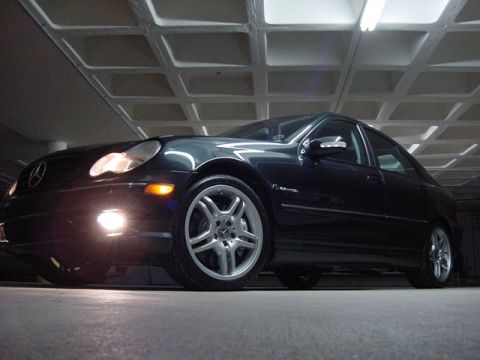
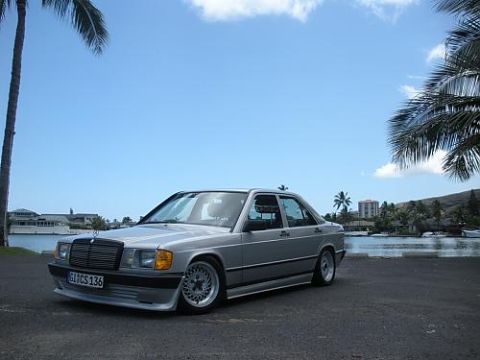
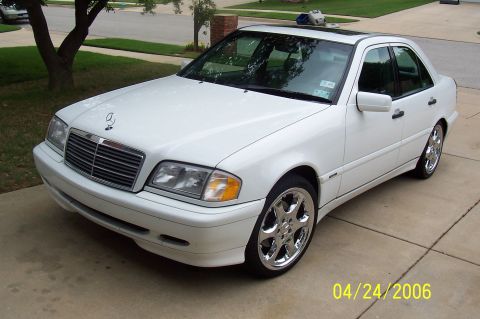
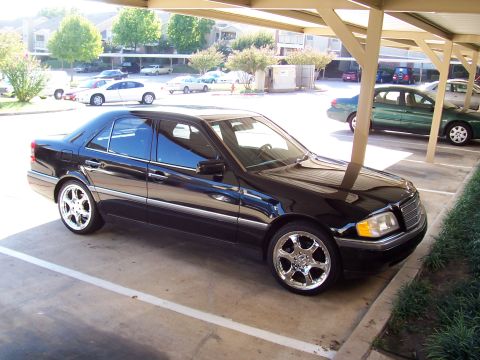
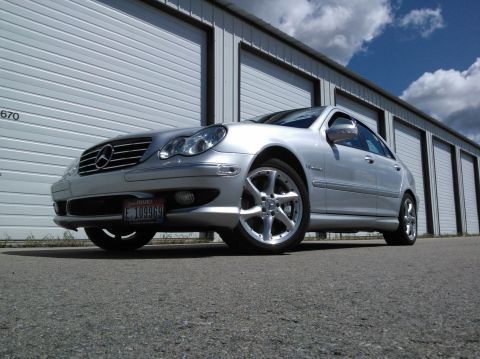
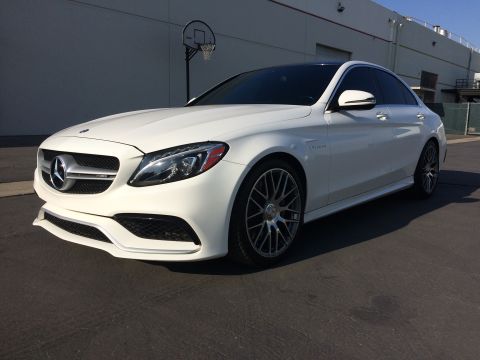
- C-Class (1993-present): successor to the 190E (W201, 1982-1993), which introduced the multilink rear suspension later used across the range. The W202 and W203 followed; the 190E 2.3-16 had a Cosworth-developed head.
- E-Class: the midsize line, named E-Class from 1993 but continuous from the W123 and W124 (sedans 1984-1995). The W124 is widely considered the last of the over-engineered era; the W210 (1995-2002) brought rust-prone bodies owners should inspect carefully.
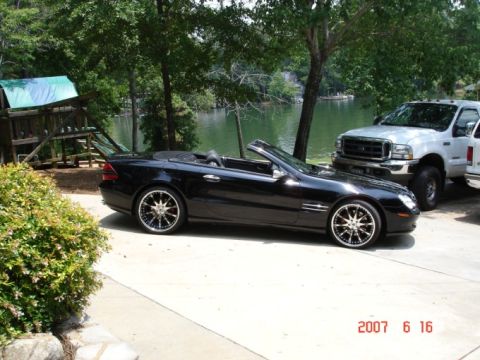
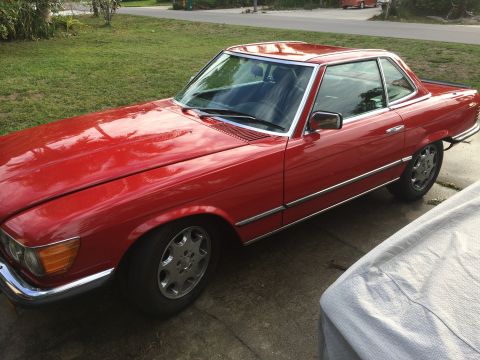
- SL-Class: the R107 ran 1971-1989, one of the longest single-generation runs in the company's history, mostly with the M116/M117 V8s. The R129 (1989-2001) added an automatic pop-up roll bar; the R230 (2001-2011) went to a folding hardtop.
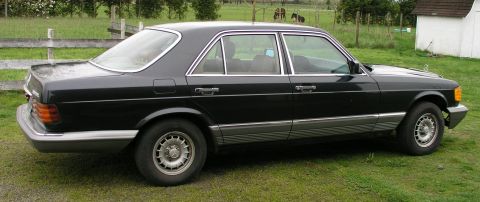
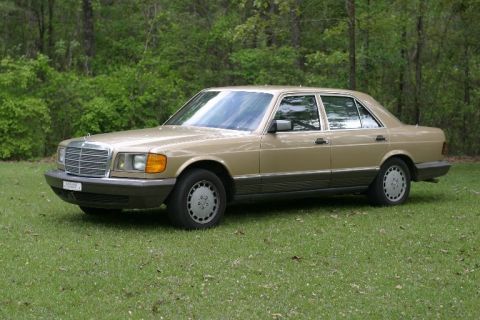
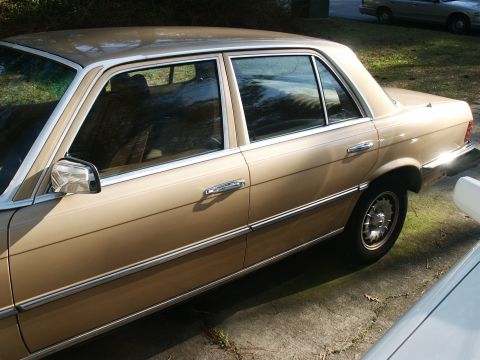
- S-Class (name formalized 1972): the W126 (1979-1991) sold 892,123 units across sedan and coupe bodies and is the most produced S-Class generation. A driver airbag reached series production here in 1981.
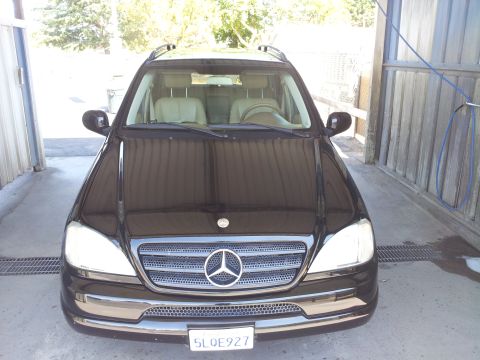
- ML/M-Class (1997-2015, then GLE): the W163 was built in Tuscaloosa, Alabama, the brand's first US assembly plant. The W164 (2005-2011) dropped the body-on-frame-style ladder construction for a unibody.
Asked all the time
What years are the classic Mercedes-Benz diesels, and which engine should I look for?
The core Mercedes-Benz diesel era for US owners is the W115 (1968-1976) and W123 (1976-1985) chassis. The four-cylinder OM616 in the 240D is nearly unkillable but slow; the five-cylinder OM617 in the 300D is the sweet spot for drivability and longevity, especially the turbodiesel, which reached the US in the 300TD wagon for 1981 and the 300D sedan for 1982.
Which Mercedes-Benz eras are considered the most durable?
Owners generally rate Mercedes-Benz cars engineered before the mid 1990s (W123, W124, W126, R107) as the most overbuilt. Quality dipped in the W210 E-Class (1995-2002) and W220 S-Class (1998-2005) years, when cost cutting around the DaimlerChrysler era showed up as rust and electrical faults. Build quality recovered through the late 2000s.
Is parts availability a problem for older Mercedes-Benz models?
No. Mercedes-Benz Classic still supplies many parts for cars decades out of production, and high-volume chassis like the W123, W126, and R107 have deep aftermarket and salvage support. Trim and some model-specific electronics are the usual hard finds, not mechanical parts.
What is the difference between the Mercedes-Benz ML-Class and M-Class?
They are the same vehicle line. Mercedes-Benz launched it as the M-Class in 1997 but badged the vehicles ML (ML320, ML350, and so on) because BMW held rights to the M model names. The first generation W163 ran 1997-2005, the W164 2005-2011, and the W166 2011-2015 before the line was renamed GLE.
When did the Mercedes-Benz C-Class replace the 190E?
The Mercedes-Benz W202 C-Class launched in 1993 as the direct successor to the W201 190E, which had been in production since 1982. The 190E introduced the five-link rear suspension that Mercedes-Benz then used across its sedan range for decades.
The wall
The most-documented Mercedes-Benz vehicles in the registry, every photo by the owner.