The registry
MG Registry: Models, Builds & Photos
MG began in the early 1920s as Morris Garages, the Oxford dealership where Cecil Kimber started building sporting bodies on Morris chassis, and the octagon badge was in use by 1924. From the Abingdon factory MG built affordable open two-seaters that defined the cheap British sports car, most famously the T-series, the MGA, the MGB, and the Midget. British Leyland closed Abingdon in October 1980, and after passing through Rover and the 2005 MG Rover collapse, the name is now owned by China's SAIC, which builds mainstream cars under the badge. For most owners on this side of the hobby, though, MG means the Abingdon-built roadsters of 1945-1980.
Pick your model
From Morris Garages to Abingdon
Cecil Kimber ran Morris Garages in Oxford and began fitting sporting bodywork to Morris cars around 1923. The MG octagon appeared in 1924, and by 1929 the operation had moved into its own factory at Abingdon, where nearly every MG sports car would be built for the next 51 years. Prewar MG earned its name with small overhead-cam Midgets like the M-type and J2, plus supercharged record cars.
The T-series and the American market
The T-series (TA 1936, TB 1939, TC 1945-1949, TD 1950-1953, TF 1953-1955) is the car that taught America what a sports car was. GIs brought TCs home after the war, and the TD, with its independent front suspension and rack and pinion steering, sold roughly 30,000 units, most of them exported to the United States. All ran versions of the 1250cc XPAG four (the TF 1500 got 1466cc).
MGA, 1955-1962
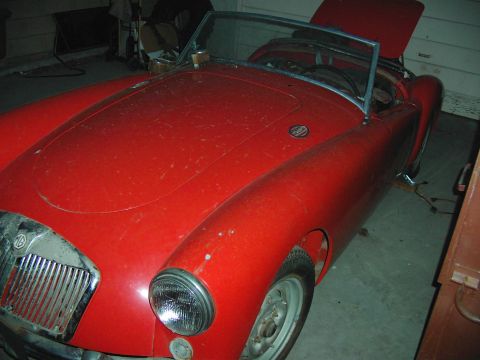
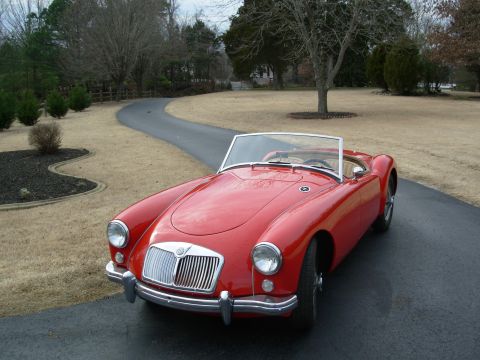
The MGA replaced the upright T-series look with a full-width envelope body over a separate chassis, powered by the BMC B-series four (1489cc, later 1588 and 1622cc). About 101,000 were built, with over 90 percent exported. The Twin Cam variant of 1958-1960 made 108 hp and got four-wheel Dunlop disc brakes, but piston problems kept production to around 2,100 cars.
MGB, 1962-1980
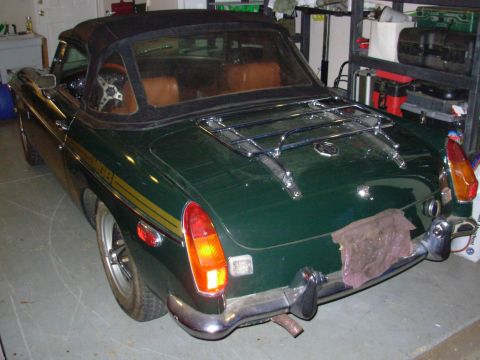
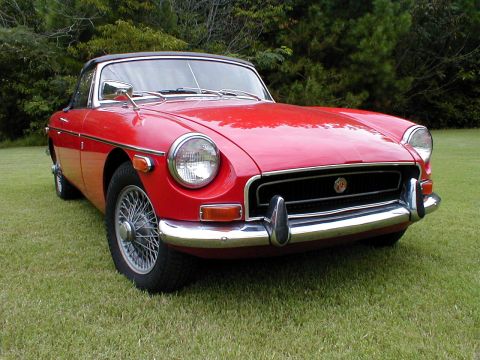
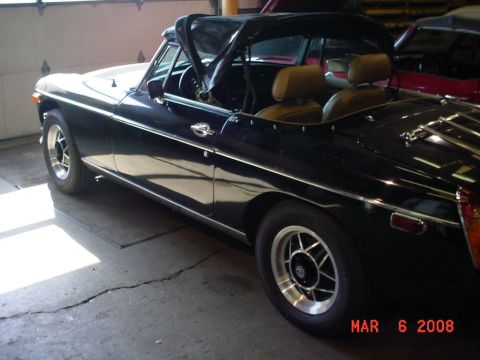
The MGB moved to unibody construction and the 1798cc B-series, and it became the best-selling sports car of its era: about 387,000 roadsters and 125,000 MGB GT coupes, just over 512,000 cars in all. Big changes for owners to know: the five-main-bearing engine from late 1964, the all-synchro gearbox in 1968, and the September 1974 switch to rubber bumpers and raised ride height driven by US regulations. The six-cylinder MGC (1967-1969) and the Rover V8-powered MGB GT V8 (1973-1976) are the rare factory variants.
Midget, 1961-1979
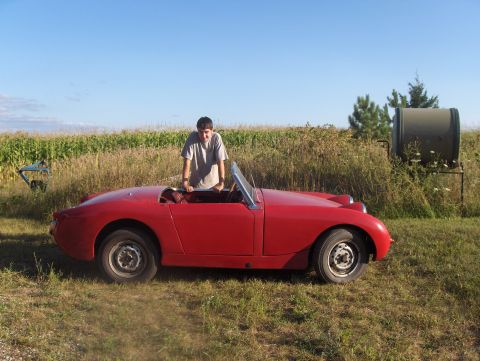
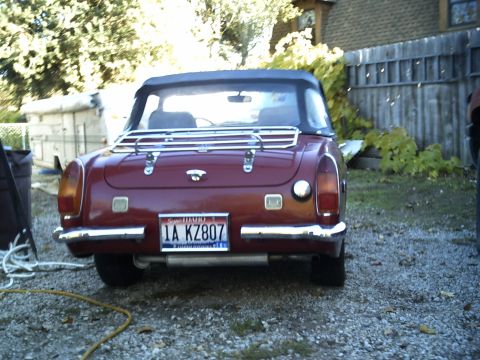
The Midget was a badge-engineered Austin-Healey Sprite, starting at 948cc and growing through 1098 and 1275cc A-series engines before the last cars, built from late 1974 through 1979, took the 1493cc Triumph Spitfire engine to meet emissions rules. Light, simple, and cheap to run, it stayed in production 18 years.
Closure and afterlife
British Leyland shut Abingdon in October 1980 and killed the MGB rather than fund a replacement. The badge survived on hot Metros and Maestros, returned on the MGF roadster in 1995, and after MG Rover went bankrupt in 2005 the marque ended up with Nanjing, then SAIC. Parts support for the classic cars is exceptional, with most MGB mechanical and body parts still available new.
Asked all the time
What years was the MGB made?
The MGB roadster ran from 1962 to 1980, all built at MG's Abingdon factory. The MGB GT coupe joined in 1965. Chrome-bumper cars end in September 1974; after that MGBs got rubber bumpers and a raised ride height to meet US federal regulations, which is the biggest era split buyers care about.
What's the difference between an MGA and an MGB?
The MGA (1955-1962) has a separate body-on-frame chassis and a 1489-1622cc B-series engine, while the MGB (1962-1980) is a unibody car with the larger 1798cc engine, roll-up windows, and a roomier cockpit. The MGA is rarer (about 101,000 built versus roughly 387,000 MGB roadsters) and generally brings more money in comparable condition.
Are parts still available for classic MGs?
Yes, MG parts support is among the best of any classic marque. For the MGB and Midget nearly everything is reproduced, including complete body shells for the MGB from British Motor Heritage. MGA and T-series supply is thinner but still strong through the major British-car suppliers and the MG clubs.
Why did MG stop making sports cars?
British Leyland closed MG's Abingdon factory in October 1980 during the company's financial collapse, ending MGB and Midget production without a successor. The MG badge later appeared on Austin-based sedans, returned on the mid-engined MGF roadster in 1995, and since the 2005 MG Rover bankruptcy has been owned by SAIC of China, which uses it on mainstream models.
Which MG engine did the Midget use?
The MG Midget started in 1961 with the 948cc BMC A-series, moved to 1098cc, then to the 1275cc A-series in 1966. From late 1974 until the end in 1979 it used the 1493cc Triumph Spitfire engine to cope with US emissions rules, and those late cars also carry rubber bumpers and an all-synchromesh gearbox derived from the Morris Marina.
The wall
The most-documented MG vehicles in the registry, every photo by the owner.