The registry
Mini Registry: Models, Builds & Photos
Mini began as the 1959 Austin Seven and Morris Mini-Minor, Alec Issigonis's transverse-engine, front-drive design for the British Motor Corporation, and became a standalone marque in 1969. The original car ran 41 years to October 2000, about 5.3 million built, and its packaging shaped nearly every small front-drive car since. BMW, owner of Rover Group from 1994, relaunched MINI as a modern brand in 2001 at the Cowley plant in Oxford.
Pick your model
Origins under BMC
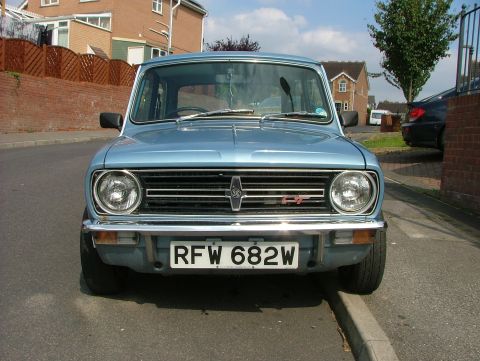
The Mini went on sale in August 1959 as both the Austin Seven and the Morris Mini-Minor, identical cars sold through BMC's two dealer networks. Issigonis mounted the 848cc A-series engine sideways with the gearbox in the sump, sharing engine oil, and used 10 inch wheels and rubber cone suspension by Alex Moulton to keep the mechanicals out of the cabin. Mini became a marque in its own right in 1969, dropping the Austin and Morris badging. The car passed through BMC, British Leyland, and Rover Group ownership without a full redesign, picking up wind-up windows in 1969, 12 inch wheels and front discs across the range by 1984, and single point fuel injection in 1991.
Mini Cooper, 1961-1971 and 1990-2000
John Cooper, whose Formula One cars won the 1959 and 1960 championships, saw the competition potential and built the first Mini Cooper in 1961 with a 997cc twin-carburetor engine and front disc brakes, tiny 7 inch discs behind the 10 inch wheels. The Cooper S followed in 1963 with a 1,071cc engine, joined by 970cc and 1,275cc versions in 1964. A 1,071cc S won the Monte Carlo Rally outright in 1964, and 1,275cc cars won again in 1965 and 1967 (the 1966 win was stripped on a headlamp technicality). British Leyland dropped the Cooper name in 1971 to save the royalty payment. Rover revived it in 1990 with a carbureted 1,275cc engine, and Coopers ran to the end of classic production in 2000.
Other classic variants
- Van (1960-1983), Pickup (1961-1983), and Estate (1960-1969): all on a longer 84 inch wheelbase; the Traveller and Countryman estates wore optional wood trim and gave way to the Clubman Estate in 1969.
- Mini Moke (1964-1968 UK): a doorless utility flop as a military vehicle that found a beach-car market; Australian production ran to 1981 and Portuguese production to 1993.
- Clubman (1969-1980): squared-off front end, with the 1275GT replacing the Cooper as the performance model; the Clubman Estate hung on until 1982.
The BMW era, 2001 on
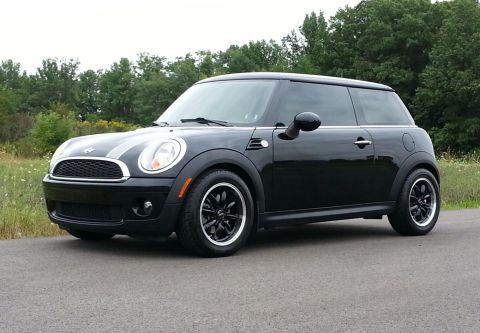
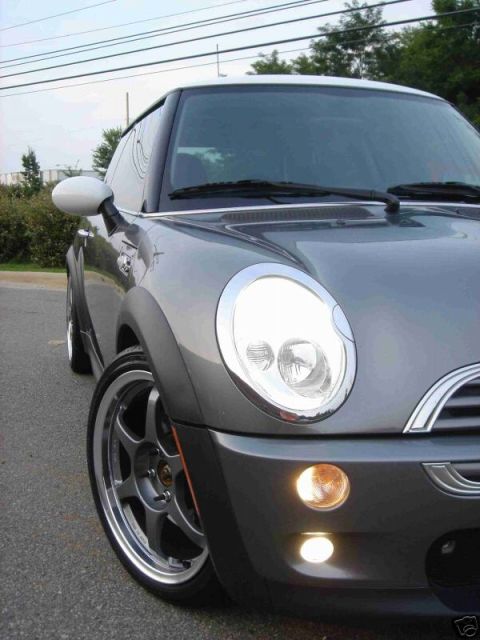
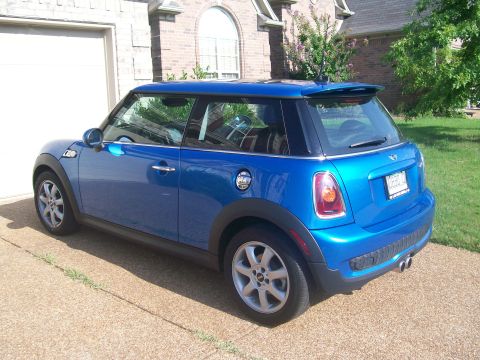
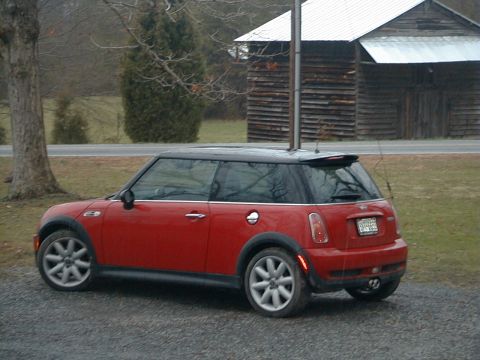
BMW retained the Mini brand when it sold Rover in 2000, and the R50/R53 MINI Cooper launched in 2001 with a Brazilian-built 1.6 liter Tritec four. The supercharged Cooper S (R53) made 163 hp. The second generation R56 arrived for 2007 with Prince engines co-developed with PSA, the Cooper S switching to a turbocharged 1.6. By 2010 the range had grown to include the Clubman wagon and the Countryman crossover. Classic and BMW cars share a name and little else; parts, tools, and know-how do not cross over.
Asked all the time
What years was the classic Mini made?
The classic Mini ran from August 1959 to October 2000, roughly 5.3 million cars. It launched as the Austin Seven and Morris Mini-Minor, and Mini became its own marque in 1969. BMW's all-new MINI followed in 2001.
What is the difference between a classic Mini Cooper and a BMW MINI Cooper?
The classic Mini Cooper (1961-1971, revived 1990-2000) is a 10-foot car with an A-series engine, gearbox in the sump, and 10 or 12 inch wheels. The BMW MINI Cooper from 2001 on is a much larger modern hatchback with a conventional drivetrain. They share almost no parts, and the wrenching skills barely transfer.
Are parts still available for classic Minis?
Yes, classic Mini parts supply is among the best of any vintage car. British Motor Heritage still presses body shells and panels, and the A-series engine was built in the millions, so mechanical parts, tuning gear, and reproduction trim are all easy to source through UK and US specialists.
Which Mini Coopers are the valuable ones?
The 1963-1971 Cooper S cars, especially 1,275cc examples, bring the strongest money, helped by Monte Carlo Rally wins in 1964, 1965, and 1967. Verify originality carefully; a huge number of standard Minis have been dressed up as Coopers, so check chassis and engine numbers against heritage records.
Why did Mini engines share oil with the gearbox?
Issigonis packaged the Mini's gearbox in the engine sump to fit the whole drivetrain sideways in a 10-foot car, so one oil supply serves both. On classic Minis that means using an oil that protects gears as well as bearings and changing it more often than a modern car, every 3,000 miles is the traditional rule.
The wall
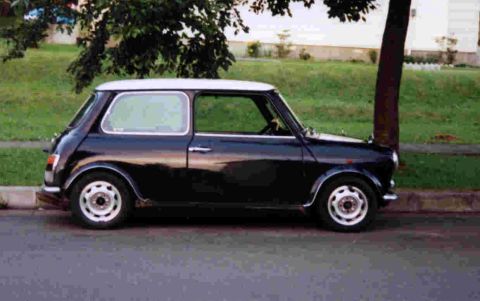
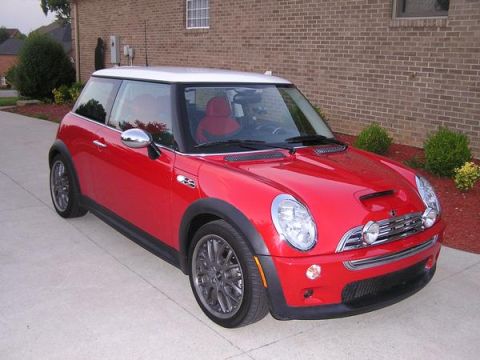
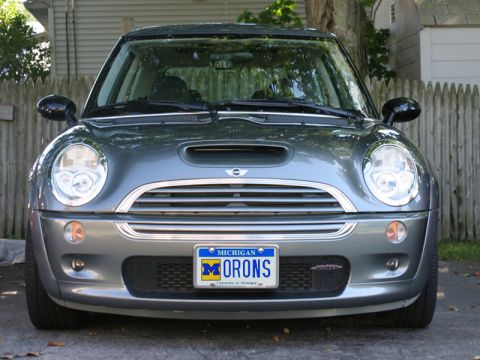
The most-documented Mini vehicles in the registry, every photo by the owner.