The registry
Oldsmobile Registry: Models, Builds & Photos
Oldsmobile was an American automobile marque founded by Ransom E. Olds as the Olds Motor Vehicle Company in Lansing, Michigan, on August 21, 1897, making it the oldest surviving American car brand for most of its life. Its Curved Dash runabout of 1901 was the first mass-produced automobile built on a progressive assembly system, predating Ford's moving line. Absorbed into General Motors in 1908 as one of William Durant's founding acquisitions, Oldsmobile spent nearly a century as GM's engineering-forward middle division, pioneering the Hydra-Matic automatic transmission in 1940, the high-compression Rocket V8 in 1949, and front-wheel drive with the 1966 Toronado. Badge engineering, corporate cost-sharing, and a collapsing brand identity eroded sales from a 1985 peak of over one million cars, and GM shut the division down, building the final Oldsmobile, an Alero, on April 29, 2004.
Pick your model
Key facts
| Founded | August 21, 1897, Lansing, Michigan (as the Olds Motor Vehicle Company) |
|---|---|
| Founders | Ransom E. Olds |
| Headquarters | Lansing, Michigan, USA |
| Parent/successor | General Motors (division since 1908) |
| Fate/status | Defunct; GM built the final Oldsmobile, an Alero, on April 29, 2004 |
| Best known for | Curved Dash runabout, Cutlass Supreme, Toronado |
| Registry presence | 42 vehicles / 425 photos documented by owners on SuperMotors |
1897-1908: Ransom E. Olds, the Curved Dash, and the Factory Fire That Made Mass Production
On August 21, 1897, Ransom Eli Olds incorporated the Olds Motor Vehicle Company in Lansing, Michigan, with backing from local lumber baron Edward W. Sparrow, and in doing so created what would become the oldest continuously operating American automobile marque. Olds was a tinkerer's son who had built steam and gasoline vehicles at his father's engine works, P.F. Olds & Son, since the mid-1880s. In 1899 copper magnate Samuel L. Smith recapitalized the venture as the Olds Motor Works and moved it to Detroit, taking control in exchange for his money and installing his sons in the business, a bargain that would soon cost Olds his own company.
The pivotal accident came in March 1901, when the Detroit factory burned to the ground. According to company lore, the only vehicle saved was a prototype of the small, inexpensive Curved Dash runabout, and the fire forced Olds to concentrate on that single 650-dollar model. Whatever the truth of the legend, the result was historic: Olds farmed out engines to Leland & Faulconer and transmissions to the Dodge brothers, assembled the cars on a progressive stationary-station system, and built 425 in 1901, then roughly 2,500 in 1902 and over 5,000 by 1904. The Curved Dash was the first genuinely mass-produced automobile in the world, a full decade before Henry Ford's moving assembly line, and it made Lansing and Detroit into car towns.
Success bred conflict. Samuel Smith's son Frederic wanted to move upmarket into larger, costlier touring cars; Ransom Olds believed the company's future was cheap runabouts. Holding the minority stake, Olds lost the argument and left in 1904, founding the rival REO Motor Car Company across town in Lansing, whose name came from his initials. The Smiths' bigger cars sold poorly, volume collapsed from its 1904 peak, and by 1908 the weakened Olds Motor Works was ripe for acquisition. On November 12, 1908, William C. Durant made it the second company, after Buick, folded into his new General Motors holding company. The founder's name stayed on the radiator; the founder himself never returned.
1908-1940: Durant's General Motors, Alfred Sloan's Ladder, and the Hydra-Matic Gamble
When William C. Durant bought the Olds Motor Works for General Motors stock in November 1908, he was buying a famous name attached to a nearly dead company, and GM spent the next decade deciding what Oldsmobile was for. Durant's first move was characteristic improvisation: he had a Buick body stretched and fitted to an Olds chassis to create a saleable car quickly. Through the 1910s Oldsmobile drifted between market segments, offering everything from fours to a 1916 V8, without a settled identity.
The identity arrived with Alfred P. Sloan, who took the GM presidency in 1923 and imposed his famous price ladder, a car for every purse and purpose. Oldsmobile was slotted into the middle: above Chevrolet and Pontiac, below Buick and Cadillac. Sloan's structure gave the division a durable role as GM's respectable, engineering-minded step-up brand, and the middle rungs proved a good place to test technology too risky for Cadillac's prestige or Chevrolet's volume. Oldsmobile introduced chrome plating on production trim in 1926 and offered a synchromesh-equipped, smooth-running product line that carried it through the Depression, which killed its companion marque Viking after just two model years, 1929 to 1930.
The era's defining act came at its close. Under divisional general manager Charles McCuen and GM engineer Earl Thompson, Oldsmobile was chosen as the launch division for the Hydra-Matic, the first mass-produced fully automatic transmission, offered as a 57-dollar option on 1940 models. It was a gamble on unproven, complex hardware, and it worked: Hydra-Matic became the industry's benchmark automatic, was licensed to rivals and even fitted to World War II tanks, and permanently fixed Oldsmobile's reputation as the GM division where the future showed up first.
1949-1963: The Rocket V8, NASCAR Dominance, and the Chrome Consensus of the Fifties
In 1949 Oldsmobile dropped a new 303-cubic-inch, high-compression overhead-valve V8 called the Rocket into its lighter 88-series body, and in doing so built what many historians count as the first American muscle car. The engine was conceived by Oldsmobile engine designer Gilbert Burrell, building on Charles Kettering's high-compression research at GM and the promise of postwar high-octane fuel, and the Rocket 88 immediately proved itself where it mattered commercially: it won five of the eight races in NASCAR's inaugural Strictly Stock season in 1949 and dominated again in 1950, taking ten of nineteen races and NASCAR's first manufacturers' championship, the year a Rocket 88 also won the inaugural Carrera Panamericana. Jackie Brenston and Ike Turner's 1951 record "Rocket 88" gave the car a claim on the founding of rock and roll, free advertising no rival could buy.
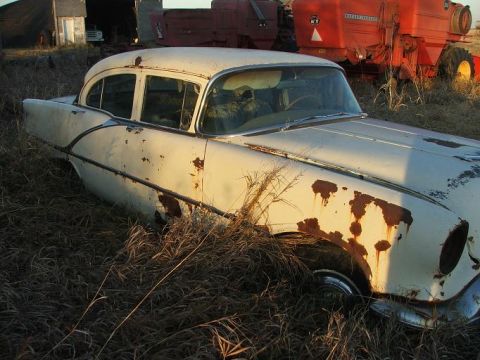
The Rocket remade the division's fortunes and its image. Oldsmobile climbed the sales charts through the 1950s, regularly ranking fourth or fifth in the industry, with the 88 line as its volume backbone and the Ninety-Eight as its flagship, the car that carried the division's prestige and its Harley Earl-era styling statements, including the 1948-introduced Futuramic bodies that had previewed GM's postwar look. Rocket branding saturated everything: emblems, hood ornaments, and the world's fair-flavored optimism of names like Golden Rocket and Starfire.
The chrome consensus had limits. When the horsepower race drew safety scrutiny, the Automobile Manufacturers Association's 1957 racing ban pushed Oldsmobile out of open factory competition, and the division settled into prosperous conventionality. Its one notable early-sixties heresy was the 1962-1963 Jetfire, a turbocharged version of the compact F-85 and among the first two turbocharged production cars in the world, launched within weeks of Chevrolet's Corvair Monza Spyder. The Jetfire's fluid-injection system confounded owners and dealers and was quietly withdrawn, an emblematic case of Oldsmobile innovating faster than its customers could absorb.
1964-1970: John Beltz, the 442, and the Toronado's Front-Wheel-Drive Moonshot
In 1964 Oldsmobile answered Pontiac's GTO within months with option code B09 on the F-85/Cutlass, and the 442 gave the division a credible seat in the muscle car era it had arguably invented in 1949. The 442 mattered to the corporation less as a volume product than as proof that Oldsmobile could hold young buyers Pontiac's John DeLorean was stealing, and by 1970, with GM's displacement cap lifted, its W-30 form stood at the top of the market the division then led in respectability if not outright ferocity.

The engineering statement of the decade was the 1966 Toronado, the first American front-wheel-drive production car since the 1937 Cord. Championed by chief engineer John Beltz, who became general manager in 1969, and styled under David North and Stanley Wilen in Bill Mitchell's GM Design organization, the Toronado sent 385 horsepower through the front wheels via a chain-drive Unitized Power Package that GM would reuse for the Cadillac Eldorado and the GMC motorhome. It won Motor Trend's 1966 Car of the Year and, more importantly for the corporate story, re-established Oldsmobile as GM's technology division at exactly the moment Sloan's ladder was blurring. Beltz, widely seen as a future GM president, died of cancer in May 1972 at age 46, a loss division veterans later counted among the reasons Oldsmobile's engineering independence faded.
Underneath the halo cars, the strategic engine of the future was already running: the Cutlass, the A-body intermediate that offered near-Ninety-Eight respectability at mid-market prices. Its ascent through the late 1960s positioned Oldsmobile for the extraordinary sales run of the following decade.
1971-1985: Cutlass Supreme America, the Diesel Disaster, and the Million-Car Peak
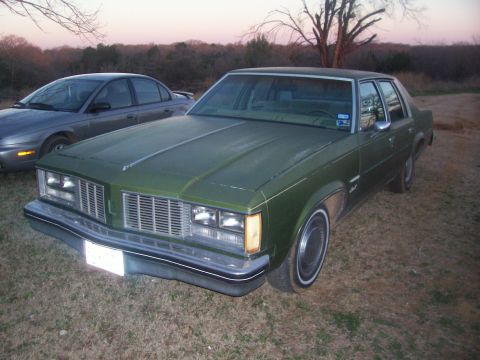
Between 1976 and the early 1980s the Oldsmobile Cutlass was, in several model years, the single best-selling car line in the United States, and it carried the division to heights no GM middle brand reached before or since. The formula was the Cutlass Supreme coupe: a formal-roof, velour-lined personal luxury car that translated Brougham-era taste into an attainable package. Oldsmobile passed Pontiac and Buick, took third place in the industry behind Chevrolet and Ford, and in 1985 built more than one million cars in a single model year, its all-time peak; only Chevrolet and Ford had ever reached that threshold before Oldsmobile first crossed it in the late 1970s. The "not your father's Oldsmobile" pleading was still years away; through the peak years the father's Oldsmobile was precisely the point.
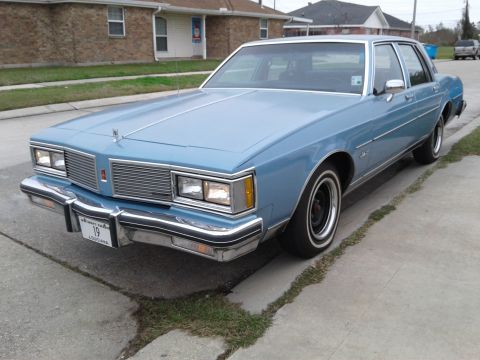
The same era planted the seeds of decline, most of them corporate. In 1977 the discovery that Chevrolet 350 V8s were being installed in Oldsmobiles sold as Rocket-powered cars triggered the "Chevymobile" lawsuits, a consumer-fraud scandal that GM settled with cash payments and extended warranties for tens of thousands of owners, at a potential cost contemporaries put near 40 million dollars, and it taught buyers that GM divisions were interchangeable under the skin. The 1978 Oldsmobile-developed 350 diesel V8, rushed to answer fuel-economy pressure by converting gasoline-engine architecture, failed in the field at catastrophic rates, spawned class actions and state lemon-law momentum, and is widely credited with setting back U.S. diesel-passenger-car adoption for years. Then GM chairman Roger Smith's 1984 reorganization dissolved the divisions' separate engineering staffs into the B-O-C and C-P-C groups, stripping Oldsmobile of the in-house engineering identity that had justified its existence since 1940.
The front-drive Cutlass Ciera of 1982, an A-body shared almost panel-for-panel with Buick, Pontiac, and Chevrolet siblings, sold in enormous numbers while demonstrating the problem: at the very moment of the million-car year, an Oldsmobile was becoming a trim level rather than a make.
1986-1997: Badge Engineering, "Not Your Father's Oldsmobile," and the Aurora Rescue Attempt
Oldsmobile's sales fell from over one million cars in 1985 to roughly half that by 1990, one of the fastest peacetime collapses of a major American brand, and the causes were made in GM's boardroom as much as in Lansing. Roger Smith's look-alike front-drive programs put near-identical GM10 and A-body sedans in Chevrolet, Pontiac, Oldsmobile, and Buick showrooms simultaneously, while Ford's aerodynamic Taurus and the ascendant Japanese brands, plus GM's own new Saturn division, carved away exactly the college-educated, import-curious buyers Oldsmobile claimed to want. The division's marketing pitch, the 1988-launched "This is not your father's Oldsmobile" campaign, became a business-school cautionary tale: it told loyalists they were obsolete without giving younger buyers a concrete reason to visit, and it named the brand's problem on national television.
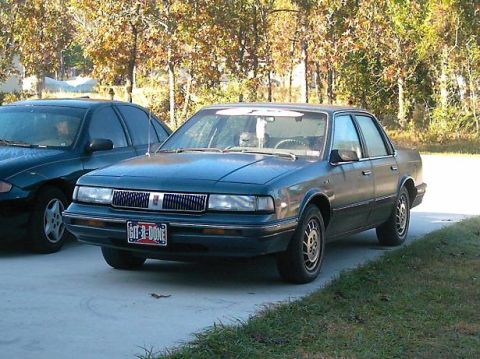
The compact Calais, an N-body triplet with the Pontiac Grand Am and Buick Somerset, typified the era's product logic, differentiated mainly by grilles and cluster graphics even as it hosted the ambitious Quad 4 sixteen-valve engine, a genuine Oldsmobile engineering effort marooned in an anonymous car. The division tried repositioning as GM's import fighter under general managers William Lane, Michael Losh, and then John Rock, the blunt-spoken former GMC chief who took over in 1992 and openly fought GM staff for the brand's survival.
Rock's centerpiece was the 1995 Aurora, a 32-valve V8 flagship on the new G-body, styled so deliberately apart from GM's fleet that it barely wore an Oldsmobile badge; the division even retired the rocket logo's old form for an Aurora-derived mark. Critics praised the car and it briefly steadied the brand's image, alongside the 1991-launched Bravada, the marque's first truck-based product since its early commercial vehicles and its hedge into the SUV boom. But the Aurora sold in the tens of thousands per year while the mass-market lines aged, and GM's centennial-year gestures toward the division in 1997 masked a portfolio still dependent on rebodied corporate platforms.
1998-2004: The Alero Endgame, Ron Zarrella's Portfolio Math, and the Last Car on April 29, 2004
On December 12, 2000, General Motors announced it would phase out Oldsmobile, the first time GM had deliberately killed one of its own divisions since LaSalle in 1940 and an announcement that came barely a year after Chrysler condemned Plymouth, and the decision was arithmetic rather than sentiment. Under GM North America president Ron Zarrella's brand-management regime, each marque had to justify its portfolio slot; Oldsmobile's sales had slid to barely 300,000 a year by 2000 while its buyer base aged and overlapped Buick's, and GM said at the time that the cost of rebuilding the brand exceeded the cost of ending it. A final all-new product wave, the 1998 Intrigue sedan, the 1999 Alero compact, and the 2001 Bravada on GM's new mid-SUV architecture, was well reviewed but could not outrun two decades of eroded identity, and the announcement itself froze showroom traffic further.
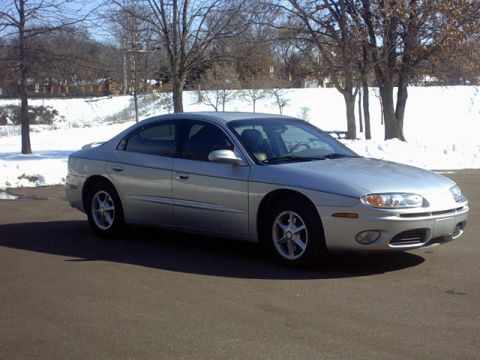
The wind-down consumed more than three years and considerable money. GM compensated roughly 2,800 Oldsmobile dealers, with published estimates of the total phase-out cost running over one billion dollars, and settled dealer litigation that dragged past the brand's death. Lansing, the company town Ransom Olds had built, watched the marque leave before its factories were repurposed for other GM products. The final 500 cars of each remaining line wore Final 500 commemorative trim in dark cherry metallic.
The last Oldsmobile, an Alero GLS sedan signed by Lansing assembly workers, came off the line on April 29, 2004, and went to Lansing's R.E. Olds Transportation Museum, later moving to GM's Heritage Center, ending the marque at 107 years and roughly 35 million vehicles built. The obituary writes itself as corporate anatomy: a brand that survived losing its founder in 1904, the Depression, and the horsepower wars could not survive becoming indistinguishable from its siblings. Oldsmobile died not of one bad car but of Sloan's ladder collapsing on the rungs in the middle.
Leadership
| Leader | Tenure | Legacy |
|---|---|---|
| Ransom E. Olds | 1897-1904 | Founded the company and put the Curved Dash into progressive assembly-line production before leaving to start REO. |
| Frederic L. Smith | 1899-1908 | Son of copper magnate Samuel L. Smith; as secretary-treasurer he was the family's operating head at Olds Motor Works, pushed the brand upmarket, and sold it to Durant's General Motors in 1908. |
| Charles L. McCuen | 1933-1940 | Engineering-minded general manager under whom Oldsmobile launched the Hydra-Matic, the first mass-produced fully automatic transmission, for 1940. |
| Sherrod E. Skinner | 1940-1950 | Steered the division through wartime production and the 1949 launch of the high-compression Rocket V8. |
| Jack F. Wolfram | 1951-1964 | Presided over the Rocket-era sales climb and the fifties styling boom, keeping Oldsmobile solidly in the industry's top ranks. |
| Harold N. Metzel | 1964-1969 | General manager during the 442's birth and the 1966 Toronado, the first American front-wheel-drive car since the Cord. |
| John B. Beltz | 1969-1972 | Chief engineer turned general manager who championed the Toronado program; died in office in May 1972 at age 46. |
| Howard H. Kehrl | 1972-1973 | Succeeded Beltz and presided over the record-selling 1973 Cutlass launch before rising through GM to corporate vice chairman. |
| Robert J. Cook | through 1983 | Lansing career man who ran the division through the Cutlass Supreme boom and the diesel-era turbulence, retiring in 1983. |
| William W. Lane | 1985-1989 | General manager at the division's mid-1980s sales peak; the Leo Burnett "This Is Not Your Father's Oldsmobile" campaign launched on his watch in 1988. |
| Michael Losh | 1989-1992 | Inherited the 1988 "Not Your Father's Oldsmobile" campaign and wound it down by early 1990 as sales kept sliding. |
| John Rock | 1992-1997 | Blunt-spoken general manager who launched the Aurora and fought internally to save the division before retiring. |
| Ron Zarrella | 1994-2001 (GM North America marketing chief, then president) | His brand-portfolio management framework concluded Oldsmobile was redundant; GM announced the phase-out in December 2000. |
Timeline
| Year | Event | Detail |
|---|---|---|
| 1897 | Company founded | Ransom E. Olds incorporates the Olds Motor Vehicle Company in Lansing, Michigan, on August 21, 1897. |
| 1899 | Olds Motor Works formed | The Smith family of Detroit buys in, reorganizing the firm as Olds Motor Works with a new Detroit factory. |
| 1901 | Factory fire and Curved Dash | A March 1901 fire destroys the Detroit plant, leaving the Curved Dash runabout as the sole surviving design; it becomes the first mass-produced American automobile. |
| 1904 | Ransom Olds departs | After clashing with the Smiths over product direction, Olds leaves and founds the rival REO Motor Car Company in Lansing. |
| 1908 | Joins General Motors | William C. Durant makes Oldsmobile one of the founding acquisitions of his new General Motors holding company on November 12, 1908. |
| 1940 | Hydra-Matic introduced | Oldsmobile offers the Hydra-Matic, the industry's first mass-produced fully automatic transmission, as a $57 option on 1940 models. |
| 1949 | Rocket V8 and 98 | The 303-cubic-inch overhead-valve Rocket V8 debuts in the 98 and Futuramic 88, and Rocket-powered cars win five of the eight races in NASCAR's first Strictly Stock season. |
| 1949 | 88 line launched | The 88 pairs the Rocket V8 with the lighter A-body, creating what many historians call the first muscle car; it later evolves into the Delta 88. |
| 1961 | Cutlass introduced | The Cutlass name arrives on the compact F-85 line and grows into the best-selling nameplate in America by the mid-1970s. |
| 1964 | 442 introduced | The 442 performance package answers Pontiac's GTO and becomes Oldsmobile's signature muscle car. |
| 1966 | Toronado launched | The Toronado is the first American front-wheel-drive production car since the 1937 Cord, engineered under John Beltz. |
| 1972 | Death of John Beltz | General manager John Beltz, driving force behind the Toronado, dies in office at 46. |
| 1977 | Diesel program begins | Oldsmobile introduces the 350 diesel V8 for 1978; its reliability failures spawn class-action suits and damage American confidence in diesel cars for decades. |
| 1982 | Cutlass Ciera introduced | The front-drive A-body Cutlass Ciera becomes one of the division's volume mainstays through the 1980s and into the 1990s. |
| 1985 | Million-car peak | Oldsmobile sells over one million cars in a model year, third behind Chevrolet and Ford, before badge engineering erodes its identity. |
| 1985 | Calais introduced | The compact N-body Calais launches for 1985, later renamed Cutlass Calais. |
| 1988 | "Not Your Father's Oldsmobile" | The ad campaign aimed at younger buyers instead reminds them the brand was their father's, and sales keep falling. |
| 1991 | Bravada introduced | The Bravada, a luxury version of GM's compact SUV, is the first truck-type Oldsmobile since the brand's early commercial vehicles. |
| 1995 | Aurora launched | The clean-sheet Aurora sedan, with a 4.0-liter DOHC V8 derived from Cadillac's Northstar, is the division's last serious rescue attempt. |
| 1999 | Alero introduced | The compact Alero replaces the Achieva and Cutlass and ends up as the final Oldsmobile model line. |
| 2000 | Phase-out announced | GM announces on December 12, 2000 that it will wind down Oldsmobile, citing years of losses and brand overlap. |
| 2004 | Final car built | The last Oldsmobile, an Alero sedan, rolls off the Lansing line on April 29, 2004, ending 107 years of production. |
Asked all the time
Who founded Oldsmobile?
Ransom E. Olds founded the Olds Motor Vehicle Company in Lansing, Michigan, on August 21, 1897. He left in 1904 after disputes with the financing Smith family and started the rival REO Motor Car Company across town.
Why did Oldsmobile shut down?
General Motors announced the phase-out on December 12, 2000, after years of losses and shrinking sales. Ron Zarrella's brand-portfolio analysis concluded Oldsmobile overlapped Buick, Pontiac, and Chevrolet with no distinct customer base left. Sales had fallen from over one million cars in 1985 to roughly a quarter of that by 2000.
When was the last Oldsmobile built?
The final Oldsmobile, an Alero sedan, was built at the Lansing, Michigan assembly plant on April 29, 2004, ending 107 years of production under the marque.
Was Oldsmobile the oldest American car brand?
For most of its life, yes. Founded in 1897, it predated every other surviving American marque during its production run. After its 2004 shutdown, Buick (1899) became the oldest active American car brand.
What was Oldsmobile's biggest engineering contribution?
Two stand out: the Hydra-Matic of 1940, the first mass-produced fully automatic transmission, and the 1949 Rocket V8, the high-compression overhead-valve engine that helped launch the postwar horsepower era. The 1966 Toronado's front-wheel drive was a third landmark.
How is Oldsmobile connected to General Motors?
William C. Durant bought Oldsmobile on November 12, 1908, making it one of the founding pieces of General Motors. It operated as a GM division for 96 years, positioned in Alfred Sloan's brand ladder between Pontiac and Buick.
Was Oldsmobile hurt by its diesel engine?
Yes. The 350 diesel V8 introduced for 1978 suffered head-bolt and fuel-system failures that triggered class-action lawsuits and state lemon-law claims. The damage went beyond one division: the engine is widely credited with souring American buyers on diesel passenger cars for a generation.
The wall
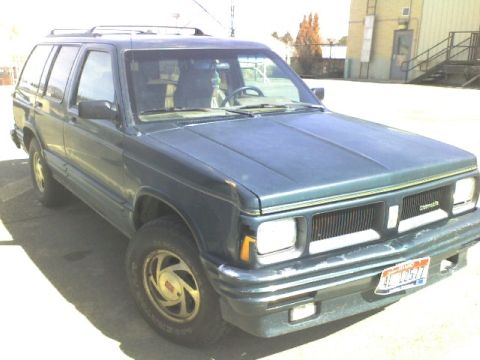
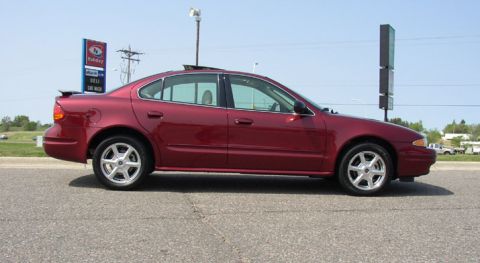
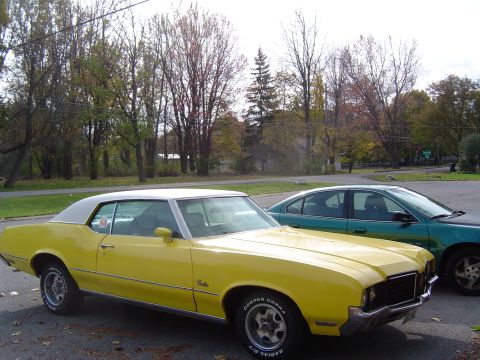
The most-documented Oldsmobile vehicles in the registry, every photo by the owner.