The registry
Plymouth Registry: Models, Builds & Photos
Plymouth was an American automobile brand founded in 1928 by Walter P. Chrysler as the low-priced division of Chrysler Corporation, headquartered in Highland Park and later Auburn Hills, Michigan. Created to fight Ford and Chevrolet on price, Plymouth carried Chrysler through the Depression, ranked as America's third best-selling brand for most of three decades, and later produced muscle-car landmarks like the Road Runner and Barracuda and the market-creating Voyager minivan. Decades of badge engineering eroded its identity, and after Chrysler's 1998 merger with Daimler-Benz, DaimlerChrysler discontinued the brand. The last Plymouth, a Neon, was built on June 28, 2001, and remaining models were rebadged as Chryslers. Plymouth is defunct today.
Pick your model
Key facts
| Fact | Detail |
|---|---|
| Founded | 1928 (introduced July 7, 1928); Highland Park, Michigan, USA |
| Founders | Walter P. Chrysler |
| Headquarters | Highland Park, Michigan; Auburn Hills, Michigan from 1996 |
| Parent / successor | Chrysler Corporation; DaimlerChrysler from 1998, which absorbed remaining models under the Chrysler badge |
| Fate / status | Defunct; discontinued by DaimlerChrysler in 2001 (last car built June 28, 2001) |
| Best known for | Road Runner, Barracuda, Voyager |
| Registry presence | 37 vehicles / 587 photos documented by owners on SuperMotors |
1928-1933: Walter P. Chrysler Builds a Ford Fighter
On July 7, 1928, Walter P. Chrysler unveiled the first Plymouth at Madison Square Garden in New York, and Chrysler's own company histories credit Amelia Earhart, weeks removed from her Atlantic crossing, as an early spokeswoman for the new brand. The debut was staged to announce Chrysler Corporation's entry into the low-priced field dominated by Ford and Chevrolet. The name, suggested by sales manager Joe Frazer, traded on Plymouth Rock and Plymouth Binder Twine, a brand every American farmer knew. Plymouth was never a company in its own right; it was a division of Chrysler Corporation from the first day, built initially at the Highland Park plant and sold through Chrysler dealers who needed a volume product to survive.
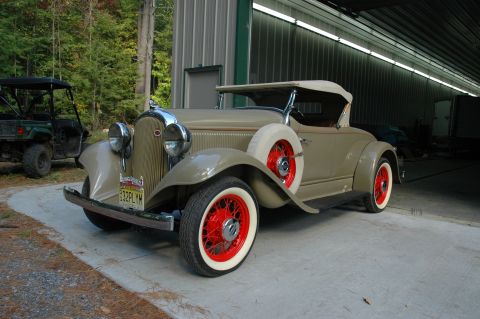
The timing looked reckless and proved brilliant. When the Depression hit in 1929, cheap cars were the only cars selling, and Plymouth carried the entire corporation. Walter Chrysler bet heavily on engineering as the differentiator: the 1931 PA introduced Floating Power engine mounts, and Plymouth offered four-wheel hydraulic brakes when Ford still sold mechanical ones. In 1930 Chrysler gave Dodge and DeSoto dealers the Plymouth franchise too, tripling the sales network overnight. By 1931 Plymouth had passed Buick to claim third place in American sales, a position it would defend for most of the next quarter century, and the corporation that might have died in the Depression instead passed Ford in total volume before the decade ended.
1934-1949: K.T. Keller, Conservative Bodies, and the Wartime Interlude
After Walter Chrysler stepped back from daily management in 1935 and died in 1940, Plymouth's fate passed to K.T. Keller, a production man whose taste ran to tall, practical bodies a man could wear a hat in. Under Keller, Plymouth avoided the styling risk that had burned Chrysler with the 1934 Airflow; the division sold durable, conservatively engineered sedans in enormous numbers, cresting 500,000 units in several late-1930s years and holding third place behind Chevrolet and Ford.
Civilian production stopped in early 1942 as the division's Detroit plants converted to war work, building munitions and components within Chrysler's larger arsenal program. When production resumed in late 1945, Plymouth, like every American make, sold warmed-over 1942 designs to a car-starved public. The genuinely new postwar Plymouths of 1949 embodied Keller's boxy philosophy just as General Motors was going low and sleek. The cars sold well in a seller's market, but the styling conservatism planted the seed of the crisis that would hit Plymouth in the early 1950s, when buyers finally had choices again and Chrysler products looked a generation old.
1950-1959: Virgil Exner's Forward Look Rescues a Fading Third Place
By 1954 Plymouth had fallen from third to fifth in American sales, and the cause was visible from across the street: Keller-era styling in a Harley Earl world. Chrysler president Lester Colbert's answer was to unleash designer Virgil Exner, hired from Studebaker in 1949, whose 1955 Forward Look and then the dramatic 1957 line ('Suddenly, it's 1960!' ran the advertising) gave Plymouth the longest, lowest, most befinned cars in the low-priced field. The 1957 Plymouth Fury became the era's signature machine, and division production rebounded past 700,000 that year, restoring third place.
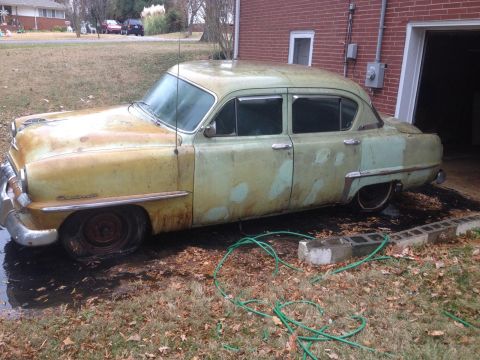
The rescue carried a hidden cost. The 1957 cars were rushed to market and rusted and rattled notoriously, damaging Plymouth's quality reputation for years; automotive historians consistently cite the 1957 Chrysler line as a turning point in the corporation's quality image. The decade also brought real engineering credentials, including the corporation's TorqueFlite automatic and, at decade's end, unibody construction across the line for 1960. Plymouth entered the 1960s with striking cars, a bruised reputation, and a corporate parent about to make a catastrophic product-planning mistake.
1960-1964: The Downsizing Disaster and the Valiant Lifeline
In 1962 Plymouth nearly destroyed itself over a rumor. Chrysler chief William Newberg, briefly president in 1960, reportedly overheard talk that Chevrolet was downsizing and ordered Plymouth's 1962 full-size cars shrunk late in development. Chevrolet was not downsizing its full-size line; the smaller Chevrolet turned out to be the compact Chevy II. Buyers rejected the smaller, oddly styled 1962 Plymouths, and Plymouth fell from fourth place to eighth, its worst showing to that point. The crisis contributed to the housecleaning that brought Lynn Townsend to the corporation's presidency in 1961.
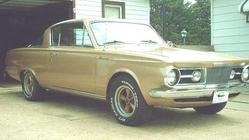
Two lifelines saved the division. The compact Valiant, launched for 1960 with the durable Slant Six engine, earned a bulletproof reputation and sold steadily through economic weather that sank flashier cars. And the unloved downsized big cars turned out to be superb drag-racing platforms; with the 426 wedge and then the 1964 Race Hemi, the Plymouths of Richard Petty and the Golden Commandos drag team dominated NASCAR and NHRA, with Petty winning the 1964 Daytona 500 in a Hemi Belvedere-based Plymouth. Racing gave the division a performance identity precisely when its sales identity was in ruins, and Townsend's team rebuilt the lineup around that identity for the decade to come.
1964-1971: Barracuda, Road Runner, and the Cartoon-Licensed Peak of Muscle
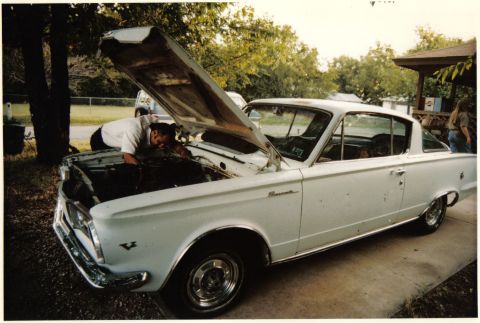
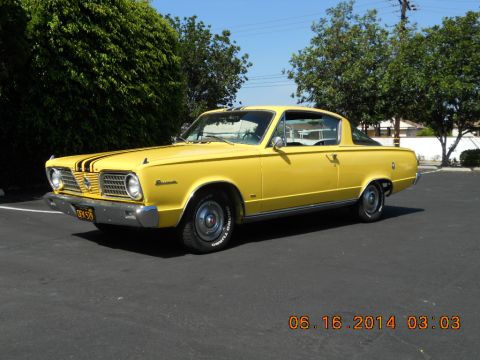
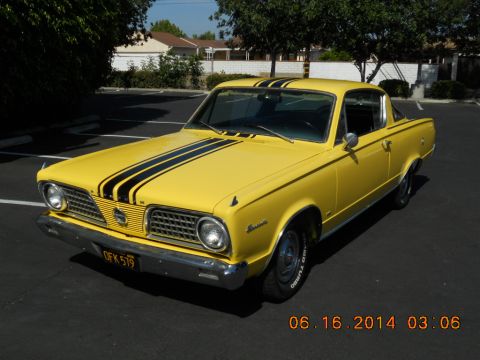
Plymouth beat the Ford Mustang to market by two weeks. The Barracuda, launched April 1, 1964 as a fastback Valiant derivative, was the division's answer to the coming youth market, though Ford's purpose-built Mustang outsold it overwhelmingly and taught Chrysler that a rebodied compact could not win a segment built on image. The lesson shaped everything Plymouth did next.
The masterstroke came in 1968. Product planners, recognizing that muscle cars had drifted upmarket, stripped the intermediate Belvedere to its essentials, fitted the 383 engine, paid Warner Bros. $50,000 to license the Road Runner cartoon (and another $10,000 to develop the 'beep-beep' horn), and priced the result under $3,000. The Road Runner sold roughly 45,000 units its first year against a forecast of about 2,500 cars, and its winged Superbird derivative lured Richard Petty back to Plymouth and into NASCAR's aero wars. The 1970 E-body Barracuda gave the pony car a dedicated platform at last, and the budget Duster coupe of 1970 became a quiet volume hero, keeping Valiant-platform sales strong. This was Plymouth's creative peak: the division reclaimed third place in U.S. sales in 1971 and again in 1974, and 1973 was the biggest volume year in its history. But insurance surcharges, emissions rules, and the coming fuel crisis were already dismantling the performance market the brand had just conquered.
1971-1979: Badge Engineering, the Volare Recalls, and Chrysler's Slide Toward Bankruptcy
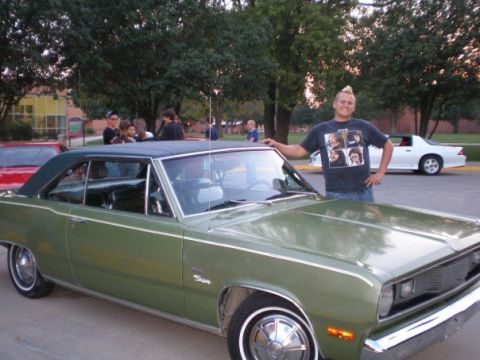
The 1970s hollowed Plymouth out from the inside. Under Lynn Townsend and his successor John Riccardo, Chrysler Corporation increasingly built one car and sold it twice, and Plymouth's versions, like the Scamp twin of the Dodge Dart Swinger, differed from their Dodge siblings by little more than grilles and taillamps. With no unique product and no clear identity beyond low price, the division depended on execution, and execution failed at the worst moment.
The 1976 Volare, the Valiant's replacement and Motor Trend's Car of the Year, was rushed to market and became one of the most recalled American cars of its era, with campaigns covering fender rust-through and stalling among other defects; the warranty and reputation damage fell on a corporation already bleeding cash. As Chrysler lurched toward the 1979-80 federal loan guarantee crisis that brought Lee Iacocca from Ford, Plymouth's captive-import Sapporo and Champ patches could not hide that the once third-place brand had lost the product, the volume, and the reason to exist separately from Dodge. Sales that had exceeded 700,000 in good years fell into steep decline, and full-size survivors like the Gran Fury lived on largely as police and fleet cars.
1980-1994: Lee Iacocca's K-Cars and the Voyager Minivan Save Chrysler, Not Plymouth
The cars that saved Chrysler Corporation in the 1980s wore Plymouth badges without saving Plymouth. Lee Iacocca, installed as chairman in 1979, bet the government-guaranteed loans on the front-drive K-car, and the 1981 Plymouth Reliant and Dodge Aries sold in the hundreds of thousands, letting Chrysler repay the loans seven years early in 1983. The 1984 Voyager, twin to the Dodge Caravan, created the American minivan market outright and became the most consequential vehicle ever to wear the Plymouth name.
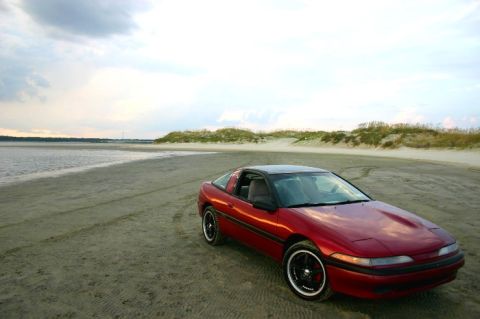
Yet every one of these hits was a shared corporate product, and the corporate logic that produced them left Plymouth nothing of its own. The sporty Laser of 1990 was built by the Diamond-Star Motors joint venture with Mitsubishi and was identical beneath its badges to the Mitsubishi Eclipse and Eagle Talon, and the K-derived Acclaim of 1989 was all but identical to the Dodge Spirit. Meanwhile Iacocca's acquisitions and brand strategy pushed Dodge toward performance and Chrysler upmarket, leaving Plymouth as the value badge with no styling identity, no exclusive product, and shrinking dealer commitment. By the early 1990s Plymouth's lineup had thinned to a handful of models, and Chrysler's product planners debated repositioning or winding down Plymouth.
1994-2001: The Neon, the Prowler, and DaimlerChrysler's Death Sentence
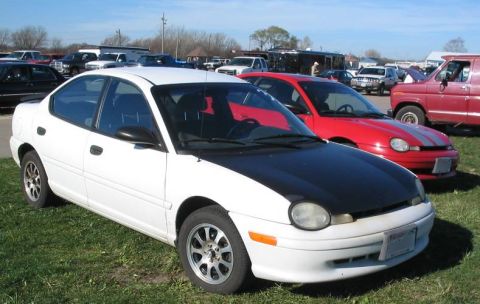
Plymouth's last decade was a rescue attempt followed by an execution. The 1994 Neon small car ('Hi.' said the launch ads) was a genuine hit and briefly suggested Plymouth could be reborn as a friendly entry brand, an idea Chrysler executives formalized in the late 1990s with a planned small-car-and-simplicity positioning. The 1997 Prowler, a factory-built retro hot rod championed by design chief Tom Gale, was meant as the halo for that revival, the only truly exclusive Plymouth in decades.
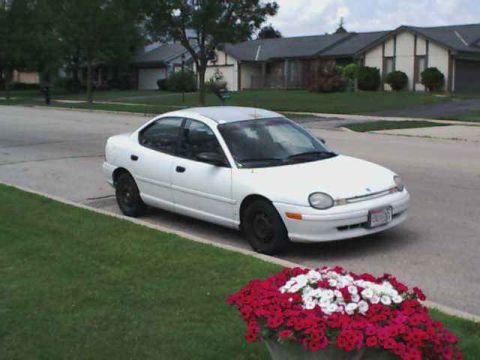
The November 1998 merger with Daimler-Benz killed the plan. DaimlerChrysler, cutting overlap across its American brands, announced on November 3, 1999 that Plymouth would be discontinued; every remaining Plymouth had a Dodge or Chrysler twin, so the brand could be deleted at almost no product cost. The PT Cruiser, developed as a Plymouth, launched as a Chrysler. The Prowler and Voyager were rebadged as Chryslers, and the last Plymouth, a silver Neon, came off the Belvidere, Illinois line on June 28, 2001. Seventy-three years after its Madison Square Garden debut with Amelia Earhart, the brand that once outsold everything in America but Chevrolet and Ford ended not with a failure but with a bookkeeping decision: decades of badge engineering had left nothing distinct enough to keep.
Leadership
| Leader | Tenure | Legacy |
|---|---|---|
| Walter P. Chrysler | 1925-1935 (Chrysler Corporation president) | Created Plymouth in 1928 as the corporation's low-priced weapon against Ford and Chevrolet, giving it hydraulic brakes the rivals lacked. |
| K.T. Keller | 1935-1950 (president), chairman to 1956 | Kept Plymouth solidly third in sales with conservative, roomy "chair-height" bodies that aged badly against postwar styling. |
| Lester "Tex" Colbert | 1950-1961 (Chrysler president) | Bankrolled Exner's Forward Look that returned Plymouth to third place in 1957, but rushed launches and the downsizing decision hatched on his watch closed his tenure in crisis. |
| Virgil Exner | 1949-1961 (Chrysler styling chief) | His 1955-1957 Forward Look made Plymouth the styling leader of the low-priced three, though rushed 1957 build quality damaged the brand. |
| Lynn Townsend | 1961-1975 (Chrysler president, then chairman) | Presided over Plymouth's muscle-car peak and its slide into badge engineering that blurred the brand's reason to exist. |
| John Riccardo | 1970-1975 (president), chairman 1975-1979 | Ran Chrysler through the Volare recalls and the slide toward federal rescue; recruited Lee Iacocca and stepped aside to clear the way for the loan guarantees. |
| Lee Iacocca | 1978-1992 (Chrysler chairman/CEO) | Saved Chrysler with the K-car and the 1984 Voyager minivan but left Plymouth without a distinct product identity. |
| Robert Eaton | 1993-1998 (Chrysler CEO), DaimlerChrysler co-chairman to 2000 | Engineered the 1998 Daimler-Benz merger; DaimlerChrysler announced Plymouth's termination in November 1999. |
Timeline
| Year | Event | Note |
|---|---|---|
| 1928 | Plymouth brand launched | Walter P. Chrysler introduces the Plymouth Model Q in July 1928 as Chrysler Corporation's entry in the low-priced field. |
| 1931 | Third place in U.S. sales | In only its fourth year, Plymouth passes Buick to join Ford and Chevrolet as one of the "low-priced three," a rank it holds for most of the next quarter century. |
| 1931 | Floating Power PA introduced | Rubber engine mounts and hydraulic brakes give the cheap Plymouth engineering features Ford and Chevrolet lack. |
| 1942 | Civilian production halted | Plymouth's Detroit lines convert to war material in February 1942 and do not build cars again until late 1945. |
| 1957 | Forward Look peak | Virgil Exner's finned 1957 Plymouths, sold under the slogan "Suddenly, it's 1960," outstyle Chevrolet and Ford but suffer rushed build quality. |
| 1960 | Valiant introduced | The compact Valiant, with Chrysler's new Slant Six, becomes the sales lifeline as full-size Plymouths stumble. |
| 1962 | Downsizing disaster | Plymouth shrinks its full-size line on a rumor about Chevrolet's plans and falls from fourth to eighth in industry sales. |
| 1964 | Barracuda introduced | The fastback Barracuda reaches showrooms on April 1, 1964, two weeks ahead of the Ford Mustang. |
| 1965 | Belvedere becomes the intermediate line | The Belvedere name moves to Plymouth's new B-body midsize platform, the foundation of its coming muscle cars. |
| 1968 | Road Runner introduced | Plymouth licenses the Warner Bros. cartoon bird for a stripped 383-powered budget muscle car and sells roughly 45,000 the first year. |
| 1970 | Duster introduced | The semi-fastback Valiant-based Duster becomes a huge seller, with the 340 version as the budget performance star. |
| 1971 | Scamp introduced | The Scamp hardtop, a rebadged Dodge Dart Swinger, typifies the badge engineering overtaking the brand. |
| 1973 | Biggest year in Plymouth history | Plymouth posts its highest volume ever, led by the Valiant family, and holds third place in U.S. sales in 1971 and 1974. |
| 1976 | Volare introduced | The Volare replaces the Valiant, wins Motor Trend Car of the Year, then suffers massive rust and safety recalls that stain Chrysler's reputation. |
| 1979 | Chrysler near bankruptcy; Iacocca arrives | Lee Iacocca becomes chairman and secures $1.5 billion in federal loan guarantees signed into law in January 1980. |
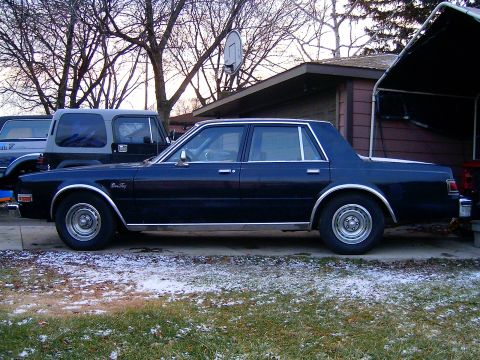
| 1980 | Gran Fury revived on the R-body | The full-size Gran Fury returns, then continues from 1982 as the M-body sedan familiar from police fleets. |
| 1981 | Reliant K-car introduced | The front-drive Plymouth Reliant and Dodge Aries K-cars anchor Chrysler's financial recovery. |
| 1984 | Voyager minivan introduced | The Voyager and Dodge Caravan create the modern minivan market and become Chrysler's most profitable franchise. |
| 1989 | Acclaim introduced | The AA-body Acclaim sedan, a near-clone of the Dodge Spirit, shows how little separated Plymouth from its siblings. |
| 1990 | Laser introduced | The Diamond-Star-built Laser sport coupe, twin to the Mitsubishi Eclipse and Eagle Talon, debuts in January 1989 as a 1990 model. |
| 1994 | Neon introduced | The Neon compact launches in January 1994 as both a Plymouth and a Dodge, greeted by the "Hi." ad campaign. |
| 1997 | Prowler introduced | The aluminum-intensive retro hot rod is the only model unique to Plymouth in its final decade. |
| 1998 | Daimler-Benz merger | Chrysler merges with Daimler-Benz in November 1998 to form DaimlerChrysler. |
| 1999 | Plymouth's death announced | DaimlerChrysler announces on November 3, 1999 that the Plymouth brand will be phased out. |
| 2001 | Last Plymouth built | The final Plymouth, a silver Neon, comes off the Belvidere, Illinois line on June 28, 2001; remaining models are rebadged as Chryslers. |
Asked all the time
Who founded Plymouth?
Walter P. Chrysler created Plymouth in July 1928 as the low-priced division of Chrysler Corporation, built to compete directly with Ford and Chevrolet. The first car, the Model Q, undercut its rivals on features by offering hydraulic brakes as standard equipment.
Why did Plymouth shut down?
Decades of badge engineering left Plymouth selling near-identical twins of Dodge models with nothing unique except, at the end, the Prowler. After Chrysler's 1998 merger with Daimler-Benz, DaimlerChrysler announced on November 3, 1999 that the brand would be phased out, and the last Plymouth, a Neon, was built on June 28, 2001.
When was Plymouth America's third best-selling brand?
Plymouth passed Buick for third place in U.S. sales in 1931, only its fourth year on the market, and held the rank behind Chevrolet and Ford for most of the next quarter century, regaining it in 1957 after a mid-1950s slump. Rambler and then Pontiac took third in the 1960s after the 1962 downsizing misstep, though Plymouth briefly reclaimed the spot in 1971 and 1974 on the strength of the Valiant and Duster.
What was Plymouth's biggest contribution to the auto industry?
The 1984 Plymouth Voyager, launched alongside the Dodge Caravan, created the modern front-drive minivan market and became one of Chrysler's most profitable product lines. Earlier, Plymouth's 1968 Road Runner defined the budget muscle car formula.
How was Plymouth related to Dodge and Chrysler?
Plymouth was never an independent company; it was a division of Chrysler Corporation from its 1928 founding. From the 1960s onward most Plymouths shared platforms and bodies with Dodge models, which eroded any distinct identity and contributed to the brand's 2001 termination.
What happened to Plymouth's models after the brand ended?
When DaimlerChrysler retired Plymouth in 2001, surviving models were folded into other brands: the Voyager minivan and the Prowler continued briefly as Chryslers, and the Neon carried on as a Dodge in the United States.
Did Plymouth ever nearly save Chrysler Corporation?
Twice. Plymouth's strong Depression-era sales carried Chrysler Corporation through the early 1930s while rivals collapsed, and in 1981 the Plymouth Reliant K-car, with its Dodge Aries twin, anchored the recovery that let Chrysler repay its federally guaranteed loans early.
The wall
The most-documented Plymouth vehicles in the registry, every photo by the owner.