The registry
Saab Registry: Models, Builds & Photos
Saab built cars in Trollhattan, Sweden from 1949 until production stopped in 2011, starting as a sideline of the Svenska Aeroplan AB aircraft company. The marque made its name on front-wheel drive, aerodynamic bodies, and early turbocharging, putting a turbo four in the 99 in 1978 when almost nobody else sold one. General Motors took full control in 2000, sold the company in 2010, and Saab filed for bankruptcy in December 2011. Parts supply survives through Orio AB, the former Saab parts division, which the Swedish state ran after the bankruptcy and sold to Hedin Mobility Group in 2022.
Pick your model
Aircraft company, then a car company
Svenska Aeroplan AB was founded in 1937 to build military aircraft in Trollhattan. After the war it needed civilian work, and the result was the Saab 92, a front-wheel-drive two-stroke with a drag coefficient of 0.30, shown as a prototype in 1947 with production starting in December 1949. The two-stroke line ran through the 93 and 96 until Saab switched the 96 to a Ford V4 in 1967, keeping the two-stroke on the order sheet through 1968. The 99 arrived in 1968 with a slant-four sourced from Triumph, and the 1978 99 Turbo put Saab in the small club of production turbo builders. From there the company sold turbocharging as its core engineering identity for three decades.
The classic 900, 1978-1993
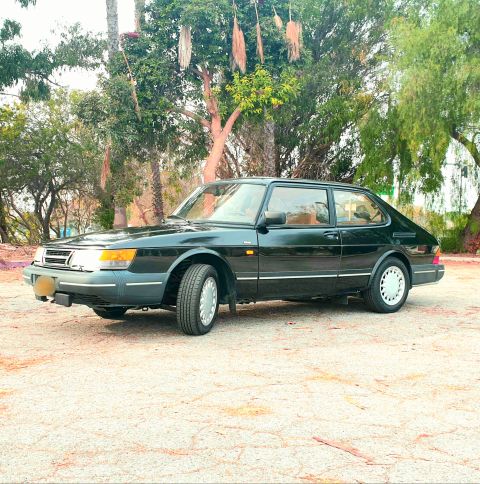
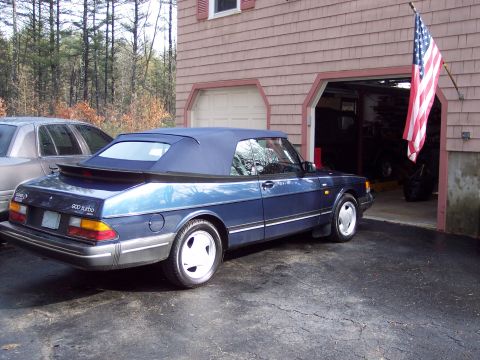
The original 900 grew out of the 99 platform and stayed in production from 1978 to 1993. It kept the oddities that define a Saab for most owners: ignition key between the seats, longitudinal engine mounted backward over the transaxle, clamshell hood, deeply curved windshield. The 16-valve turbo cars (introduced late 1984, 1985 model year in the US) and the convertible (from 1986) are the ones people hunt for now. The 1988-1993 cars are mechanically mature, and the B202 engine will go well past 200,000 miles if the oil got changed. Watch for cracked cylinder heads on neglected turbos and rust in the rear arches and floor.
The 9000, then the GM years
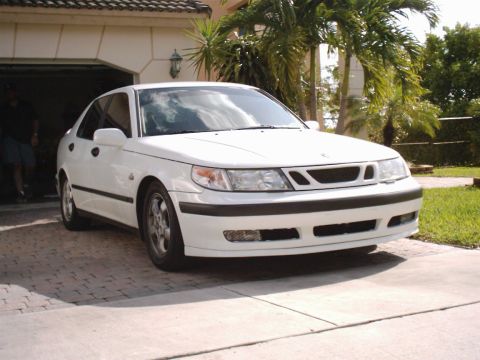
The 9000, built from 1984 to 1998, was Saab's move upmarket, a big hatchback and later a sedan on the Type Four platform shared with the Fiat Croma, Lancia Thema, and Alfa Romeo 164. About 503,000 were built. GM bought half of Saab in 1989 and the rest in 2000. The 9-5 replaced the 9000 in 1997 (sold as a 1999 model in the US) and ran through 2009 in its first generation, on a GM2900-derived platform with Saab's own turbo fours and the Trionic engine management Saab developed in house. Early 9-5s eat oil sludge if the service history is thin; the fix crowd knows to drop the pan and clean the pickup. The 9-3 name replaced the 900 badge in 1998, and the second-generation 9-3 (2003 onward, on GM Epsilon) dropped the hatchback for a sedan, then added a convertible in 2004. The 2003-2004 cars use the B207 Ecotec-based turbo four, a different animal from the old Saab engines but cheap to keep running.
The end
GM sold Saab to Spyker in early 2010 after nearly closing it. Cash ran out within two years and Saab Automobile filed for bankruptcy on December 19, 2011. NEVS bought the assets and built a handful of 9-3s afterward, but the marque as owners knew it ended in Trollhattan in 2011.
Asked all the time
What years was the classic Saab 900 made?
The original Saab 900 ran from 1978 to 1993, replaced in 1994 by the GM-based NG900. The late cars, roughly 1987-1993, get the 16-valve engines, better rustproofing, and most of the running production fixes, which is why they are the ones owners keep.
When did Saab go out of business and why?
Saab Automobile filed for bankruptcy on December 19, 2011. GM had sold the company to Spyker in 2010 after years of losses, and the new owner could not raise enough cash to keep the Trollhattan line running. NEVS later bought the assets but never restarted volume production.
Can you still get parts for a Saab?
Yes. Orio AB, the former Saab parts division, still supplies OEM parts. The Swedish state ran it after the bankruptcy and sold it to Hedin Mobility Group in 2022. The aftermarket for 900, 9-3, and 9-5 models is healthy through independent specialists and the club networks, and GM-era cars (1998 onward) share plenty of components with other GM platforms, which keeps common wear parts cheap.
What is the difference between GM-era Saabs and the older ones?
Saabs built before roughly 1994 (96, 99, classic 900) are all-Saab engineering: backward-mounted engines, transaxle gearboxes, hatchback bodies. After GM took a stake in 1989, the NG900, 9-3, and 9-5 moved onto shared GM platforms, though Saab kept its own turbo engines and Trionic engine management well into the 2000s. GM-era cars are cheaper to run; classic cars hold more collector interest.
What should a buyer check on a Saab 9-5?
On a first-generation Saab 9-5 (1999-2009 in the US), the big item is oil sludge in the 2.3 turbo, worst on the 1999-2003 cars. Ask for oil-change records, and if there are none, budget to drop the oil pan and clean the pickup screen. Also check the direct ignition cassette, a known wear item, and the automatic transmission on higher-mileage cars.
The wall
The most-documented Saab vehicles in the registry, every photo by the owner.