The registry
Saturn Registry: Models, Builds & Photos
Saturn Corporation (later Saturn LLC) was founded by General Motors on January 7, 1985, in Spring Hill, Tennessee, as GM's "different kind of car company," a clean-sheet small-car brand created under chairman Roger Smith to fight Japanese imports on their own terms. It built compact cars with dent-resistant polymer panels, sold them at no-haggle prices, and briefly earned import-level customer loyalty after its 1990 launch of the S-Series. GM starved the brand of new product in the mid-1990s, then diluted it with rebadged Opels (the L-Series, Ion, Vue, Aura, and others). Caught in GM's 2009 bankruptcy, Saturn was slated for sale to Penske Automotive Group; the deal collapsed in September 2009, production ended in October 2009, and the brand was formally wound down in October 2010.
Pick your model
Key facts
| Founded | January 7, 1985, Spring Hill, Tennessee, USA |
|---|---|
| Founders | General Motors (initiated under chairman Roger B. Smith) |
| Headquarters | Spring Hill, Tennessee, USA |
| Parent/successor | General Motors (wholly owned subsidiary Saturn Corporation, later Saturn LLC) |
| Fate/status | Defunct; production ended October 2009 after the Penske Automotive Group deal collapsed, brand wound down October 2010 |
| Best known for | S-Series (SL sedan and SC coupe), Vue, Ion |
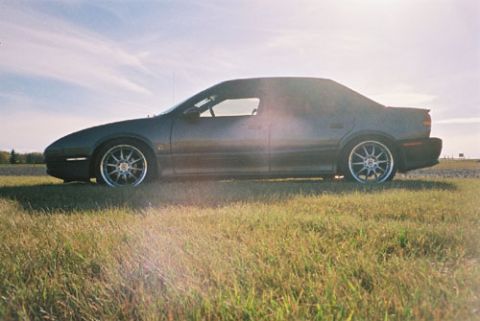
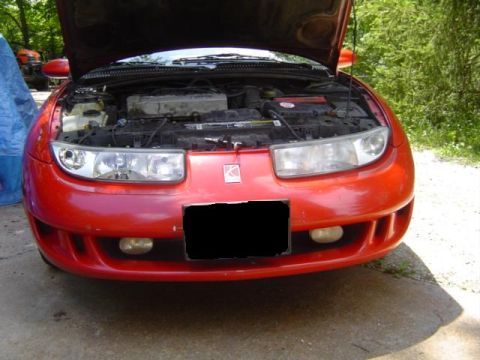
| Registry presence | 10 vehicles / 64 photos documented by owners on SuperMotors |
1982-1985: Roger Smith's Moonshot Against the Imports
Saturn was born as a confession that General Motors could no longer build a small car Americans would choose over a Honda. In the early 1980s GM was losing the compact segment outright: Japanese manufacturers held a decisive cost and quality advantage, estimated inside GM at well over a thousand dollars per car, and voluntary import quotas were the only thing slowing them. Chairman Roger B. Smith, who had staked his tenure on technology bets like robotics and the EDS and Hughes acquisitions, decided the answer was not another badge on an existing platform but an entirely new company, deliberately quarantined from GM's culture, work rules, and dealer practices.
The project began around 1982 as an internal skunkworks study, code-named Saturn after the rocket that carried Americans to the Moon, a pointed reference to beating a foreign rival through engineering ambition. Engineers and planners from across GM, working with the United Auto Workers in an unusual joint study group of 99 members drawn from both management and the union, examined how the best plants in the world actually operated. Their conclusion was heretical inside 1980s GM: the problem was not the workers, it was the system, and a competitive small car required rethinking labor relations, retailing, and manufacturing all at once.
On January 7, 1985, GM incorporated Saturn Corporation as a wholly owned but operationally separate subsidiary, the first new GM marque since Chevrolet joined the fold in 1918. Smith announced the venture publicly with characteristic grandiosity, projecting an investment of up to $5 billion and annual output of up to half a million cars. In July 1985, after a heavily publicized courtship of dozens of states, GM chose a greenfield site in Spring Hill, Tennessee, a farming town south of Nashville, precisely because it was a thousand miles from Detroit's habits. The distance was the point. Saturn would recruit its own workforce, write its own labor agreement, and answer to its own management, an autonomy that made the brand possible and that GM's divisions would spend the next two decades trying to claw back.
1985-1990: Spring Hill, Skip LeFauve, and the UAW Deal That Broke the Mold
Between incorporation in 1985 and the first car in 1990, Saturn Corporation built something rarer than a factory: a labor agreement Detroit had never seen. The 1985 memorandum negotiated with the UAW, championed on the union side by vice president Donald Ephlin, scrapped the master GM contract. Saturn workers were salaried rather than hourly, a portion of pay was tied to quality and training targets, job classifications collapsed from dozens to a handful, and self-directed work teams hired their own members and stopped their own line. Union representatives sat in business meetings at every level. Ephlin took heavy fire from UAW traditionalists for it, and the agreement remained a flashpoint inside the union for the rest of Saturn's life.
The company's leadership was forged in tragedy before it built anything at all: founding president Joseph Sanchez died of a heart attack on January 26, 1985, barely three weeks into the job, and GM veteran William E. Hoglund stepped in to steady the startup. Richard "Skip" LeFauve, who succeeded Hoglund as president in February 1986, became the culture's chief evangelist. Under LeFauve, Saturn recruited its initial workforce almost entirely from laid-off and transferred GM-UAW people, then ran them through hundreds of hours of training before they touched a car. The Spring Hill complex itself was vertically integrated to an unusual degree, casting its own engine blocks and molding the polymer body panels that became the brand's engineering signature: doors and fenders that shrugged off dents and parking-lot dings.
Reality trimmed the ambition. Roger Smith's $5 billion, 500,000-car vision shrank to roughly a $1.9 billion initial phase and a plant sized near 240,000 cars a year, as GM's mid-1980s profit slide and internal resentment from Chevrolet and Pontiac, who saw Saturn consuming capital they were denied, forced the program down. Smith retired in August 1990 and, in a carefully staged piece of theater, drove the first Saturn off the Spring Hill line that July. The company he left behind had the culture and the factory, but its patron was gone before a single car was sold, and every subsequent GM chairman would treat Saturn as an expensive inheritance rather than a mission.
1990-1994: The S-Series Launch, No-Haggle Retailing, and the Homecoming Peak
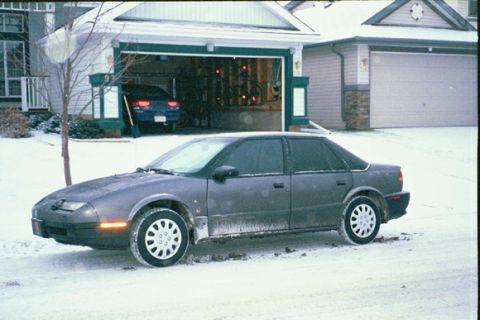
When Saturn Corporation began selling cars on October 25, 1990, it proved that Americans would buy a domestic small car, so long as nothing about buying it felt like buying a domestic small car. The product was the S-Series: the SL sedan and SC coupe, compact cars on Saturn's own Z-platform with plastic body panels and Saturn-built engines. Inside GM they were unremarkable machinery; outside, they were the vehicle for a retailing revolution. Saturn granted large exclusive market territories to hand-picked dealers, posted one fixed price, and trained staff to sell without pressure. Hal Riney & Partners' advertising, built around the tagline "A Different Kind of Company, A Different Kind of Car," sold Spring Hill's people rather than horsepower.
Trust was cemented early by a crisis handled well. In 1991, when a batch of cars shipped with improperly mixed engine coolant, Saturn did not repair them; it replaced the affected cars outright, a gesture the press retold for years. The payoff showed in the data: Saturn placed at or near the top of the J.D. Power sales-satisfaction rankings alongside Lexus and Infiniti, luxury company for a car selling around $10,000, and studies found roughly half of Saturn buyers would otherwise have bought an import.
Sales climbed from a rocky 1991 start to a peak of 286,003 cars in 1994, the same summer some 44,000 owners and family members drove to Spring Hill for the "Homecoming," a factory pilgrimage no other mass-market American brand could have plausibly thrown. Saturn posted its first operating profit in 1993 under Skip LeFauve.
The triumph carried its own poison. Saturn's cult following was attached to a single aging product line, and its success bred resentment across GM, where executives at divisions starved of capital asked why the corporation's most coddled unit sold fewer cars than a single Chevrolet nameplate. The moment Saturn most needed a second model was precisely the moment GM decided it had spent enough.
1994-1999: Jack Smith's Starvation Diet and the Lost Second Act
Saturn Corporation spent the second half of the 1990s as a healthy brand attached to a corporation that refused to feed it. GM, reshaped by the 1992 board change that installed CEO Jack Smith, ranked capital requests by return, and a new Saturn-exclusive platform never won. Press accounts such as Newsweek's "How GM Crushed Saturn" argue that finance-driven capital discipline after Smith's rise starved Saturn of new product. The S-Series received a rework for 1996 and steady refinement, but no companion model arrived for the entire decade. Customers who loved their SL and outgrew it had nothing larger to buy from the brand that had earned their loyalty, and they left; Saturn's own retailers begged publicly for product.
The numbers told the story plainly: from the 1994 peak of roughly 286,000 sales, volume slid year after year even as the American market boomed and buyers stampeded toward the sport-utility vehicles Saturn did not build. The retail experience stayed excellent, and Saturn kept its top-tier sales-satisfaction rankings, an increasingly strange spectacle of a beloved store with an empty shelf.
What product decisions GM did make for Saturn in these years were revealing. In 1996 Saturn's retail network was chosen to distribute the GM EV1 electric car in California and Arizona, a nod to the dealers' reputation for handling unusual customers well, though the EV1 was a GM program rather than a Saturn one. And when a second Saturn line was finally approved, GM declined to develop it in Spring Hill's spirit: the forthcoming midsize car would be adapted from the German Opel Vectra and built at an existing GM plant in Wilmington, Delaware, outside Saturn's unique labor agreement. The 1985 promise of a self-contained different kind of company was already being unwound in the planning documents. Skip LeFauve moved on in 1995, and with him went the last leader whose primary loyalty ran to Saturn rather than to GM's balance sheet.
1999-2004: The L-Series Flop, the Ion Stumble, and the End of the Spring Hill Compact
Between 1999 and 2004, Saturn finally got the expanded lineup it had begged for, and the products were wrong in ways that unwound the brand's whole premise. The midsize L-Series, launched in mid-1999 for the 2000 model year and represented in this registry by the L200, was an Americanized Opel Vectra built in Wilmington, Delaware. It arrived anonymous-looking into the most cutthroat segment in the industry, against the Camry and Accord, and sold at a fraction of GM's projections; the line was killed after 2005. Saturn loyalists noticed that the "different kind of car company" was now selling a rebadged German GM sedan built by regular GM workers.
The Vue, launched for 2002 as Saturn's first sport-utility vehicle, was the better idea, arriving years late into the compact-SUV boom but at least aimed where the market actually was; it became a durable seller despite early gearbox and quality troubles. Then came the Ion for 2003, the long-awaited replacement for the S-Series on GM's global Delta platform. The Ion was panned by the press for its interior, its center-mounted instruments, and its electric power steering feel, and it never matched the affection or the volumes of the car it replaced. Retiring the Spring Hill-engineered S-Series after 2002 severed the brand's last mechanical link to its founding.
The institutional Saturn died in the same window. In December 2003, Spring Hill's UAW Local 1853 voted to abandon the 1985 site agreement, the salaried pay, the risk-and-reward formula, and the co-management structure, and return to the national GM contract, a decision formally executed in 2004; the workforce, watching GM shift products away from the plant, concluded the special deal no longer protected them. GM subsequently folded Saturn Corporation into the parent as Saturn LLC, and Spring Hill became one GM assembly plant among many. Everything after this point was Saturn as a sales channel, not Saturn as a company.
2004-2008: Bob Lutz's Opel Makeover, the Aura's Trophy, and a Brand Without a Reason
Between 2004 and 2008, GM vice chairman Bob Lutz gave Saturn the best cars it ever sold. Under Lutz, Saturn shifted to rebadged and shared-platform product (Sky, Aura, Outlook, Astra, 2007 NACOTY), and its original distinctiveness faded. Lutz's diagnosis was that Saturn's problem was product, and his fix was to turn the brand into GM's import-flavored channel by drawing directly on Opel, GM's German subsidiary. The results came fast: the Sky roadster in 2006, a Kappa-platform twin of the Pontiac Solstice; the Aura midsize sedan in 2006, an Epsilon-platform relative of the Opel Vectra that won the 2007 North American Car of the Year award; the Outlook, a full-size Lambda crossover; and in 2008 the Astra, a compact imported from Belgium that was very nearly an Opel with the badges swapped. GM committed well over a billion dollars to the renewal, and reviewers agreed the showroom had never looked better.
Sales rose from the mid-decade trough but never approached the 1994 peak, and the arithmetic underneath was ruinous. The polymer panels were gone, the Spring Hill labor experiment was gone, and no-haggle pricing had eroded; what remained was a network of well-liked dealers selling rebadged Opels against Pontiac, Chevrolet, and the actual imports, inside a corporation carrying eight domestic brands it could not all afford to support. Federalizing and rebadging European cars added cost that the volumes never repaid, and analysts inside and outside GM increasingly named Saturn, along with Pontiac, Saab, and Hummer, as a brand GM kept alive mostly because shutting a brand meant buying out its dealers.
Spring Hill itself, the town that had embodied the founding promise, lost its founding product entirely: Saturn assembly there wound down as the Ion died in 2007, and the plant was retooled to build the Chevrolet Traverse. By 2008 Saturn was a marketing wrapper with a proud history, excellent dealers, borrowed cars, and no independent engineering, manufacturing, or labor identity. When the financial system froze in the autumn of 2008, it had no constituency inside GM left to defend it.
2008-2010: Bankruptcy, the Penske Rescue That Collapsed, and the October Wind-Down
Saturn's death was an appendix to the largest industrial bankruptcy in American history. When GM went to Washington for survival loans in late 2008, its February 2009 viability plan named the brands it would keep, and Saturn was not among them; GM announced Saturn would be sold or phased out. The corporation entered Chapter 11 on June 1, 2009, and four days later announced a genuinely novel escape: Roger Penske's Penske Automotive Group, one of the country's largest dealer chains, agreed in principle to buy the Saturn brand and its roughly 350-dealer network. Penske's model would have made Saturn a distribution company, not a manufacturer, buying finished cars first from GM under a transition supply deal and later from another automaker.
That last clause killed it. Penske needed a long-term manufacturing partner, and negotiations centered on Renault building future Saturns; on September 30, 2009, the prospective manufacturer's board rejected the supply arrangement, and Penske, unwilling to own a car brand with no cars beyond GM's short transition contract, walked away the same day. GM announced immediately that Saturn would be wound down. Production of the remaining Saturn models ended in October 2009, and under the wind-down agreements the dealer network and the brand were formally closed out by October 2010, with GM honoring warranties through its surviving service network. Pontiac died in the same purge, ending, in one year, both of GM's postwar experiments in youth and reinvention.
The verdict on Saturn Corporation has hardened into a business-school staple. The 1985-1994 experiment worked: a domestic manufacturer built import-level loyalty with an ordinary compact car by changing how it treated workers and customers. What failed was the parent. GM proved unwilling to fund a second act, unable to protect Saturn's autonomy from its own divisions, and finally unable to afford the brand at all. Estimates of GM's cumulative losses on Saturn ran into the billions of dollars over two decades. Spring Hill, the emblem of the whole venture, survived its brand; the plant builds GM vehicles, including electric ones, to this day.
Leadership
| Leader | Tenure | Legacy |
|---|---|---|
| Roger B. Smith | GM chairman, 1981-1990 | Conceived Saturn as GM's clean-sheet import fighter and drove the first Saturn, a 1991-model S-Series, off the Spring Hill line in his last week as chairman. |
| Joseph Sanchez | Saturn president, January 1985 | Named founding president when Saturn was incorporated; died of a heart attack on January 26, 1985, roughly three weeks into the job. |
| William E. Hoglund | Saturn president, 1985-1986 | GM veteran who steadied the startup after Sanchez's sudden death and carried it into the Spring Hill build-out. |
| Richard "Skip" LeFauve | Saturn president, 1986-1995 | Built the company's UAW partnership, no-haggle retail model, and distinct small-car culture through the launch years. |
| Donald Hudler | Saturn president, 1995-1998 | Ran sales and marketing behind the "Homecoming" loyalty era, then presided as GM withheld new product. |
| Cynthia Trudell | Saturn chairman and president, 1999-2001 | Believed to be the first woman to head a major automaker's car division; oversaw the slow-selling L-Series launch. |
| Annette Clayton | Saturn president, 2001 to reportedly June 2005 | Ran Saturn through the Ion launch and the end of its separate corporate structure as operations were folded into GM. |
| Jill Lajdziak | Saturn general manager, 2004-2009 (VP of sales, service and marketing from 1999) | Led the Saturn organization through its wind-down, including the rebadged Opel lineup and the unsuccessful Penske sale. |
| Robert "Bob" Lutz | GM vice chairman of product development, 2001-2009 | Pushed Opel-derived designs into Saturn showrooms, giving the brand better cars but no distinct identity. |
Timeline
| Date | Event |
|---|---|
| November 1983 | GM chairman Roger Smith publicly announces the Saturn project, a clean-sheet small-car venture to fight Japanese imports. |
| February 1984 | The joint GM-UAW "Group of 99" study group forms to design Saturn's founding principles. |
| January 7, 1985 | Saturn Corporation is incorporated, GM's first new marque since Chevrolet joined in 1918; founding president Joseph Sanchez dies of a heart attack on January 26. |
| July 1985 | GM selects Spring Hill, Tennessee, and signs the landmark GM-UAW Saturn labor agreement. |
| February 1986 | Skip LeFauve becomes Saturn's third president, succeeding interim chief William Hoglund. |
| July 30, 1990 | The first Saturn, a 1991-model SL2, comes off the Spring Hill line, driven by retiring chairman Roger Smith. |
| October 25, 1990 | Retail sales of the S-Series begin at no-haggle Saturn dealerships. |
| 1991 | Saturn replaces, rather than repairs, cars shipped with improperly mixed coolant, cementing its customer-service reputation. |
| 1993 | Saturn reports its first operating profit, announcing its first profitable month in May. |
| June 1994 | Some 44,000 owners and family members attend the Spring Hill "Homecoming"; calendar-1994 sales peak at 286,003. |
| December 1996 | GM EV1 electric-car leases begin through Saturn retailers in California and Arizona. |
| 1999 | The Opel-derived L-Series launches from Wilmington, Delaware; Cynthia Trudell becomes the first woman to head a major U.S. car division. |
| 2002-2003 | The Vue and Ion launch; the original S-Series is retired after 2002. |
| December 2003 | Spring Hill's UAW Local 1853 votes to end the unique Saturn labor agreement, dissolved in 2004 as Saturn is folded into GM. |
| 2006-2008 | Bob Lutz's Opel-derived renewal arrives: Sky, Aura (2007 North American Car of the Year), Outlook, and the Belgian-built Astra. |
| March 2007 | Ion production ends, closing out Saturn assembly at Spring Hill. |
| February 17, 2009 | GM's viability plan marks Saturn for sale or phase-out. |
| June 2009 | GM enters Chapter 11 on June 1; the Penske Automotive Group deal for Saturn is announced June 5. |
| September 30, 2009 | Penske walks away after its prospective manufacturing partner's board (widely reported to be Renault) rejects the supply deal; GM announces the wind-down. |
| October 2009 | Saturn production ends. |
| October 31, 2010 | The dealer network and brand are formally closed out. |
Asked all the time
Why did Saturn shut down?
Saturn was killed by General Motors' 2009 bankruptcy. GM had already starved the brand of unique product since the mid-1990s, and when the company restructured under Chapter 11 in June 2009 it marked Saturn for sale or closure. A deal to sell the brand to Penske Automotive Group collapsed in September 2009 after Penske could not line up a manufacturer to build future cars, so production ended in October 2009 and GM formally wound the brand down in October 2010.
Who founded Saturn?
General Motors founded Saturn Corporation on January 7, 1985, as a wholly owned subsidiary. The project was the brainchild of GM chairman Roger B. Smith, who wanted a clean-sheet American small-car company that could beat Japanese imports, and it was built into a working company by its long-serving president Richard "Skip" LeFauve.
What made Saturn different from other GM brands?
Saturn was set up as "a different kind of car company": its own factory in Spring Hill, Tennessee, its own dealer network with fixed no-haggle prices, a separate UAW labor contract with team-based work rules, and cars with dent-resistant polymer body panels over a steel spaceframe. In its early-1990s peak the brand posted import-level owner loyalty scores that no other domestic nameplate matched.
Was Saturn ever profitable for GM?
By most accounts, no. GM spent roughly five billion dollars launching the brand, and although Saturn reported an operating profit in 1993 at the height of S-Series demand, GM itself said during its 2009 restructuring that Saturn had never been profitable over its life. GM's refusal to fund follow-up models after 1994 reflected internal skepticism that the experiment could ever earn its keep.
Where were Saturns built?
The original S-Series and later the Ion were built at the purpose-built Spring Hill, Tennessee plant. The L-Series was assembled in Wilmington, Delaware, and later Opel-based models such as the Aura, Sky, Vue, and Outlook came from various GM plants in the United States, Mexico, and elsewhere as Saturn was absorbed into GM's regular manufacturing network.
What happened to Saturn's Spring Hill plant after the brand ended?
Spring Hill stopped building Saturns when Ion production ended in March 2007. GM kept the plant, retooled it for other products, and it remains an active GM assembly site, so the factory outlived the brand it was created for.
Why did Saturn's sale to Penske fail?
Penske Automotive Group agreed in mid-2009 to buy Saturn's brand and dealer network while GM built cars for it temporarily. Penske needed another manufacturer to supply vehicles afterward, and when its prospective partner's board (widely reported to be Renault) rejected the arrangement on September 30, 2009, Penske walked away and GM announced Saturn's wind-down the same day.
The wall
The most-documented Saturn vehicles in the registry, every photo by the owner.