The registry
Scion Registry: Models, Builds & Photos
Scion was Toyota's youth-market brand for North America, launched in 2003 and shut down in August 2016 when Toyota folded the surviving models back into its own lineup. The brand sold small, boxy, and sporty cars at fixed no-haggle prices with a heavy emphasis on factory accessories and owner personalization. Under the skin nearly every Scion is shared Toyota hardware (the FR-S is Subaru, and the late iA is a Mazda), which keeps parts supply healthy a decade after the badge disappeared.
Pick your model
Where Scion came from
Toyota created Scion to pull younger buyers into showrooms, announcing the brand at the New York Auto Show in 2002 and putting the first cars on sale at 105 California Toyota dealers in June 2003 before going nationwide in June 2004. The pitch was "pure price" (no-haggle pricing), mono-spec trim levels, and a long dealer accessory catalog so owners could build the car up themselves. Most Scions were rebadged Japanese-market Toyotas, which keeps the mechanical parts supply healthy because nearly everything under the skin is shared Toyota hardware.
tC (2005-2016)
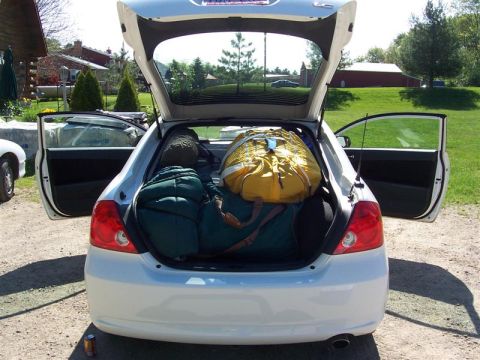
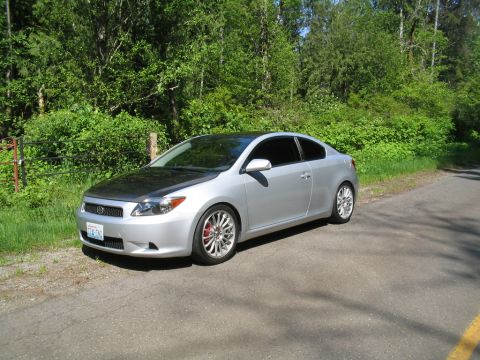
The tC was Scion's only model developed specifically for the brand and its best seller, close to 40 percent of everything the brand moved. The first generation (2005-2010) sat on the European Avensis platform and ran the 2.4L 2AZ-FE four making 160 hp, with a panoramic glass roof standard. The second generation (2011-2016) switched to the 2.5L 2AR-FE at 179-180 hp with a six-speed manual or automatic. Both generations respond well to bolt-ons, and TRD sold a factory supercharger for first-gen cars until it was discontinued in 2009.
xB (2004-2015)
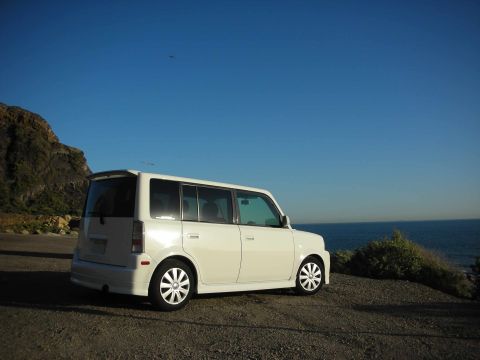
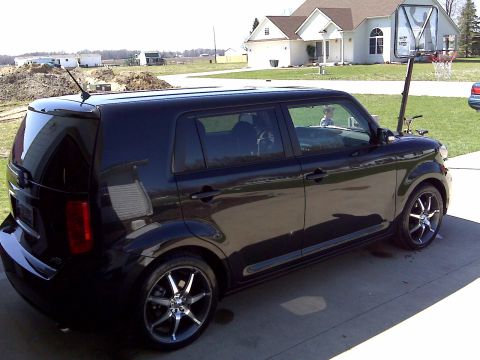
The xB is the box that defined the brand. The first generation (2004-2006) was a rebadged Toyota bB with the 1.5L 1NZ-FE four (108 hp), a curb weight around 2,450 lb, and a flat-floored interior that swallows far more cargo than the footprint suggests. The second generation (2008-2015) grew about a foot longer, gained roughly 600 lb, and picked up the tC's 2.4L 2AZ-FE at 158 hp. First-gen cars remain the modding favorite because they are lighter and share suspension architecture with the Echo and xA.
FR-S (2013-2016)
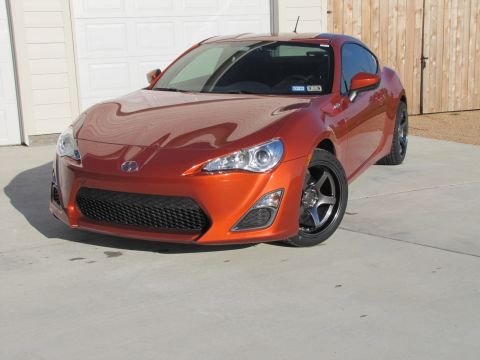
The FR-S was Scion's rear-drive sports coupe, built at Subaru's Gunma plant alongside the BRZ and sold from the 2013 model year. It uses the 2.0L Subaru FA20 flat four with Toyota D-4S combined port and direct injection, making 200 hp, with a low center of gravity and a standard Torsen limited-slip differential. After Scion closed it carried on as the Toyota 86 with a mild facelift and a bump to 205 hp on manual cars, so parts and aftermarket support carried straight over.
The rest of the lineup
The smaller sellers still turn up cheap and are just as easy to keep running. The xA (2004-2006) was a rebadged Toyota ist hatchback sharing the xB's 1.5L 1NZ-FE. The xD replaced it for 2008 with a 128 hp 1.8L 2ZR-FE and lasted through 2014. The iQ (2012-2015) was a ten-foot city car with a 94 hp 1.3L four and a CVT. In the brand's final stretch Scion added the iA sedan, a rebadged Mazda2 built by Mazda in Mexico and the only Scion that is not Toyota hardware underneath, plus the iM hatchback, a version of the Toyota Auris.
The end of the brand
Toyota announced Scion's shutdown on February 3, 2016, citing the fact that Toyota's own lineup had absorbed the youth-buyer mission. The FR-S, iA, and iM were rebadged as the Toyota 86, Yaris iA, and Corolla iM for 2017; the tC ended production in August 2016 with a Final Release edition. Warranty and parts service transferred to Toyota dealers.
Asked all the time
What years was Scion in business?
Scion launched in California in June 2003, went nationwide in June 2004, and Toyota announced the brand's shutdown on February 3, 2016. The last Scion-badged cars were 2016 models, with tC production ending in August 2016.
Why did Toyota kill Scion?
Toyota said Scion had done its job of attracting younger buyers and that the main Toyota lineup could carry that mission itself. Rather than orphan the cars, Toyota rebadged the Scion FR-S, iA, and iM as the Toyota 86, Yaris iA, and Corolla iM for 2017.
Are Scion parts still easy to get?
Yes. Nearly every Scion is mechanically a Toyota, the FR-S shares its drivetrain with the Subaru BRZ, and the 2016 iA is a Mazda2 underneath, so all three parent companies still support the hardware. Engines like the 2AZ-FE and 1NZ-FE have deep parts supply through Toyota dealers and the aftermarket, and Toyota dealers took over Scion warranty and service when the brand closed.
What is the difference between first and second generation Scion xB?
The first-generation Scion xB (2004-2006) is a rebadged Toyota bB with a 108 hp 1.5L engine and a curb weight around 2,450 lb. The second generation (2008-2015) is about a foot longer, roughly 600 lb heavier, and uses the 158 hp 2.4L 2AZ-FE from the tC. Modders generally prefer the lighter first-gen box.
Is the Scion FR-S the same car as the Toyota 86 and Subaru BRZ?
Essentially yes. The Scion FR-S (2013-2016) was co-developed with Subaru, built in Subaru's Gunma plant alongside the BRZ, and uses the 2.0L FA20 flat four with Toyota's D-4S injection. After Scion closed, the car continued as the Toyota 86 with a light facelift and 205 hp on manual cars, so tuning and parts carry straight over.
The wall
The most-documented Scion vehicles in the registry, every photo by the owner.