The registry
Tracker Registry: Models, Builds & Photos
Tracker is the aluminum fishing boat brand Johnny Morris started in 1978 out of Springfield, Missouri, selling boat, motor, and trailer as one factory rigged package at a single nationally advertised price ($2,995 for the original 16 footer). That package model changed how boats were sold in America and made Tracker one of the highest volume builders in the country. The brand builds today under White River Marine Group, the Bass Pro Shops manufacturing arm.
Pick your model
How Tracker Started
Johnny Morris founded Tracker in 1978 as an offshoot of Bass Pro Shops in Springfield, Missouri. The first package put a 16 foot aluminum hull, a 35 hp outboard, a trolling motor, a depth finder, and a custom trailer together at one nationally advertised price, $2,995 at launch. Instead of buying a bare hull from one dealer, a motor from another, and a trailer from a third, you bought the whole rig factory matched and pre-rigged. That package selling model forced the rest of the industry to follow, and it is the main reason Tracker hulls are so common on the water and in classifieds today.
Construction Over the Years
Tracker built riveted aluminum hulls for its first two decades, the standard method of the day. The switch to all welded construction on the bass boat lines came later than most people assume. Hulls in the 1998 model year were still riveted, 1999 boats mixed welds and rivets, and by roughly 2002 the bass lines were fully welded. That dividing line is worth knowing when shopping used. Riveted boats can develop seep leaks at the seams that need bucking or sealing; welded hulls trade that problem for the occasional cracked weld, which is a straightforward repair for anyone with a TIG setup or a local welder.
The Pro Line
The original boats were sold as the Bass Tracker I, II, and III in 16 and 17 foot lengths. The Pro names arrived in the mid 1980s, with the Pro 16 and Pro 17 in price guides by 1986, and the line carried through the Pro Team 170, 175, and 190 models still built today. These run relatively flat mod-V bottoms with low deadrise, which means they plane easily on modest horsepower (most were factory rigged between 40 and 90 hp) but ride harder in chop than a deep-V. Livewells, bow decks, and trolling motor wiring came standard as part of the package concept.
The Tournament Line
The Tournament series sat a step up in the aluminum lineup from the mid 1980s onward. The Tournament TX-17 shows up in price guides from 1986 into the mid 1990s as a mod-V, while the Tournament V-17 (documented 1986 through 1998) and the later Tournament V-18 carried true deep-V hulls, about 17 degrees of deadrise on the V-18, with more freeboard for anglers running bigger water. Same aluminum construction logic applies: check transom wood and floor decking for rot on any example from this era, since the plywood cores age faster than the hulls do.
Corporate Status
Tracker is not defunct. Bass Pro Shops folded its boat operations into White River Marine Group in 2015, shortly after acquiring Ranger, Triton, and Stratos in late 2014, and the group now claims the largest boat production volume in the world. Tracker aluminum boats, including the Grizzly jon boat line, are built in Lebanon, Missouri, alongside sister brands Nitro, Sun Tracker, Mako, and Tahoe. Parts support for common-era boats is good because so many were built, and the hulls themselves outlast most of the hardware bolted to them.
Asked all the time
What years were Tracker Pro boats made?
The first Tracker bass boats, sold from 1978, were the Bass Tracker I, II, and III in 16 and 17 foot lengths. The Pro 16 and Pro 17 names appear in price guides by 1986, and the mod-V bass line continues in production today as the Pro 170, Pro Team 175, and Pro Team 190.
What is the difference between riveted and welded Tracker hulls?
Tracker used riveted aluminum construction from 1978 through the late 1990s. The bass boat lines transitioned to all welded hulls between 1999 and roughly 2002; 1998 hulls were still riveted and some 1999 boats mixed both. Riveted boats can develop seep leaks at the seams over time; welded hulls avoid that but can crack at a weld, which is a repairable condition. Welded construction is generally the preferred buy on the used market.
Is Tracker still in business?
Yes. Tracker builds today under White River Marine Group, the Bass Pro Shops manufacturing arm formed in 2015, with aluminum boat production based in Lebanon, Missouri, alongside sister brands Nitro, Sun Tracker, Mako, Tahoe, and Ranger.
What should I check when buying a used Tracker?
On any 1980s through 2000s Tracker, check the plywood transom core and floor decking for rot, since the wood ages faster than the aluminum. On pre-2000 riveted boats, water test for seam leaks. Verify livewell pumps and trolling motor wiring, since those were factory rigged and often original.
How does the Tracker Tournament line differ from the Pro line?
The Tournament series sat above the base Pro models from the mid 1980s onward. The Tournament TX-17 was a mod-V, while the Tournament V-17 (1986-1998) and later V-18 ran true deep-V hulls with more freeboard for bigger water. The Pro line runs flatter mod-V bottoms that plane easily on 40 to 90 hp but ride harder in chop.
The wall
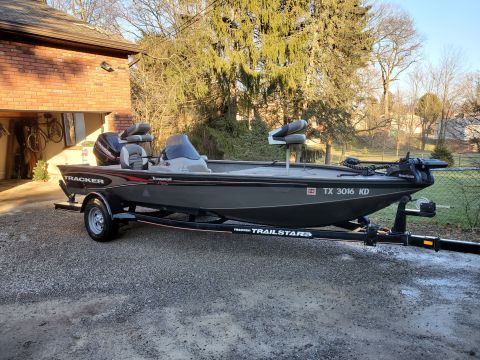
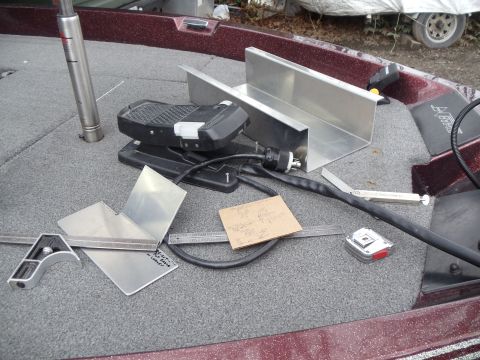
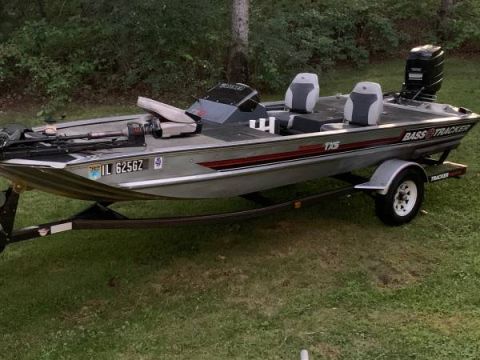
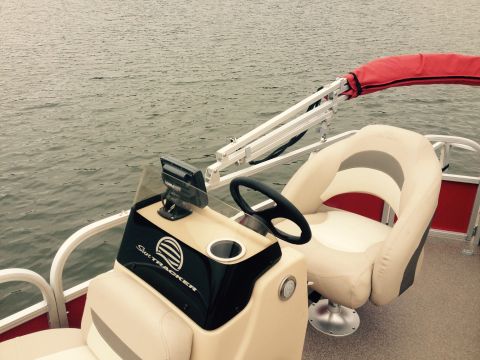
The most-documented Tracker vehicles in the registry, every photo by the owner.