The registry
Triumph Registry: Models, Builds & Photos
Triumph built its first motorcycle in Coventry in 1902 and its last Meriden twin in 1983. John Bloor's Hinckley company revived the name in 1991, so the badge covers two mechanically unrelated eras of British motorcycles.
Pick your model
Coventry, Meriden, and the twin era
Triumph began building motorcycles in Coventry in 1902 under Siegfried Bettmann, a German-born bicycle importer who had founded the firm in 1885. Jack Sangster bought the motorcycle business in 1936, renamed it Triumph Engineering, and brought in Edward Turner from Ariel. Turner's 1937 Speed Twin 5T put a compact 500cc parallel twin in a single-cylinder-sized frame, and that layout carried Triumph through the postwar boom. German bombing destroyed the Coventry works in 1940, and production restarted at a new plant in Meriden in 1942. BSA bought Triumph from Sangster in 1951, but the bikes kept coming out of Meriden, the factory that built every classic-era Bonneville.
Collapse and the Hinckley rebirth
The BSA group failed in 1973 and Triumph was folded into Norton Villiers Triumph. Meriden workers occupied the plant, ran it as a co-op from 1975, and kept the 750 twins alive until the company went into receivership in 1983. The cause was plain: outdated tooling, undercapitalization, and Japanese competition that had passed the pushrod twins by. John Bloor bought the name and rights in 1983, licensed Les Harris of Racing Spares in Devon to build about 1,300 more T140s from 1985 to 1988, and spent the decade tooling a new factory at Hinckley. Production restarted there in 1991 with a modular range of liquid-cooled triples and fours. The two eras share a badge and almost nothing else mechanically.
The model lines that matter
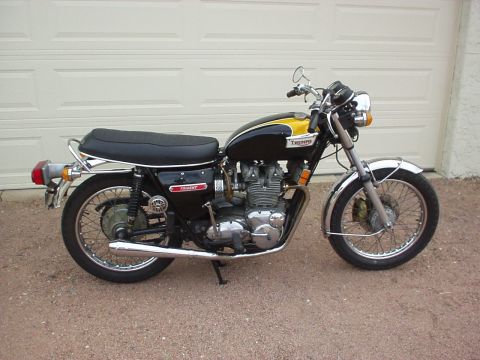
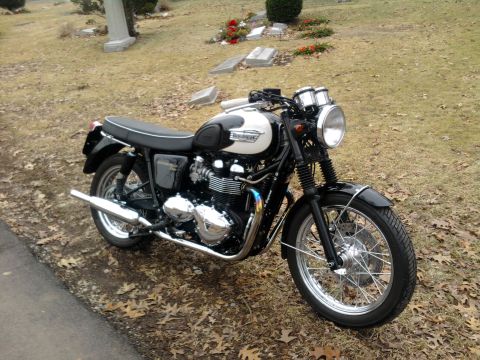
- Bonneville: the original T120 ran 1959-1975 as a twin-carb 650, named for Johnny Allen's 1956 speed runs at the Bonneville Salt Flats; the 750cc T140 followed from 1973 to 1983. Hinckley revived the name in 2001 with a 790cc air-cooled twin, enlarged to 865cc in 2007 and replaced by liquid-cooled 900 and 1200 engines from 2016.
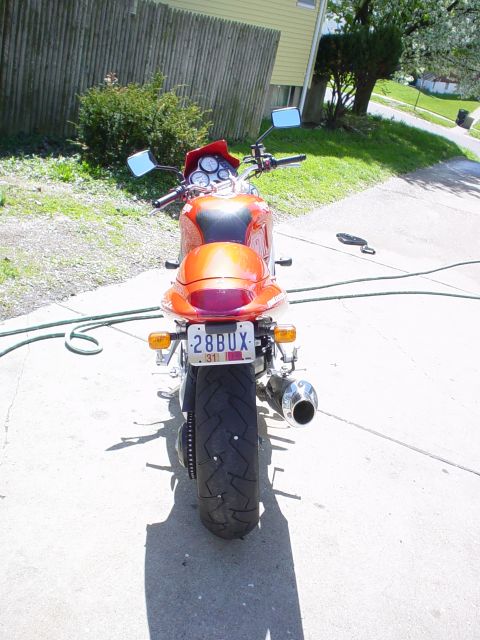
- Trident 900: an early Hinckley naked bike built 1991-1998 around the 885cc inline triple, using the modular steel spine frame shared across the first Hinckley range. Not to be confused with the classic Trident 750 pushrod triple built from 1968 to 1975.
- Daytona: Hinckley's sportbike line, launched in 1991 with a 750cc triple and a 1000cc four, replaced by 900 and 1200 versions in 1993, moving to the fuel-injected 955cc triple in 1997, then the 675cc triple from 2006 to 2017.
- Sprint ST: sport-touring triple sold 1999-2010, first with the 955cc engine, then the 1050 from 2005. Both generations used a single-sided swingarm; the 1050 added the underseat exhaust.
- Speed Four: a naked 599cc inline four built 2002-2006, derived from the TT600 supersport with its bodywork stripped and bars raised.
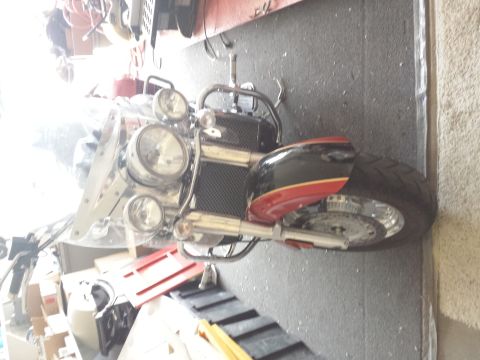
- Executive: a factory touring version of the T140 Bonneville offered in the early 1980s, with a Sabre cockpit fairing and Sigma hard luggage, one of Meriden's last attempts to broaden the twin's appeal.
Asked all the time
What is the difference between a Meriden Triumph and a Hinckley Triumph?
Meriden Triumphs are the classic air-cooled pushrod twins built through 1983, ending with the 750cc T140. Hinckley Triumphs are the modern liquid-cooled bikes John Bloor's reborn company has built since 1991. They share the Triumph name only; no parts interchange, and the two eras have separate parts suppliers and specialist communities.
What years was the original Triumph Bonneville made?
The classic Triumph Bonneville ran from 1959 to 1983 at Meriden: the 650cc T120 through 1975 and the 750cc T140 from 1973 on, including the co-op years. Les Harris's Racing Spares then built licensed T140s in Devon from 1985 to 1988. The Hinckley Bonneville revival started in 2001 and continues today.
Did Triumph ever go out of business?
Yes. The Meriden Triumph operation went into receivership in 1983 after years as a workers' co-op, done in by old tooling and Japanese competition. John Bloor bought the Triumph name that year, licensed a short run of Devon-built Bonnevilles from 1985 to 1988, and restarted full production at Hinckley in 1991, so the marque itself never fully disappeared.
Are parts hard to find for older Triumphs?
Classic Meriden Triumph twins are well supported. High demand kept specialists reproducing most wear parts, and 650/750 twin spares are easier to source than for most defunct British marques. Early Hinckley models like the Trident 900 and 955-era Daytona and Sprint ST lean more on used parts and owner networks, since Triumph has dropped support for some 1990s components.
What engine layouts has Triumph used?
The parallel twin defined Triumph from the 1937 Speed Twin through the last T140s. The classic era also produced the Trident 750 pushrod triple from 1968. Hinckley Triumph relaunched in 1991 with liquid-cooled inline triples and fours, then settled on the three-cylinder as its signature, alongside modern parallel twins in the Bonneville family.
The wall
The most-documented Triumph vehicles in the registry, every photo by the owner.