The registry
Victory Registry: Models, Builds & Photos
Victory was Polaris Industries' attempt to build an American cruiser from a clean sheet. Development started in 1994, the brand went public in 1997, and the first V92C rolled off the Spirit Lake, Iowa line on July 4, 1998. Over 18 years the brand grew from one 92-cubic-inch model into a full line of cruisers, baggers, and tourers powered by its own Freedom V-twin family. Polaris shut Victory down in January 2017 to concentrate its resources on Indian Motorcycle, which it had bought in 2011.
Pick your model
How Victory started
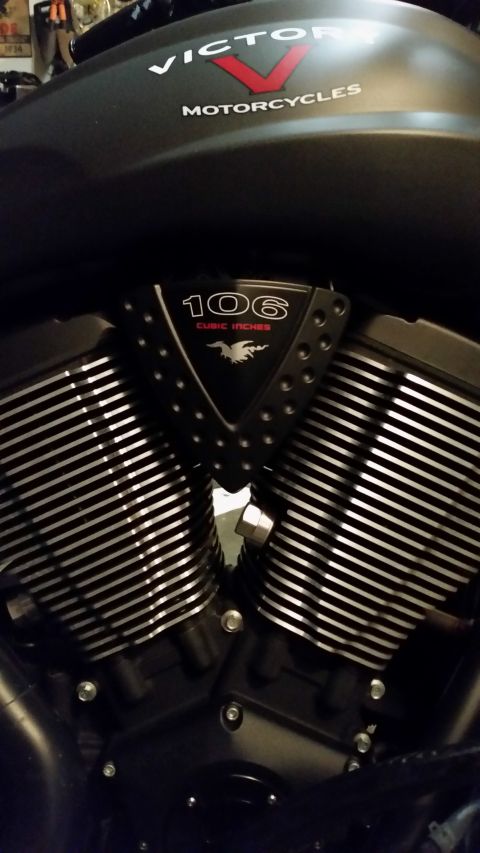
Polaris, the Minnesota snowmobile and ATV maker, began work on a motorcycle in 1994, announced the Victory brand publicly in 1997, and built the first production V92C on July 4, 1998, sold as a 1999 model. Engines were designed and built in Osceola, Wisconsin, with final assembly in Spirit Lake, Iowa. The founding engine was the 92-cubic-inch (1,507 cc) V92, an air/oil-cooled 50-degree V-twin with single overhead cams, four valves per cylinder, fuel injection, and a counterbalancer, a more modern layout than the pushrod twins it was built to compete with. In 2002 Victory replaced it with the higher-output Freedom engine, which grew to 100 cubic inches with a 6-speed in the 2005 Hammer. The 106-cubic-inch Freedom 106 debuted in the 2008 Vision and had spread across the whole line by 2011. That 106/6 combination powered nearly everything the company sold in its final years.
The models that matter
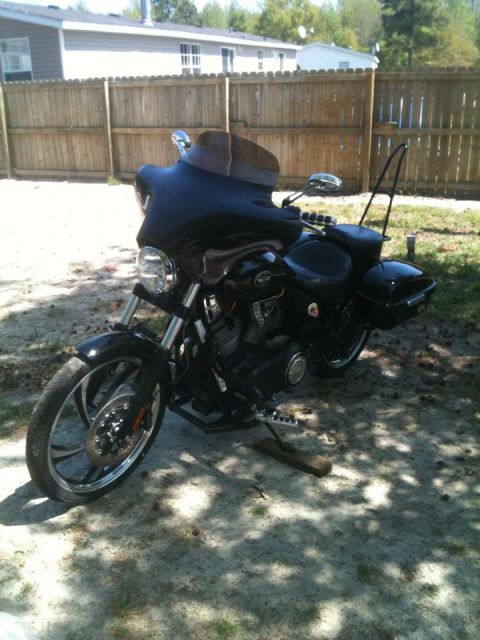
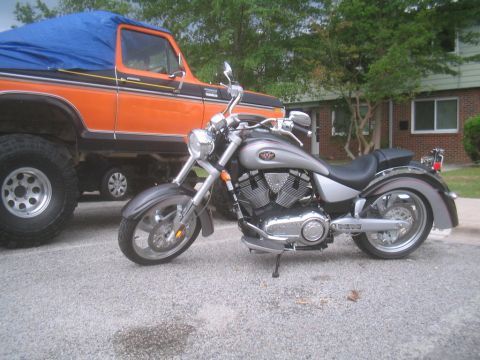
- Kingpin (2004-2012). The volume cruiser of the middle era. It paired the Vegas chassis with a 180-section rear tire, a valanced front fender, and cast wheels. The first two years ran the Freedom 92 with a 5-speed, the 100/6 arrived for 2006, and the last 2011-2012 bikes carry the 106. The Kingpin Tour (from 2007) added a trunk and bags in place of the discontinued Touring Cruiser, and the Kingpin 8-Ball (from 2008) was the blacked-out budget version. These are mechanically simple, and the Freedom engine in them has a strong reputation for going high mileage without bottom-end trouble.
- V92TC Touring Cruiser (2002-2006). Victory's first purpose-built tourer: a stretched platform with hard leather-covered bags, a windshield, and floorboards. It carried the 92-inch Freedom engine with a 5-speed, and it was the first model to get that engine. After the TC ended, the Vision took over touring duty in 2008 and the Cross Country followed in 2010.
- V92C and Classic Cruiser. The original V92C, sold as 1999 through 2003 models, set the pattern for the brand. The Classic Cruiser was the deep-fender variant sold alongside it in the early 2000s. First-year bikes had teething issues with fueling and charging that Victory sorted in later years, so build year matters when buying.
The end, and living with one now
Polaris bought Indian in 2011 and ran both brands until January 9, 2017, when it announced Victory would be wound down. Victory never reached sustained profitability, and Polaris judged Indian's name carried more weight. Polaris committed to supplying parts for 10 years after the shutdown, and that window is closing, so consumables and Victory-specific body parts increasingly come from the used market and a handful of aftermarket specialists. The owner community is small but active, and the shared Freedom engine architecture across Vegas, Kingpin, Hammer, and Cross Country means much of the driveline knowledge transfers between models.
Asked all the time
What years were Victory motorcycles made?
Victory built motorcycles from 1998 through the 2017 model year. The first V92C was built on July 4, 1998 and sold as a 1999 model, and Polaris announced the shutdown of Victory on January 9, 2017.
Why did Victory go out of business?
Polaris ended Victory in January 2017 after 18 years without sustained profitability. Polaris had bought Indian Motorcycle in 2011, and Indian's older name was winning the sales fight, so Polaris put its money there instead of running two competing brands.
Can you still get parts for a Victory?
Polaris committed to supplying Victory parts for 10 years after the 2017 shutdown, so common service parts have remained available, but that window is closing. Body panels and model-specific pieces increasingly come from the used market and aftermarket specialists. Driveline parts interchange well across Victory models sharing the Freedom engine.
What is the difference between the Victory engine generations?
Victory started with the 92-cubic-inch air/oil-cooled V92 in 1998, moved to the higher-output Freedom 92 in 2002, enlarged it to 100 cubic inches with a 6-speed in the 2005 Hammer, and introduced the Freedom 106 in the 2008 Vision, which powered the whole line by 2011. All are 50-degree V-twins with single overhead cams and four valves per cylinder.
Is a used Victory Kingpin a good buy?
Generally yes. The Kingpin ran 2004-2012, starting with the Freedom 92 and a 5-speed, then the 100/6 from 2006 and the 106 for 2011-2012, engines that routinely go high mileage. Check for stator and regulator health, worn drive belts, and service history, and remember Victory-specific cosmetic parts are getting harder to source.
The wall
The most-documented Victory vehicles in the registry, every photo by the owner.