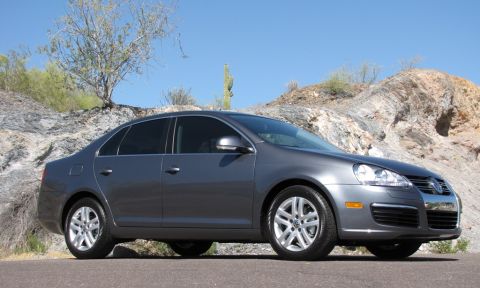
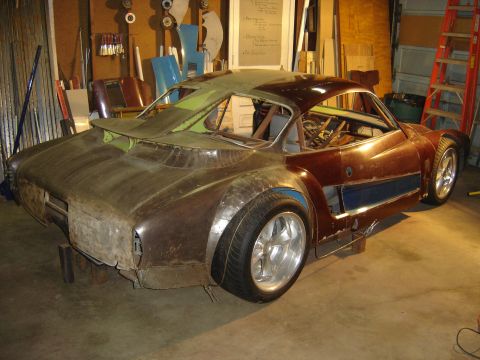
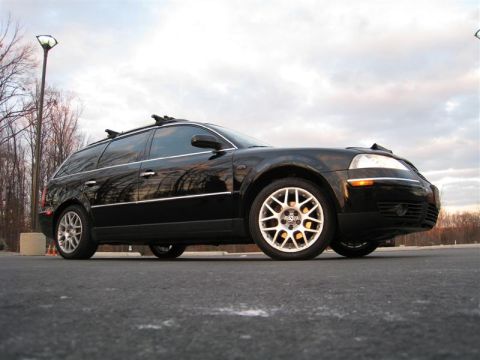
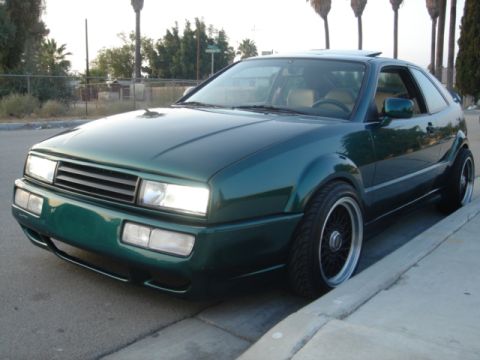
The registry
Volkswagen Registry: Models, Builds & Photos
Volkswagen AG is a German automaker founded on May 28, 1937 in Berlin by the German Labour Front (Deutsche Arbeitsfront), the Nazi state's labor organization, to build Ferdinand Porsche's affordable "people's car." The wartime plant at Wolfsburg built military vehicles instead, and the company was effectively refounded in 1945 when British Army Major Ivan Hirst restarted Beetle production in the occupied zone. The air-cooled Beetle and Transporter made Volkswagen Europe's largest automaker and a global export power by the 1960s; the near-fatal collapse of Beetle sales in the early 1970s forced the water-cooled, front-drive Golf revolution of 1974. Volkswagen survived that crisis, the 2015 diesel-emissions scandal, and repeated leadership upheavals to become the flagship marque of the Volkswagen Group, one of the world's largest carmakers, still headquartered in Wolfsburg, Lower Saxony, and now pivoting to electric vehicles.
Pick your model
Key facts
| Founded | May 28, 1937, in Berlin, Germany |
|---|---|
| Founders | German Labour Front (Deutsche Arbeitsfront), the Nazi state's labor organization, with Ferdinand Porsche as chief engineer |
| Headquarters | Wolfsburg, Lower Saxony, Germany |
| Parent/successor | Volkswagen Group (Volkswagen AG); the VW marque is the group's flagship brand |
| Fate/status | Active; refounded in practice under British military control in 1945, transferred to West German trusteeship in 1949, partially privatized in 1960 |
| Best known for | Beetle, Golf/GTI, Transporter (Bus) |
| Registry presence | 130 vehicles / 3,370 photos documented by owners on SuperMotors |
1934-1945: Ferdinand Porsche, the KdF-Wagen, and a Factory Built for a Car That Never Came
Volkswagen was willed into existence by a state, not a market: on May 28, 1937 the German Labour Front (Deutsche Arbeitsfront) chartered the company in Berlin to mass-produce Ferdinand Porsche's design for a car ordinary Germans could buy for 990 Reichsmarks. Porsche had been developing rear-engined, air-cooled small-car concepts since the early 1930s, and Adolf Hitler personally adopted the project in 1934 as propaganda for a motorized Germany, laying the cornerstone of a purpose-built factory and company town, the future Wolfsburg, in 1938. The car was branded the KdF-Wagen, after the Labour Front's Kraft durch Freude (Strength through Joy) leisure organization, and roughly 336,000 Germans paid into a stamp-savings scheme to reserve one.
Almost none of them ever received a car. When war began in September 1939 the factory converted to military production, chiefly the Kubelwagen, Porsche's militarized derivative of the people's car platform, plus the amphibious Schwimmwagen. More than 50,000 Kubelwagens were built, and the plant relied heavily on forced and slave labor, including concentration-camp prisoners, a fact the modern company has documented and acknowledged, funding historical research and compensation programs decades later. Allied bombing wrecked roughly two-thirds of the factory by 1945.
The founding matters causally for everything that followed. Because the company was a creature of the Nazi state, it emerged from the war with no private owner, no customers, and a morally compromised birth certificate. That ownership vacuum is why a British Army officer, not a German industrialist, would decide whether Volkswagen lived or died, and why the eventual privatization of the 1960s left the State of Lower Saxony holding a blocking stake that shapes Volkswagen governance to this day.
1945-1948: Major Ivan Hirst Saves a Bombed-Out Plant the Allies Did Not Want
Volkswagen's real founding as a commercial carmaker dates to August 1945, when 29-year-old British Army Major Ivan Hirst of the Royal Electrical and Mechanical Engineers took charge of the wrecked Wolfsburg works in the British occupation zone. The factory was slated for possible dismantling as war reparations; Hirst instead had a surviving Type 1 sedan painted khaki and demonstrated to British headquarters, winning an order for 20,000 cars for the occupation authorities. Production restarted in late 1945 with salvaged tooling, a workforce of refugees, and a roof that still leaked bomb damage; about 1,785 cars were completed that first year.
The rest of the industrial world passed on the company. A British commission led by Sir William Rootes dismissed the car as commercially hopeless, Ford executives, advised by chairman Ernest Breech that the plant was not worth taking, declined it when offered, and Australian and French interest came to nothing. The rear-engined Beetle, as the Type 1 came to be known, was judged too odd, too noisy, and too tied to its Nazi origins to matter.
Hirst's contribution was managerial as much as mechanical: he established quality control, secured materials through military channels, and, critically, searched for a German executive who could run the company after the occupation ended. That search produced Heinrich Nordhoff, a former Opel executive, appointed managing director on January 1, 1948. The handover from Hirst to Nordhoff is the hinge of the whole story. Without Hirst there is no Volkswagen at all; without Nordhoff there is no strategy for what Volkswagen should become.
1948-1968: Heinrich Nordhoff, One Car for the World, and the Beetle Economy
Under Heinrich Nordhoff, who ran Volkswagen from 1948 until his death in April 1968, the company bet everything on continuous refinement of a single product, and for twenty years the bet paid off spectacularly. Nordhoff refused annual model changes and instead improved the Beetle incrementally, thousands of engineering changes under an outwardly unchanging shell, while driving costs down with volume. Production passed one million cumulative Beetles in 1955, and the car became the visible engine of West Germany's Wirtschaftswunder, its economic miracle.
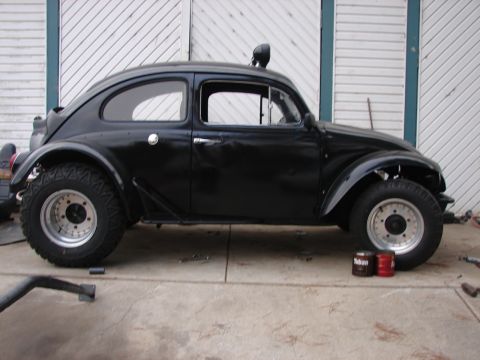
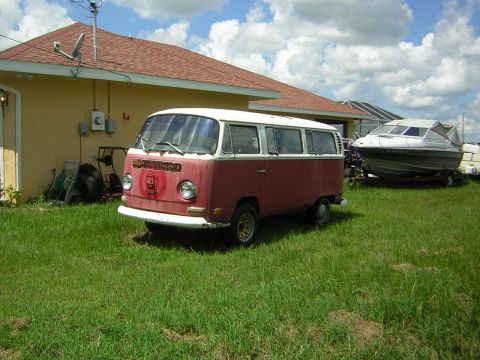
Two product decisions defined the era beyond the Beetle itself. Dutch importer Ben Pon's 1947 sketch of a box on the Beetle platform became the Transporter, launched in 1950, which gave Volkswagen a second high-volume line and eventually a counterculture icon in the United States. And the Karmann Ghia of 1955, a Ghia-styled, Karmann-built coupe on Beetle mechanicals, showed Nordhoff's formula for expanding the range without new engineering: reclothe the same platform.
The American market made Volkswagen a global company. Volkswagen of America was formed in 1955, and Doyle Dane Bernbach's self-deprecating 1959 advertising campaign, Think Small and Lemon, turned the car's oddness into a virtue; by 1968 the Beetle was the best-selling import in the United States. In 1960 the company was partially privatized as Volkswagenwerk AG, with the federal government and Lower Saxony each retaining 20 percent, an arrangement codified in the 1960 Volkswagen Law that entrenched state influence permanently.
The era's weakness was baked into its success. Nordhoff's one-car company had no successor product, and derivatives like the Type 3 failed to break the mold. When Nordhoff died in office in 1968, he left record volumes and a strategic dead end.
1968-1975: The Beetle Cliff, Kurt Lotz, Rudolf Leiding, and the Audi Rescue
Between 1968 and 1974 Volkswagen nearly died of its own best-seller, and the company that saved it was one it had bought almost by accident. Beetle demand collapsed in its core markets as buyers moved to modern front-drive, water-cooled competitors like the Fiat 128 and as United States safety and emissions rules punished the aging air-cooled design. Kurt Lotz, Nordhoff's successor, burned capital on failed replacements, including the NSU-derived K70, and was pushed out in 1971; his successor Rudolf Leiding presided over losses that reached roughly 800 million Deutschmarks in 1974, the worst in company history to that point, and Leiding himself was gone by early 1975, replaced by Toni Schmuecker. Three chief executives in seven years measured the depth of the crisis.
The rescue came from Ingolstadt. Volkswagen had acquired Auto Union from Daimler-Benz in stages, negotiating in 1964, taking a majority holding on January 1, 1965, and completing the purchase by 1966, and merged it with NSU in 1969 to form Audi NSU Auto Union. Audi's engineers, particularly Ludwig Kraus, had quietly developed modern front-wheel-drive, water-cooled cars, and Volkswagen raided that work wholesale. The Passat of 1973 was substantially a rebodied Audi 80. The Scirocco coupe, styled by Giorgetto Giugiaro of Italdesign and built by Karmann, arrived in early 1974 to prove the new platform's appeal.
Then came the car that decided whether Volkswagen would exist: the Giugiaro-designed Golf, launched in May 1974, a crisply folded front-drive hatchback that replaced the Beetle's entire mission. It sold a million units in 31 months. The smaller Polo followed in 1975 to cover the entry segment. Beetle sedan production ended at Wolfsburg in 1974 and at Emden in January 1978, though the car lived on in Mexico until 2003. The company had executed, under duress, one of the fastest total product transformations in automotive history.
1975-1992: Carl Hahn, the GTI Idea, Westmoreland, and the March on the World
Having survived, Volkswagen spent the late 1970s and 1980s converting the Golf platform into a global empire, a campaign personified by Carl Hahn, chief executive from 1982 to 1993. The platform proved endlessly elastic. A small band of engineers led by Anton Konrad and Alfons Loewenberg developed a hot version almost as a skunkworks project; launched in 1976, the GTI invented the hot-hatch category and gave Volkswagen a performance identity it had never had. The booted Jetta of 1979 answered American and Chinese preferences for sedans and eventually became Volkswagen's best-selling model in the United States. The rear-engined van tradition continued with the Type 2's successor, sold in America as the Vanagon from 1980, and the open Golf became the long-lived Cabriolet, built by Karmann from 1979 into the 1990s.
The American gamble went sour. Volkswagen opened the Westmoreland, Pennsylvania assembly plant in 1978, the first foreign carmaker to build in the modern United States, producing the Golf as the Rabbit. Decisions to soften and cheapen the car for supposed American tastes eroded the brand's engineering premium just as Japanese competitors were raising quality; sales slid and the plant closed in 1988. The Brazilian-sourced Fox of the late 1980s was a stopgap that underlined how thin the American lineup had become.
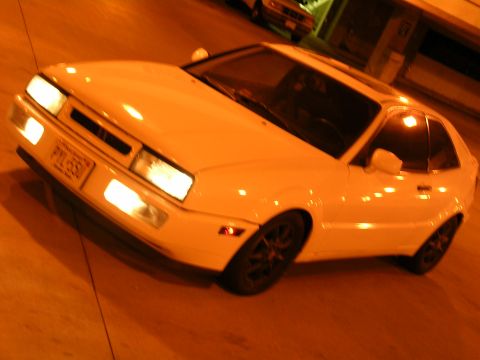
Hahn's strategic legacy lay elsewhere. He signed the 1984 joint venture creating Shanghai Volkswagen, making Volkswagen the first German carmaker in modern China and among the very first Western ones, behind only American Motors' Beijing Jeep venture, a first-mover position that made China the group's largest and most profitable market for decades. He bought SEAT of Spain (majority stake 1986) and Skoda of Czechoslovakia (1991), turning Volkswagen into a multi-brand group. The image halo came from motorsport and engineering flourishes: Audi's Quattro rally program lifted the whole group, and the supercharged Corrado of 1988 showed Wolfsburg could still build a driver's car. Hahn also left a cost problem: by the early 1990s Volkswagen was among the least productive volume carmakers in Europe, a bill that came due immediately after his retirement.
1993-2006: Ferdinand Piech, Platform Sharing, and the Empire of Brands
Ferdinand Piech, Ferdinand Porsche's grandson, took over a nearly insolvent Volkswagen in January 1993 and rebuilt it into Europe's dominant carmaker through engineering ambition and ruthless internal politics. Facing losses of almost 2 billion Deutschmarks, Piech and personnel chief Peter Hartz cut costs with a four-day week that saved roughly 30,000 German jobs, and hired the Basque cost-cutter Jose Ignacio Lopez away from General Motors, triggering an industrial-espionage lawsuit that Volkswagen settled in 1997 for 100 million dollars plus a commitment to buy 1 billion dollars of GM parts over seven years.

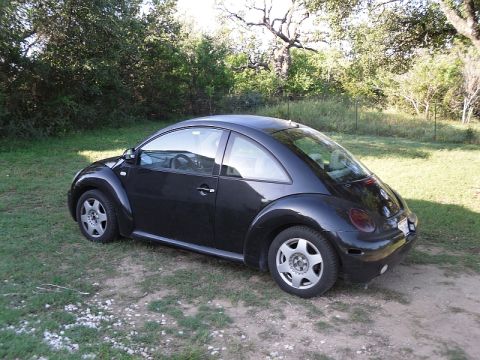
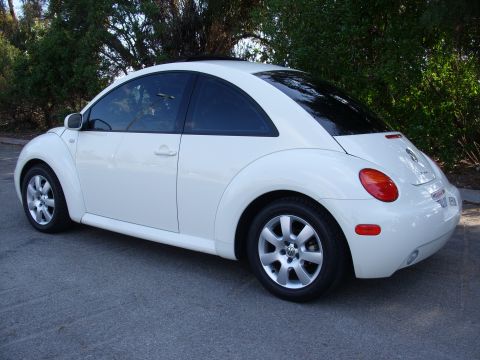
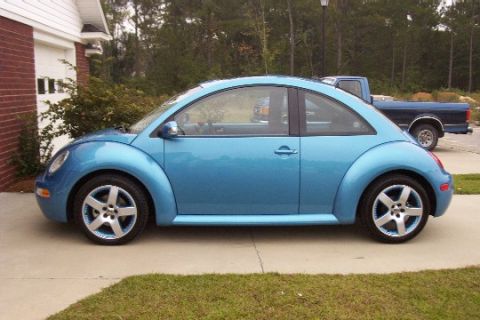
Piech's structural innovation was radical platform sharing: the PQ34 platform alone underpinned the fourth-generation Golf, the Audi A3, the Skoda Octavia, and the SEAT Leon, spreading engineering cost across four brands. His brand strategy pushed Volkswagen upmarket, sometimes past the point of sense. The retro New Beetle of 1998, born from a 1994 California design study by J Mays and Freeman Thomas, revived the company's American image. The Phaeton luxury sedan and its bespoke Dresden glass factory lost money on every car but existed because Piech willed it; its engineering sibling, the Touareg SUV of 2002, developed jointly with Porsche's Cayenne, at least found buyers. In 1998 Piech bought Lamborghini, Bentley, and the Bugatti name in a single year, and the group's Le Mans and rally programs under the Audi banner delivered the racing credibility Wolfsburg wanted.
Piech moved to the supervisory board chairmanship in 2002, handing the executive job to Bernd Pischetsrieder, but never really let go; Pischetsrieder's ouster in 2006 in favor of Piech's protege Martin Winterkorn showed where power actually sat. The same years exposed the governance rot that concentrated power breeds: the 2005 corruption scandal around works-council chief Klaus Volkert and Peter Hartz revealed company-funded bribery of labor representatives, and in 2005 Porsche began building the stake that would lead to a failed 2008 takeover attempt and, in reversal, the group's absorption of Porsche itself by 2012.
2007-2015: Martin Winterkorn, Strategy 2018, and the Diesel Deception
Martin Winterkorn's Strategy 2018, announced in 2007, aimed to make Volkswagen the world's largest automaker, and the company hit the target in 2015, the same year the method behind part of it was exposed as fraud. Winterkorn, a Piech disciple and obsessive detail engineer, drove enormous investment into the MQB modular architecture, launched with the seventh-generation Golf in 2012, which standardized components across tens of millions of group vehicles. In China, Volkswagen's two joint ventures made it the market leader in the world's largest car market. Group deliveries passed 10 million vehicles in 2014.
The American piece of the plan rested on clean diesel. Unable to meet United States NOx standards with its EA189 diesel engine at acceptable cost, Volkswagen engineers installed defeat-device software that detected emissions testing and switched the engine into a compliant mode, while on the road the cars emitted up to 40 times the legal NOx limit. Researchers at West Virginia University found the on-road discrepancy in 2014 while working with the International Council on Clean Transportation; on September 18, 2015 the United States Environmental Protection Agency issued a notice of violation. Volkswagen admitted roughly 11 million vehicles worldwide carried the software. Winterkorn resigned within days. The scandal ultimately cost more than 30 billion euros in fines, settlements, and buybacks, sent executive Oliver Schmidt to a United States prison, and led to criminal charges against Winterkorn himself in Germany.
Internal politics turned on the crisis too. Ferdinand Piech had tried and failed to unseat Winterkorn in April 2015, losing a supervisory-board showdown and resigning his chairmanship; five months later the scandal accomplished what Piech could not. Piech died in 2019, ending the family's direct operational hand, though the Porsche and Piech families still control the group through Porsche SE. The deception's deepest consequence was strategic: diesel, the core of Volkswagen's European product plan for two decades, was dead as a growth technology, and the company needed a new bet.
2015-Present: Herbert Diess, Oliver Blume, and the Forced March to Electric
Volkswagen answered the diesel scandal with the auto industry's most aggressive pivot to battery-electric vehicles, a strategy driven by Herbert Diess, the former BMW executive who became Volkswagen brand chief in 2015 and group chief executive in 2018, succeeding Matthias Muller, the Porsche chief who had steadied the group through the scandal's legal settlements from 2015 to 2018. Diess committed tens of billions of euros to the dedicated MEB electric platform, converted the Zwickau plant entirely to electric production, and launched the ID.3 hatchback in 2020 and ID.4 crossover in 2021 as the electric heirs to the Golf's mission. The ID. Buzz of 2022 mined the Transporter's heritage for the electric age. Diess's public embrace of Tesla as the benchmark, and his repeated clashes with the works council and the Porsche-Piech families over software delays at the Cariad unit and over job cuts, cost him the job in 2022; Porsche chief Oliver Blume replaced him, running both companies until Michael Leiters took over as Porsche AG chief executive on January 1, 2026.
The structural constraints of the postwar settlement still bind the company. Lower Saxony's 20 percent voting stake under the Volkswagen Law and the works council's co-determination power make restructuring slow by design, which is why the December 2024 agreement to cut roughly 35,000 German jobs by 2030 came through negotiation rather than plant closures. Meanwhile the profit engines shifted: China, once the group's cash machine, turned fiercely competitive as BYD and other domestic electric makers took share, pushing Volkswagen into partnerships with XPeng and a stated in-China-for-China development strategy, alongside battery ventures under the PowerCo unit and a stake in Rivian for software.
Volkswagen AG today remains headquartered in Wolfsburg as the flagship marque of the Volkswagen Group, still one of the two largest carmakers on earth by volume, roughly 89 years after the German Labour Front chartered it and more than 80 years after Ivan Hirst decided the wreckage was worth saving. Its recurring pattern holds: existential crisis, then reinvention around a single decisive platform, Beetle to Golf to MQB to MEB.
Leadership
| Leader | Tenure | Legacy |
|---|---|---|
| Ferdinand Porsche | 1934-1945 (chief engineer) | Designed the KdF-Wagen that became the Beetle and oversaw the Wolfsburg plant's creation under the Nazi state. |
| Maj. Ivan Hirst | 1945-1949 (British military control) | Restarted Beetle production in the bombed-out plant and secured the British Army order that kept Volkswagen alive. |
| Heinrich Nordhoff | 1948-1968 | Built Volkswagen into Europe's largest automaker and a leading global exporter on a one-model Beetle strategy, taking annual output past one million by 1961. |
| Kurt Lotz | 1968-1971 | Merged NSU with Auto Union in 1969, consolidating the front-drive, water-cooled engineering that would save the company, but failed to field a Beetle successor. |
| Rudolf Leiding | 1971-1975 | Pushed the Passat, Scirocco, and Golf into production, executing the water-cooled front-drive pivot that saved the company. |
| Toni Schmücker | 1975-1981 | Returned Volkswagen to profit after the 1974-75 crisis and opened the Westmoreland, Pennsylvania plant in 1978, the first US assembly plant by a foreign automaker in the postwar era. |
| Carl Hahn | 1982-1993 | Globalized the company, acquiring SEAT and Skoda and expanding into China through the 1984 Shanghai joint venture. |
| Ferdinand Piech | 1993-2002 (CEO), chairman to 2015 | Grandson of Porsche; rescued the company through platform sharing and assembled the multi-brand empire including Bentley, Lamborghini, and Bugatti. |
| Bernd Pischetsrieder | 2002-2006 | Ran the group between Piech's CEO and chairman eras; ousted in 2006 when the supervisory board installed Piech's protege Martin Winterkorn. |
| Martin Winterkorn | 2007-2015 | Drove Strategy 2018 to make VW the world's largest automaker; resigned days after the diesel-emissions cheating became public in September 2015. |
| Matthias Müller | 2015-2018 | Porsche chief promoted to steady the group through the diesel-scandal settlements and launch the initial electric-vehicle strategy. |
| Herbert Diess | 2018-2022 (Group CEO) | Forced the post-Dieselgate pivot to electric vehicles, launching the MEB platform and ID. family. |
| Oliver Blume | 2022-present (Group CEO) | Ran Volkswagen Group and Porsche AG in a dual role until January 2026, when Michael Leiters took over Porsche; manages the EV transition and 2024 German plant restructuring. |
Timeline
| Year | Event | Detail |
|---|---|---|
| 1934 | People's car contract | Ferdinand Porsche receives the Reich contract to design an affordable car for the German people, the project that became the Beetle. |
| 1937 | Company founded | The German Labour Front founds the company on May 28, 1937 in Berlin to build Porsche's KdF-Wagen. |
| 1938 | Wolfsburg plant | Cornerstone laid for the factory and company town at what becomes Wolfsburg; civilian production never materializes before the war. |
| 1940 | Kubelwagen | The Beetle-based Type 82 Kubelwagen enters volume military production, the plant's principal wartime vehicle alongside the amphibious Schwimmwagen. |
| 1945 | British takeover | Major Ivan Hirst of the British Army takes charge of the bombed plant and restarts Beetle production with an order for 20,000 cars. |
| 1945 | Beetle | Civilian Type 1 Beetle production begins in earnest under British control; the model runs until 2003 with over 21.5 million built. |
| 1948 | Nordhoff arrives | Former Opel executive Heinrich Nordhoff becomes managing director and commits the company to relentless refinement of a single model. |
| 1949 | Handover; US arrival | The British transfer trusteeship to the West German federal and Lower Saxony governments; the first Beetles reach the United States. |
| 1950 | Transporter | The Type 2 Transporter launches, creating the forward-control van segment and the "Bus" that anchors VW's commercial line. |
| 1955 | Karmann Ghia | The Ghia-styled, Karmann-built coupe on Beetle underpinnings goes on sale; Volkswagen of America is founded the same year. |
| 1960 | Privatization | Volkswagen becomes a partly privatized stock corporation; the "VW Law" caps any shareholder's votes and preserves Lower Saxony's blocking stake. |
| 1965 | Auto Union purchase | Volkswagen takes majority control of Auto Union from Daimler-Benz on January 1, 1965 (wholly owned by 1966), acquiring the Ingolstadt operation that it relaunches as Audi. |
| 1968 | Nordhoff dies | Heinrich Nordhoff dies in office in April 1968; Kurt Lotz takes over as Beetle sales begin to soften. |
| 1969 | NSU merger | Volkswagen merges Auto Union with NSU, forming Audi NSU Auto Union AG and absorbing NSU's front-drive, water-cooled expertise. |
| 1973 | Passat | The Audi 80-derived Passat becomes the first of the modern water-cooled, front-drive Volkswagen line. |
| 1974 | Golf and Scirocco | The Giugiaro-designed Golf and Scirocco launch as the Beetle's replacements while the company posts record losses. |
| 1975 | Polo | The Polo supermini arrives as Toni Schmücker takes over and returns the company to profit. |
| 1976 | GTI | The Golf GTI goes on sale in Germany, defining the hot-hatch formula with a 110 hp fuel-injected 1.6. |
| 1978 | Westmoreland plant; Rabbit | US-built Rabbits (the American-market Golf) roll out of the Westmoreland, Pennsylvania plant; German Beetle sedan production had ended at Emden in January. |
| 1979 | Jetta and Cabriolet | The booted Golf-based Jetta debuts, becoming VW's best-selling model in North America, alongside the Karmann-built Golf Cabriolet. |
| 1980 | Vanagon | The third-generation Transporter reaches the US as the Vanagon, still rear-engined but wider and squarer. |
| 1984 | China joint venture | Shanghai Volkswagen is established, giving VW a decades-long head start in what becomes its largest market. |
| 1986 | SEAT acquired | Volkswagen takes majority control of Spain's SEAT, its first step toward a multi-brand European group. |
| 1988 | Westmoreland closes; Corrado | The Pennsylvania plant closes after a decade of weak US sales; the Karmann-built Corrado sport coupe launches in Europe. |
| 1991 | Skoda joins | Volkswagen takes a stake in Czech automaker Skoda, completing Carl Hahn's post-Cold-War expansion. |
| 1993 | Piech era begins | Ferdinand Piech becomes CEO amid a loss-making crisis and imposes platform sharing across VW, Audi, SEAT, and Skoda. |
| 1993 | EuroVan | The front-engined, front-drive T4 Transporter reaches North America as the EuroVan, ending the rear-engine van line. |
| 1998 | New Beetle; luxury brands | The Golf-based New Beetle revives the company's US fortunes the same year the group buys Bentley, Lamborghini, and Bugatti. |
| 2002 | Touareg | The Touareg SUV, co-developed with Porsche's Cayenne, marks VW's push upmarket under Piech's successor Bernd Pischetsrieder. |
| 2003 | Beetle production ends | The last original air-cooled Beetle leaves the Puebla, Mexico line on July 30, 2003, after 21,529,464 built. |
| 2008 | Porsche battle | Porsche SE's failed takeover attempt reverses; by 2012 Volkswagen fully absorbs Porsche AG instead. |
| 2011 | Chattanooga plant | Volkswagen returns to US manufacturing with the Chattanooga, Tennessee plant building the Passat. |
| 2015 | Dieselgate | The EPA's September 18, 2015 notice of violation exposes defeat-device software on about 11 million diesels; CEO Martin Winterkorn resigns and penalties exceed $30 billion. |
| 2016 | Electric pivot | Volkswagen announces the MEB dedicated electric platform and a wholesale strategic shift to battery-electric vehicles. |
| 2020 | ID. era | The ID.3 and ID.4 launch as the first MEB production cars, with the ID.4 later built in Chattanooga. |
| 2022 | Blume takes over | Oliver Blume replaces Herbert Diess as Volkswagen Group CEO while retaining the Porsche AG job through its IPO. |
| 2024 | German restructuring | Volkswagen and its works council agree to cut over 35,000 German jobs by 2030 while keeping plants open, the marque's deepest postwar retrenchment. |
Asked all the time
Who founded Volkswagen?
Volkswagen was founded on May 28, 1937 in Berlin by the German Labour Front (Deutsche Arbeitsfront), the Nazi state's labor organization, to build Ferdinand Porsche's low-priced 'people's car.' Porsche was the chief engineer, not the founder, and the company was effectively refounded in 1945 when British Army Major Ivan Hirst restarted production at the occupied Wolfsburg plant.
Why is Volkswagen headquartered in Wolfsburg?
The German Labour Front built the factory and a purpose-built company town on open land near Fallersleben in 1938 specifically to produce the KdF-Wagen. The town was renamed Wolfsburg in 1945, and the plant remains one of the largest single automobile factories in the world.
How did Volkswagen survive World War II?
The plant built military vehicles, including the Kubelwagen and Schwimmwagen, using forced labor, and was heavily bombed. In 1945 the British occupation authority under Major Ivan Hirst restarted Beetle production with a 20,000-car British Army order after British and American automakers declined to take the factory.
Why did Volkswagen stop making the Beetle?
Beetle sales collapsed in the early 1970s against modern front-drive competitors, pushing the company to record losses in 1974. Volkswagen replaced it with the water-cooled Golf that year; German sedan production ended in 1978, and the last air-cooled Beetle was built in Puebla, Mexico on July 30, 2003.
What was the Volkswagen diesel scandal?
In September 2015 the US EPA revealed that Volkswagen had installed defeat-device software on diesel engines to cheat emissions tests, affecting about 11 million vehicles worldwide. CEO Martin Winterkorn resigned, the company pleaded guilty to US criminal charges, and total costs exceeded $30 billion.
Is Volkswagen still German-owned?
Volkswagen AG is a publicly traded German company. Porsche SE, the Porsche-Piech family holding company, controls the majority of voting shares, the State of Lower Saxony holds a blocking 20 percent stake protected by the German 'VW Law,' and Qatar is the third major shareholder.
How is Volkswagen related to Audi and Porsche?
Volkswagen bought Auto Union from Daimler-Benz in 1965 and relaunched it as Audi, merging it with NSU in 1969. Porsche AG became a fully owned Volkswagen Group brand in 2012 after Porsche's failed takeover of VW reversed; the group also owns SEAT, Skoda, Bentley, and Lamborghini, and holds a stake in Bugatti through the Bugatti Rimac joint venture.
Is Volkswagen going all-electric?
After the 2015 diesel scandal, Volkswagen committed to battery-electric vehicles on its dedicated MEB platform, launching the ID.3 and ID.4 in 2020. The company has stated it intends to be largely electric in Europe by the 2030s, though it slowed some targets in 2024 amid weak EV demand and German plant restructuring.
The wall
The most-documented Volkswagen vehicles in the registry, every photo by the owner.