The registry
Volvo Registry: Models, Builds & Photos
Volvo built its first car, the OV4, in Gothenburg, Sweden in 1927, after founders Assar Gabrielsson and Gustaf Larson set the company up as a subsidiary of the SKF bearing works. The name is Latin for "I roll," and the marque built its reputation on crash safety, introducing the three-point seat belt as standard equipment in 1959 and leaving the patent open for every other manufacturer to use free. Ford owned the car division from 1999 to 2010, when China's Geely bought it, and Volvo Cars remains in production today with headquarters still in Gothenburg.
Pick your model

Origins and the safety habit
Volvo started as a 1927 subsidiary of SKF, the Swedish bearing maker, and the early cars were engineered for Swedish winters and rough gravel roads rather than speed. The safety record starts earlier than most people think. The PV444 carried a laminated windscreen from its 1944 debut. Engineer Nils Bohlin's three-point seat belt went into the Amazon and PV544 as standard in 1959, and Volvo left the patent open so every automaker could use it free. Front and rear crumple zones arrived on the 140 series in 1966, and the production rear-facing child seat followed in 1972.
PV444, PV544, and the Amazon
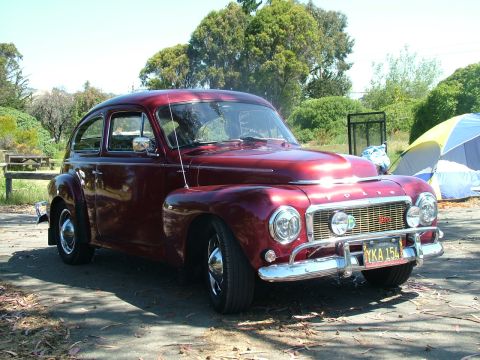
The fastback PV444 entered production in 1947, and the PV544 that replaced it in 1958 ran through 1965. These were the cars that opened the American market, with documented US imports from the mid 1950s, concentrated at first in Texas and southern California. The Amazon, built from 1956 to 1970 and sold in the US as the 122S starting in 1959, shared the B18 four and carried those first standard three-point belts.
The brick era: 240, 740, 760, 940
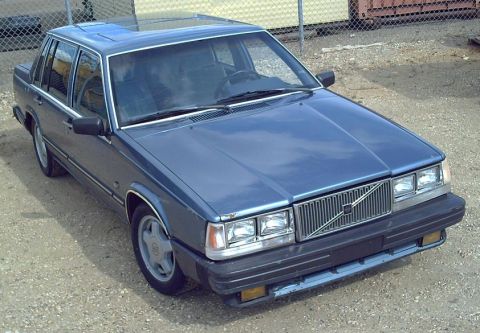
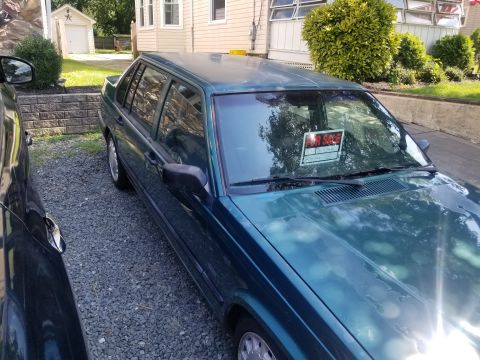
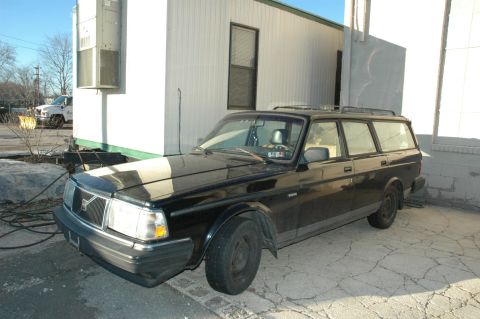
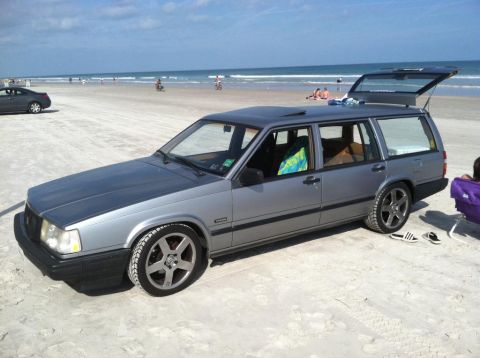
The rear-drive "brick" wagons and sedans are what most American owners know. The 200 series ran 1974-1993. The 700 series arrived as the upmarket 760 in 1982 (built through 1990), with a turbocharged 2.3 liter four or the PRV V6, followed by the cheaper 740 from 1984 to 1992. The redblock B230 four in these cars is a non-interference iron-block engine that routinely passes 300,000 miles, which is why they are still on the road. The 940 (1990-1998) was a rebodied 700 with the same driveline. US sales of the 940 ended after 1995, and the last rear-drive Volvos sold in America were the 960 and its renamed 1998 versions, the S90 sedan and V90 wagon.
The front-drive switch: 850, S70, V70
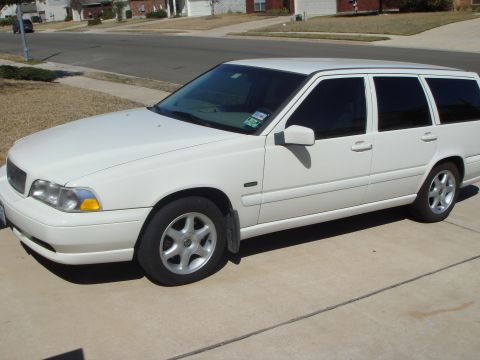
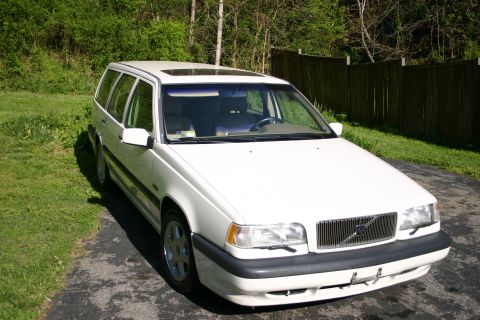
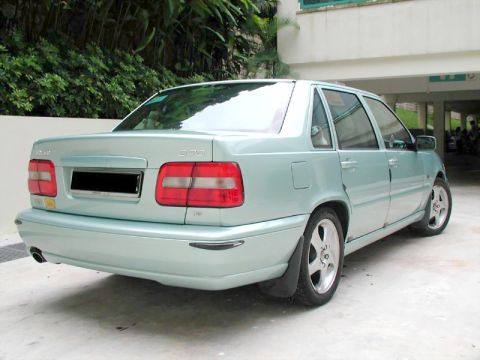
The 850, built from 1991 to 1997 and sold in the US from the 1993 model year, moved Volvo's core line to front-wheel drive with a transverse whiteblock inline five. The little 480 coupe had already gone front-drive in Europe in 1986, but it never crossed the Atlantic. The 1995 850 T-5R and the 850 R that followed it, plus the factory BTCC wagon campaigned with Tom Walkinshaw Racing in 1994, changed the brand's image overnight. For 1997 in Europe and 1998 in the US the 850 was reworked into the S70 sedan and V70 wagon (first generation 1996-2000), keeping the five-cylinder engines and adding available all-wheel drive on the V70 AWD and the raised Cross Country that appeared for 1998.
P1800 and the compacts
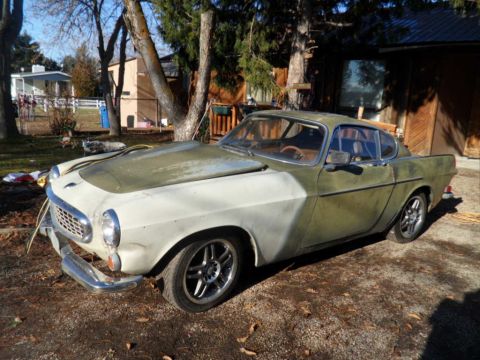
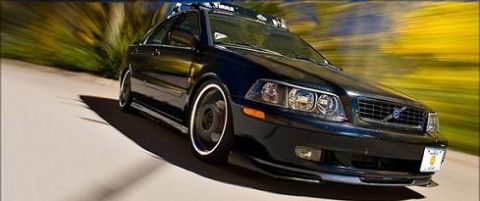
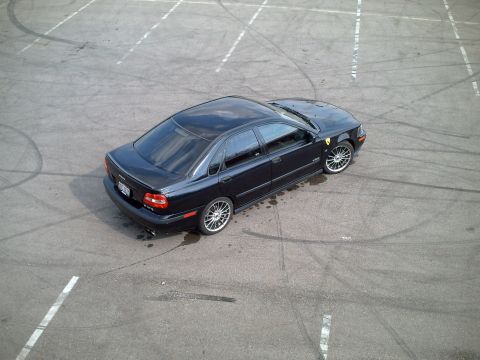
The P1800 coupe (1961-1972, plus the 1800ES shooting brake through 1973) used the B18 and later B20 pushrod four. One 1966 1800S famously passed 3 million miles with original owner Irv Gordon in 2013, and stood at 3.25 million by his death in 2018. On the modern end, the first-generation S40 sedan (1995-2004, US sales from the 2000 model year) shared its platform with the Mitsubishi Carisma and was built at NedCar in the Netherlands, while the second generation (2004-2012) sat on the Ford C1 platform shared with the Mazda3 and European Focus, with the T5 turbo five as the hot version.
Corporate fate
AB Volvo sold the car business to Ford in 1999 for 6.45 billion dollars. Geely bought Volvo Cars in 2010 for 1.8 billion, and the truck company remains a separate Swedish firm. Parts support for the rear-drive cars stays strong through specialists like IPD and a deep salvage supply.
Asked all the time
What years were the rear-wheel-drive Volvo bricks made?
Volvo built rear-drive 200 series cars from 1974 to 1993, the 760 from 1982 to 1990, the 740 from 1984 to 1992, and the 940 from 1990 to 1998, though US sales of the 940 ended after 1995. The last rear-drive Volvos sold in the United States were the 960 and its renamed 1998 versions, the S90 sedan and V90 wagon.
Is the Volvo redblock engine really that durable?
Yes. The 8-valve Volvo B21/B23/B230 redblock is an iron-block, non-interference design, so a snapped timing belt does not bend valves. With basic maintenance these engines commonly run 300,000 miles or more, which is a big reason 240s, 740s, and 940s survive in daily use. The 16-valve B234 is the exception: it is an interference engine, so treat its timing belt as a hard service item.
When did Volvo switch to front-wheel drive?
Volvo's first front-drive car was the 480 coupe, launched in Europe in 1986. The first sold in the US was the 850, which arrived for the 1993 model year with a transverse inline five and was built through 1997. The S70 and V70 that replaced it kept the layout, and once the rear-drive S90 and V90 left showrooms after 1998, every Volvo since has been front- or all-wheel drive.
Who owns Volvo now?
Volvo Cars has been owned by China's Geely Holding since 2010. Before that, Ford owned the car division from 1999 to 2010. AB Volvo, the truck and heavy equipment maker, is a separate Swedish company and has not built cars since the 1999 sale.
Are parts still easy to get for older Volvos?
Generally yes. The rear-drive Volvo 240/740/940 cars share many driveline parts across two decades of production, and specialists like IPD plus strong OE supply keep most mechanical parts available. The 1800 has dedicated vendors, while some 1980s-specific trim and electronics take more hunting.
The wall
The most-documented Volvo vehicles in the registry, every photo by the owner.