The registry
Yamaha Registry: Models, Builds & Photos
Yamaha Motor Co., Ltd. is a Japanese manufacturer of motorcycles, marine engines, ATVs, snowmobiles, and personal watercraft, founded on July 1, 1955 in Hamamatsu, Shizuoka, by Genichi Kawakami as a spin-off of the musical instrument maker Nippon Gakki (today Yamaha Corporation). Its first product, the YA-1 motorcycle, won Japan's Mount Fuji Ascent Race in its debut year, and the company grew into the world's second-largest motorcycle maker behind Honda. Along the way it diversified into outboard motors in 1960, invented the WaveRunner personal watercraft category, survived a near-fatal price war with Honda in the early 1980s, and built a Grand Prix racing dynasty around riders like Kenny Roberts and Valentino Rossi. Yamaha Motor remains an independent, publicly traded company headquartered in Iwata, Japan.
Pick your model
Key facts
| Founded | July 1, 1955, Hamamatsu, Shizuoka, Japan (spun off from Nippon Gakki Co.) |
|---|---|
| Founders | Genichi Kawakami |
| Headquarters | Iwata, Shizuoka, Japan |
| Parent/successor | None; independent of Yamaha Corporation (the instrument maker), which retains a minority stake and shares the tuning-fork mark |
| Fate/status | Active; independent, publicly traded manufacturer of motorcycles, marine engines, ATVs, snowmobiles, and personal watercraft |
| Best known for | YZF-R1, V-Max, WaveRunner |
| Registry presence | 202 vehicles / 1,791 photos documented by owners on SuperMotors |
1955-1959: Genichi Kawakami Turns a Piano Company's Propeller Tooling into the Red Dragonfly
On July 1, 1955, Genichi Kawakami carved Yamaha Motor Co., Ltd. out of Nippon Gakki, the musical instrument firm descended from the reed organ Torakusu Yamaha built in 1887 and led by the Kawakami family since Genichi's father Kaichi took its presidency in 1927, because the company's wartime machinery had to make something other than propellers. Nippon Gakki had spent the Second World War manufacturing wooden and metal aircraft propellers for the Japanese military, and Kawakami, who became president of the parent firm in 1950 at age 38, inherited idle metalworking capacity and a government pushing industrial conversion. He sent engineers to study German machines, settled on the DKW RT125 as a template, and in January 1955 put the YA-1 into production, a 125cc two-stroke nicknamed the Akatombo, the Red Dragonfly, for its maroon paint at a time when Japanese motorcycles were universally black.
Kawakami then made the decision that defined the company's culture: he entered the untested YA-1 in the Mount Fuji Ascent Race on July 10, 1955, nine days after incorporation, and won. The YA-1 swept the Asama Highlands Race that autumn as well. Racing was not marketing garnish; it was the survival strategy of a newcomer entering a Japanese market crowded with more than a hundred motorcycle makers. Victories gave the tuning-fork badge, borrowed directly from the parent's musical heritage, instant credibility, and by the end of the decade Yamaha was among the handful of Japanese manufacturers still standing as the field consolidated toward the eventual big four.
1960-1967: The First Outboard Motor and the Toyota 2000GT Prove Yamaha Is More Than Motorcycles
In 1960 Yamaha Motor shipped its first outboard motor, the P-7, and the decision to diversify into marine power turned out to be the most consequential product-line choice in the company's history, because marine and non-motorcycle businesses would eventually generate roughly half of corporate revenue and cushion every motorcycle downturn that followed. Genichi Kawakami framed diversification as insurance: a company selling only motorcycles in Japan would live and die with one market. The same decade brought Yamaha's first overseas subsidiary in Thailand in 1964 and serious export push into the United States, where small-displacement two-strokes sold to a generation of new riders.
The era's most surprising work happened under contract. Toyota, lacking capacity and specialized know-how, engaged Yamaha to help engineer and assemble the Toyota 2000GT sports car, launched in 1967, with Yamaha responsible for the twin-cam cylinder head work and much of the coachbuilt assembly at its Iwata facilities. The 2000GT established Yamaha as Japan's quiet specialist in high-performance engine consulting, a sideline that later produced cylinder heads for Toyota, the Ford Taurus SHO V6 of 1989, and Volvo V8s. Meanwhile the company went racing on the world stage: Yamaha entered Grand Prix competition in 1961, and Phil Read delivered its first 250cc world championship in 1964 on the RD56 twin, beating Honda's four-strokes with two-stroke simplicity, a technical identity Yamaha would ride for two decades.
1968-1979: The DT-1 Invents the Trail Bike and the XS650 Takes Yamaha Four-Stroke
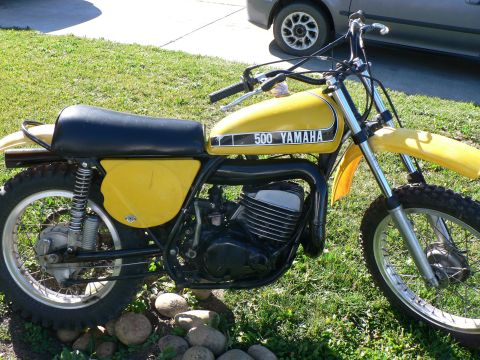
In 1968 Yamaha Motor released the DT-1, a 250cc street-legal two-stroke that could actually be ridden off-road, and the machine created the dual-purpose trail bike category in America almost single-handedly, selling far beyond Yamaha's forecasts and forcing every competitor to answer it. The DT-1 mattered corporately because it gave Yamaha a franchise Honda did not own, and its descendants seeded the off-road business that later produced the YZ motocross line, machines like the open-class YZ490, and eventually the ATV division. Yamaha's monoshock rear suspension, developed from Grand Prix racing and brought to production motocrossers in the mid-1970s, kept that franchise ahead of the field.
The company also hedged against tightening emissions expectations by going four-stroke. The 1970 XS650 vertical twin, Yamaha's first big four-stroke, answered the British twins just as Triumph and BSA were collapsing, and it stayed in production for over a decade. The 1978 XS1100 shaft-drive four announced that Yamaha would contest the superbike class Honda's CB750 had created. Leadership changed in this period as well: Genichi Kawakami handed the Yamaha Motor presidency to Hisao Koike in 1974 while staying on as chairman and retaining influence from the parent side, and the company added snowmobiles in 1968, another diversification that made Yamaha a full-line powersports company rather than a motorcycle maker. Kenny Roberts, developed through Yamaha's US racing program, won the 500cc world championship in his rookie 1978 season and repeated in 1979 and 1980, the first American to take the premier class, and his success anchored Yamaha's brand in the United States market that now mattered most.
1981-1983: The HY War, a Failed Bid to Dethrone Honda, and the Fall of Hisao Koike
In 1981 Yamaha Motor president Hisao Koike publicly declared that Yamaha would overtake Honda to become the world's number one motorcycle maker, and the resulting two-year price and production war, remembered in Japan as the HY War, nearly destroyed the company. Yamaha built a new factory to push annual capacity toward four million units just as the global motorcycle market softened. Honda's president Kiyoshi Kawashima answered with the phrase 'Yamaha wo tsubusu,' roughly 'we will crush Yamaha,' and Honda flooded the market with new models and discounts it could absorb thanks to its automobile profits, a cushion Yamaha did not have.
By early 1983 Yamaha was drowning in roughly a year's worth of unsold inventory, and the company posted heavy losses on debt that had ballooned during the capacity race. The reckoning was formal and public: in accounts of the HY War, Koike is described as conceding the failed bid to overtake Honda before resigning the presidency in 1983. Hideto Eguchi took over and executed the retrenchment, cutting production plans, shedding inventory, reducing the workforce, and refocusing on profitability over volume. The HY War became a Japanese business-school case study in overreach, and inside Yamaha it hardened a lasting doctrine: never again bet the company on unit share against Honda; win instead on diversification, engineering character, and racing prestige. The discounted-inventory flood also, incidentally, put cheap Yamahas in American garages for years and swelled the brand's grassroots base.
1984-1992: The V-Max, the WaveRunner, and the Banshee Rebuild Yamaha on Character Products
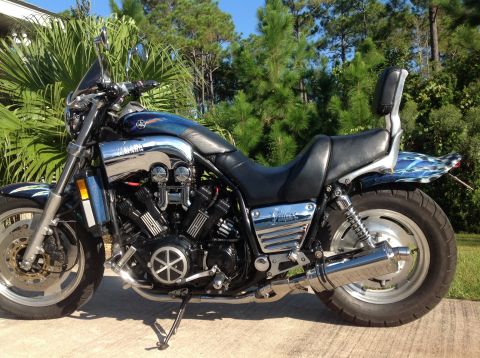
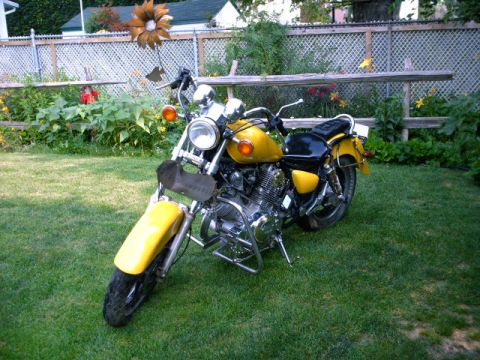
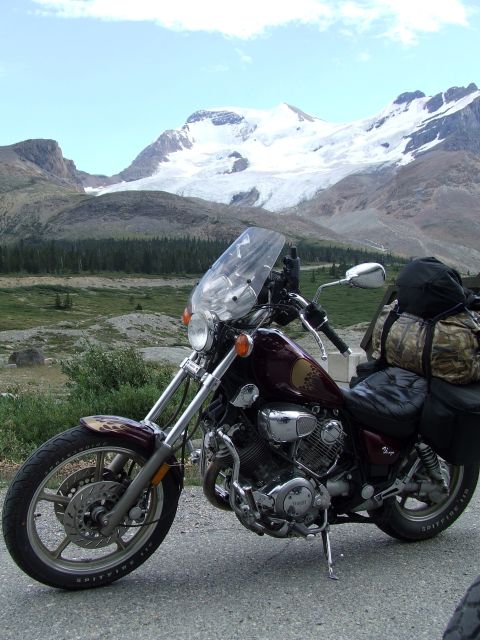
Yamaha Motor's recovery from the 1983 crisis was built on machines with exaggerated personalities rather than volume plays, and the 1985 V-Max was the thesis statement: a 145-horsepower V4 muscle bike conceived largely by Yamaha's American arm for American tastes, profitable at low volume and unmatched by any Honda equivalent. The same logic ran through the cruiser line begun with the Virago, Japan's first V-twin cruiser in 1981, which opened the Harley-alternative segment that later grew into the V Star family, and through sport bikes like the FZR600, which carried Yamaha's Genesis five-valve engine thinking and Deltabox frame technology from racing into showrooms.
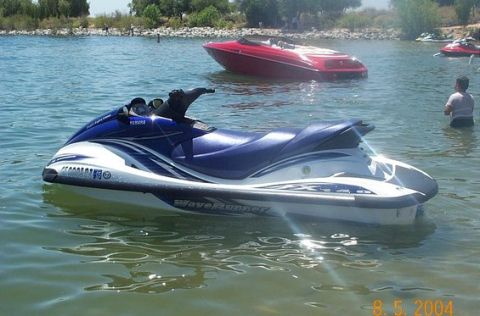
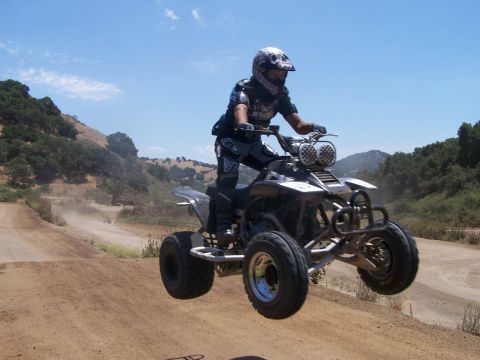
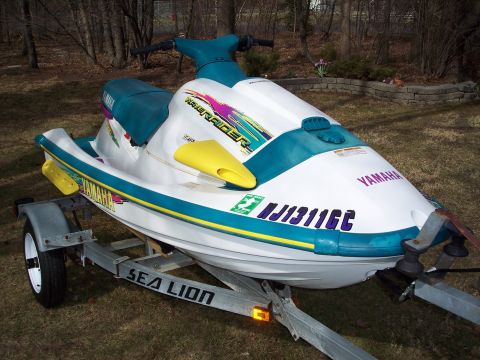
Two category inventions of this era mattered even more to the balance sheet. In 1986 Yamaha launched the WaveRunner Marine Jet 500T, the first sit-down, open-stern production personal watercraft, creating the modern runabout PWC market it still leads and extending the marine business Genichi Kawakami had started in 1960; descendants like the XLT1200 WaveRunner line kept the franchise fresh for decades. On land, Yamaha converted its three-wheeler experience, begun with machines like the Tri-Moto, into four-wheel ATVs after the 1988 industry consent decree ended three-wheeler sales in the US. The 1987 Banshee, a twin-cylinder two-stroke sport quad that stayed in the US lineup until 2006, and the entry-level Blaster gave Yamaha a sport-ATV identity no rival matched. Hideto Eguchi's successors inherited a company that had learned to make money on breadth: motorcycles, ATVs, snowmobiles such as the Phazer line, watercraft, outboards, golf cars, and generators.
1993-2003: Takehiko Hasegawa's Global Rebalancing, the R1 Shock, and the Raptor's Sport-Quad Peak
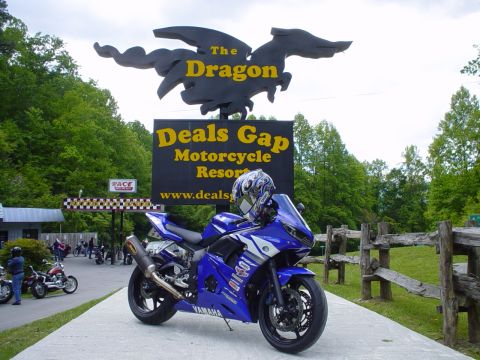
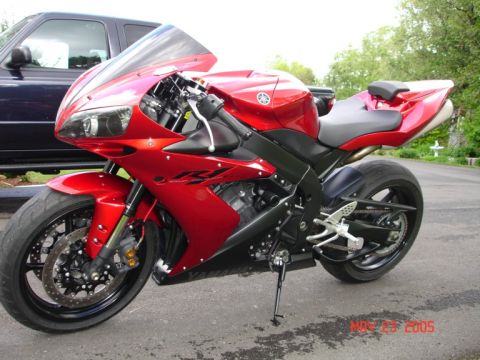
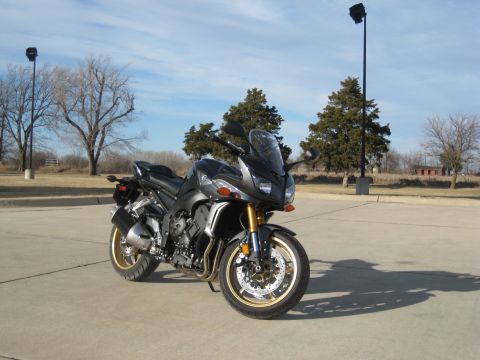
In 1998 Yamaha Motor detonated the supersport class with the YZF-R1, a liter bike whose stacked-gearbox engine layout allowed a shorter, lighter chassis than anything Honda, Suzuki, or Kawasaki sold, and the R1 restored Yamaha's performance flagship status at the exact moment the company needed a halo. The 1990s had opened roughly: Japan's bubble collapse and a punishing yen squeezed exports, and Yamaha leaned harder on Asian commuter markets, US powersports, and the marine division to carry results. Presidents Hideto Eguchi and then Takehiko Hasegawa, who took over in 1994, steered this rebalancing, expanding manufacturing in Taiwan, Indonesia, India, and Brazil so that currency swings hurt less.
The utility ATV boom became the quiet profit engine of the decade in North America. Yamaha's Kodiak 400, Big Bear, Timberwolf, and the flagship Grizzly 600 of 1998, followed by the Grizzly 660, turned farmers and hunters into repeat customers. On the sport side the 2001 Raptor 660, the largest-displacement sport quad on the market at launch, and the race-bred YFZ450 of 2004 gave Yamaha the sport-ATV crown just as that market peaked. In motocross, the 1998 YZ400F and its successor the YZ450F forced the entire industry back to four-strokes, a strategic engineering bet that anticipated emissions regulation and obsoleted competitors' two-stroke lineups. The parent's grip also loosened through this period: Yamaha Corporation's cross-shareholding declined, and Yamaha Motor increasingly acted as the larger, more global of the two Yamahas.
2004-2012: Valentino Rossi's Defection, the Lehman Shock, and Hiroyuki Yanagi's Rescue
When Valentino Rossi left Honda and won the 2004 MotoGP championship in his first season on a Yamaha YZR-M1, taking the opening race in South Africa, he handed Yamaha Motor the most valuable marketing victory in its racing history, proof before a global audience that the rider had not been carried by Honda's machine. Rossi delivered titles in 2004, 2005, 2008, and 2009, and Jorge Lorenzo added more in 2010, 2012, and 2015; the M1 program, run under engineers including Masao Furusawa, kept Yamaha's premier-class credibility intact for a decade and pulled showroom traffic to the R1 and R6.
The business itself hit a wall in 2008. The Lehman collapse gutted the discretionary US powersports market on which Yamaha's high-margin ATVs, snowmobiles, and watercraft depended, and Yamaha Motor posted a consolidated net loss of 216.1 billion yen for fiscal 2009, the worst result in company history. President Takashi Kajikawa stepped down in 2009, and after a brief bridge presidency under Tsuneji Togami, Hiroyuki Yanagi took over in 2010; the company closed and consolidated plants, cut the workforce, raised capital, and reweighted itself toward Asian commuter motorcycles and outboards, businesses that recovered fastest. Yanagi's restructuring worked; Yamaha returned to solid profitability by 2013 and emerged with a portfolio deliberately tilted away from the boom-bust North American recreational cycle. The episode rhymed with 1983: overexpansion into a downturn, a leadership change, and a survival playbook built on the diversification Genichi Kawakami had preached from the start.
2013-2026: Yoshihiro Hidaka, Electrification Hedging, and the Handoff to Motofumi Shitara
Yamaha Motor entered the 2020s under president Yoshihiro Hidaka, appointed in 2018, as a company whose center of gravity had quietly shifted: marine products, led by large four-stroke outboards dominant in the US boating market, became the most profitable division, while motorcycles earned their money in Indonesia, Vietnam, India, and Brazil rather than the mature West. Annual revenue passed 2.4 trillion yen in the mid-2020s, and the land-mobility business broadened into side-by-sides built in Newnan, Georgia, descendants in spirit of utility lines like the Wolverine and Kodiak families. Hidaka resigned in September 2024; chairman Katsuaki Watanabe added the president's role on an interim basis, and Motofumi Shitara took over as president and chief executive in March 2025.
Strategy in this era has been deliberate hedging rather than conviction bets, a temperament traceable to the scars of 1983 and 2009. Yamaha launched electric scooters like the E01 and NEO's in pilot volumes, joined Honda, Suzuki, and Kawasaki in the Gachaco battery-swap consortium in Japan in 2022, invested in hydrogen and synthetic-fuel engine research alongside Toyota and Kawasaki, and kept building high-performance gasoline engines for third parties. The corporate relationship with Yamaha Corporation, the instrument maker, formally loosened as the two companies reduced cross-shareholdings in the late 2010s while sharing the tuning-fork brand under a joint brand charter. Seven decades after Genichi Kawakami entered an unproven motorcycle in a hill-climb race nine days after incorporation, Yamaha Motor Co., Ltd. remains independent, publicly traded on the Tokyo exchange, the world's second-largest motorcycle producer by most counts, and the rare Japanese manufacturer that never needed a parent, a merger, or a bailout to survive.
Leadership
| Leader | Tenure | Legacy |
|---|---|---|
| Genichi Kawakami | 1955-1974 (founding president; chairman thereafter) | Turned Nippon Gakki's postwar propeller tooling into the YA-1 and built Yamaha Motor into a global motorcycle and marine company. |
| Hisao Koike | 1974-1983 (president) | Led the aggressive capacity expansion that triggered the HY War with Honda, then resigned when the price war reportedly nearly bankrupted the company. |
| Hideto Eguchi | 1983-1994 (president) | Executed the post-HY-War retrenchment, cutting output and debt while character products like the V-Max and WaveRunner rebuilt the brand. |
| Takehiko Hasegawa | 1994-2001 (president) | Father of Yamaha's snowmobile business who, as president, pushed overseas manufacturing and presided over the launch of the 1998 YZF-R1. |
| Itaru Hasegawa | 2001-2005 (president) | Led the early-2000s expansion and the era in which Yamaha signed Valentino Rossi away from Honda. |
| Takashi Kajikawa | 2005-2009 (president) | Rode the mid-2000s powersports boom, then stepped down as the Lehman shock produced the company's worst-ever loss. |
| Tsuneji Togami | 2009-2010 (president) | Brief bridge presidency covering the emergency restructuring and capital raise at the depth of the crisis. |
| Hiroyuki Yanagi | 2010-2017 (president/CEO) | Steered Yamaha Motor out of the Lehman-shock losses, refocusing on emerging-market commuters and profitable core lines. |
| Yoshihiro Hidaka | 2018-2024 (president/CEO) | Ran the electrification-hedging strategy, balancing battery-electric ventures with continued combustion and hydrogen development; resigned in September 2024. |
| Katsuaki Watanabe | 2024-2025 (chairman; interim president/CEO) | Chairman who took on the president's role on an interim basis after Hidaka's resignation. |
| Motofumi Shitara | 2025-present (president/CEO) | Took over as president and chief executive in March 2025, continuing the multi-pathway powertrain strategy. |
Timeline
| Year | Event or model | Note |
|---|---|---|
| 1955 | Yamaha Motor Co., Ltd. founded | Genichi Kawakami spins the motorcycle business out of instrument maker Nippon Gakki on July 1 in Hamamatsu, Shizuoka. |
| 1955 | YA-1 "Red Dragonfly" | Yamaha's first motorcycle, a 125cc two-stroke, wins the Mount Fuji Ascent Race nine days after the company's founding. |
| 1960 | First outboard motor | The P-7 outboard opens the marine business that becomes Yamaha's second profit pillar. |
| 1967 | Toyota 2000GT | Yamaha engineers and assembles Toyota's halo sports car, proving its four-stroke engineering credentials. |
| 1968 | DT-1 | The 250cc DT-1 effectively invents the dual-purpose trail bike category in the United States. |
| 1970 | XS650 | Yamaha's first large four-stroke twin becomes a decade-and-a-half production staple and flat-track legend. |
| 1973 | RD350 | The reed-valve two-stroke twin brings Grand Prix manners to street riders. |
| 1976 | XS750 | A shaft-drive triple marks Yamaha's push into multi-cylinder four-stroke touring. |
| 1978 | XS1100 | Yamaha's first liter-plus four-cylinder, then among the fastest production motorcycles sold. |
| 1978 | SR500 | The kick-start single distills the four-stroke thumper into a long-running cult classic. |
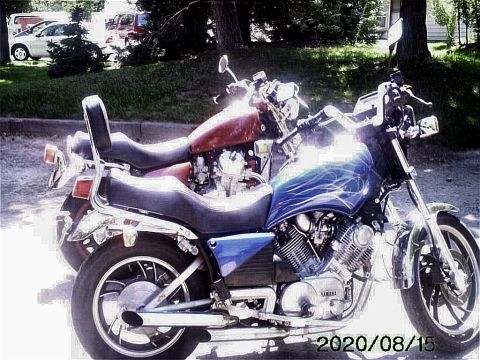
| 1981 | Virago | The XV750 Virago is the first Japanese V-twin cruiser, aimed squarely at Harley-Davidson's market. |
| 1981-1983 | The HY War | Yamaha's bid to overtake Honda in unit sales collapses into a ruinous price war; president Hisao Koike resigns in 1983. |
| 1985 | V-Max | The 145 hp V4 muscle bike defines the power-cruiser category and stays in production for over two decades. |
| 1986 | WaveRunner | The Marine Jet 500T introduces the sit-down, open-stern production personal watercraft, the category Yamaha named and still leads. |
| 1987 | Banshee | The twin-cylinder two-stroke YFZ350 Banshee becomes the definitive dune sport quad, sold in the US through 2006. |
| 1987 | Warrior | The YFM350 Warrior brings electric-start sport-quad practicality to a mass audience. |
| 1988 | Blaster | The 200cc Blaster becomes the entry-level sport ATV for a generation of riders. |
| 1998 | YZF-R1 | The R1 resets the open-class supersport benchmark with a claimed 150 hp in a 389-pound package. |
| 1998 | Grizzly 600 | Yamaha's flagship utility ATV line grows around the big-bore Grizzly. |
| 2001 | Raptor 660 | The Raptor 660 marks the peak of the big-bore sport-quad boom. |
| 2004 | Valentino Rossi wins on the YZR-M1 | Signed away from Honda in 2003, Rossi wins the 2004 season opener at Welkom, South Africa, and the MotoGP title in his first Yamaha season. |
| 2004 | YFZ450 | The race-bred YFZ450 answers Honda's TRX450R in the sport-quad arms race. |
| 2009 | Lehman-shock losses | Yamaha Motor posts a 216.1-billion-yen net loss, the worst in company history, amid the global financial crisis; president Takashi Kajikawa steps down. |
| 2010 | Hiroyuki Yanagi becomes president | Yanagi's turnaround restores profitability by refocusing on emerging-market motorcycles and marine. |
| 2018 | Yoshihiro Hidaka becomes president | Hidaka launches a multi-path powertrain strategy spanning battery-electric, hybrid, and hydrogen research. |
| 2025 | Motofumi Shitara becomes president | After Hidaka's September 2024 resignation and an interim term by chairman Katsuaki Watanabe, Shitara takes over as president and CEO in March 2025. |
Asked all the time
Who founded Yamaha Motor?
Genichi Kawakami, president of the musical instrument maker Nippon Gakki, founded Yamaha Motor Co., Ltd. on July 1, 1955 in Hamamatsu, Shizuoka, spinning off the motorcycle operation that had grown out of the company's wartime propeller tooling.
Is Yamaha Motor the same company as Yamaha pianos?
No. Yamaha Motor was separated from Nippon Gakki (today Yamaha Corporation) in 1955. The two are independent publicly traded companies that share the Yamaha name and tuning-fork logo, with cross-shareholdings but separate management.
Is Yamaha still in business?
Yes. Yamaha Motor remains an independent, publicly traded company headquartered in Iwata, Japan, and is the world's second-largest motorcycle manufacturer behind Honda.
How did Yamaha survive the HY War with Honda?
Between roughly 1981 and 1983 Yamaha tried to overtake Honda in motorcycle unit sales, triggering a price and product war that left Yamaha with massive unsold inventory and heavy debt. President Hisao Koike resigned in 1983 and the company spent years retrenching under Hideto Eguchi, cutting production and refocusing on profitability.
What is Yamaha best known for?
Beyond motorcycles like the XS650, V-Max, and YZF-R1, Yamaha invented the trail-bike category with the 1968 DT-1, created the WaveRunner personal watercraft, engineered the Toyota 2000GT, and built a Grand Prix dynasty around Kenny Roberts and Valentino Rossi.
Why is Yamaha headquartered in Iwata instead of Hamamatsu?
Yamaha Motor was founded in the Hamamatsu area in 1955 but established its main plant and head office in nearby Iwata, Shizuoka, which has remained the company's headquarters and principal motorcycle production site.
When did Yamaha start making boat engines?
Yamaha built its first outboard motor, the P-7, in 1960, five years after the company's founding. Marine products grew into one of Yamaha Motor's largest and most profitable divisions.
The wall
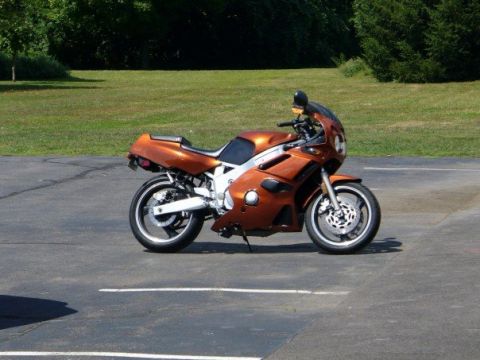
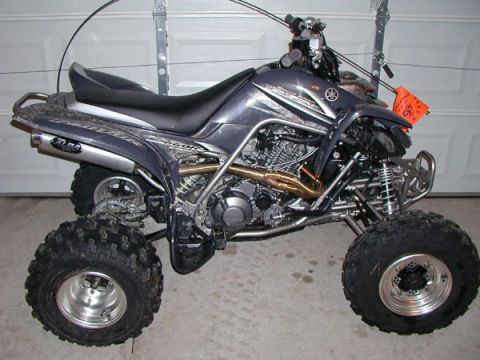
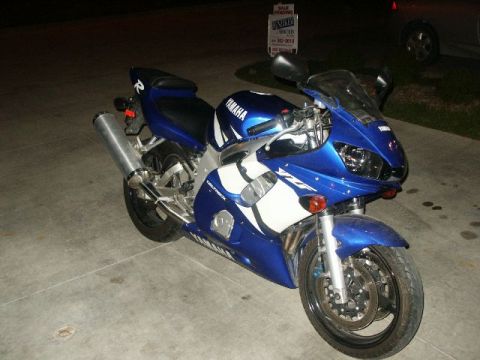
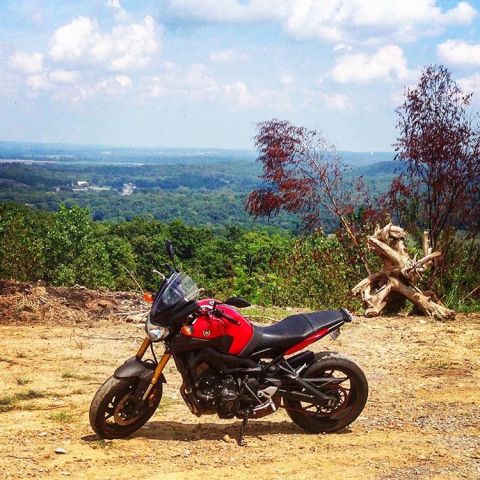
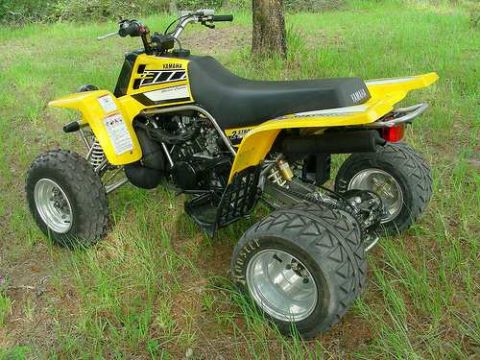
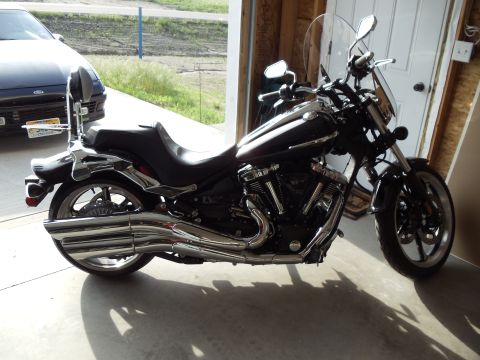
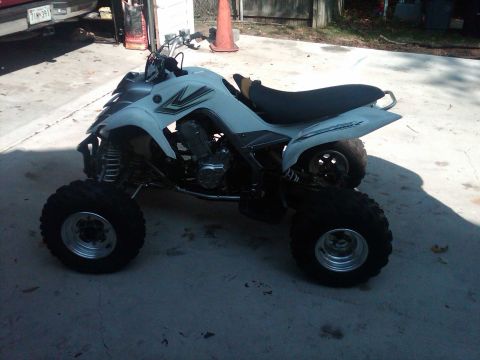
The most-documented Yamaha vehicles in the registry, every photo by the owner.