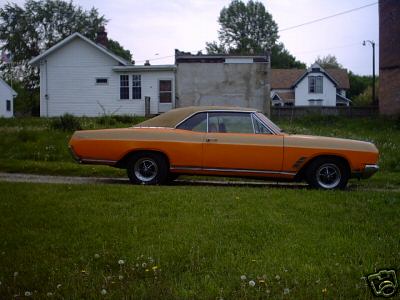
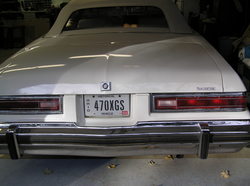
The registry
Buick Registry: Models, Builds & Photos
Buick is America's oldest surviving automobile brand and the founding company of General Motors. Scottish-born plumbing inventor David Dunbar Buick founded the Buick Auto-Vim and Power Company in Detroit in 1899 and incorporated the Buick Motor Company in 1903; after the firm was sold and moved to Flint, Michigan, its valve-in-head engine made it a manufacturing powerhouse under William C. Durant, who took control in 1904. Durant used Buick's profits and volume to found General Motors in 1908, making Buick the cornerstone of what became the world's largest automaker. For over a century it built upper-middle-market cars in GM's brand ladder between Chevrolet and Cadillac. Buick survived GM's 2009 bankruptcy, which killed Pontiac, Saturn, Hummer, and Saab, largely because of its enormous popularity in China. Today Buick Motor Division remains active as a crossover and electric-focused brand.
Pick your model
Key facts
| Founded | 1899, Detroit, Michigan (as the Buick Auto-Vim and Power Company; incorporated as the Buick Motor Company May 19, 1903) |
|---|---|
| Founders | David Dunbar Buick |
| Headquarters | Detroit, Michigan, USA (historic home: Flint, Michigan) |
| Parent / successor | General Motors (Buick was GM's founding company, 1908; operates today as Buick Motor Division) |
| Fate / status | Active. America's oldest surviving automobile brand; survived GM's 2009 bankruptcy largely on the strength of its Chinese market sales |
| Best known for | Riviera, LeSabre, Roadmaster |
| Registry presence | 36 vehicles / 655 photos documented by owners on SuperMotors |
1899-1908: David Dunbar Buick, the Valve-in-Head Engine, and William Durant's Takeover
Buick began not with a car but with a bathtub. David Dunbar Buick, a Scottish immigrant plumbing manufacturer in Detroit, made his first fortune on a process for bonding porcelain enamel to cast iron, then sold out of the plumbing business and sank the money into gasoline engines, incorporating the Buick Auto-Vim and Power Company in 1899 and reorganizing it as the Buick Motor Company in 1903. With engineers Walter Marr and Eugene Richard, Buick developed the overhead-valve, or valve-in-head, engine, which breathed better and made more power per cubic inch than the side-valve designs nearly everyone else used. It was a genuinely superior technology, and it defined Buick engineering for the next half century.
What David Buick lacked was money and management discipline. By 1903 he had burned through his own capital and that of Detroit backer Benjamin Briscoe, who offloaded the company to the Flint Wagon Works interests, which moved it to Flint, Michigan. The relocated Buick Motor Company had built only a handful of cars when, in November 1904, its Flint directors turned to William Crapo Durant, the city's carriage-making tycoon, to rescue it. Durant, a salesman of extraordinary nerve, took control, raised capitalization from 75,000 to 300,000 dollars almost immediately and to roughly 2.6 million by 1907, and put the Model B and then the Model 10 in front of buyers with relentless promotion. David Buick, holding little stock and less influence, left the company bearing his name in 1906 and died nearly broke in Detroit in 1929.
Under Durant, Buick's growth was explosive: from 37 cars in 1904 to 8,820 in 1908, making Buick the largest automobile producer in America, ahead of Ford and Cadillac combined. That production volume, and the profit it threw off, was the collateral for Durant's next move. On September 16, 1908, Durant used Buick as the foundation to incorporate General Motors in New Jersey, folding in Oldsmobile that year and Cadillac and Oakland the next. Every subsequent chapter of GM history rests on the fact that Buick was the company strong enough to hold the whole structure up.
1908-1929: GM's Cash Cow, Charles Nash, Walter Chrysler, and the Sloan Ladder
For its first two decades inside General Motors, Buick was the division that paid the bills and trained the industry's future leadership. When Durant's overexpansion forced bankers to eject him from GM control in 1910, they installed Charles Nash as Buick president; Nash in turn hired Walter P. Chrysler, a railroad machinist, to run the Flint works in 1912. Chrysler modernized Buick production and drove output past 100,000 cars a year, and the profits from his plants kept GM solvent. Both men left over conflicts with Durant after his 1916 return, Nash to found Nash Motors and Chrysler eventually to found the Chrysler Corporation, which means Buick's management office effectively seeded two of its rivals.
Buick also mattered on the track and in the showroom. The factory racing team of 1909 and 1910, with drivers Louis Chevrolet and Bob Burman, won dozens of events and gave the valve-in-head engine a performance reputation that advertising translated into sales. When Alfred P. Sloan reorganized GM in the 1920s around the famous price ladder, a car for every purse and purpose, Buick was assigned the upper-middle rungs: above Oldsmobile and Oakland, below Cadillac. That positioning, the doctor's and lawyer's car, became Buick's identity for the rest of the century. Under general manager Harry Bassett the division prospered through the decade; after Bassett's sudden death in 1926 the job passed to Edward T. Strong, who steered Buick straight into the teeth of the Depression.
1929-1942: Depression Near-Death and Harlow Curtice's Revival
The Depression came closer to killing Buick than anything before GM's 2009 bankruptcy. Sales collapsed from around 266,000 cars in 1926 to roughly 41,000 in 1933, and according to standard histories of the 1932-33 Buick-Oldsmobile-Pontiac sales-company era, GM is said to have weighed Buick's future. What saved it was a 1933 leadership change: Harlow Curtice, the 40-year-old head of GM's AC Spark Plug unit, replaced Strong as Buick general manager and was given license to rebuild the line.
Curtice's insight was that a Depression-era buyer needed a reason to stretch for a Buick, so he cut prices toward the Oldsmobile range while adding visible value, and in 1936 he renamed the entire line with words instead of numbers: Special, Century, Roadmaster, Limited. The Century, which paired the biggest straight-eight with the lightest body, was marketed on its ability to reach 100 miles per hour and gave Buick a performance halo the division milked for decades. The Roadmaster became the flagship statement that Buick could build a near-Cadillac. Curtice also cultivated Harley Earl's Art and Colour studio, and the 1938 Y-Job, built on a Buick chassis, became the industry's first concept car. By 1938 Buick was healthy again, and Curtice's performance earned him a path that ended with the presidency of General Motors itself in 1953, evidence of how central Buick remained to GM's executive pipeline. Civilian production stopped in February 1942 as Flint converted to aircraft engines and other war materiel.
1946-1958: Portholes, the Ned Nickles Look, and the Chrome-Laden Boom
Postwar Buick converted pent-up demand into its golden age, and it did so on styling as much as engineering. Designer Ned Nickles gave the 1949 models two signatures that became brand hallmarks: VentiPorts, the portholes along the front fenders, and the Sweepspear chrome bodyside line. The same era introduced the pillarless hardtop body style on the 1949 Roadmaster Riviera coupe, a design launched alongside Cadillac and Oldsmobile versions that GM then spread across the industry. Under the hood, Buick replaced its venerable straight-eight with the 1953 Nailhead V8 and pushed its torque-converter Dynaflow automatic, marketing smoothness to a customer base of professionals and managers.
The bet paid off spectacularly. In 1954 and 1955 Buick passed Plymouth to become America's third best-selling make behind Chevrolet and Ford, with 1955 production of roughly 738,000 cars, the division's all-time record to that point. The mid-priced Special and Century carried the volume while the Roadmaster and the new 1959-era flagships carried prestige. The boom overreached, however: quality slipped under the production push, the 1957 and 1958 models grew heavy with chrome just as the Eisenhower recession hit and buyers turned toward simpler cars, and Buick sales fell by more than half from the 1955 peak. The division answered in 1959 by scrapping every model name at once, replacing Special, Century, and Roadmaster with LeSabre, Invicta, and Electra, a clean-slate move that showed how badly management believed the old image had curdled.
1959-1970: Ed Rollert's Recovery, the LeSabre and Riviera, and Bill Mitchell's Design High-Water Mark
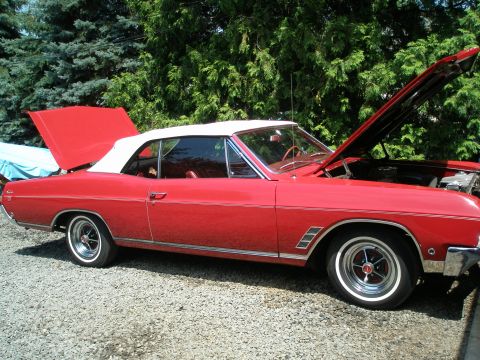
Buick entered the 1960s wounded, falling from third in industry sales to ninth in 1960, its worst ranking since 1905, and general manager Edward Rollert, appointed in 1959, spent his tenure rebuilding it into GM's quality-and-style division. The LeSabre, named for Harley Earl's 1951 dream car, became the bread-and-butter full-size Buick and one of the industry's most durable nameplates, anchoring the lineup for four decades. The compact 1961 Special introduced an aluminum V8 and spawned the 1962 V6, the first V6 in a mass-produced American car, an engine whose descendants powered GM products into the 2000s. The Skylark grew out of the Special as Buick's entry in the booming intermediate market, and its Gran Sport versions let Buick play in the muscle-car era without abandoning its gentleman's image.
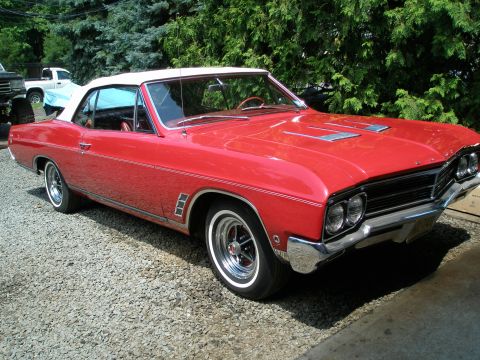
The design statement of the era was the 1963 Riviera, styling chief Bill Mitchell's razor-edged personal luxury coupe, created to answer the Ford Thunderbird and awarded to Buick after an internal competition among GM divisions. The Riviera gave Buick genuine critical prestige, praised by European designers in a way few American cars were, and it demonstrated the corporate logic of the period: divisions won products by fighting for them inside GM. By the mid-1960s Buick had climbed back to fifth in industry sales, profitable, conservative, and secure in the Sloan ladder just as that ladder was about to buckle.
1971-1985: Emissions, Downsizing, and the Turbo Regal Counterattack
The 1970s forced Buick, a division built on big smooth engines, to reinvent itself around scarcity. Emissions rules and the 1973 oil embargo gutted the appeal of its big-engine flagships, and Buick's response was unusually pragmatic: in 1974 it bought back the tooling for its own V6, which GM had sold to Jeep's owner Kaiser in 1967, repurchasing it from Jeep's new parent AMC and making the 3.8-liter V6 the centerpiece of the lineup. GM's corporate downsizing program then shrank the full-size LeSabre and Electra for 1977, a gamble that worked commercially and kept Buick's traditional buyers on board.
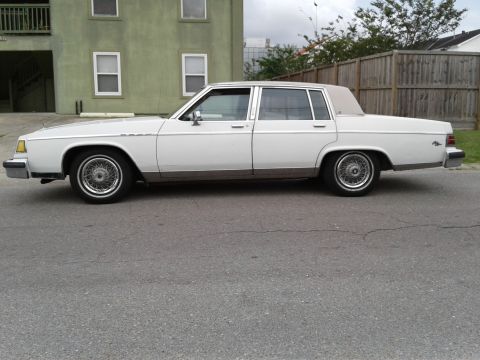
The signature product of the era was the Regal, launched in 1973 as a personal-luxury intermediate and transformed after 1978 into the platform for Buick's turbocharged V6 program. Buick paced the Indianapolis 500 in 1976 with a turbocharged V6 Century, the first V6 ever to pace the race, and again in 1981 with a V6 Regal, and the program culminated in the black Regal Grand National and the 1987 GNX, cars that made a near-luxury division briefly the maker of America's quickest production automobile. The strategy was deliberate: leaders of the period, notably chief engineer and later general manager Lloyd Reuss, used turbo performance to lower Buick's median buyer age without surrendering the core. The same years exposed the cost of GM corporate politics, though. Badge engineering across divisions produced near-identical B-O-P cars, and the 1977 Chevymobile revelation that GM was delivering Oldsmobiles, and some Buicks and Pontiacs, with Chevrolet engines triggered roughly 250 lawsuits and a public erosion of what made a Buick a Buick.
1986-2004: Front-Drive Sameness, the Reatta Experiment, and the Premium American Motorcars Retreat
The late 1980s were the decade Buick nearly lost its identity inside GM's look-alike front-wheel-drive fleet. Chairman Roger Smith's reorganization and aggressive platform-sharing, a reorganization widely blamed by automotive historians for the look-alike GM cars of 1985-86, produced downsized 1985-86 Electras, LeSabres, and Rivieras that customers struggled to tell apart from Oldsmobiles and even Chevrolets, and Buick US sales slid from a 1984 peak of about 906,000 cars, a year in which worldwide Buick sales topped one million, toward roughly half that by the early 1990s. The division's answer, articulated by general managers Donald Hackworth and then Edward Mertz, who ran Buick from 1986 to 1997, was a formal retreat to the core: Buick would build Premium American Motorcars, substantial, distinctive, powerful, mature, and stop chasing the young sporty buyer.
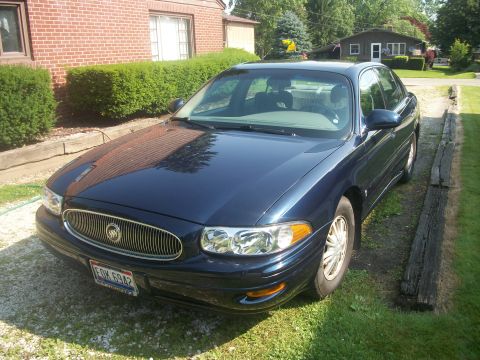
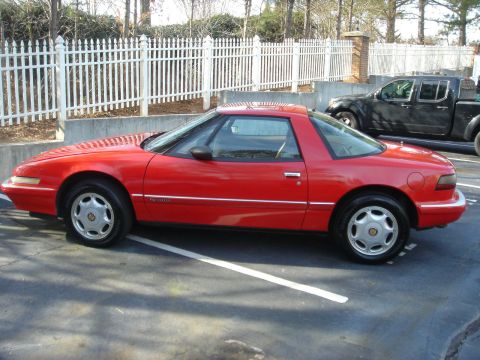
Two products bracket the era's logic. The Reatta, a hand-assembled two-seater built from 1988 to 1991 at a special Craft Centre in Lansing, was the last gasp of the youth-image strategy; it sold 21,751 units in four years and was cancelled, confirming that Buick buyers did not want a Buick sports car. The Park Avenue, launched as a standalone flagship for 1991 on the acclaimed 3800 V6, embodied the Mertz doctrine and sold steadily to exactly the older professional customer Buick had decided to keep. The doctrine worked as a holding action, Buicks of the 1990s were reliable and profitable, but it aged the buyer base relentlessly, and by the early 2000s nameplates like Century, LeSabre, and Park Avenue were being retired without credible successors. Meanwhile the decision that would save the brand was made far from Flint: in 1998 GM's Shanghai GM joint venture with SAIC began building Buicks in China, where the name carried prewar prestige from the imperial and republican era, when figures such as the last emperor Puyi and leaders of the republic rode in Buicks.
2005-Today: Bankruptcy Survival, the China Lifeline, and the Electric Electra Revival
Buick survived the 2009 collapse of General Motors for one blunt reason: China. When GM entered Chapter 11 in June 2009 and killed Pontiac, Saturn, Hummer, and Saab, industry logic said the geriatric-skewing Buick should die too. But Shanghai GM sold roughly 447,000 Buicks in China that year against about 102,000 in the United States, the nameplate ranked among the strongest foreign brands in the world's fastest-growing car market, and executives concluded that killing Buick in America would poison it in China. Buick lived; Pontiac, with better US demographics but no China business, did not.
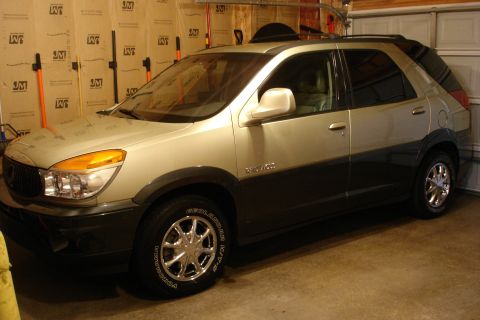
The product line was rebuilt around that reality. Crossovers such as the Enclave and the 2001-vintage Rendezvous before it had already begun moving Buick away from sedans, and after 2009 the transformation accelerated with China-influenced and globally sourced models like the LaCrosse, Encore, and Envision. By the 2020s Buick in North America sold no sedans at all, an outcome that would have been unthinkable to the LeSabre generation. In 2022 the division unveiled a new trishield badge and announced an all-electric future under Buick-GMC global chief Duncan Aldred, reviving the Electra name for its EV line and its Chinese-market flagships. The company David Dunbar Buick founded in Detroit in 1899, and that created General Motors in 1908, remains America's oldest surviving automobile brand, now sustained chiefly by its Chinese market.
Leadership
| Leader | Tenure | Legacy |
|---|---|---|
| David Dunbar Buick | 1899-1906 | Founded the company and backed the valve-in-head (overhead-valve) engine that defined Buick engineering, then was pushed out with almost nothing. |
| William C. Durant | 1904-1910 | Took control of the struggling Flint company, made it America's top-selling automaker by 1908, and used it as the cornerstone to found General Motors. |
| Charles W. Nash | 1910-1912 | Restored order and profitability after Durant's overexpansion before rising to the GM presidency. |
| Walter P. Chrysler | 1912-1919 | Works manager from 1912 and Buick president from 1916, he ran Buick as GM's manufacturing powerhouse and profit engine before quitting over Durant's meddling. |
| Harry H. Bassett | 1920-1926 | Presided over Buick's booming 1920s expansion in the Sloan ladder until his sudden death in office in October 1926. |
| Edward T. Strong | 1926-1933 | Inherited the division at its 1920s peak and rode it down into the Depression collapse that nearly killed Buick. |
| Harlow Curtice | 1933-1948 | Revived a Depression-battered division with the 1936 Special and Century and the mantra of styling plus value; later became GM president. |
| Ned Nickles | 1947-1950s (Buick chief designer) | Created the porthole VentiPorts, the Sweepspear, and the pillarless-hardtop Buick look of the postwar boom. |
| Bill Mitchell | 1958-1977 (GM design VP) | His 1963 Riviera and 1966 fastback-era Buicks marked the design high point of the marque. |
| Edward D. Rollert | 1959-1965 | Rebuilt quality and sales after the late-1950s collapse, overseeing the modern LeSabre/Electra lineup and the 1963 Riviera launch era. |
| Lloyd Reuss | 1975-1984 (chief engineer, then general manager from 1980) | Fathered the turbocharged V6 "Fast with Class" program that produced the Grand National era; later became GM president. |
| Edward H. Mertz | 1986-1997 | Defined the Premium American Motorcars doctrine, shipping the Park Avenue and 3800-powered lineup that stabilized Buick through the 1990s. |
| Duncan Aldred | 2014-2025 (global VP, Buick-GMC) | Led the crossover pivot and the 2022 rebrand and Electra EV commitment; promoted to president of GM North America in 2025. |
Timeline
| 1899 | David Dunbar Buick founds the Buick Auto-Vim and Power Company in Detroit to build gasoline engines |
|---|---|
| 1903 | Buick Motor Company incorporated May 19 in Detroit; sold to Flint Wagon Works interests and moved to Flint, Michigan |
| 1904 | First production Buick, the valve-in-head Model B; William C. Durant takes control on November 1 |
| 1908 | Buick builds 8,820 cars, America's No. 1 producer; Durant incorporates General Motors around Buick on September 16 |
| 1929 | David Dunbar Buick dies nearly penniless in Detroit |
| 1933 | Sales bottom near 41,000; Harlow Curtice named general manager |
| 1936 | Line renamed Special, Century, Roadmaster, Limited; the 100-mph Century becomes Buick's performance halo |
| 1938 | Harley Earl's Buick-based Y-Job debuts as the industry's first concept car |
| 1942 | Civilian production halts in February for war materiel |
| 1949 | VentiPorts, Sweepspear, and the pillarless-hardtop Roadmaster Riviera define the postwar Buick look |
| 1953 | Nailhead V8 replaces the straight-eight |
| 1955 | Record 738,814 cars; Buick is America's third best-selling make |
| 1959 | Entire line renamed LeSabre, Invicta, and Electra after the late-1950s slump |
| 1962 | Buick Special introduces the first V6 in a mass-produced American car |
| 1963 | Bill Mitchell's Riviera launches Buick into personal luxury |
| 1974 | Buick buys back its V6 tooling (sold to Kaiser in 1967) to anchor the emissions-era lineup |
| 1976 | Turbocharged V6 Century paces the Indianapolis 500, the first V6 pace car |
| 1987 | Turbo Regal program peaks with the Grand National and GNX |
| 1988-1991 | Reatta two-seater hand-built at the Lansing Craft Centre; 21,751 made |
| 1998 | Shanghai GM joint venture with SAIC builds the first Chinese Buicks |
| 2006 | China overtakes the United States as Buick's largest market |
| 2009 | GM's Chapter 11 kills Pontiac, Saturn, Hummer, and Saab; Buick survives on Chinese sales (~447,000 vs ~102,000 in the US) |
| 2022 | New trishield badge unveiled with an all-electric commitment and the revival of the Electra name for EVs |
Asked all the time
Who founded Buick?
David Dunbar Buick, a Scottish-born plumbing inventor who had already made money on a process for bonding porcelain to cast iron, founded the Buick Auto-Vim and Power Company in Detroit in 1899 and incorporated the Buick Motor Company in 1903. He lost control of the firm by 1906 and died in 1929 with almost no stake in the company that bore his name.
Is Buick still in business?
Yes. Buick Motor Division remains an active General Motors brand, now focused on crossovers and electric vehicles. It is America's oldest surviving automobile brand.
Why did Buick survive GM's 2009 bankruptcy when Pontiac and Saturn did not?
China. By 2009 Buick sold far more cars in China than in the United States (roughly 447,000 versus 102,000), and the brand carried prestige there dating to pre-revolution Shanghai. GM kept Buick and killed Pontiac, Saturn, Hummer, and Saab instead.
How is Buick connected to General Motors?
Buick is the founding company of General Motors. William C. Durant, who had taken control of Buick in 1904 and made it America's top-selling automaker, used its profits and volume to incorporate the GM holding company in 1908.
What made early Buicks technically distinctive?
The valve-in-head (overhead-valve) engine, which Buick championed from its first production car, the 1904 Model B. The layout breathed better than the flathead engines most rivals used and became a Buick engineering signature for decades.
When did Buick start building cars in China?
1998, when the Shanghai GM joint venture with SAIC began producing Buicks in Shanghai. Within a decade China had become Buick's largest market.
The wall
The most-documented Buick vehicles in the registry, every photo by the owner.