The registry
Holden Registry: Models, Builds & Photos
Holden started in Adelaide in 1856 as a saddlery business, moved into car body building by 1919, and became General Motors-Holden's after GM bought the company in 1931. The 48-215 of 1948 was the first car fully manufactured in Australia, and for decades Holden built its own sixes and V8s locally. GM shut Australian manufacturing in October 2017 and retired the Holden brand entirely at the end of 2020.
Pick your model
From saddlery to GM's Australian arm
James Alexander Holden opened a saddlery in Adelaide in 1856. The firm moved into full car body building as Holden's Motor Body Builders, registered in 1919, fitting locally built bodies to imported chassis, and by the mid 1920s it was building bodies for General Motors under an exclusive agreement signed in 1923. GM bought the company outright in 1931 and merged it with its Australian sales operation to form General Motors-Holden's. The car that made the name was the 48-215, launched on 29 November 1948, the first car wholly manufactured in Australia. It used a 132.5 cubic inch (2,171 cc) grey motor six and unitary construction, both unusual for the market at the time.
The Commodore, 1978-2020
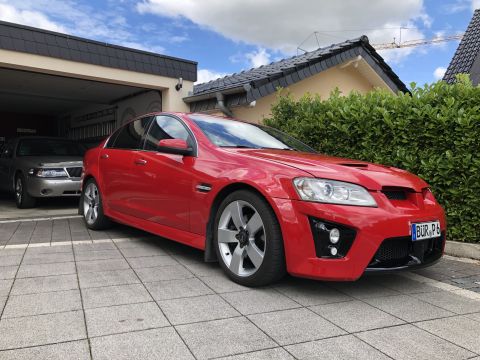
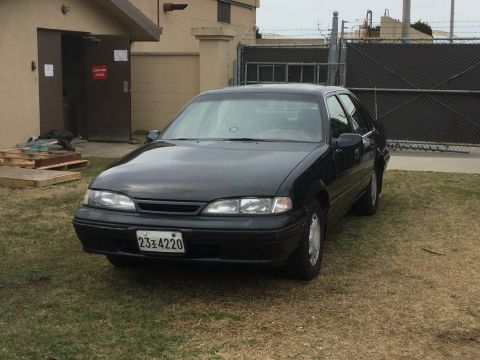
The Commodore is the model that matters most to anyone wrenching on a Holden today. The first VB Commodore of 1978 used the Opel Rekord E body with the Senator's longer front end, re-engineered for Australian roads and running Holden's own 3.3 liter six and 4.2 or 5.0 liter V8s. The VN of 1988 widened the body and switched to the Buick-derived 3.8 liter V6, which powered base Commodores through the 1990s and 2000s. The VT of 1997 and its VX, VY, and VZ successors were the sales peak, and from June 1999 the 5.7 liter Gen III (LS1) V8 replaced the old Holden 5.0. The VE of 2006 was the first Commodore designed entirely in Australia, on the Zeta platform that also went to the United States under the Pontiac G8 and carried the fifth-generation Chevrolet Camaro. The last Australian-built Commodore, a VF II, left the Elizabeth line on 20 October 2017; the imported ZB, a rebadged Opel Insignia, carried the name until 2020.
Astra and the rebadge era
Holden used the Astra name in three separate runs. The 1984-1989 cars were rebadged Nissan Pulsars from the Button Plan era of badge engineering: the LB of 1984 and LC facelift of 1986 sat on the N12 Pulsar, the LD of 1987 on the N13. The name returned in September 1996 on the Opel-sourced TR, followed by the popular TS (1998-2005, assembled at Elizabeth from late 1998) and the fully imported AH (2004-2009), both front-drive Opel designs. The final run started with the imported PJ Astra GTC and VXR in 2015, then the Opel-based BK hatch from late 2016. Watch the 2017 BL Astra sedan, though: it was a rebadged Chevrolet Cruze, not an Opel, so its parts follow the Cruze.
Why the brand is gone
Local manufacturing died from a mix of a high Australian dollar, small production volumes, and the end of government co-investment; Ford closed its Australian plants in October 2016 and Toyota followed in October 2017. Holden continued as an import brand, but GM announced on 17 February 2020 it would retire the marque, and operations wound up by the end of that year. Parts support and the owner community are now the main things keeping these cars on the road.
Asked all the time
When did Holden stop making cars?
Holden built its last Australian car, a VF II Commodore, at the Elizabeth plant in South Australia on 20 October 2017. Holden then sold imported models until GM announced in February 2020 that it was retiring the brand, with operations closing by the end of 2020.
What years was the Holden Commodore made?
The Holden Commodore ran from the VB of 1978 through the Australian-built VF II of 2017, then continued as the imported Opel-based ZB until Holden closed in 2020. The Australian-designed VE and VF (2006-2017) were the only Commodores engineered entirely in-house.
Which Holden Astra do I have?
Holden Astras from 1984-1989 (LB, LC, and LD) are rebadged Nissan Pulsars. From the TR of 1996 onward they are Opel-based, with one exception: TR (1996-1998), TS (1998-2005), AH (2004-2009), PJ GTC/VXR (2015-2017), and BK hatch (2016-2020) are Opel Astras, but the 2017 BL sedan is a rebadged Chevrolet Cruze. Parts interchange follows the donor car, Nissan, Opel, or Cruze, not other Holdens.
What engines did Holden Commodores use?
Early Holden Commodores ran Holden's own 3.3 liter six and 4.2 or 5.0 liter V8s. From the 1988 VN, the base engine was the Buick-derived 3.8 liter V6, and from 1999 the GM Gen III 5.7 liter (LS1) V8 replaced the Holden 5.0. Later cars used the Alloytec 3.6 V6 and Gen IV 6.0 and 6.2 V8s.
Can I still get parts for a Holden?
Yes. When GM retired Holden in 2020 it committed to at least 10 years of servicing and spare-parts support, and mechanical parts for V6 and LS-powered Commodores are easy because they share GM engines sold worldwide. Body and trim for older Holdens increasingly depends on the used market, reproduction suppliers, and the owner community.
The wall
The most-documented Holden vehicles in the registry, every photo by the owner.