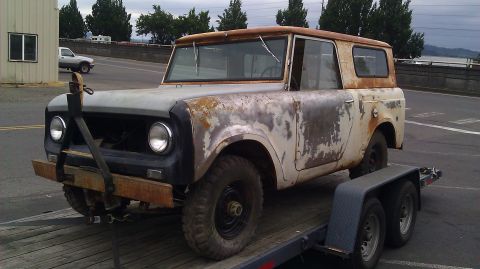
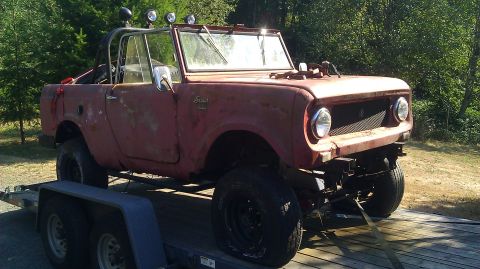
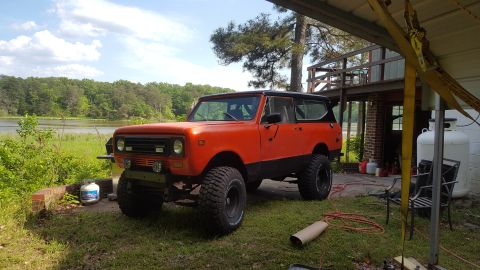
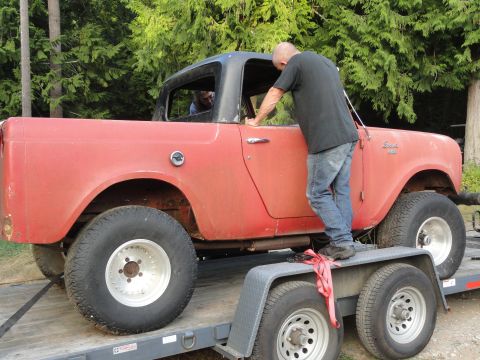
The registry
International Registry: Models, Builds & Photos
International Harvester Company was formed in 1902 in Chicago when J.P. Morgan's banking house financed the merger of Cyrus H. McCormick Jr.'s McCormick Harvesting Machine Company with Charles Deering's Deering Harvester Company, creating an agricultural equipment giant that soon became one of America's most important truck builders. Under the International brand it built farm tractors, heavy trucks, pickups, the Travelall wagon, the Scout, and thousands of school bus chassis. Crushed by a 172-day UAW strike in 1979-1980 and the farm-economy collapse, it sold its agricultural business to Tenneco in 1985 and renamed the surviving truck company Navistar International in 1986. Navistar was acquired by Volkswagen's Traton SE in 2021 and renamed International Motors, LLC in 2024, which still builds International trucks and buses in Lisle, Illinois.
Pick your model
Key facts
| Founded | 1902, Chicago, Illinois, USA |
|---|---|
| Founders | Cyrus H. McCormick Jr. and Charles Deering, with J.P. Morgan's banking house financing the merger |
| Headquarters | Chicago, Illinois (historic); Lisle, Illinois (successor International Motors, LLC) |
| Parent / successor | Navistar International (1986), acquired by Traton SE (Volkswagen Group) in 2021, renamed International Motors, LLC effective October 1, 2024 |
| Fate / status | International Harvester ceased to exist in 1986 after selling its agricultural business to Tenneco in 1985; the truck business survives today as International Motors |
| Best known for | Scout, Travelall, and school bus chassis |
| Registry presence | 46 vehicles / 2,217 photos documented by owners on SuperMotors |
1902-1913: J.P. Morgan Merges the McCormicks and the Deerings
The company that would put International trucks on American roads for a century began on August 12, 1902, when J.P. Morgan's banking house engineered the merger of the two bitterest rivals in farm equipment. Cyrus H. McCormick Jr., son of the reaper's inventor, ran McCormick Harvesting Machine Company; Charles Deering headed Deering Harvester Company. The two Chicago firms had spent decades in a price war so destructive that a combination was the only way either family could protect its fortune, and Morgan partner George W. Perkins brokered the deal, folding in three smaller makers (Plano, Champion, and Milwaukee) to create International Harvester Company with roughly 85 percent of the American harvester market.
The new giant's dominance drew immediate government attention. Antitrust scrutiny shadowed International Harvester almost from its first year, culminating in a 1912 federal suit that would eventually force the sale of some subsidiary lines. That legal pressure had a lasting strategic consequence: it pushed the company to diversify beyond harvesters into engines, tractors, and, decisively, motor trucks. In 1907 International Harvester introduced the Auto Buggy, a high-wheeled motor vehicle built for farmers on rutted rural roads, and within two years followed it with the truck-bed Auto Wagon, both sold through the same dealer network that sold their binders and mowers. It was the seed of everything the International badge would later mean: trucks designed for work rather than show, sold to customers the company already knew by name.
1914-1929: Auto Wagons Become a Real Truck Line Under Alexander Legge
By the end of the First World War International Harvester had turned a farmer's motor buggy into one of the largest truck operations in the United States. The Auto Buggy and Auto Wagon high-wheelers gave way to conventional trucks, and wartime demand for military and agricultural haulage proved the business could stand on its own. Alexander Legge, a onetime Nebraska ranch hand who had risen through the collection department to become president in 1922, drove the company's transformation from a harvester trust into a diversified equipment maker, and it was under his leadership that the truck division stopped being a sideline.
The 1920s also settled a question that had lingered since the merger: what the products would be called. The McCormick and Deering names survived on farm equipment, but the trucks carried the International name, and the brand identity that SuperMotors members still restore today dates from this consolidation. The Farmall row-crop tractor, launched in 1924, subsidized the whole enterprise; its enormous profits gave International Harvester the balance sheet to keep investing in truck plants through the decade. When Legge left in 1929 to chair the Federal Farm Board under President Hoover, he handed his successors a company that was simultaneously the biggest farm equipment maker in the world and a top-tier American truck manufacturer, a dual identity that would define, and eventually doom, the firm.
1930-1945: Depression Survival and the Wartime Truck Machine
International Harvester entered the Depression as one of the few American manufacturers strong enough to keep its truck line alive while competitors folded. Farm equipment revenue collapsed with commodity prices, but the company's scale and the Farmall's dominance carried it through, and by the mid-1930s International trucks consistently ranked third in American truck sales behind Chevrolet and Ford. The C-series and D-series light trucks of the 1930s brought styled sheet metal and passenger-car comfort to a brand that had sold on ruggedness alone, a response to Chevrolet and Ford proving that even work trucks had to look good to sell.
The Second World War converted International Harvester into an arsenal. The company built half-tracks, gun carriages, torpedoes, and tens of thousands of military trucks, and its Fort Wayne, Indiana and Springfield, Ohio plants ran around the clock on government contracts. War production mattered to the postwar story in two ways. First, it left International Harvester with expanded truck capacity and engineering depth that it would pour into the postwar K-series and L-series lines. Second, it deepened the company's relationship with the United Auto Workers and other unions, whose wartime organizing gains set up the labor-cost structure and the strike history that management would grapple with for the next four decades.
1946-1960: The Travelall, School Buses, and the Postwar Light-Line Bet
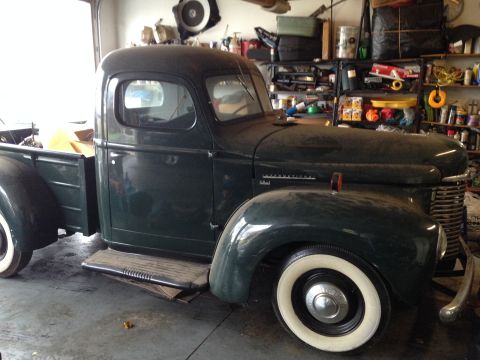
In the fifteen years after the war International Harvester made its most consequential product bet: that a farm equipment company could compete with Detroit in light trucks. The K and KB series sold well to returning veterans and rural buyers, and in 1953 the company introduced the Travelall, a steel-bodied wagon on a truck chassis that anticipated the modern SUV by decades. The Travelall existed because International's dealers, concentrated in farm country, needed a family vehicle to sell alongside pickups, and it gave the brand a foothold in the emerging suburban utility market years before the Chevrolet Suburban had serious competition.
The same era cemented International Harvester's grip on a quieter but more durable business: the American school bus. The company's medium-duty chassis, bodied by firms like Ward, Thomas, and Wayne, became the default platform under yellow School Bus bodies across rural America, a franchise built on the dealer network's reach into every county seat. But the light-line business was already showing its structural flaw. International sold perhaps a tenth the volume of Ford or Chevrolet pickups while bearing full development costs, and management under president John L. McCaffrey chose to keep funding it anyway, reasoning that the dealers demanded a full line. That decision, defensible in 1955, became a bleeding wound by the late 1960s.
1961-1970: Ted Ornas Draws the Scout and International Invents the Recreational 4x4
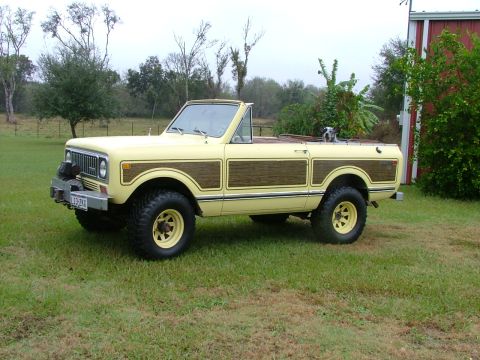
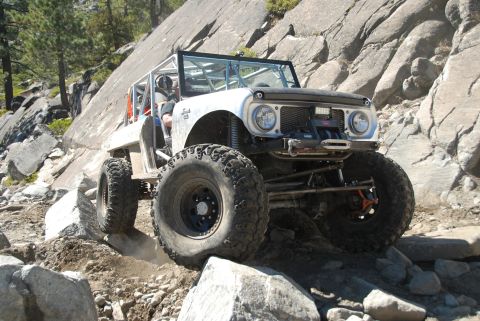
For the 1961 model year International Harvester launched the vehicle that guaranteed the brand would outlive the company: the Scout. Designer Ted Ornas revived the stalled project with a concept sketched one evening at his kitchen table on a scrap of mat board, and the Scout 80 went from approval to production at Fort Wayne in roughly two years, with the first units built in November 1960, an astonishing pace driven by management's fear that the company was missing the postwar recreation boom that Jeep had to itself. The Scout was International's answer to a strategic problem: the light truck line was losing ground to Detroit, and the company needed a product no Big Three maker yet built. It worked. The Scout created the compact recreational 4x4 segment and forced Ford to respond with the 1966 Bronco.

The 1960s were the brand's consumer high-water mark, with Scout, Travelall, and pickup lines giving International a full showroom. But the money told a different story. Corporate profits still came overwhelmingly from heavy trucks and farm equipment, and the light line consumed capital the company did not have; International Harvester's margins ran chronically below those of Deere in agriculture and below the Big Three in trucks because it fought a multi-front war against specialists on every front. The Scout was a genuine hit that masked a structural weakness no single product could fix.
1971-1980: The Scout II, Archie McCardell, and the Strike That Broke the Company
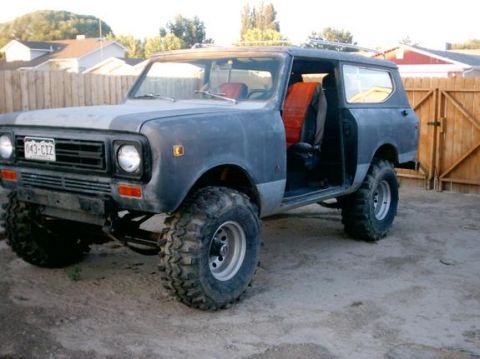
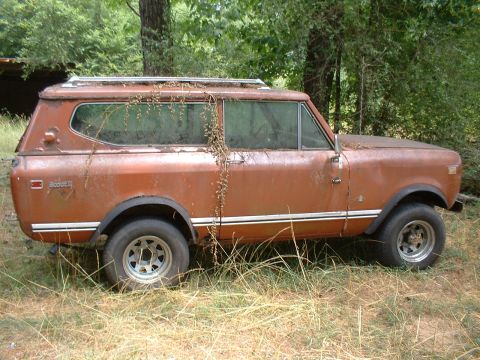
International Harvester spent the 1970s retreating to what it did best, then destroyed itself trying to become efficient at it. The Scout II arrived in 1971 as a roomier, more civilized successor to the original Scout, and when the company killed its money-losing pickup and Travelall lines in 1975, the Scout II became International's only light vehicle, soldiering on with loyal buyers and even a Nissan-sourced diesel option while the corporation concentrated on heavy trucks, buses, and farm equipment.

The fatal turn came at the top. In 1977 the board hired Archie McCardell from Xerox as president, paying him a 1.5 million dollar signing bonus, and charged him with attacking the company's bloated costs. McCardell cut deeply and then, in November 1979, provoked a confrontation with the United Auto Workers over work rules and mandatory overtime. The resulting strike lasted 172 days, from November 1, 1979 to April 20, 1980, and cost International Harvester close to 600 million dollars by most accounts, at precisely the moment the Federal Reserve's interest rate shock and a collapsing farm economy hit both of its core markets. The company never recovered its footing. Scout production ended at Fort Wayne on October 21, 1980, not because the vehicle failed but because a corporation fighting for survival could not fund the emissions, safety, and product investment the light line required.
1981-1986: Selling the Farm to Tenneco and the Birth of Navistar
Between 1981 and 1986 International Harvester executed one of the largest corporate self-amputations in American industrial history. Staggering under more than 4 billion dollars of debt after the McCardell-era strike and the farm depression, the company posted losses that ranked among the worst ever recorded by a U.S. corporation to that point, and its bankers forced a series of restructurings that stripped away construction equipment, the axle and transmission business, and finally the crown jewels. In November 1984 the company agreed to sell its agricultural equipment division, the McCormick-Deering heritage business it had been founded on in 1902, to Tenneco, which merged it with Case; the deal closed in early 1985.
The sale included the International Harvester name and the IH logo, so in 1986 the remaining company, now purely a builder of medium and heavy trucks, school bus chassis, and diesel engines, renamed itself Navistar International Corporation. The trucks kept the International brand. Chairman Donald Lennox, who had steered the dismemberment, argued that shedding agriculture was the only alternative to total liquidation, and the survival of the truck business vindicated him: Navistar emerged as the largest combined maker of medium-heavy trucks and school bus chassis in North America, even as the 84-year-old International Harvester Company formally ceased to exist.
1987-2020: Navistar's Truck Decades, the EGR Disaster, and the Long Search for a Partner
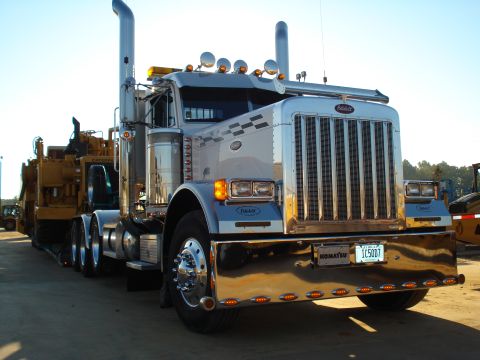
Navistar International spent three decades proving that the International truck brand could survive its parent's death, then nearly died again on a single engineering bet. Through the late 1980s and 1990s the company dominated medium-duty trucks and school buses, buying bus-body maker AmTran and consolidating the business into what became its IC Bus subsidiary, and its DT466 diesel earned a reputation for indestructibility that kept fleets loyal. A long partnership with Ford supplied PowerStroke diesels for Ford's pickups, a lucrative arrangement that soured into litigation in the 2000s over the troubled 6.0-liter engine.
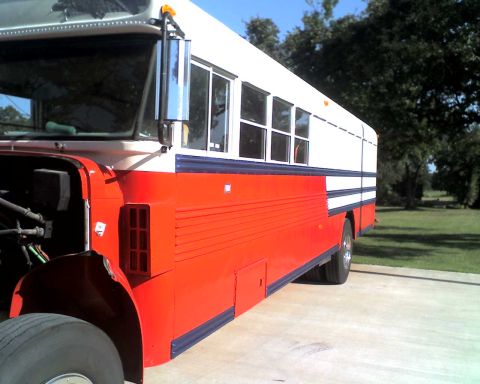
The near-fatal wound was self-inflicted. When 2010 EPA emissions rules arrived, CEO Daniel Ustian bet the company on exhaust gas recirculation alone while every competitor adopted selective catalytic reduction. The EGR-only MaxxForce engines failed to meet the standard reliably, warranty costs exploded, market share collapsed, and Ustian left in 2012 amid an SEC investigation. Activist investors Carl Icahn and Mark Rachesky won board representation, the company switched to Cummins power and SCR, and management spent the 2010s rebuilding trust. The rescue came from Germany: Volkswagen's truck arm agreed in 2016 to take a 16.6 percent stake, deepened the alliance through the Traton SE holding company, and in 2021 Traton acquired Navistar outright for roughly 3.7 billion dollars, ending 119 years of American independence for the McCormick-Deering lineage.
2021-Today: Traton's International Motors and the Scout Name's Strange Afterlife
Since 2021 the International brand has been a German-owned American truck maker, and in 2024 the corporate name finally caught up with the badge. Traton SE, Volkswagen Group's commercial vehicle holding company, completed its acquisition of Navistar in July 2021 and folded the company into a global alliance with Scania and MAN, sharing powertrains and electrical architectures across continents. In September 2024 Navistar announced it would rename itself International Motors, LLC, effective that October 1, retiring the invented 1986 corporate name in favor of the one customers had used all along. From headquarters in Lisle, Illinois, International Motors builds Class 6-8 trucks and IC Bus school buses, including electric models from a new San Antonio plant.
The strangest twist belongs to the Scout. Volkswagen Group acquired the Scout trademark through the Navistar deal, and in 2022 it spun up Scout Motors as a separate company to build electric trucks and SUVs trading on the 1961 original's reputation, breaking ground on a plant in Blythewood, South Carolina. So the International Harvester legacy now lives in two Volkswagen-owned bodies: International Motors carrying the truck and bus business in an unbroken line from the 1907 Auto Buggy, and Scout Motors reviving Ted Ornas's kitchen-table sketch as an EV brand. The company Cyrus McCormick Jr. and Charles Deering merged in 1902 is gone, but both of its names are still on new vehicles.
Leadership
| Leader | Tenure | Legacy |
|---|---|---|
| Cyrus H. McCormick Jr. | President 1902-1918, chairman to 1935 | First president of the merged company; steered it from harvesting machinery into trucks and tractors |
| Harold F. McCormick | President 1918-1922, executive-committee chairman 1922-1935, board chairman 1935-1941 | Second-generation McCormick who ran the company between his brother Cyrus Jr. and the Legge era, then chaired its board until his death |
| Alexander Legge | President 1922-1929, 1931-1933 | Professionalized IH management, expanded the truck line, and led it through the Farmall tractor era; left in 1929 to chair Hoover's Federal Farm Board |
| Fowler McCormick | President 1941-1946, chairman 1946-1951 | Ran the wartime production machine and pushed postwar diversification |
| Ted Ornas | Head of motor-truck styling, 1940s-1970s | Sketched the original Scout concept at his kitchen table in 1958-59 and shaped IH light-line styling through the Scout II |
| Brooks McCormick | President/COO from 1968, CEO 1971-1978 | Last family leader; attempted modernization before recruiting his own successor |
| Archie McCardell | President 1977, CEO 1978-1982 | Cost-cutting drive provoked the 172-day 1979-1980 UAW strike that broke the company financially |
| Donald Lennox | CEO 1982-1987 | Sold the agricultural business to Tenneco in 1985 and rebuilt the survivor as Navistar |
| Daniel Ustian | Navistar CEO 2003-2012 | Bet EPA-2010 compliance on EGR-only MaxxForce engines; the failure cost billions and ended with his 2012 resignation amid an SEC investigation |
| Troy Clarke | Navistar CEO 2013-2020 | Stabilized Navistar after the EGR emissions failure and brought in Volkswagen as partner then buyer |
Timeline
| Year | Event | Notes |
|---|---|---|
| 1902 | International Harvester founded | J.P. Morgan's bank financed the merger of McCormick Harvesting Machine and Deering Harvester, plus three smaller firms, in Chicago on August 12, 1902. |
| 1907 | Auto Buggy introduced | The high-wheeled Auto Buggy, joined within two years by the truck-bed Auto Wagon, put International into the motor vehicle business as a farmer's vehicle. |
| 1915 | Purpose-built trucks arrive | International moved from high-wheelers to conventional trucks, launching a line that would carry the brand for a century. |
| 1923 | Fort Wayne, Indiana truck works opens | The first truck rolled out in December 1923; Fort Wayne became International's heavy-truck manufacturing and engineering center. |
| 1924 | Farmall tractor introduced | The row-crop Farmall dominated American farms and funded the truck business for decades. |
| 1937 | D-series pickups introduced | Styled light trucks that made International a genuine pickup competitor to Ford and Chevrolet. |
| 1941-1945 | Wartime production | International built military trucks, half-tracks, gun carriages, and torpedoes for the U.S. war effort. |
| 1953 | Travelall introduced | A truck-based wagon that predated the Chevrolet Suburban's four-door layout and anticipated the modern SUV. |
| 1950s-1970s | School Bus chassis dominance | International's Loadstar and predecessor chassis were the default platform under American school bus bodies. |
| 1961 | Scout 80 introduced | Ted Ornas's compact 4x4, in production at Fort Wayne from November 1960 and launched to fight the Jeep CJ, effectively invented the recreational sport-utility segment. |
| 1971 | Scout II introduced | The larger, more refined second-generation Scout ran through 1980 and remains the most collected International light vehicle. |
| 1975 | Light-line pickups and Travelall discontinued | International exited the pickup and wagon market to concentrate on the Scout and heavy trucks. |
| 1977 | Archie McCardell hired from Xerox | His aggressive cost cutting set up the confrontation with the UAW. |
| 1979-1980 | UAW strike | A 172-day strike (November 1, 1979 to April 20, 1980) cost International hundreds of millions of dollars just as interest rates and the farm economy collapsed. |
| 1980 | Scout production ends | The last Scout II left Fort Wayne on October 21, 1980, ending International's light-vehicle era. |
| 1985 | Agricultural business sold to Tenneco | Agreed in November 1984 and closed in early 1985, the farm-equipment operation merged into Case, forming Case IH; International Harvester as a farm company was finished. |
| 1986 | Navistar International created | The surviving truck and engine company renamed itself Navistar; trucks kept wearing the International badge. |
| 2010-2012 | EGR emissions strategy fails | Navistar's EGR-only approach to EPA 2010 diesel rules failed certification, forcing a costly reversal to SCR and years of losses. |
| 2021 | Traton SE acquires Navistar | Volkswagen's truck holding completed its purchase of Navistar in July 2021 for about $3.7 billion, ending its run as an independent company. |
| 2022 | Volkswagen revives the Scout name | VW launched Scout Motors as a separate EV company; the brand's revival sits outside International Motors. |
| 2024 | Renamed International Motors, LLC | Navistar took back the International name effective October 1, 2024, still building trucks and buses from Lisle, Illinois. |
Asked all the time
Who founded International Harvester?
International Harvester was formed in 1902 when J.P. Morgan's banking house financed the merger of Cyrus H. McCormick Jr.'s McCormick Harvesting Machine Company with Charles Deering's Deering Harvester Company, plus three smaller equipment makers, in Chicago.
Why did International Harvester shut down?
A 172-day UAW strike in 1979-1980 under CEO Archie McCardell, combined with record interest rates and a collapsing farm economy, left the company near bankruptcy. It sold its agricultural business to Tenneco in 1985 and the remaining truck company renamed itself Navistar International in 1986, ending International Harvester as a corporate entity.
Does International still make trucks?
Yes. The successor company, International Motors, LLC (formerly Navistar), still builds International-badged heavy trucks and IC Bus school buses from its headquarters in Lisle, Illinois, now owned by Volkswagen's Traton SE.
Why did International stop making the Scout and pickups?
International dropped its light-line pickups and the Travelall in 1975 to stem losses against Ford and GM, and ended Scout production in October 1980 when the strike-battered company retreated to heavy trucks to survive.
Who owns International today?
Traton SE, the truck holding company of the Volkswagen Group, acquired Navistar in 2021 for about $3.7 billion and renamed it International Motors, LLC in 2024.
Does International Motors build the new Scout?
No. Scout Motors is a separate electric-vehicle company created by Volkswagen in 2022. The Scout trademark went to VW rather than to International Motors, so the revived Scout is not built by the company that made the original.
What happened to International's farm equipment business?
It was sold to Tenneco in 1985 and merged with the J.I. Case operation to form Case IH, which today is part of CNH Industrial.
The wall
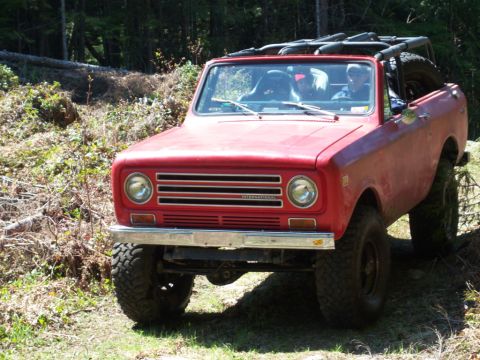
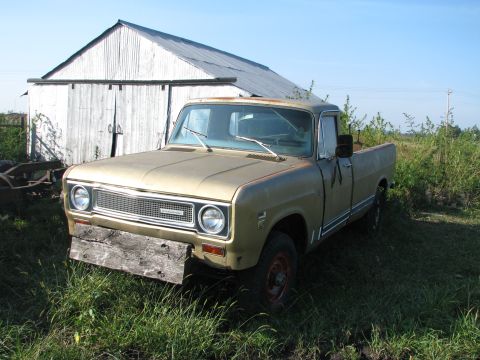
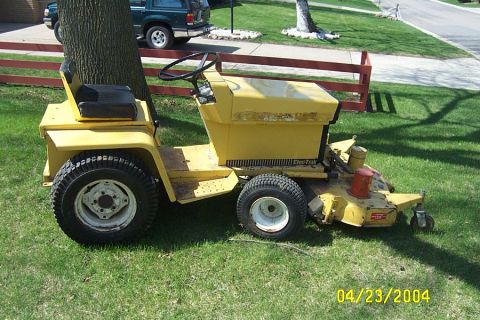
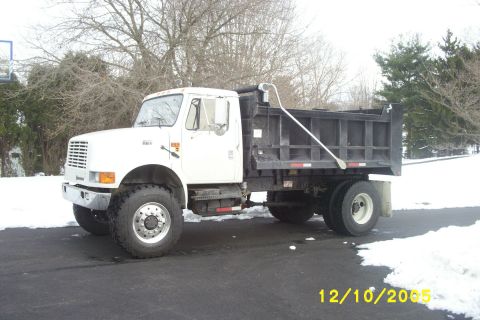
The most-documented International vehicles in the registry, every photo by the owner.