The registry
Jaguar Registry: Models, Builds & Photos
Jaguar traces to the Swallow Sidecar Company, founded by William Lyons and William Walmsley in Blackpool in 1922, with the Jaguar Cars name adopted in 1945. The company built its reputation on value-priced performance, five Le Mans wins between 1951 and 1957, and the twin-cam XK inline six that powered its road cars from 1949 into the 1980s. Ford bought Jaguar in a deal agreed in 1989 and completed in 1990, then sold it to Tata Motors in 2008, where it continues today as part of Jaguar Land Rover.
Pick your model
From Swallow Sidecars to an independent marque
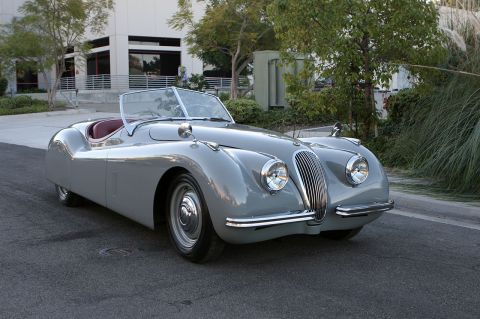
William Lyons started out building motorcycle sidecars in 1922, moved into coachwork on Austin Seven chassis, and launched the SS Jaguar saloon in 1935. The SS initials carried bad associations after the war, so the company renamed itself Jaguar Cars in 1945. The turning point came in 1948 with the XK120 and its new twin-cam 3.4 liter XK inline six, rated at 160 hp when most British sixes made half that. That engine stayed in production, in various displacements, until 1992, finishing its 43 year run in the Daimler DS420 limousine after the last XK-engined Jaguar, the 1987 XJ6.
Racing and the great road cars
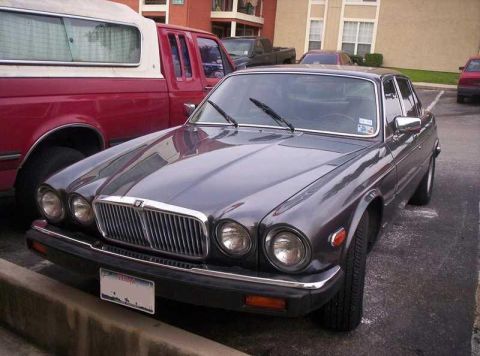
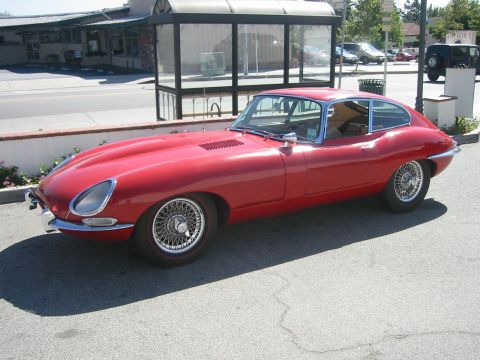
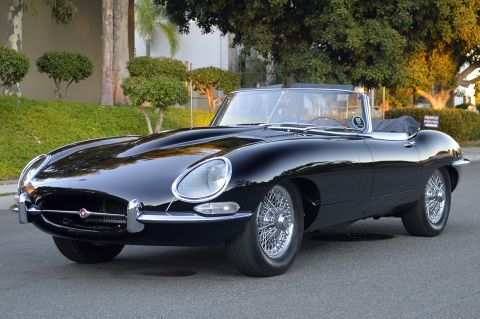
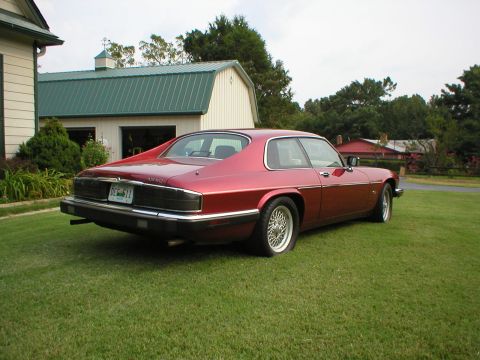
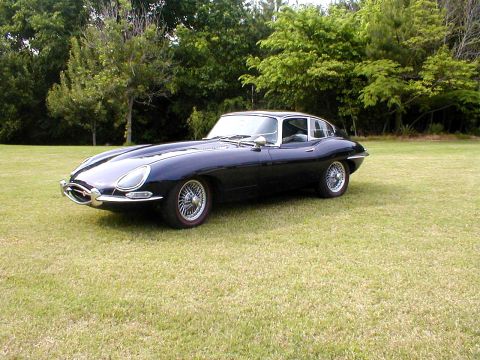
Jaguar won Le Mans in 1951 and 1953 with the C-Type (which introduced disc brakes to the race in 1953) and in 1955, 1956, and 1957 with the D-Type. The E-Type, sold in the US as the XKE, ran from 1961 to 1974: independent rear suspension, monocoque center section, and a claimed 150 mph from the 3.8 liter six. Series 1 cars (through 1967) with covered headlights bring the strongest money. The XJ6 sedan arrived in 1968 and its basic architecture lasted, through Series 1, 2, and 3, until 1987 for the six-cylinder cars; the V12 Series 3 continued until 1992. The XJ-S grand tourer (1975-1996) offered the 5.3 liter V12, one of very few mass-produced V12s of its era.
Corporate fate
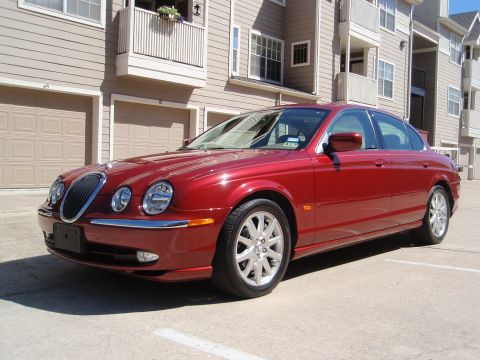
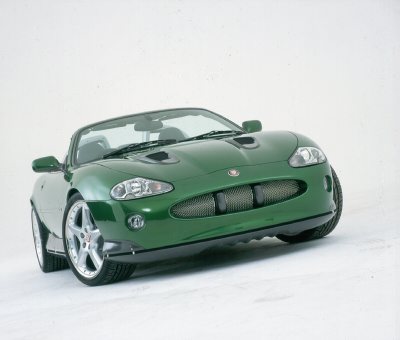
Jaguar merged with the British Motor Corporation in 1966, was swallowed into British Leyland in 1968, and suffered the build-quality problems that period is known for. It went public again in 1984, then Ford bought it in a deal agreed in late 1989 and completed in 1990. Ford-era platform sharing produced the S-Type (built 1999-2007, on a platform shared with the Lincoln LS) and the X-Type (2001-2009, derived from the Ford Mondeo, with standard all-wheel drive at launch). Tata Motors bought Jaguar and Land Rover from Ford in 2008. The XK coupe and convertible of 2006-2014 used a bonded and riveted aluminum monocoque, and supercharged XKR versions ran from 1998 to 2014, topping out with the XKR-S of 2012-2014 and its 542 hp (550 PS) 5.0 liter supercharged V8. Jaguar is still in business under Tata, currently repositioning as an electric-only brand, with its first new electric model due to debut in 2026.
What owners deal with
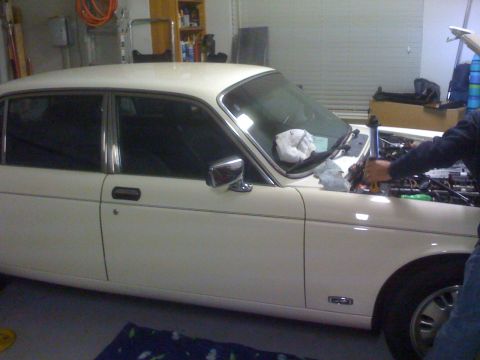
The XK six is durable if cooling is maintained. V12 cars punish deferred maintenance, most of the horror stories trace to overheating and neglected ignition work. Lucas electrics respond to clean grounds. Parts support for XK120 through XJ-S is strong through specialists in the UK and US.
Asked all the time
What years was the Jaguar XKE (E-Type) made?
Jaguar built the E-Type, badged XKE in the United States, from 1961 to 1974. Series 1 cars through 1967 have covered headlights and the purest styling and command the highest prices. Series 2 ran 1968-1971, and the Series 3 of 1971-1974 introduced the 5.3 liter V12.
What is the difference between the old and new Jaguar S-Type?
Jaguar used the S-Type name twice. The original was a compact sports saloon built 1963-1968, based on the Mark 2 with independent rear suspension. The modern S-Type was built 1999-2007 under Ford ownership (sold in the US through the 2008 model year), sharing its rear-drive platform with the Lincoln LS and offered with V6 and V8 engines plus the supercharged S-Type R.
Which Jaguar XJ6 is the one to buy?
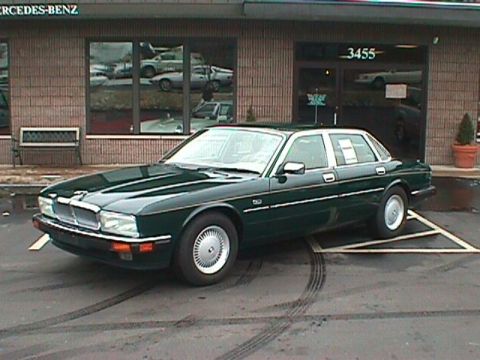
Most owners point to the Series 3 XJ6 (1979-1987 for the six-cylinder cars; the V12 Series 3 continued to 1992) as the sweet spot: the Pininfarina-updated body, improved build quality after the British Leyland years, and the proven 4.2 liter XK six. Series 1 cars (1968-1973) are rarer and collectible; Series 2 (1973-1979) cars are cheapest but had the worst assembly quality.
Are Jaguar parts hard to find for older models?
For mainstream classic Jaguars (XK120 through E-Type, XJ6, XJ-S), parts availability is good. Large specialists in the UK and US reproduce most mechanical and trim parts, and the XK engine family was built in huge numbers. Ford-era cars like the S-Type and X-Type benefit from shared Ford components. The hardest items are usually model-specific trim and early alloy-bodied XK120 panels.
Is the Jaguar V12 as scary as its reputation?
The Jaguar 5.3 liter V12, used in the E-Type Series 3 and XJ-S, is mechanically stout but intolerant of neglect. Most failures trace to overheating (dropped valve seats) and ignored ignition and cooling maintenance packed into a tight engine bay. A well-maintained example with records is a smooth, reliable engine; a cheap neglected one gets expensive fast.
The wall
The most-documented Jaguar vehicles in the registry, every photo by the owner.