The registry
Lincoln Registry: Models, Builds & Photos
The Lincoln Motor Company is an American luxury automaker founded in Detroit, Michigan, in August 1917 by Henry M. Leland, the precision-engineering pioneer who had earlier created Cadillac, together with his son Wilfred Leland. It began by building Liberty V12 aircraft engines for World War I, turned to luxury cars in 1920, and collapsed into receivership in the postwar slump. Ford Motor Company bought Lincoln for $8 million on February 4, 1922, and it has operated ever since as Ford's luxury division, producing landmark cars such as the Continental, the Mark coupes, the Town Car, and the Navigator SUV. Lincoln remains active today, headquartered in Dearborn, Michigan, selling a luxury SUV lineup in North America and China.
Pick your model
Key facts
| Founded | August 1917, Detroit, Michigan |
|---|---|
| Founders | Henry M. Leland and Wilfred Leland |
| Headquarters | Dearborn, Michigan, United States |
| Parent/successor | Ford Motor Company (acquired February 4, 1922, for $8 million) |
| Fate/status | Active; operates as Ford's luxury division |
| Best known for | Continental, Town Car, Navigator |
| Registry presence | 230 vehicles / 4,092 photos documented by owners on SuperMotors |
1917-1922: Henry Leland's Liberty Engines and the Bankruptcy That Handed Lincoln to Ford
Lincoln Motor Company was born in August 1917 to build war engines, not cars, and that origin killed its independence within five years. Henry M. Leland, then 74, walked out of General Motors after William Durant refused to commit Cadillac to Liberty aircraft engine production. Leland, the master machinist who had founded Cadillac in 1902 and made interchangeable-parts precision an American industrial religion, formed Lincoln with his son Wilfred, naming the company for Abraham Lincoln, the first president he had voted for, in 1864. The Detroit plant built roughly 6,500 Liberty V12 aircraft engines before the contract cancellations that followed the November 1918 Armistice wound production down in January 1919.
Converting an engine plant to luxury car manufacture proved slower and costlier than the Lelands planned. The Lincoln Model L of 1920 carried a beautifully machined 357-cubic-inch V8, but its coachwork was conservative to the point of dowdiness, styled largely by Angus Woodbridge, Leland's son-in-law and a former milliner. The car landed in the teeth of the sharp 1920-21 postwar recession, sales stalled far below the plant's capacity, and a disputed federal tax assessment drained the remaining cash. Receivership came in November 1921.
Henry Ford bought Lincoln at the receiver's sale on February 4, 1922, for $8 million, a price contemporaries considered far below the value of the plant and inventory. The Lelands stayed on believing Ford had promised them continued control; within four months both father and son were forced out, and Wilfred Leland spent years in fruitless litigation trying to recover the company. The purchase gave Ford Motor Company, then a one-car maker of the Model T, its first foothold in the luxury market, and it gave Edsel Ford, Henry's only son, the one corner of the empire his father would largely leave him alone to run.
1922-1942: Edsel Ford, E.T. Gregorie, and the Zephyr and Continental That Defined American Elegance
Under Edsel Ford's presidency from 1922, Lincoln became the proof that the Ford family could build beauty as well as volume. Edsel, whose dictum was that his father made the most popular car in the world while he wanted to make the best, kept the Leland-engineered V8 chassis and clothed it with America's finest coachbuilders: Brunn, Judkins, LeBaron, Dietrich, Willoughby. The Model K of 1931 and its V12 successors of 1932-1939 put Lincoln in direct combat with Packard, Cadillac, and Duesenberg at the summit of the market, and Lincolns served as presidential transport, including Franklin Roosevelt's armored 'Sunshine Special.'
The Depression nearly destroyed that business. Grand-luxe chassis sales collapsed industry-wide after 1930, and Lincoln's survival came from moving downmarket with the Lincoln-Zephyr of 1936, a streamlined, unit-bodied V12 car developed from John Tjaarda's radical Briggs prototype and priced in the $1,300 range against senior Lincolns that cost several times as much. The Zephyr sold roughly 15,000 units in its first year and immediately became the overwhelming majority of Lincoln production, keeping the marque alive when the big Model K faded to handfuls and died after 1939.
The era's crowning act came from a vacation request. In late 1938 Edsel asked chief designer Eugene T. 'Bob' Gregorie for a one-off continental-style convertible on the Zephyr chassis to drive in Florida. The reaction from wealthy onlookers was so strong that the Lincoln Continental entered production for 1940. Frank Lloyd Wright called it the most beautiful car ever designed, and the Museum of Modern Art later exhibited it as rolling sculpture. When civilian production halted for World War II in February 1942, Lincoln's identity, elegance flowing from Edsel Ford's personal taste, was fixed.
1945-1960: Benson Ford, the Mexican Road Race Lincolns, and the Continental Mark II Money Pit
Edsel Ford's death from cancer in May 1943 at age 49 left postwar Lincoln without its patron, and the division spent fifteen years searching for a formula. Under the reorganization that followed Henry Ford II's takeover of the company in 1945, Lincoln was paired with Mercury in a Lincoln-Mercury Division from October 1945, with Benson Ford, Edsel's second son, heading it from 1948. The warmed-over Zephyr-based cars gave way in 1949 to new bodies sharing structure with Mercury, a cost-driven decision that blurred the brand's separation from the mid-market.
Racing gave Lincoln its most unexpected postwar credibility. Factory-backed Lincoln Capris, prepared by Clay Smith and Bill Stroppe, dominated the stock class of the brutal Carrera Panamericana, sweeping the top positions in 1952 and 1953 and winning again in 1954. For a luxury marque, proving durability across 2,000 miles of Mexican mountain roads was marketing no advertisement could buy.
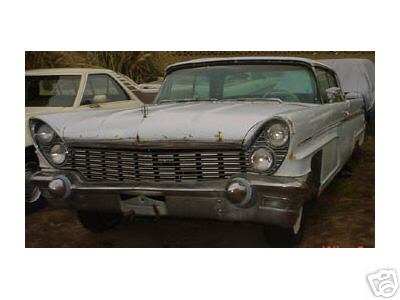
The decade's grand gesture nearly justified itself and financially failed. In 1955 Ford created a separate Continental Division under William Clay Ford, Edsel's youngest son, to build the Continental Mark II, a hand-finished $10,000 coupe priced against Rolls-Royce and intended to resurrect Edsel's masterpiece as a halo. Ford reportedly lost roughly $1,000 on every car, and the division was folded back into Lincoln after two model years and about 3,000 cars. The huge unibody Lincolns of 1958-1960, built in the new Wixom, Michigan plant, then stretched to some of the longest production cars America ever made just as a recession punished excess. By 1960 Lincoln had lost money for most of a decade and executives inside Ford openly debated killing the brand.
1961-1968: Elwood Engel's Slab-Sided Continental, Robert McNamara's Reprieve, and Dealey Plaza
The 1961 Lincoln Continental saved the brand from cancellation and became the most influential American luxury car of its generation. Robert McNamara, the Ford Whiz Kid then running the company's car divisions, agreed to spare Lincoln on the condition that it build one rationalized model line. The design came from a proposal Elwood Engel had sketched as a Ford Thunderbird; scaled up, its clean slab sides, restrained chrome, and rear-hinged back doors rejected the fins and glitter of the late 1950s outright. The design team received an award from the Industrial Designers Institute, a rarity for Detroit, and Engel's departure to run Chrysler styling in 1961 spread the slab-side language across the industry.
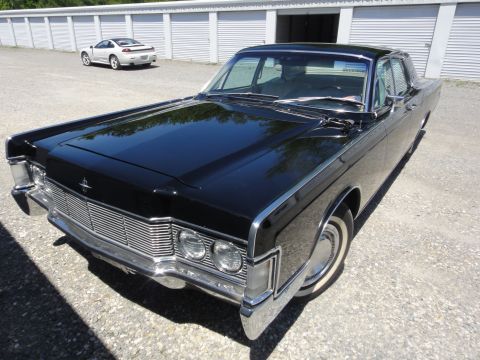
The business logic mattered as much as the styling. One body, a sedan and America's only four-door convertible, replaced the sprawling 1958-1960 range. Lincoln backed the car with an unprecedented two-year, 24,000-mile warranty and enforced tighter assembly standards at Wixom, directly attacking the quality reputation gap with Cadillac. Sales roughly doubled over the previous generation's pace, and Lincoln turned profitable again.
The same car carries the darkest image in the company's file. The midnight-blue 1961 Continental presidential limousine, code-named X-100, was carrying John F. Kennedy through Dealey Plaza in Dallas on November 22, 1963. Rather than retire the car, the government had it armored and rebuilt, and it served presidents into the 1970s. The association fixed the slab-sided Continental in public memory, for grief and for grandeur, more deeply than any advertising campaign could have. Through 1968 the Continental evolved gently, and Lincoln, still a one-model marque, prepared its next move against Cadillac's hot-selling personal coupes.
1968-1980: Lee Iacocca's Mark III Gamble, the Town Car Name, and the Versailles Misfire
The Continental Mark III of April 1968 was Lee Iacocca's answer to a simple arithmetic problem: Cadillac's Eldorado was harvesting enormous profits Lincoln could not touch with sedans alone. Iacocca ordered a Rolls-Royce-style grille and a fake spare-tire hump grafted onto Thunderbird underpinnings, a car developed cheaply and priced high. Buyers responded exactly as he predicted; the Mark III outsold expectations from its first year and, by Iacocca's own account, became one of the most profitable cars per unit Ford built. The formula, shared platform beneath, baroque luxury above, funded Lincoln for a decade and made the personal-luxury coupe the brand's profit engine.
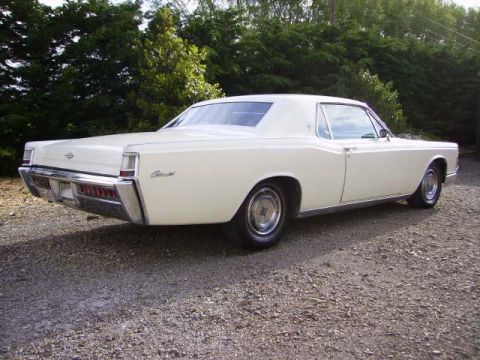
Its successors scaled the bet up. The Continental Mark IV of 1972 introduced designer editions with Cartier, Givenchy, Pucci, and Bill Blass trim, marketing luxury as fashion, and the 1977-1979 Continental Mark V sold over 220,000 copies of a car more than nineteen feet long. Meanwhile the Town Car name appeared in 1969 as a Continental trim package, planting the seed of the brand's future best-seller.
The decade's failure was as instructive as its successes. Facing the 1976 Cadillac Seville, a compact luxury sedan built for a market rattled by the 1973 oil embargo, Lincoln rushed out the Versailles in 1977, a Ford Granada with a Lincoln grille and stand-up hood ornament at nearly triple the Granada's price. The market saw through it, sales ran at a fraction of the Seville's, and the car died in 1980. The Versailles became Detroit's textbook case that badge engineering fails when the disguise is thin, a lesson Lincoln would relearn more than once.
1980-1998: Downsizing, the Aero Mark VII, and the Town Car That Owned the Livery Trade
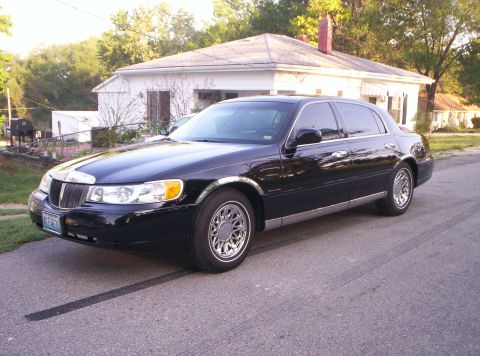
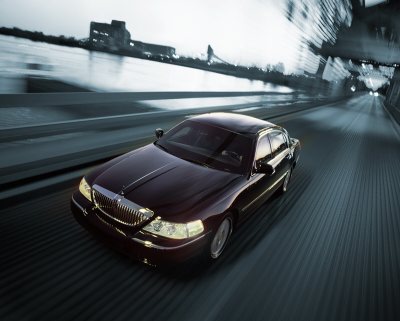
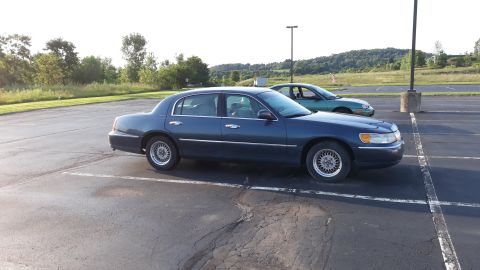
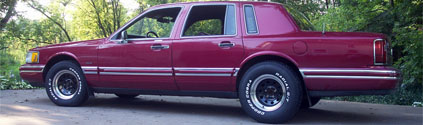
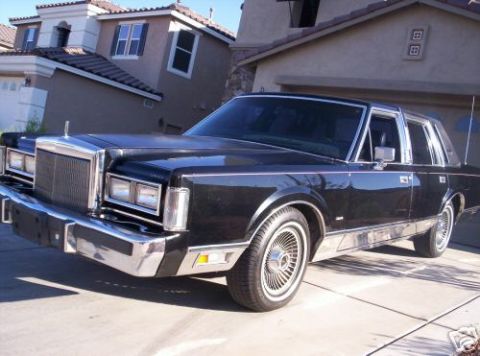
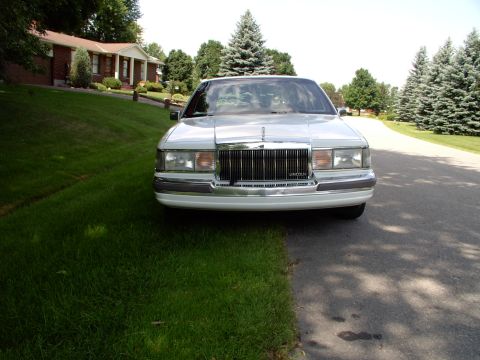
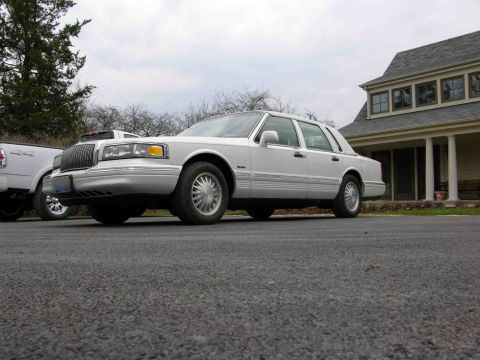
The second oil shock of 1979 forced Lincoln to shrink everything, and the 1980s became a contest between its past and Ford's new aerodynamic religion. The full-size cars moved to the smaller Panther platform for 1980, and the Town Car became a standalone model in 1981. Squared-off, V8-powered, body-on-frame, it was old technology executed with total conviction, and it found two devoted constituencies: traditional retail buyers fleeing Cadillac's disastrous V8-6-4 and diesel engines, and the black-car livery trade, for which the Town Car became the default vehicle of American executive transport for a quarter century. In its best years the Town Car alone sold over 100,000 units.
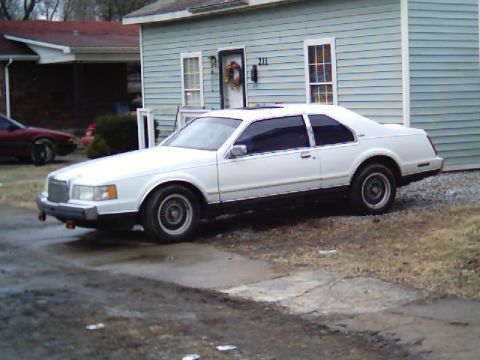
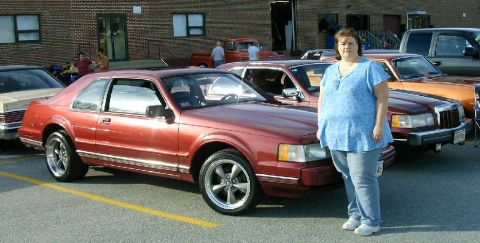
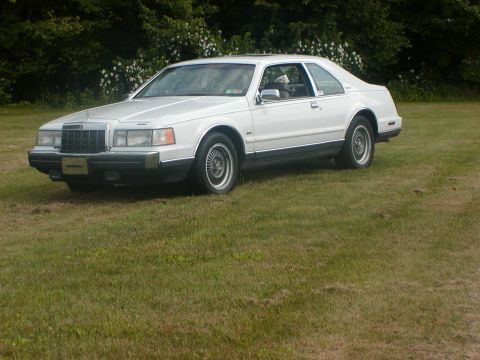
The Mark VII of 1984 pointed the other direction. Built on the Fox platform and shaped in the wind tunnel under design chief Jack Telnack's aero doctrine, it carried the first flush composite headlamps legally sold on an American car, and the LSC version, with the Mustang's 5.0-liter V8 and firm suspension, was pitched openly at BMW's 6 Series. The 1988 Continental went further from tradition, becoming a front-wheel-drive V6 sedan on the Taurus architecture.
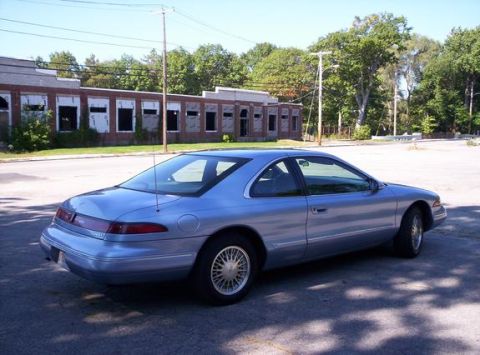
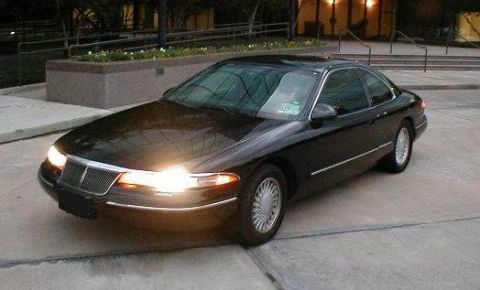
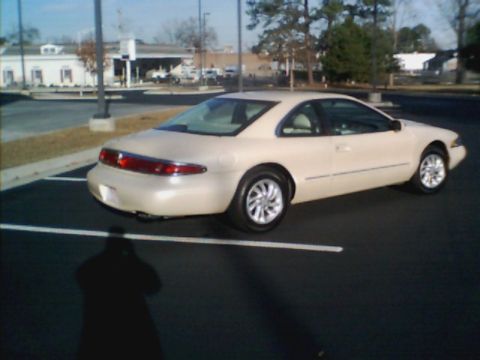
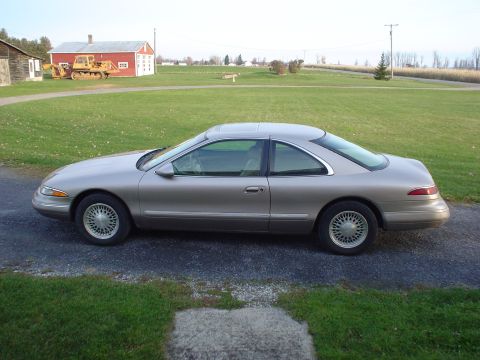
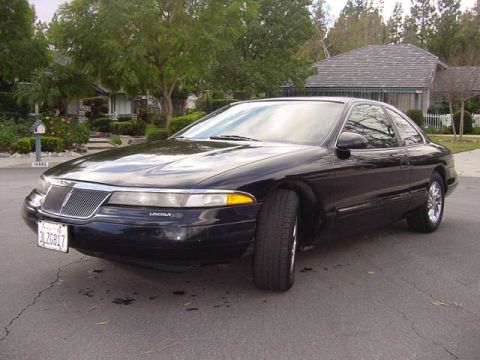
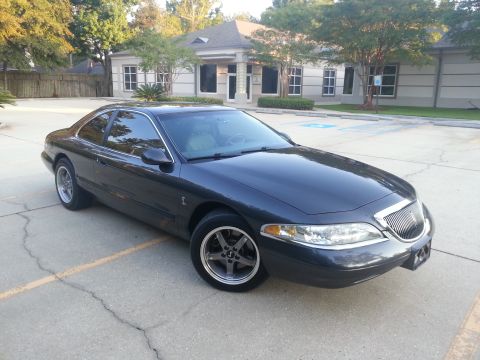
The Mark VIII of 1993 crowned the aero line with the new 4.6-liter DOHC InTech V8 and air suspension, a genuinely advanced grand tourer that nevertheless watched its personal-luxury-coupe market evaporate beneath it; the Mark line died with it in 1998, ending a lineage begun in 1956. Lincoln's real problem by the mid-1990s was demographic: its buyers were the oldest in the industry, and Lexus and Infiniti, launched in 1989, were taking the customers Lincoln needed next.
1998-2006: The Navigator Windfall, Jacques Nasser's PAG Detour, and the Wixom Shutdown
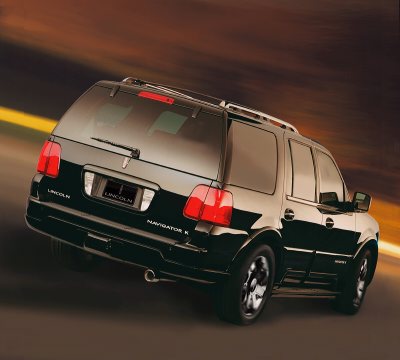
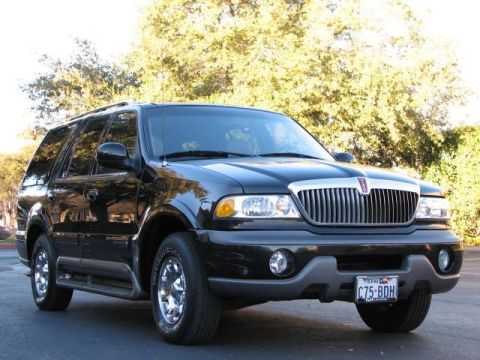
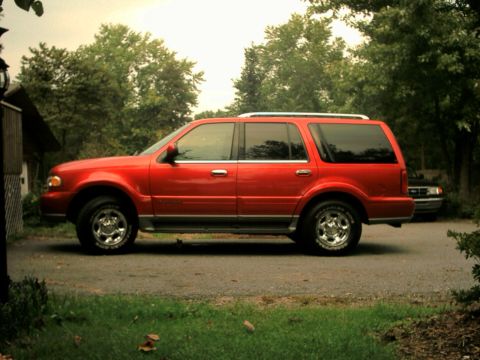
The 1998 Lincoln Navigator was the most consequential product decision the brand made in three decades, and it cost comparatively little. A leather-lined, chrome-grilled Ford Expedition, the Navigator invented the full-size American luxury SUV category, generated enormous per-unit profits, and briefly lifted Lincoln past Cadillac to the top of U.S. luxury sales in 1998. General Motors' scramble to answer it with the 1999 Cadillac Escalade confirmed how completely Lincoln had caught its rival flat-footed. For once, borrowing a Ford platform was a strength: truck buyers expected shared bones.

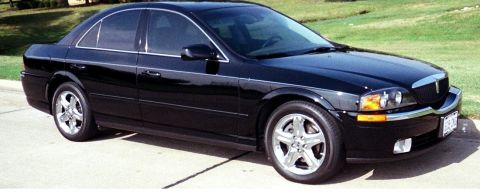
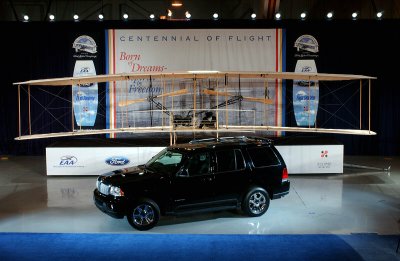
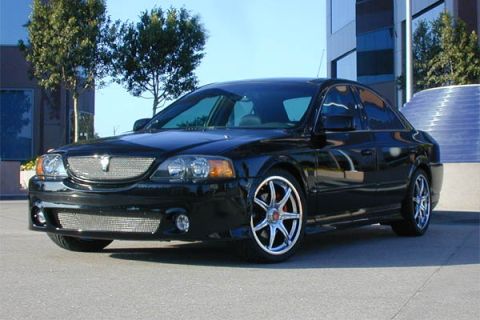
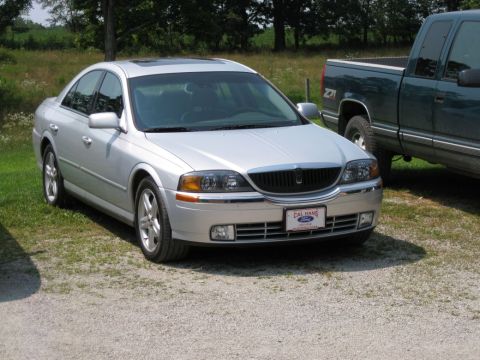
Corporate strategy then took Lincoln in a new direction, a strategy Ford would later unwind. CEO Jacques Nasser placed Lincoln in the new Premier Automotive Group alongside Jaguar, Volvo, and Aston Martin in 1999, moving its offices to Irvine, California, and pushing it toward European-style sport sedans. The centerpiece was the 2000 Lincoln LS, a rear-wheel-drive sedan on a new platform shared with the Jaguar S-Type, offered with a V8 and even a manual-transmission V6. Motor Trend named the LS its 2000 Car of the Year, but Lincoln never funded the follow-through; the LS aged without major renewal and died in 2006. The Aviator of 2003, an Explorer-based junior Navigator, lasted three model years, and the Navicross concept of 2003 previewed a crossover direction the division was not yet ready to build.
The retreat was general by mid-decade. Nasser was ousted in 2001, Lincoln was pulled back from PAG to Dearborn in 2002, and Ford's 'Way Forward' restructuring closed the Wixom plant in May 2007, ending 50 years of Lincoln assembly there. Mercury, Lincoln's showroom partner since 1945, was itself dying, and Lincoln's lineup narrowed toward badge-shared Fords once again.
2006-Today: Alan Mulally's Triage, the China Bet, and the All-SUV Reinvention Under Ford
Lincoln survived the 2008 financial crisis because Alan Mulally's One Ford plan sold everything else instead. As Ford mortgaged its assets in 2006 and then divested Aston Martin, Jaguar, Land Rover, and Volvo between 2007 and 2010, and wound down Mercury in 2010-2011, Lincoln became the company's only remaining premium brand by default. Ford recommitted publicly, reviving the 'Lincoln Motor Company' name in December 2012 and standing up a dedicated design studio under David Woodhouse. An interim naming scheme of MK-prefixed alphanumerics (MKZ, MKX, MKC and kin) traded away decades of name equity, a decision the company itself later reversed.
Two moves defined the recovery. The first was China: Lincoln entered the market in 2014, found buyers who carried none of the brand's American geriatric baggage, and by the late 2010s China rivaled the United States as Lincoln's growth engine, with local production beginning in 2020. The second was the return to real names and big SUVs. The 2018 Navigator, with its Black Label interiors and 30-way seats, won the North American Truck of the Year award and re-established the flagship; the Aviator returned for 2020 with a plug-in hybrid option; and the reborn 2017 Continental, though praised, sold too slowly and died in 2020 along with the MKZ, ending Lincoln sedans in North America outright.
Lincoln today is an all-SUV luxury division of Ford Motor Company, headquartered in Dearborn, Michigan, spanning Corsair to Navigator, selling on quiet-luxury comfort rather than sport pretension. Its electric transition has moved cautiously after Ford scaled back EV plans in 2023-2024, leaning on hybrids in the interim. A century after Henry Leland's receivership sale, the brand's continued existence still rests on the same arrangement struck on February 4, 1922: Ford's platforms underneath, Lincoln's idea of American luxury on top.
Leadership
| Leader | Tenure | Legacy |
|---|---|---|
| Henry M. Leland | 1917-1922 | Founded Lincoln to build Liberty V12 aircraft engines, then luxury cars; forced out months after selling to Ford. |
| Edsel Ford | 1922-1943 | As Ford president took personal charge of Lincoln, turning Leland's over-engineered chassis into styled luxury cars and commissioning the Zephyr and Continental. |
| E.T. "Bob" Gregorie | 1935-1946 (Ford chief designer) | Designed the 1936 Zephyr production body and the 1939 Continental prototype for Edsel Ford. |
| Benson Ford | 1948-1956 (Lincoln-Mercury head) | Ran the Lincoln-Mercury Division through the Carrera Panamericana racing wins and postwar rebuilding. |
| William Clay Ford Sr. | 1952-1957 (Special Products/Continental Division) | Led the Continental Mark II program, a $10,000 flagship that lost money on every car and folded as a division in 1957. |
| Robert McNamara | 1957-1960 (Ford group VP, cars) | Spared Lincoln from cancellation on the strength of Elwood Engel's 1961 Continental proposal. |
| Elwood Engel | 1950s-1961 (designer) | Styled the slab-sided 1961 Continental with rear-hinged doors, the design that saved the brand. |
| Lee Iacocca | 1967-1978 (Ford executive, later president) | Championed the 1968 Continental Mark III, a high-margin personal luxury coupe that made Lincoln reliably profitable. |
| Jacques Nasser | 1999-2001 (Ford CEO) | Placed Lincoln inside the Premier Automotive Group alongside Jaguar and Volvo, a detour reversed in 2002. |
| Alan Mulally | 2006-2014 (Ford CEO) | Sold off Ford's other luxury brands and kept Lincoln as the sole premium marque, setting up its SUV and China strategy. |
Timeline
| Year | Event | Detail |
|---|---|---|
| 1917 | Company founded | Henry M. Leland and son Wilfred incorporate the Lincoln Motor Company in Detroit in August 1917 to build Liberty V12 aircraft engines for World War I. |
| 1920 | Model L introduced | Lincoln's first automobile, the Model L, pairs a 357-cubic-inch V8 with precision engineering but dated coachwork. |
| 1922 | Ford acquires Lincoln | Ford Motor Company buys Lincoln out of receivership for $8 million on February 4, 1922; the Lelands depart within months and Edsel Ford takes charge. |
| 1932 | KB V12 introduced | The Model KB brings a 448-cubic-inch V12 to Lincoln's flagship chassis at the depth of the Depression. |
| 1936 | Zephyr introduced | The streamlined, unit-body Lincoln-Zephyr with a small V12 moves the brand into the mid-luxury market and saves its volume. |
| 1940 | Continental introduced | Edsel Ford's personal Zephyr-based cabriolet, styled by E.T. Gregorie, enters production as the Lincoln Continental. |
| 1943 | Edsel Ford dies | Edsel Ford dies at 49, ending the patronage that had shaped Lincoln design since 1922. |
| 1952 | Carrera Panamericana wins begin | Factory-backed Lincoln Capris take the top places in the stock class of the Mexican Road Race in 1952, 1953, and 1954. |
| 1956 | Continental Mark II introduced | The separate Continental Division sells the hand-finished Mark II for roughly $10,000 and loses money on every unit; the division folds in 1957. |
| 1957 | Wixom Assembly opens | Lincoln production consolidates at the new Wixom, Michigan plant, its home for the next half century. |
| 1961 | Slab-sided Continental introduced | Elwood Engel's clean four-door with rear-hinged doors debuts after Robert McNamara spares the brand from cancellation. |
| 1963 | Dealey Plaza | President Kennedy is assassinated riding in the 1961 Lincoln Continental presidential limousine SS-100-X in Dallas on November 22, 1963. |
| 1968 | Continental Mark III introduced | Lee Iacocca's Thunderbird-based personal luxury coupe launches in April 1968 and out-earns anything else Lincoln builds. |
| 1969 | Town Car name appears | Lincoln first uses Town Car as a Continental trim designation, the start of a nameplate that anchors the brand for four decades. |
| 1972 | Continental Mark IV introduced | The Mark IV extends the Mark formula with an opera window and record sales. |
| 1977 | Continental Mark V introduced | The sharp-edged Mark V becomes the best-selling Mark coupe of the full-size era. |
| 1977 | Versailles introduced | Lincoln's hurried Granada-based answer to the Cadillac Seville sells poorly and is dropped in 1980. |
| 1980 | Downsized Town Car and Mark VI | Lincoln moves its full-size line to the smaller Panther platform, and Town Car becomes a standalone model in 1981. |
| 1984 | Mark VII introduced | The aerodynamic Mark VII brings composite headlamps and, in LSC form, the Mustang's 5.0 V8. |
| 1993 | Mark VIII introduced | The final Mark coupe carries a 4.6-liter DOHC V8 on an independent-rear-suspension platform; production ends in 1998. |
| 1998 | Navigator introduced | The Expedition-based Navigator creates the full-size luxury SUV segment and delivers windfall profits. |
| 1999 | Lincoln joins Premier Automotive Group | CEO Jacques Nasser folds Lincoln into PAG with Jaguar, Volvo, and Aston Martin; Ford reverses the move in 2002. |
| 2000 | LS introduced | The rear-drive LS sport sedan, sharing its platform with the Jaguar S-Type, chases the German sedans until 2006. |
| 2003 | Aviator introduced | The Explorer-based Aviator gives Lincoln a mid-size SUV; the name returns on a new generation in 2019. |
| 2007 | Wixom Assembly closes | Ford shutters the Wixom, Michigan plant that had built Lincolns since 1957; the last car, a Town Car, is built on May 31, 2007. |
| 2011 | Town Car production ends | The last Panther-platform Town Car is built in 2011, ending the livery trade's default limousine. |
| 2014 | China sales begin | Lincoln enters the Chinese market, which becomes central to its volume strategy. |
| 2020 | Continental discontinued | The last Continental sedan is built, leaving Lincoln with an all-SUV lineup in North America. |
Asked all the time
Who founded Lincoln?
Henry M. Leland, the precision-engineering pioneer who had earlier created Cadillac, founded the Lincoln Motor Company in Detroit in August 1917, together with his son Wilfred Leland. The company began as a builder of Liberty V12 aircraft engines for World War I before turning to luxury cars in 1920.
Why did Lincoln become part of Ford?
Lincoln collapsed into receivership during the postwar slump of 1921, hurt by tax disputes and dated styling. Henry Ford bought the company at a receiver's sale for $8 million on February 4, 1922, partly at the urging of his son Edsel, who wanted a luxury marque to shape; the Lelands were pushed out within months.
Is Lincoln still in business?
Yes. Lincoln has operated continuously since 1917 and remains Ford Motor Company's luxury division, headquartered in Dearborn, Michigan, selling an all-SUV lineup in North America and China.
Where does the Lincoln name come from?
Henry Leland named the company after Abraham Lincoln, the first president he ever voted for, in 1864.
What is Lincoln best known for?
Its landmark nameplates: the Continental, first built in 1940 from Edsel Ford's personal car; the Mark series of personal luxury coupes launched with Lee Iacocca's 1968 Mark III; the Town Car that dominated the American limousine and livery trade; and the Navigator, which created the full-size luxury SUV segment in 1998.
How is Lincoln connected to Cadillac?
Henry Leland founded both companies. He organized Cadillac in 1902 from the remains of the Henry Ford Company, sold it to General Motors, and left GM in 1917 in a dispute over wartime engine production to found Lincoln, making the two American luxury rivals children of the same engineer.
Why did Lincoln stop building sedans?
Under Ford's broader shift away from passenger cars, Lincoln ended MKZ and Continental production in 2020 and committed fully to SUVs, where the Navigator, Aviator, Nautilus, and Corsair earn stronger margins and match buyer demand in both North America and China.
How is Lincoln documented on SuperMotors?
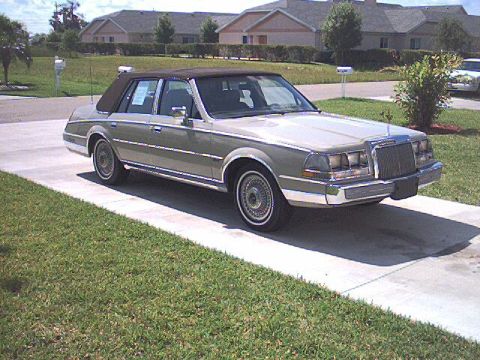
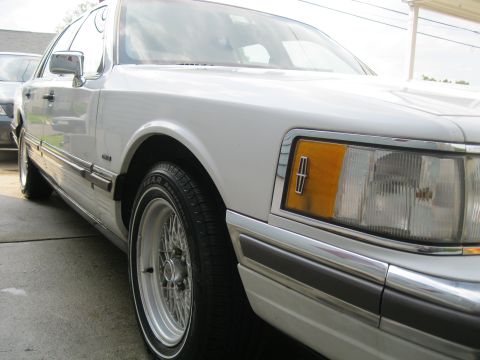
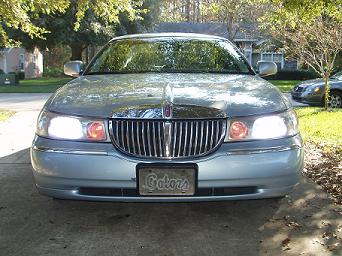
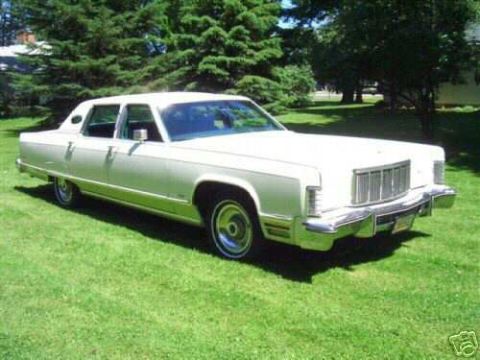
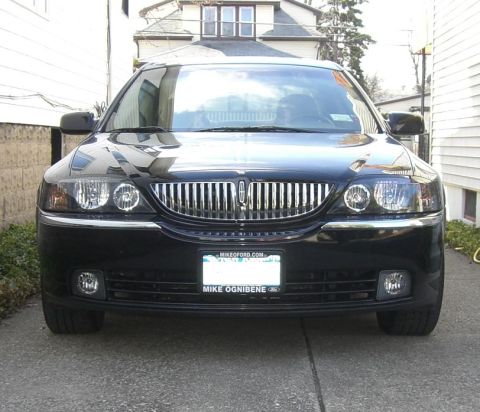
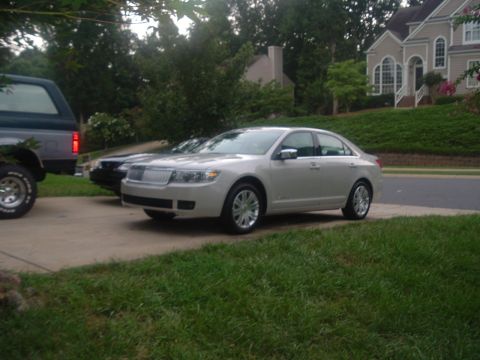
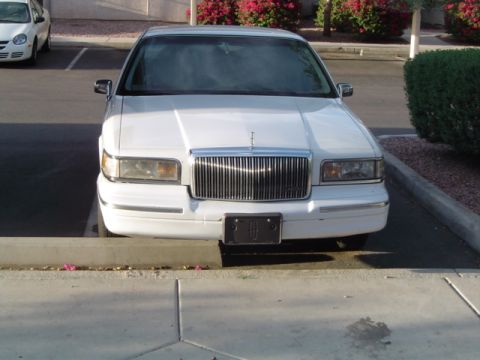
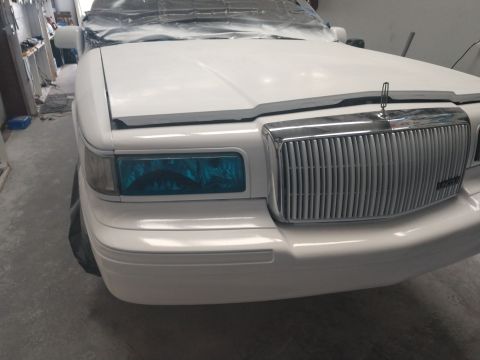
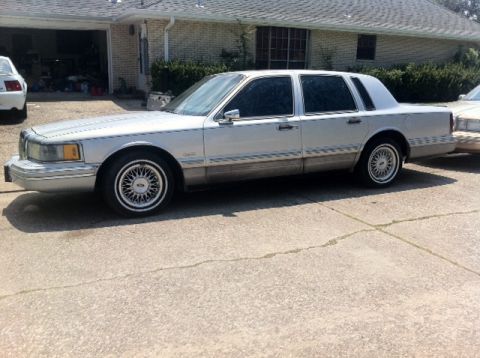
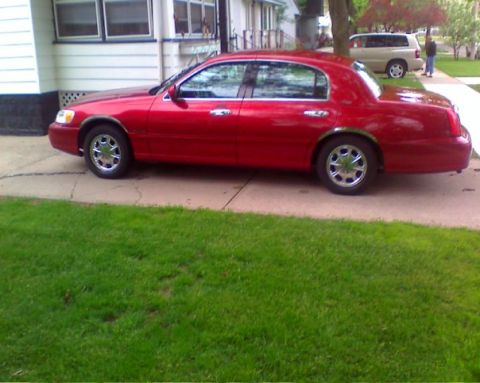
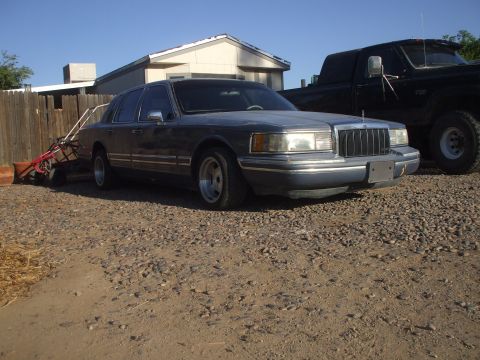
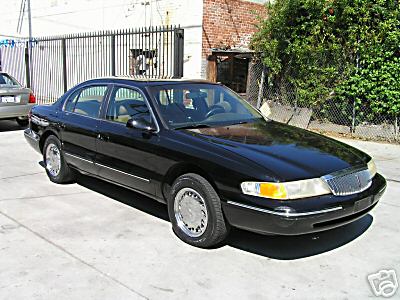
Owners have documented 230 Lincoln vehicles with 4,092 photos across 17 models in the SuperMotors registry, with the Town Car, Mark VIII, Mark VII, and Continental the most represented.
The wall
The most-documented Lincoln vehicles in the registry, every photo by the owner.