Home/
Registry/
Ford/
Fairlane/
1968-1969/
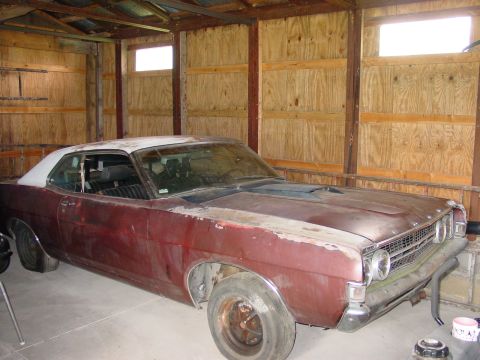
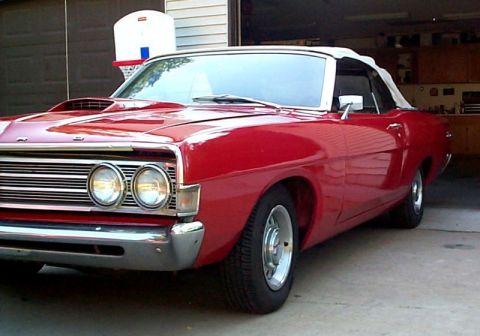
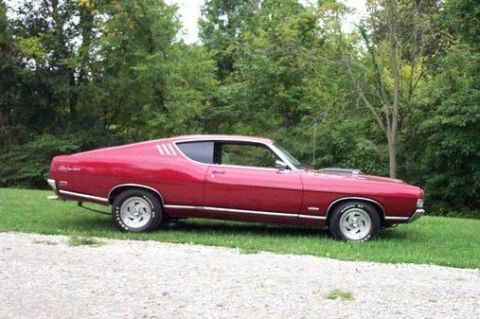
1969 Ford Fairlane/
Photo
supermotors.net/registry/media/1008382

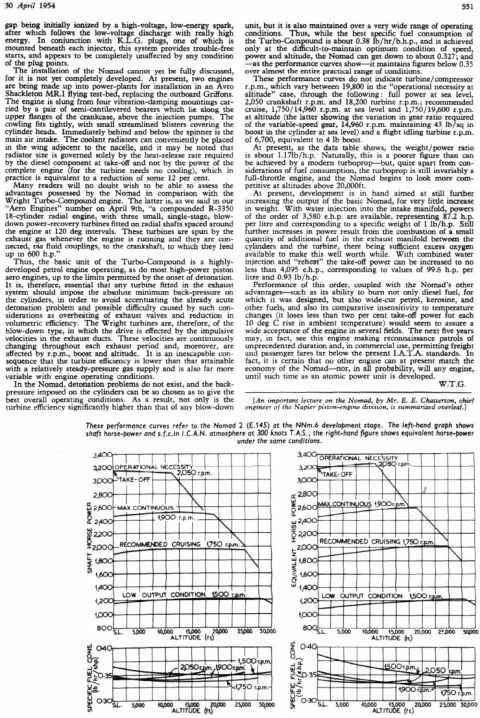
This document page discusses engines of unusual construction, detailing various engine designs and their performance characteristics.
ENGINES 0F UNUSUAL CONSTRUCTION 4t a number of other curious ones that Bradshaw insisted, in open deance of the scientists of the Royal Aircraft factory at Farnborough, would promote excellent performance. One of these was his idea of copper-plated steel cylinder nning for supposedly effective cooling. The Government and the aircraft industry went wild with enthusiasm, and the Ministry of Munitions ordered that production of practically every other engine (save two Rolls- Royoe and the BHP/Siddeley Puma) be stopped by 1919 so that all manufac- turers could standardise on quantity production of the Dragony. Perhaps the experience taught them (and perhaps it could teach us) a lesson, for the Dragony turned out to be disastrous lt weighed half a hundredweight more than ABC predicted and developed 45 hp less; and it had an irredeemable tendency to break itself into pieces after only a few hours in the air. About twelve hundred were built by the time it went into full production in 1918 before the Establishment realised the error of its ways and abandoned the thing. >Quite the most extraordinary system of cooling was that proposed by Ernest Chatterton for his Simplic 2-stroke engine. It had no ns at all but consumed about ve times more air than it needed for combustion, employing the bulk of the air to cool the engine from the inside just where it had been made hot, rather than having to divine the heat at a distance down the tem- perature gradient of cylinder walls and ns. What prompted Chatterton to work out this idea was his distaste for the complicated design of supercharged engines, particularly those using intercoolers for the intake air, and the general unsuitability of such a principle for engines intended to generate less than about 150 bhp There is no doubt that high eiciency is very difcult to obtain in small turbochargers, due to high gas losses, and the cost of a turbocharger is not much decreased with its size. Arguing properly (and if only others would agree) that powerzweight ratio is a more important parameter of engine performance than power : displacement ratio, Chatterton concentrated on the attainment of low weight and small engine dimensions in a construc- tion of the utmost simplicity. In principle the Simplic was a two-stroke engine with uniflow scavenging through inlet ports in the cylinder wall and a poppet exhaust valve in the head. However, the engine requires no blower for charging nor any fan for inducing a ow of cooling air. All this is made possible by the engine operating with a very high expansion ratio, no less than 60: 1. There have been a number of engines exploiting the more-complete-expansion cycle, in which the expan sion ratio is greater than the compression ratio: the idea makes good thermo- dynamic sense, but seldom has it been exploited with such ingenuity as in the Simplic. So great is the expansion in Chattertons cylinder that, when
Comments
More from this build

No comments yet.