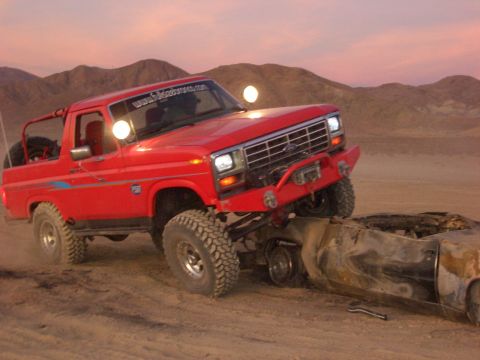
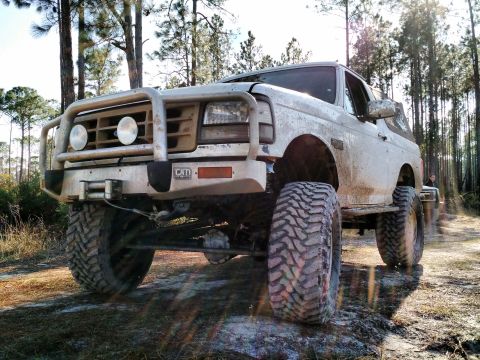
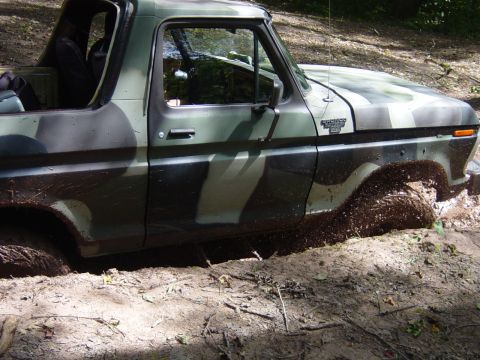
The registry
Ford Registry: Models, Builds & Photos
Ford Motor Company is an American automaker founded on June 16, 1903, in Detroit, Michigan, by Henry Ford with eleven investors and $28,000 in capital, after two earlier Ford ventures had failed. It industrialized the automobile itself: the Model T of 1908 and the moving assembly line of 1913 made cars affordable to working people and made Ford, for a time, the largest manufacturer on earth. The company survived near-bankruptcy in the 1940s under Henry Ford II, went public in 1956, built the trucks and SUVs that funded a century of crises, mortgaged nearly all its assets including the Blue Oval logo in 2006 to avoid the bailout that took down its Detroit rivals, and today remains an independent, publicly traded automaker (NYSE: F), still controlled by the Ford family through supervoting Class B shares and headquartered in Dearborn, Michigan.
Pick your model
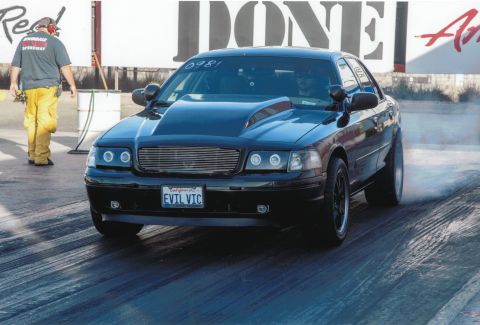
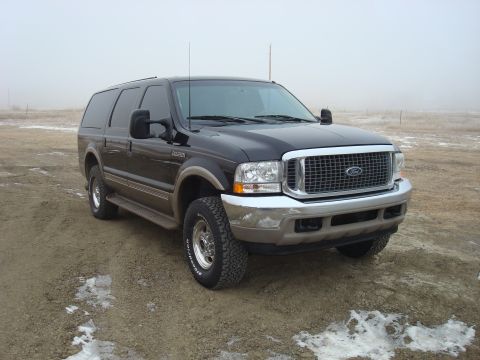
Key facts
\n| Fact | Detail |
|---|---|
| Founded | June 16, 1903, Detroit, Michigan, USA |
| Founders | Henry Ford, with eleven investors including Alexander Malcomson and John and Horace Dodge, capitalized at $28,000 |
| Headquarters | Dearborn, Michigan, USA |
| Parent / successor | None; independent, publicly traded (NYSE: F), Ford family control via supervoting Class B shares |
| Fate / status | Active; went public January 1956, never dissolved or absorbed |
| Best known for | Model T, F-150, Mustang |
| Registry presence | 18,351 vehicles / 710,407 photos documented by owners on SuperMotors |
1903-1908: Malcomson's Money, the Dodge Brothers' Engines, and Henry Ford's Third Try
\nWhen Ford Motor Company incorporated on June 16, 1903, its founder was a 39-year-old engineer with two failed car companies behind him and a reputation for tinkering instead of shipping. The Detroit Automobile Company had collapsed in 1901; the Henry Ford Company had ousted him in 1902 and renamed itself Cadillac. What saved the third attempt was coal dealer Alexander Malcomson, who assembled twelve shareholders and $28,000 in paid-in cash, and the Dodge brothers, John and Horace, whose machine shop supplied complete engines and chassis because the new firm owned almost no tooling of its own. Ford was, at first, an assembler.
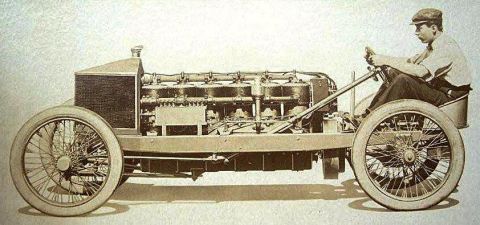
The first car, the Model A of 1903, sold to Chicago dentist Ernst Pfennig within weeks of incorporation, and the company was profitable almost immediately. Two fights defined the era. The first was internal: Malcomson wanted expensive cars for the carriage trade, Henry Ford wanted cheap cars for farmers. Ford won by routing profits through a separate parts company Malcomson had no stake in, forcing him to sell out in 1906 and leaving Henry Ford with majority control. The second fight was external: the Selden patent, a broad 1895 claim on the gasoline automobile that most manufacturers licensed rather than contested. Ford refused, fought the Association of Licensed Automobile Manufacturers in court for eight years, and won on appeal in 1911. The victory made Henry Ford a folk hero, the small man who beat the trust, and that public image became a corporate asset worth more than the legal fees.
By 1906 the Model N, a light four-cylinder car at $600, was the best-selling automobile in the United States and proved the low-price thesis. Everything the company would become was already visible: obsession with cost, contempt for bankers and patent lawyers, and one man's absolute control.
\n1908-1915: The Model T, Highland Park's Moving Line, and the Five-Dollar Day
\nThe Model T, introduced October 1, 1908, at $850, was not the first cheap car, but it was the first cheap car that was also a good one, and it changed what Ford Motor Company was for. Designed by Henry Ford with Childe Harold Wills and Hungarian-born engineers Joseph Galamb and Eugene Farkas, it used lightweight vanadium steel, a simple planetary transmission, and enough ground clearance for roads that were mostly mud. Demand outran the Piquette Avenue plant instantly, and the answer was Highland Park, the vast daylight factory Albert Kahn designed, which opened in 1910.
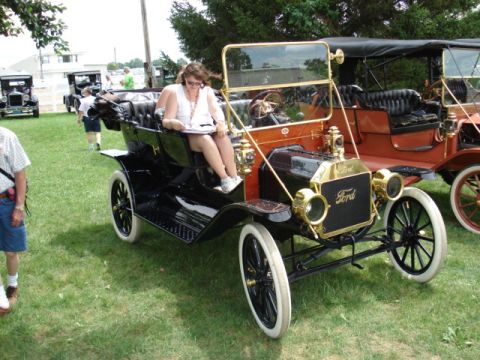
The moving assembly line arrived there in stages during 1913, borrowed conceptually from Chicago meatpacking disassembly lines and pushed by production men like Charles Sorensen and Clarence Avery. Chassis assembly time fell from over twelve hours to around ninety minutes, and the savings went into price cuts: the Model T that cost $850 in 1908 sold for $360 by 1916, and volume rose as price fell, the inverse of every competitor's logic.
The line created its own crisis. The work was so monotonous that annual labor turnover at Highland Park reached roughly 370 percent in 1913, meaning the company hired several workers for every job just to keep one. Henry Ford's answer, announced January 5, 1914, was the five-dollar day, roughly double the going wage, paired with a shortened eight-hour shift and a paternalistic Sociological Department that inspected workers' homes for thrift and sobriety. Wall Street called it economic suicide; the Wall Street Journal called it an economic crime. It stabilized the workforce, filled Ford's hiring lines, and, whatever Henry Ford's motives, put his own product within reach of the people who built it. By 1914 Ford built more cars than all other American manufacturers combined.
\n1915-1927: The Rouge, the Dodge Lawsuit, and the Cost of One Man's Stubbornness
\nBetween 1915 and 1927 Henry Ford built the most vertically integrated industrial complex on earth and nearly wrecked the company that owned it. The River Rouge plant in Dearborn, begun in 1917, eventually took in iron ore, coal, and rubber at one end and sent finished vehicles out the other, with its own steel mill, glass plant, power station, and deep-water docks, employing over 100,000 workers at its late-1920s peak. Ford owned iron mines, forests, a railroad, and a fleet of ore boats. The logic was control: no supplier could hold him up the way the Dodge brothers once could.
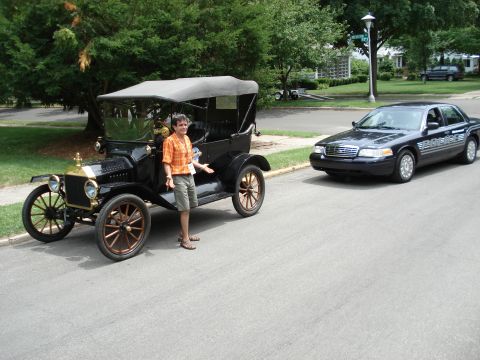
Control was also the point of the era's defining legal fight. The Dodge brothers, still minority shareholders, sued in 1916 when Henry Ford withheld dividends to fund the Rouge, and in 1919 the Michigan Supreme Court ordered a special dividend in Dodge v. Ford, ruling that a corporation is run primarily for its stockholders. Ford's response was to buy out every minority shareholder in 1919, borrowing to do it, and to place ownership entirely within his family. From then until 1956, Ford Motor Company answered to no outside investor, and its books were whatever Henry Ford said they were.
The empire had a single point of failure: its founder's refusal to replace the Model T. Through the early 1920s the T still dominated, and side ventures multiplied, Fordson tractors, the Lincoln acquisition of 1922 taken over from Henry Leland, even Trimotor aircraft. But Alfred Sloan's General Motors was selling color, annual model changes, and installment credit through GMAC, its financing arm, while Ford sold the same black car for cash. Chevrolet closed the gap year by year. Edsel Ford, company president in title since 1919, argued for a modern replacement and was overruled and humiliated repeatedly. Only when T sales collapsed in 1926 and early 1927 did Henry Ford relent, and the last of some 15 million Model Ts left the line in May 1927 with nothing ready to succeed it.
\n1927-1932: The Model A Shutdown, the Flathead V8, and Edsel Ford's Quiet Rebellion
\nFord Motor Company did something in 1927 that no dominant manufacturer had ever done voluntarily: it shut down. Replacing the Model T meant closing production for roughly six months while Henry Ford, then 64, personally directed a crash redesign, and the shutdown handed Chevrolet the sales crown and threw tens of thousands out of work in Detroit. The new Model A, launched in December 1927, was worth the chaos commercially: modern three-speed transmission, safety glass, and styling shaped by Edsel Ford, whose taste his father dismissed but quietly depended on. Nearly five million were built in four years, and crowds mobbed dealerships just to look at it.
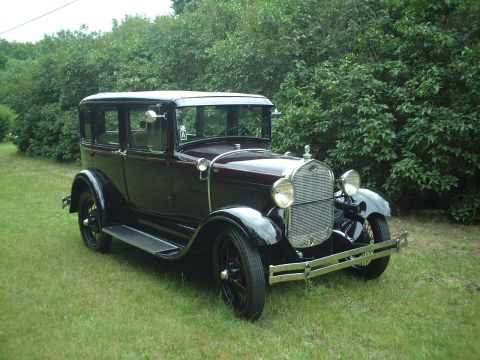
The Model A's short life exposed the deeper problem. General Motors changed models annually; Ford still bet everything on one design, and by 1931 the A was aging into a Depression market. Henry Ford's answer was engineering audacity rather than marketing: the 1932 flathead V8, the first mass-produced, affordably priced eight-cylinder engine, cast as a single block when rivals said it could not be done at low cost. It kept Ford relevant through the 1930s and incidentally founded American hot-rodding, since the cheap V8 became the default speed engine for a generation.
The Depression years also stripped the company's benevolent image. The five-dollar-day employer of 1914 was, by 1932, cutting wages and running its plants through fear. On March 7, 1932, the Ford Hunger March of unemployed workers to the Rouge ended with Dearborn police and Ford security firing into the crowd, killing four marchers that day. Edsel Ford, formally president, pushed for modernization and humane labor policy and lost nearly every internal battle to his father and to the man his father increasingly trusted instead, a former sailor and security chief named Harry Bennett.
\n1932-1945: Harry Bennett's Service Department, the Overpass, and Willow Run
\nBy the mid-1930s the real power at Ford Motor Company ran not through its president, Edsel Ford, but through Harry Bennett's Service Department, an internal force of ex-boxers, ex-convicts, and informers that policed the Rouge like an occupied territory. Henry Ford, aging and increasingly erratic, trusted Bennett precisely because Bennett flattered him and fought the unions he hated. The signature image of the era came on May 26, 1937, at the Battle of the Overpass, when Bennett's men beat UAW organizers Walter Reuther and Richard Frankensteen in front of news photographers outside the Rouge. General Motors and Chrysler had already signed with the UAW that year; Ford held out until a Rouge-wide strike in April 1941 forced negotiations, and the contract signed that June, in a characteristic whipsaw, ended up among the industry's most generous once Henry Ford capitulated.
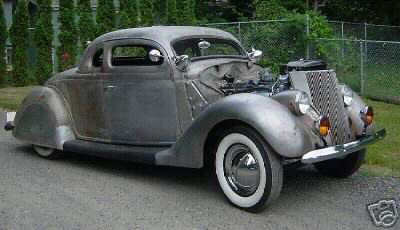
The war remade the company against its founder's instincts. Henry Ford had been a prominent isolationist, but Edsel Ford and production chief Charles Sorensen committed the company to bomber production, and the result was Willow Run, a mile-long plant near Ypsilanti that applied automotive line methods to the B-24 Liberator. After brutal early years that critics mocked as Will It Run, the plant reached a rate of roughly one bomber per hour in 1944 and built more than 8,600 B-24s, alongside Ford's output of jeeps, engines, and tanks.
Edsel Ford died of stomach cancer on May 26, 1943, at 49, worn down, his family believed, by decades of his father's cruelty. The 79-year-old Henry Ford, already diminished by strokes, resumed the presidency of what was by then a chaotic company losing money on civilian operations and drifting toward Bennett's control. Washington took the risk seriously enough that the Navy released Edsel's son, Henry Ford II, from service in 1943 to go learn the family business before there was nothing left to inherit.
\n1945-1949: Henry Ford II, the Whiz Kids, Ernest Breech, and the Company's Second Founding
\nIn September 1945, 28-year-old Henry Ford II took the presidency of Ford Motor Company from his failing grandfather, with his mother Eleanor and grandmother Clara reportedly threatening to sell their stock unless the old man yielded, and his first significant act was firing Harry Bennett. What he inherited was barely a company: no reliable cost accounting, cash balances estimated by weighing invoices, losses commonly cited at several million dollars a month, and a management culture built on spying. Henry Ford himself died in April 1947, at 83, by candlelight in a Fair Lane flooded by a power failure.
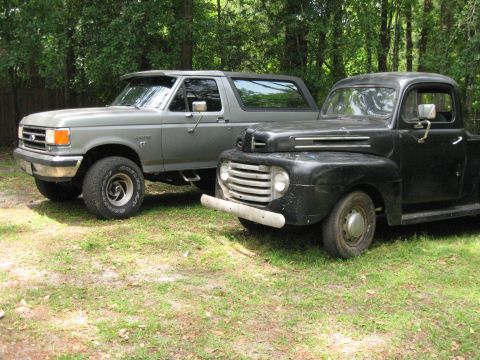
The rebuild came from two hires. First, a group of ten Army Air Forces statistical-control officers sold themselves to Ford as a package in 1946; the press later called them the Whiz Kids, and they included Robert McNamara, future Ford president and Secretary of Defense, and Arjay Miller, another future president. They gave Ford modern financial controls where none had existed. Second, Henry Ford II recruited Ernest Breech from General Motors' Bendix operation in 1946 as executive vice president, and Breech imported GM's decentralized structure, profit-center discipline, and seasoned operating men like engineer Harold Youngren. The unstated strategy was to remake Ford in GM's organizational image while keeping family ownership.
The proof arrived in June 1948 with the 1949 Ford, the company's first genuinely postwar design: slab-sided, modern, developed in a crash program after Breech rejected the existing proposal and pushed the heavier design to Mercury. It sold over a million units in an extended model year, generated the profits that funded everything after, and demonstrated that the company could once again develop a competitive product on schedule. The same era launched the F-1 pickup in 1948, the first purpose-built Ford truck line rather than a car with a bed, and the founding ancestor of the F-Series franchise that would eventually carry the entire corporation.
\n1949-1960: McNamara's Numbers, the Thunderbird, the Edsel Disaster, and Going Public
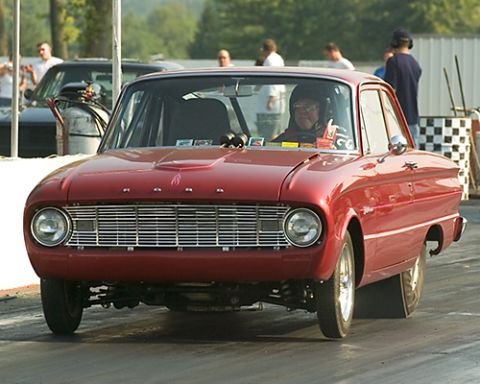
\nThe 1950s made Ford Motor Company solidly second in the American industry and taught it, expensively, that GM's playbook could not simply be photocopied. The volume war with Chevrolet ran hot, with Ford briefly flooding dealers in the 1953-54 blitz, and the product line modernized fast: overhead-valve V8s, the Crown Victoria glamour coupes of 1955-56, the Fairlane and Galaxie full-size lines, and the 1955 Thunderbird, the two-seater that answered Chevrolet's Corvette and then, in Robert McNamara's most profitable heresy, grew a back seat in 1958, nearly doubling its sales at once and more than quadrupling them by 1960, inventing the personal-luxury car.
Two corporate events mattered more than any car. On January 17, 1956, Ford went public in what was then the largest stock offering in history, $657 million, as the Ford Foundation sold down its nonvoting holdings; the family kept about 40 percent of voting power through Class B shares, an arrangement that still governs the company. Public ownership ended the era of the private fiefdom and put quarterly numbers men, above all McNamara, in the ascendancy.
The other event was the Edsel. Conceived in the mid-1950s boom to give Ford a GM-style ladder of brands, the separate Edsel division launched in September 1957 into a recession, with polarizing styling, quality problems, and no clear price position between Ford and Mercury. It died in November 1959 after losses generally put around $250 million, and its name became the English language's word for a marketing catastrophe. The failure discredited expansion-by-brand, empowered McNamara's austerity, and produced its own corrective: the plain, cheap, compact Falcon of 1960, McNamara's car to his bones, which sold over 400,000 in its first year and whose platform would soon carry a car McNamara would never have approved. McNamara reached the Ford presidency in November 1960 and left within weeks to join the Kennedy cabinet.
\n1960-1968: Iacocca's Mustang, Total Performance, and Beating Ferrari at Le Mans
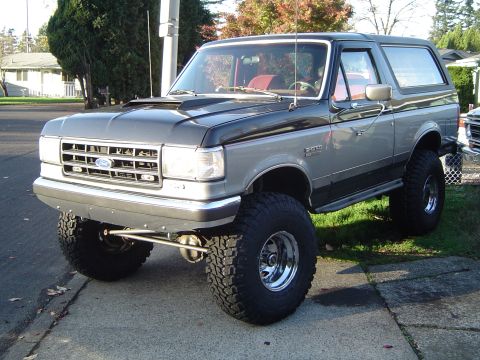
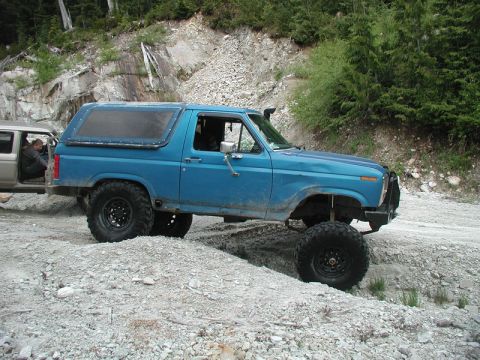
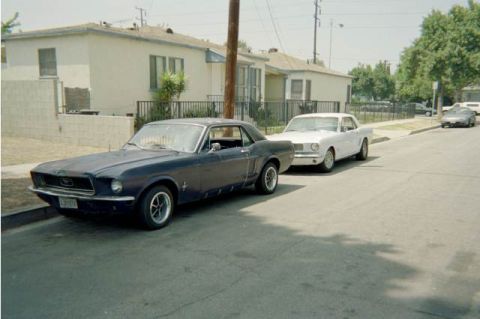
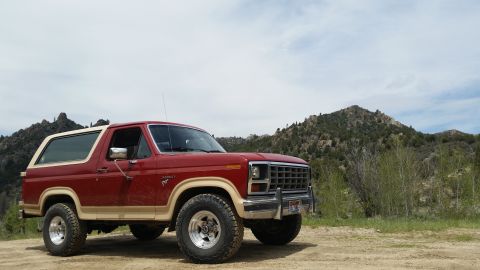
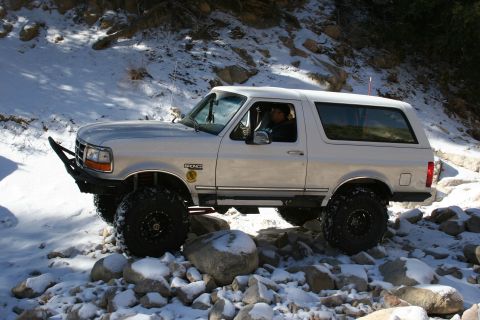
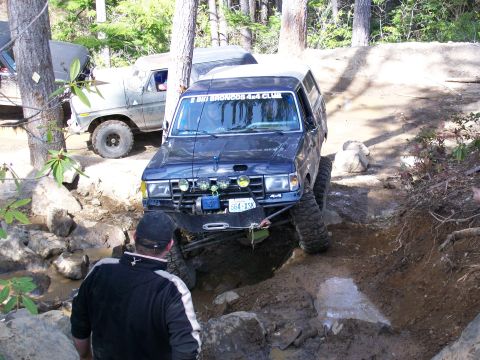
\nIn November 1960, at 36, Lee Iacocca took over the Ford Division convinced the company was selling to a customer who no longer existed, and the decade that followed was Ford Motor Company's marketing high-water mark. Iacocca's Fairlane Committee identified the coming wave of baby-boom buyers who wanted style on a paycheck, and the answer was the Mustang, launched April 17, 1964, at the New York World's Fair: Falcon mechanicals under long-hood, short-deck styling, a $2,368 base price, and an options list that let the customer build the car's profit margin. It sold roughly 418,000 in its first twelve months, made the covers of Time and Newsweek simultaneously, created the pony-car segment, and made Iacocca the most famous auto executive since the elder Henry Ford. The Bronco of 1966 applied the same instinct for new segments to four-wheel drive, answering Jeep with a civilized compact 4x4 and seeding what the industry would later call the SUV.
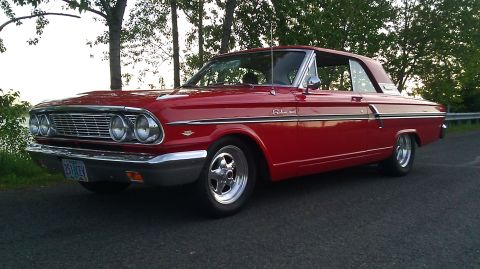
Racing was corporate policy, not sport. When the Automobile Manufacturers Association's 1957 anti-racing pact collapsed in practice, Henry Ford II declared Total Performance and spent accordingly: NASCAR with the Galaxies and Torinos, drag racing with the 427 programs, Indianapolis wins with Lotus-Ford in 1965. The decade's defining grudge was personal. After Enzo Ferrari walked away from a 1963 acquisition deal at the last moment, Henry Ford II ordered his company to beat Ferrari at Le Mans, and after two failed years the GT40 program under Carroll Shelby delivered a 1-2-3 finish in June 1966, followed by wins in 1967, 1968, and 1969. The point was never trophies; it was proving to the postwar world, and to Ford's own engineers, that an American mass producer could out-engineer Europe's best, and the halo sold Mustangs.
\n1968-1978: Bunkie Knudsen's Nineteen Months, the Pinto, and the Firing of Lee Iacocca
\nHenry Ford II's announcement in February 1968 that he had hired Semon Bunkie Knudsen away from General Motors to be Ford's president was a public slap at Lee Iacocca, and it began a decade in which palace politics did the company as much damage as OPEC. Knudsen lasted nineteen months before Henry Ford II fired him in September 1969 with the immortal non-explanation that things just didn't work out; Iacocca finally got the presidency in 1970 and spent the decade fighting a chairman who resented his celebrity.
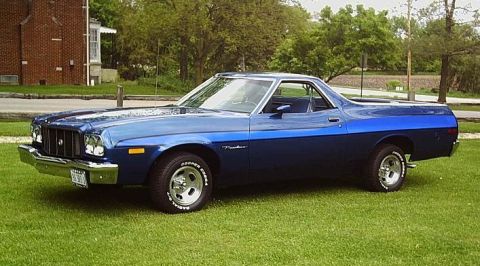
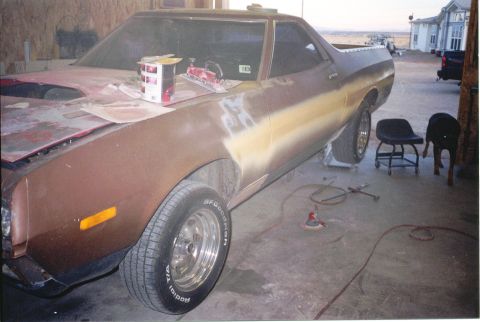
The product record was a study in whiplash. The Maverick of 1969 and the Pinto of 1971 were Iacocca's answers to the import surge, the Pinto famously developed to a formula of under 2,000 pounds and under $2,000. It sold in the millions, then became a national scandal after a 1977 Mother Jones expose and the 1978 recall of 1.5 million cars over fuel-tank fires, with internal cost-benefit memos becoming the textbook case of engineering ethics taught ever since. The 1973 OPEC embargo vindicated Iacocca's other small-car bet in the strangest way: the Mustang II, a Pinto-based compact widely mocked by enthusiasts later, landed in September 1973 weeks before the oil shock and sold nearly 386,000 in its first year. Bread-and-butter money increasingly came from trucks, where the F-100 line and the 1975 introduction of the F-150, created partly to slip under new emissions thresholds, set up the franchise that would define Ford's economics for the next half century. The LTD and Ranchero kept the big-car and car-truck trades alive even as their market eroded.
The era ended in melodrama. Amid federal investigations and his own declining health, Henry Ford II fired Iacocca in July 1978, telling him, by Iacocca's account, sometimes you just don't like somebody. Iacocca walked to a dying Chrysler, revived it with the minivan and the K-car, and spent the 1980s as living proof of the talent Ford had thrown away.
\n1979-1985: Philip Caldwell, Donald Petersen, and the $3.3 Billion Near-Death
\nBetween 1980 and 1982 Ford Motor Company lost roughly $3.3 billion, the deepest sustained loss in American corporate history to that point, and the crisis broke the company's postwar formula for good. The second oil shock of 1979 collapsed big-car sales, Japanese manufacturers were taking share with quality Detroit could not match, and Ford's US market share fell toward 16 percent. Philip Caldwell, the first non-Ford to run the company when Henry Ford II handed him the chief executive job in 1979, and president Donald Petersen responded with plant closures, white-collar cuts, and a bet that was radical mainly for being sincere: quality and design would be the product, not chrome and horsepower.
The stopgaps were world-car programs. The front-drive Escort of 1981, developed with Ford of Europe, replaced the Pinto and became for a time the best-selling car in America; the Tempo followed in 1984. The Quality is Job 1 campaign, launched in 1981, was backed by something real: Ford brought W. Edwards Deming, the statistician Japan had listened to for thirty years while Detroit had not, into the company in 1981, and his statistical process methods and supplier discipline measurably closed defect gaps by mid-decade. An unprecedented profit-sharing agreement with the UAW in 1982 traded concessions for a stake in recovery.
The decision that defined the next decade was aesthetic. Petersen backed design chief Jack Telnack's aerodynamic direction when research clinics said buyers found it too radical, first on the 1983 Thunderbird, and then bet the company, roughly $3 billion in development spending, on a jellybean-shaped family sedan that finance men wanted cancelled repeatedly during the loss years. Caldwell and Petersen protected it. When Ford returned to profit in 1983 and 1984, it did so as a company that had committed, on paper at least, to product-led recovery rather than badge shuffling, with the proof due in showrooms at the end of 1985.
\n1985-1993: The Taurus Gamble, Jack Telnack's Aero Ford, and Out-Earning General Motors
\nThe Taurus, launched December 26, 1985, was the biggest single-product bet in Ford Motor Company's postwar history, and it paid off so completely that it briefly rearranged Detroit's hierarchy. Developed under Lew Veraldi's Team Taurus, which put designers, engineers, suppliers, and assembly workers in one program organization instead of sequential silos, and styled under Jack Telnack's aero language, the front-drive sedan looked like nothing else American showrooms sold. It was Motor Trend's Car of the Year, sold in the hundreds of thousands annually, and by 1992 was the best-selling car in America, dethroning the Honda Accord. Its success validated the process as much as the product; Team Taurus became the template American manufacturers cited for a decade.
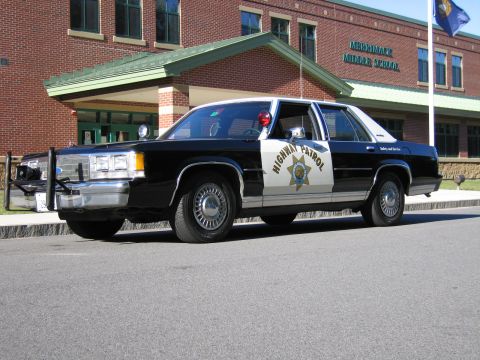
The money followed. Under chief executive Donald Petersen, Ford earned $5.3 billion in 1988, and in 1986 and again in the late 1980s Ford's profits exceeded General Motors' for the first time since the 1920s, on roughly two-thirds of GM's volume. Trucks quietly deepened the moat: the F-Series became America's best-selling vehicle outright in the early 1980s and never gave the title back, the compact Ranger and Bronco II mined the small-truck boom, the Aerostar chased Chrysler's minivan, and in 1990 the four-door Explorer replaced the Bronco II and detonated the mainstream SUV market, becoming one of the most profitable vehicle lines on earth. The Mazda partnership, formalized with a 25 percent stake bought in 1979, yielded the Probe and Festiva and a manufacturing classroom in Japanese methods.
Success bought indulgences. Ford paid about $2.5 billion for Jaguar in 1989, bought Aston Martin in 1987, and diversified into finance with First Nationwide. Petersen retired in 1990 amid board friction, Harold Red Poling steered the company through the 1990-91 recession losses, and the strategic question of the 1990s was already forming: whether a company earning its living on trucks should spend its winnings on European luxury brands.
\n1993-2001: Alex Trotman's Ford 2000, Jacques Nasser's Spree, and the Explorer-Firestone Disaster
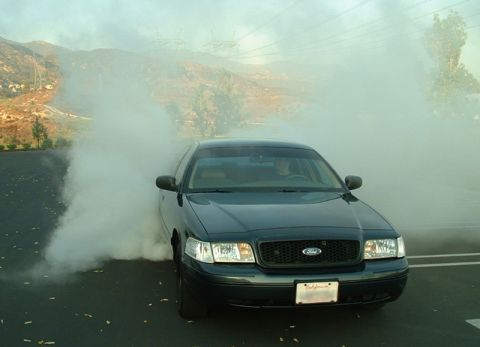
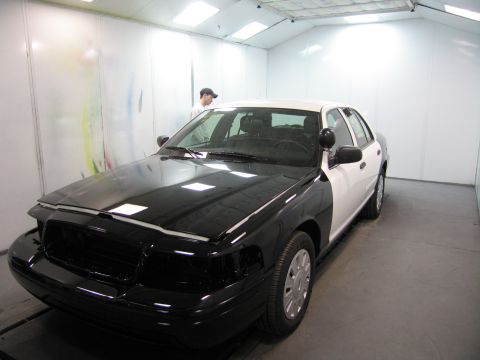
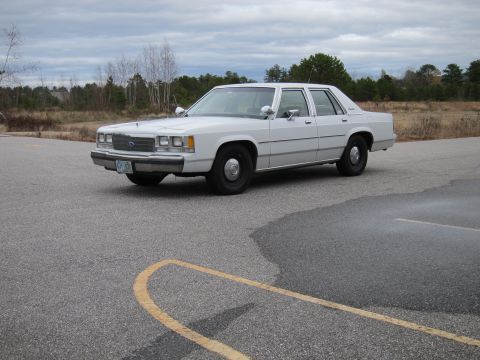
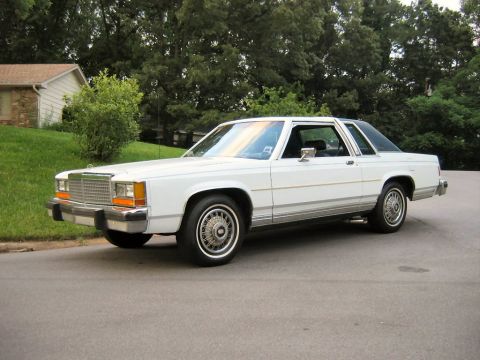
\nAlex Trotman, the Scottish-born lifer who became chairman and chief executive in November 1993, bet Ford Motor Company's future on globalization and re-centralization, and the decade ended with both bets in flames. His Ford 2000 program of 1994 merged the North American and European organizations into single global vehicle centers to kill duplicate engineering; the theory was sound, the execution produced world cars like the Contour, a well-engineered Mondeo derivative priced too close to the Taurus to sell, and an organization exhausted by reorganization. Meanwhile the profit engine ran on domestic iron the program barely touched: the 1997 Expedition and the enormous 2000 Excursion converted cheap gasoline into margins of $10,000 and more per unit, and the Crown Victoria soldiered on as America's default police car and taxi.
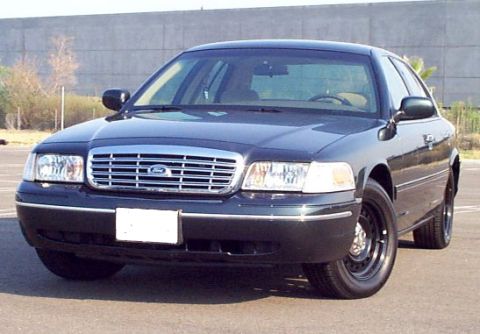
Jacques Nasser, chief executive from January 1999, spent the boom like it would last: Volvo Cars for $6.45 billion in 1999, Land Rover from BMW for about $2.7 billion in 2000, Aston Martin and Jaguar already in hand, all gathered into the Premier Automotive Group under Wolfgang Reitzle, plus e-commerce ventures, junkyards, and repair chains, on the theory that Ford was a consumer company, not a manufacturer. Ford earned a record $7.2 billion in 1999, and the family placed William Clay Ford Jr. as chairman that January to watch over it.
The reckoning came through the company's most profitable product. Through 2000 and 2001, Firestone tires on Explorers were linked by federal investigators to tread-separation rollovers eventually associated with more than 270 US deaths, triggering the recall of millions of tires, congressional hearings, the rupture of a supplier relationship dating to Henry Ford and Harvey Firestone's friendship, and Ford's own $3 billion replacement of 13 million more tires. With quality slipping, the Explorer's halo gone, a $5.45 billion loss in 2001, and reports in the NYT, Fortune, and BusinessWeek of friction between Nasser and dealers, engineers, and the Ford family, the board fired him in October 2001 and made Bill Ford chief executive, the first family member to run the company since 1979.
\n2001-2006: Bill Ford's Way Forward and the Slow-Motion Emergency
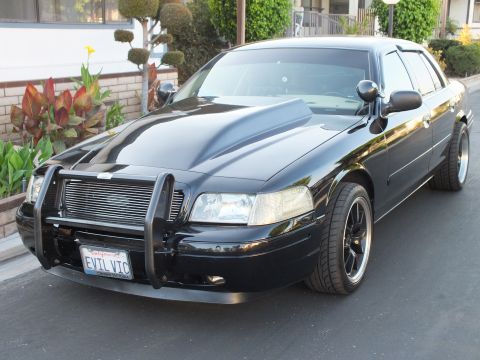
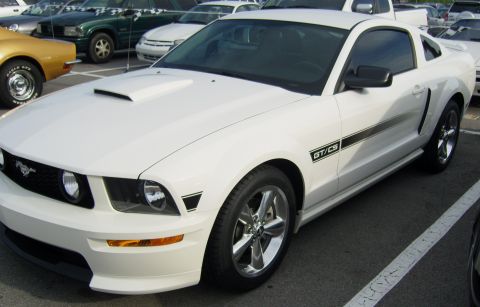
\nWilliam Clay Ford Jr. took the chief executive job in October 2001 promising to fix the company his great-grandfather founded, and Ford has said publicly that recruiting Mulally meant recognizing the limits of what an insider could do. The early moves were orthodox turnaround: the 2002 revitalization plan closed plants, cut tens of thousands of jobs, killed low-margin lines, and sold off Nasser-era acquisitions at losses. There were genuine product wins, the 2004 F-150 redesign, the Escape and its pioneering hybrid version in 2004, the retro 2005 Mustang, and the Five Hundred and Fusion sedans that tried to rebuild a car business the company had let rot while SUV margins were easy.
The structural math kept getting worse. Gasoline prices climbed after 2004 and the truck-heavy mix that generated most of Ford Motor Company's profit began to shrink, while Toyota took share with the Prius and Camry. Legacy costs, retiree health care and pensions negotiated in fat decades, added well over a thousand dollars of burden per vehicle against transplant factories that carried none. Credit-rating agencies cut Ford debt to junk in 2005. The Premier Automotive Group hemorrhaged money, with Jaguar the worst of it, yet divesting was resisted as an admission of failure. Market share in the United States, above 25 percent in the mid-1990s, slid toward 17 percent.
In January 2006 Bill Ford announced the Way Forward, a restructuring that would idle 14 plants and cut up to 30,000 hourly jobs by 2012, and within months events outran it; the plan was accelerated that summer as truck sales fell faster than the assumptions beneath it. Bill Ford's most consequential act was recognizing his own limits. Through 2006 he personally courted Alan Mulally, the Boeing executive who had rebuilt the 777 program and led Boeing's commercial airplanes recovery after 2001, and in September 2006 handed him the chief executive job, keeping the chairmanship, telling employees the company needed an experienced turnaround operator more than it needed a Ford.
\n2006-2010: Alan Mulally Mortgages the Blue Oval, and Ford Alone Skips the Bailout
\nIn November and December 2006, weeks after arriving from Boeing, Alan Mulally borrowed $23.6 billion by pledging substantially all of Ford Motor Company's domestic assets, its plants, its stake in Ford Credit, and even the Blue Oval trademark itself, as collateral. Inside and outside the company it looked like desperation, and Ford's record $12.6 billion loss for 2006 reinforced the impression. It turned out to be the single best-timed financing decision in the industry's modern history: the credit markets closed in 2008, and the cash raised while they were open was the reason Ford lived through what followed on its own money.
Mulally's management system mattered as much as the mortgage. His weekly Business Plan Review forced every executive to color-code their operations honestly, and the story of Mark Fields showing the first red chart, and being applauded rather than fired, became the company's internal legend for the culture change. One Ford, the strategy on the card in every employee's pocket, meant selling the empire and building common global platforms: Aston Martin sold in 2007, Jaguar and Land Rover to Tata Motors in 2008 for about $2.3 billion, roughly a third of what Ford had paid, Volvo to Geely in 2010, the Mazda stake wound down, and Mercury shut down entirely in 2010. The global Focus and Fiesta programs were the platform proof.
When the financial crisis hit, General Motors and Chrysler took federal rescue money and went through managed bankruptcies in 2009. Ford went to the same December 2008 Senate hearings, asked only for a standby line it never drew, and restructured privately, converting debt, renegotiating with the UAW, and taking the reputational dividend of being the Detroit company that did not take the bailout. Ford earned $2.7 billion in 2009 while its rivals were in court, and in May 2012, when Moody's followed Fitch in restoring Ford's investment-grade rating, the collateral was released and the company got the Blue Oval back from its creditors. Bill Ford, who had called pledging the mark "enormously emotional" because the company was pledging its heritage, counted that release as the true end of the crisis.
\n2010-2020: Mark Fields, Jim Hackett, the Aluminum F-150, and the Death of the Ford Sedan
\nFord Motor Company spent the 2010s printing money on trucks while burning two chief executives over the question of what else it should be. Alan Mulally handed the company to Mark Fields in July 2014 at peak health, and Fields's tenure opened with the era's boldest manufacturing bet: the 2015 F-150 switched to an all-aluminum body, cutting up to around 700 pounds, a gamble on the company's most important product that required retooling its two largest truck plants and rewriting supplier and repair economics. It worked; the F-Series stayed America's best-selling vehicle, a title it has held for over four decades, and by late in the decade analysts routinely valued the F-Series franchise at more than the company's entire market capitalization.
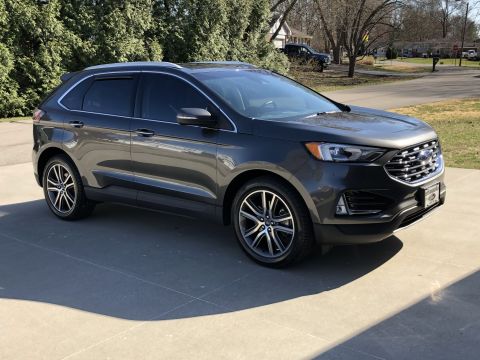
That valuation gap was Fields's undoing. With Tesla worth more than Ford despite selling a fraction of the volume, and Wall Street reading Ford as a metal-bender in a software age, Fields spread bets across mobility ventures, the Chariot shuttle acquisition, autonomy investments, without a story investors bought. The board replaced him in May 2017 with Jim Hackett, the former Steelcase chief and Ford Smart Mobility chairman, whose tenure produced the decade's most symbolically loaded decision: in April 2018 Ford announced it would stop selling traditional sedans in North America, killing the Taurus, Fusion, and Focus lines, betting the entire domestic showroom on trucks, SUVs, and the Mustang. The company that invented the mass-market car exited the car business in its home market because a Fusion earned a fraction of an Explorer's margin.
Hackett's redesign spent an advertised $11 billion on restructuring, deepened alliances with Volkswagen on vans and EVs, invested in Argo AI for autonomy, and green-lit the products that would define the next era, the Mustang Mach-E and an electric F-150, while quarterly results and the problem-plagued 2020 Explorer launch at Chicago Assembly (widely reported by the Detroit Free Press and CNBC) kept the stock flat. In August 2020 the board turned to Jim Farley, the product-and-marketing operator who had come from Toyota in 2007, to execute what Hackett had sketched.
\n2020-2026: Jim Farley's Ford+, the Lightning and Mach-E Bet, and the EV Recalibration
\nJim Farley became chief executive of Ford Motor Company on October 1, 2020, and immediately sharpened the strategy into Ford+: electrify the icons rather than invent new nameplates, and split the company to make the costs legible. The Mustang Mach-E launched in late 2020 wearing the pony badge on an electric crossover, a decision that enraged purists and got the vehicle noticed, and the F-150 Lightning of 2022 electrified the franchise product itself, with early demand so heavy Ford stopped taking reservations around 200,000. The 2021 Bronco revival showed the same logic in reverse, mining the company's own history for a Jeep-fighter, and the compact Maverick pickup rebuilt the affordable entry point the dead sedans had abandoned.
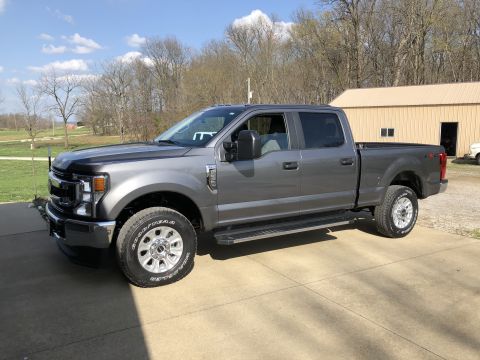
In March 2022 Farley reorganized the company into Ford Blue for combustion, Ford Model e for electric vehicles and software, and Ford Pro for the commercial and fleet business that had always been an underreported strength. The structure's most consequential effect was transparency: Model e's losses, $4.7 billion in 2023 and $5.1 billion in 2024, were published for all to see while Ford Pro earned billions, and the numbers forced the recalibration that followed. Ford delayed and resized battery plants within the BlueOval SK and BlueOval City programs launched in 2021, cancelled a planned three-row electric SUV in 2024 in favor of hybrids and a low-cost EV platform developed by a California skunkworks team under former Tesla engineer Alan Clarke, and wound down the Argo AI autonomy venture in 2022, taking a $2.7 billion charge. Persistent quality and recall costs, in which Ford led the industry in recall counts for multiple years, remained Farley's most public frustration.
Through all of it the fundamentals held the founder's shape uncannily: an American manufacturer, controlled by the Ford family through Class B supervoting shares into a fifth generation with Bill Ford as executive chairman, earning its living on trucks and commercial vehicles built in American plants, still independent, still traded on the New York Stock Exchange under the single letter F, and still, 123 years on, betting the company on the proposition that ordinary working customers will pay for a tool that does the job.
\nLeadership
\n| Leader | Tenure | Legacy |
|---|---|---|
| Henry Ford | President 1906-1919, 1943-1945; controlling figure 1903-1945 | Built the Model T and the moving assembly line, then nearly destroyed the company by refusing to modernize after it |
| Edsel Ford | President 1919-1943 | Nominal president overruled by his father; drove the Model A, the Lincoln acquisition, and Ford styling until his death at 49 |
| Henry Ford II | President 1945-1960; CEO to 1979; chairman to 1980 | Purged Harry Bennett, hired the Whiz Kids and Ernest Breech, and rebuilt a company losing millions a month into a modern corporation |
| Ernest Breech | Executive VP 1946-1955; chairman 1955-1960 | Ex-GM executive who installed financial controls and divisional structure during the postwar refounding |
| Robert McNamara | Whiz Kid 1946; president Nov 1960-Jan 1961 | Cost discipline and the Falcon; left after weeks to become Secretary of Defense |
| Arjay Miller | President 1963-1968 | Whiz Kid who presided over the Mustang-era boom and modern financial planning; later dean of Stanford's business school |
| Lee Iacocca | Ford Division head 1960; president 1970-1978 | Fathered the 1964½ Mustang and Total Performance; fired by Henry Ford II in July 1978 |
| Semon "Bunkie" Knudsen | President Feb 1968-Sep 1969 | Poached from GM, lasted nineteen months before Henry Ford II fired him |
| Philip Caldwell | CEO 1979-1985; chairman 1980-1985 | First non-Ford chairman; steered the company through $3.3 billion in losses (1980-82) and approved the Taurus |
| Donald Petersen | President 1980-1985; CEO/chairman 1985-1990 | Championed the aero Taurus and quality push; Ford out-earned General Motors in 1986 |
| Harold "Red" Poling | President/COO 1985-1990; chairman/CEO 1990-1993 | Finance-bred cost-cutter of the 1980-82 crisis who steered Ford through the 1990-91 recession losses and back to profit |
| Jack Telnack | Chief design executive, 1980s-1997 | The aero look: 1983 Thunderbird and 1986 Taurus reshaped American car design |
| Alex Trotman | CEO/chairman 1993-1998 | Ford 2000 global consolidation; launched the Expedition-era truck profit machine |
| Jacques Nasser | CEO 1999-Oct 2001 | Acquisition spree (Volvo, Land Rover) ended by the Explorer-Firestone crisis and his ouster |
| Bill Ford Jr. | CEO 2001-2006; chairman 1999-present (executive chairman since 2006) | Great-grandson of the founder; stabilized the company, then recruited his own replacement |
| Alan Mulally | CEO Sep 2006-Jul 2014 | Borrowed $23.6 billion against nearly everything including the Blue Oval in 2006; Ford alone among Detroit's Three skipped the 2009 bailout |
| Mark Fields | CEO Jul 2014-May 2017 | Launched the aluminum-body F-150; ousted as the stock stagnated |
| Jim Hackett | CEO May 2017-Oct 2020 | Killed the North American Ford sedan line and reset the product plan toward trucks and EVs |
| Jim Farley | CEO Oct 2020-present | Ford+ reorganization into Model e, Ford Blue, and Ford Pro; launched the Mach-E and F-150 Lightning, then recalibrated the EV bet |
Timeline
\n| Year | Event / model | What happened |
|---|---|---|
| 1903 | Ford Motor Company founded | Henry Ford's third automotive venture is incorporated in Detroit on June 16 with $28,000 from twelve shareholders, including coal dealer Alexander Malcomson and the Dodge brothers, who supplied engines. |
| 1908 | Model T introduced | The Model T goes on sale October 1, 1908, at $850 for the touring car, and eventually sells over 15 million copies through 1927. |
| 1913 | Moving assembly line | Highland Park's moving chassis line cuts Model T assembly time from over 12 hours to about 93 minutes. |
| 1914 | Five-Dollar Day | Ford roughly doubles prevailing wages to $5 per day, slashing turnover and creating customers for its own product. |
| 1917 | Rouge plant construction begins | Work starts on the River Rouge complex in Dearborn, which grows into the largest integrated factory on earth. |
| 1919 | Family buyout | After the Dodge v. Ford dividend lawsuit, Henry Ford buys out all minority shareholders and installs son Edsel as president. |
| 1922 | Lincoln acquired | Ford buys the bankrupt Lincoln Motor Company from Henry Leland for $8 million, giving Edsel Ford a luxury canvas. |
| 1927 | Model A introduced | Ford shuts down production for roughly six months to retool from the T, then launches the Model A in December 1927. |
| 1932 | Flathead V8 | Ford puts a one-piece cast V8 block in a low-priced car, the engine that founded American hot rodding. |
| 1937 | Battle of the Overpass | Harry Bennett's Service Department beats UAW organizers including Walter Reuther outside the Rouge on May 26. |
| 1941 | UAW contract | Ford, the last holdout of the Big Three, signs with the UAW in June 1941 after an April Rouge strike and, by family accounts, Clara Ford's ultimatum to her husband. |
| 1942 | Willow Run | Civilian production stops for the war; the Willow Run plant eventually turns out B-24 Liberator bombers at rates approaching one per hour. |
| 1943 | Edsel Ford dies | Edsel Ford dies of cancer at 49; the aging Henry Ford resumes the presidency of a deteriorating company. |
| 1945 | Henry Ford II takes over | The 28-year-old grandson becomes president in September, fires Harry Bennett, and begins the company's second founding. |
| 1946 | Whiz Kids and Breech hired | Ten Army Air Forces statisticians including Robert McNamara join, and GM veteran Ernest Breech arrives to rebuild management. |
| 1948 | F-1 introduced | The first F-Series pickup launches the truck line that would bankroll the company for the next eight decades. |
| 1954 | Thunderbird introduced | The two-seat 1955 Thunderbird debuts as a "personal car" and outsells the Corvette out of the gate. |
| 1956 | Ford goes public | The January 1956 IPO, then the largest common-stock offering in history at $657 million, keeps family control through Class B shares. |
| 1957 | Edsel launched | The Edsel division debuts into a recession and dies by November 1959, a loss of roughly $250 million. |
| 1959 | Ford Credit founded | Ford Motor Credit Company opens, turning financing into a durable profit center. |
| 1960 | Falcon introduced | Robert McNamara's compact Falcon sells over 400,000 in its first year and later donates its platform to the Mustang. |
| 1964 | Mustang introduced | Lee Iacocca's Mustang debuts April 17, 1964, at the New York World's Fair and sells roughly 418,000 in its first twelve months. |
| 1965 | Bronco introduced | The 1966 Bronco arrives to fight the Jeep CJ and International Scout, founding Ford's SUV line. |
| 1966 | Le Mans victory | The GT40 sweeps 1-2-3 at Le Mans, the payoff of Henry Ford II's grudge campaign after Enzo Ferrari walked away from a buyout. |
| 1968 | Bunkie Knudsen hired | Henry Ford II hires GM's Semon Knudsen as president over Iacocca; he is fired nineteen months later. |
| 1970 | Pinto introduced | The subcompact Pinto launches for 1971 and later becomes a byword for fuel-tank fire litigation and the 1978 recall of 1.5 million cars. |
| 1975 | F-150 introduced | The F-150 debuts as a heavier-duty half-ton; the F-Series becomes America's best-selling truck in 1977 and best-selling vehicle by the early 1980s. |
| 1978 | Iacocca fired | Henry Ford II dismisses president Lee Iacocca in July with the explanation "sometimes you just don't like somebody"; Iacocca resurfaces at Chrysler. |
| 1980 | Caldwell era begins | Philip Caldwell becomes chairman as Ford enters three years of losses totaling about $3.3 billion, the worst in its history to that point. |
| 1983 | Ranger introduced | The compact Ranger pickup replaces the Mazda-built Courier and anchors the small-truck line for three decades. |
| 1985 | Taurus introduced | The aero 1986 Taurus, a roughly $3 billion gamble under Jack Telnack's design leadership, becomes America's best-selling car by 1992. |
| 1986 | Ford out-earns GM | Ford posts higher profits than General Motors for the first time since the mid-1920s. |
| 1990 | Explorer introduced | The 1991 Explorer replaces the Bronco II and detonates the mainstream SUV boom. |
| 1996 | Expedition introduced | The full-size Expedition replaces the Bronco and prints money through the late-1990s SUV surge. |
| 1999 | Volvo Cars acquired | Jacques Nasser buys Volvo's car arm for $6.45 billion, adding to the Premier Automotive Group alongside Jaguar and Aston Martin; Land Rover follows in 2000. |
| 2000 | Explorer-Firestone crisis | Tread-separation rollovers on Explorers trigger the recall of millions of Firestone tires, congressional hearings, and the end of a 95-year supplier relationship. |
| 2001 | Bill Ford becomes CEO | The board removes Nasser in October; founder's great-grandson Bill Ford Jr. takes the CEO job. |
| 2006 | Mulally and the mortgage | Boeing's Alan Mulally becomes CEO in September; Ford borrows $23.6 billion secured by nearly all assets, including the Blue Oval trademark. |
| 2008-09 | Ford skips the bailout | GM and Chrysler take federal rescue and bankruptcy; Ford, living on its 2006 loans, does not. |
| 2008 | Jaguar and Land Rover sold | Ford sells JLR to Tata Motors for about $2.3 billion; Volvo goes to Geely in 2010, unwinding the Nasser-era empire. |
| 2014 | Aluminum F-150 | The 2015 F-150 switches to an aluminum-alloy body, shedding up to 700 pounds from America's best-selling vehicle. |
| 2018 | Sedan line killed | Ford announces it will drop nearly all North American cars, ending the Taurus, Fusion, Focus, and Fiesta in the home market. |
| 2020 | Farley era; Mach-E | Jim Farley becomes CEO in October as the Mustang Mach-E, the first mass-market Ford EV, reaches customers. |
| 2022 | F-150 Lightning and Ford+ | The electric F-150 Lightning ships and Ford splits into Model e, Ford Blue, and Ford Pro operating units. |
| 2024-26 | EV recalibration | Facing multibillion-dollar Model e losses, Ford delays and resizes EV programs while pivoting toward hybrids and a low-cost EV platform. |
Asked all the time
Who founded Ford Motor Company?
Henry Ford incorporated Ford Motor Company on June 16, 1903, in Detroit with eleven other investors and $28,000 in capital. Key backers included coal dealer Alexander Malcomson and John and Horace Dodge, whose machine shop supplied the first engines and chassis. It was Ford's third attempt at a car company after the Detroit Automobile Company and the Henry Ford Company both failed.
Is Ford still in business?
Yes. Ford Motor Company remains an independent, publicly traded automaker (NYSE: F) headquartered in Dearborn, Michigan. The Ford family still controls the company through supervoting Class B shares, an arrangement dating to the January 1956 public offering.
Why did Ford not take a government bailout in 2009?
Because it had already borrowed the money. In late 2006, new CEO Alan Mulally arranged $23.6 billion in loans secured by nearly all of Ford's assets, including the Blue Oval trademark itself. When the 2008-09 financial crisis pushed General Motors and Chrysler into federal rescue and bankruptcy, Ford ran on that private credit line instead.
When did Ford go public?
January 1956, in what was then the largest common-stock offering in American history at $657 million. The Ford Foundation sold much of its holding to the public, while the family retained control through Class B shares carrying 40 percent of voting power.
How did Ford nearly go bankrupt in the 1940s?
By the end of World War II the company was reportedly losing millions of dollars a month under an aging Henry Ford and enforcer Harry Bennett, with almost no financial controls. Henry Ford II took over in September 1945, fired Bennett, and hired the Whiz Kids and GM veteran Ernest Breech to rebuild the company from the books up.
Why did Ford stop making sedans?
In April 2018, under CEO Jim Hackett, Ford announced it would drop nearly all traditional cars from its North American lineup because buyers had shifted to trucks and SUVs, where Ford's margins lived. The Taurus, Fusion, Focus, and Fiesta were phased out of the US market, leaving the Mustang as the lone car.
What was the Edsel and why did it fail for Ford?
Edsel was a new mid-priced division Ford launched in September 1957, named for Henry Ford's late son. It arrived into a recession, priced on top of Ford's own Mercury line, with polarizing styling; Ford killed it in November 1959 after losses commonly put around $250 million.
Does the Ford family still control Ford?
Yes. The family's Class B shares carry roughly 40 percent of shareholder voting power despite representing a small fraction of total equity. Bill Ford Jr., great-grandson of the founder, has chaired the company since 1999 and has held the title of executive chairman since 2006.
The wall
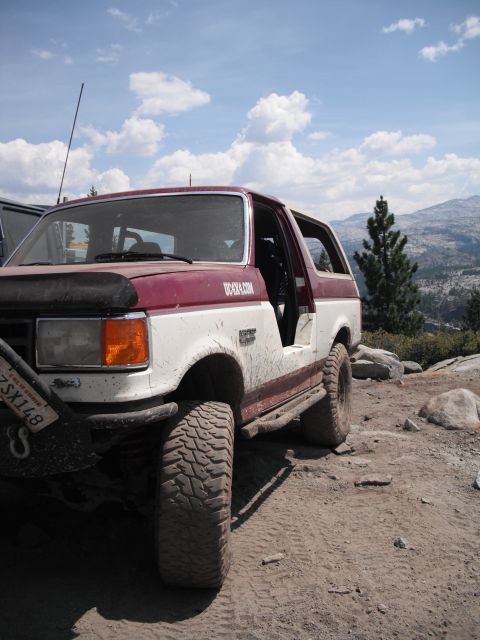
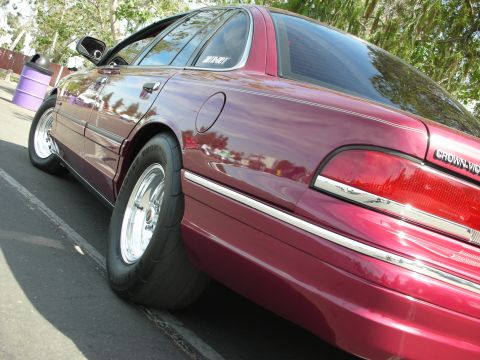
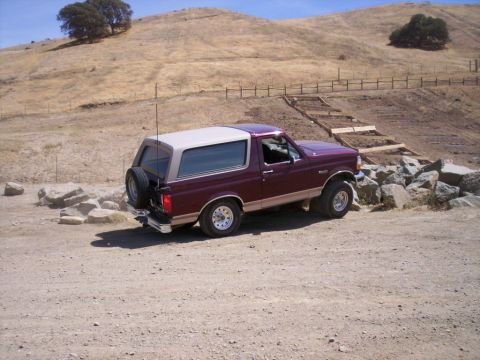
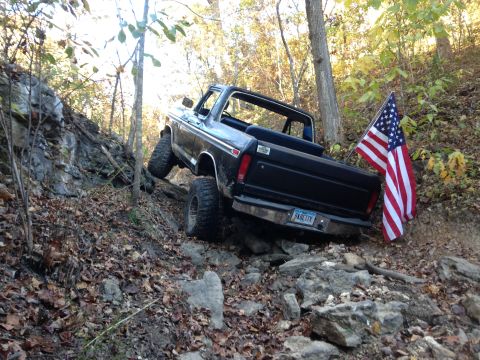
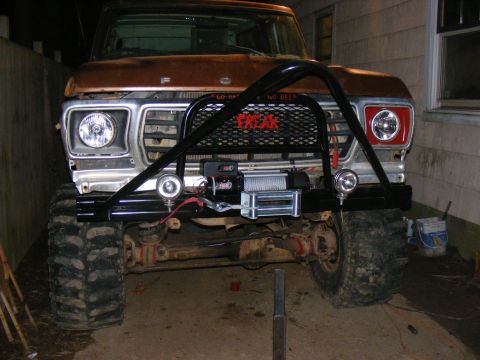
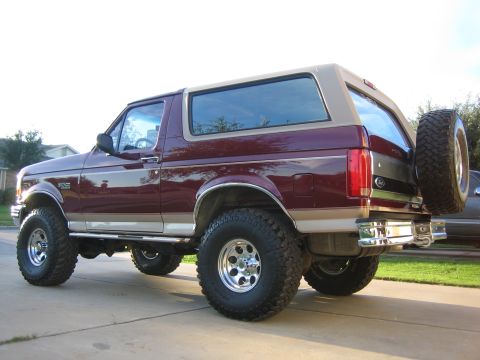
The most-documented Ford vehicles in the registry, every photo by the owner.