The registry
Mitsubishi Registry: Models, Builds & Photos
Mitsubishi Motors Corporation is a Japanese automaker founded on April 22, 1970, in Tokyo as a spin-off of the automotive division of Mitsubishi Heavy Industries, whose vehicle-building lineage dates to the 1917 Mitsubishi Model A, Japan's first series-produced car. Through the 1970s and 1980s it grew via an equity and export partnership with Chrysler, building compact cars, pickups, and the Pajero/Montero 4x4, and it won global rallying fame with the Lancer Evolution. Overexpansion, the 2000-2004 defect cover-up scandals, and a 2016 fuel-economy fraud nearly destroyed it. Mitsubishi Motors survives today as an active automaker headquartered in Minato, Tokyo, with Nissan as its largest shareholder, a 34 percent controlling stake bought in 2016 and trimmed to about 24.5 percent in 2024, within the Renault-Nissan-Mitsubishi Alliance, focused on SUVs, pickups, plug-in hybrids, and Southeast Asian markets.
Pick your model
Key facts
| Founded | April 22, 1970, Tokyo, Japan (spun off from Mitsubishi Heavy Industries) |
|---|---|
| Founders | Mitsubishi Heavy Industries (automotive division spin-off); vehicle lineage traces to Yataro Iwasaki's Mitsubishi zaibatsu and the 1917 Mitsubishi Model A |
| Headquarters | Minato, Tokyo, Japan |
| Parent / successor | Nissan Motor Co. is the largest shareholder, holding a stake acquired at 34 percent in 2016 and reduced to about 24.5 percent in a November 2024 buyback, within the Renault-Nissan-Mitsubishi Alliance |
| Fate / status | Active automaker; survived the 2000-2004 recall cover-up and 2016 fuel-economy fraud, now focused on SUVs, pickups, plug-in hybrids, and Southeast Asian markets |
| Best known for | Lancer Evolution, Pajero/Montero, 3000GT |
| Registry presence | 51 vehicles / 2,267 photos documented by owners on SuperMotors |
1870-1970: Yataro Iwasaki's Zaibatsu and the Long Road from the Model A to a Standalone Car Company
Mitsubishi built its first automobile in 1917, more than half a century before Mitsubishi Motors Corporation legally existed. The parent enterprise began in 1870 as a shipping firm founded by Yataro Iwasaki, a samurai-born entrepreneur from Tosa domain, and grew into one of Japan's largest zaibatsu conglomerates, its three-diamond mark derived from the Iwasaki family crest. In 1917 the Mitsubishi Shipbuilding arm produced the Mitsubishi Model A, a seven-seat sedan modeled on the Fiat Tipo 3 and generally recognized as Japan's first series-production automobile. Only 22 were built before the company concluded that hand-built cars could not compete with cheaper American imports, and Mitsubishi turned its engineering talent toward trucks, buses, and, in the 1930s and 1940s, military hardware including the A6M Zero fighter designed by Jiro Horikoshi.
The postwar American occupation dissolved the zaibatsu, and in 1950 Mitsubishi Heavy Industries was split into three regional companies, which reunified in 1964. Automobiles remained a side business inside a shipbuilding and machinery giant, though the division scored real successes: the 1960 Mitsubishi 500 minicar, the Minica kei car of 1962, and the first Colt small cars aimed at Japan's motorizing middle class. By the late 1960s Mitsubishi Heavy Industries' leadership, under president Yoichiro Makita's push to rationalize the conglomerate, recognized that a capital-hungry consumer car business needed its own balance sheet and a foreign partner to reach export scale. The Japanese government's flirtation with consolidating its auto industry ahead of trade liberalization added urgency: stay small inside a heavy-industry parent and risk being merged away, or spin out and find an ally. Mitsubishi chose the spin-out, setting up the April 1970 incorporation of Mitsubishi Motors Corporation and simultaneously negotiating the equity deal with Chrysler that would define its next two decades.
1970-1982: Tomio Kubo, the Chrysler Alliance, and the Colt Cars That Wore Dodge Badges
Mitsubishi Motors Corporation was incorporated on April 22, 1970, in Tokyo, and within a year it had sold Chrysler a 15 percent stake as the price of instant access to the American market, a deal driven from above by Mitsubishi Heavy Industries president Yoichiro Makita. Yuji Sato served as the new company's first president, and in 1973 the job passed to Tomio Kubo, a former aircraft engineer who had led wartime design programs at Mitsubishi Heavy Industries and who became the company's dominant strategic voice through the decade. The logic Kubo championed was that Mitsubishi did not need its own dealer network in the United States; Chrysler's showrooms would do. The Galant sedan crossed the Pacific as the Dodge Colt beginning in 1971, and through the 1970s captive imports badged as Dodges and Plymouths gave Mitsubishi export volume that its rivals Toyota and Nissan had to build with their own costly retail infrastructure.
The arrangement paid off during the 1973 oil crisis, when small, thrifty Japanese cars suddenly matched American demand, and Mitsubishi's annual production reached one million vehicles in 1980. The company also developed engineering signatures in this era, most famously the Silent Shaft balance-shaft system for four-cylinder engines, which it patented and licensed to Porsche and Saab, giving a mid-tier Japanese maker rare technical prestige. But the Chrysler relationship carried a built-in ceiling: Chrysler had no interest in helping Mitsubishi sell cars under its own name in America, and every Colt sold burnished Dodge's brand, not Mitsubishi's. As Chrysler stumbled toward its 1979-1980 federal bailout, Mitsubishi executives concluded the dependency had become a liability, and in 1982 the company began selling Mitsubishi-badged cars through its own fledgling US dealer network, starting with just 70 dealers.
1982-1990: The Pajero, the Starion, and Diamond-Star Motors in Normal, Illinois
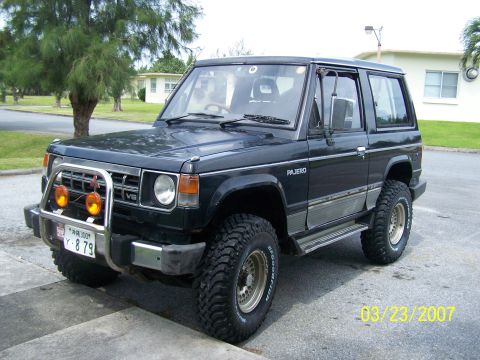
In 1982 Mitsubishi Motors finally put its own three-diamond badge on American showrooms, and the vehicle that anchored its independent identity worldwide was the Pajero, sold in the United States as the Montero. Launched that year, the boxy four-wheel-drive wagon gave Mitsubishi a halo the sedans never could: it won the Paris-Dakar Rally outright in 1985 and went on to become the most successful vehicle in Dakar history, a marketing engine that sold trucks across the Middle East, Africa, and Southeast Asia. Alongside it, the Starion turbocharged coupe carried the brand into the 1980s performance-car conversation, and the L200 pickup, also exported as the Dodge Ram 50, became the volume workhorse in developing markets.
The decade's defining corporate move was Diamond-Star Motors, a 50-50 joint venture with Chrysler announced in 1985, with a new assembly plant in Normal, Illinois that opened in 1988. The venture existed because of politics as much as product: Japan's voluntary export restraints capped how many cars Mitsubishi could ship to America, so building them in Illinois was the only way to grow. Diamond-Star's first product, the Eclipse sport coupe of 1989 and its Eagle Talon and Plymouth Laser twins, became a genuine American youth-market hit and later the totem car of the import tuner scene. Mitsubishi went public on the Tokyo exchange in 1988, ending 18 years as a privately held ward of the Mitsubishi group, and closed the decade among Japan's largest automakers with global ambitions and, for the first time, the capital-markets exposure that would later punish its mistakes.
1990-1997: Hirokazu Nakamura's Bubble-Era Bet on the 3000GT, the Diamante, and Southeast Asia
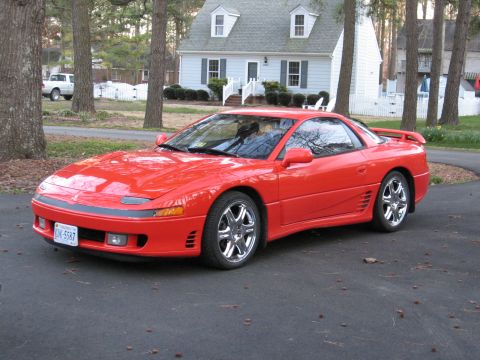
Mitsubishi Motors entered the 1990s convinced it could climb into Japan's automotive first tier, and under president Hirokazu Nakamura it spent like a company that believed its own forecasts. The technology flagship was the 3000GT, launched in 1990 with twin turbos, all-wheel drive, four-wheel steering, and active aerodynamics, a rolling brochure of everything Mitsubishi engineering could do, sold in America partly as the Dodge Stealth in a final echo of the Chrysler captive-import era. The Diamante luxury sedan, named Japan's Car of the Year for 1990-1991, was the brand's bid for upmarket respectability against Toyota's new Lexus. In 1991 Mitsubishi bought out Chrysler's half of Diamond-Star Motors, and Chrysler sold down its equity stake, ending two decades of dependence just as the Expo and other 1990s crossovers broadened the US lineup.
Nakamura's strategic wager was Southeast Asia. While rivals focused on North America, Mitsubishi built dominant positions in Thailand, Indonesia, the Philippines, and Malaysia, where it had supplied the technology behind Proton, Malaysia's national car, since 1983. Recreational vehicles and pickups from those plants, including the Montero Sport derivative of the L200 platform, made the region Mitsubishi's profit engine. Domestically, the gasoline direct-injection GDI engine program, launched in 1996, was promoted as a company-transforming technology. The problem was arithmetic: Japan's bubble economy had burst in 1991, the yen was surging, and Mitsubishi had committed bubble-era capital spending against post-bubble revenues. When the Asian financial crisis hit in July 1997, the company's most profitable region collapsed at the exact moment its balance sheet could least absorb it.
1990-2005: Tommi Makinen, the Lancer Evolution, and the Rally Program That Built a Cult Brand
Between 1996 and 1999 a Mitsubishi Lancer Evolution driven by Finland's Tommi Makinen won four consecutive World Rally Championship drivers' titles, a feat no driver had achieved before, and it gave a mid-sized, financially strained automaker a performance mystique out of all proportion to its marketing budget. The Lancer Evolution existed because of homologation rules: to race a car in the WRC's Group A category, Mitsubishi had to sell road-going versions, so beginning in 1992 the company stuffed the turbocharged 4G63 engine and all-wheel drive from the Galant VR-4 into its compact Lancer sedan. Ralliart, the competition arm run by Andrew Cowan, a Scot who had won rallies for Mitsubishi back in the 1970s, managed the works program from England.
The racing halo did concrete commercial work. Successive Evolution generations sold out in Japan, gray-market cars fed a global cult, and the nameplate's fame eventually forced official exports: the Evolution VIII became the first Evo formally sold in the United States in 2003, arriving precisely when the company needed showroom traffic and a credible answer to Subaru's WRX STI. Smaller sporting products such as the FTO coupe, a 1994-1995 Japan Car of the Year winner, drew on the same engineering culture. Meanwhile the Pajero kept winning the Dakar Rally, ultimately taking twelve overall victories including seven consecutively from 2001 to 2007, a record that made Mitsubishi synonymous with desert endurance in markets where the WRC meant little. The competition programs ended as casualties of the financial crises that followed, with the WRC works effort wound down in 2005 and Dakar abandoned in 2009, but they remain the reason enthusiasts still speak of the brand with an affection its sales figures never earned.
1997-2004: Katsuhiko Kawasoe, the Recall Cover-Up, and the DaimlerChrysler Rescue That Wasn't
In July 2000 investigators tipped off by an internal whistleblower found documents hidden in a locker room at Mitsubishi Motors headquarters proving the company had systematically concealed customer defect complaints from Japanese regulators since 1977. The revelation, which forced the recall of well over half a million vehicles and the resignation of president Katsuhiko Kawasoe, arrived when the company was already reeling from the Asian crisis and roughly 1.7 trillion yen of debt. Kawasoe had held the job only since late 1997, when payoffs to sokaiya corporate racketeers had forced out his predecessors, chairman Hirokazu Nakamura and president Takemune Kimura. The rescuer was DaimlerChrysler, which in 2000 bought a 34 percent controlling stake for about 2.1 billion dollars, part of Juergen Schrempp's plan for a three-continent Welt AG. Daimler installed Rolf Eckrodt, a turnaround veteran from its Adtranz rail unit, first as chief operating officer and then as president, to cut costs and rationalize the model range.
The turnaround failed twice over. In the United States, Mitsubishi chased volume with zero-zero-zero financing, no money down, no interest, no payments for a year, aimed at young buyers of the Eclipse and Galant; when the deferred payments came due, defaults forced a charge of over 400 million dollars in 2003 and gutted the residual values of the entire lineup. In Japan, the scandal deepened: defective truck hubs from the Fuso division were linked to fatal accidents, and in 2004 a second wave of cover-up disclosures revealed the 2000 confession itself had been incomplete. That April, DaimlerChrysler's supervisory board refused to inject further capital and walked away. Eckrodt resigned, and Mitsubishi Motors, abandoned by its foreign parent with its domestic sales in freefall, survived only because the old zaibatsu family, Mitsubishi Heavy Industries, Mitsubishi Corporation, and Bank of Tokyo-Mitsubishi, assembled a bailout of several hundred billion yen rather than let a company bearing the three diamonds die.
2005-2016: Osamu Masuko's Shrink-to-Survive Strategy, the i-MiEV, and the Fuel-Economy Fraud
Osamu Masuko, who became president of Mitsubishi Motors in 2005 after a career at trading house Mitsubishi Corporation, spent a decade proving that a Japanese automaker could survive by getting smaller. The revitalization plan he inherited and executed closed capacity, ended production in Australia in 2008, wound down the Normal, Illinois plant by 2015, and refocused the company on the two things that reliably made money: SUVs and pickups, and Southeast Asia, where a new Thai plant made Mitsubishi a top exporter. In the United States the brand shriveled to a handful of nameplates led by the Outlander crossover and the cheap Mirage subcompact, and the Lancer Evolution died with the 2015 Final Edition because Masuko judged that halo cars no longer justified their engineering cost.
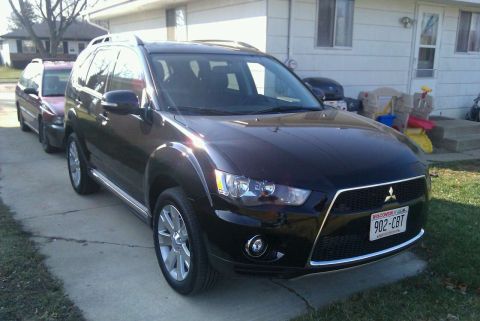
Masuko also placed one genuinely early bet: electrification. The i-MiEV of 2009 was the first modern mass-produced highway-capable electric car from a major automaker, beating the Nissan Leaf to market, and the Outlander PHEV of 2013 became for years the world's best-selling plug-in hybrid SUV. The bet bought credibility but not scale. Then in April 2016 the company's past caught up with it a third time: Mitsubishi admitted it had manipulated fuel-economy test data on its kei cars, including vehicles built for Nissan, and that improper testing methods stretched back 25 years. It was Nissan's own engineers who had uncovered the discrepancy. Mitsubishi's market value dropped by roughly half within days, and Masuko, having watched DaimlerChrysler abandon the company in 2004, moved fast to secure a partner with leverage rather than wait for collapse.
2016-2026: Carlos Ghosn, the Nissan Takeover, and Life Inside the Renault-Nissan-Mitsubishi Alliance
In May 2016, weeks after the fuel-economy scandal broke, Nissan's Carlos Ghosn agreed to buy 34 percent of Mitsubishi Motors for 237 billion yen, about 2.2 billion dollars, converting the whistleblower into the controlling shareholder. The deal made Mitsubishi the third member of the Renault-Nissan-Mitsubishi Alliance, which in 2017 briefly ranked as the world's largest automotive group by volume, and it put Ghosn in the chairman's seat at a third company. Osamu Masuko stayed on as chief executive, and the logic was industrial: shared platforms, shared purchasing, and a division of the world in which Mitsubishi contributed its ASEAN strength, its pickup and body-on-frame know-how, and its plug-in hybrid technology.
The arrest of Ghosn, who denies all charges and has never been tried, in Tokyo in November 2018 on financial-misconduct charges, and his subsequent escape from Japan hidden in an equipment case in December 2019, threw the entire Alliance into crisis, and Mitsubishi's boards removed him within days of the arrest. The company retrenched again under Takao Kato, a career Mitsubishi man promoted from its Indonesian operation to chief executive in 2019, with a plan that cut costs, withdrew new-model development for Western Europe, and doubled down on Southeast Asia and Oceania, where the Xpander MPV and Triton pickup, the modern L200 lineage, lead their segments. The rebalanced Alliance agreements of 2023, which reduced Renault's stake in Nissan and saw Mitsubishi pledge up to 200 million euros toward Renault's Ampere electric-vehicle unit, a plan that lapsed when Renault cancelled Ampere's stock-market listing in early 2024, kept the three-way structure alive in looser form, and Mitsubishi has since leaned on Nissan platforms for North American product while supplying its PHEV systems in return. In November 2024 Mitsubishi bought back roughly a tenth of its own shares from a cash-strapped Nissan, trimming Nissan's holding from 34 percent to about 24.5 percent while leaving it the largest shareholder. As of 2026 Mitsubishi Motors Corporation remains an active, profitable, deliberately mid-sized automaker headquartered in Minato, Tokyo, selling roughly under a million vehicles a year, a company that survived three near-death scandals by repeatedly shrinking to the markets that never stopped buying its trucks.
Leadership
| Leader | Tenure | Legacy |
|---|---|---|
| Yataro Iwasaki | 1870-1885 (Mitsubishi founder) | Founded the Mitsubishi shipping company in 1870, origin of the zaibatsu whose heavy-industries arm later built cars. |
| Yuji Sato | 1970-1973 (first president) | Founding president of the spun-off company; the 1971 Chrysler equity deal, negotiated by MHI president Yoichiro Makita, closed on his watch and put Colts in Dodge showrooms. |
| Tomio Kubo | 1973-1979 (president), then chairman | Ex-aircraft engineer who became the company's dominant strategist, riding Chrysler's distribution to export scale and licensing Silent Shaft engine technology to Porsche and Saab. |
| Hirokazu Nakamura | 1989-1995 (president), chairman to 1997 | Bubble-era expansionist who bet on the 3000GT, the Diamante, and aggressive Southeast Asian plant building; resigned as chairman in December 1997 amid a racketeer-payoff scandal. |
| Katsuhiko Kawasoe | 1997-2000 (president) | Presided over the defect cover-up scandal that broke in 2000; resigned and was later arrested and convicted on professional-negligence charges tied to Fuso defect deaths, receiving a three-year suspended sentence; he denied knowledge of the concealment. The DaimlerChrysler rescue negotiated on his watch collapsed. |
| Rolf Eckrodt | 2002-2004 (president & CEO) | DaimlerChrysler's turnaround man from its Adtranz rail unit; cut costs but resigned in April 2004 when Stuttgart's board refused to inject further capital. |
| Osamu Masuko | 2005-2014 (president), then chairman/CEO to 2019 | Shrink-to-survive restructurer who closed markets, launched the i-MiEV electric car in 2009, and steered the company into Nissan's arms after the 2016 fuel-economy fraud. |
| Carlos Ghosn | 2016-2018 (chairman) | Orchestrated Nissan's 34 percent takeover in October 2016 and folded Mitsubishi into the Renault-Nissan-Mitsubishi Alliance before his November 2018 arrest. |
| Takao Kato | 2019-present (CEO; chairman from 2026) | Promoted from the Indonesian operation after Ghosn's fall; his "Small but Beautiful" plan refocused the company on ASEAN, pickups, and profitability. |
Timeline
| Year | Event or model | Note |
|---|---|---|
| 1870 | Mitsubishi founded | Yataro Iwasaki establishes the shipping firm that grows into the Mitsubishi zaibatsu. |
| 1917 | Mitsubishi Model A | Mitsubishi Shipbuilding hand-builds Japan's first series-produced car, completing about 22 units. |
| 1970 | Mitsubishi Motors Corporation founded | Mitsubishi Heavy Industries spins off its automotive division as a standalone company on April 22, 1970, in Tokyo. |
| 1971 | Chrysler alliance | Chrysler buys a 15 percent stake, and Mitsubishi Galants begin selling in the United States as the Dodge Colt. |
| 1973 | Lancer introduced | The compact Lancer debuts and immediately goes rallying, winning the 1974 Safari Rally. |
| 1978 | Mirage introduced | Mitsubishi's front-drive subcompact launches, sold in America as the Dodge/Plymouth Colt. |
| 1978 | L200 pickup introduced | The compact L200 pickup line debuts, reaching the US as the Dodge Ram 50 and later Mitsubishi Mighty Max. |
| 1982 | Pajero / Montero introduced | The Pajero 4x4 launches, badged Montero in North America, and goes on to win the Paris-Dakar Rally a record 12 times. |
| 1982 | Starion introduced | The turbocharged rear-drive Starion coupe arrives, also sold as the Chrysler Conquest. |
| 1985 | Diamond-Star Motors formed | Mitsubishi and Chrysler announce a 50/50 joint-venture plant in Normal, Illinois, which starts production in 1988. |
| 1987 | Galant sixth generation | The sixth-generation Galant launches in October 1987, wins the 1987-88 Japan Car of the Year, and its VR-4 variant carries Mitsubishi's Group A rally program. |
| 1989 | Eclipse introduced | The Illinois-built Eclipse sport coupe launches for 1990 alongside its Eagle Talon and Plymouth Laser twins. |
| 1990 | 3000GT introduced | The twin-turbo all-wheel-drive 3000GT flagship debuts, sold in Japan as the GTO and briefly as the Dodge Stealth. |
| 1990 | Diamante introduced | The Diamante luxury sedan launches and wins the 1990-91 Japan Car of the Year award. |
| 1991 | Expo introduced | The Expo and Expo LRV compact people-movers reach the US market for 1992. |
| 1992 | Lancer Evolution introduced | The first Lancer Evolution homologates Mitsubishi's World Rally Championship program. |
| 1994 | FTO introduced | The Japan-market FTO coupe debuts and wins the 1994-95 Japan Car of the Year award. |
| 1996-1999 | Tommi Makinen's WRC titles | Tommi Makinen wins four consecutive World Rally drivers' championships in Lancer Evolutions, and Mitsubishi takes the 1998 manufacturers' title. |
| 1996 | Montero Sport introduced | The pickup-based Montero Sport (Challenger in Japan) joins the SUV lineup for 1997. |
| 2000 | Recall cover-up exposed | Mitsubishi admits it systematically hid customer defect complaints for decades; DaimlerChrysler takes a 34 percent stake the same year. |
| 2001 | Outlander introduced | The Airtrek/Outlander crossover debuts and later becomes the company's global best-seller in PHEV form. |
| 2004 | DaimlerChrysler walks away | DaimlerChrysler refuses further capital, forcing a Mitsubishi Group bailout; US sales collapse after the 0-0-0 financing debacle. |
| 2009 | i-MiEV launched | Mitsubishi puts one of the world's first mass-produced highway-capable electric cars on sale in Japan. |
| 2013 | Outlander PHEV launched | The plug-in hybrid Outlander becomes the world's best-selling PHEV SUV of its era. |
| 2015 | Normal, Illinois plant closes | Mitsubishi ends North American production, ending the Diamond-Star legacy. |
| 2016 | Fuel-economy fraud and Nissan takeover | Mitsubishi admits falsifying mileage tests dating back 25 years; Nissan buys 34 percent for about 237 billion yen in October 2016. |
| 2018 | Ghosn arrested | Alliance chairman Carlos Ghosn is arrested in Tokyo and removed as Mitsubishi Motors chairman. |
| 2023 | Alliance rebalanced | Renault and Nissan agree to equalize cross-shareholdings; Mitsubishi doubles down on Southeast Asia and pickups. |
| 2024 | Nissan trims its stake | Mitsubishi buys back about 10 percent of its own shares from Nissan, cutting Nissan's holding from 34 percent to roughly 24.5 percent; Nissan stays the largest shareholder. |
Asked all the time
Who founded Mitsubishi Motors?
Mitsubishi Motors Corporation was created on April 22, 1970, when Mitsubishi Heavy Industries spun off its automotive division as a standalone company in Tokyo. The broader Mitsubishi organization traces to Yataro Iwasaki's shipping company of 1870, and its car-building lineage to the 1917 Mitsubishi Model A.
Is Mitsubishi Motors still in business?
Yes. Mitsubishi Motors is an active automaker headquartered in Minato, Tokyo, operating within the Renault-Nissan-Mitsubishi Alliance with Nissan as its largest shareholder, focused today on SUVs, pickups, plug-in hybrids, and Southeast Asian markets.
Why did Mitsubishi nearly collapse in the early 2000s?
In 2000 Mitsubishi Motors admitted it had systematically concealed customer defect complaints for decades to avoid recalls. The scandal widened in 2004 to its truck unit, DaimlerChrysler refused further capital, and only a bailout by Mitsubishi Group companies kept the automaker alive.
What was Mitsubishi's relationship with Chrysler?
Chrysler bought a 15 percent stake in Mitsubishi Motors in 1971, sold Mitsubishi-built cars as Dodge and Plymouth Colts through the 1970s and 1980s, and partnered with Mitsubishi in the Diamond-Star Motors plant in Normal, Illinois, which opened in 1988 and built the Eclipse, Eagle Talon, and Plymouth Laser.
Who owns Mitsubishi Motors today?
Mitsubishi Motors is publicly traded, with Nissan Motor Co. its largest shareholder. Nissan bought a 34 percent controlling stake in October 2016 for roughly 237 billion yen after Mitsubishi's fuel-economy testing fraud, then reduced it to about 24.5 percent in a November 2024 share buyback. Mitsubishi Motors operates inside the Renault-Nissan-Mitsubishi Alliance.
What is Mitsubishi Motors best known for?
The Lancer Evolution rally cars that carried Tommi Makinen to four straight World Rally Championship drivers' titles from 1996 to 1999, the Pajero/Montero 4x4 with a record 12 Paris-Dakar wins, and performance cars like the 3000GT and Eclipse.
When did Mitsubishi stop building cars in the United States?
Mitsubishi ended North American production in late 2015 when it closed the former Diamond-Star Motors plant in Normal, Illinois, which had opened as a Chrysler joint venture in 1988. It continues to sell imported vehicles in the US.
What was the 2016 Mitsubishi fuel-economy scandal?
In April 2016 Mitsubishi Motors admitted it had falsified fuel-economy test data on more than 600,000 kei cars, including models built for Nissan, with improper testing methods dating back roughly 25 years. The share price collapsed, and Nissan used the crisis to acquire its 34 percent controlling stake that October.
The wall
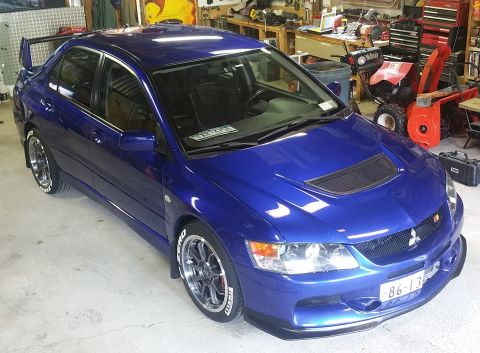
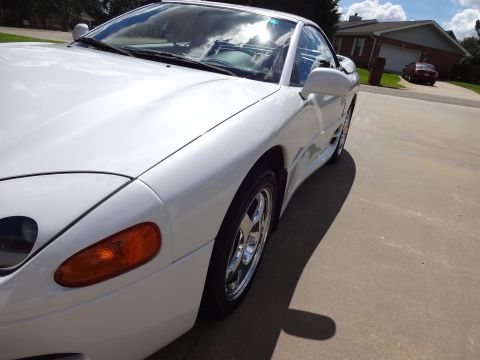
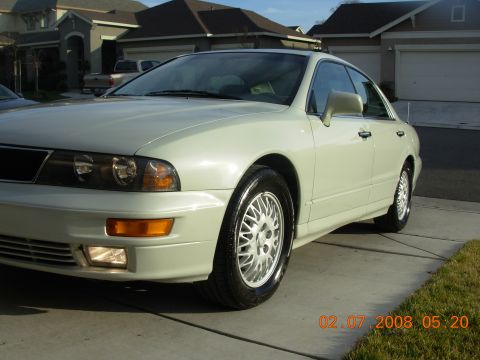
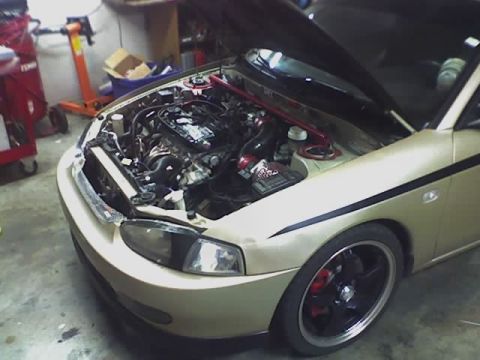
The most-documented Mitsubishi vehicles in the registry, every photo by the owner.