The registry
Peugeot Registry: Models, Builds & Photos
Peugeot is a French automaker founded as a car builder in 1889, when Armand Peugeot showed a steam tricycle, with gasoline production cars following in 1890. The company grew out of a family metalworking firm dating to 1810 that made saws, coffee mills, and bicycles before automobiles. Peugeot sold cars in the United States until withdrawing from the market in 1991, so American examples cluster in the 1980s, mostly the 505 and the short-lived 405. Today the marque continues in Europe as part of Stellantis, the group formed by the 2021 merger of PSA and Fiat Chrysler.
Pick your model
From coffee mills to cars
The Peugeot family was stamping steel in the Doubs region of France by 1810, and the lion trademark, registered in 1858, originally certified saw blades. Armand Peugeot built a steam tricycle in 1889 and switched to Daimler-licensed gasoline engines in 1890. By the early 1900s Peugeot was one of the largest carmakers in the world, and it has run continuously since, absorbing Citroen in 1976 to form PSA and Chrysler's European operations in 1978. PSA merged with Fiat Chrysler in January 2021 to create Stellantis, which owns the marque now.
The American chapter
Peugeot sold cars in the US for decades, but volume collapsed in the late 1980s and the company pulled out of the American market in August 1991. That exit is why parts support in North America runs through specialist importers and club networks rather than a dealer body, and why most surviving US cars are 505s and 405s from the final years.
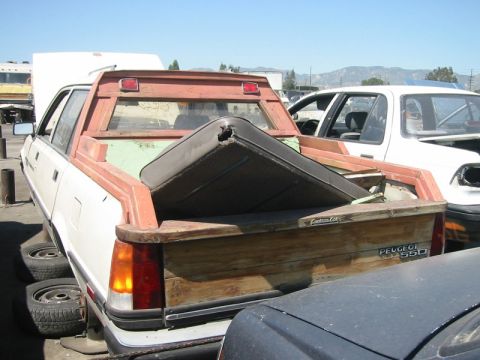
505 (1979-1992)
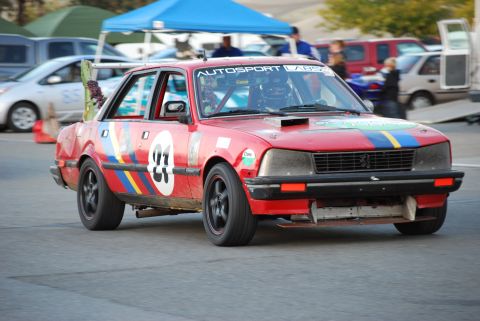
The 505 was Peugeot's last rear-wheel-drive car, a Pininfarina-styled sedan and wagon built on a long-travel coil-sprung chassis that earned a reputation on rough roads worldwide. US cars from the mid 1980s came with gasoline fours including the Simca-derived turbo unit, the PRV V6 in later models, and diesels earlier in the run. The wagons carried an unusually high payload rating for the class, and 505 production for some markets continued into the 1990s after France stopped in 1992.
405 (1987-1997 in Europe)
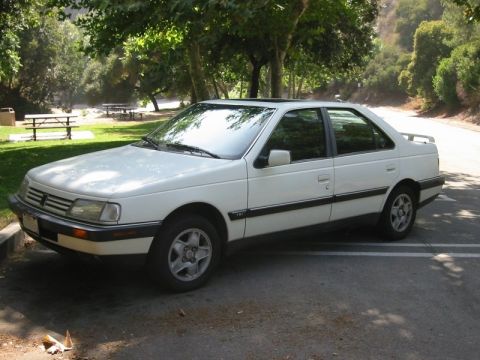
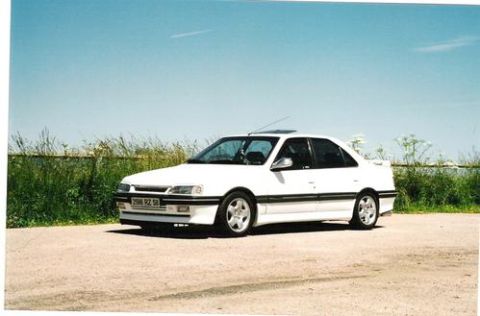
The 405 won European Car of the Year in 1988 by 212 points, the widest margin recorded in the award up to that point. It is a front-wheel-drive sedan and wagon; the Mi16 version used a 1.9 liter 16-valve twin-cam four (XU9J4) rated at 160 hp in European trim and 150 hp in US emissions tune, and Peugeot sold the 405 in the US only from 1989 to 1991 before the market withdrawal. Licensed 405 production continued in Iran until 2020.
205, 406, and 206
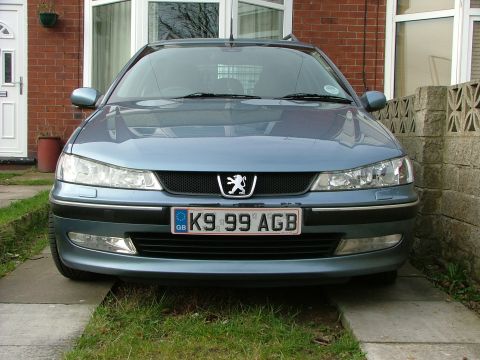
The 205 supermini (1983-1998) is the model most often credited with turning Peugeot around in the early 1980s. More than 5.2 million were built, and the 205 GTI set the pace for the European hot hatch class through that decade. The 406 (1995-2004) replaced the 405 in Europe, and the Pininfarina-designed and built 406 Coupe is the version most often sought out today. The 206 launched in 1998 and became Peugeot's best-selling model ever, passing 8 million units, with the 206 GTi and the WRC rally program (manufacturers' titles in 2000, 2001, and 2002) giving the small car real competition credentials. None of the three was sold new in the United States.
Asked all the time
When did Peugeot stop selling cars in the United States?
Peugeot withdrew from the US market in August 1991 after years of falling sales. The last models sold new in America were the 505 and the 405, which is why most US-registered Peugeots date from the 1980s and 1989-1991.
What years was the Peugeot 505 made?
The Peugeot 505 ran from 1979 to 1992 in France, with some overseas assembly continuing later. It was Peugeot's last rear-wheel-drive model, sold as a sedan and a wagon, and it was the volume Peugeot in the US through the 1980s.
What makes the Peugeot 405 Mi16 special?
The Mi16 was the performance version of the Peugeot 405, using a 1.9 liter 16-valve twin-cam four rated at 160 hp in European trim and 150 hp in US emissions tune. The 405 won European Car of the Year in 1988, and US sales lasted only from 1989 to 1991, so Mi16s are thin on the ground in North America.
Is it hard to get parts for a Peugeot in North America?
Peugeot has had no US dealer network since 1991, so parts come through European suppliers, specialist importers, and club networks. Mechanical parts for the 505 and 405 are still obtainable because both cars were built in large numbers worldwide, but trim and body pieces take patience.
Does Peugeot still exist?
Yes. Peugeot never went out of business; it absorbed Citroen in 1976 to form PSA and merged with Fiat Chrysler in January 2021 to become part of Stellantis. The marque still sells cars across Europe and much of the world, just not in the United States.
The wall
The most-documented Peugeot vehicles in the registry, every photo by the owner.