The registry
Shelby Registry: Models, Builds & Photos
Shelby American, Inc. is an American performance-car manufacturer founded in 1962 by Carroll Shelby, a retired Texas racing driver and 1959 Le Mans winner, in Venice, California. The company mated Ford V8 engines to the British AC Ace chassis to create the Cobra, won the FIA International Championship for GT Manufacturers in 1965, built the GT350 and GT500 Shelby Mustangs for Ford, and ran Ford's GT40 program that beat Ferrari at Le Mans in 1966 and 1967. Original production ended around 1969-70 as Ford took the Shelby Mustang in-house. Carroll Shelby later partnered with Chrysler in the 1980s, then revived Shelby American in the 1990s with continuation Cobras. Today the company operates from Las Vegas, Nevada, as a wholly owned subsidiary of Carroll Shelby International, building Shelby-badged Ford vehicles; it survived its founder's death in 2012.
Pick your model
Key facts
| Fact | Detail |
|---|---|
| Founded | 1962, Venice, California, USA |
| Founders | Carroll Shelby |
| Headquarters | Las Vegas, Nevada, USA |
| Parent/successor | Wholly owned subsidiary of Carroll Shelby International, Inc. (holding company formed 2003) |
| Fate/status | Active; original operation wound down around 1969-70, revived in the 1990s and still building vehicles today |
| Best known for | Cobra, GT350, GT500 |
| Registry presence | 12 vehicles / 1,723 photos documented by owners on SuperMotors |
1923-1961: Carroll Shelby, the Chicken Farmer Who Won Le Mans
Before Shelby American built a single car, its founder had already reached the top of international motorsport and been forced out of it by his own heart. Carroll Hall Shelby was born January 11, 1923, in Leesburg, Texas, flew AT-6 trainers as a U.S. Army Air Corps flight instructor during World War II, and tried oil-field work and chicken farming before discovering, in 1952, that he could drive a race car faster than almost anyone in America. Racing in bib overalls because he came straight from the farm, Shelby rose through American sports-car racing to works drives with Aston Martin, and in June 1959 he and co-driver Roy Salvadori won the 24 Hours of Le Mans in an Aston Martin DBR1.
The victory came with a secret. Shelby raced with nitroglycerin pills under his tongue to manage angina from a congenital heart condition, and by 1960 the condition ended his driving career at age 37. That forced retirement is the causal seed of the company. Shelby had spent a decade watching underpowered European chassis and understressed American V8s exist on separate continents, and he had cultivated relationships on both sides of the Atlantic. Denied the cockpit, he opened a high-performance driving school at Riverside, California, and a Goodyear racing-tire distributorship, both of which gave him cash flow, a shop, and a network while he shopped an idea: a light European roadster with a cheap, powerful American engine. He pitched Chevrolet first and was turned down, since General Motors saw no reason to fund a Corvette rival. Ford, which had nothing to answer the Corvette, said yes.
1962-1964: Venice, California, the AC Ace, and the Birth of the Cobra
Shelby American, Inc. was incorporated in 1962 in a small shop in Venice, California, on the strength of two telegrams and an engine that did not exist a year earlier. When Carroll Shelby learned in late 1961 that AC Cars of Thames Ditton, England, was losing the Bristol engine supply for its Ace roadster, he cabled AC proposing a V8-powered version, then persuaded Ford to supply its new lightweight 260-cubic-inch small-block. The first car, CSX2000, was assembled in early 1962, and Shelby famously had it repainted between press drives so journalists believed a fleet existed. The result was the Cobra, the model that justified the company's existence: it gave Ford a halo sports car to fight the Corvette, gave AC a future, and gave Shelby a manufacturer's identity rather than a tuner's.
The business logic mattered as much as the speed. Shelby American was capitalized thinly and lived on Ford's parts support, Goodyear money, and race winnings, so racing was not marketing garnish, it was the revenue and credibility engine. Cobras began beating Corvettes in SCCA competition almost immediately in 1963, which validated Ford's investment and pulled the company into Ford's larger "Total Performance" campaign. By January 1965 Shelby American had outgrown Venice and moved into two hangars at Los Angeles International Airport, a physical marker that a hot-rod shop had become a manufacturer with a works racing team. The ambition had also escalated: to beat Ferrari's GT cars in Europe, chief engineer development under Shelby produced the streamlined Cobra Daytona Coupe, designed by Peter Brock, because the open roadster ran out of aerodynamics on the Mulsanne Straight.
1965-1967: The Championship, the GT350, and Beating Ferrari for Henry Ford II
In 1965 Shelby American did something no American constructor had done before: it won the FIA International Championship for GT Manufacturers, taking the title from Ferrari with the Brock-designed Daytona Coupes. The championship was the payoff of the whole Cobra program, and it made Shelby American the obvious contractor when Henry Ford II, humiliated by Enzo Ferrari's collapse of the 1963 Ford-Ferrari purchase negotiations, ordered his company to beat Ferrari at Le Mans at any cost. Ford's GT40 program had failed in 1964 under Ford Advanced Vehicles in England, so Ford handed race development to Shelby American, whose team, with engineers like Phil Remington and drivers like Ken Miles, turned the GT40 into a winner. Ford GT40s managed by Shelby American finished 1-2-3 at Le Mans in 1966 and won again in 1967 with Dan Gurney and A.J. Foyt in the Mk IV.

The same Ford relationship produced the company's other defining product line. Ford general manager Lee Iacocca needed the new Mustang to shed its secretary's-car image and qualify for SCCA B-Production racing, so he asked Shelby to build a homologation special. The 1965 GT350 was the answer: a stripped, stiffened Mustang fastback assembled first at the Venice shop and then at the LAX hangars that won the SCCA B-Production national championship three years running from 1965 to 1967, and whose Hertz rental variant, the GT350H, put roughly 1,000 "Rent-A-Racer" cars in front of the public. In 1967 Shelby added the big-block GT500, which immediately outsold the GT350 and signaled the line's drift from race car to boulevard grand tourer, a drift Ford's marketing department encouraged because grand tourers sold in volume.
1967-1970: Ford Takes the Mustang In-House and Shelby Walks Away
By late 1967 Shelby American had effectively stopped being an independent manufacturer, and the causes were contractual, physical, and personal. The company lost its lease on the LAX hangars, and Ford moved Shelby Mustang production for 1968 to the A.O. Smith Company in Ionia, Michigan, under direct Ford control. Federal safety and emissions regulations arriving for 1968 made low-volume California assembly untenable, and Ford's marketing machine had turned the Shelby Mustang into a styling package whose engineering Shelby American no longer really controlled. Racing, the company's founding purpose, was also winding down: Ford withdrew from the sports-car war after the 1967 Le Mans win, and the Cobra ended production in 1967 as its FIA class relevance expired.
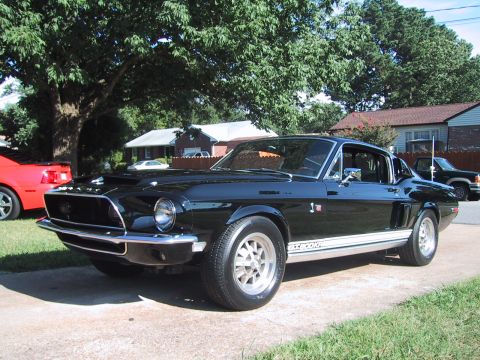
Carroll Shelby himself asked Ford to end the program. Sales of the badge-engineered 1969 cars were slow, the Mustang's own Mach 1 and Boss models had cannibalized the Shelby's reason to exist, and Shelby reportedly told Ford the cars had strayed too far from what his name stood for. Production ceased with the 1969 model year, and according to Shelby American Automobile Club records, roughly 789 leftover 1969 cars were re-serialed as 1970 models, an operation the marque histories describe as conducted under federal oversight. Shelby American's operating businesses were wound down or folded back into Ford's orbit around 1969-70, while Carroll Shelby scattered into other ventures, including a Goodyear tire distributorship, an African safari operation, and the chili business that later produced his commercially successful chili kits. The name went dormant, but Shelby kept the trademarks, which turned out to be the most valuable asset he owned.
1982-1991: Lee Iacocca, Chrysler, and the Front-Wheel-Drive Detour
When Carroll Shelby returned to the car business in 1982, he did it for Chrysler, not Ford, and the reason was one man: Lee Iacocca. Fired by Henry Ford II in 1978, Iacocca took over a nearly bankrupt Chrysler, secured the 1980 federal loan guarantees, and then called his old Mustang collaborator to sprinkle performance credibility on a lineup of front-wheel-drive economy cars. Shelby set up a performance operation in California and produced tuned Dodges through the 1980s, from the Shelby Charger to the turbocharged Omni GLH, a name Shelby said stood for "Goes Like Hell." In 1986 he formed Shelby Automobiles in Whittier, California, which built limited-run vehicles like the GLHS as a manufacturer in its own right rather than a trim-package supplier.
The Chrysler era mattered less for the cars than for what it preserved and provoked. It kept the Shelby name commercially alive through the malaise years, it kept Carroll Shelby wealthy and connected while Ford wanted nothing to do with V8 specials, and it put him in the room for Chrysler's Viper program, where he served as a member of the informal "Team Viper" leadership that shaped the 1992 Dodge Viper RT/10, a car conceived explicitly as a modern Cobra. Shelby's health nearly ended the story in this era: his congenital heart condition deteriorated until he received a heart transplant in June 1990, followed by a kidney transplant in 1996 with a kidney donated by his son Michael. He responded by founding the Carroll Shelby Foundation to fund organ-transplant and acute coronary care for children, and by outliving most predictions by two decades.
1991-2002: Continuation Cobras, the CSX Serial Wars, and the Litigious Rebirth
The revived Shelby American of the 1990s was built on an unusual product: its own past. In 1991 Carroll Shelby began "completing" leftover 1960s Cobra chassis in California, and by the mid-1990s he had relaunched full Cobra production as "continuation" cars, 427 S/C roadsters carrying new CSX4000 serial numbers, on the argument that the company was finishing an unfinished 1960s production run. The move was commercially shrewd because original Cobras had become million-dollar collectibles and the replica industry was profiting from Shelby's design without paying him. It also dragged the company into years of litigation, including a long fight with replica maker Factory Five Racing and disputes over whether the Cobra's shape could be protected at all; Shelby won some rounds and lost others, but the lawsuits established that the Shelby business model was now intellectual property first and manufacturing second. The batch of cars serialed as leftover 1960s chassis, the CSX3000-series completion cars, drew particular scrutiny in the 1990s and reinforced how much of the company's value lay in provenance.
Structurally, this era produced the corporate architecture that still exists. Shelby's operations consolidated in Las Vegas, Nevada, in 1998, near the Las Vegas Motor Speedway, and his licensing arm, Carroll Shelby Licensing, began systematically monetizing the Cobra and GT350/GT500 trademarks. The one clean-sheet car of the period, the Oldsmobile-powered Shelby Series 1 launched in the late 1990s, was a financial failure whose cost overruns forced Shelby to sell a controlling stake in the operating company to its body supplier, Venture Corporation, which itself went bankrupt in 2003; the episode taught the organization a durable lesson: modified Fords and licensed heritage paid, boutique supercars did not.
2003-2012: Reconciliation with Ford, the New GT500, and the Death of Carroll Shelby
In 2003, at age 80, Carroll Shelby reorganized his empire under a new holding company, Carroll Shelby International, Inc., with Shelby American as its operating subsidiary, and in the same period he reconciled with Ford Motor Company after three decades of estrangement. The rapprochement was driven from Ford's side by executives who wanted heritage for the retro 2005 Mustang, and from Shelby's side by the simple fact that his brand and Ford's Mustang were worth more together. Shelby consulted on the 2004-2006 Ford GT, the modern successor to the GT40 he had raced to Le Mans wins, and in 2005 Ford and Shelby announced the return of factory Shelby Mustangs. The 2007 Shelby GT500, built by Ford's Special Vehicle Team with Shelby's name and input, put the brand back in Ford showrooms for the first time since 1970, while Shelby American in Las Vegas built its own post-title conversions such as the Shelby GT and the 2008 GT500KR.
Carroll Shelby died on May 10, 2012, in Dallas, Texas, at age 89, having survived on a transplanted heart for 22 years. His death triggered estate disputes among heirs and his widow, but the corporate succession held: he had spent the prior decade deliberately institutionalizing the company, its licensing machine, and its Ford relationship precisely so the business would not die with him. Unlike Ferrari after Enzo or Tucker after Preston, Shelby American entered its post-founder era with signed long-term agreements and a product pipeline already running.
2012-Today: Shelby American After Shelby, Las Vegas Production and the Licensing Machine
Shelby American entered its second decade without its founder as a small manufacturer with an outsized brand, and it has survived by staying narrow. From its Las Vegas headquarters, which doubles as a museum and tourist destination, the company builds limited-run post-title vehicles on Ford platforms, including Super Snake versions of the GT500 and Mustang, Shelby F-150 and Raptor trucks that broadened revenue beyond sports cars, wide-body and anniversary editions, and continuation Cobras and Daytona Coupes in the CSX serial tradition. Ford, meanwhile, kept the factory line alive with the 2013-2014 and 2020-2022 GT500 and the 2015-2020 GT350, paying tribute and license fees that flow through Carroll Shelby Licensing.
The causal logic of the modern company is the inverse of 1962. Carroll Shelby founded Shelby American because he had engineering ideas and no brand; today Shelby American has one of the most valuable brands in American performance and deliberately limited engineering ambitions, outsourcing platforms to Ford and volume to Ford's factories. Leadership passed to professional managers under the Carroll Shelby International holding structure, with longtime associates such as Joe Conway and Gary Patterson steering the operating company, and the founder's trust holding ownership continuity. Sixty-plus years after a heart condition forced a Texas race driver out of the cockpit, the company he improvised in a Venice shop remains active, profitable at boutique scale, and still selling the same core promise: a Ford with more.
Leadership
| Leader | Tenure | Legacy |
|---|---|---|
| Carroll Shelby | Founder, 1962-2012 (with a hiatus from Ford work 1970-1982) | Created the Cobra, won the 1965 FIA GT championship, ran Ford's GT40 Le Mans wins, and rebuilt the company twice. |
| Phil Remington | Chief engineer/fabricator, 1962-1967 | The hands-on development engineer behind the Cobra and GT40 programs at the Venice and LAX shops. |
| Pete Brock | Designer, 1962-1965 | Designed the Cobra Daytona Coupe, the body that won Shelby the 1965 FIA GT championship. |
| Ken Miles | Chief test driver and development engineer, 1963-1966 | Developed the GT350 and GT40 Mk II; won Daytona and Sebring in 1966 before dying in testing that August. |
| Joe Conway | CEO of Shelby American and Co-CEO of Carroll Shelby International, 2009-present (hand-picked by Carroll Shelby in 2009) | Steered the company through the founder's death into a licensing-and-production business. |
| M. Neil Cummings | Co-CEO of Carroll Shelby International; CEO of Carroll Shelby Licensing | Runs the trademark-licensing arm that monetizes the Cobra and GT350/GT500 marks, half of the modern business model. |
| Gary Patterson | President of Shelby American, December 2016-present (with the company since 1996) | Runs Las Vegas production of post-title Shelby Mustangs, F-150s, and continuation Cobras. |
Timeline
| Year | Event |
|---|---|
| 1923 | Carroll Hall Shelby born January 11 in Leesburg, Texas. |
| 1959 | Shelby and Roy Salvadori win the 24 Hours of Le Mans in an Aston Martin DBR1. |
| 1960 | A congenital heart condition forces Shelby to retire from driving at 37. |
| 1962 | Shelby American, Inc. incorporated in Venice, California; first Cobra (CSX2000) built with Ford's 260 V8 on the AC Ace chassis. |
| 1963 | Cobras win the inaugural USRRC manufacturers championship, dethroning the Corvette in American road racing. |
| 1965 | Company moves to two hangars at LAX in January; GT350 launches and wins SCCA B-Production; Daytona Coupes win the FIA International Championship for GT Manufacturers, a first for an American constructor. |
| 1966 | Shelby-run Ford GT40s finish 1-2-3 at Le Mans; roughly 1,000 GT350H "Rent-A-Racer" cars built for Hertz. |
| 1967 | Big-block GT500 debuts; Gurney and Foyt win Le Mans in the Shelby-run Mk IV; Cobra production ends; company loses its LAX lease. |
| 1968 | Shelby Mustang production moves to A.O. Smith in Ionia, Michigan, under Ford control. |
| 1969-70 | Shelby asks Ford to end the program; leftover 1969 cars re-VIN'd as 1970 models under reported federal oversight; original operation winds down. |
| 1982 | Shelby joins Lee Iacocca's Chrysler as a performance consultant, beginning the Dodge era. |
| 1986 | Shelby Automobiles formed in Whittier, California, building the Omni GLHS as a standalone manufacturer. |
| 1990 | Carroll Shelby receives a heart transplant in June. |
| 1991 | First "completion" Cobras built on leftover 1960s CSX3000 chassis; Carroll Shelby Foundation established. |
| Mid-1990s | Full continuation Cobra production relaunches with new CSX4000 serial numbers; operations shift to Las Vegas (headquarters from 1998). |
| 1998-99 | Oldsmobile-powered Series 1 launches; cost overruns force sale of a controlling stake to Venture Corporation. |
| 2003 | Carroll Shelby International, Inc. holding company formed; Shelby reconciles with Ford and advises on the Ford GT. |
| 2007 | Ford's SVT-built Shelby GT500 returns the brand to Ford showrooms for the first time since 1970. |
| 2012 | Carroll Shelby dies May 10 in Dallas at 89; succession passes to professional management under Joe Conway. |
| 2016 | Gary Patterson named President of Shelby American in December. |
| Today | Shelby American builds post-title Mustangs, trucks, and continuation Cobras in Las Vegas while Carroll Shelby Licensing monetizes the trademarks. |
Asked all the time
Who founded Shelby American?
Carroll Shelby, a Texas racing driver who won the 1959 24 Hours of Le Mans for Aston Martin, founded Shelby American in 1962 in Venice, California, after a heart condition ended his driving career.
Why did Shelby American shut down its original operation?
Ford took the Shelby Mustang program in-house, moving assembly to Michigan in 1968, and by 1969 Carroll Shelby asked Ford to end the program; leftover 1969 cars were retitled as 1970 models and the original company wound down around 1970.
Is Shelby American still in business today?
Yes. Shelby American operates from Las Vegas, Nevada, as a wholly owned subsidiary of Carroll Shelby International, building post-title Shelby Mustangs, trucks, and continuation Cobras. It survived Carroll Shelby's death in 2012.
How did Shelby American beat Ferrari?
Twice over. Shelby American's Cobra Daytona Coupes took the 1965 FIA International Championship for GT Manufacturers from Ferrari, and the company ran Ford's GT40 program to overall Le Mans wins in 1966 and 1967.
What is the relationship between Shelby American and Ford?
Shelby American began as a Ford-powered constructor in 1962, built the GT350 and GT500 for Ford through 1970, split for over a decade (including a Chrysler partnership in the 1980s), then reconciled in 2003, since when Ford has built factory Shelby GT500 Mustangs under license.
Why did Shelby American's founder work for Chrysler in the 1980s?
Lee Iacocca, who had championed Shelby at Ford in the 1960s, hired Carroll Shelby at Chrysler in 1982 as a performance consultant, producing front-wheel-drive Dodge Shelby Chargers, the Omni GLHS, and early work on the Viper; the Shelby American name itself was dormant during this period.
Where are Shelby American vehicles built now?
At Shelby American's Las Vegas, Nevada facility, where the company has been based since 1998; Ford-built Shelby Mustangs are separate licensed products from Ford's own plants.
Who owns Shelby American?
Shelby American is a wholly owned subsidiary of Carroll Shelby International, Inc., the holding company formed in 2003 that also owns Carroll Shelby Licensing, the trademark arm; ownership continuity since the founder's death rests with the Carroll Shelby Trust.
The wall
The most-documented Shelby vehicles in the registry, every photo by the owner.