The registry
SleekCraft Registry: Models, Builds & Photos
SleekCraft was a Southern California performance boat builder with a messier paper trail than its glasswork. Bruce Nescher organized Nescher Boats in 1962, watched it fail in 1967, and started over in late 1968 under the Sleekcraft name. The company built fiberglass V-hulls from roughly 17 to 34 feet with jet, stern drive, and outboard power, and it grew fast, from about $331,000 in gross sales in 1970 to over $6,000,000 in 1975. The name also lives on in trademark law: AMF Inc. v. Sleekcraft Boats (9th Cir. 1979) produced the "Sleekcraft factors" courts still use to test brand confusion.
Pick your model
Where SleekCraft came from
Bruce Nescher was building boats in the Los Angeles area well before the SleekCraft name existed. He organized a sole proprietorship called Nescher Boats in 1962, and that venture failed in 1967. In late 1968 he started over and adopted the Sleekcraft name; early hulls carried "Boats by Nescher, Baldwin Park, Calif." tags, and by the mid 1970s the boats also wore "Sleek Craft by Nescher" badging. Dealer lore says Nescher was a racer who wanted a better boat, an origin much like Eliminator's, and the court record backs up the character of the product: low-profile hulls built for racing, high speed cruising, and skiing, sold to the 1970s river racer and jet boat crowd. Growth was steep. Promotion spending went from $6,800 in 1970 to $126,000 in 1974, and gross sales climbed from about $331,000 in 1970 to more than $6,000,000 in 1975.
The lawsuit that made the name famous
In 1979 the Ninth Circuit decided AMF Inc. v. Sleekcraft Boats, a trademark fight brought by AMF over its Slickcraft brand of family runabouts. The trial court had found no infringement. The appeals court reversed, held that confusion was likely, and sent the case back for a limited injunction, and Sleekcraft went right on building boats under its own name. The eight-part likelihood-of-confusion test from that opinion is still cited as the Sleekcraft factors, which means this boat company shows up in more law school casebooks than boating magazines.
The model lines
- Executive: the flagship cruiser line of the 1970s and 1980s. The 23-footer is the common one, sold as a big-block jet (Berkeley pumps) or with a small-block sterndrive; a 1981 example with a Chevy 350 and sterndrive is typical of the latter.
- Jr. Executive: the 21-foot version of the Executive concept, documented from 1976 through 1991, including the Jr. Executive 21 JRV tunnel-V built 1984-1991. The usual setup is a 454 Chevrolet big block feeding a Berkeley JG jet pump.
- Diplomat, Ambassador, Aristocrat, Newport: other named series from the 1970s and 1980s catalog, in the day boat and family runabout end of the range, sharing running gear with the rest of the lineup. Factory records for these are thin.
- Enforcer: the raised-deck, offshore-styled line launched around 1985, starting with the 28-footer and followed by 23 and 26 foot hulls. Later owners of the brand kept building Enforcers into the 2000s.
What happened to the company
Nescher ran Sleekcraft as a sole proprietorship until June 1980, when he and two partners formed Sleek Craft Boats by Nescher, Inc. That corporation ended up in Chapter 7 bankruptcy, and a successor called American Sleek Craft, Inc. took over the business. Nescher moved to Lake Havasu City, where by the late 1980s he was building boats with Conquest Boats; a September 1991 federal injunction barred him and Conquest from putting the Sleek Craft name on their hulls. He died in 2000. The brand itself landed with North American Sleekcraft under Ron Moyes in 1994, also in Lake Havasu City, which built Sleekcraft boats alongside Magic Powerboats (Moyes picked up Magic's assets after its 1999 bankruptcy). That operation closed in 2009, the corporation was defunct by January 2010, and the molds sold out of a bank foreclosure. Original-era SleekCrafts survive in numbers because the hulls were heavily laid up, and parts support today is generic rather than factory: Berkeley jet pump parts, big-block Chevy and Ford marine parts, and standard marine hardware cover most of what an owner needs.
Asked all the time
What years were SleekCraft boats made?
The Sleekcraft name went into use in late 1968, after Bruce Nescher's earlier Nescher Boats (1962-1967) failed. The original company built boats through the 1970s and 1980s, went through bankruptcy around 1990, and successor owners kept the brand alive; North American Sleekcraft built Sleekcraft-branded boats in Lake Havasu City from 1994 until 2009. Most surviving hulls date from the early 1970s through the early 1990s.
Who founded SleekCraft and what happened to the company?
Bruce Nescher founded it in Southern California, running it as a sole proprietorship until 1980 and then as Sleek Craft Boats by Nescher, Inc. That corporation went into Chapter 7 bankruptcy, with American Sleek Craft, Inc. as successor. Nescher moved to Lake Havasu City and built boats with Conquest Boats until his death in 2000. The brand passed to North American Sleekcraft under Ron Moyes (who also built Magic Powerboats) in 1994; that operation closed in 2009.
What engines and drives did SleekCraft use?
SleekCraft sold jet drive, stern drive, and outboard configurations across hulls from about 17 to 34 feet. Jet models typically pair a big-block Chevrolet or Ford V8 with a Berkeley pump, and a 454 Chevy on a Berkeley JG is a very common combination in Executives and Jr. Executives. Sterndrive boats often ran small blocks, like the Chevy 350 found in 23-foot Executives.
Are parts still available for SleekCraft boats?
There is no factory parts channel for vintage SleekCraft boats, but most of the drivetrain is off-the-shelf: Berkeley jet pump components, standard big-block marine engine parts, and common marine hardware. Hull-specific items like windshields, rub rails, and interior pieces usually mean salvage boats or fabrication.
Why does the SleekCraft name come up in trademark law?
The 1979 Ninth Circuit case AMF Inc. v. Sleekcraft Boats, a dispute with AMF's Slickcraft brand, produced the eight-factor likelihood-of-confusion test still known as the Sleekcraft factors. The appeals court found confusion likely and ordered a limited injunction, but the boat company kept its name, which is why courts still cite it to this day.
The wall
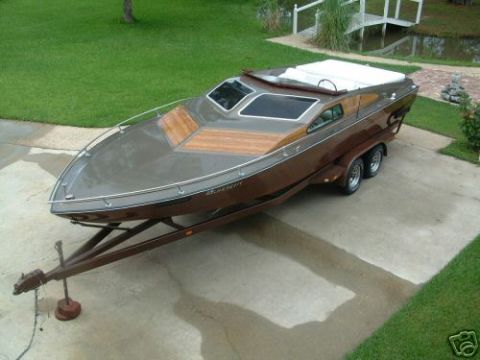
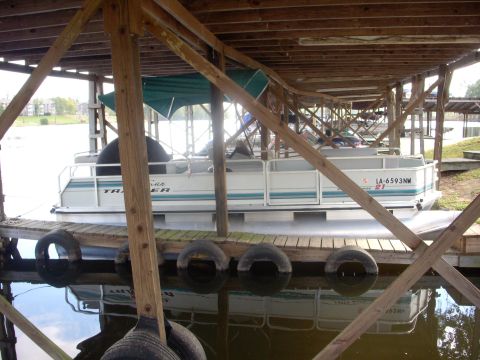
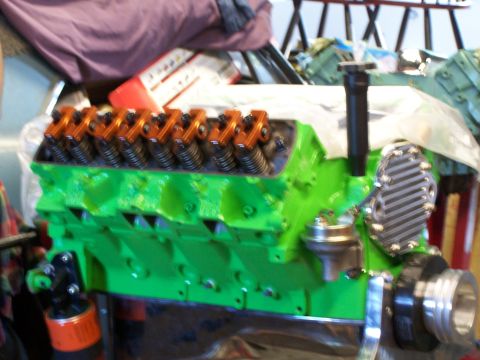
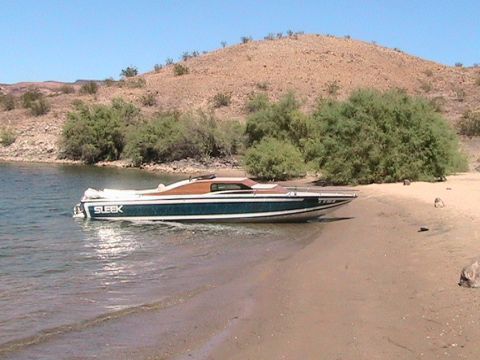
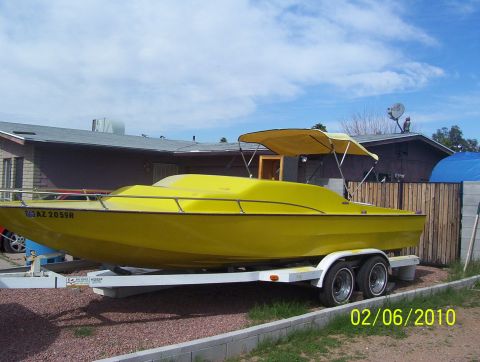
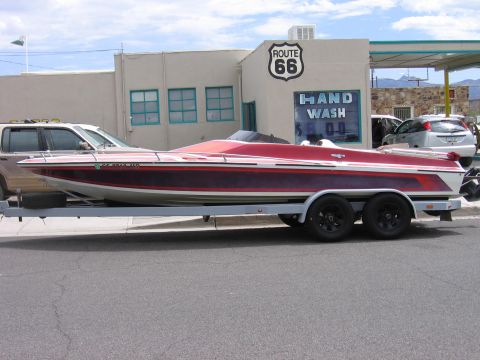
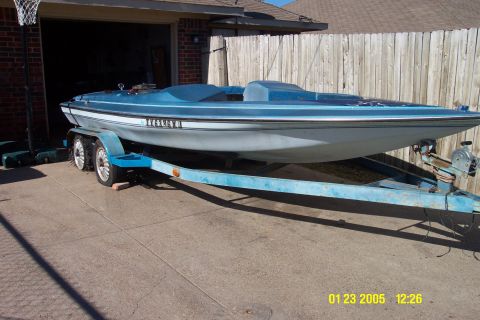
The most-documented SleekCraft vehicles in the registry, every photo by the owner.