The registry
Subaru Registry: Models, Builds & Photos
Subaru is the automobile brand of Subaru Corporation, the Japanese firm founded on July 15, 1953 in Tokyo as Fuji Heavy Industries by Kenji Kita, who consolidated successor companies of the wartime Nakajima Aircraft Company. Kita named the marque Subaru, the Japanese word for the Pleiades star cluster, reflecting the merger of five firms into one. From the 1958 Subaru 360 microcar onward, the company built its identity on horizontally opposed boxer engines and, after 1972, mass-market all-wheel drive, engineering choices rooted in its aircraft heritage. It survived a near-fatal 1980s-90s financial crisis through the Legacy and Outback, world rally titles, and a decisive all-AWD strategy. Fuji Heavy Industries renamed itself Subaru Corporation in 2017; the company remains independent and active today, with Toyota holding roughly a 20 percent stake.
Pick your model
Key facts
| Founded | July 15, 1953, Tokyo, Japan (as Fuji Heavy Industries) |
|---|---|
| Founders | Kenji Kita, consolidating successor companies of the Nakajima Aircraft Company |
| Headquarters | Ebisu, Shibuya, Tokyo, Japan |
| Parent / successor | Subaru Corporation (renamed from Fuji Heavy Industries in 2017); Toyota holds roughly a 20 percent stake |
| Fate / status | Active and independent; automobile brand of Subaru Corporation |
| Best known for | Legacy, Outback, Impreza WRX |
| Registry presence | 81 vehicles / 3,948 photos documented by owners on SuperMotors |
1917-1953: Chikuhei Nakajima's Aircraft Empire and Kenji Kita's Five-Star Salvage
Subaru began not as a car company but as the wreckage of Japan's largest wartime aircraft maker, reassembled by a banker-turned-industrialist named Kenji Kita. The lineage runs to 1917, when former naval engineer Chikuhei Nakajima founded the Aircraft Research Laboratory in Gunma Prefecture, which grew into the Nakajima Aircraft Company, builder of tens of thousands of military aircraft including the Ki-43 Hayabusa fighter. Japan's 1945 defeat destroyed that business at a stroke: occupation authorities banned aircraft production and, under zaibatsu-dissolution policy, broke Nakajima (briefly renamed Fuji Sangyo) into a dozen smaller firms that survived by making bus bodies, engines, and the Fuji Rabbit motor scooter from surplus aircraft parts.
The 1950 Corporate Credit Rearrangement Act had formalized that breakup into twelve companies, but when the occupation ended in 1952 and the restrictions eased, Kenji Kita, then president of Fuji Sangyo's successor interests, drove the reconsolidation. On July 15, 1953, five of the fragments (Fuji Kogyo, Fuji Jidosha Kogyo, Omiya Fuji Kogyo, Utsunomiya Sharyo, and Tokyo Fuji Sangyo) merged to form Fuji Heavy Industries, headquartered in Tokyo. Kita, an enthusiast who reportedly said a Japanese car should carry a Japanese name, chose Subaru, the Japanese name for the Pleiades cluster, whose six visible stars conveniently mirrored the five merged companies plus the new parent. The six-star badge encoded the merger itself.
The founding logic explains everything that followed. Fuji Heavy Industries was staffed by aircraft engineers with no automotive tradition to defer to, so when it turned to cars it reached for aviation solutions: monocoque construction, light weight, and eventually the horizontally opposed engine. The company's first automotive attempt, the 1954 P-1 prototype badged Subaru 1500, showed real sophistication but died after roughly 20 units because the young firm lacked capital and a supplier base to industrialize it. That failure taught Kita's team to aim smaller, a lesson that produced the company's first true hit four years later.
1958-1968: Shinroku Momose, the Subaru 360, and the Kei-Car Beachhead
The 1958 Subaru 360 made Fuji Heavy Industries a real car company by putting postwar Japan on wheels for the price of a large motorcycle. Designed under chief engineer Shinroku Momose, a former Nakajima aircraft man, the 360 answered the government's mid-1950s call for a people's car within the tiny kei-class tax rules: a rear-mounted 356 cc two-stroke twin in a monocoque body weighing under 450 kilograms, with aircraft-style weight discipline in every panel. Nicknamed the ladybug, it stayed in production for twelve years and sold about 392,000 units, giving the company the cash flow and dealer network the failed 1500 never could.
Success in kei cars did not translate abroad. Entrepreneur Malcolm Bricklin began importing the 360 to the United States in 1968 through the newly formed Subaru of America, which he co-founded with Harvey Lamm, exploiting its exemption from federal safety rules by weight. Consumer Reports rated it Not Acceptable in 1969, and the little car's American reputation collapsed, leaving unsold inventory and a lesson the company absorbed: the U.S. market would require a genuinely engineered small car, not a repurposed kei.
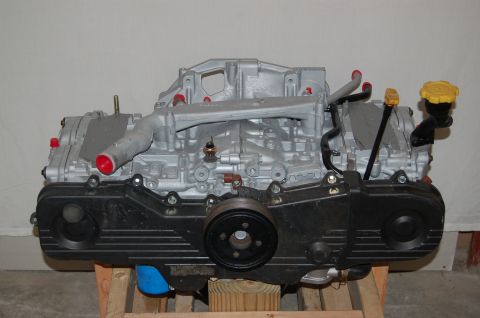
The decisive engineering answer arrived in 1966. The front-wheel-drive Subaru 1000 introduced the water-cooled flat-four boxer engine, chosen by Momose's team for its low center of gravity, short length, and inherent balance, virtues familiar from aircraft practice. Every mainstream Subaru since has carried a boxer, making the 1000 the true technical founding document of the brand. Fuji Heavy Industries ended the decade as a small but distinct player, and in 1968 came under partial Nissan influence when Nissan acquired roughly a 20 percent stake amid government-encouraged industry consolidation, an arrangement that shaped its supplier and product politics for two decades.
1972-1979: The Leone's Four-Wheel-Drive Gamble That Defined the Brand
In 1972 Fuji Heavy Industries stumbled into its brand identity when it bolted four-wheel drive into a mass-market passenger car, the Subaru Leone wagon. The origin was a modest one: Tohoku Electric Power had asked for a car that could carry inspection crews through snowbound mountain routes, and Subaru engineers answered by grafting a driven rear axle onto the front-drive ff-1 1300G van, building a small batch for the utility before engineering the system into the new Leone. The production result, the 4WD Leone wagon launched in September 1972, is generally credited as the first mass-produced four-wheel-drive passenger car, and it repositioned Subaru from maker of cheap small cars to maker of go-anywhere small cars.
The timing was fortunate. The 1973 oil crisis sent American buyers toward economical Japanese imports, and Subaru of America, having survived the 360 debacle, found in the 4WD Leone models a product no competitor matched: farmers, ski-country families, and rural mail carriers in New England and the Rocky Mountain states became the brand's base, a geography Subaru dominates to this day. U.S. sales climbed through the decade, and the marketing line inexpensive, and built to stay that way captured a value-brand positioning the company would later have to escape.
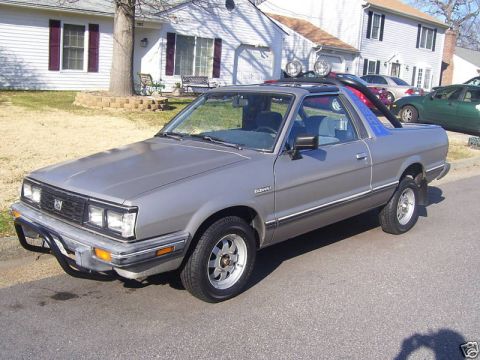
The era's most eccentric product was a direct answer to American trade policy. The 1978 Brat, a small 4WD pickup derived from the Leone, carried two rear-facing jump seats bolted into its bed so it could be classified as a passenger car and dodge the 25 percent chicken tax on imported light trucks. The seats were a customs dodge that became a cult object, and the Brat demonstrated a pattern in Subaru corporate behavior: when blocked, improvise with engineering rather than lobbying. By decade's end the company had a clear formula, boxer engines plus four-wheel drive plus practical bodies, but it remained subscale, dependent on a single U.S. niche, and junior partner in the Nissan relationship.
1980-1989: Cash-Rich Complacency, the XT Wedge, and the Isuzu Detour
The 1980s made Fuji Heavy Industries rich in America and then punished it for not knowing what to do with the money. Voluntary export restraints on Japanese cars from 1981 created artificial scarcity that let importers earn fat margins; Subaru of America, a publicly traded U.S. company since its first stock offering in 1968 and unusual in being independent of its Japanese supplier, posted record profits mid-decade selling every Leone-derived sedan and wagon it could get. But the same export limits pushed rivals upmarket with fresh product while Subaru's aging, oddly styled lineup stood still.
The company's attempt at image renewal was the 1985 XT, a wedge-shaped coupe with aircraft-inspired cockpit instruments and a claimed drag coefficient of 0.29, among the lowest of any production car then sold. It advertised Subaru's aerospace lineage but sold poorly, because a value brand could not command coupe prices, and it symbolized a lineup drifting from the customers who actually bought Subarus. When the yen surged after the 1985 Plaza Accord, the economics collapsed: dollar revenues no longer covered yen costs, U.S. sales slid from their mid-decade peak, and Subaru of America went from record profits to heavy losses within three years. Fuji Heavy Industries bought out its independent American distributor in 1990 to stop the bleeding.
The manufacturing response was a joint venture that later proved more valuable than it looked. In 1987 Fuji Heavy Industries and Isuzu formed Subaru-Isuzu Automotive in Lafayette, Indiana, opening in 1989 to build the Subaru Legacy alongside Isuzu trucks. The plant hedged currency risk and trade friction, and after Isuzu exited in 2002 it became Subaru of Indiana Automotive, the company's only assembly plant outside Japan and the anchor of its U.S. business. The decade closed with the company in genuine peril, propped up in part by its Nissan shareholding relationship, and betting survival on one clean-sheet car.
1989-1995: The Legacy Bet, Near-Bankruptcy, and Colin McRae's Rally Salvation
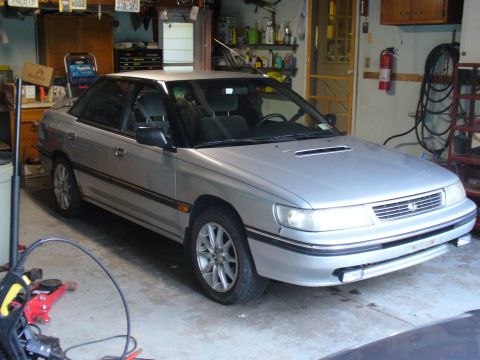
The 1989 Subaru Legacy was a bet-the-company car, and for several years it looked like a losing one. Fuji Heavy Industries spent heavily on an all-new midsize platform intended to lift the brand out of the cheap-and-cheerful basement, launching it with endurance speed records at Arizona Test Center to advertise its seriousness. But the early 1990s brought the collapse of Japan's bubble economy, continued U.S. losses, and red ink deep enough that Fuji Heavy Industries was widely reported to be near failure; Nissan, itself weakening, could not rescue its affiliate, and the Lafayette plant ran far under capacity.
Two decisions made in the depths of that crisis saved the company. The first was motorsport as brand surgery. Fuji Heavy Industries partnered with David Richards' British firm Prodrive in 1989 to run the Subaru World Rally Team, moving from the Legacy to the smaller Impreza, launched in 1992 as the Legacy's compact sibling. Colin McRae's 1995 World Rally Championship drivers' title, paired with Subaru's first of three consecutive manufacturers' titles from 1995 to 1997, transformed the blue-and-gold Impreza into a performance icon and gave a struggling value brand global credibility money could not buy.
The second decision was strategic monoculture. Under the leadership of the mid-1990s, including president Isamu Kawai and, on the American side, Subaru of America president George Muller, the company concluded it could not survive as a full-line also-ran and committed in 1996 to making essentially every vehicle it sold in the United States all-wheel drive. The move discarded price-fighting front-drive variants and staked the brand entirely on the traction identity the 1972 Leone had discovered by accident. It was a narrowing that looked defensive at the time and proved to be the most profitable focusing decision in the company's history.
1995-1999: The Outback Invention and the Crossover Formula the Industry Copied
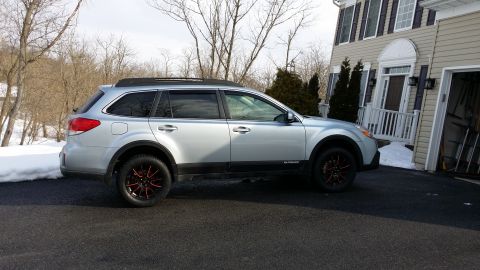
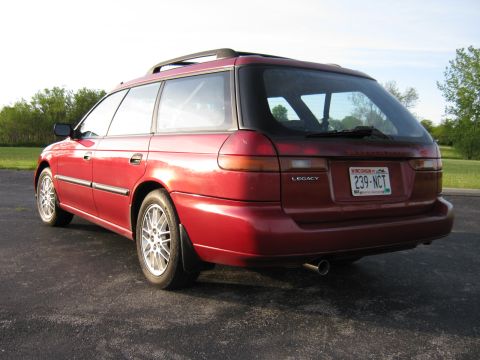
In 1995 Subaru of America invented a vehicle category with body cladding, a suspension lift, and Paul Hogan. Facing an SUV boom it had no truck to answer, the company took the Legacy wagon, raised it, added rugged trim, and named it the Outback, marketing it as the world's first sport utility wagon with the Crocodile Dundee actor as pitchman. The concept originated with Subaru of America, which lacked the money to develop an all-new SUV and instead reworked what it had in partnership with Fuji Heavy Industries, and it worked immediately: the Outback reversed Subaru's U.S. sales decline and eventually became its best-selling model line, proving buyers wanted SUV attitude with car behavior. The raised-wagon crossover template it established is now the dominant body style of the global industry.
The formula was quickly extended. The 1997 Forester put a taller body on the Impreza platform, an early compact crossover that beat most rivals to the segment, and it gave Subaru a second pillar in the exact heart of where the market was heading. Together the Outback and Forester converted the all-AWD strategy from a survival gambit into a growth engine; Subaru's U.S. volume climbed steadily through the late 1990s while its Japanese home market share stayed modest, cementing the company's unusual identity as a Japanese firm whose true home market is the United States.
The decade also closed the Nissan chapter. When Nissan's own crisis forced it into the Renault alliance in 1999, it sold its roughly 20 percent Fuji Heavy Industries stake to General Motors, ending three decades of Nissan affiliation. The GM tie-up brought badge-engineering obligations and a new set of corporate politics, but it arrived with Subaru finally profitable, focused, and carrying a coherent brand for the first time since the 1970s.
1999-2008: The General Motors Interlude, the Baja Misfire, and Toyota's Arrival
General Motors' 1999 purchase of 20 percent of Fuji Heavy Industries produced one of the least consequential alliances in modern auto history, and its unwinding handed Subaru to Toyota. GM's tenure yielded scattered badge engineering: the Subaru Traviq minivan (a rebadged Opel Zafira) for Japan, and the Saab 9-2X, an Impreza wagon in Saab clothes built for the U.S. that dealers nicknamed the Saabaru and buyers largely ignored. A planned Saab version of the Tribeca SUV died on the drawing board. The alliance gave Subaru little technology and less strategy, and when GM's own finances tightened it sold its entire stake in 2005.

The era's homegrown misfire was the 2003 Baja, an Outback-based four-door pickup built at the Lafayette, Indiana plant as a spiritual Brat successor. Planned for around 24,000 units a year, it sold roughly 30,000 in total across four model years before cancellation in 2006, a reminder that Subaru's quirk only sold when attached to practicality. Meanwhile the rally program that had built the brand wound down: after Petter Solberg's 2003 drivers' title, results faded, and Fuji Heavy Industries withdrew the Subaru World Rally Team at the end of 2008, citing the global financial crisis. The competitive halo survived the exit; the Impreza WRX and STI remained the brand's performance franchise.
The pivotal event was who bought GM's shares. Toyota took 8.7 percent of Fuji Heavy Industries in 2005 and later raised its stake toward 16-17 percent, bringing production work (Camry assembly at the Indiana plant from 2007) and, eventually, the jointly developed Toyota 86/Subaru BRZ sports car built at Subaru's Gunma works. Unlike GM, Toyota wanted Subaru to stay Subaru, an arms-length patronage that stabilized the company heading into the 2008 crash.
2008-2016: Ikuo Mori, Yasuyuki Yoshinaga, and the Improbable American Boom
Between 2008 and 2016 Subaru pulled off the industry's least likely feat: it grew straight through the global financial crisis and roughly doubled its U.S. sales while spending less than almost any rival. Under presidents Ikuo Mori and, from 2011, Yasuyuki Yoshinaga, Fuji Heavy Industries ran a deliberate small-giant strategy: few platforms, no discount volume, capacity kept slightly below demand to protect pricing, and marketing built on emotion rather than specification. Subaru of America's Love campaign, launched in 2008 with agency Carmichael Lynch, tied the brand to dogs, families, and longevity, and U.S. volume rose from about 187,000 cars in 2008 to more than 600,000 by 2016, with operating margins that were repeatedly the highest in the volume-car industry.
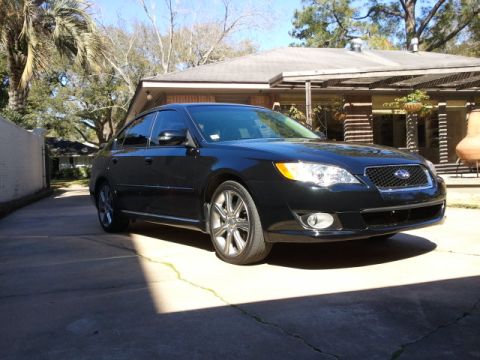
Product discipline drove the run. The 2010 Outback grew to true midsize dimensions and became a mainstream family default; the Forester's 2014 redesign hit the compact-crossover boom squarely; the 2012 Impreza-based Crosstrek gave younger buyers an entry point. Safety became the second brand pillar with the stereo-camera EyeSight driver-assist system, introduced in Japan in 2008 and in the U.S. from 2012, which let a small company match the safety marketing of far larger ones. The Lafayette, Indiana plant expanded repeatedly to keep up, and the weak yen after 2012 turned the export-heavy business into a profit machine.
Success forced an identity question the company answered symbolically. Aerospace remained a real business, building parts for Boeing and helicopters for Japan's defense ministry, but automobiles now produced the vast majority of revenue. On April 1, 2017, following Yoshinaga's announcement, Fuji Heavy Industries renamed itself Subaru Corporation, retiring the founding name after 64 years so the company would finally be called what the world already called it.
2017-2026: Subaru Corporation, the Quality Reckoning, and the Toyota-Tethered Electric Turn
Subaru Corporation's first decade under its new name has been a lesson in the costs of growing faster than your engineering culture. The lean-capacity strategy that produced record margins also strained development and inspection resources, and the bill came due: a 2017 scandal over decades of improper final vehicle inspections at Japanese plants, followed by large recalls, engine and brake-related quality problems, and executive apologies. Yasuyuki Yoshinaga stepped aside, and Tomomi Nakamura became president in 2018 with a mandate to rebuild quality assurance even at the expense of the famous margins, which duly compressed. U.S. sales nonetheless kept setting records into 2019 at over 700,000 units, evidence of how deep the brand loyalty built since the 1990s ran.
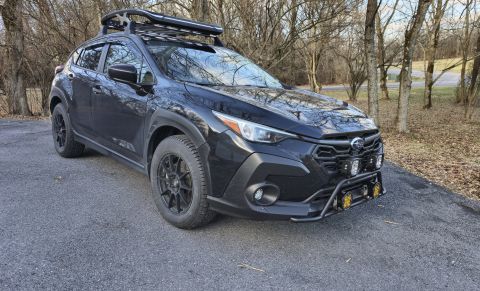
The electric transition drove Subaru deeper into Toyota's orbit, by necessity rather than choice. A company of Subaru's size, selling roughly a million vehicles a year worldwide, cannot fund battery-electric platforms alone, so in 2019 Toyota raised its stake to about 20 percent, Subaru took a small reciprocal holding, and the two co-developed a dedicated EV architecture that yielded the Solterra, twin to Toyota's bZ4X, launched in 2022. Further co-developed EVs followed, along with plans for U.S. battery-electric production, with the Indiana plant the leading candidate, and a shared hybrid strategy, with Subaru committing to boxer-based strong hybrids using Toyota system components to bridge the gap while its American buyers stay loyal to gasoline all-wheel drive.
As of 2026, an aircraft company's fragments have become a niche automaker that nearly died twice and survived by narrowing rather than broadening: boxer engines, symmetrical all-wheel drive, one overseas plant, one dominant market. Subaru Corporation remains independent, profitable, headquartered in Ebisu, Tokyo, and still wears the six stars of the Pleiades that named the 1953 merger.
Leadership
| Leader | Tenure | Role and era |
|---|---|---|
| Kenji Kita | 1953-1956 | First president; led the five-company merger and personally chose the Subaru name |
| Takao Yoshida | 1956-1963 | President; Subaru 360 launch and kei-car expansion |
| Nobuo Yokota | 1963-1970 | President; Subaru 1000 boxer engine, 1968 Nissan capital tie-up |
| Eiichi Ohara | 1970-1978 | President; 4WD Leone wagon and U.S. growth through the oil crisis |
| Sadamichi Sasaki | 1978-1985 | President; Brat era and peak export-restraint profits |
| Toshihiro Tajima | 1985-1990 | President; post-Plaza Accord downturn, Subaru-Isuzu Automotive joint venture |
| Isamu Kawai | 1990-1996 | President, sent from Nissan amid heavy losses; Legacy bet and buyout of Subaru of America |
| Takeshi Tanaka | 1996-2001 | President; all-AWD strategy matures, Outback-led U.S. recovery, GM alliance begins |
| Kyoji Takenaka | 2001-2006 | President; GM interlude unwinds, Toyota takes its first stake in 2005 |
| Ikuo Mori | 2006-2011 | President; growth through the financial crisis, rally-program exit, EyeSight debut |
| Yasuyuki Yoshinaga | 2011-2018 | President; record U.S. boom, rename to Subaru Corporation, 2017 inspection scandal |
| Tomomi Nakamura | 2018-2023 | President and CEO; quality-assurance rebuild, deepened Toyota alliance to 20 percent |
| Atsushi Osaki | 2023-present | President and CEO; electrification push and next-generation hybrid strategy with Toyota |
On the American side, Malcolm Bricklin and Harvey Lamm founded Subaru of America in 1968 as an independent distributor; SOA president George Muller (from 1993) drove the 1996 decision to sell only all-wheel-drive vehicles in the United States.
Timeline
| 1917 | Chikuhei Nakajima founds the Aircraft Research Laboratory in Gunma Prefecture, forerunner of the Nakajima Aircraft Company |
|---|---|
| 1945 | Japan's defeat ends aircraft production; Nakajima is renamed Fuji Sangyo |
| 1950 | Fuji Sangyo is split into twelve companies under the Corporate Credit Rearrangement Act |
| 1953 | Five successor firms merge on July 15 to form Fuji Heavy Industries under Kenji Kita |
| 1954 | P-1 prototype (Subaru 1500) built; roughly 20 units before cancellation |
| 1958 | Subaru 360 kei car launches; about 392,000 sold over twelve years |
| 1966 | Subaru 1000 introduces the flat-four boxer engine |
| 1968 | Malcolm Bricklin and Harvey Lamm found Subaru of America; Nissan takes a roughly 20 percent stake in FHI |
| 1972 | 4WD Leone wagon launches in September, the first mass-produced four-wheel-drive passenger car |
| 1978 | Brat pickup debuts with chicken-tax-dodging jump seats |
| 1985 | XT coupe debuts; Plaza Accord yen surge ends the U.S. profit boom |
| 1989 | Legacy launches with 100,000 km FIA speed records in Arizona; Subaru-Isuzu Automotive opens in Lafayette, Indiana |
| 1990 | FHI buys out Subaru of America; Isamu Kawai arrives as president amid crisis |
| 1995 | Colin McRae wins the WRC drivers' title; Legacy-based Outback launches in the U.S. |
| 1996 | Subaru of America commits to an all-wheel-drive-only lineup |
| 1997 | Forester debuts, an early compact crossover |
| 1999 | Nissan sells its stake to General Motors |
| 2005 | GM exits; Toyota buys an initial 8.7 percent of FHI |
| 2008 | EyeSight debuts in Japan; Subaru World Rally Team withdrawn; Love campaign launches in the U.S. |
| 2017 | Fuji Heavy Industries becomes Subaru Corporation on April 1; final-inspection scandal breaks in Japan |
| 2019 | Toyota raises its stake to about 20 percent; Subaru of America sets its all-time record of 700,117 sales |
| 2022 | Solterra EV, co-developed with Toyota, launches |
| 2023 | Atsushi Osaki becomes president and CEO, steering the electrification push |
Asked all the time
Who founded Subaru?
Kenji Kita founded the company on July 15, 1953 in Tokyo as Fuji Heavy Industries, consolidating five successor firms of the wartime Nakajima Aircraft Company. Kita personally chose the name Subaru, the Japanese word for the Pleiades star cluster, to mark the merger of five companies into one.
Is Subaru still in business?
Yes. Fuji Heavy Industries renamed itself Subaru Corporation in 2017 and remains an independent, active automaker headquartered in Ebisu, Shibuya, Tokyo, with Toyota holding roughly a 20 percent stake.
What does the name Subaru mean?
Subaru is the Japanese name for the Pleiades star cluster. The six-star badge represents the five companies Kenji Kita merged into Fuji Heavy Industries in 1953 plus the unified firm itself.
Does Toyota own Subaru?
No. Toyota holds roughly a 20 percent stake, first bought in 2005 after General Motors sold its holding, but Subaru Corporation remains an independent company. The alliance produced the jointly developed BRZ/86 sports cars and the Solterra electric vehicle.
Why does Subaru use boxer engines and all-wheel drive?
The horizontally opposed boxer layout, introduced with the 1966 Subaru 1000, traces to the company's aircraft-engineering heritage from Nakajima Aircraft. Mass-market four-wheel drive followed with the 1972 Leone wagon, and after its 1990s financial crisis the company committed to all-wheel drive across nearly its whole lineup.
Did Subaru almost go bankrupt?
Yes. Fuji Heavy Industries posted heavy losses in the early 1990s as its 1980s products aged. The 1989 Legacy, the 1995 Outback, Colin McRae's 1995 world rally championship, and a decisive all-AWD strategy pulled the company back to profitability.
When did Subaru come to America?
Malcolm Bricklin's Subaru of America began importing the Subaru 360 microcar in 1968. The 1972 Leone's four-wheel drive, the 1995 Outback, and the post-2008 pivot under Ikuo Mori and Yasuyuki Yoshinaga made the United States Subaru's dominant market.
What is the connection between Subaru and Nakajima Aircraft?
Chikuhei Nakajima founded Nakajima Aircraft in 1917, and it grew into Japan's largest wartime aircraft maker. Occupation authorities dissolved it after 1945, and in 1953 Kenji Kita reunited five of its successor companies as Fuji Heavy Industries, the firm that became Subaru Corporation.
The wall
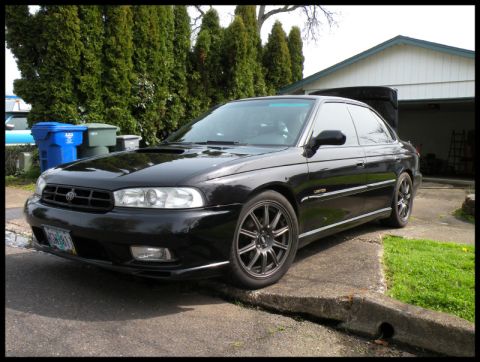
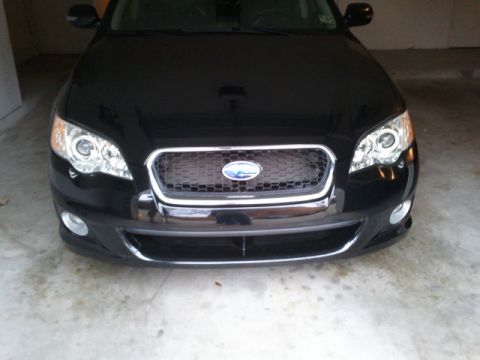
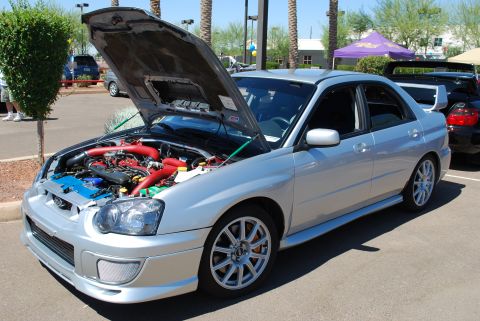
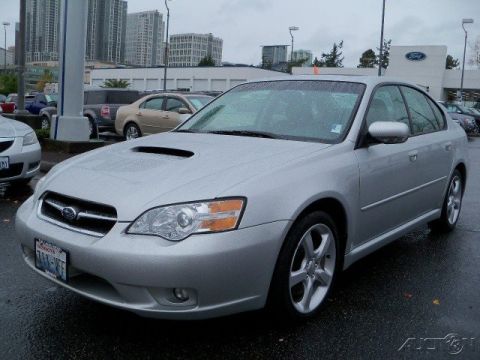
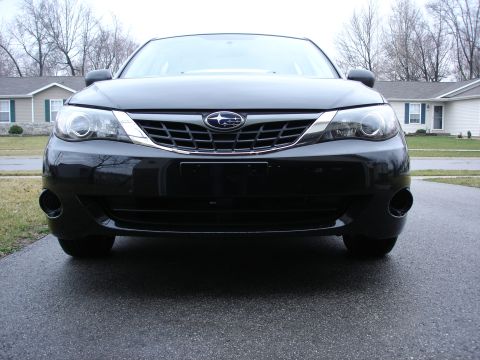
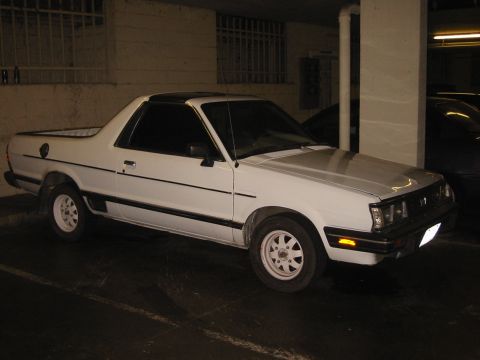
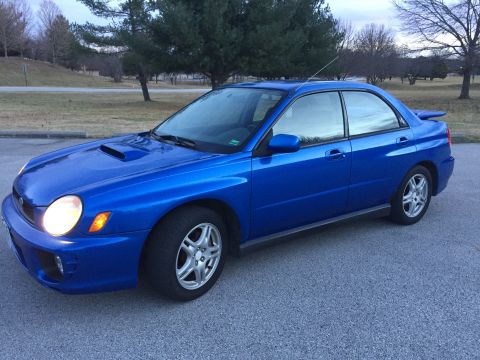
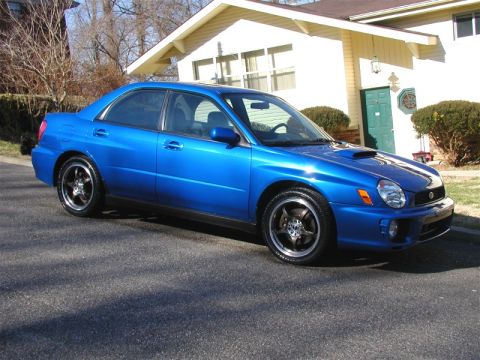
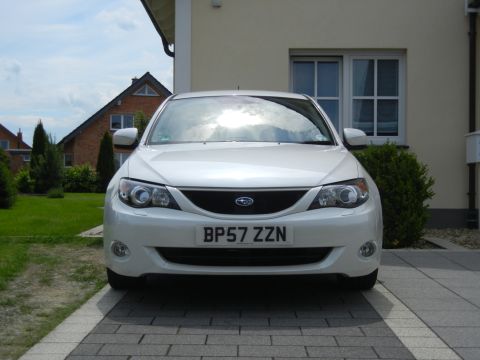
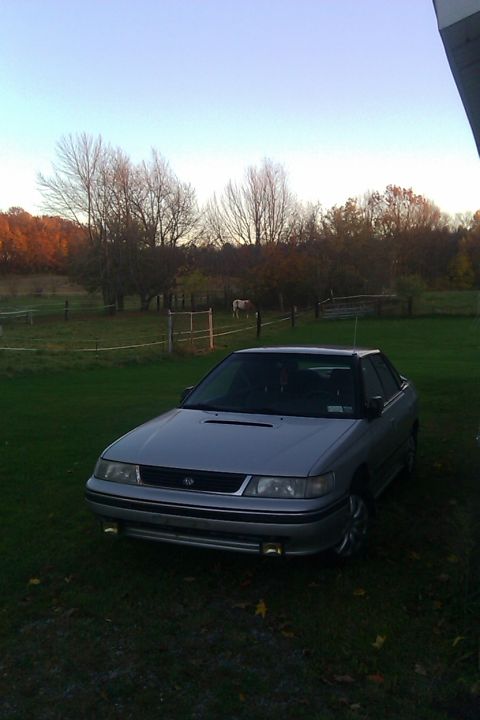
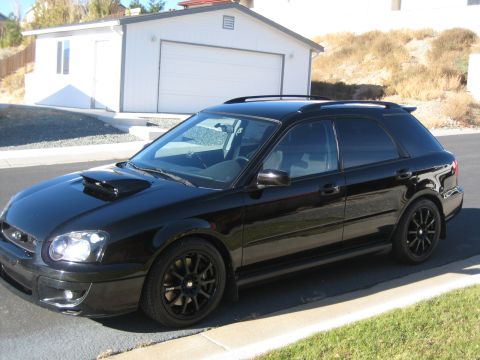
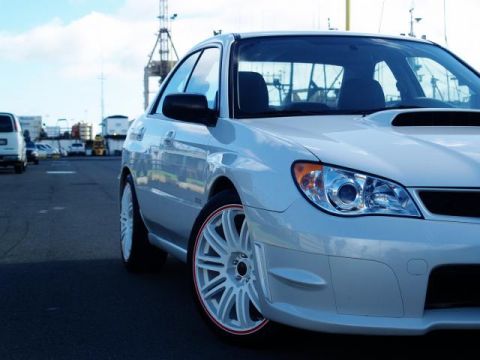
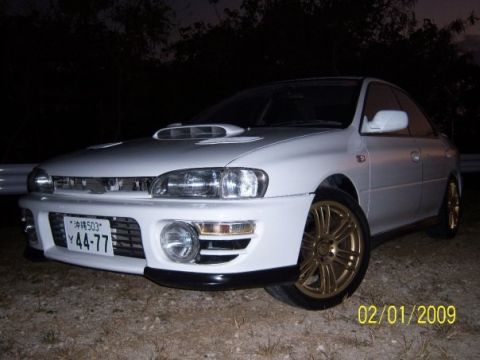
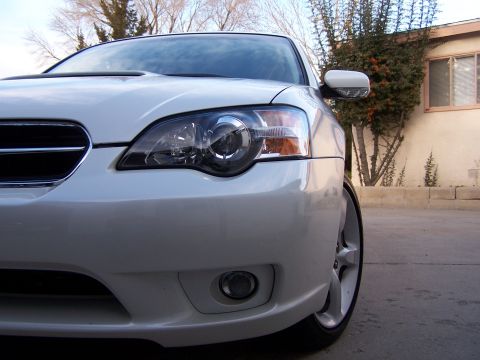
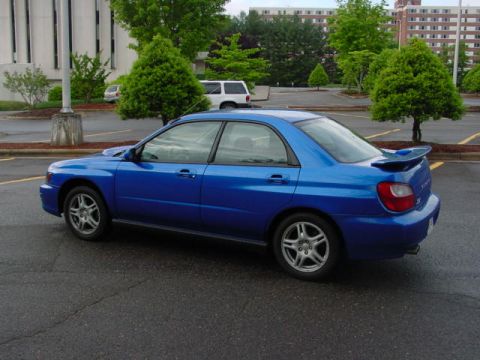
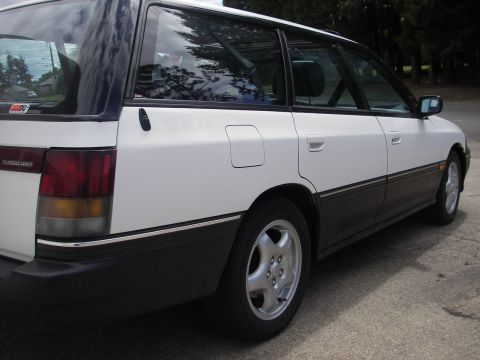
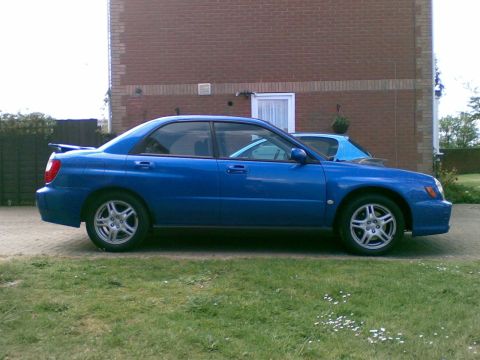
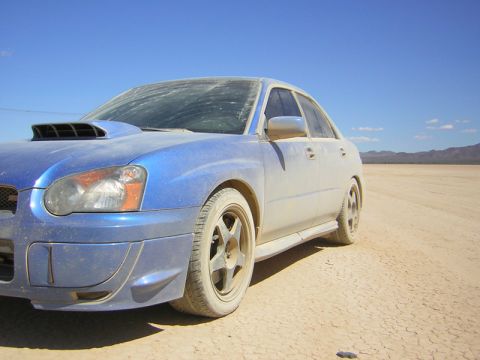
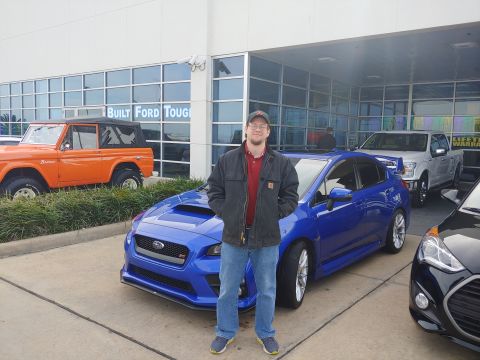
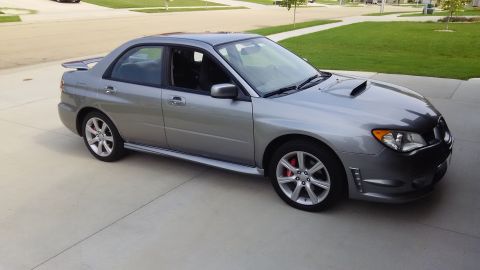
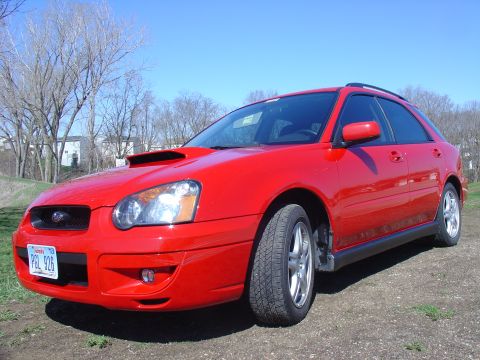
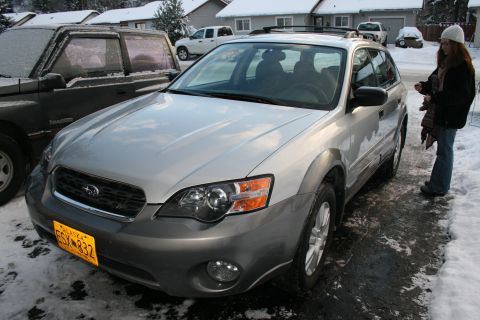
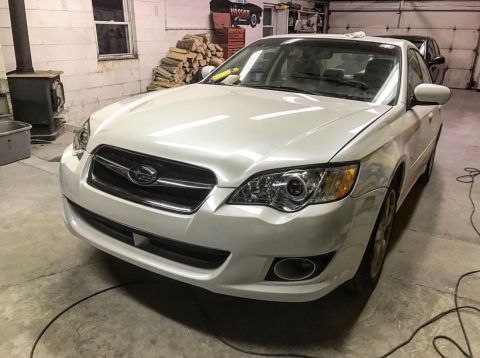
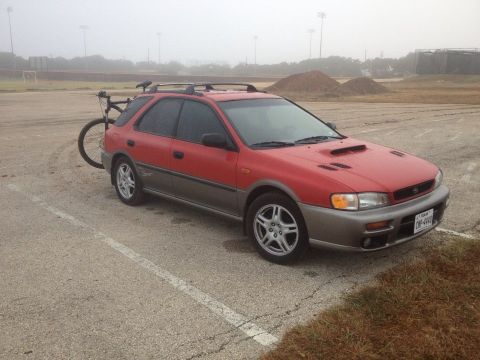
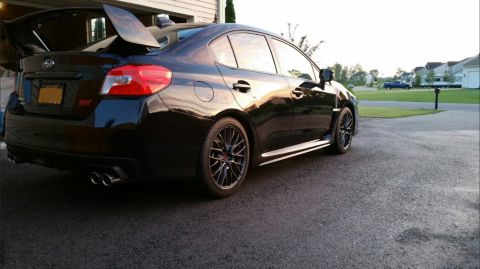
The most-documented Subaru vehicles in the registry, every photo by the owner.