The registry
Toyota Registry: Models, Builds & Photos
Toyota Motor Corporation is a Japanese automaker founded on August 28, 1937, in Aichi Prefecture by Kiichiro Toyoda, who spun the car business out of his father Sakichi's Toyoda Automatic Loom Works using money from a landmark loom patent sale. The company nearly died in a 1949-1950 cash crisis, then rebuilt itself around the Toyota Production System, the just-in-time manufacturing method developed by Taiichi Ohno that became the template for modern industry. Toyota conquered America with the Corolla, pickups, and the Camry, invented the mass-market hybrid with the 1997 Prius, launched Lexus in 1989, and survived the 2009-2010 unintended-acceleration recall crisis under family scion Akio Toyoda. Still headquartered in Toyota City, Japan, it remains the world's largest automaker by volume, selling roughly ten to eleven million vehicles a year.
Pick your model
Key facts
| Founded | August 28, 1937, in Aichi Prefecture, Japan |
|---|---|
| Founders | Kiichiro Toyoda, spinning the automobile department out of his father Sakichi Toyoda's Toyoda Automatic Loom Works |
| Headquarters | Toyota City, Aichi, Japan |
| Parent / successor | Independent; became Toyota Motor Corporation in 1982 when Toyota Motor Co. and Toyota Motor Sales merged |
| Fate / status | Active; the world's largest automaker by volume, selling roughly ten to eleven million vehicles a year |
| Best known for | Corolla, Land Cruiser, Prius |
| Registry presence | 217 vehicles / 8,323 photos documented by owners on SuperMotors |
1924-1937: Sakichi Toyoda's Loom Money and Kiichiro's Gamble on Cars
Toyota began not with an engine but with a loom: the Type G automatic loom Sakichi Toyoda perfected in 1924 generated the capital and the philosophy that built the car company. Sakichi's loom stopped itself the instant a thread broke, a principle later called jidoka, and when Britain's Platt Brothers bought the patent rights in 1929 for about 100,000 pounds, the money went to Sakichi's son Kiichiro with, by family account, a charge to do for Japan in automobiles what the father had done in textiles.
Kiichiro Toyoda, a mechanical engineer trained at Tokyo Imperial University, opened an automobile department inside Toyoda Automatic Loom Works in 1933. His team reverse-engineered American hardware: the first engine, the Type A of 1934, drew heavily on the Chevrolet straight six, and the 1936 Model AA sedan borrowed styling cues from the Chrysler Airflow. The Japanese government's 1936 Automobile Manufacturing Industries Act, designed to push Ford and General Motors assembly operations out of Japan, handed the fledgling business a protected home market it might not have secured on cost and quality alone.
On August 28, 1937, the automobile department was spun off as Toyota Motor Co., Ltd., capitalized at 12 million yen, with Kiichiro's brother-in-law Risaburo Toyoda as first president and Kiichiro as executive vice president running operations. The name changed from Toyoda to Toyota partly because the katakana rendering took eight brush strokes, an auspicious number, and partly to separate the company from the family name. The Koromo plant, opened in 1938 in the town that would later rename itself Toyota City, was laid out to Kiichiro's just-in-time idea: parts should arrive at the line only as needed, eliminating warehoused inventory. That notion, sketched before the war, would take another two decades and another man to become a system.
1937-1950: War Trucks, Ruin, and the Bank Crisis That Cost Kiichiro Toyoda His Job
The near-death of Toyota Motor Co. in 1949 shaped its behavior for the next seventy years more than any product ever did. Through the Pacific War the company built trucks for the Imperial Japanese Army, crude machines assembled under material shortages so severe that late-war examples left the factory with single headlights and wooden cabs. The main plant escaped serious bombing; Japan surrendered the day a planned raid on Koromo was to be reviewed, by company lore, and Toyota restarted truck production under Allied occupation rules that initially banned passenger cars.
The reckoning came with the Dodge Line, the 1949 anti-inflation austerity program imposed on Japan, which collapsed truck demand and left Toyota unable to meet payroll. A consortium led by the Bank of Japan's Nagoya branch rescued the company on hard terms: workforce reductions, and the separation of sales into an independent company, Toyota Motor Sales, run by Shotaro Kamiya, the former GM Japan executive whose dealer-network genius later earned him the nickname the god of sales. A two-month strike followed in 1950, and roughly 2,000 workers left. Kiichiro Toyoda resigned the presidency to take responsibility, an act that fixed two permanent Toyota traits: an obsession with holding cash rather than debt, and a labor settlement that traded lifetime employment for union cooperation.
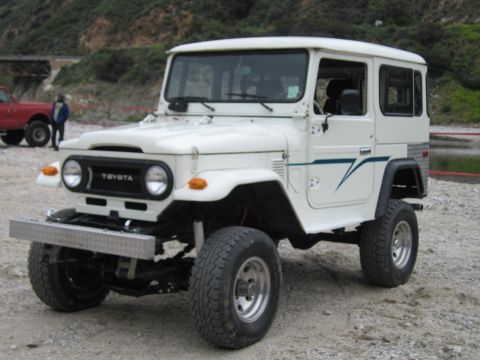
Taizo Ishida, a loom-works manager with no romance about cars, took over as president and enforced financial discipline. Kiichiro was preparing to return when he died of a cerebral hemorrhage in March 1952, aged 57. Salvation had already arrived from an unlikely source: the Korean War, which broke out weeks after the strike ended and brought U.S. military orders for over 4,600 trucks, refilling the treasury the crisis had emptied. The same era produced the Toyota BJ, the Jeep-inspired four-wheel-drive that in 1954 took the name Land Cruiser and became the company's longest-lived model line and its ambassador to markets with no paved roads.
1950-1962: Eiji Toyoda, Taiichi Ohno, and the Invention of the Toyota Production System
In the summer of 1950 Eiji Toyoda, Kiichiro's cousin, spent weeks studying Ford's River Rouge complex and came home convinced that copying Detroit was impossible and unnecessary. The Rouge turned out 7,000 vehicles a day; Toyota had built 2,685 cars in thirteen years. Scale was not available, so Toyota would have to compete on waste elimination. The man who turned that necessity into a system was Taiichi Ohno, a machinist-turned-manager transferred from the loom business, who spent the 1950s reorganizing Toyota's shops around two pillars: just-in-time flow, inspired partly by American supermarket restocking, and jidoka, Sakichi's stop-the-line-on-defect principle carried over from looms. Kanban cards to pull parts through the plant, rapid die changes, multi-machine operators, and the andon cord any worker could pull became the Toyota Production System, though the company did not codify or name it publicly until the 1970s.
Product ambition returned alongside process discipline. The 1955 Crown was the first passenger car Toyota engineered wholly in-house, aimed at Japan's taxi fleets and the small managerial class. The Motomachi plant, opened in 1959 as Japan's first dedicated passenger-car factory, signaled that Ishida's cash-hoarding years had funded a real bet on cars rather than trucks. That same year the town of Koromo renamed itself Toyota City, a measure of how completely the company had become the region's economy. By 1962 domestic production passed one million cumulative vehicles, and the labor-management joint declaration signed that year formalized the postwar peace: no strikes of consequence have interrupted Toyota's Japanese plants since.
1957-1965: Shotaro Kamiya's American Beachhead and the Toyopet Humiliation
Toyota's first attempt on the American market, launched in 1957, was a failure so complete that it taught the company more than any success. Toyota Motor Sales U.S.A. opened in Hollywood, California, in October 1957 at the urging of Shotaro Kamiya, who feared that if Toyota waited, European imports would lock up the small-car niche. The product was the Toyopet Crown, a car engineered for Japanese city speeds. On American freeways it overheated, vibrated, and lacked the power to hold 60 mph gracefully; U.S. sales totaled only a few hundred units a year, and by 1960 Toyota withdrew passenger cars from the market entirely, keeping only a trickle of Land Cruiser sales alive through the drought.
Rather than retreat for good, Toyota treated the humiliation as a requirements document. Engineers benchmarked American driving conditions explicitly, and the resulting Corona of 1964, sold in the U.S. from 1965 with available automatic transmission and air conditioning, was the first Japanese car built to American use rather than adapted to it. It worked: Corona tripled Toyota's U.S. sales in its first full year and gave dealers something to sell besides apologies. The pattern set here repeated for decades. Toyota entered markets cautiously, absorbed failure without abandoning the objective, and re-entered with a product engineered against the specific reasons for the earlier defeat. Meanwhile at home, Japan's income-doubling boom and the government's motorization push were creating, for the first time, ordinary families who could buy a car, and Toyota was about to build the car for them.
1966-1973: The Corolla, the Hilux, and the Machine That Motorized Two Continents
The car that made Toyota a mass manufacturer arrived in November 1966, priced for the Japanese family that had never owned one. The Corolla, developed under chief engineer Tatsuo Hasegawa with a philosophy he called an 80-point car with no zero-point features, deliberately one-upped rival Datsun's Sunny by 100 cc of displacement and beat it to market momentum. It became Japan's best seller almost immediately, reached the U.S. in 1968, and eventually became the best-selling car nameplate in world history, with cumulative sales passing 50 million. For the corporation, the Corolla's significance was industrial: it justified the Takaoka plant, built in 1966 expressly for high-volume TPS production, and it converted Toyota from a maker of taxis and trucks into a consumer brand.
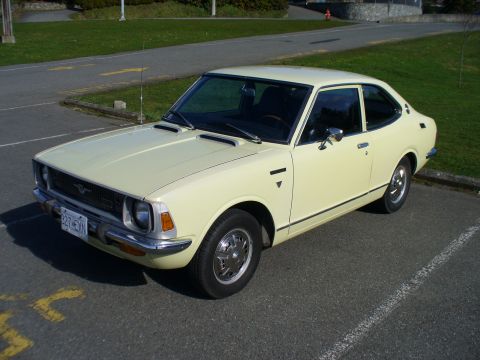
The same era produced the other pillar of Toyota's export identity. The Hilux compact pickup of 1968, sold in North America simply as the Toyota truck, gave the company a product Detroit did not take seriously and emerging markets could not get enough of; its descendants would carry Toyota's durability reputation everywhere from Australian cattle stations to war zones. In 1970 the Celica arrived as Toyota's answer to the Mustang formula, a cheap coupe body over sedan mechanicals, created to give the young brand emotional range beyond appliance transport.
Corporate structure hardened around the growth. Eiji Toyoda became president in 1967 and would run the company through its greatest expansion. By 1972 cumulative production passed ten million vehicles, and Toyota Motor Sales' Kamiya-built U.S. dealer network was outperforming every import rival. Then, in October 1973, the OPEC embargo quadrupled oil prices, and the small, frugal cars Toyota had been building out of Japanese necessity suddenly looked like foresight.
1973-1983: Oil Shocks, Trade War, and the Merger That Made Toyota Motor Corporation
The 1973 oil crisis did for Toyota what no marketing campaign could: it converted American fuel economy anxiety into Japanese market share. Toyota passed Volkswagen in 1975 to become the best-selling import brand in the United States, and U.S. volume ran past 500,000 units a year by the late 1970s, led by the Corolla and compact trucks. The second oil shock of 1979 accelerated the shift just as Detroit's small-car stumbles, the Pinto and Vega among them, handed Toyota a durability reputation by contrast. Success bred backlash. With U.S. unemployment climbing, Japanese imports became a political target, and in 1981 Japan's government accepted the Voluntary Export Restraint, capping car shipments to the U.S. at 1.68 million units industry-wide. The quota reshaped Toyota's strategy in two lasting ways: constrained volume pushed the company upmarket toward higher-profit cars, and it made building factories inside the United States inevitable.
Internally, the era ended the strange 1950 divorce between making and selling. In July 1982 Toyota Motor Co. and Toyota Motor Sales, separated by the bank rescue three decades earlier, merged into Toyota Motor Corporation under president Shoichiro Toyoda, Kiichiro's son, restoring the founding family to operational command with Eiji Toyoda as chairman. The recombined company immediately launched two projects that defined the next decade: a joint venture with General Motors to test whether the Toyota Production System could work with American labor, and a secret flagship program, coded F1, that would become Lexus. The first fruit of the new corporation's product thinking was the 1982 Camry, a front-wheel-drive family sedan aimed squarely at the American middle class, created because the rear-drive Corona-class cars could no longer match the packaging of GM's front-drive X-cars. Few launches have ever paid off longer.
1984-1989: NUMMI, Georgetown, and Teaching America the Toyota Production System
When New United Motor Manufacturing Inc. opened in Fremont, California, in 1984, it settled the most contested question in the auto industry: Toyota's advantage traveled. The 50-50 joint venture with General Motors reopened a closed GM plant notorious for absenteeism and sabotage, rehired most of the same UAW workforce, applied the Toyota Production System, and within two years was building Corolla-based Chevrolet Novas at quality levels matching Japan. GM got a lesson it largely failed to absorb; Toyota got something more valuable, proof that it could manufacture with American workers before betting billions on its own plants.
The bet followed immediately. Toyota Motor Manufacturing Kentucky broke ground in Georgetown in 1986 and shipped its first Camry in May 1988, beginning the localization drive that would eventually make Toyota one of the largest manufacturing employers in the American South. A Cambridge, Ontario plant opened the same year. The 1985 Plaza Accord, which nearly doubled the yen's value against the dollar in two years, turned localization from strategy into survival: cars exported from Japan were becoming unprofitable at American prices.
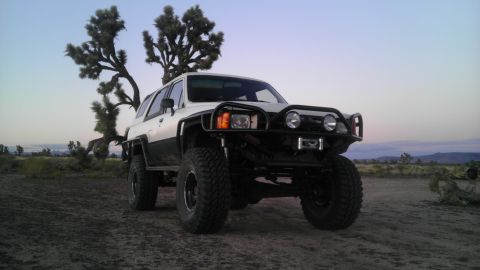
The product line of the era showed a company rich enough to be playful. The 1984 MR2, a mid-engine two-seater built from parts-bin economy-car components, and the Supra, split from the Celica line in 1986 as a standalone grand tourer, existed to shed Toyota's appliance image with the young buyers the brand would need for decades. The trucks did the volume work: the Pickup earned a folk reputation for indestructibility, and the 1984 4Runner, initially little more than that truck with a fiberglass shell and rear seats, put Toyota early into the SUV wave that would dominate the 1990s. In 1986 Toyota became the first import brand to sell one million vehicles in the U.S. in a single year.
1989-1994: The Lexus Gamble, Bubble-Era Excess, and the Yen Squeeze
On September 1, 1989, Toyota Motor Corporation put a decade of profit and its engineering reputation behind a single question: would Americans pay Mercedes money for a Japanese car? The answer was the Lexus LS 400, product of the F1 program launched in 1983 under chief engineer Ichiro Suzuki, developed with a reported budget over $1 billion, 450 prototypes, and obsessive benchmarks against the Mercedes S-Class and BMW 7 Series. Priced around $35,000, dramatically under the Germans, and sold through a new dealer network built on service standards rather than showroom bravado, Lexus outsold both BMW and Mercedes-Benz in the U.S. within two years. An early voluntary recall, handled with dealers picking cars up from owners' homes, converted a potential embarrassment into the brand's defining customer-care myth. The Voluntary Export Restraint had pushed Toyota upmarket; Lexus was the destination.
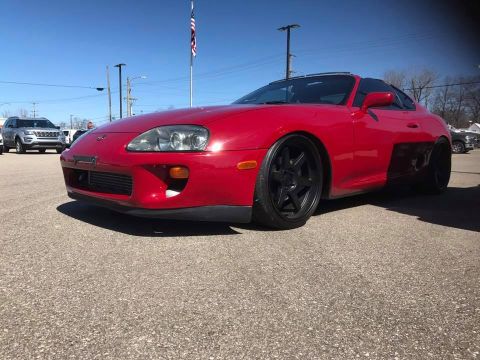
The same bubble-economy confidence produced Japan's over-engineered golden age: the 1989 Celsior/LS, the fourth-generation Supra of 1993 whose 2JZ engine became a tuner legend, and a bewildering proliferation of domestic-market variants. Then the bubble burst. Japan's asset collapse from 1990 and a yen that strengthened toward 100 to the dollar crushed export margins, and Toyota's operating performance sagged through the early 1990s. The response was characteristically unsentimental: aggressive cost-reduction programs, faster localization of production in North America, and a purge of low-volume complexity. In 1992 the company also published the Earth Charter, an environmental commitment that read as public relations at the time but seeded the project that mattered most, the G21 study group formed in 1993 to design a car for the twenty-first century. Shoichiro Toyoda handed the presidency to his brother Tatsuro in 1992; when Tatsuro fell ill in 1995, the family stepped back and Hiroshi Okuda became the first non-Toyoda president in twenty-eight years.
1995-2001: Hiroshi Okuda's Speed, the Prius Moonshot, and Building Trucks for America
Hiroshi Okuda took the presidency of Toyota Motor Corporation in August 1995 declaring the company too slow, too cautious, and too Japanese, and spent his tenure proving a salaryman could shake a founding-family firm. Okuda accelerated everything: development cycles, overseas plant construction, and above all the G21 hybrid project, whose launch he pulled forward against engineers' protests so that the Prius reached the Japanese market in December 1997, timed to the Kyoto climate conference. The first mass-produced hybrid car lost money on every early unit and its battery and software problems nearly broke the program, but it bought Toyota a decade of technological halo no advertising budget could match, and the hybrid drive it pioneered, later branded Hybrid Synergy Drive, became the most profitable green-technology franchise in the industry.
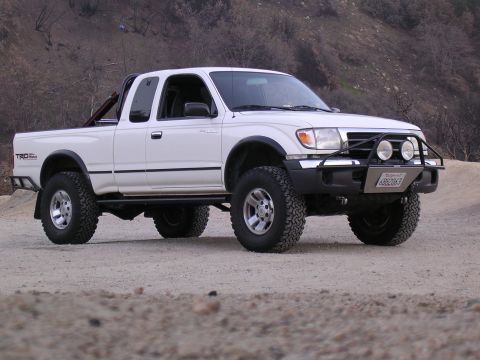
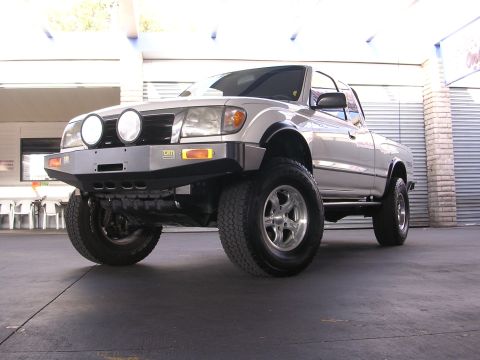
North America got its own declaration of permanence. The Tacoma, launched in 1995 from the NUMMI plant, was the first Toyota pickup designed for American personal use rather than adapted from the global Hilux, and it went on to dominate the midsize truck segment so completely that rivals periodically abandoned it. The full-size attempt came in stages: the 1993 T100 was sized and powered too timidly and taught the same lesson as the Toyopet Crown, so Toyota answered with a purpose-built Indiana plant and the 1999 Tundra, the first credible Japanese-brand full-size pickup, followed by the Sequoia SUV on the same bones. The 1994 RAV4 had meanwhile invented the car-based compact crossover, the segment that would eventually eat the sedan market Toyota's Camry ruled; the Camry itself became America's best-selling car in 1997 and held the title for most of the next two decades. In 1999 Toyota listed on the New York and London stock exchanges, and cumulative production passed 100 million vehicles.
2002-2008: Fujio Cho, the Global Sprint Past General Motors, and the Cost of Speed
Between 2002 and 2008 Toyota Motor Corporation grew by roughly the size of an entire major automaker, and the sprint to overtake General Motors strained the company in ways critics would later connect to the crisis that nearly wrecked it. Fujio Cho, the TPS disciple who had launched the Georgetown, Kentucky plant, became president in 1999 and with the 2002 Global Vision plan set a target of 15 percent world market share. Plants opened at a pace of nearly one a year: France, China joint ventures with FAW and Guangzhou, Texas for the Tundra, Mexico. The Scion youth brand launched in the U.S. in 2003, the second-generation Prius of 2003 turned the hybrid from curiosity into a Hollywood status symbol, and the retro FJ Cruiser of 2006 mined the Land Cruiser's heritage for showroom traffic. Net profit passed one trillion yen in fiscal 2003, the first Japanese company to do so, and in 2007-2008 Toyota finally passed General Motors as the world's largest automaker by production, ending a reign that had lasted since 1931.
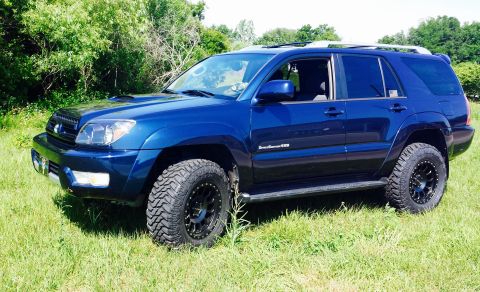
Katsuaki Watanabe, president from 2005, pushed cost reduction even harder through the CCC21 program, targeting billions in supplier savings. Inside the company, veterans worried aloud that the growth had outrun the supply of TPS-trained people, that engineering was being stretched across too many new plants and platforms, and that big-company disease had arrived. The warnings were prescient twice over. When Lehman Brothers collapsed in September 2008, Toyota's sales fell off a cliff with everyone else's, and the company posted its first annual operating loss since 1950, roughly 461 billion yen for the fiscal year ending March 2009. And the strains that came with growing that fast were about to be tested in American courtrooms and congressional hearings, where the recalls centered on floor-mat and pedal entrapment and NASA and NHTSA ultimately found no electronic defect.
2009-2013: Akio Toyoda, the Recall Firestorm, and Three Disasters in Four Years
Akio Toyoda became president of Toyota Motor Corporation in June 2009, the founder's grandson recalled to the bridge in a storm, and within eight months he was apologizing before the United States Congress. The unintended-acceleration crisis ignited with an August 2009 crash near San Diego that killed an off-duty California Highway Patrol officer and his family in a Lexus with a trapped floor mat. Recalls for floor-mat entrapment and sticking accelerator pedals eventually covered on the order of ten million vehicles worldwide, and in early 2010 Toyota took the unprecedented step of halting U.S. sales of eight models. Akio Toyoda's February 2010 congressional testimony conceded that growth had outpaced the company's people and processes. NASA and NHTSA later found no electronic defect, but the U.S. Department of Justice's 2014 settlement, a $1.2 billion penalty for misleading statements, was the largest ever levied on an automaker to that point.
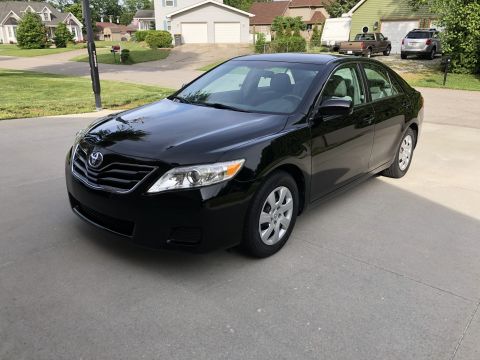
The disasters kept coming. The March 2011 Tohoku earthquake and tsunami shattered Toyota's supply chain and cost hundreds of thousands of units of production; Thai floods that autumn did it again. Toyota briefly lost the world production crown to General Motors and Volkswagen in 2011 before retaking it in 2012. Akio Toyoda's response reversed his predecessors' doctrine: he capped plant expansion for three years, declared the era of pursuing volume over, and demanded ever-better cars from a company he accused of building boring ones. Concretely that meant the Toyota New Global Architecture platform program, a re-founding of the company's engineering around fewer, better shared structures, and the 86 sports coupe of 2012, developed with Subaru, as a statement that the founder's grandson intended Toyota to be a carmaker rather than a car factory.
2013-2019: TNGA, the Le Mans Obsession, and the BMW-Built Supra Revival
By 2013 Akio Toyoda had stabilized Toyota Motor Corporation; the rest of the decade was spent rebuilding its engineering spine and its pulse. The Toyota New Global Architecture debuted under the 2015 Prius and then the 2017 Camry, consolidating the sprawl of legacy platforms accumulated during the growth sprint into a handful of modular structures with lower centers of gravity and shared components, the deepest re-architecture of the company's products since front-wheel drive. Hybrids, no longer a halo, became the default powertrain strategy: Toyota passed 10 million cumulative hybrid sales in 2017 while pointedly declining to chase Tesla into battery-only vehicles, a caution that drew years of criticism and, later, partial vindication when EV demand growth slowed.
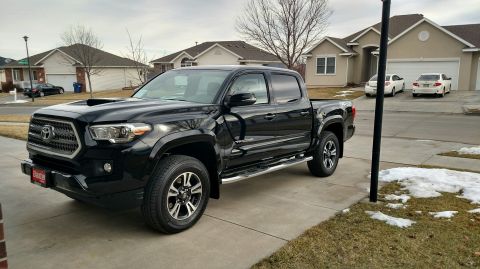
Racing carried the emotional argument. Toyota Gazoo Racing, built around Akio Toyoda's own master-driver persona, returned the company to top-level endurance racing, suffered the cruelest loss in modern Le Mans history when the leading TS050 died on the final lap in 2016, and finally won the 24 Hours of Le Mans in 2018 with Fernando Alonso sharing the winning car, beginning a five-year winning streak. The World Rally Championship program returned in 2017 and delivered drivers' and manufacturers' titles. The road-car payoff was deliberate: the GR sub-brand, the 2019 Supra revived through a co-development deal with BMW because Akio Toyoda judged the model's return worth the heresy of a shared platform and a BMW engine, and later the GR Yaris and GR Corolla homologation specials. Scion was folded back into Toyota in 2016, its mission absorbed. In these years Toyota also began recasting itself in investor presentations as a mobility company, seeding the software arm that became Woven, while quietly remaining what it had always been, the most profitable maker of conventional cars on earth.
2020-2026: Koji Sato, the Multi-Pathway Bet, and the Crown of the World's Largest Automaker
In January 2023 Akio Toyoda announced he was handing the presidency of Toyota Motor Corporation to Koji Sato, the 53-year-old engineer who had run Lexus and Gazoo Racing, effective that April, saying a carmaker's transformation needed a younger generation while he moved up to chairman. The succession came amid the industry's loudest strategic argument, and Toyota was on the unfashionable side of it. While rivals declared all-electric futures, Toyota defended a multi-pathway doctrine: hybrids, plug-in hybrids, hydrogen fuel cells like the Mirai, hydrogen combustion experiments, and battery EVs each for the markets that suited them. The first dedicated EV, the bZ4X of 2022, launched into an embarrassing wheel-hub recall, but the hybrid position proved commercially shrewd as EV growth cooled in 2024-2025 and hybrid demand surged, driving Toyota to record profits, including a net profit near 5 trillion yen in fiscal 2024.
The pandemic era tested the company's legendary supply chain and, unusually, Toyota weathered the 2021 chip shortage better than rivals at first, a legacy of post-tsunami semiconductor stockpiling rules, seizing the global sales crown from Volkswagen in 2020 and holding the title of world's largest automaker by volume every year since, at roughly 10 to 11 million vehicles annually including subsidiaries Daihatsu and Hino. The blemishes were self-inflicted: certification-testing scandals at Hino, Daihatsu, and Toyota itself between 2022 and 2024 forced production halts and public apologies that echoed the growth-era lessons of 2010. The long bets remained characteristically physical: Woven City, the sensor-laden test town rising at the foot of Mount Fuji on the site of the old Higashi-Fuji plant, welcomed its first residents in 2025, and solid-state battery development continued toward promised late-decade production. The presidency turned over again on schedule rather than in crisis: in February 2026 Toyota named chief financial officer Kenta Kon president and CEO effective that April, moving Sato up to vice chairman and a newly created chief-industry-officer post, with Akio Toyoda remaining chairman above them both. Nearly ninety years after Kiichiro Toyoda spun a car department out of a loom works, the company he founded remains family-chaired, cash-rich, deliberately unhurried, and larger than any carmaker on earth.
Leadership
| Leader | Tenure | Legacy |
|---|---|---|
| Sakichi Toyoda | Patriarch, d. 1930 | Inventor of the automatic loom whose patent proceeds and "jidoka" principle seeded the car company. |
| Risaburo Toyoda | President 1937-1941 | Kiichiro's brother-in-law and first president of Toyota Motor Co., presiding while Kiichiro ran operations as executive vice president. |
| Kiichiro Toyoda | President 1941-1950 | Founded Toyota Motor Co. in 1937 and originated just-in-time thinking; resigned during the 1950 bank crisis and layoffs. |
| Taizo Ishida | President 1950-1961 | Restored financial discipline after the 1950 crisis and funded the postwar plant expansion. |
| Shotaro Kamiya | President, Toyota Motor Sales, 1950-1975 | Built the dealer network and led the 1957 entry into the American market, recovering from the Toyopet Crown's failure. |
| Taiichi Ohno | Production engineer to executive VP, 1950s-1978 | Developed the Toyota Production System of just-in-time flow and kanban that reshaped world manufacturing. |
| Fukio Nakagawa | President 1961-1967 | Banker-turned-president who bridged Ishida's austerity and the Eiji Toyoda era, presiding over the Corolla's 1966 launch. |
| Eiji Toyoda | President 1967-1982, Chairman 1982-1992 | Championed the Production System, the Corolla, NUMMI, and the decision to build Lexus. |
| Shoichiro Toyoda | President 1982-1992, Chairman 1992-1999 | Led the merged Toyota Motor Corporation through Georgetown, Kentucky and the Lexus launch. |
| Tatsuro Toyoda | President 1992-1995 | Kiichiro's younger son and NUMMI's first Toyota-side leader; stepped down after falling ill in 1995. |
| Hiroshi Okuda | President 1995-1999 | First non-Toyoda president in decades; pushed the Prius to a 1997 launch and accelerated globalization. |
| Fujio Cho | President 1999-2005 | Georgetown veteran who drove the global expansion that carried Toyota past General Motors in volume. |
| Katsuaki Watanabe | President 2005-2009 | Cost-reduction architect of the growth sprint's final years, ending with the 2008 crash and Toyota's first operating loss in decades. |
| Akio Toyoda | President 2009-2023, then Chairman | Steered the company through the recall crisis and the 2011 earthquake, then launched TNGA and GR performance cars. |
| Koji Sato | President/CEO 2023-2026, then Vice Chairman | Led the multi-pathway electrification strategy and record hybrid-driven profits before handing the presidency to Kenta Kon. |
| Kenta Kon | President/CEO 2026-present | Former chief financial officer named president in the February 2026 management change, focusing on internal operations while Sato and chairman Akio Toyoda face the wider industry. |
Timeline
| Year | Event / model | Note |
|---|---|---|
| 1924 | Type G automatic loom | Sakichi Toyoda perfects the loom whose patent licensing later helps bankroll automobile research. |
| 1933 | Automobile department formed | Kiichiro Toyoda opens a car division inside Toyoda Automatic Loom Works. |
| 1936 | Model AA | Toyota's first production passenger car enters sale. |
| 1937 | Toyota Motor Co. founded | The car business is incorporated as an independent company on August 28, 1937. |
| 1950 | Bank crisis and restructuring | A cash crisis forces layoffs, Kiichiro Toyoda's resignation, and the split-off of Toyota Motor Sales. |
| 1951 | Toyota BJ, forerunner of the Land Cruiser | The four-wheel-drive BJ debuts and takes the Land Cruiser name in 1954. |
| 1957 | Toyota Motor Sales U.S.A. founded | Shotaro Kamiya's organization begins selling the Toyopet Crown in California, initially with little success. |
| 1966 | Corolla introduced | The compact that becomes one of the best-selling nameplates in automotive history. |
| 1968 | Hilux introduced | The compact pickup that motorizes work fleets across Asia, Africa, and Latin America; sold in the U.S. as the Toyota Pickup. |
| 1970 | Celica introduced | Toyota's affordable sport coupe debuts at the Tokyo Motor Show. |
| 1978 | Supra introduced | Launched as the six-cylinder Celica Supra before becoming its own line in 1986. |
| 1982 | Toyota Motor Corporation formed | Toyota Motor Co. and Toyota Motor Sales merge under president Shoichiro Toyoda. |
| 1983 | Camry reaches America | The front-drive sedan that becomes the best-selling car in the United States for most of the following decades. |
| 1984 | NUMMI opens; 4Runner introduced | The Fremont, California joint venture with General Motors starts production, and the Hilux-based 4Runner SUV debuts. |
| 1984 | MR2 introduced | Toyota's mid-engine two-seater arrives as an affordable answer to European exotics. |
| 1988 | Georgetown, Kentucky plant opens | Toyota Motor Manufacturing Kentucky builds its first Camry, anchoring U.S. production. |
| 1989 | Lexus launched | The LS 400 debuts Toyota's luxury division in the United States. |
| 1993 | T100 introduced | Toyota's first attempt at a larger American pickup lands undersized against domestic full-sizers. |
| 1995 | Tacoma introduced | The U.S.-market compact pickup replaces the Hilux-based Pickup and is built in America. |
| 1997 | Prius introduced | The world's first mass-produced hybrid car goes on sale in Japan under president Hiroshi Okuda. |
| 1999 | Tundra introduced | Toyota's first genuine full-size pickup, built in Indiana and later San Antonio. |
| 2000 | Sequoia introduced | The Tundra-based full-size SUV joins the American lineup. |
| 2006 | FJ Cruiser introduced | A retro off-roader styled after the FJ40 Land Cruiser. |
| 2008 | Toyota passes General Motors | Toyota becomes the world's largest automaker by sales volume. |
| 2009-2010 | Unintended-acceleration recalls | Toyota recalls millions of vehicles; Akio Toyoda testifies before the U.S. Congress in February 2010. |
| 2015 | TNGA platform debuts | The Toyota New Global Architecture launches with the fourth-generation Prius. |
| 2018 | Le Mans victory | Toyota Gazoo Racing wins the 24 Hours of Le Mans for the first time, with Fernando Alonso among the drivers. |
| 2019 | Supra revived | The fifth-generation GR Supra returns, co-developed with BMW and built by Magna Steyr in Austria. |
| 2023 | Koji Sato becomes CEO | Akio Toyoda moves to chairman and Sato takes over with a multi-pathway electrification strategy. |
| 2026 | Kenta Kon becomes president and CEO | The former CFO takes over on April 1, 2026; Koji Sato moves to vice chairman and chief industry officer, with Akio Toyoda remaining chairman. |
Asked all the time
Who founded Toyota?
Kiichiro Toyoda founded Toyota Motor Co. on August 28, 1937, spinning the car business out of his father Sakichi Toyoda's Toyoda Automatic Loom Works. Proceeds from Sakichi's automatic loom patents helped fund the early automobile work.
Is Toyota still in business?
Yes. Toyota Motor Corporation remains active and is the world's largest automaker by volume, selling roughly ten to eleven million vehicles a year from its headquarters in Toyota City, Japan.
Why is it spelled Toyota instead of Toyoda?
The company adopted "Toyota" in 1936 after a public logo contest. Written in Japanese katakana, Toyota takes eight brush strokes, a number considered lucky, and the voiceless sound was judged cleaner for a brand than the family name Toyoda.
Why did Kiichiro Toyoda leave Toyota?
He resigned as president in 1950 during a cash crisis in which Toyota's banks demanded restructuring and workforce cuts. Kiichiro stepped down to take responsibility for the layoffs and died in 1952 before a planned return.
What is the Toyota Production System?
It is the just-in-time manufacturing method developed principally by engineer Taiichi Ohno from the 1950s onward, combining kanban pull scheduling with Sakichi Toyoda's jidoka principle of stopping the line at defects. It became the template for lean manufacturing worldwide.
When did Toyota start selling cars in the United States?
Toyota Motor Sales U.S.A. was founded in 1957 under Shotaro Kamiya and began selling the Toyopet Crown in California in 1958. The Crown failed on American highways, and Toyota did not gain real traction until the Corona and Corolla in the mid-to-late 1960s.
When did Toyota become the world's largest automaker?
Toyota first passed General Motors in global sales in 2008 and, after trading the top spot during the recall and earthquake years, has held the title of world's largest automaker by volume for most years since 2020.
Who runs Toyota today?
Kenta Kon, Toyota's former chief financial officer, became president and CEO on April 1, 2026, succeeding Koji Sato, who moved up to vice chairman. Akio Toyoda, grandson of founder Kiichiro, remains chairman of the board.
Does Toyota own Lexus?
Yes. Lexus is Toyota's luxury division, launched in the United States in 1989 with the LS 400 rather than a separate company.
The wall
The most-documented Toyota vehicles in the registry, every photo by the owner.