The registry
Chevrolet Registry: Models, Builds & Photos
Chevrolet is an American automobile marque founded in Detroit, Michigan on November 3, 1911 by racing driver Louis Chevrolet, his brother Arthur, and ousted General Motors founder William C. Durant, who built the company as his vehicle to retake GM. It succeeded: Durant used Chevrolet stock to regain control of General Motors in 1916, and Chevrolet was merged into GM in 1918, becoming its core volume division. Under Alfred Sloan and William Knudsen, Chevrolet overtook Ford in the late 1920s and spent most of the twentieth century as America's best-selling brand, producing everything from the Bel Air and Corvette to the Silverado pickup line. It survived GM's 2009 Chapter 11 bankruptcy and remains active today as General Motors Company's mainstream global division, now pivoting toward Ultium-based electric vehicles.
Pick your model

Key facts
| Founded | November 3, 1911, Detroit, Michigan, USA |
|---|---|
| Founders | Louis Chevrolet, Arthur Chevrolet, William C. Durant |
| Headquarters | Detroit, Michigan, USA |
| Parent/successor | General Motors (merged into GM in 1918; a division of General Motors Company since 2009) |
| Fate/status | Active. GM's core high-volume global division; never dissolved. |
| Best known for | Corvette, Camaro, Silverado pickup line |
| Registry presence | 762 vehicles / 19,576 photos documented by owners on SuperMotors |
1911-1915: Louis Chevrolet, Billy Durant, and a Company Built for Revenge
Chevrolet was incorporated in Detroit on November 3, 1911 not primarily to build cars, but to win back an empire. William C. Durant, the carriage magnate who had assembled General Motors in 1908 from Buick, Oldsmobile, Cadillac and a swarm of suppliers, had been forced out of GM's management in 1910 when his debt-fueled acquisition spree collided with a credit crunch and bankers took control. Durant needed a new company with a credible name attached to it, and he found one in Louis Chevrolet, a Swiss-born racing driver who had made his reputation driving Buicks for Durant's factory team. Louis and his brother Arthur lent the venture their surname and their engineering enthusiasm.
The partnership fractured almost immediately over strategy. Louis Chevrolet wanted to build a large, refined, expensive car, and the first product, the 1912 Series C Classic Six, reflected that ambition at a price near $2,150. Durant, who had watched Henry Ford's Model T devour the low-priced market, wanted volume. By 1914 the argument was effectively over, and in 1915 Louis Chevrolet sold his stock and walked away from the company bearing his name, reportedly after Durant needled him about smoking cigarettes rather than cigars, though the real dispute was product philosophy. Louis Chevrolet spent the rest of his career in racing and aviation engines and died in 1941 with no financial stake in the marque.
Durant reoriented the company toward the middle of the market with the Royal Mail and Baby Grand models of 1914, which also introduced the bowtie badge, an emblem Durant claimed to have copied from wallpaper in a Paris hotel, though his family later offered competing origin stories. The decisive product arrived in 1915: the Chevrolet Four-Ninety, named for its $490 price, aimed squarely at the Model T. It gave Durant exactly what he had built the company to produce, a fast-growing revenue stream and a stock whose value he could weaponize.
1916-1918: The Reverse Takeover of General Motors
Between 1915 and 1918 Chevrolet performed one of the strangest maneuvers in American corporate history: the small company swallowed the giant. Durant, backed by the du Pont family's chemical fortune and its treasurer John J. Raskob, quietly exchanged Chevrolet shares for General Motors shares, offering five Chevrolet shares for one GM share at a time when GM's bankers had let the stock languish. Because Durant controlled Chevrolet, every swap tightened his grip on GM. By September 1915 he could walk into a GM board meeting and announce that he held control, and by June 1916 he was again president of General Motors, six years after the banks had shown him the door.
The corporate structure was then inverted to match reality. On May 2, 1918, General Motors acquired the operating assets of the Chevrolet Motor Company, and Chevrolet became a division of GM rather than its nominal parent. That transaction fixed Chevrolet's fate for the next century: it would never again be an independent company, but it would become the volume engine of the world's largest automaker.
The same year, 1918, Chevrolet entered the truck business with its first purpose-built commercial chassis, the One-Ton, a decision that looked minor at the time and turned out to be foundational. Trucks would repeatedly rescue the division's profitability in the decades ahead, and the direct lineage of that 1918 chassis runs through the C/K Pickup era to the Silverados that fund General Motors today.
Durant himself did not survive the peace. The postwar recession of 1920 crushed GM's stock, Durant tried to prop it up with personal margin buying, and the du Ponts and J.P. Morgan interests forced him out of General Motors for the second and final time in November 1920. His last business venture was a bowling alley in Flint, and he died in 1947. The company he had named after a race driver he quarreled with, created to recapture a corporation that expelled him twice, outlived him as the centerpiece of both stories.
1919-1929: Sloan, Knudsen, and the Dethroning of the Model T
In 1921 General Motors' new management seriously considered killing Chevrolet, and the decision to save it instead reshaped the American car market. A consulting study commissioned after Durant's ouster concluded Chevrolet could never compete with Ford and should be liquidated. Alfred P. Sloan, then rising toward the GM presidency he assumed in 1923, rejected the recommendation and instead assigned Chevrolet the bottom rung of his famous price ladder, a car for every purse and purpose, with Chevrolet positioned just above Ford on price but well above it on features.
The man who executed that strategy was William S. Knudsen, a Danish-born production genius who had built Ford's branch-assembly system before Henry Ford drove him out in 1921. GM hired him in 1922, and by 1924 he ran Chevrolet. Knudsen's Danish-accented rallying cry to his dealers, I want vun for vun, meaning one Chevrolet sold for every Ford, became the division's operating doctrine. He modernized the K-series cars, adopted annual model changes in line with Sloan's planned obsolescence philosophy, and priced Chevrolet close enough to Ford that the extra equipment felt free.
The strategy worked because Henry Ford refused to change. When Ford finally shut down for most of 1927 to retool from the Model T to the Model A, Chevrolet took the U.S. sales crown for the first time, building over one million cars that year. Ford's Model A won 1929 and 1930 back, but the pattern was set: Chevrolet would lead U.S. sales in most years for the next half century.
Chevrolet closed the decade with an engineering answer to Ford's four-cylinder cars. The 1929 overhead-valve inline six, marketed as a six for the price of a four and nicknamed the Stovebolt, gave Chevrolet a smoothness advantage it advertised relentlessly. Descendants of that engine family powered Chevrolets into the 1960s, and its cast-iron durability became central to the brand's working-class identity.
1930-1945: Depression Dominance, the Suburban, and War Production
The Great Depression halved the American auto industry, and Chevrolet emerged from it stronger relative to every rival. As total U.S. car sales collapsed from roughly 4.5 million in 1929 to barely 1.1 million in 1932, buyers who still had money traded down the price ladder, exactly the flow Alfred Sloan's structure was designed to capture. Chevrolet led U.S. sales through most of the 1930s, its six-cylinder value pitch landing perfectly in a decade when a car purchase was an act of caution. Division head Marvin E. Coyle, a finance man known inside GM as Mr. Facts and Figures, ran a conservative, cost-disciplined operation from 1933 to 1946 that GM's leadership treated as the corporation's cash anchor.
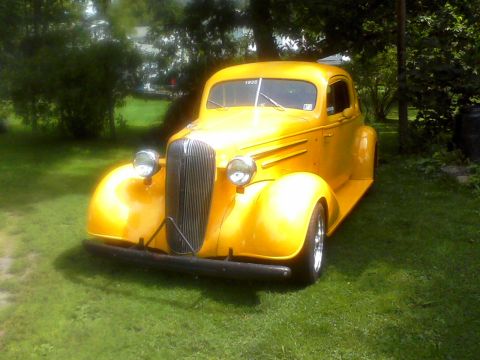
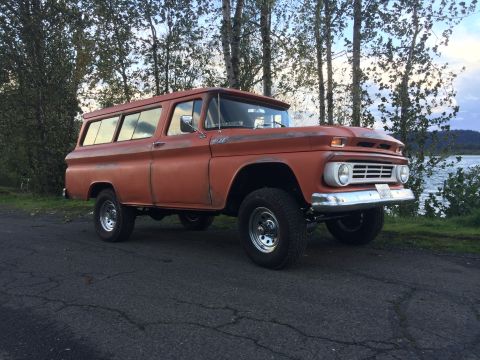
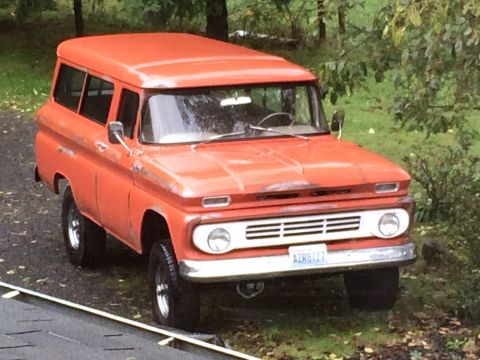
The decade also produced one of the longest-lived nameplates in automotive history. In 1935 Chevrolet put a steel wagon body on its half-ton commercial chassis and called it the Carryall Suburban, aimed at fleets that needed to haul crews and gear. Nobody involved intended to invent the sport utility vehicle, but the format, truck frame under enclosed passenger body, proved so durable that the Suburban name has remained in continuous production longer than any other automobile nameplate.
Styling became a weapon in the same years. Harley Earl's GM Art and Colour Section, the industry's first real in-house design department, gave Chevrolet annual visual freshness Ford would not match for years, and cars like the 1932 Confederate series and 1940 Special Deluxe carried Cadillac-influenced lines at the bottom of the price ladder.
Civilian production ended in early 1942 by federal order, and Chevrolet's plants converted entirely to war material. The division built some 60,000 Pratt & Whitney aircraft engines, armored cars, aircraft parts, ammunition, and hundreds of thousands of military trucks, including much of the fleet that carried the U.S. Army across Europe. Former Chevrolet boss William Knudsen left GM's presidency in 1940 to direct national war production for Franklin Roosevelt, and in 1942 accepted a lieutenant general's commission. When the war ended, Chevrolet held enormous manufacturing capacity, an intact dealer network, and four years of pent-up demand.
1946-1954: Postwar Boom, Advance Design Trucks, and a Fiberglass Gamble
Chevrolet entered the postwar market selling warmed-over 1942 designs and still could not build cars fast enough. With sixteen million servicemen returning and no new civilian cars built since early 1942, the seller's market of 1946 through 1948 let Chevrolet consolidate its position as America's default brand, regularly leading U.S. sales past the one-million-unit mark.
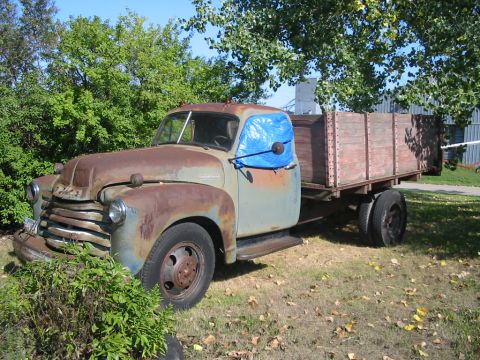
The division's first genuinely new postwar product was not a car but a truck. The Advance Design pickups launched in mid-1947, a year ahead of Chevrolet's new cars, with wider cabs and better visibility, an acknowledgment that returning veterans starting farms and small businesses were the hottest market in the country. The bet paid off in market leadership Chevrolet trucks held into the 1950s, and it set a pattern, trucks first when money is tight, that the division would repeat for decades.
The 1950 model year brought the Bel Air name to a pillarless hardtop, and by 1953 Bel Air was the top trim of the full-size line, the aspirational face of a brand built on thrift. The same year Chevrolet did something wholly out of character. Harley Earl, GM's design chief, had seen GIs bringing home MGs and Jaguars and pushed a two-seat sports car onto the Motorama show circuit; the production version, the fiberglass-bodied Corvette, went on sale in 1953 with 300 built. Saddled with the old Stovebolt-derived Blue Flame six and a two-speed automatic, it sold poorly, and GM management came close to killing it. Zora Arkus-Duntov, a Belgian-born engineer who had written GM a letter criticizing the car and got hired for his trouble, argued the Corvette could become a halo that pulled young buyers into Chevrolet showrooms. His argument won because of what arrived next: a proper V8.
1955-1962: Ed Cole's Small-Block V8 and the Hot One
The 1955 Chevrolet, advertised as The Hot One, was the most consequential car the division built in the postwar era, and its heart was Ed Cole's small-block V8. Cole, who became Chevrolet's chief engineer in 1952 with a mandate to remake the stodgy division, designed the 265-cubic-inch overhead-valve V8 with a lightweight block, stud-mounted rocker arms, and an unprecedented ability to rev cheaply. Wrapped in crisp Ferrari-influenced styling overseen by Harley Earl's studio under Clare MacKichan, the 1955 model turned Chevrolet from the sensible choice into the exciting one overnight. Chevrolet built more than 1.7 million cars for 1955, and the 1955 through 1957 Bel Airs became the defining artifacts of American 1950s prosperity. The small-block architecture itself became the most-produced engine family in history, with GM citing over 100 million built across its generations.
The V8 rescued the Corvette. With Zora Arkus-Duntov installed as its de facto chief engineer and the small-block under its hood from 1955, the Corvette became a legitimate performance car and a racing tool, surviving the 1957 Automobile Manufacturers Association resolution against factory racing mainly because Duntov kept development alive through back channels.
Chevrolet stacked its lineup upward in the same years. The Impala arrived for 1958 as a glamour trim and became a standalone series in 1959; by the mid-1960s it would be the best-selling single nameplate in America, moving more than a million units in 1965 alone. The stripped Biscayne held the fleet-and-frugal floor of the full-size line, and the 1959 El Camino answered Ford's Ranchero with a car-based pickup.
Ed Cole's reward was the division presidency in 1956, and his engineering ambition set up both Chevrolet's next triumph and its most damaging scandal, because the radical rear-engine compact he championed for 1960 carried his fingerprints too.
1960-1966: The Corvair, Ralph Nader, and the Conventional Cars That Saved the Decade
Chevrolet opened the 1960s with its boldest engineering gamble and closed the episode with a public-relations wound that changed federal law. The 1960 Corvair, Ed Cole's answer to the Volkswagen Beetle, used a rear-mounted air-cooled flat six and swing-axle rear suspension, a genuinely radical package for Detroit. It sold respectably and won Motor Trend's 1960 Car of the Year, but its handling at the limit, aggravated by GM's decision to save a few dollars per car by omitting a front anti-roll bar and relying on unusual tire-pressure specifications, generated lawsuits. Ralph Nader's 1965 book Unsafe at Any Speed made the first-generation Corvair its opening chapter, and GM's response, hiring private investigators to dig into Nader's personal life, blew up into a 1966 Senate hearing where GM president James Roche publicly apologized. The scandal helped pass the National Traffic and Motor Vehicle Safety Act of 1966, creating federal auto-safety regulation. A 1972 federal study largely cleared even the original 1960-1963 Corvair's handling, finding it no more prone to loss of control than contemporary compacts, but the car was already dead, discontinued in 1969.
The commercial lesson Chevrolet drew was to hedge radicalism with orthodoxy. The 1962 Chevy II, later renamed the Nova, was a deliberately conventional compact rushed to market in eighteen months because the Corvair was losing plain-vanilla buyers to Ford's Falcon. The 1964 Chevelle, filling the mid-size gap, became one of the division's pillars. Both outsold the Corvair decisively, confirming for GM management that conservative engineering paired with aggressive styling was the low-risk formula.
Trucks got the same rationalization. The 1960 C/K series put Chevrolet's light trucks on a modern drop-center frame with independent front suspension, and the 1967 restyle under design chief Bill Mitchell's studios began the C/K's climb from work implement toward personal vehicle. Semon Knudsen, son of the William Knudsen who had beaten Ford in the 1920s, ran Chevrolet from 1961 to 1965 and pushed the division deeper into youth marketing and performance imagery, setting the table for the muscle era.
1967-1972: The Camaro, Big-Block Muscle, and Peak Chevrolet
In these years Chevrolet operated at a scale no automotive brand had reached before, routinely building well over two million vehicles annually and underwriting an outsized share of General Motors' profits, while fighting a culture war it had initially refused to enter. Ford's Mustang, launched in April 1964, created the pony-car market while Chevrolet leadership insisted the sporty Corvair Monza already covered it. The delay cost Chevrolet two and a half years. The Camaro arrived for 1967 on the new F-body, developed under general manager Pete Estes, its name chosen partly because Chevrolet marketers could claim it meant a small vicious animal that eats Mustangs. It never caught the Mustang in 1960s sales, but it anchored Chevrolet's youth image and gave the division its Trans-Am racing program, where Roger Penske and Mark Donohue won the 1968 and 1969 championships with Camaros.
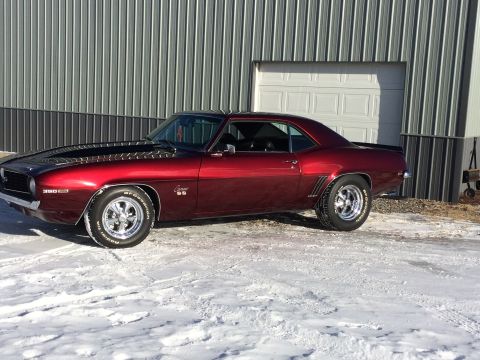
Muscle permeated the whole line. The Chevelle SS396 and the 1970 LS6 454 defined big-block excess, the Nova SS gave the formula a budget entry, and dealers like Don Yenko built their businesses stuffing 427s into cars the factory would not. Chevrolet fed the culture while officially honoring GM's racing ban, funneling parts and engineering through backdoor programs, including the Can-Am efforts that developed the aluminum big-block.
The quieter products mattered more to the ledger. The 1970 Monte Carlo, conceived under general manager Pete Estes with chief stylist David Holls and introduced by Estes's successor John DeLorean, was a cheap-to-build personal luxury coupe on stretched Chevelle bones that opened a segment that would print money for fifteen years. The 1969 K5 Blazer answered the Ford Bronco with a shortened C/K truck platform, a cheaper and shrewder approach than a bespoke chassis, and pointed at the SUV future. The era peaked just as its foundations cracked: emissions rules arrived in 1968, insurance surcharges strangled muscle-car sales by 1971, and GM's compression-ratio cuts that year marked the end of the horsepower race Chevrolet had been winning.
1971-1979: The Vega Disaster, OPEC, and the Downsizing Gamble
Chevrolet's 1970s began with a self-inflicted catastrophe and ended with one of the bravest product decisions General Motors ever made. The 1971 Vega was supposed to be GM's definitive answer to imported small cars, developed under corporate direction from GM president Ed Cole rather than by Chevrolet's own engineers, and built at Lordstown, Ohio at a targeted 100 cars per hour. It won Motor Trend Car of the Year for 1971 and then destroyed its own reputation: the innovative sleeveless aluminum-block engine overheated and warped, fenders rusted visibly within two years, and the 1972 Lordstown strike made the plant a national symbol of industrial alienation. The Vega sold nearly two million units and poisoned a generation of buyers on GM small cars, opening the door it was built to close, the one Toyota and Honda walked through.
The October 1973 OPEC embargo quadrupled oil prices and inverted the market Chevrolet was built for. The division's response was the 1976 Chevette, a rear-drive economy car adapted from GM's global T-car program, competent, joyless, and profitable enough, moving 2.8 million units over twelve model years.
The bigger answer was the downsizing program. GM chairman Thomas Murphy and president Pete Estes committed some $600 million to shrinking the corporation's full-size cars before federal fuel-economy standards forced the issue, and the 1977 Caprice and Impala arrived roughly 700 pounds lighter and nearly a foot shorter than their predecessors while gaining interior and trunk space. Critics predicted buyers would reject smaller big cars; instead the B-body was named Motor Trend Car of the Year and sold enormously, and the basic platform lasted, in fleet and police service, until 1996.
Trucks quietly carried the decade. The 1973 square-body C/K Pickup generation ran eighteen years and cemented the pickup's transition into personal transportation, while the Suburban and Blazer built the customer base that would dominate Chevrolet's economics for the next fifty years.
1980-1992: Front-Drive Stumbles, Roger Smith's Reorganization, and the Import Siege
Chevrolet spent the 1980s executing a front-wheel-drive conversion it could not afford to botch, and botched much of it. The 1980 Citation, GM's X-body compact, launched to 800,000 first-year sales and then collapsed under recalls, most notoriously for rear-brake lockup, becoming a case study in launching before development is finished; it was dead by 1985. The 1982 Cavalier on the J-body proved more durable, frequently ranking among America's best-selling cars on price and fleet volume rather than excellence, and the Celebrity carried the mid-size A-body flag. Chairman Roger Smith's 1984 reorganization stripped the divisions of their engineering autonomy, and his look-alike corporate styling made a Chevrolet hard to distinguish from a Buick, hollowing out brand identities that Sloan's ladder had depended on. Chevrolet's answer to Japan itself was outsourcing: the joint-venture NUMMI plant with Toyota built the Nova of 1985 to 1988, and captive imports like the Sprint and Spectrum came from Suzuki and Isuzu, tacit admissions that GM could not build a competitive small car alone.
The genuinely original successes were trucks and truck-shaped things. The 1982 S10 created the modern domestic compact-pickup segment and spawned the S10 Blazer SUV; the 1985 Astro van chased Chrysler's minivans with a rear-drive truck platform; and the 1988 GMT400 C/K Pickup redesign, one of the era's few unambiguous engineering triumphs, ran a decade. The 1990 Lumina sedan and the plastic-bodied Lumina APV minivan landed mid-pack against a Ford Taurus that had reset the sedan bar in 1986.
The bill for the decade arrived in 1992. GM lost $23.5 billion that year, mostly a one-time accounting charge for retiree health benefits but real crisis underneath, and the board, led by outside director John Smale, fired chairman Robert Stempel in a coup that ended the era of unaccountable GM management. Chevrolet, still GM's volume backbone, entered the 1990s dependent on exactly one thing: light trucks.
1993-2008: The Truck and SUV Bonanza and the Rot Beneath It
For fifteen years Chevrolet effectively became a truck company with a car showroom attached, and the strategy was rational right up until it nearly killed General Motors. Cheap gasoline and the light-truck regulatory loophole made SUVs the most profitable vehicles in industrial history, and Chevrolet held prime position. The 1995 Tahoe put the full-size SUV formula into suburban driveways, the Suburban printed money at margins reported to be among the fattest in the industry, and the 1999 GMT800 generation renamed the light pickups Silverado 1500, with Silverado 2500 and Silverado 3500 heavy-duty variants sustaining the commercial base the division had cultivated since 1918. Line extensions followed the money: the 2002 Avalanche blurred truck and SUV, the 2002 Trailblazer replaced the S10-based Blazer, and the 2004 Colorado succeeded the S10 itself.
The car side told the opposite story. The Malibu name returned in 1997 to fight the Camry and Accord from behind, the Cobalt replaced the Cavalier in 2005, and the Daewoo-sourced Aveo held the entry point after GM's 2002 purchase of the bankrupt Korean automaker, a deal that quietly turned Chevrolet into GM's global badge across Asia, Europe, and Latin America. NASCAR sponsorship and the Monte Carlo kept the performance image alive, and the Corvette, given the C5 generation in 1997 and class wins at Le Mans from 2001, remained the brand's engineering showcase. Retro experiments like the 2003 SSR convertible pickup flopped.
The structural problem was that GM's North American operations lost money on most cars and survived on truck margins while carrying an estimated $1,500 to $1,900 per vehicle in retiree health-care and pension costs its Japanese transplants did not bear. When gasoline passed $4 a gallon in 2008 and the financial crisis froze credit, truck and SUV sales collapsed simultaneously with the division's cash cushion, and the arithmetic that had flattered Chevrolet for fifteen years reversed with terminal speed.
2009-2019: Chapter 11, the New GM, and the Ignition-Switch Reckoning
On June 1, 2009, General Motors, Chevrolet's parent for ninety-one years, filed the largest industrial bankruptcy in American history, and Chevrolet's survival was a deliberate government choice. The Obama administration's auto task force financed a 39-day Chapter 11 that split the company, sending the old GM's liabilities into liquidation and carrying four brands into the new General Motors Company: Chevrolet, Cadillac, Buick, and GMC. Pontiac, Saturn, Hummer, and Saab were killed or sold, which made Chevrolet more central to GM than at any time since the 1920s, the sole mainstream volume brand in the home market. The U.S. Treasury's roughly $50 billion intervention ended with the government selling its final shares in December 2013 at a net loss of about $10 billion, a price officials defended as cheaper than losing the industrial base.
Chevrolet carried the recovery's symbolism. The 2011 Volt, a plug-in hybrid conceived before the bankruptcy under product chief Bob Lutz, launched as proof the new GM could lead technically, and the 2017 Bolt EV beat Tesla's Model 3 to market as the first affordable 238-mile electric car. The fifth-generation Camaro, revived in 2009 after a seven-year absence, and the mid-engine 2020 Corvette C8, the layout Zora Arkus-Duntov had advocated since the 1960s, restored performance credibility, while the Silverado and Equinox did the actual earning.
The old company's sins resurfaced in 2014. GM recalled 2.6 million small cars, chiefly Cobalts and Ions, for an ignition switch that could shut off power and disable airbags, a defect the later Valukas report found had been known inside GM for years; GM's own compensation fund tied it to 124 deaths, and the company paid a $900 million federal settlement. New CEO Mary Barra, appointed January 2014 as the first woman to lead a global automaker, framed the crisis as a catalyst for cultural change. She also shrank Chevrolet's world: GM withdrew the brand from Europe in 2015 and sold Opel in 2017, retreating to markets where Chevrolet actually made money.
2020-Today: Mary Barra's Ultium Bet and the Two-Track Present
Chevrolet entered the 2020s executing two contradictory strategies at once, and its parent's finances depend on both working. Under CEO Mary Barra, General Motors declared in 2021 an aspiration to end sales of new gasoline light vehicles by 2035 and committed tens of billions of dollars to the Ultium battery platform, with Chevrolet as the volume face of the program. The results arrived unevenly: the Bolt was recalled wholesale in 2021 for battery fire risk at a cost near $2 billion, mostly borne by supplier LG, then discontinued in 2023 and promised a revival on Ultium; the Silverado EV, built at the converted Detroit-Hamtramck plant renamed Factory ZERO, launched in 2023 into a market whose EV demand grew slower than the 2021 projections assumed; and the Equinox EV, launched in 2024 around a $35,000 effective price point, became one of America's better-selling non-Tesla EVs and the closest thing to the people's electric Chevrolet the strategy always needed.
The other track is the old religion. Internal-combustion Silverados, Tahoes, and Suburbans remain among GM's most profitable products and fund the transition, the Corvette's mid-engine C8 line, including hybrid E-Ray and Z06 variants, carries the performance flag, and the Colorado and a revived Trailblazer nameplate fill out a crossover-heavy lineup from which traditional sedans have almost entirely disappeared; the Malibu, the last Chevrolet sedan in North America, ended production in 2024.
The corporate arc closes where it began. The company Louis Chevrolet lent his name to in 1911 and abandoned in 1915, the stock vehicle Billy Durant used to recapture General Motors in 1916, is now a division approaching its one hundred fifteenth year, GM's global mainstream brand across the Americas, the Middle East, Korea, and beyond. Its fate was sealed in 1918, permanent subordination inside GM, and that turned out to be the survival strategy: divisions of General Motors have died by the half dozen, and Chevrolet has outlasted every one of them because it is the part of the corporation that pays for the rest.
Leadership
| Leader | Tenure | Legacy |
|---|---|---|
| William C. Durant | 1911-1920 (Chevrolet founder; GM president 1916-1920) | Built Chevrolet as his vehicle to retake General Motors, then folded it into GM in 1918 as the corporation's volume brand. |
| Louis Chevrolet | 1911-1915 | Racing driver whose name and engineering credibility launched the marque; left after clashing with Durant over building cheap cars. |
| Alfred P. Sloan | 1923-1956 (GM president 1923-1937, then chairman; chief executive until 1946) | Positioned Chevrolet as the entry rung of GM's "a car for every purse and purpose" ladder and gave it annual model changes as a weapon against Ford. |
| William S. Knudsen | 1924-1933 (Chevrolet general manager) | Ex-Ford production chief who modernized Chevrolet manufacturing and led the brand past the Model T, taking the sales crown from Ford in 1927. |
| Harley Earl | 1927-1958 (GM styling chief) | Gave Chevrolet the 1953 Corvette and the styling-led annual model change that defined the 1950s Bel Air era. |
| Marvin E. Coyle | 1933-1946 (Chevrolet general manager) | Finance-trained "Mr. Facts and Figures" who steered Chevrolet through the Depression and World War II as GM's cost-disciplined cash anchor. |
| Ed Cole | 1952-1961 (Chevrolet chief engineer, then general manager 1956-1961) | Fathered the 1955 small-block V8, the engine that powered Chevrolet performance for four decades, and championed the Corvair. |
| Zora Arkus-Duntov | 1953-1975 (Corvette engineer) | Turned the Corvette from a slow-selling styling exercise into a genuine performance car; remembered as its godfather. |
| Bill Mitchell | 1958-1977 (GM styling chief) | Styled the 1963 Corvette Sting Ray and the second-generation Camaro, the high-water marks of Chevrolet design. |
| Semon "Bunkie" Knudsen | 1961-1965 (Chevrolet general manager) | Son of William Knudsen; pushed Chevrolet into youth marketing and performance imagery, setting the table for the muscle era. |
| Elliott "Pete" Estes | 1965-1969 (Chevrolet general manager; later GM president) | Launched the Camaro and conceived the Monte Carlo; as GM president co-drove the 1977 downsizing gamble. |
| John DeLorean | 1969-1972 (Chevrolet general manager) | Ran the division at its sales peak and presided over the troubled Vega launch before leaving GM. |
| Roger B. Smith | 1981-1990 (GM chairman/CEO) | His 1984 reorganization dissolved Chevrolet's engineering autonomy and produced the look-alike front-drive cars that ceded ground to imports. |
| Mary Barra | 2014-present (GM CEO) | Steered GM through the ignition-switch recall crisis and committed Chevrolet to the Ultium electric platform with the Silverado EV, Blazer EV, and Equinox EV. |
Timeline
| Year | Event | Detail |
|---|---|---|
| 1911 | Company founded | Louis Chevrolet, Arthur Chevrolet, and ousted GM founder William C. Durant incorporate the Chevrolet Motor Company in Detroit on November 3. |
| 1913 | Bowtie badge adopted | Durant introduces the bowtie emblem, first worn by the 1914 models, that still identifies every Chevrolet. |
| 1915 | Louis Chevrolet departs; Series 490 launched | Louis Chevrolet sells his stock and leaves after a dispute with Durant, whose $490 Series 490 aims squarely at Ford's Model T. |
| 1916 | Reverse takeover of GM | Durant uses Chevrolet stock swaps to regain control of General Motors, the company that had forced him out in 1910. |
| 1918 | Merged into General Motors | Chevrolet becomes a GM division and its designated volume brand; it also enters the truck business the same year. |
| 1927 | Chevrolet outsells Ford | With the Model T dying and Knudsen's plants humming, Chevrolet takes the U.S. sales crown for the first time. |
| 1929 | Stovebolt six introduced | The overhead-valve "Cast Iron Wonder" six gives Chevrolet "a six for the price of a four" against Ford's four-cylinder Model A. |
| 1935 | Suburban introduced | The Suburban Carryall debuts on a truck chassis and becomes the longest-running nameplate in the industry. |
| 1942 | Civilian production halted | Chevrolet converts to war production, building trucks, aircraft engines, and armament through 1945. |
| 1947 | Advance Design trucks | Chevrolet's first all-new postwar pickups launch the Advance Design series that runs through 1955. |
| 1950 | Bel Air name and Powerglide arrive | Chevrolet fields the low-priced field's first two-door hardtop and its first automatic transmission. |
| 1953 | Corvette introduced | The fiberglass-bodied Corvette enters production in Flint with 300 hand-built cars. |
| 1955 | Small-block V8 and the "Hot One" | Ed Cole's 265-cubic-inch small-block V8 debuts in the restyled 1955 Bel Air line, transforming Chevrolet's image. |
| 1958 | Impala introduced | Launched as the top Bel Air trim, the Impala becomes a standalone series in 1959 and eventually America's best-selling car. |
| 1959 | El Camino introduced | Chevrolet answers Ford's Ranchero with its own car-based pickup. |
| 1960 | Corvair introduced | The rear-engine, air-cooled Corvair is Chevrolet's radical compact answer to the imports. |
| 1960 | C/K Pickup introduced | The C/K designation begins the truck line that anchors Chevrolet sales for four decades. |
| 1962 | Chevy II / Nova introduced | A conventional compact rushed to market to cover the Corvair's failure against the Ford Falcon. |
| 1964 | Chevelle introduced | Chevrolet's A-body intermediate arrives and soon spawns the SS 396 muscle car. |
| 1965 | Unsafe at Any Speed published | Ralph Nader's book attacks the early Corvair's swing-axle handling and helps trigger federal auto-safety regulation. |
| 1965 | Caprice introduced | The Caprice debuts as a luxury Impala package in a record year when Chevrolet builds over three million cars and trucks, the first automaker to do so. |
| 1967 | Camaro introduced | Chevrolet's answer to the Ford Mustang launches with small-block, big-block, and Z/28 options. |
| 1969 | Blazer introduced | The full-size K5 Blazer takes on the Ford Bronco with a removable top on a shortened pickup chassis. |
| 1970 | Monte Carlo introduced | Chevrolet enters the personal-luxury market that dominates 1970s coupe sales. |
| 1970 | Vega introduced | The subcompact Vega wins early awards, then rusting bodies and failing aluminum engines make it a byword for GM quality decline. |
| 1975 | Monza introduced | A Vega-based sporty coupe built for the emissions-and-economy era. |
| 1976 | Chevette introduced | Chevrolet's rear-drive T-car subcompact answers the OPEC fuel shocks. |
| 1977 | Full-size line downsized | The B-body Caprice and Impala shed roughly 700 pounds, the first move in GM's corporate downsizing gamble. |
| 1979 | Citation introduced (1980 model) | Chevrolet's first front-drive compact sells huge numbers, then recalls and defects destroy its reputation. |
| 1981 | Cavalier introduced (1982 model) | The front-drive J-car becomes Chevrolet's small-car staple for two decades. |
| 1981 | S10 introduced (1982 model) | Chevrolet fields the first domestically built compact pickup against the Japanese imports. |
| 1984 | Roger Smith reorganization | GM's corporate restructuring strips Chevrolet of its own engineering, producing the look-alike sedans of the late 1980s. |
| 1985 | Astro introduced | Chevrolet's mid-size van answers the Chrysler minivans with a rear-drive truck platform. |
| 1989 | Lumina introduced (1990 model) | The W-body Lumina replaces the Celebrity as Chevrolet's mainstream family car. |
| 1994 | Tahoe introduced (1995 model) | The four-door Tahoe arrives as the SUV boom turns Chevrolet trucks into GM's profit engine. |
| 1998 | Silverado introduced (1999 model) | The GMT800 Silverado replaces the C/K name and becomes the perennial number-two-selling vehicle in America. |
| 2001 | Avalanche introduced (2002 model) | The midgate-equipped Avalanche blends Suburban and pickup on the GMT800 platform. |
| 2003 | Colorado introduced (2004 model) | The Colorado replaces the S10 as Chevrolet's mid-size pickup. |
| 2009 | GM Chapter 11 bankruptcy | General Motors files for bankruptcy on June 1; the new GM keeps Chevrolet as one of four core brands while Pontiac, Saturn, and Hummer die. |
| 2010 | Chevrolet Volt launched (2011 model) | The plug-in hybrid Volt leads the new GM's technology push. |
| 2014 | Ignition-switch recall; Mary Barra becomes CEO | GM recalls millions of Cobalt-era small cars over a defective ignition switch linked by GM's compensation fund to 124 deaths, in Barra's first year as CEO. |
| 2016 | Bolt EV launched (2017 model) | The Chevrolet Bolt is the first affordable long-range electric car from a major automaker, beating the Tesla Model 3 to market. |
| 2021 | Ultium era begins | GM announces its aim to end gasoline light-vehicle sales by 2035 and confirms an Ultium-based Silverado EV for Factory ZERO; the truck is fully revealed in January 2022. |
| 2023 | Ultium crossovers arrive | The Blazer EV arrives in 2023, followed by the Equinox EV in 2024, bringing Chevrolet's electric push into its highest-volume segments while gasoline trucks still pay the bills. |
Asked all the time
Who founded Chevrolet?
Chevrolet was founded in Detroit on November 3, 1911 by Swiss-born racing driver Louis Chevrolet, his brother Arthur, and William C. Durant, the founder of General Motors who had been forced out of GM in 1910 and wanted a company he could use to win it back.
Is Chevrolet still in business?
Yes. Chevrolet has never shut down. It has been General Motors' core volume division since the 1918 merger, survived GM's 2009 Chapter 11 bankruptcy as one of the four retained brands, and today sells vehicles worldwide, including Ultium-based electric models.
How did Chevrolet end up owned by General Motors?
Durant built Chevrolet's sales and stock value fast enough that by 1916 he could swap Chevrolet shares for GM shares and regain control of General Motors, the reverse takeover he had planned from the start. Chevrolet was then formally merged into GM in 1918.
Why did Chevrolet part ways with founder Louis Chevrolet?
Louis Chevrolet wanted to build large, refined cars, while Durant wanted a cheap high-volume competitor to the Ford Model T. After the dispute came to a head, Louis sold his stock and left in 1915, missing the fortune the shares would have brought.
When did Chevrolet first outsell Ford?
Chevrolet took the U.S. sales crown from Ford in 1927, when Ford shut down for months to retool from the Model T to the Model A. Under general manager William Knudsen, Chevrolet then held the number-one spot for most years through the rest of the twentieth century.
What is Chevrolet best known for building?
Three things above all: the Corvette sports car built since 1953, the small-block V8 introduced in 1955 that powered generations of performance cars, and full-size pickups, from the Advance Design and C/K series to today's Silverado, long America's second-best-selling vehicle.
How did Chevrolet fare in the 2009 GM bankruptcy?
When General Motors filed Chapter 11 on June 1, 2009, the reorganized company kept Chevrolet, Cadillac, Buick, and GMC while killing Pontiac, Saturn, and Hummer and selling Saab. Chevrolet emerged as the new GM's mainstream global brand.
What is Chevrolet doing about electric vehicles?
Under GM CEO Mary Barra, Chevrolet launched the affordable long-range Bolt EV in 2016 and is now moving its highest-volume nameplates onto GM's Ultium battery platform, with the Silverado EV, Blazer EV, and Equinox EV, while continuing to sell gasoline trucks and SUVs alongside them.
The wall
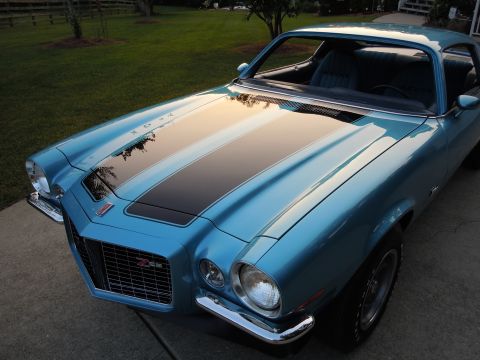
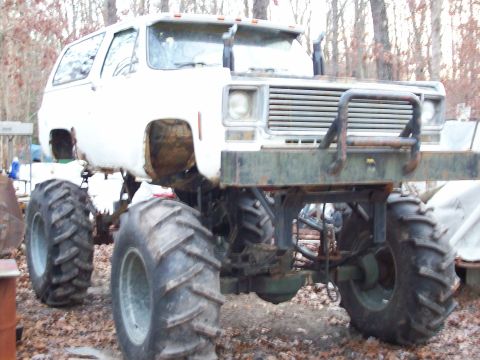
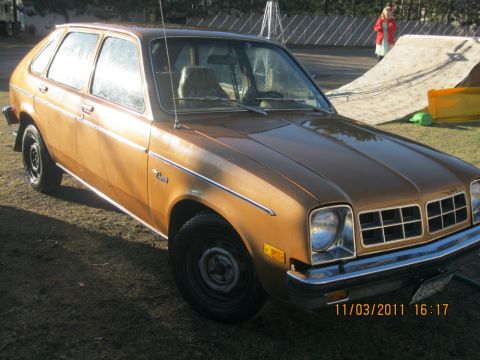
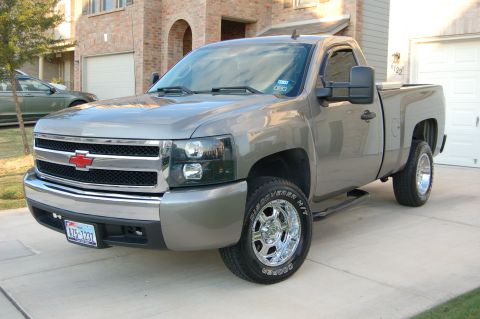
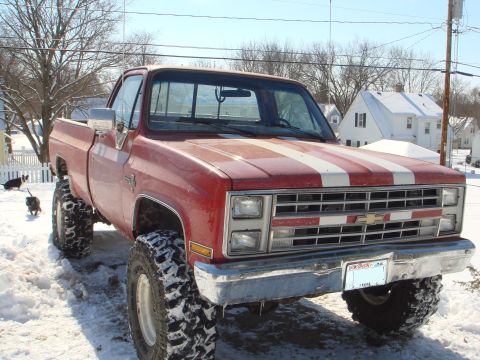
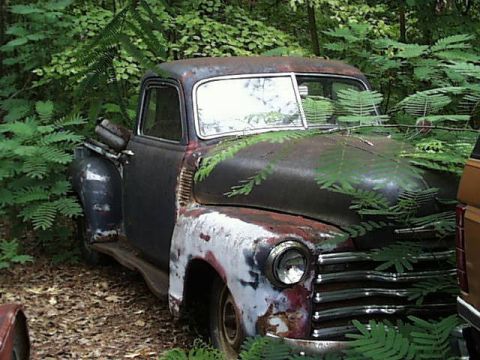
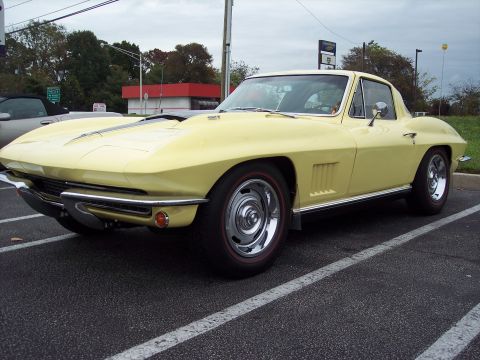
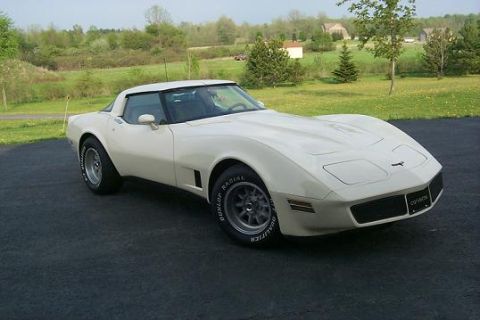
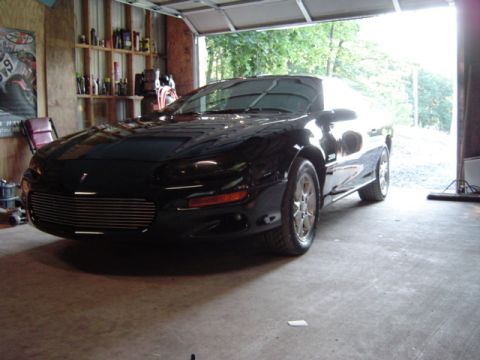
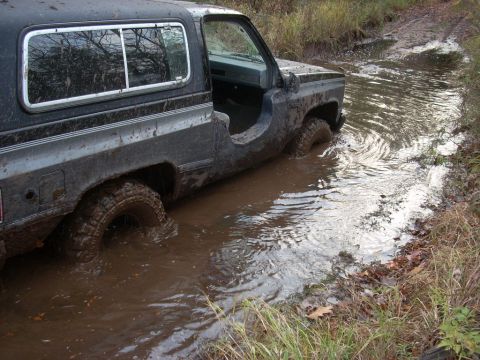
The most-documented Chevrolet vehicles in the registry, every photo by the owner.