The registry
Chrysler Registry: Models, Builds & Photos
Chrysler Corporation was founded on June 6, 1925, in Highland Park, Michigan, by Walter P. Chrysler, who reorganized the failing Maxwell Motor Company around his engineering-led Chrysler Six automobile. Within a decade it became one of America's Big Three automakers, building Chrysler, Plymouth, Dodge, DeSoto, and Imperial cars and pioneering innovations from four-wheel hydraulic brakes to the Hemi V8 and the minivan. The company nearly died three times: rescued by federal loan guarantees under Lee Iacocca in 1979-80, merged into DaimlerChrysler in 1998, and reorganized through Chapter 11 bankruptcy in 2009 under Fiat's control. Today Chrysler survives as a brand of FCA US, LLC, a subsidiary of Stellantis N.V. following the 2021 Fiat Chrysler-PSA merger, with a product line reduced to a handful of models.
Pick your model
Key facts
| Fact | Detail |
|---|---|
| Founded | June 6, 1925, Highland Park, Michigan |
| Founders | Walter P. Chrysler, with engineers Fred Zeder, Owen Skelton, and Carl Breer |
| Headquarters | Auburn Hills, Michigan, USA |
| Parent/successor | FCA US, LLC, a subsidiary of Stellantis N.V. (since the January 2021 FCA-PSA merger) |
| Fate/status | Active as a brand; Chrysler Corporation ceased to exist as an independent company with the 1998 Daimler-Benz merger and was reorganized through Chapter 11 in 2009 |
| Best known for | Chrysler 300, Town & Country minivan, Imperial |
| Registry presence | 41 vehicles / 1,180 photos documented by owners on SuperMotors |
1875-1925: Walter Chrysler, the Zeder-Skelton-Breer Trio, and the Maxwell Rescue
Chrysler Corporation began not with a factory but with a mechanic's resume: Walter Percy Chrysler, born in 1875 in Wamego, Kansas, was a railroad machinist who taught himself automobiles by buying a Locomobile and taking it apart. By 1916 he was running Buick for General Motors at a salary reported near $500,000 a year, then quit in 1919 after clashing with GM founder William Durant over autonomy. Bankers hired him to salvage Willys-Overland and then the moribund Maxwell Motor Company, and it was inside Maxwell that the future corporation took shape.
The decisive move was Chrysler's recruitment of three Studebaker engineers, Fred Zeder, Owen Skelton, and Carl Breer, who designed the car that carried his name. The Chrysler Six, introduced in January 1924 at the Commodore Hotel in New York because the show floor rejected a car with no company behind it, offered a high-compression six-cylinder engine and four-wheel hydraulic brakes at a medium price, features then confined to luxury cars. It sold roughly 32,000 units in its first year, a record for a new nameplate. On June 6, 1925, Walter Chrysler reorganized Maxwell into Chrysler Corporation, headquartered in Highland Park, Michigan, the enclave inside Detroit where Maxwell's plant and offices already stood. The company was born as an engineering house first and a manufacturer second, an identity that would define its best and worst decades.
1925-1940: The Dodge Purchase, Plymouth, DeSoto, and the Airflow Gamble
In 1928 Chrysler Corporation transformed itself from a single-brand upstart into a full-line rival to General Motors in a single year. Walter Chrysler bought Dodge Brothers from the banking firm Dillon, Read for about $170 million in stock, instantly acquiring Dodge's foundries, forge shops, and dealer network, capacity Chrysler could never have built organically. The same year he launched Plymouth as a low-priced brand to fight Ford and Chevrolet, and DeSoto to fill the middle of the market. The Imperial nameplate, introduced in 1926, crowned the range as Chrysler's answer to Cadillac and Packard; the corporation later spun Imperial off as a standalone marque from 1955 to 1975 in a bid for genuine luxury credibility that never fully stuck.
Plymouth's timing proved providential. When the Depression arrived, the cheap, hydraulically braked Plymouth kept the corporation profitable while weaker rivals bled; Chrysler earned money through most of the early 1930s, a feat among Detroit automakers matched only by General Motors, and by the late 1930s it had passed Ford to become the number two producer in the United States, a position it held until 1949. Walter Chrysler celebrated by building the Chrysler Building in Manhattan, completed in 1930 as the world's tallest structure, financed personally rather than by the corporation.
The era's great failure was the 1934 Airflow, the streamlined, wind-tunnel-developed sedan championed by Carl Breer. It was structurally advanced, with the engine moved forward over the axle and passengers seated within the wheelbase, but its blunt waterfall styling repelled buyers and a rushed production launch bred quality problems. The Airflow was dead by 1937, and its commercial humiliation taught Chrysler management a lesson it over-learned: for the next decade and a half the corporation would not risk styling leadership again. Walter Chrysler stepped back from day-to-day control in 1935, handing the presidency to K.T. Keller, and died in 1940.
1940-1950: K.T. Keller, the Detroit Arsenal, and the Cost of Conservatism
Between 1940 and 1945 Chrysler Corporation built more tanks than the entire Third Reich, and the war was arguably its finest hour as an institution. President K.T. Keller, a production man trained under Walter Chrysler, ran the government-owned Detroit Arsenal Tank Plant in Warren, Michigan, which delivered 22,234 tanks, most of them M3s and M4 Shermans. Chrysler plants also produced Wright Cyclone aircraft engines for the B-29, anti-aircraft guns, radar units, and marine engines, and the corporation's engineers contributed to the Manhattan Project's uranium diffusion equipment.
Peace exposed the weakness in Keller's virtues. He is said to have insisted that cars be tall enough to drive while wearing a hat, and the corporation's first postwar designs, launched in 1949, were boxy, upright, and deliberately unfashionable while General Motors and Ford embraced longer, lower styling. The engineering was sound and the build quality respected, but Chrysler began surrendering the market share Plymouth had won in the 1930s. The corporation entered the 1950s still number two in the industry, yet with a styling deficit that would take a crisis, and a new designer, to correct. Keller moved up to chairman in 1950, passing the presidency to Lester Colbert.
1951-1961: The FirePower Hemi, Virgil Exner's Forward Look, and the Letter-Series 300
Chrysler Corporation answered its styling crisis with horsepower first: the 1951 FirePower V8, the original 331-cubic-inch Hemi, gave the company the most powerful engines in America and a performance reputation its dowdy bodies did not deserve. K.T. Keller had hired Virgil Exner away from Studebaker in 1949 to head a new Advanced Styling studio, and president Lester Colbert elevated him to Director of Styling in 1953; Exner's 1955 "Hundred Million Dollar Look" and 1957 "Forward Look" cars, low, finned, and dramatic, briefly made Chrysler the design leader of the industry, forcing GM to scrap and restyle its own programs.
The emblem of the era was the Chrysler 300, launched in 1955 as America's most powerful production car with 300 horsepower from the Hemi. The letter-series 300s dominated NASCAR in 1955-56 under the Kiekhaefer team and gave the corporation a halo of engineering swagger; the nameplate proved durable enough to be revived twice in later decades. Alongside it, the 1961 Newport repositioned the brand downmarket as an affordable full-size Chrysler, a volume play that kept dealers alive as DeSoto was killed off in November 1960 after years of being squeezed between Dodge and Chrysler in the corporate ladder.
The decade ended badly. The rushed 1957 model launch bred rust and quality scandals that damaged the brands for years, a 1958 recession gutted sales, and Colbert was tainted by a conflict-of-interest scandal involving executive William Newberg, who was found to hold interests in Chrysler suppliers. Exner's post-1960 designs missed the market, and by 1961 the corporation needed new management again. The lesson of the era: Chrysler could lead the industry in engineering and styling simultaneously, but never yet in management discipline.
1962-1978: Lynn Townsend's Expansion, the Muscle Years, and the Slide Toward Insolvency
Lynn Townsend, an accountant elevated to president of Chrysler Corporation in 1961, spent the decade buying growth and the next decade paying for it. Townsend rationalized the model line, installed Elwood Engel from Ford to replace Virgil Exner with cleaner, slab-sided styling, and pushed the five-year/50,000-mile warranty that rebuilt consumer trust after the late-1950s quality debacles. He also expanded aggressively overseas, acquiring Simca in France, Rootes in Britain, and Barreiros in Spain, subsidiaries that were chronically weak and drained capital for twenty years.
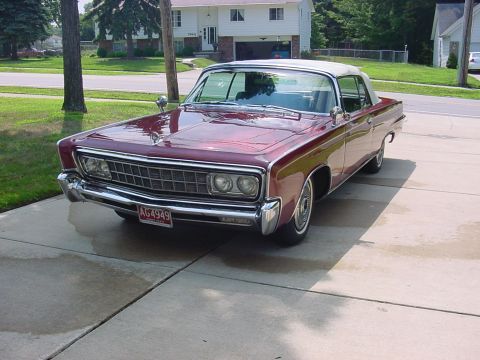
The corporation's engineering culture produced its last unambiguous triumphs in this era: the 426 Hemi of 1964 that dominated NASCAR so thoroughly it was banned for 1965, the winged Dodge Daytona and Plymouth Superbird aero cars, and a muscle-car catalog that made Mopar a cult. The New Yorker soldiered on as the flagship of the full-size C-body line, the corporation's profit core. But Chrysler badly mistimed the market twice: the 1974 full-size redesign landed in the teeth of the OPEC oil embargo, and the company had no competitive small car when buyers stampeded toward them. Townsend retired in 1975, leaving John Riccardo a company with obsolete plants, a bloated inventory system called the "sales bank" that built cars with no orders and parked them in fields, and mounting losses. By 1978 Chrysler Corporation was heading for the largest corporate collapse in American history, and Riccardo made the hire that saved it: Lee Iacocca, freshly fired by Henry Ford II.
1979-1992: Lee Iacocca, the Federal Bailout, the K-Car, the Minivan, and Jeep
On January 7, 1980, President Carter signed the Chrysler Corporation Loan Guarantee Act, providing $1.5 billion in federal guarantees, and the deal defined American industrial politics for a generation. Lee Iacocca, chairman from 1979, sold the rescue to Congress with concessions from the UAW, dealers, and lenders, and sold the tank division to General Dynamics in 1982; loss-making Chrysler Europe had already gone to Peugeot for a nominal sum in 1978, before his arrival. He put his own face in the advertising with the line "If you can find a better car, buy it." Chrysler repaid the guaranteed loans in 1983, seven years early, and the Treasury collected $311 million when Chrysler bought back the stock warrants it had pledged for the guarantees.
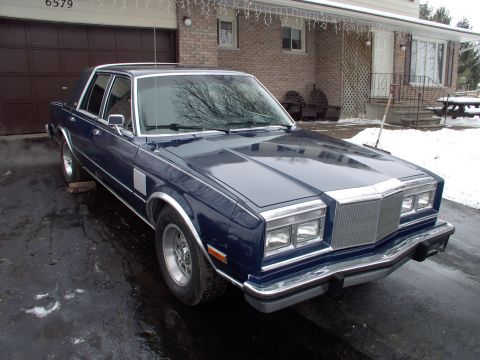
Two products did the actual saving. The 1981 K-car compacts, the Plymouth Reliant and Dodge Aries, were cheap, front-wheel-drive, six-passenger cars whose platform Iacocca stretched into nearly everything the corporation sold, including the Fifth Avenue, the traditional rear-drive luxury holdover that remained one of Chrysler's most profitable single models through the mid-1980s. The second was the 1984 minivan, a Hal Sperlich concept Ford had rejected, launched as the Dodge Caravan and Plymouth Voyager and later crowned by the Chrysler Town & Country. The minivan created an entire vehicle segment and gave Chrysler two decades of near-monopoly profits in it.
Iacocca's second act was acquisition: in 1987 Chrysler bought American Motors Corporation from Renault for about $1.5 billion, principally to get Jeep, the most valuable brand purchase in Detroit history, along with AMC's efficient platform-team engineering culture that would reshape Chrysler's own development process. His misses were real too, including distracting diversifications into Gulfstream and Lamborghini and a late-1980s product drought of aging K-derivatives. He retired in 1992, a national celebrity, handing Robert Eaton a company again short of cash but long on ideas.
1993-1998: Bob Eaton, Bob Lutz, Cab-Forward, and Detroit's Most Profitable Automaker
By the mid-1990s Chrysler Corporation was, per vehicle, the most profitable car company in the world, a turnaround built on the AMC-derived platform-team system that slashed development time and cost. Under chairman Robert Eaton and president Bob Lutz, with design chief Tom Gale, Chrysler launched the 1993 LH sedans, the Concorde among them, whose "cab-forward" proportions pushed the wheels to the corners and made every competitor look old. The compact Neon, the Ram pickup's 1994 reinvention, and a fresh Sebring coupe and convertible line filled the showrooms; the 300M, launched for 1999 off the second-generation LH platform, deliberately revived the letter-series name to signal that Chrysler engineering ambition was back.
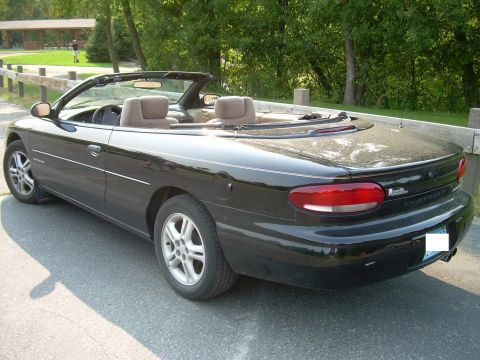
The paradox of the era is that success made Chrysler a target rather than a fortress. Investor Kirk Kerkorian, with Iacocca advising, mounted a hostile takeover attempt in 1995 that failed but rattled the board. Eaton, worried about overcapacity, consolidation, and the next downturn, concluded Chrysler could not survive alone. Lutz, the product man, disagreed with the Daimler deal and retired in 1998. In May 1998 Eaton announced a $36 billion "merger of equals" with Daimler-Benz, and the independent Chrysler Corporation, seventy-three years old and at the peak of its game, ceased to exist.
1998-2009: DaimlerChrysler, Cerberus, and the Chapter 11 Near-Death
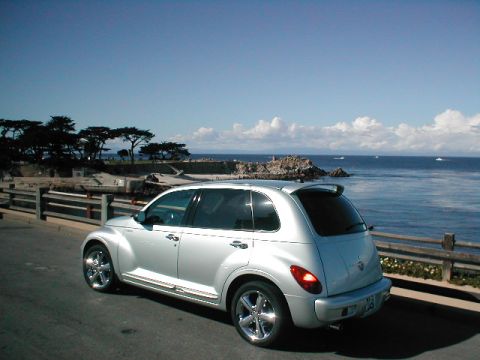
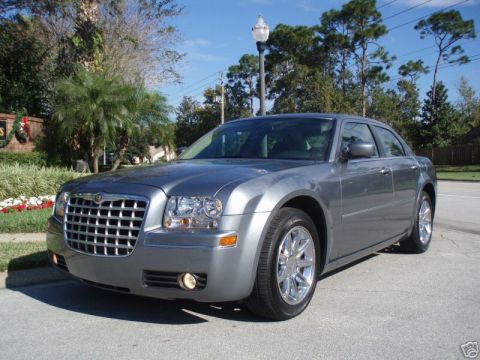
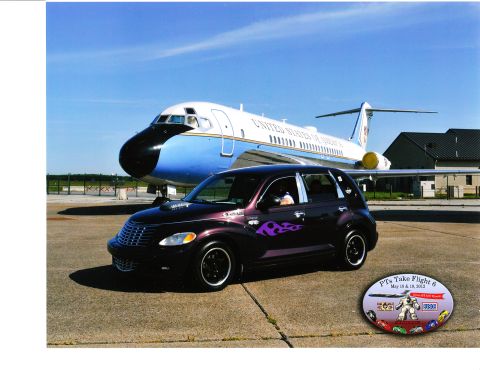
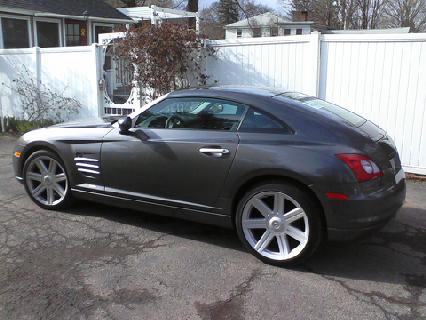
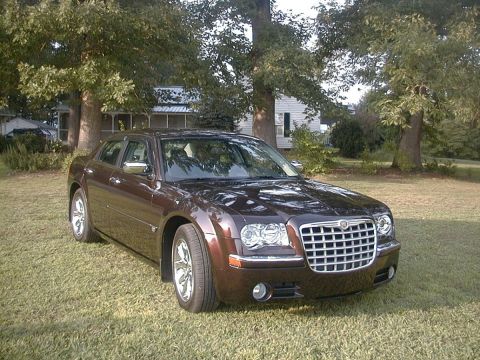
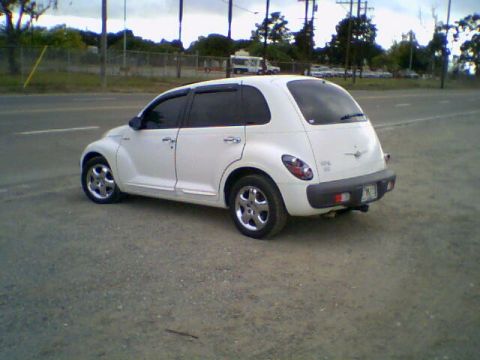
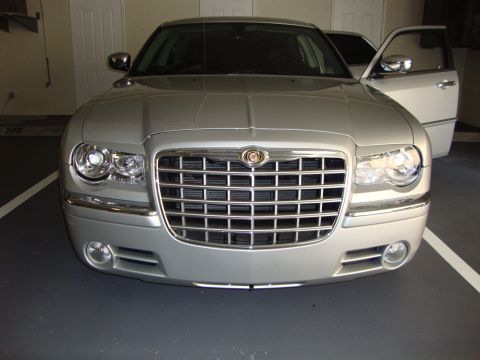
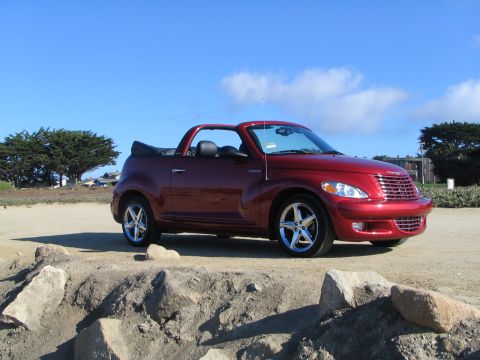
Within two years of the 1998 merger, Daimler-Benz chairman Jurgen Schrempp admitted publicly that the "merger of equals" had always been intended as a takeover, and the admission poisoned the combined company. American executives departed en masse, Chrysler lurched into losses by 2001, and Dieter Zetsche was sent from Stuttgart to cut 26,000 jobs. The German era produced genuine product fruit: Mercedes components underpinned the rear-drive LX platform, whose 2005 Chrysler 300 sedan became a styling phenomenon and the brand's biggest hit in decades, and the Crossfire of 2004 was built in Germany by Karmann directly on the previous-generation Mercedes SLK, the merger's most literal artifact. The PT Cruiser, a retro-styled tall wagon launched in 2000 from the pre-merger design studio under Tom Gale's influence, sold over a million units and showed Chrysler could still mint money from cheap platforms and bold design.
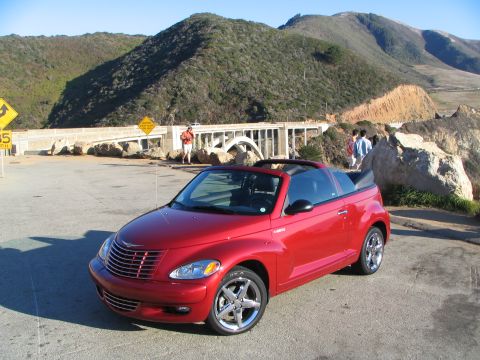
None of it was enough. In May 2007 Daimler sold 80.1 percent to the private-equity firm Cerberus Capital Management in a deal valued at $7.4 billion; most of the $7.4B recapitalized Chrysler rather than flowing to Daimler. Cerberus installed Home Depot's Robert Nardelli as CEO just as gasoline prices spiked and the 2008 financial crisis destroyed credit and truck sales. On April 30, 2009, Chrysler LLC filed for Chapter 11 bankruptcy, the first of the Detroit Three to fall, with the Obama administration's auto task force brokering roughly $12.5 billion in U.S. Treasury support and handing operational control to Fiat and CEO Sergio Marchionne in exchange for small-car technology and management.
2009-2026: Sergio Marchionne, FCA, and Chrysler as a Brand Inside Stellantis
Sergio Marchionne's bet, that a bankrupt Chrysler and a marginal Fiat could survive only as one company, paid off faster than anyone in Washington expected. The reorganized Chrysler Group LLC repaid its U.S. and Canadian government loans in May 2011, six years early; the "Imported from Detroit" Super Bowl advertisement with Eminem that February reintroduced the Chrysler 300 and the brand as symbols of the city's comeback. Fiat completed its buyout of the UAW retiree trust's stake in January 2014, creating Fiat Chrysler Automobiles, and the American operating company was renamed FCA US, LLC, headquartered in Auburn Hills, Michigan. Profit, however, came overwhelmingly from Jeep and Ram; the Chrysler brand itself was starved, shrinking to the 300, the Pacifica minivan that replaced the Town & Country in 2017, and little else.
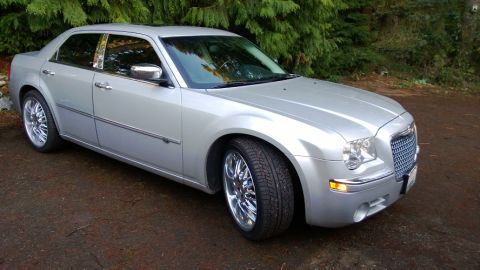
Marchionne died suddenly in July 2018, and his successor Mike Manley executed the consolidation Marchionne had long preached, agreeing to merge FCA with France's PSA Group. The merger closed on January 16, 2021, creating Stellantis N.V., a fourteen-brand giant led at its founding by Carlos Tavares. Within Stellantis, Chrysler survives as a brand of FCA US, LLC, given a stated future as an electrified marque, previewed by the 2022 Airflow concept that deliberately reclaimed the name of the corporation's boldest 1934 failure, though concrete product has been repeatedly delayed and the 300 sedan ended production in 2023. A century after Walter Chrysler introduced his Six at a New York hotel, the corporation he built no longer exists as an independent entity, but the nameplate and the engineering lineage persist inside one of the world's largest automakers.
Leadership
| Leader | Tenure | Legacy |
|---|---|---|
| Walter P. Chrysler | 1925-1935 (president); chairman to 1940 | Founded the company from the failing Maxwell, bought Dodge in 1928, and launched Plymouth and DeSoto to build a full-line Big Three rival. |
| K.T. Keller | 1935-1950 (president); chairman to 1956 | Ran the Detroit Arsenal war-production effort but held to boxy, conservative postwar styling that cost Chrysler its number-two sales position. |
| Virgil Exner | 1949-1961 (Advanced Styling head; Director of Styling from 1953) | His 1955-57 Forward Look tailfin designs forced GM and Ford to restyle, briefly making Chrysler the industry's design leader. |
| Lester Colbert | 1950-1961 (president, then chairman) | Presided over the FirePower Hemi and the Forward Look's rise, but the rushed 1957 launch, the 1958 recession, and the Newberg conflict-of-interest scandal ended his tenure. |
| Lynn Townsend | 1961-1975 (president, then chairman) | Expanded internationally and presided over the muscle-car era, but overexpansion and quality problems set up the late-1970s crisis. |
| John Riccardo | 1970-1979 (president, then chairman) | Inherited Townsend's overextended empire, sold Chrysler Europe to Peugeot in 1978, recruited Lee Iacocca, and resigned in 1979 to ease the bailout's passage through Washington. |
| Lee Iacocca | 1978-1992 (president from 1978; chairman and CEO from 1979) | Secured the 1979-80 federal loan guarantees, launched the K-car and the 1984 minivan, and bought Jeep with AMC in 1987. |
| Bob Lutz | 1986-1998 (president/vice chairman) | Championed the cab-forward LH sedans, the Viper, and the fast, cheap platform-team product development system. |
| Bob Eaton | 1993-1998 (chairman and CEO) | Led Chrysler through its most profitable years, then negotiated the 1998 merger that made it a division of DaimlerChrysler. |
| Dieter Zetsche | 2000-2005 (president and CEO, Chrysler Group) | Sent from Stuttgart to stem DaimlerChrysler-era losses, he cut 26,000 jobs and oversaw the LX-platform 300 that revived the brand. |
| Robert Nardelli | 2007-2009 (chairman and CEO, Chrysler LLC) | Cerberus's pick to run the newly private Chrysler; presided over the collapse into the April 2009 Chapter 11 filing as credit and truck sales evaporated. |
| Sergio Marchionne | 2009-2018 (CEO, Chrysler Group/FCA) | Rebuilt the company out of the 2009 bankruptcy under Fiat control and merged the two into Fiat Chrysler Automobiles in 2014. |
Timeline
| Year | Event | Detail |
|---|---|---|
| 1924 | Chrysler Six debuts | Walter Chrysler's engineering team of Zeder, Skelton, and Breer launched the medium-priced Chrysler Six with four-wheel hydraulic brakes and a high-compression engine. |
| 1925 | Chrysler Corporation founded | On June 6, 1925, Walter P. Chrysler reorganized the failing Maxwell Motor Company into Chrysler Corporation, headquartered in Highland Park, Michigan. |
| 1926 | Imperial introduced | Chrysler launched the Imperial as its flagship luxury line to compete with Cadillac, Lincoln, and Packard. |
| 1928 | Dodge purchase; Plymouth and DeSoto launched | Chrysler bought Dodge Brothers from the banking house Dillon, Read for roughly $170 million in stock and launched the low-priced Plymouth and mid-priced DeSoto the same year, creating a full-line Big Three automaker. |
| 1934 | Airflow introduced | The streamlined, unit-construction Chrysler Airflow was an engineering landmark and a commercial failure that pushed the company toward styling conservatism. |
| 1940 | Walter Chrysler dies; New Yorker becomes a series | Founder Walter P. Chrysler died on August 18, 1940; the New Yorker name, introduced on 1938-39 models, became a standalone series that would run to 1996. |
| 1941 | Detroit Arsenal at full production | The Chrysler-operated Detroit Arsenal Tank Plant in Warren, Michigan, opened in 1941 and built about a quarter of U.S. tank output during the Second World War. |
| 1951 | FirePower Hemi V8 introduced | Chrysler's 331-cubic-inch FirePower V8 with hemispherical combustion chambers gave the company the industry's most powerful passenger-car engine at 180 horsepower. |
| 1955 | C-300 and the Forward Look | Virgil Exner's Forward Look restyling arrived along with the 300-horsepower Chrysler C-300, the first of the letter-series cars and ancestor of today's 300. |
| 1955 | Imperial spun off as a separate make | Chrysler made Imperial its own division and marque to fight Cadillac head-on; it remained separate through 1975. |
| 1957 | Second-generation Forward Look; torsion-bar suspension | The "Suddenly, it's 1960" 1957 line paired the industry's tallest tailfins with Torsion-Aire front suspension and the three-speed TorqueFlite automatic. |
| 1960 | Company-wide unibody construction | Chrysler switched nearly all its 1960 cars to unit-body construction, years ahead of GM and Ford, and killed the DeSoto brand the following year. |
| 1961 | Newport introduced as a full series | The value-priced Newport became Chrysler's volume model and anchored the brand's full-size line into the late 1970s. |
| 1964 | 426 Race Hemi | The second-generation 426 Hemi swept the top three places at the 1964 Daytona 500 and became the definitive Mopar muscle engine when street versions arrived in 1966. |
| 1979 | Federal bailout sought | Facing collapse, new chairman Lee Iacocca won the Chrysler Corporation Loan Guarantee Act, signed by President Carter in January 1980, providing $1.5 billion in federal loan guarantees. |
| 1981 | K-car launched | The front-wheel-drive Dodge Aries and Plymouth Reliant K-cars, followed by the Chrysler LeBaron, returned the company to profit; Chrysler repaid the guaranteed loans in 1983, seven years early. |
| 1983 | Fifth Avenue becomes a model | The rear-drive M-body New Yorker Fifth Avenue, sold as simply Fifth Avenue from 1984, became a surprise profit machine through 1989. |
| 1984 | Minivan and Town & Country | The Dodge Caravan and Plymouth Voyager created the minivan segment; the Chrysler Town & Country version followed for 1990 and ran through 2016. |
| 1987 | AMC and Jeep acquired | Chrysler bought American Motors from Renault for about $1.5 billion, chiefly to get the Jeep brand and AMC's new Bramalea plant. |
| 1993 | Cab-forward LH cars; Concorde introduced | The LH-platform Chrysler Concorde, Dodge Intrepid, and Eagle Vision launched the cab-forward design era that made Chrysler the most profitable automaker per vehicle in Detroit by the mid-1990s. |
| 1995 | Sebring introduced | The Sebring coupe and convertible replaced the LeBaron as Chrysler's mid-size line and ran through 2010. |
| 1998 | DaimlerChrysler merger | Chrysler Corporation merged with Daimler-Benz in a $36 billion deal billed as a merger of equals; Chrysler ceased to exist as an independent company on November 12, 1998. |
| 1998 | 300M introduced | The LH-based 300M revived the letter-series name, made Car and Driver's 10Best list, and was named Motor Trend's Car of the Year for 1999. |
| 2000 | PT Cruiser launched | The retro-styled PT Cruiser sold more than 1.3 million units worldwide over a ten-year run. |
| 2003 | Crossfire introduced | Built by Karmann on Mercedes SLK mechanicals, the Crossfire was the most visible product of the DaimlerChrysler platform-sharing era. |
| 2005 | Modern 300 debuts | The rear-drive LX-platform 300, with an available 5.7-liter Hemi in the 300C, became an immediate hit and remains the brand's signature sedan. |
| 2007 | Cerberus buys Chrysler | Daimler sold 80.1 percent of Chrysler to private-equity firm Cerberus Capital Management for $7.4 billion, far less than it had paid in 1998. |
| 2009 | Chapter 11 bankruptcy | Chrysler LLC filed for Chapter 11 on April 30, 2009, and emerged in June as Chrysler Group LLC with Fiat holding management control and the U.S. and Canadian governments as shareholders. |
| 2014 | Fiat Chrysler Automobiles formed | Fiat completed its buyout of Chrysler Group in January 2014 and merged the companies into FCA, with the U.S. arm renamed FCA US, LLC. |
| 2021 | Stellantis merger | FCA merged with France's PSA Group on January 16, 2021, forming Stellantis N.V.; Chrysler survives as one of its fourteen brands with a line reduced to the Pacifica minivan family. |
Asked all the time
Who founded Chrysler?
Walter P. Chrysler, a former Buick president and railroad machinist from Kansas, founded Chrysler Corporation on June 6, 1925, by reorganizing the failing Maxwell Motor Company around his new Chrysler Six automobile. The engineering trio of Fred Zeder, Owen Skelton, and Carl Breer, whom he had recruited from Studebaker, designed the cars that made the company possible.
Is Chrysler still in business?
Chrysler survives as a brand but not as an independent company. Chrysler Corporation ended with the 1998 Daimler-Benz merger, went through Chapter 11 bankruptcy in 2009, and today operates as FCA US, LLC, a North American subsidiary of Stellantis N.V. Its product line has shrunk to the Pacifica minivan family.
Why did Chrysler go bankrupt in 2009?
A collapse in U.S. auto sales during the 2008 financial crisis hit Chrysler hardest of the Big Three because its lineup leaned on trucks and SUVs, as the 2008-09 financial crisis hit, its private-equity owner Cerberus did not inject the further capital Chrysler needed, and credit markets froze. Chrysler LLC filed Chapter 11 on April 30, 2009, and emerged in June with Fiat in management control and U.S. and Canadian government financing.
Who owns Chrysler today?
Stellantis N.V., the multinational formed by the January 2021 merger of Fiat Chrysler Automobiles and France's PSA Group, owns Chrysler. The legal entity is FCA US, LLC, headquartered in Auburn Hills, Michigan.
How did Chrysler survive its 1979 crisis?
Chairman Lee Iacocca persuaded Congress to pass the Chrysler Corporation Loan Guarantee Act, signed in January 1980, which backed $1.5 billion in private loans. Cost cuts, union concessions, and the profitable front-wheel-drive K-cars let Chrysler repay the guaranteed loans in 1983, seven years ahead of schedule.
What innovations is Chrysler known for?
Chrysler introduced four-wheel hydraulic brakes on the 1924 Chrysler Six, streamlined unit construction with the 1934 Airflow, the FirePower Hemi V8 in 1951, torsion-bar suspension and the TorqueFlite automatic in 1957, industry-wide unibody construction in 1960, and the modern minivan in 1984.
Why did Chrysler merge with Daimler-Benz?
In 1998 Chrysler was Detroit's most profitable automaker but feared it was too small and too dependent on the North American truck market to survive alone. CEO Bob Eaton agreed to a $36 billion merger of equals with Daimler-Benz; in practice Stuttgart ran the combined company, and Daimler sold Chrysler to Cerberus in 2007 at a heavy loss.
What happened to Chrysler's other brands like Plymouth and DeSoto?
Chrysler retired DeSoto in 1961 after the 1958 recession gutted the mid-priced market, spun Imperial off as a separate marque from 1955 to 1975, killed Plymouth in 2001, and retired the Eagle brand in 1998. Dodge, Jeep, and Ram continue alongside Chrysler inside Stellantis.
The wall
The most-documented Chrysler vehicles in the registry, every photo by the owner.