The registry
Pontiac Registry: Models, Builds & Photos
Pontiac was an American automobile brand, formally the Pontiac Motor Division of General Motors, launched in 1926 as a companion make to GM's Oakland division and built in Pontiac, Michigan. It outsold and absorbed Oakland by 1932, then evolved from a builder of dependable low-priced sixes into GM's performance division. Under Semon "Bunkie" Knudsen, Pete Estes, and John DeLorean in the 1956-1969 era, Pontiac created the Wide-Track image, the GTO that ignited the muscle car boom, and the Firebird Trans Am. Decades of badge engineering, emissions-era decline, and GM's corporate homogenization eroded the brand, and GM killed Pontiac in its 2009 bankruptcy restructuring. The last Pontiac, a white G6, was built in January 2010.
Pick your model
Key facts
| Founded | 1926, Pontiac, Michigan, United States |
|---|---|
| Founders | General Motors, launched as a companion make to its Oakland division under Alfred P. Sloan's brand-ladder plan |
| Headquarters | Detroit, Michigan, United States (Pontiac Motor Division of General Motors) |
| Parent / successor | General Motors; no successor brand, its dealers and models were folded into other GM divisions |
| Fate / status | Defunct. GM discontinued Pontiac in its 2009 bankruptcy restructuring; the last car, a white G6, was built in January 2010 |
| Best known for | GTO, Firebird Trans Am, Bonneville |
| Registry presence | 149 vehicles / 5,688 photos documented by owners on SuperMotors |
1926-1932: Alfred Sloan's Companion-Make Gamble Kills Its Own Parent, Oakland
Pontiac entered the market in January 1926 as the only General Motors companion make that would outlive the division it was created to support. Alfred P. Sloan's "a car for every purse and purpose" ladder had a price gap between Chevrolet and the Oakland Motor Car Company of Pontiac, Michigan, and Sloan filled it with a new brand named for the Odawa war chief whose name the town already carried. The formula was deliberate: a smooth six-cylinder engine in a car priced near four-cylinder Chevrolet money, engineered under Oakland chief Ben Anibal, a Cadillac alumnus.
The gamble worked too well. Pontiac sold roughly 76,000 cars in its first year, one of the strongest launches the industry had seen, and by the late 1920s it was decisively outselling the older, costlier Oakland. When the Depression collapsed mid-priced car sales, General Motors faced a choice between its heritage brand and its profitable newcomer, and the answer was arithmetic. Oakland built its last cars in 1931, and in 1932 the operation was formally renamed the Pontiac Motor Division. The child had absorbed the parent, a pattern no other GM companion make (LaSalle, Marquette, Viking) managed.
The lesson Pontiac's early success taught General Motors would define the division for eight decades: Pontiac existed to fill whatever space the corporation needed filled between Chevrolet and Oldsmobile. That dependency on corporate positioning, rather than on an independent engineering identity, was both Pontiac's founding logic and, in the end, the reason it could be deleted.
1933-1945: Harry Klingler, the Silver Streak, and Survival Through the Depression and War
Pontiac spent the 1930s proving that a division born as a price-ladder patch could carve out its own identity, and the man who did it was general manager Harry Klingler, a former Chevrolet sales chief installed in 1933 as Depression-era sales cratered. Klingler's Pontiac leaned on value engineering: the 1935 models shared GM's new all-steel "Turret Top" bodies, and designer Frank Hershey (working under Harley Earl's Art and Colour section) gave the cars the Silver Streak, a band of chrome ribbons running down the hood that became Pontiac's visual signature for two decades.
Mechanically the division stayed conservative on purpose. Pontiac built durable L-head sixes and straight-eights and sold them on dependability to schoolteachers, farmers, and family buyers. The strategy kept the division profitable through years that killed dozens of independent automakers, and by the late 1930s Pontiac ranked consistently around fifth or sixth in the American industry.
Civilian production stopped in early 1942 as the Pontiac, Michigan plants converted to war work, including the Oerlikon 20 mm anti-aircraft cannon, aircraft torpedoes, and front axles for the Cadillac-built M5 tank. When production resumed in late 1945, Pontiac picked up exactly where it left off: warmed-over 1942 designs, flathead engines, chrome streaks, and an aging customer base. In a postwar seller's market that was fine. It would shortly become the division's biggest problem, because the "reliable but dull" reputation Klingler built was precisely what the next generation of managers would have to destroy to save the brand.
1946-1955: The Grandma's-Car Problem and the Strato-Streak V8 That Bought a Reprieve
By the early 1950s Pontiac Motor Division had the oldest customer base and stodgiest image at General Motors, and everyone in the building knew it. The postwar seller's market masked the problem: Pontiac sold everything it could build through the late 1940s, adding the Chieftain line and, in 1950, the Catalina name on its pillarless hardtops. But the cars still carried prewar-rooted flathead sixes and eights while Oldsmobile and Cadillac were selling modern overhead-valve V8s, and the Silver Streak chrome that once read as distinctive now read as old-fashioned.
General manager Arnold Lenz began a V8 program but died in a 1952 grade-crossing accident; it fell to his successors to finish the job. The 1955 model year delivered the rescue: an all-new body shared with Chevrolet and the 287-cubic-inch Strato-Streak overhead-valve V8, standard across the line. Volume jumped to over 550,000 cars for 1955, an all-time division record to that point, and the Star Chief, a stretched, chrome-laden flagship introduced in 1954, gave Pontiac something to sell against Oldsmobile ambition.
The 1955 boom was a reprieve, not a cure. The buyers were still older, the styling still trailed the market, and when industry sales softened in 1956 Pontiac slipped again. GM president Harlow Curtice concluded the division needed not a facelift but a purge, and in July 1956 he reached down into the corporation for the youngest general manager in Pontiac history. That appointment, more than any car, is the hinge of the whole Pontiac story.
1956-1963: Bunkie Knudsen Tears Off the Silver Streaks and Invents Wide-Track Performance
When 43-year-old Semon E. "Bunkie" Knudsen took over Pontiac Motor Division in 1956, he stated the problem in one sentence that became industry legend: you can sell a young man's car to an old man, but you can never sell an old man's car to a young man. Knudsen, son of former GM president William Knudsen, ordered the Silver Streak chrome stripped off the 1957 models literally weeks before production, a symbolic beheading of the grandma's-car image. He then hired two engineers who would define American performance: Elliot "Pete" Estes from Oldsmobile and a young Packard alumnus named John Z. DeLorean.
Knudsen pushed Pontiac into NASCAR and NHRA competition through Super Duty engine programs, on the theory that racing credibility was the fastest way to change what teenagers thought of the brand. The image pivot got its engineering hook in 1959, when the all-new bodies sat on widened tracks; ad man Jim Wangers' agency branded it "Wide-Track," and Pontiac suddenly had both a real handling advantage and the best marketing line in Detroit. The 1959 Bonneville, named for the salt flats where Pontiac had chased speed records, headlined the lineup, and the division won Motor Trend's Car of the Year that season.
The results were extraordinary. Pontiac climbed from sixth place in industry sales to third by 1962, behind only Chevrolet and Ford, a position it held for most of a decade. The 1962 Grand Prix, a cleanly detrimmed personal-luxury coupe championed by Knudsen, and the full-size Catalina, the lightweight platform for the Super Duty drag cars, showed the new formula: style plus speed, sold to the young. When Knudsen moved up to Chevrolet in 1961, Estes took the division and DeLorean became chief engineer, and the pipeline of ambition was fully loaded just as GM's corporate management, spooked by safety politics, banned factory racing in January 1963. Pontiac's answer to that ban created the muscle car.
1964-1970: John DeLorean's GTO End-Run and the Peak of the Excitement Division
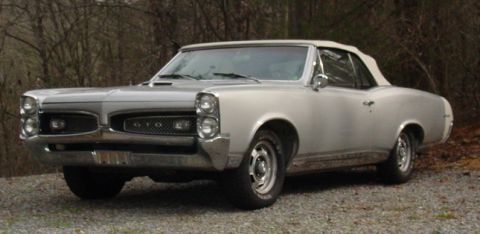
The 1964 Pontiac GTO exists because John DeLorean and his engineers broke a General Motors rule and dared the corporation to undo a sales hit. With racing banned by the corporate edict of 1963, Pontiac needed street performance to keep its young-buyer image alive, but GM policy capped intermediate cars' engine displacement. DeLorean, engineers Bill Collins and Russ Gee, and marketer Jim Wangers slipped the 389-cubic-inch V8 into the midsize Tempest-based LeMans as an option package called GTO, exploiting the loophole that option packages did not require corporate approval. Pontiac planned for about 5,000 cars; it sold over 32,000 the first year, and the entire industry spent the next five years copying it. The muscle car era, as a market category, starts here.
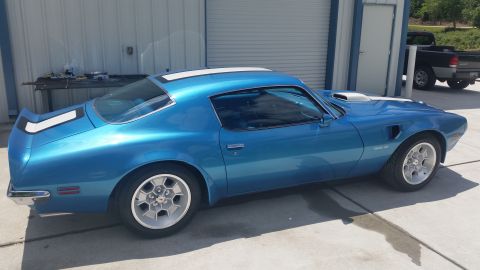
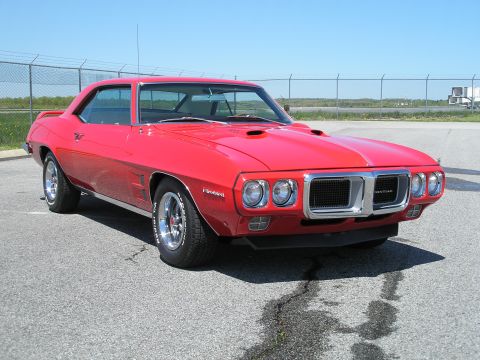
Estes moved up to Chevrolet in 1965 and DeLorean, at 40 the youngest general manager in GM history, took the division. Pontiac's 1967 Firebird was a corporate consolation prize, a Camaro-platform pony car handed down after GM killed DeLorean's in-house two-seater proposal, but Pontiac engineering turned it into the brand's longest-lived performance franchise, crowned by the 1969 Trans Am. The Grand Prix's 1969 reinvention on its own long-hood G-body, a DeLorean project, rescued a fading nameplate and invented the modern personal-luxury coupe formula that Detroit milked for 15 years.
The numbers marked the summit: Pontiac held third place in U.S. sales through the decade and built its image on "the Excitement Division." But the machinery that produced the golden age was already being dismantled. DeLorean was promoted to Chevrolet in 1969, insurance surcharges were strangling muscle car sales, and federal emissions rules were coming. Pontiac's identity was performance, and everything after 1970 attacked performance.
1971-1981: Emissions, Insurance, and Corporate Homogenization Hollow Out the Performance Brand
Pontiac Motor Division entered the 1970s as GM's performance brand and exited it as a badge, and the causes were mostly external to the division. Insurance surcharges on supercars gutted muscle car demand by 1971; GM's corporate switch to low-compression engines for unleaded fuel, then the 1973 OPEC embargo and federal emissions and bumper standards, destroyed the horsepower race entirely. The GTO withered from icon to a Ventura option package by 1974, then died. Pontiac's succession of short-tenure general managers after DeLorean had nothing like the autonomy Knudsen had enjoyed; GM's central staffs increasingly dictated shared platforms, shared engines, and shared sheetmetal.
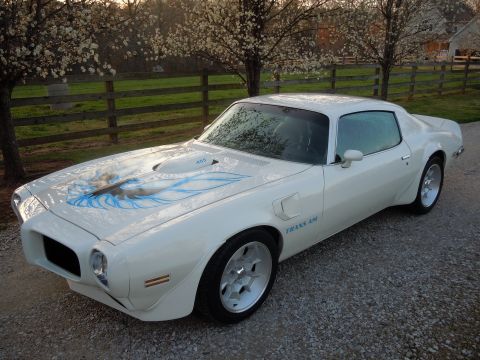
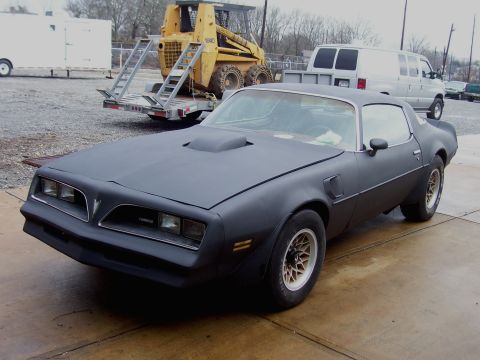
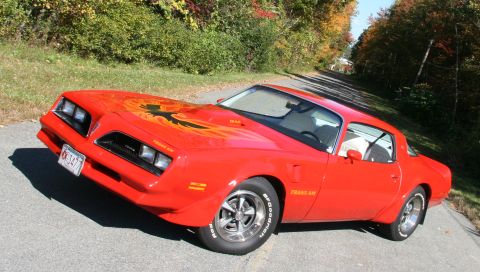
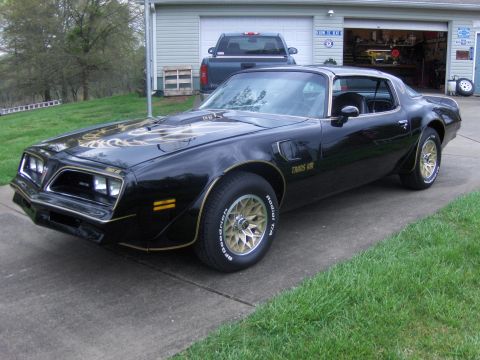
The exception proved what focus could still do. The Firebird Trans Am survived when Pontiac product planners fought to keep it alive during the darkest 1972-1974 stretch, and it became the accidental beneficiary of the era: as every competitor abandoned performance, the Trans Am inherited the whole market. Sales climbed through the decade, supercharged by the 1977 film Smokey and the Bandit, and peaked at over 117,000 Trans Ams for 1979, more than the entire GTO run of any single year. For a few years the black-and-gold Trans Am essentially was Pontiac's image.
Underneath, the rot spread. Pontiac's own V8 engine line was wound down as GM moved to corporate engines, ending an era in which each division designed its own powerplants; the 301 was the last Pontiac-designed V8, gone after 1981. Badge-engineered compacts like the Astre (a Vega clone) and Sunbird diluted the lineup. Sales fell from third place toward the middle of the pack, and by 1980-1981 the division was losing volume fast enough that GM management openly debated what Pontiac was for. The answer, once again, came from a general manager with a thesis.
1982-1992: Bill Hoglund's 'We Build Excitement' Revival, the Fiero, and Body-Cladding Pontiac
In January 1981, weeks after taking over a division in free fall, Pontiac general manager William Hoglund gathered his staff to answer an existential question, why does Pontiac exist, and the answer they committed to was the last coherent identity the brand ever had: Pontiac would be GM's driver's-car division, sold from 1982 under the slogan "We Build Excitement." The timing was desperate; Pontiac sales had collapsed from over 900,000 in 1978 to under 500,000 by 1981. Hoglund's team rebuilt the brand around blacked-out trim, rally gauges, tuned suspensions, and aggressive body cladding, a design language pushed hard by Pontiac studio chiefs under GM design vice presidents Irv Rybicki and later Chuck Jordan.
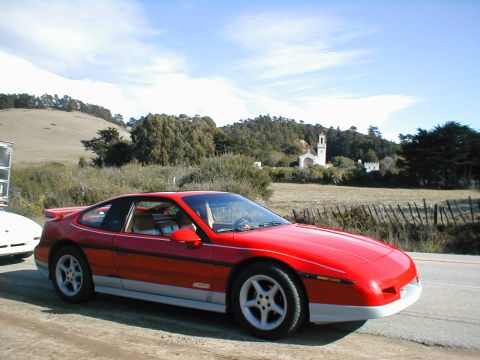
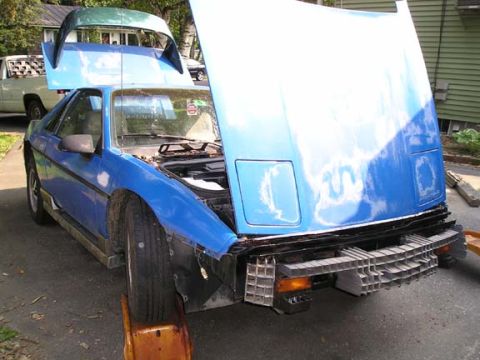
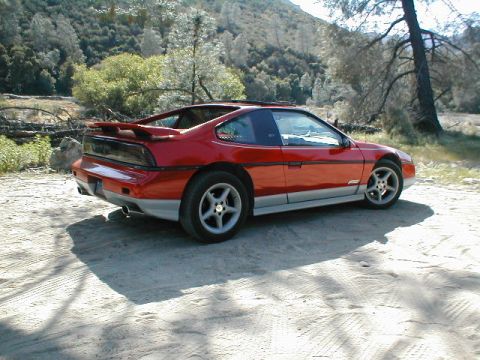
The era's boldest product was the 1984 Fiero, a mid-engine two-seat commuter car that engineer Hulki Aldikacti pushed through GM approval by pitching it as a fuel-economy car, since a Pontiac sports car would never have been funded. It sold 136,840 units in its first year, then died in 1988, killed by cost-cut engineering (borrowed Chevette front suspension, an underdeveloped chassis fixed only in its final year) and engine-fire recalls that poisoned its reputation. The Fiero is the Pontiac story in miniature: genuine ambition approved only through subterfuge, then starved by the corporation.
The volume revival, though, was real. The third-generation Firebird (1982) restored halo credibility, the 6000 STE won Car and Driver 10Best honors three straight years, and the Grand Am, relaunched in 1985 on the compact N-body, became Pontiac's bestseller and one of the top-selling cars in America by decade's end. The Trans Sport "dustbuster" minivan of 1990 showed the excitement formula stretched onto family transport with mixed results. Pontiac climbed back to third place in U.S. car sales at the end of the 1980s. It was the brand's last genuine ascent, and it depended on a distinctiveness that GM's next two decades of cost-driven consolidation would systematically remove.
1993-2004: Cladding Fatigue, the Aztek, and the Brand-Management Era That Made Pontiac Optional
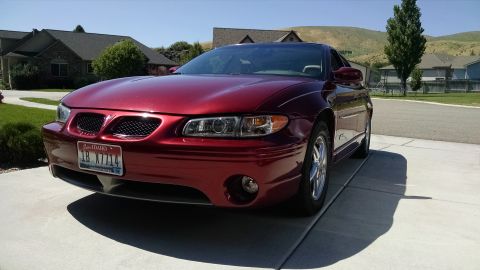
Pontiac spent the 1990s profitable in volume and bankrupt in identity, because General Motors' reorganizations kept stripping the division of everything that made it a division. After GM's 1992 boardroom coup ousted chairman Robert Stempel, the corporation merged divisional engineering and marketing into central organizations; Pontiac no longer designed its own engines, platforms, or even most of its sheetmetal hard points. What remained of "excitement" was styling flourish, and the plastic body cladding that read as sporty in 1988 curdled into a punchline by the late 1990s, most infamously on the ribbed 1996-1998 Grand Prix and the 2001 Aztek. Pontiac and GMC were folded into a single marketing division in 1996, an org-chart admission that Pontiac was a channel, not a car company.
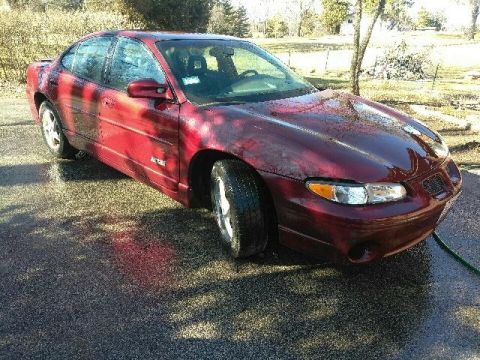
The 2001 Aztek crossover became the era's symbol, and its failure was a process failure, not a designer's whim: an adventurous concept was value-engineered onto the existing U-body minivan platform to save money, wrecking its proportions, and it was greenlit anyway under GM's brand-management regime imported from consumer packaged goods, a regime associated with executive Ron Zarrella. It sold a fraction of its 75,000-unit annual target and has been shorthand for GM dysfunction ever since.
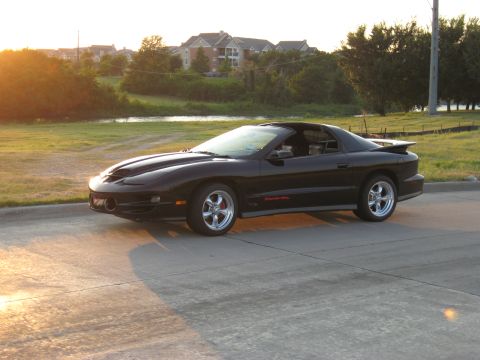
Meanwhile the products that carried actual Pontiac DNA faded. The fourth-generation Firebird, still offering the Corvette's LS1 V8 in Trans Am form, sold too slowly to justify its Canadian assembly plant, and GM ended Firebird and Camaro production in August 2002 with no successor. The Sunfire and Grand Am sold on rebates to rental fleets; the Montana minivan chased a segment Pontiac had no business defining. By 2004 Pontiac was a mid-pack brand whose best-known products were discontinued, and GM vice chairman Bob Lutz arrived promising to fix exactly that.
2005-2010: Bob Lutz's Rear-Drive Rescue Attempt, the 2009 Bankruptcy, and a White G6 in January 2010
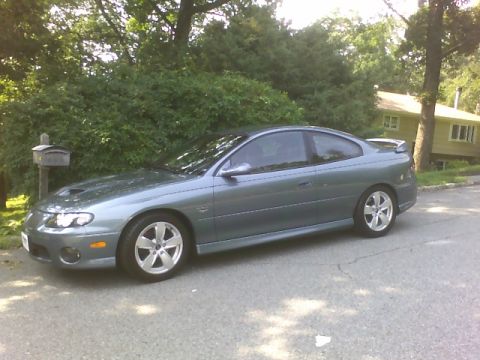
The last act of the Pontiac Motor Division was a real product renaissance arriving too late to survive General Motors' financial collapse. Product chief Bob Lutz, convinced Pontiac could be rehabilitated as an affordable rear-drive performance brand, imported the Holden Monaro from GM's Australian arm as the 2004-2006 GTO revival, and then the Holden Commodore as the 2008 G8 sedan, a car critics ranked against sport sedans costing far more. The Solstice roadster (2006) gave Pontiac its first true two-seater since the Fiero and outsold the Mazda Miata in its first year. For the first time since the 1980s, enthusiasts had reasons to walk into a Pontiac showroom.
None of it mattered to the balance sheet. GM lost $38.7 billion in 2007 and $30.9 billion in 2008, and when the corporation entered Chapter 11 bankruptcy on June 1, 2009, the restructuring plan negotiated with the U.S. Treasury's auto task force required shrinking to four core brands: Chevrolet, Cadillac, Buick, and GMC. Buick survived on enormous China sales and GMC on truck profit margins; Pontiac, whose U.S. sales had fallen to about 267,000 in 2008 and whose lineup overlapped Chevrolet almost car for car, had no constituency in the room. GM announced on April 27, 2009 that Pontiac would be phased out by the end of 2010.
The end was quiet. Dealers sold down inventory through 2009, the G8 died with barely two model years behind it, and the final Pontiac ever assembled, a white G6 sedan, came off the Orion Township, Michigan line in January 2010. The division founded in 1926 to fill a price gap died 84 years later because, after decades of corporate homogenization, it no longer filled any gap at all. What survives is the catalog of the years when it did: Wide-Track, the GTO, the Trans Am, and the proof that inside General Motors, a division was only ever as distinct as its leaders were insubordinate.
Leadership
| Leader | Tenure | Legacy |
|---|---|---|
| Alfred P. Sloan (GM president) | 1923-1937 | Created Pontiac in 1926 as the companion make that filled the price gap above Chevrolet, then let it absorb its own parent, Oakland, by 1932. |
| Harry Klingler | 1933-1951 | Steadied the division through the Depression with the Silver Streak styling theme and a reputation for durable, low-priced sixes and eights. |
| Semon "Bunkie" Knudsen | 1956-1961 | Stripped the Silver Streaks off the 1957 cars, pushed Pontiac into NASCAR and drag racing, and launched the Wide-Track chassis that rebuilt the brand around performance. |
| Elliot "Pete" Estes | 1961-1965 | Kept the performance momentum, approving the 1964 GTO package that DeLorean's engineers slipped past GM's displacement rules. |
| John Z. DeLorean | 1965-1969 | Chief engineer turned general manager who fathered the GTO and overhead-cam six and made Pontiac GM's number-three seller. |
| Bill Hoglund | 1980-1984 | Revived a moribund division with the "We Build Excitement" repositioning and the mid-engine Fiero. |
| Bob Lutz (GM vice chairman) | 2001-2010 | Tried a rear-drive rescue with the Australian-sourced GTO and G8 before the 2009 bankruptcy closed the brand. |
Timeline
| Year | Event or model | Note |
|---|---|---|
| 1926 | Pontiac launched | General Motors introduces Pontiac as a six-cylinder companion make to Oakland, built in Pontiac, Michigan, and priced just above Chevrolet. |
| 1932 | Oakland dissolved | Pontiac outsells its parent so decisively that GM kills Oakland and keeps the companion, a reversal unique among Sloan's companion makes. |
| 1935 | Silver Streak styling debuts | Under Harry Klingler, the chrome Silver Streak bands become Pontiac's identifying mark for two decades. |
| 1942-1945 | Wartime production | Pontiac's plants switch to war material, including the Oerlikon anti-aircraft cannon and aerial torpedoes. |
| 1955 | Strato-Streak V8 | Pontiac's first modern overhead-valve V8 arrives, starting the escape from its grandma's-car image. |
| 1956 | Bunkie Knudsen named general manager | At 43 the youngest GM division head, Knudsen begins remaking Pontiac around youth and performance. |
| 1957 | Bonneville introduced | A fuel-injected limited-edition convertible announces the new performance direction; Bonneville becomes the flagship line in 1958. |
| 1959 | Wide-Track debut; Catalina becomes a series | Widened tracks give the 1959 line its handling and its advertising hook, and Catalina graduates from trim level to full model. |
| 1961 | Tempest introduced | DeLorean's compact with a rope driveshaft and rear transaxle wins Motor Trend Car of the Year. |
| 1962 | Grand Prix introduced | Pontiac's entry in the personal-luxury field; the clean-flanked 1963 restyle becomes a design landmark. |
| 1964 | GTO introduced; LeMans becomes its own series | Dropping the 389 V8 into the intermediate LeMans as a $295 option end-runs GM's engine-size rules and ignites the muscle car boom. |
| 1967 | Firebird introduced | Pontiac's Camaro-derived pony car arrives; the Trans Am package follows in 1969 and outlives the muscle car era. |
| 1969 | DeLorean promoted out | John DeLorean leaves for Chevrolet with Pontiac holding third place in US sales, the division's high-water mark. |
| 1973 | Super Duty 455 Trans Am | The last of the truly fast emissions-era Pontiacs sells 252 copies while the rest of the line detunes. |
| 1977 | Trans Am boom | Smokey and the Bandit turns the black-and-gold Trans Am into a sales phenomenon while corporate engines replace Pontiac's own V8s. |
| 1982 | 6000 introduced | The front-drive A-body arrives as Bill Hoglund launches the "We Build Excitement" campaign; the 6000 STE becomes its credibility car. |
| 1984 | Fiero introduced | America's first mass-produced mid-engine car sells 136,840 in year one, then dies in 1988 just as its suspension is fixed. |
| 1985 | Grand Am relaunched on the N-body | The compact Grand Am becomes Pontiac's volume leader through the cladding era. |
| 1990 | Trans Sport introduced | The plastic-bodied "dustbuster" minivan shows how far concept-car promises fell in production. |
| 1995 | Sunfire introduced | The Cavalier-based compact replaces the Sunbird as badge engineering deepens. |
| 1997 | Montana name arrives | The Trans Sport's trail-rated trim package becomes the minivan's name outright in 1999. |
| 2001 | Aztek introduced | The crossover's styling makes it a byword for GM's brand-management failures despite genuine utility. |
| 2004 | GTO returns | Bob Lutz imports the Australian Holden Monaro as a new GTO, the first move in a rear-drive rescue attempt. |
| 2008 | G8 introduced | The Holden Commodore-based G8 earns strong reviews but arrives months before GM's collapse. |
| 2009 | GM kills Pontiac | In its April 2009 bankruptcy restructuring, GM announces Pontiac will be wound down rather than kept as a niche brand. |
| 2010 | Last Pontiac built | A white G6 comes off the Orion Township, Michigan line in January 2010, ending 84 years of production. |
Asked all the time
Who founded Pontiac?
General Motors created Pontiac in 1926 as a companion make to its Oakland division, part of Alfred P. Sloan's plan to fill every price gap in GM's brand ladder. It was named for the city of Pontiac, Michigan, where it was built, itself named for the 18th-century Odawa chief.
Why did Pontiac shut down?
GM discontinued Pontiac during its 2009 bankruptcy restructuring. The US Treasury-supervised plan required GM to cut to four core brands, and Pontiac, weakened by decades of badge engineering and shrinking sales, was wound down rather than sold. The last car was built in January 2010.
When was the last Pontiac built?
January 2010. The final Pontiac, a white G6 sedan, came off the line at GM's Orion Township, Michigan plant, ending 84 years of production.
Who made Pontiac a performance brand?
Semon "Bunkie" Knudsen, general manager from 1956, started it by stripping the Silver Streak trim and taking Pontiac racing, and his chief engineer John DeLorean finished it with the 1964 GTO and the Firebird. Pete Estes ran the division between them and approved the GTO.
What was Pontiac's Wide-Track?
For 1959 Pontiac widened its wheel tracks by about five inches, improving stance and handling. The advertising built around "Wide-Track" became one of the most effective brand images of the era and anchored Pontiac's performance identity through the 1960s.
Was Pontiac ever GM's number-three brand?
Yes. From 1962 through 1970 Pontiac held third place in US auto sales behind Chevrolet and Ford, the payoff of the Knudsen-Estes-DeLorean performance era.
Did Pontiac build anything besides cars?
During World War II Pontiac's plants built the Oerlikon 20 mm anti-aircraft cannon, aerial torpedoes for the Navy, and front axles for the Cadillac-built M5 tank, resuming car production in 1945.
The wall
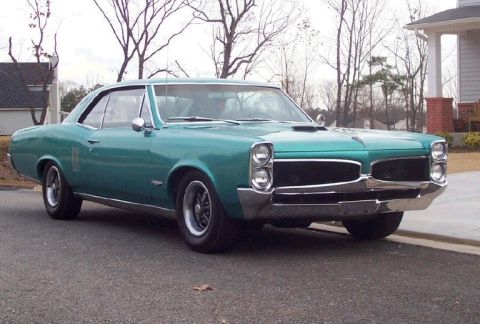
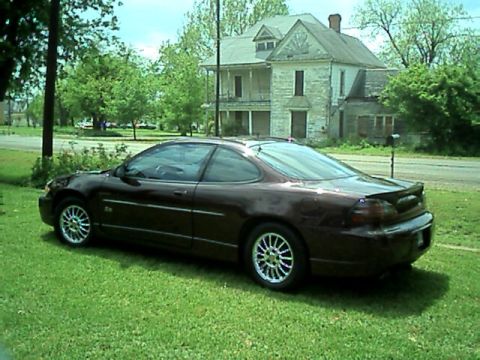
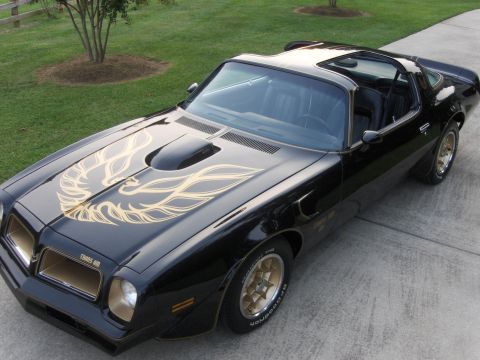
The most-documented Pontiac vehicles in the registry, every photo by the owner.