Share This
Url
Tag
Img
Thumb

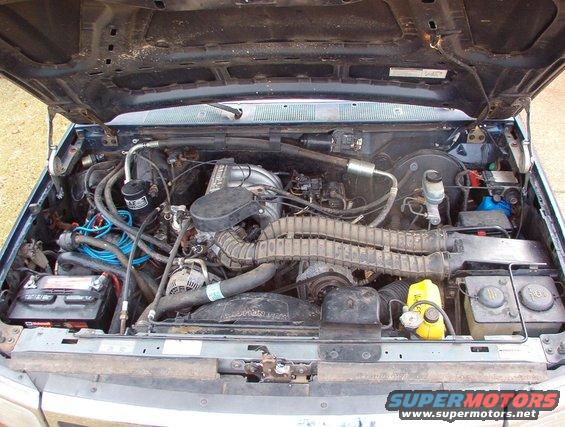
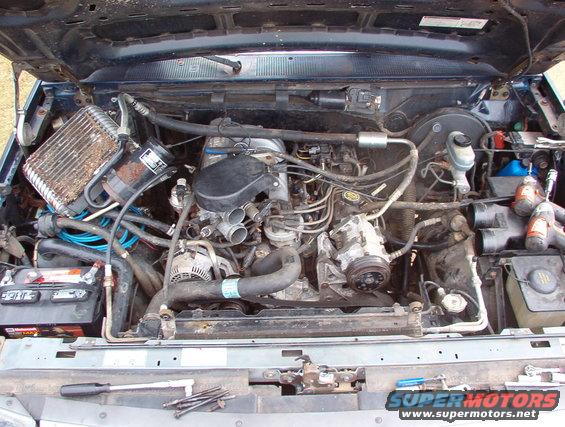
01Before.JPG | Hits: 4013 | Size: 76.91 KB | Posted on: 11/24/09 | Link to this image


Because the compressor is locked up, and because it's more expensive to repair an R-12 system than to convert it, I'm going to swap to R-134a while replacing the compressor.

Note that there's plenty of room to store things under the hood, like jumper cables, spare water/coolant, ATF, brake fluid, etc.

A QUICKER & usually cheaper way to do this conversion is to find a '94-96 factory R134a system still sealed on a junk truck with the same engine as yours, and lift it out as a unit, including the underhood HVAC box, and the hood latch support bracket; and swap everything without opening either refrigerant system.


----------------------------------------------------------------
ADVANTAGES
- Cost - R-134a is generally much cheaper than R-12 or any of the other alternative refrigerants currently available.
- Environmentally Friendly - R-134a has been scientifically tested to be safe for the ozone.
- Industry Wide Support and Service - Recycling and service equipment are widely available for R-134a systems.
- Recyclable on Site - R-134a can be recycled on site using designated recycling equipment. If a refrigerant has been contaminated with an unknown blended alternative, the refrigerant can not be recycled on site.
- Stable Mixture - R-134a is the only approved alternative which is not a blend of other refrigerants. R-134a does not separate or settle out providing for consistent operating characteristics.
- Detectable - R-134a is detectable using current leak detection methods designed for R-12.

DISADVANTAGES
- Less Efficient than CFC-12 - In systems originally designed for R-12, retrofitting with R-134a may produce less than satisfactory results. Using HFC-134a results in higher head pressures and higher compressor outlet temperatures. To provide satisfactory cooling performance a larger condenser or an additional cooling fan may be needed to remove the excess heat.
NOTE: In newer vehicles designed to use R-134a, cooling performance is similar to older R-12 equipped vehicles.
- Higher Pressures - Higher head pressures may hasten the failure of an A/C compressor which is already severely worn.
- Leakage - R-134a is made of molecules which are smaller than that of R-12. After retrofitting a R-12 system with R-134a, the smaller molecules combined with the higher operating pressure may result in leaks which were previously undetectable.
- Retrofitting Cost - If retrofitting requires replacement of the condenser or compressor, the total cost of the job may greatly exceed the cost of continued service with R-12.

R-134a MINIMUM RETROFITTING REQUIREMENTS
NOTE: When available, Original Equipment Manufacturer (OEM) procedures on R-134a retrofitting are found in Technical Service Bulletins (TSB). Always check for TSBs prior to retrofitting, some vehicles can not be retrofitted.
- All traces of the original refrigerant must be removed. Under the provisions of the EPA's Significant New Alternative Policy (SNAP), mixing differing types of refrigerant is prohibited. Separate, dedicated, EPA approved equipment must be used to recover and store the R-12 removed from the system.
NOTE: It is illegal to vent any type of refrigerant to the atmosphere.
- The system should be inspected thoroughly for leaks and deteriorated components. If the system is operational it should also be checked for proper performance. Any deficiencies noted should be corrected prior to retrofitting.
NOTE: Due to the less efficient cooling characteristics of R-134a in systems originally designed for R-12, a properly charged R-12 system which is performing poorly prior to retrofitting will not produce satisfactory cooling performance after retrofitting.
- Unique R-134a Fittings must be added to all service ports, or the service port must be permanent disabled.
- The original refrigerant service label should be removed and a new R-134a service label should be installed.
- All existing mineral oil should be removed from the system and replaced with Polyalkaline Glycol (PAG42) oil
CAUTION: Always review TSBs for manufacturer specific oil requirements. Some manufacturers require a specific type (PAG or POE).
- If any components are removed, R-134a compatible gaskets and O-rings should be used during installation.
- If A/C hoses are replaced, barrier type hose should be installed.
NOTE: Non-barrier type neoprene hoses may be identified by the thin ribbing running the length of the hose. Non-barrier hoses are often thicker and more flexible than barrier hoses.
- The amount of R-134a charged into the system should normally be 80-90 % of the amount of R-12 required in a fully charged system. Check Technical Service Bulletins (TSB) for specific amounts.
NOTE: Experience has shown that a fully charged R-134a retrofitted system may still exhibit bubbles flowing through the sight glass.

IMPROVED PERFORMANCE
To compensate for the higher vapor temperature of R-134a, the following may be needed to increase heat removal capacity and provide satisfactory cooling performance. Insufficient heat removal capacity may be indicated by high system pressures and warm outlet temperatures.
- Improved Condenser: Older model tube and fin condensers should be replaced with more efficient Serpentine or Parallel flow style condensers. Smaller, reduced area condensers may need to be replaced with larger condensers to provide sufficient heat removal capacity.
NOTE: Cleaning the debris from in front of and behind the condenser can dramatically improve the systems cooling performance.
- Improved Air Flow: (Electric Pusher Fans) An auxiliary fan may be needed to provide additional airflow over the condenser. Additional air baffles may be needed to direct all available air through the condenser instead of beside, under, or above it.
- More Efficient Fan Blades - Older vehicles may be equipped with 2 bladed fans. Replacing this type of fan with newer, more efficient multi-bladed fans will increase the airflow across the condenser, resulting in improved cooling performance.
- Fan Clutch Operation - On belt driven fans, verify the fan clutch is operating properly. If there is any evidence of leakage from the clutch, it should be replaced. Replacing the clutch with a heavy duty model may be necessary to provide adequate airflow.
NOTE: Prior to installing new fans or fan clutches, verify that all fan shrouds and air dams are present and undamaged.

PREVENT LEAKAGE
Replace Non-Barrier Hoses - Because R-134a is made up of molecules which are much smaller than those in R-12, older non-barrier type hoses may leak when used with R-134a.
Early testing indicated that non-barrier type hoses would need to be replace during all R-134a retrofits. Recent testing has shown that the mineral oil used in lubricating the R-12 systems saturates the inner walls creating a sufficient barrier to prevent R-134 leakage.
NOTE: If the system is flushed, the oil saturation barrier will be removed and the non-barrier hoses will need to be replaced to prevent leakage.
Replace O-Rings and Seals - Any fitting which has been disturbed during the retrofit procedure should have the O-ring or seal replaced with one which is R-134a compatible. To prevent leakage, new O-rings and seals should be coated with mineral oil prior to installing.

INCREASED RELIABILITY
Compressor Replacement - The higher system pressures associated with R-134a could result in premature failures of worn compressors. Seals within the compressor may not be compatible with R-134a, resulting in seal failure and leakage.
NOTE: Always consult Technical Service Bulletins (TSB) prior to performing an R-134a retrofit. Some compressors are not compatible with R-134a and must be replaced.
Replace Receiver/Dryer/Desicant - Replacing the desicant helps assure a dry, moisture free cooling system. Replacing the Receiver/Dryer allows for removing any non-compatible mineral oil which may have collected in it.
Flush Condenser - If there has been a compressor failure or the compressor is worn flushing the condenser will remove any debris which might block refrigerant flow or cause further damage to the compressor.
NOTE: If any non-barrier hoses are flushed they will need to be replaced with barrier hoses to prevent refrigerant leakage.

SAFETY
If a vehicle is not equipped with a high pressure compressor shut-off switch, it is highly recommended to install one. Due to the higher operating pressures of R-134a it is very important to disengage the compressor prior to a component failure resulting from excessive pressure.

TOXICITY, FLAMMABILITY, AND CORROSION
According to the Environmental Protection Agency (EPA), R-134a is regarded as one of the safest refrigerants yet introduced, based on current toxicity data. The chemical industry's Program for Alternative Fluorocarbon Toxicity Testing (PAFT) tested R-134a in full battery of laboratory animal toxicity studies. The results indicate that R-134a does not pose a cancer or birth defects hazard. In addition, R-134a is being used in computer cleaning "air" cans, self-contained "air" horns, and metered dose inhalers in Europe.

OEM engineers and chemical manufacturers have examined the flammability and corrosiveness of R-134a. Like CFC-12, R-134a is not flammable at ambient temperature and atmospheric pressure. However, R-134a service equipment and vehicle A/C systems should not be pressure tested or leak tested with compressed air. Some mixtures of air and R-134a have been shown to be combustible at elevated pressures. These mixtures may be potentially dangerous, causing injury or property damage. R-134a is not corrosive on standard steel, aluminum, and copper.

When handling R-134a, service technicians should be sure to work in a well ventilated area.

Share This
Url
Tag
Img
Thumb

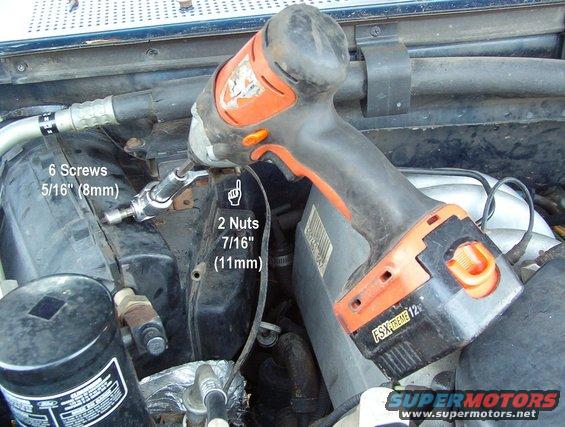
02CaseScrews.JPG | Hits: 4456 | Size: 73.05 KB | Posted on: 11/24/09 | Link to this image


I'll remove the evaporator core for 2 reasons:
1) to check for metal shavings from the failed compressor, and to flush them out if necessary, &
2) to wash the squirrel crap out of the fins. I vacuumed out what I could while replacing the blower & resistor, but I know there's more. (This CAN be done withOUT releasing any refrigerant.)

Three of the case screws are hidden inside the foil heat sheild, and on this truck, their heads had rusted away. I had to dremel them off & then use vise-grips to remove the screw shafts later.

Share This
Url
Tag
Img
Thumb

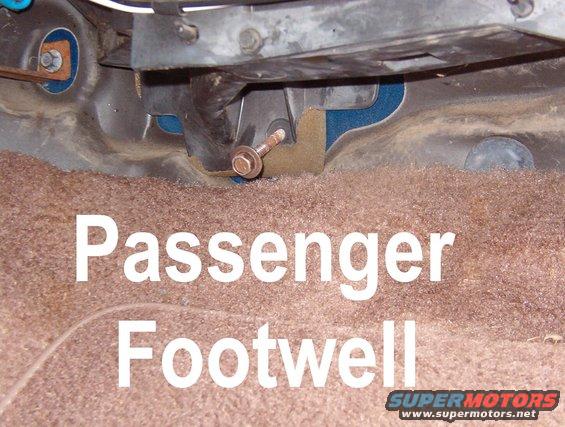
03Inside.JPG | Hits: 3057 | Size: 71.35 KB | Posted on: 11/24/09 | Link to this image


There's one fastener for the evaporator cover inside: an 11mm(7/16") lag screw.

Share This
Url
Tag
Img
Thumb

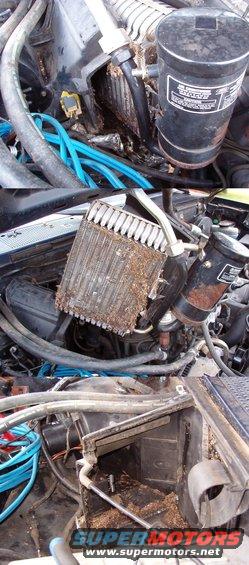
04Evap.JPG | Hits: 3741 | Size: 58.61 KB | Posted on: 11/24/09 | Link to this image


The butyl sealant between the case halves takes some effort to separate, and then the evaporator & cover can be removed forward & upward together. Obviously, even a good shop-vac can't clean the core thoroughly working only thru the blower opening. But removing the core from the case DOESN'T require opening the refrigerant system, so it can be done whenever necessary. Leaves in most trucks' HVAC systems come through the wiper valance slots ('80-86 only), or under the lower w/s trim (all years).

.

I've taken several steps to reduce the quantity of leaves & grass that make it to the evaporator on my truck, but I haven't evaluated their effectiveness yet...

. . .

Share This
Url
Tag
Img
Thumb

05Ready.JPG | Hits: 3073 | Size: 90.39 KB | Posted on: 11/24/09 | Link to this image


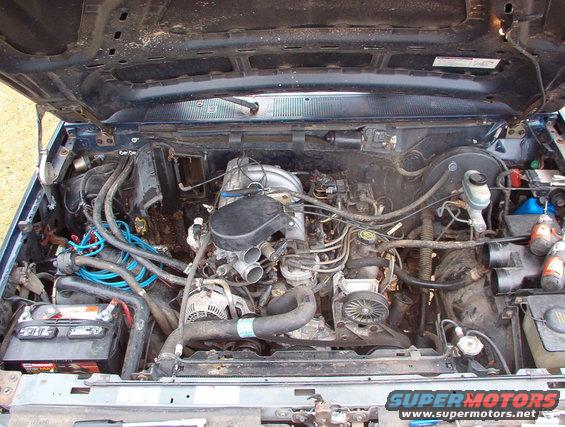
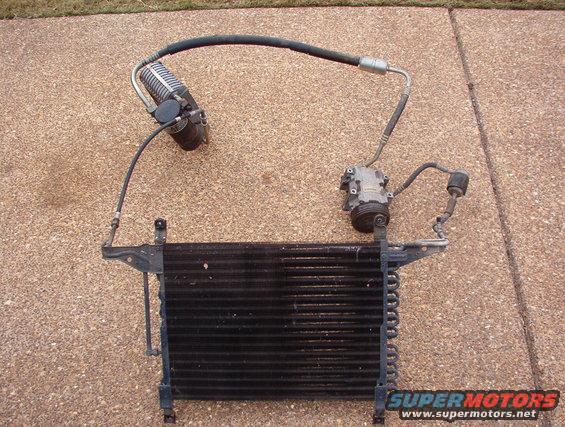
The evaporator has been removed from its housing; the compressor is unbolted from the engine; & the condenser is loose, but still in place. The radiator has been shifted out of its cradles by removing the fan & shroud, but the coolant lines are still connected & filled. The ATF lines are also flexible enough to remain connected & filled. So if the heater hoses are routed under the liquid line (R12 only), the whole A/C system can be removed & installed without releasing ANY refrigerant, OR any other fluids. All '94-96/7 F-series/Bronco factory R134a systems have a rigid liquid line that runs against the wheelwell, requiring the heater hoses to be disconnected temporarily.

A QUICKER & usually cheaper way to do this conversion is to find a '94-96 factory R134a system still sealed on a junk truck with the same engine as yours, and lift it out as a unit, including the underhood HVAC box, and the hood latch support bracket; and swap everything without opening either refrigerant system.


Share This
Url
Tag
Img
Thumb

06Gone.JPG | Hits: 3656 | Size: 92.22 KB | Posted on: 11/24/09 | Link to this image


Even working alone, it's fairly easy to lift the entire refrigerant system out of the engine bay as a sealed unit. I'm going to install that A/C-delete idler pulley (pulley only FOTZ8678A) in place of the compressor temporarily so I can still drive this truck.


Share This
Url
Tag
Img
Thumb

07Out.JPG | Hits: 3482 | Size: 103.72 KB | Posted on: 11/24/09 | Link to this image


Even working alone, it's fairly easy to lift the entire refrigerant system out of the engine bay as a sealed unit. So for anyone wanting to delete the A/C system: it's NOT necessary to vent the refrigerant. Just take it out & leave it full. If you plan to NEVER put it back, take it to a shop and let them recover the refrigerant before you toss the system.

.

A QUICKER & usually cheaper way to do this conversion is to find a '94-96 factory R134a system still sealed on a junk truck with the same engine as yours, and lift it out as a unit, including the underhood HVAC box, and the hood latch support bracket; and swap everything without opening either refrigerant system.


Share This
Url
Tag
Img
Thumb

FinComb.JPG | Hits: 2465 | Size: 80.76 KB | Posted on: 9/17/12 | Link to this image


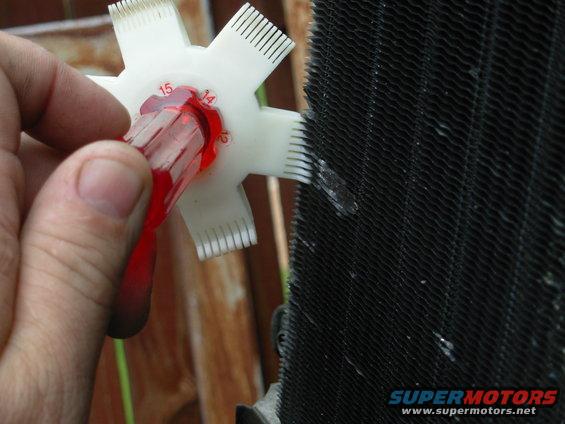
A fin comb can be used to clean & straighten the condenser fins. The fin pitch on the old R12 condenser is 12; the fin pitch on the R134a parallel-flow condenser appears to be metric, and is finer than any combs on this tool. I had to use picks to straighten each dent in each fin. Yes, it took a while...


Share This
Url
Tag
Img
Thumb

08Parts.JPG | Hits: 3376 | Size: 125.88 KB | Posted on: 11/24/09 | Link to this image


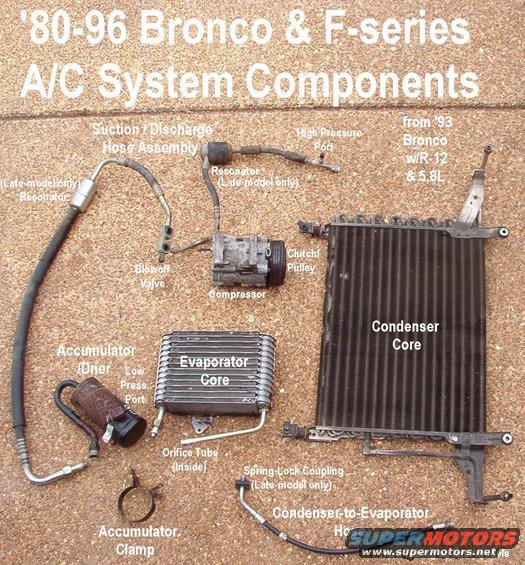
System components


To do the conversion correctly, the system must be recovered (many shops will do this free since they get to keep the refrigerant, so DON'T VENT IT), disassembled, flushed (to remove the old R-12-compatible mineral oil), blown out (to remove the flush), and reassembled with new O-rings, accumulator, & orifice tube.

For the underdash vacuum system, see this:


A QUICKER & usually cheaper way to do this conversion is to find a '94-96 factory R134a system still sealed on a junk truck with the same engine as yours, and lift it out as a unit, including the underhood HVAC box, and the hood latch support bracket; and swap everything without opening either refrigerant system.


Share This
Url
Tag
Img
Thumb

09Orifice.JPG | Hits: 2846 | Size: 72.17 KB | Posted on: 11/24/09 | Link to this image


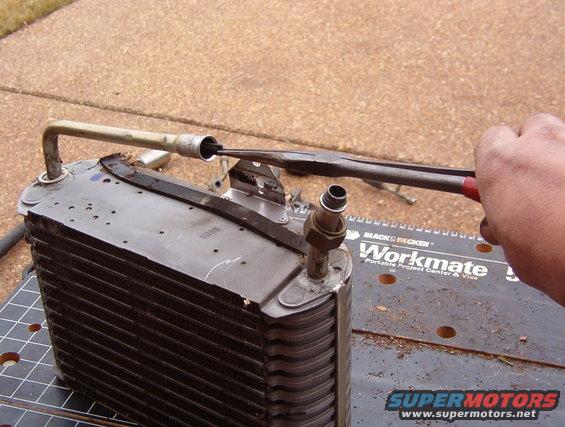
After recovering the refrigerant (using the proper equipment according to applicable laws), remove the orifice tube from the evaporator core inlet. This can be quite difficult, especially if it's clogged - the pressure of the system trying to work commonly forces the orifice beyond the detents in the tubing. There are special tools available to extract the orifice, and there are replacement tubes available so that the impacted one can simply be cut off with the orifice still inside.

Share This
Url
Tag
Img
Thumb

10Screen.JPG | Hits: 3572 | Size: 42.77 KB | Posted on: 11/24/09 | Link to this image


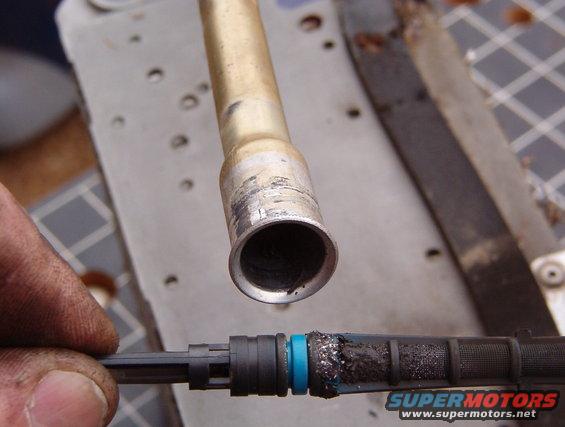
This orifice tube is blue (with black residue on most of it), indicating it's for R-12. Note the fine metal shavings on the filter screen, indicating 1) that the compressor has failed, & 2) that there are more shavings between the compressor & evaporator: in the high-side line, in the condenser, & in the condenser-to-evaporator line. The lines must be flushed to remove these filings so that the new compressor isn't damaged. But Ford says flushing the condenser is INeffective at removing the filings from it, so a new condenser is required.

.

The reason this compressor failed was probably because of overcharging. I removed 3 lbs 4 oz from this system, which is 8 oz (1/2 lb) too much. This probably resulted in liquid refrigerant entering the compressor, causing it to hydraulic, which would explain the shavings.

Share This
Url
Tag
Img
Thumb

OrificeTrash.JPG | Hits: 2212 | Size: 61.15 KB | Posted on: 9/17/12 | Link to this image


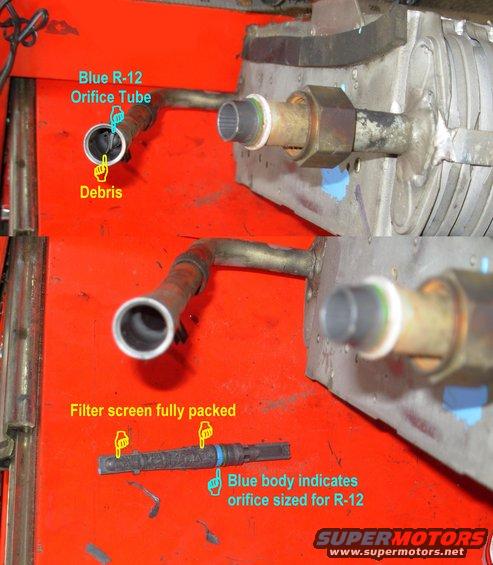
This is a severely fouled orifice tube, though not with the normal type of debris. This one contains almost no metal - this is some kind of rubber flakes, possibly a sealant added to the system, or the degraded interior lining of a hose.

Share This
Url
Tag
Img
Thumb

11Parts.JPG | Hits: 3415 | Size: 101.62 KB | Posted on: 11/24/09 | Link to this image


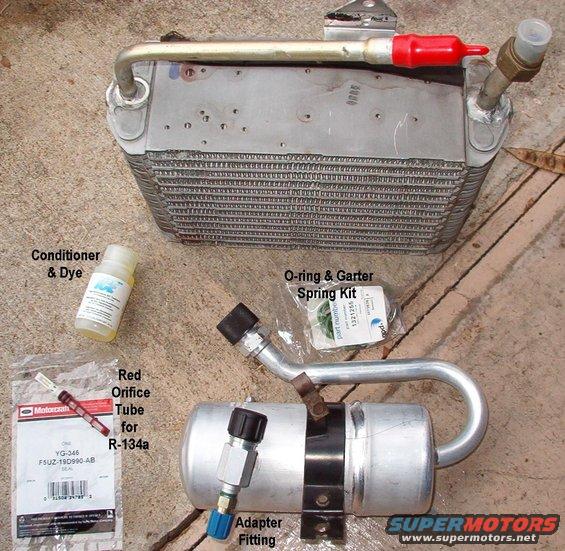
The kit I bought contained a pint of flush, a new oiled compressor w/clutch & pulley, a bottle of PAG-46 oil, a blue orifice tube (none of which are shown), the dye (1.5oz), the accumulator/drier, & the o-rings. I bought the red orifice tube & the adapter fittings because I'm converting an R12 system to R134a, instead of installing R12 parts. The evaporator core has been washed (hence the caps to keep water out of the lines), and the black accumulator strap has been modified to fit around this one's larger-than-stock lower diameter.


Factory R-134a service ports use rubber balls (which are easily cut) instead of Schrader valves; the conversion fittings are F3AZ-19E762-A & F3AZ-19E762-B.

A QUICKER & usually cheaper way to do this conversion is to find a '94-96 factory R134a system still sealed on a junk truck with the same engine as yours, and lift it out as a unit, including the underhood HVAC box, and the hood latch support bracket; and swap everything without opening either refrigerant system.


Share This
Url
Tag
Img
Thumb

12After.JPG | Hits: 3045 | Size: 71.88 KB | Posted on: 11/25/09 | Link to this image


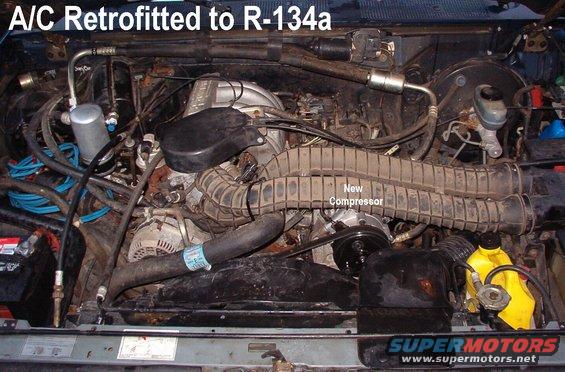
Everything has been reassembled. The compressor was shipped with 7oz of oil, and the dye is blended with 1.5 oz, and all other components were emptied, so 4oz of PAG46 oil needs to be added since the total oil capacity is 11 oz per TSB 97-10-05. Normally, 1/3 of the total oil charge is poured into each of the compressor, condenser, & accumulator. To ensure all moisture is removed, I'll hold a vaccum for at least 30 min. Based on TSB 94-19-20, I'll charge the system with 2 lb 6 oz (38 oz) of R-134a.


Factory R-134a service ports use rubber balls (which are easily cut) instead of Schrader valves; the conversion fittings are F3AZ-19E762-A & F3AZ-19E762-B.

Note the spare water stored beside the radiator for use in the cooling system, or w/s sprayer; and the jumper cables behind the battery; and the PS fluid beside the brake master cylinder. There's also brake fluid & engine oil farther back.

Share This
Url
Tag
Img
Thumb

LabelR12.JPG | Hits: 3131 | Size: 37.41 KB | Posted on: 11/25/09 | Link to this image


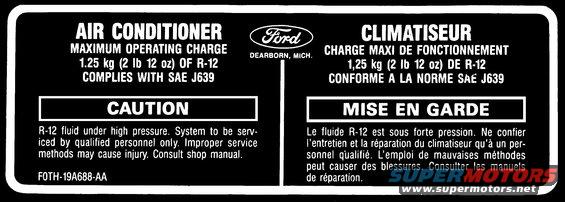
The original 1993 label (apparently designed in 1990) from the R-12 accumulator. Per TSB 94-19-20, the charge is now 2 lbs 6 oz (38oz) of R-134a, & 11oz (the original 7 plus 4 extra) of PAG-46 per TSB 97-10-05. For some reason, TSB 97-15-05 does not indicate the correct oil quantity.

After charging, the low pressure switch should be adjusted to turn off around 22psi for R134a. This TSB describes the setting for R12, but the process is the same:


A properly-modified R12 system converted to R134a should have a high-pressure switch as well.


Factory R-134a service ports use rubber balls (which are easily cut) instead of Schraeder valves; the conversion fittings are F3AZ-19E762-A & F3AZ-19E762-B.

A QUICKER & usually cheaper way to do this conversion is to find a '94-96 factory R134a system still sealed on a junk truck with the same engine as yours, and lift it out as a unit, including the underhood HVAC box, and the hood latch support bracket; and swap everything without opening either refrigerant system.