Model hub · Jeep
Jeep Wrangler: History, Generations & Specs
The Jeep Wrangler is a body-on-frame, off-road SUV built across four generations: YJ (1987-1995), TJ (1997-2006), JK (2007-2018), and JL (2019-present). Launched for 1987 as the replacement for the Jeep CJ line, it carried forward the CJ's mechanical layout and has kept the same core formula ever since: solid front and rear axles, part-time four-wheel drive with a two-speed transfer case, a fold-down windshield, removable doors, and a removable soft or hard top. The current JL generation, in production since 2019, still offers all of those features along with two-door and four-door Unlimited body styles.
Pick your generation
Each generation page covers what changed year by year, what owners call them, and the wall of registered vehicles.
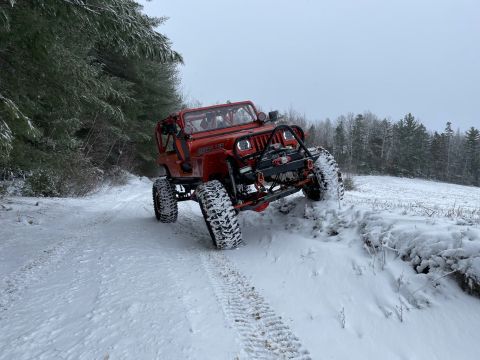
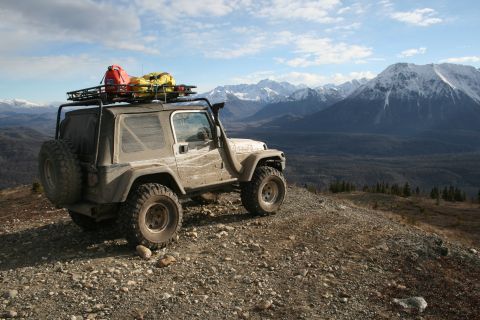
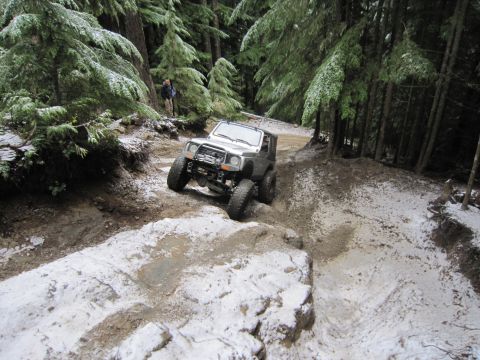
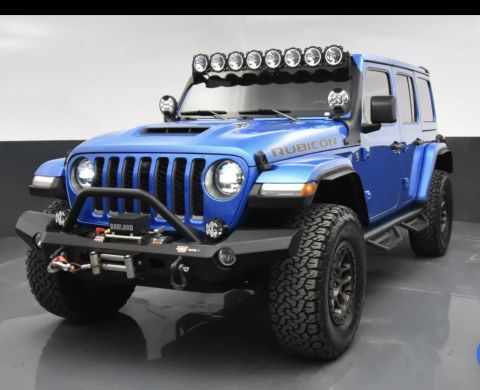
By model year
More Jeep models
The wall
The most-documented Jeep Wranglers in the registry, every photo by the owner.
Key facts
| Fact | Detail |
|---|---|
| Production years | 1987-present (YJ launched for 1987) |
| Generations | 4 (YJ, TJ, JK, JL) |
| Vehicle type | Body-on-frame, off-road SUV |
| Body styles | Two-door; four-door Unlimited from the JK (2007) |
| Drivetrain | Solid front and rear axles, part-time 4WD, two-speed transfer case |
| Signature features | Fold-down windshield, removable doors, removable soft or hard top |
| Notable variants | Rubicon (from 2003), Unlimited LJ (2004), 4xe plug-in hybrid, Rubicon 392 V8 |
Generations at a glance
| Generation | Years | Why it matters |
|---|---|---|
| 1987-1995 Wrangler YJ | 1987-1995 | First Wrangler, replacing the CJ-7; the only generation with rectangular headlights, on leaf springs front and rear. |
| 1997-2006 Wrangler TJ | 1997-2006 | Returned to round headlights and moved to coil springs at all four corners; introduced the Rubicon trim for 2003. |
| 2007-2018 Wrangler JK | 2007-2018 | Introduced the four-door Unlimited body style alongside the two-door. |
| 2019-2026 Wrangler JL | 2019-present | Revised frame with more aluminum and the widest engine range yet, including the 4xe plug-in hybrid and the V8 Rubicon 392. |
The Wrangler replaced the Jeep CJ line, with the CJ-7 ending production as the first Wrangler, the YJ, launched for 1987. It retained the CJ's solid-axle, part-time 4WD configuration while adding wider track, anti-roll bars, and other on-road revisions. The nameplate has stayed with the same core formula through four generations.
YJ (1987-1995): rectangular headlights, leaf springs
The YJ is identifiable by its rectangular headlights, the only Wrangler generation to use them. Engine options were the 2.5-liter AMC four-cylinder and the 4.2-liter AMC inline-six, with the six replaced by the 4.0-liter inline-six for 1991. It used leaf-spring suspension front and rear and offered manual and automatic transmissions.
TJ (1997-2006): coil springs and the first Rubicon
The TJ returned to round headlights and replaced leaf springs with a coil-spring suspension at all four corners, improving articulation. Powertrains were the 2.5-liter four-cylinder, later the 2.4-liter four for 2003, and the 4.0-liter inline-six. The Rubicon trim arrived for 2003 with front and rear locking differentials and a 4:1 low-range transfer case; the long-wheelbase Unlimited (LJ) body followed for 2004 and remained a two-door.
JK (2007-2018): the four-door arrives
The JK introduced a four-door body style, the Unlimited, alongside the two-door. It launched with the 3.8-liter V6, which was replaced by the 3.6-liter Pentastar V6 rated at 285 horsepower for 2012. Transmissions included manual and automatic units, and the Rubicon continued with locking differentials and a disconnecting front sway bar.
JL (2019-present): more engines, same formula
The JL retained the two-door and four-door Unlimited body styles on a revised frame with greater use of aluminum. Engines include the 3.6-liter Pentastar V6, a 2.0-liter turbocharged four-cylinder, a 3.0-liter EcoDiesel V6, and the 4xe plug-in hybrid combining the 2.0-liter turbo with electric motors. The Rubicon 392 added a 6.4-liter V8. The windshield remains fold-down and the doors remain removable.
Asked all the time
What engines did the Jeep Wrangler use across generations?
The YJ (1987-1995) used a 2.5-liter four-cylinder and a 4.2-liter inline-six, with the 4.0-liter inline-six replacing the 4.2 in 1991. The TJ (1997-2006) offered the 2.5-liter four (2.4-liter four from 2003) and the 4.0-liter six. The JK (2007-2018) launched with a 3.8-liter V6 and switched to the 3.6-liter Pentastar V6 (285 hp) in 2012. The JL (2019-present) offers the 3.6-liter V6, a 2.0-liter turbo four, a 3.0-liter EcoDiesel V6, the 4xe plug-in hybrid, and the 6.4-liter V8 in the Rubicon 392.
Which Wrangler was the first with four doors?
The four-door body style, badged Unlimited, was introduced with the JK generation for 2007. Earlier long-wheelbase models existed (the TJ-based LJ Unlimited, introduced for 2004), but those remained two-door. The four-door body continued into the JL generation from 2019.
What is the difference between the YJ and TJ suspensions?
The YJ (1987-1995) used leaf springs at both the front and rear axles. The TJ (1997-2006) switched to a coil-spring suspension at all four corners, which increased suspension travel and wheel articulation while keeping the solid axles.
When did the Rubicon trim first appear?
The Rubicon trim was introduced on the TJ generation for 2003. It added front and rear locking differentials and a 4:1 low-range ratio in the transfer case. The Rubicon has continued on the JK and JL generations.
How can I tell a YJ Wrangler apart from other generations?
The YJ (1987-1995) is the only Wrangler generation with rectangular headlights. The TJ, JK, and JL all use round headlights. The YJ also rides on leaf springs, unlike the coil-sprung generations that followed.