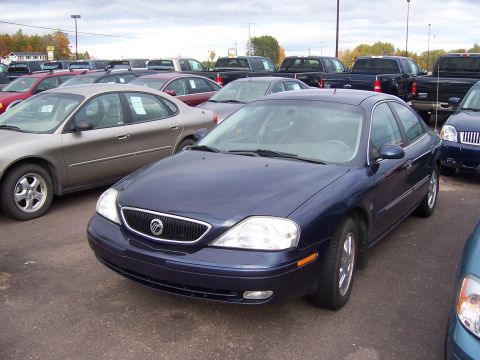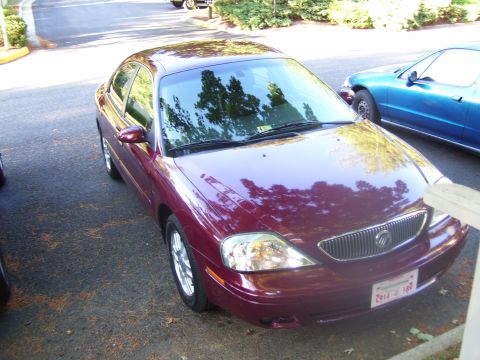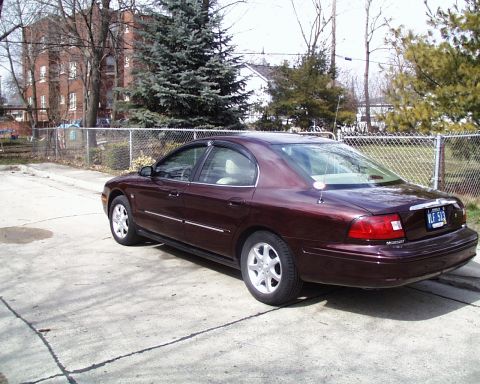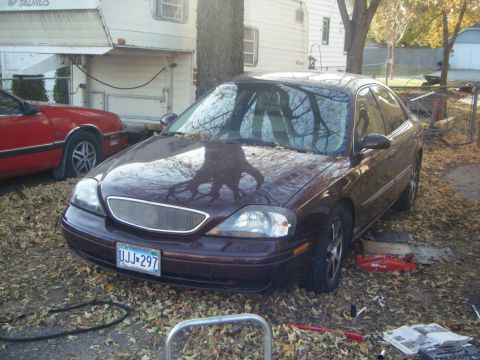
The fourth-generation Mercury Sable (2000-2005) was a conservative rework of the oval 1996-1999 car, with a taller, squarer rear roofline and trunk that recovered usable trunk space and rear headroom. It stayed on Ford's front-drive platform shared with the Taurus, now coded D186, and kept the two familiar 3.0 liter V6 choices, the pushrod Vulcan at 155 horsepower and the DOHC Duratec at 200 horsepower. The last fourth-generation Sable was built on April 29, 2005, and the larger Mercury Montego, followed by the 2006 Milan, took over Mercury's sedan lineup.
Other Mercury Sable generations
Platform and body
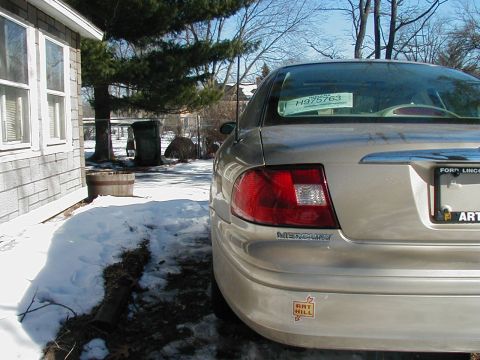
The 2000-2005 Mercury Sable rode on Ford's D186 front-wheel-drive platform, a reworked version of the DN101 structure under the 1996-1999 car, shared with the fourth-generation Ford Taurus on a 108.5 inch wheelbase. The 2000 redesign kept the center structure and doors of the 1996-1999 car but replaced the front and rear sheetmetal, trading the oval theme for a squarer trunk and a more upright rear window. That change added real trunk volume, 16.0 cubic feet in the sedan, and fixed the biggest packaging complaint about the previous car. Body styles were a four-door sedan and a four-door wagon, the wagon with an available rear-facing third-row seat.
Engines
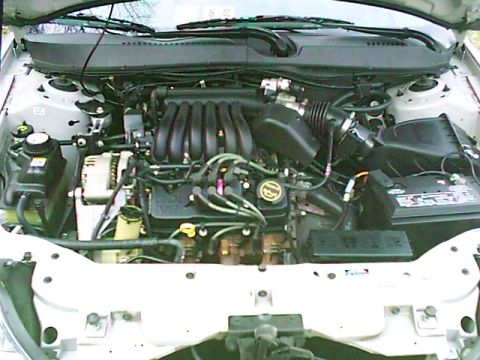
- 3.0L Vulcan OHV V6, 155 hp net and 185 lb-ft. The base engine, iron block and heads, two valves per cylinder. Late in the run Ford listed it at 153 hp; it is the same engine. Slow but extremely durable, and cheap to keep running. A flexible-fuel (E85) version of the Vulcan was offered throughout the 2000-2005 span.
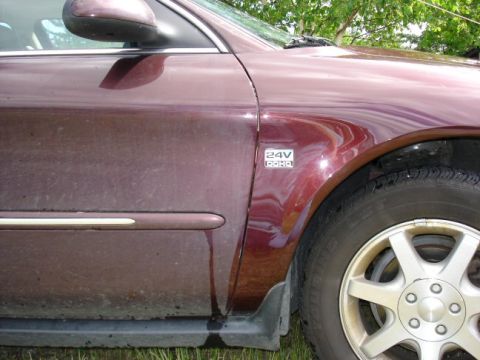
- 3.0L Duratec DOHC V6, 200 hp net and 200 lb-ft. Aluminum block and heads, four valves per cylinder. The optional engine, standard on the LS Premium, and the one to want if you drive on the highway.
Both engines are 3.0 liters, which confuses parts counters to this day. Check the eighth VIN digit: U is the Vulcan, S is the Duratec, 2 is the flex-fuel Vulcan.
Drivetrain and transmissions
Every 2000-2005 Sable is front-wheel drive with a four-speed automatic. Some Vulcan cars built through 2003 used the AX4S transaxle; Duratec cars got the heavier-duty AX4N (later renamed 4F50N), and from 2004 the AX4N handled everything. The transaxle is the known weak point of these cars; regular fluid service matters more than anything else you can do to one.
Year-by-year changes
- 2000: Full restyle inside and out on the carryover platform. New dashboard shared with the Taurus, available side airbags, and power adjustable pedals offered.
- 2001-2003: Mostly equipment shuffling. A GS Plus sedan slotted between the GS and the top trim for 2002-2003.
- 2004: Freshening at both ends, with a full-chrome grille, revised front and rear fascias, new taillights, and a new instrument cluster and steering wheel inside. Wagon production stopped in August 2004, a few months into the 2005 model year, so 2005 wagons exist but are scarce.
- 2005: Shortened final model year, nearly all sedans. The last fourth-generation Sable left Ford's Atlanta plant on April 29, 2005, as the Mercury Montego (a Ford Five Hundred twin) arrived, with the Mercury Milan following for 2006. This was the last use of the Sable name until the unrelated 2008-2009 revival.
Trims
The lineup launched as GS, LS, and LS Premium, with the GS as the value model (Vulcan powered) and the LS Premium carrying the Duratec, alloy wheels, and upgraded interior trim. A GS Plus sedan appeared for 2002-2003, and by 2004 the range had thinned, with LS Premium content sold as a package on the LS in the final year. Wagons mirrored the sedan trim structure. Late in the run the GS increasingly went to fleet buyers, and a large share of surviving 2004-2005 cars started life as fleet or rental units, which is worth remembering when reading a used listing.
Asked all the time
What engines came in the 2000-2005 Mercury Sable?
Every 2000-2005 Mercury Sable used a 3.0 liter V6, but there were two very different ones: the base pushrod Vulcan making 155 hp (listed at 153 hp in the last years), and the optional DOHC Duratec making 200 hp. Check the eighth VIN digit to tell them apart: U for Vulcan, S for Duratec, 2 for the flex-fuel Vulcan.
Which years of the fourth-generation Sable are the best to buy?
For the 2000-2005 Mercury Sable, the 2004-2005 cars carry the freshened styling and the most accumulated running fixes, and any Duratec car is the more pleasant drive. Whatever the year, transaxle service history matters more than the calendar; the AX4S/AX4N four-speed automatic is the common failure point.
What changed in 2004 on the Mercury Sable?
The 2004 Mercury Sable got a freshening at both ends: a full-chrome grille, revised front and rear fascias, new taillights, and a new instrument cluster and steering wheel inside. Wagon production stopped in August 2004, early in the 2005 model year, and the whole line ended in April 2005 before the Montego took over.
Is the Vulcan or the Duratec 3.0 the better engine in a Sable?
In the 2000-2005 Mercury Sable, the 155 hp Vulcan is the tougher, simpler engine and the cheaper one to maintain, while the 200 hp Duratec is noticeably quicker and better on the highway. Both share the same weak link, the four-speed automatic transaxle, so buy on transmission condition first.
Why did the Mercury Sable end in 2005?
Mercury replaced the Sable with the Montego, a larger twin of the Ford Five Hundred, for 2005, with the mid-size Milan following for 2006. The last fourth-generation Sable was built at Ford's Atlanta plant on April 29, 2005, after a shortened final model year. The Sable name returned briefly on a renamed Montego for 2008-2009.
Did the 2000-2005 Mercury Sable come as a wagon?
Yes. The fourth-generation Mercury Sable offered a four-door wagon with an available rear-facing third-row seat from 2000 into early 2005. Wagon production stopped in August 2004, a few months into the 2005 model year, so a small number of 2005 wagons were built before the sedan ended in April 2005.
The wall · registered 2000-2005 Sables
Sorted by depth of documentation. Click any vehicle to open its permanent record.