The registry
Suzuki Registry: Models, Builds & Photos
Suzuki Motor Corporation is a Japanese maker of small cars, motorcycles, ATVs, and outboard motors, founded in October 1909 by Michio Suzuki in Hamamatsu, Japan, as Suzuki Loom Works, a builder of weaving machinery for the silk industry. The company entered powered transport in 1952 with the Power Free motorized bicycle, renamed itself Suzuki Motor Co. in 1954, and built its business on two pillars: two-stroke motorcycles and kei minicars like the 360cc 1955 Suzulight and the 1979 Alto. Alliances with General Motors (1981-2008), Volkswagen (2009-2015, ended in arbitration), and Toyota (2019-present) shaped its modern era, as did dominance of the Indian market through Maruti Suzuki. Suzuki quit the American car market in 2012 but remains independent today, still headquartered in Hamamatsu.
Pick your model
Key facts
| Founded | October 1909, Hamamatsu, Shizuoka, Japan (as Suzuki Loom Works) |
|---|---|
| Founders | Michio Suzuki |
| Headquarters | Hamamatsu, Shizuoka, Japan |
| Parent/successor | Independent; Suzuki Loom Works became Suzuki Motor Co., Ltd. in 1954, restyled Suzuki Motor Corporation in 1990. Cross-shareholding alliance with Toyota since 2019. |
| Fate/status | Active. Withdrew from U.S. car sales in 2012 after American Suzuki's Chapter 11, but still builds cars, motorcycles, ATVs, and outboards worldwide. |
| Best known for | GSX-R sportbikes, the Hayabusa 1300, and the Samurai/Jimny 4x4 |
| Registry presence | 151 vehicles / 9,344 photos documented by owners on SuperMotors |
1909-1937: Michio Suzuki and the Loom Works of Hamamatsu
In October 1909, a 22-year-old carpenter's apprentice named Michio Suzuki opened Suzuki Loom Works in the coastal town of Hamamatsu, and for its first four decades the company that would build the Hayabusa built weaving machines. Michio Suzuki, born in 1887 to a cotton-farming family in Shizuoka Prefecture, had watched his mother work a hand loom and reasoned that a better machine would make better cloth faster. His pedal-driven looms sold well into Japan's booming silk and cotton trade, and in 1920 he reorganized the firm as Suzuki Loom Manufacturing Co. with capital from local investors.
The instinct that defined the company appeared early: Michio Suzuki was a relentless incremental improver, filing dozens of loom patents, and he understood that a machine business tied to a single commodity was fragile. When the textile market softened in the 1930s, he began looking for a second product. The answer, he decided, was a small car. By 1937 Suzuki engineers had torn down an imported Austin 7 and built prototype cars around a liquid-cooled four-stroke engine of under 800cc. The project demonstrated the pattern Suzuki would repeat for a century, entering the smallest and cheapest end of a market where giants would not bother to compete. It also demonstrated the company's luck with timing, because the prototypes were finished just as Japan's government, mobilizing for war with China, declared passenger cars a non-essential luxury and ordered manufacturers onto war production. The car program was shelved, and Suzuki spent the war years building looms and war materiel. The company would not sell a car for another two decades, but the Hamamatsu workshop culture Michio Suzuki built, frugal, mechanically ingenious, suspicious of complexity, outlived him and became the corporate personality.
1945-1954: The Power Free Motorized Bicycle and the Second Founding
In 1952, with Japan's postwar textile market collapsing under a cotton price crash, Suzuki Loom Manufacturing saved itself by bolting a 36cc two-stroke engine onto a bicycle. The Power Free, launched that June, was Michio Suzuki's answer to a nation that needed cheap transport and could not afford cars. Its clever double-sprocket drive let the rider pedal, pedal with engine assist, or ride on engine power alone, and Japan's patent office judged the design novel enough to grant the firm a research subsidy. The Power Free was crude, but it sold, and it converted a dying loom company into a vehicle maker almost overnight.
The follow-up came fast. The 60cc Diamond Free of 1953 won its class in the Mount Fuji Hill Climb, the first evidence of a racing instinct that would later win world championships, and production climbed to roughly 6,000 units a month. In June 1954 the company acknowledged what it had become and renamed itself Suzuki Motor Co., Ltd. The same year it launched the Colleda, its first complete motorcycle rather than a motorized bicycle. Michio Suzuki, now in his late sixties, had effectively founded the company twice: once in 1909 around the loom, and again in 1952 around the two-stroke engine. The two-stroke choice mattered strategically. Two-strokes were cheap to build, simple to service, and powerful for their size, exactly right for a poor postwar market, and Suzuki would stake its engineering identity on them for the next twenty-five years while rivals such as Honda committed to four-strokes. That single architectural bet explains most of what Suzuki built, raced, and nearly died from between 1954 and 1976.
1955-1961: The Suzulight and the Invention of the Suzuki Kei Car
In October 1955, Suzuki Motor Co. finally built the small car Michio Suzuki had prototyped eighteen years earlier, and the Suzulight was radical out of proportion to its size. Designed to Japan's kei-class rules, which capped engine size at 360cc in exchange for tax and licensing breaks, the Suzulight carried a two-stroke twin driving the front wheels, with rack-and-pinion steering and independent suspension at all four corners. Front-wheel drive was exotic even in Europe in 1955; on a Japanese minicar it was nearly unheard of, and Suzuki's engineers, who had studied the German Lloyd 400, adopted it because packaging efficiency mattered more than convention in a car under three meters long.
The Suzulight established the market position Suzuki has never abandoned: the kei car, the smallest legal automobile in Japan, sold on price and running costs to first-time buyers. It was a deliberate flanking strategy. Toyota and Nissan fought over full-size sedans; Suzuki, a Hamamatsu motorcycle firm with a fraction of their capital, took the segment beneath their notice and built scale there. Volumes were tiny at first, a few units a day, because the company's cash and management attention still ran through motorcycles. Michio Suzuki stepped back from day-to-day control in 1957, handing the presidency to his adopted son-in-law Shunzo Suzuki, beginning the family tradition, common in Japanese merchant houses, of adopting capable sons-in-law into the founding name. The founder died in 1982 at 95, having lived to see the loom works he started sell a million vehicles a year, most of them descendants of the little front-drive Suzulight.
1961-1967: Ernst Degner's Defection and the Isle of Man TT
Suzuki's rise from also-ran to world champion in Grand Prix motorcycle racing began in 1961 with a Cold War defection. Suzuki had entered the Isle of Man TT in 1960 and been humiliated; its two-strokes were slow and fragile. The fastest small two-strokes on earth belonged to MZ of East Germany, whose engineer Walter Kaaden had discovered the resonant expansion-chamber exhaust and disc-valve induction that roughly doubled specific output. MZ's star rider, Ernst Degner, was himself a trained engineer who understood Kaaden's work intimately, and according to Mat Oxley's Stealing Speed and standard motorcycling histories, in September 1961 he defected from East Germany, his family reportedly smuggled out in a car trunk, and signed with Suzuki, bringing the technology with him.
The payoff was immediate and historic. In 1962 Degner won the 50cc TT at the Isle of Man and took the inaugural 50cc world championship, Suzuki's first, and the first world title for any Japanese two-stroke. Hugh Anderson added 50cc and 125cc world championships for Suzuki in 1963 and 1964. The racing program was corporate strategy, not sport for its own sake: world titles were the cheapest possible advertising in the export markets Suzuki needed, and the Kaaden-derived engine science flowed straight into road bikes. U.S. Suzuki Motor Corp. opened in Los Angeles in 1963, selling lightweight two-strokes to American riders on the credibility those championships bought. By the mid-1960s Suzuki was established in the country that would become its most profitable and, decades later, most painful market. The Degner episode remains one of the most significant technology transfers in motorsport history, and Suzuki's entire two-stroke golden age, through the RM motocross line and the RG500 Grand Prix bikes, descends from it.
1967-1975: The GT750, the Jimny, and the RE5 Rotary Disaster
Between 1967 and 1975 Suzuki Motor Co. swung between its shrewdest acquisition and its most expensive engineering failure. The shrewd move came cheap: in 1968 Suzuki took over the ON360, a tiny four-wheel-drive kei vehicle developed by the failing Hope Motor Company, reportedly for about 12 million yen. Reengineered with Suzuki's own two-stroke twin, it launched in 1970 as the LJ10 Jimny, the first mass-produced 4x4 kei car. The Jimny created a category, the genuinely small, genuinely capable off-roader, that Suzuki has owned worldwide ever since, and its descendants, including the Samurai, would carry the company into and out of its greatest American crisis.
On two wheels, Suzuki scaled its two-stroke doctrine upward. The T500 of 1968 proved a big two-stroke twin could be reliable, and the water-cooled GT750 of 1971, nicknamed the Water Buffalo in America, was Suzuki's flagship answer to Honda's four-stroke CB750. But the company also chased a technological dead end. Convinced, as much of the industry briefly was, that the Wankel rotary was the future, Suzuki licensed the design from NSU and launched the RE5 rotary motorcycle in 1974, with bodywork styling by Giorgetto Giugiaro. The RE5 was heavy, thirsty, and complex, arriving exactly as the 1973 oil crisis made fuel economy the market's obsession. It sold dismally, and the write-offs on tooling and development pushed Suzuki toward serious financial distress by 1976. The RE5 failure forced the strategic reckoning that defined the next era: the two-stroke and rotary company would have to learn, very quickly, to build conventional four-strokes.
1976-1980: The GS Four-Strokes, Barry Sheene, and Osamu Suzuki's Ascent
In 1976, staggered by rotary losses and by U.S. emissions rules that were strangling road-going two-strokes, Suzuki Motor Co. executed one of the fastest architectural pivots in motorcycle history. The GS750 and GS400 four-stroke twins and fours, developed in roughly two years by engineers who had studied Kawasaki's Z1 closely, arrived fully sorted, and the GS1000 of 1978 was judged by the period press to handle better than any Japanese liter bike before it. The GS550 and GS400 filled out the range, and within three years a company that had never sold a four-stroke street bike had a complete, credible four-stroke line. The GS family rescued Suzuki's motorcycle business and became the mechanical ancestor of every GSX that followed.
Racing burnished the recovery. Barry Sheene won the 500cc world championship on the square-four two-stroke RG500 in 1976 and again in 1977, giving Suzuki its first premier-class titles, while the RM motocross line, including the RM125 and RM250, established Suzuki as a permanent force in dirt competition. The decisive corporate event of the era, though, was a succession. In 1978 Osamu Suzuki, born Osamu Matsuda and adopted into the family upon marrying a granddaughter of the founder, became president. A former banker rather than an engineer, Osamu Suzuki was described in obituaries by Bloomberg and CNN as fiercely cost-focused, famous for prowling factories hunting wasted yen, and he would run the company, as president or chairman, for more than four decades. His first landmark decision came in 1979: the Alto, a stripped-to-the-bone kei car priced at 470,000 yen, undercutting every rival. The Alto sold explosively, stabilized the car business, and made bigger players notice Hamamatsu.
1981-1984: The General Motors Alliance and the Maruti Gamble in India
In August 1981 Suzuki Motor Co. signed the two agreements that shaped its next quarter century: an equity alliance with General Motors, which took an initial stake of about 5 percent, and, soon after, the partnership that became Maruti. For GM, the world's largest automaker, Suzuki was a source of the minicars it could not profitably build itself. For Osamu Suzuki, GM was distribution, capital, and protection; a small maker selling under a million cars a year needed a giant's umbrella. The first fruit was the Cultus, a 1.0-liter hatchback that GM sold in America as the Chevrolet Sprint and later as the Geo Metro, giving Suzuki engineering volume it could never have won under its own badge.
The Indian decision was bolder and, in hindsight, the best investment in the company's history. India's government had nationalized Maruti Udyog, the failed car project founded by Sanjay Gandhi, and went shopping for a foreign partner; larger automakers hesitated at a poor, closed, license-controlled market. Osamu Suzuki committed in 1982, taking a 26 percent stake in the joint venture, and the Maruti 800, an Alto derivative, rolled out in December 1983. It became independent India's people's car. Maruti took more than half the Indian market within a decade, and Maruti Suzuki remains the market leader today, at times contributing the majority of Suzuki's global car volume and profit. The same period produced a styling landmark on two wheels: the 1981 GSX1100S Katana, shaped by Hans Muth's Target Design in Germany, a deliberately shocking silhouette commissioned because Suzuki's management believed its bikes were mechanically excellent and visually forgettable.
1985-1987: The GSX-R 750 Revolution and the Samurai's American Landing
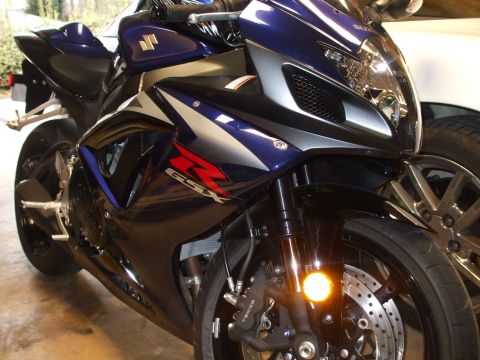
In 1985 Suzuki Motor Co. released the GSX-R 750 and invented the modern race-replica sportbike, the single most influential product in the company's motorcycle history. Championed by engineer Etsuo Yokouchi, who set the heretical target of endurance-racer weight for a street-legal machine, the GSX-R used an aluminum cradle frame and oil-cooled engine to come in around 176 kilograms dry when rivals weighed twenty-plus kilos more. It transferred Suzuki's endurance-racing program directly to the showroom, forced every Japanese competitor to respond in kind, and founded a GSX-R dynasty that later included the GSX-R600 and GSX-R 1000. For a mid-sized maker, owning the sportbike category outright was worth more than any advertising budget.
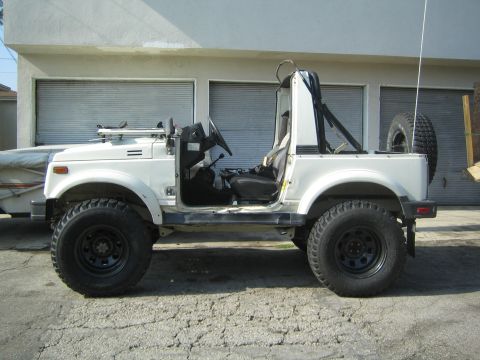
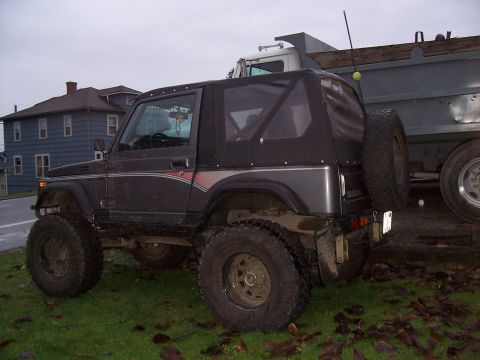
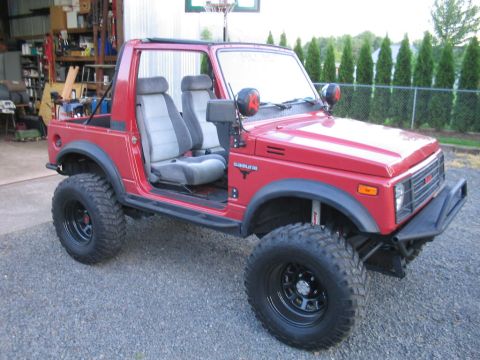
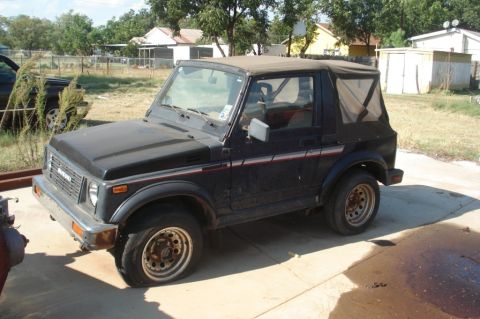
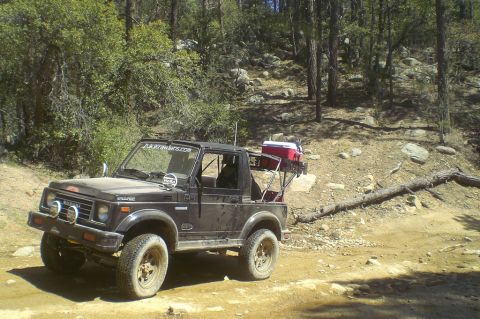
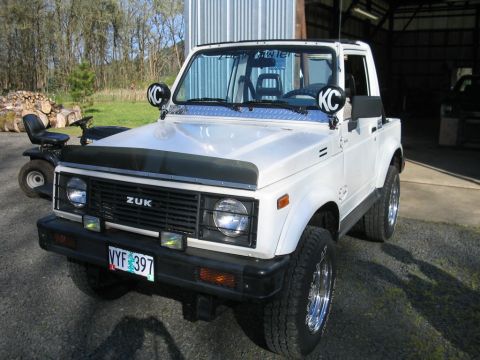
The same years brought Suzuki's boldest four-wheel move: entering the United States under its own name. American Suzuki began selling the Samurai, the export version of the second-generation Jimny, for the 1986 model year at a base price near $6,200, thousands under any other 4x4. It was an immediate phenomenon: roughly 47,000 first-year sales were the best any Japanese automaker had yet recorded in its first year selling cars in America, and volume climbed past 80,000 units in 1987. Suzuki simultaneously built out its all-terrain-vehicle business, having introduced the industry's first four-wheel ATV, the QuadRunner LT125, in 1982, a line that grew into the QuadRunner 250, the high-performance LT500R QuadRacer, and eventually the King Quad 300 utility family. By 1987 Suzuki looked like the industry's cleverest small company. The reversal came within a year.
1988-1997: Consumer Reports, the Rollover War, and the CAMI Rescue with GM
On June 2, 1988, Consumers Union declared the Suzuki Samurai "not acceptable" for its propensity to roll over in its avoidance-maneuver test, reportedly the organization's first "Not Acceptable" rating in roughly a decade (commonly cited as the first since 1978), and Suzuki's American car business never fully recovered. Samurai sales collapsed from their 80,000-plus peak to a trickle within two years. Suzuki insisted the test had been manipulated, and the dispute became one of the longest-running fights in consumer journalism: Suzuki sued Consumers Union for product disparagement in 1996, litigation dragged on for eight years, and the parties settled in 2004 with no payment and a carefully worded joint statement. Whatever the merits, the reputational wound defined Suzuki's U.S. car operation, which was rebuilt around the more conventional Sidekick, a wider, softer small SUV that GM also sold in huge numbers as the Geo Tracker.
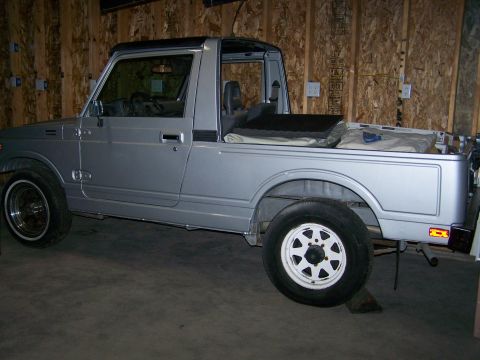
The GM relationship deepened into manufacturing. CAMI Automotive, a 50-50 Suzuki-GM joint venture plant in Ingersoll, Ontario, opened in 1989 to build Sidekicks and Trackers for North America, giving Suzuki local production and GM a captive small-SUV supplier. Suzuki's own-brand U.S. lineup stayed thin and oddly assorted, including the two-seat X-90 of 1995, a T-top curiosity that became a case study in niche products without a constituency, and the Esteem compact sedan. The pattern of the decade was clear: Suzuki thrived where it was the low-cost specialist, in Japan, India, and emerging markets, and struggled wherever it fought full-line automakers on their own ground. Motorcycles, ATVs, and outboards carried the American operation through the 1990s.
1993-2005: Kevin Schwantz, the Hayabusa 1300, and Peak Two-Wheel Suzuki
Suzuki's motorcycle division reached its competitive and cultural peak in the decade after Kevin Schwantz won the 1993 500cc world championship on the RGV500, a title Suzuki repeated with Kenny Roberts Jr. in 2000. The road range of the era was the deepest Hamamatsu ever fielded. The 1999 Hayabusa 1300 was the headline act: built to be the fastest production motorcycle on earth, it recorded top speeds around 194 mph, seized the crown from Honda's Blackbird, and provoked such alarm about an escalating speed war that Japanese and European makers adopted a 300 km/h limiter agreement from 2000. Naming it Hayabusa, the peregrine falcon that preys on blackbirds, was corporate trash talk of a very deliberate kind, and the model became a two-decade franchise.
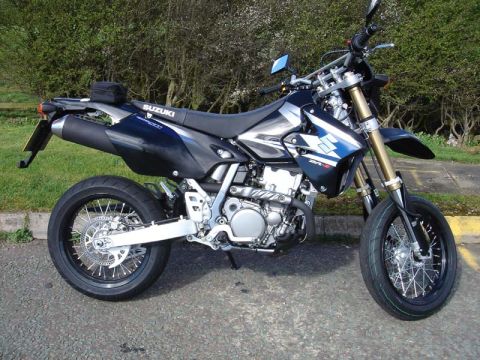
Around it Suzuki built famously rational motorcycles. The SV650 V-twin of 1999 became the default recommendation for new sport riders, with the TL1000R and SV1000 carrying the V-twin line upmarket; the Bandit series and GSX600F Katana covered budget performance; the DR-Z400S and DR650SE anchored dual-sport; cruisers like the VL 1500 Intruder Classic and single-cylinder Savage chased Harley's shadow; and the ATV line ran from the sporting QuadSport Z400 and LTZ400 to the Vinson 500 and King Quad 700 workhorses. The strategy was breadth at value pricing, and through the early 2000s it made Suzuki a solid third among Japan's big four, profitable on two wheels even when four wheels disappointed.
1998-2008: Osamu Suzuki's Second Act and the End of the GM Era
Between 1998 and 2008 Osamu Suzuki, who had formally handed the presidency to others but never the power, steered Suzuki Motor Corporation through the rise and unwinding of its General Motors alliance. GM raised its stake to 10 percent in 1998 and to 20 percent in 2001, and for a moment Suzuki looked destined to be absorbed into GM's global small-car apparatus, building Chevrolet-badged kei cars and selling rebadged Daewoos as Suzukis in America. Osamu Suzuki, characteristically, accepted GM's investment while, as obituaries in Bloomberg and CNN later put it, protecting Suzuki's independence, once summarizing his position as being happy to cooperate but never to be swallowed. Day-to-day management passed to presidents Masao Toda in 2000 and Hiroshi Tsuda in 2003, with Osamu as chairman and chief executive; when Tsuda stepped down in 2008, Osamu, then 78, simply took the presidency back himself.
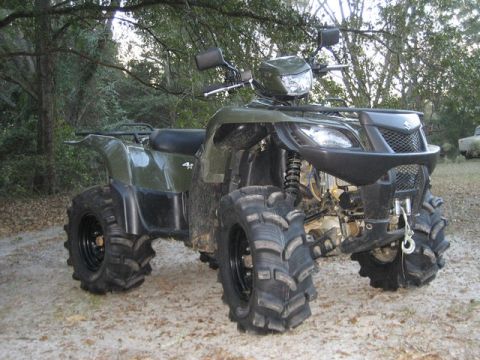
The unwinding came from Detroit's weakness, not Hamamatsu's. GM sold most of its Suzuki holding back to the company in March 2006, cutting its stake to about 3 percent, and liquidated the remainder in November 2008 as the financial crisis pushed GM itself toward bankruptcy. Suzuki bought its own shares back at prices that made the twenty-seven-year alliance, on balance, a bargain for the smaller partner: Suzuki had gained American distribution, the CAMI plant, and engineering scale, and exited with its independence intact. The same decade confirmed India as the company's center of gravity. Suzuki raised its stake in Maruti past 54 percent in 2002, Maruti went public in 2003, and by the late 2000s India routinely accounted for more of Suzuki's car sales than Japan. The company's fate was now tied less to any alliance than to the purchasing power of the Indian middle class, a bet placed in 1982 that kept compounding.
2009-2015: The Volkswagen Marriage and the Arbitration Divorce
In December 2009 Suzuki Motor Corporation agreed to sell Volkswagen a 19.9 percent stake for roughly 222.5 billion yen, about $2.5 billion, in what both sides called a comprehensive partnership, and within two years the deal had curdled into the most public divorce in the modern auto industry. The logic looked impeccable on paper: VW needed Suzuki's small-car know-how and its Indian dominance; Suzuki needed VW's diesel, hybrid, and electric technology to meet tightening global regulations. The cultures never meshed. Volkswagen's annual report described Suzuki as an associate it could significantly influence; Osamu Suzuki, then in his early eighties and, as obituaries later characterized him, fiercely protective of Suzuki's independence, publicly rejected being treated as anything but an equal, comparing the promised technology access to a marriage in which the partner withheld everything.
The rupture came in 2011, when VW accused Suzuki of breaching the agreement by arranging to buy diesel engines from Fiat, and Suzuki demanded its shares back. Volkswagen refused to sell, so Suzuki took the dispute to the International Court of Arbitration in London in November 2011. The ruling arrived in August 2015: the partnership was dissolved and VW was ordered to divest, though the arbitrators also partially upheld VW's counterclaim that the Fiat engine arrangement had breached the agreement. Suzuki bought back its stock for approximately $3.8 billion, booking the episode as an expensive lesson in reading contracts and partners. The affair reinforced the deepest pattern in Suzuki's corporate behavior, visible from GM through VW to Toyota later: alliances are tools, independence is the objective, and the Suzuki family firm of Hamamatsu does not accept a parent.
2012-2013: American Suzuki's Chapter 11 and the Retreat from U.S. Cars
On November 5, 2012, American Suzuki Motor Corporation filed for Chapter 11 bankruptcy protection and announced it would stop selling cars in the United States, ending a 27-year automotive run that had begun with the Samurai boom. The causes were structural rather than sudden. Suzuki's U.S. car sales had peaked around 100,000 units in 2007 and fallen below 27,000 by 2011; the lineup depended on a strong yen's worst victims, small cheap imports; the dealer network was thin; and the company had never recovered the brand standing lost in the 1988 rollover controversy. The Kizashi midsize sedan, a genuinely praised 2010 effort to move upmarket, arrived too late and sold too few to matter. Osamu Suzuki concluded that capital tied up chasing 0.2 percent of the American market earned far more in India and Southeast Asia, and cut the loss.
The retreat was surgical, not total. The bankruptcy covered only the U.S. distributor, and the reorganized entity, Suzuki Motor of America, continued the profitable lines: motorcycles, ATVs, and marine outboards, businesses where Suzuki's brand had never been damaged and its engineering reputation ran deep. Cars like the Grand Vitara and the Sidekick's descendants vanished from American showrooms, but the GSX-R sportbikes, DR dual-sports, KingQuad ATVs, and four-stroke outboards stayed. The episode is the cleanest illustration of Osamu Suzuki's doctrine that a mid-sized manufacturer survives by concentrating force where it can be first or second, and by abandoning, without sentiment, markets where it cannot.
2015-2026: Toshihiro Suzuki, the Toyota Alliance, and Life After Osamu
In June 2015 Toshihiro Suzuki, son of Osamu, became president of Suzuki Motor Corporation, beginning the managed handover of a company his father had run for thirty-seven years, and the transition's central question was whether Suzuki could stay independent in an industry consolidating around electrification. The answer was a third great alliance, this time on Suzuki's preferred terms. After exploratory talks from 2016, Suzuki and Toyota took small cross-shareholdings in August 2019, Toyota buying 4.94 percent of Suzuki, with cooperation on hybrids, shared models, and above all India, where Toyota sells rebadged Suzukis and gains access to the distribution Maruti Suzuki built over four decades. Unlike the VW deal, the structure preserved sovereignty, which was the point.
Osamu Suzuki retired as chairman in June 2021, at 91 the longest-serving leader of any global automaker, and died on December 25, 2024, at 94. His legacy was a company that had grown from a provincial loom-and-motorcycle firm into a maker of roughly three million vehicles a year, dominant in India, unkillable in Japanese kei cars, and never once owned by anyone. The current era tests that inheritance. Suzuki launched its first global electric vehicle, the e Vitara, built in India for world markets from 2025, committed multi-trillion-yen investment to electrification through 2030, and returned the Hayabusa and a revived Katana to showrooms while winding down Grand Prix racing after 2022 to fund the EV transition. Suzuki Motor Corporation remains headquartered in Hamamatsu, still run by a Suzuki, still selling the smallest profitable vehicles in every market it enters, which is, in the end, the same business Michio Suzuki was in.
Leadership
| Leader | Tenure | Legacy |
|---|---|---|
| Michio Suzuki | 1909-1957 (founder, president) | Built weaving looms into a motor company, launching the Power Free motorized bicycle in 1952 and the Suzulight kei car in 1955. |
| Shunzo Suzuki | 1957-1973 (president) | Michio's adopted son-in-law; presided over Suzuki's grand prix racing rise, the Isle of Man TT titles, and U.S. market entry in 1963. |
| Jitsujiro Suzuki | 1973-1978 (president) | Steered the company through the RE5 rotary failure and the 1970s emissions crunch that forced the four-stroke GS line. |
| Osamu Suzuki | 1978-2000 and 2008-2015 (president); chairman/CEO 2000-2008 and 2015-2021 | Adopted son-in-law who ran the company for over four decades; delivered the Alto, the GM alliance, and the Maruti venture that made Suzuki India's dominant carmaker. |
| Masao Toda / Hiroshi Tsuda | 2000-2003 / 2003-2008 (presidents) | Ran day-to-day operations under chairman-CEO Osamu Suzuki through the GM unwinding; when Tsuda stepped down in 2008, Osamu resumed the presidency himself. |
| Toshihiro Suzuki | 2015-present (president) | Osamu's son; unwound the Volkswagen fallout's aftermath, signed the 2019 Toyota capital alliance, and pushed the EV and India-export strategy. |
Timeline
| Year | Event or model | Detail |
|---|---|---|
| 1909 | Suzuki Loom Works founded | Michio Suzuki opens a weaving-loom workshop in Hamamatsu serving Japan's silk industry. |
| 1920 | Incorporation | The firm reorganizes as Suzuki Loom Manufacturing Co., a publicly capitalized company. |
| 1952 | Power Free | Suzuki enters powered transport with a 36cc clip-on motorized bicycle engine. |
| 1954 | Renamed Suzuki Motor Co. | The company formally commits to vehicles, dropping "Loom" from its name. |
| 1955 | Suzulight | Suzuki launches one of Japan's first true 360cc kei cars, with front-wheel drive and four-wheel independent suspension. |
| 1962 | Isle of Man TT win | Ernst Degner, who defected from East Germany's MZ team in 1961, gives Suzuki its first TT and 50cc world championship. |
| 1963 | U.S. Suzuki established | Suzuki opens its American motorcycle sales arm in Los Angeles. |
| 1965 | First outboard motor | The D55, a 5.5 hp two-stroke outboard, opens the marine business that becomes Suzuki's third product pillar. |
| 1970 | Jimny LJ10 | Suzuki's tiny kei-class 4x4 debuts, founding the line that later produces the Samurai. |
| 1971 | GT750 | The water-cooled two-stroke triple "Water Buffalo" becomes Suzuki's first big-bore flagship. |
| 1974 | RE5 | Suzuki's Wankel rotary motorcycle flops commercially and nearly cripples the company. |
| 1976 | GS four-strokes | The GS750 and GS400 mark Suzuki's belated but excellent switch to four-stroke street bikes; the GS400 and later GS1000 anchor the line. |
| 1976 | Barry Sheene's title | Sheene wins the 500cc world championship on the RG500, repeating in 1977. |
| 1978 | Osamu Suzuki becomes president | The adopted son-in-law begins a reign of more than 40 years at the top. |
| 1979 | Alto | The 470,000-yen kei hatch becomes a domestic sales phenomenon and Suzuki's small-car template. |
| 1981 | General Motors alliance | GM takes a 5.3 percent stake; Suzuki gains U.S. car distribution (Chevrolet Sprint) and global reach. |
| 1981 | Katana | The Hans Muth-styled Katana resets sportbike design language. |
| 1982 | Maruti agreement | Suzuki partners with the Indian government's Maruti Udyog; the Maruti 800 launches in 1983 and Suzuki eventually dominates the Indian car market. |
| 1985 | GSX-R 750 | The aluminum-framed, oil-cooled GSX-R 750 creates the modern race-replica sportbike category. |
| 1985 | Samurai | The Samurai (SJ-series Jimny) reaches America for the 1986 model year; roughly 47,000 first-year sales set a Japanese-automaker record, and volume tops 80,000 in 1987. |
| 1985 | QuadRunner ATVs | Suzuki, which introduced the first four-wheel ATV in 1982 with the LT125, expands the QuadRunner 250 line and the racing LT500R "Quadzilla" follows in 1987. |
| 1988 | Consumer Reports rollover charge | Consumer Reports rates the Samurai "Not Acceptable" for rollover propensity; sales collapse and Suzuki sues in 1996, settling in 2004. |
| 1989 | Sidekick and CAMI | The Sidekick launches, built alongside the Geo Tracker at the CAMI joint-venture plant with GM in Ontario, Canada. |
| 1990 | Suzuki Motor Corporation | The company adopts its current name. |
| 1993 | Schwantz championship | Kevin Schwantz wins the 500cc world title on the RGV500. |
| 1993 | Wagon R | The tall-boy Wagon R redefines kei-car packaging and becomes one of Japan's perennial best-sellers. |
| 1995 | Esteem | The compact Esteem sedan joins Suzuki's U.S. car range; the quirky X-90 follows in 1996. |
| 1999 | Hayabusa 1300 | The Hayabusa 1300 tops 300 km/h and becomes the fastest production motorcycle of its day. |
| 1999 | Grand Vitara | The Grand Vitara brings a V6 to Suzuki's U.S. SUV lineup. |
| 2000 | DR-Z400 | The DR-Z400 family becomes Suzuki's dual-sport and off-road workhorse. |
| 2001 | GSX-R 1000 | The GSX-R 1000 debuts and immediately dominates literbike comparisons and superbike grids. |
| 2008 | GM exits | General Motors sells its remaining Suzuki shares, ending the 27-year alliance. |
| 2009 | Volkswagen alliance | VW buys 19.9 percent of Suzuki; the partnership sours almost immediately. |
| 2012 | American Suzuki Chapter 11 | Suzuki's U.S. distributor files for bankruptcy and withdraws from the American car market, keeping motorcycles, ATVs, and marine. |
| 2015 | VW divorce; Toshihiro Suzuki president | An arbitration ruling forces VW to sell its stake back; Osamu's son Toshihiro takes the presidency. |
| 2019 | Toyota capital alliance | Suzuki and Toyota take cross-shareholdings and cooperate on EVs and Indian-market vehicles. |
| 2021 | Osamu Suzuki retires | He steps down as chairman at age 91 after more than four decades in charge; he dies in December 2024. |
Asked all the time
Who founded Suzuki?
Michio Suzuki founded Suzuki Loom Works in Hamamatsu, Japan, in October 1909 to build weaving machinery for the silk industry. The company did not sell a powered vehicle until the Power Free motorized bicycle of 1952, and it took the name Suzuki Motor Co. in 1954.
Why did Suzuki stop selling cars in the United States?
American Suzuki Motor Corporation filed for Chapter 11 bankruptcy in November 2012 and wound down automobile sales, citing years of low volume, an aging lineup, unfavorable exchange rates, and dealer costs. Suzuki kept selling motorcycles, ATVs, and outboard motors in the U.S., which it still does.
Is Suzuki still in business?
Yes. Suzuki Motor Corporation remains an independent company headquartered in Hamamatsu, building small cars, motorcycles, ATVs, and marine engines. Its largest car market is India, where its Maruti Suzuki subsidiary has led sales since the 1980s.
Was Suzuki ever owned by General Motors or Volkswagen?
Neither company ever controlled Suzuki. GM held a minority stake from 1981 (peaking around 20 percent in the early 2000s) until selling out in 2008. Volkswagen bought 19.9 percent in 2009, but the partnership collapsed and a 2015 arbitration ruling forced VW to sell the shares back to Suzuki.
What is the relationship between Suzuki and Maruti?
Maruti Udyog began in 1982 as a joint venture between Suzuki and the Indian government; the Maruti 800, a licensed Suzuki Alto, launched in 1983. Suzuki gradually raised its holding to a majority, and Maruti Suzuki India remains the country's best-selling carmaker and Suzuki's most important profit source.
What happened with the Suzuki Samurai rollover controversy?
In 1988 Consumer Reports rated the Samurai 'Not Acceptable' for its propensity to roll over in its avoidance test, and U.S. sales collapsed. Suzuki sued Consumers Union for product disparagement in 1996; the case settled in 2004 without any payment, with Consumers Union clarifying its statements.
Does Suzuki still race motorcycles?
Suzuki won 500cc/MotoGP world titles with Barry Sheene (1976-77), Kevin Schwantz (1993), Kenny Roberts Jr. (2000), and Joan Mir (2020), but the factory withdrew from MotoGP at the end of 2022. It remains active in motocross and endurance racing support.
Is Suzuki part of Toyota now?
No. Suzuki and Toyota formed a capital alliance in 2019 in which Toyota holds roughly 5 percent of Suzuki and Suzuki holds a small stake in Toyota. They cooperate on EVs and Indian-market models, but Suzuki remains independently managed from Hamamatsu.
The wall
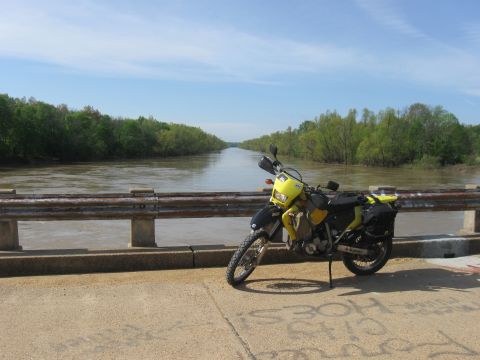
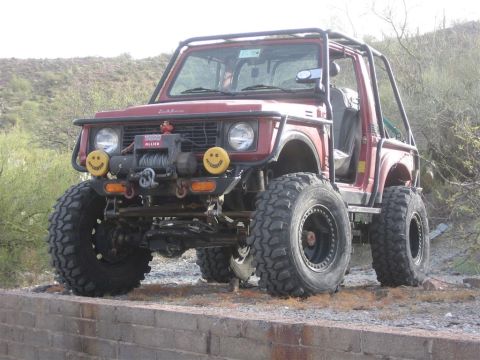
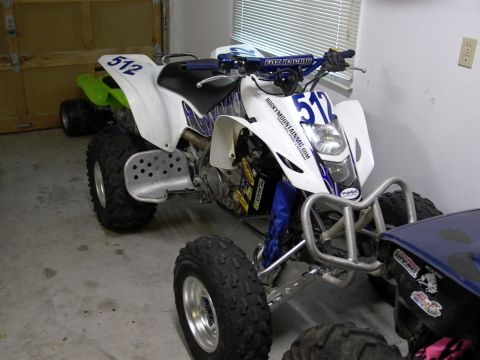
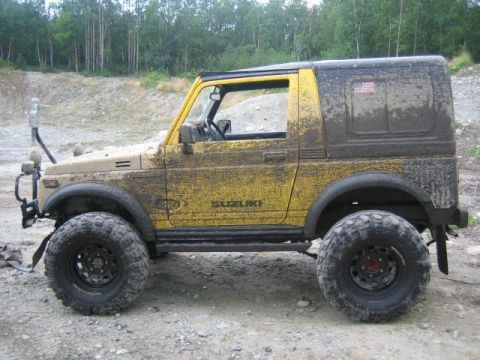
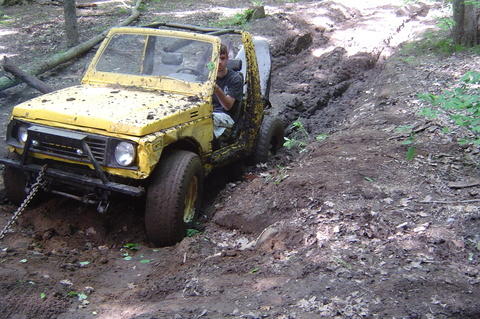
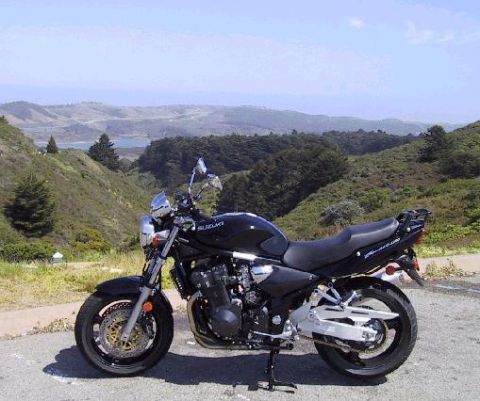
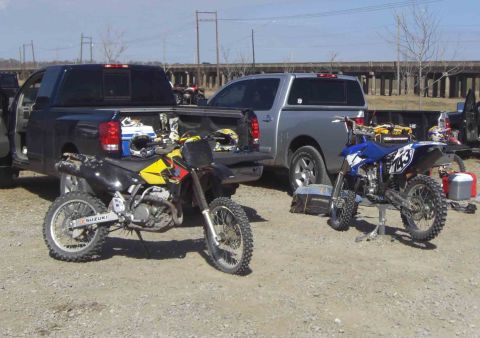
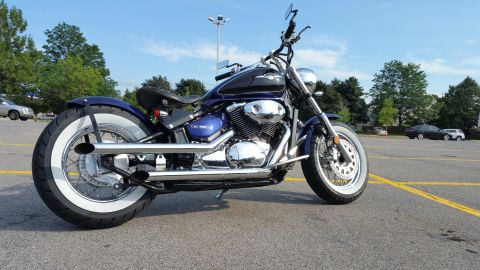
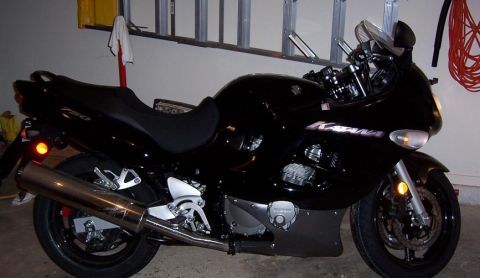
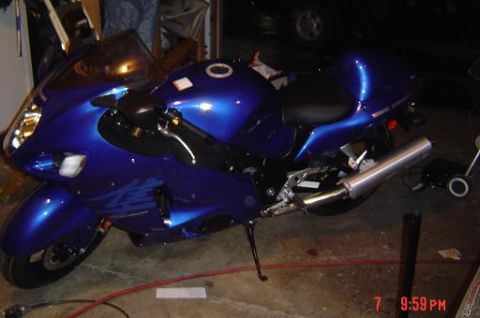
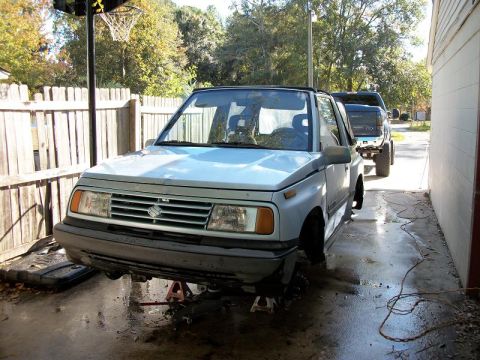
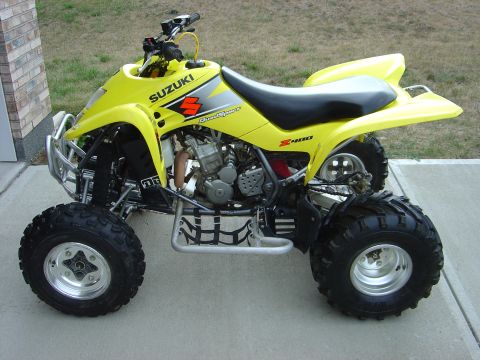
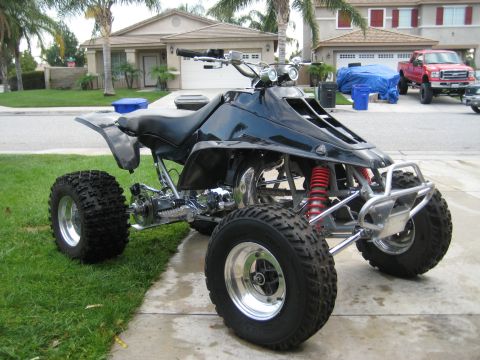
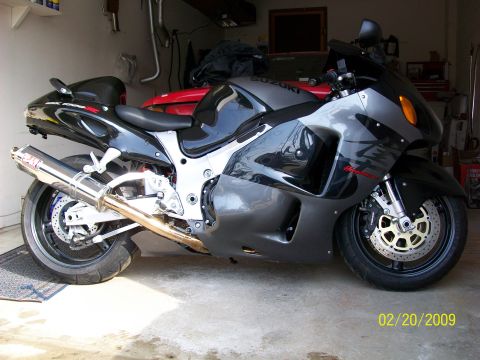
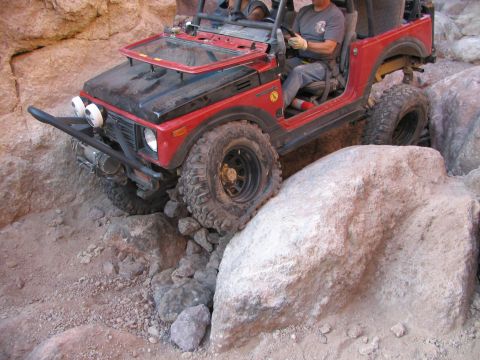
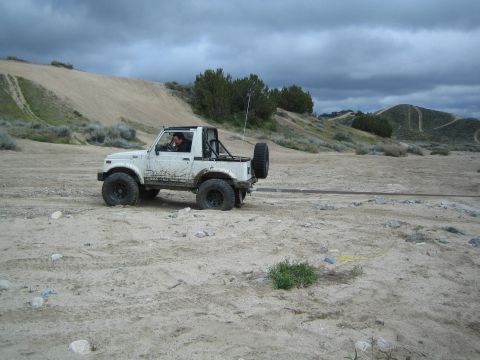
The most-documented Suzuki vehicles in the registry, every photo by the owner.