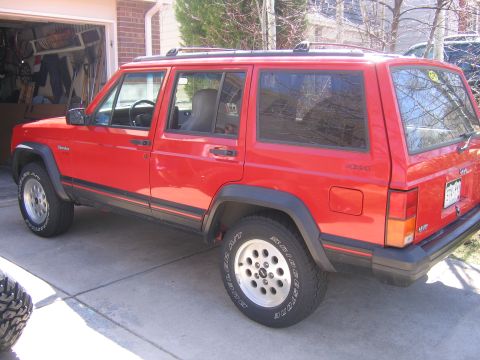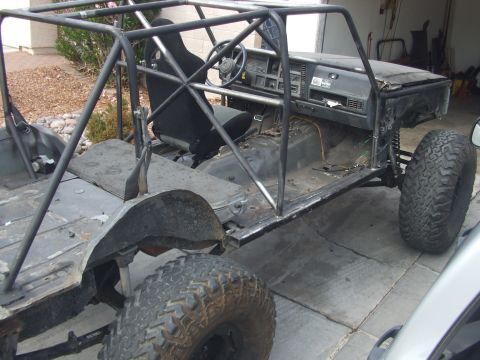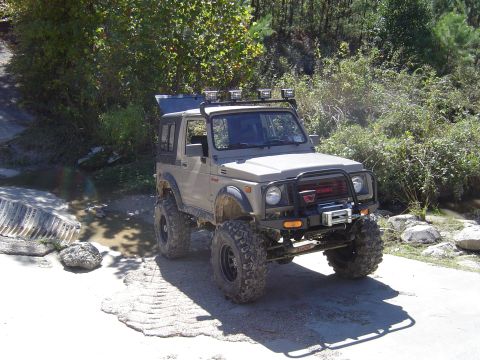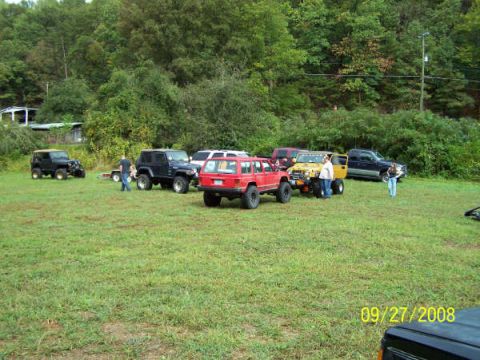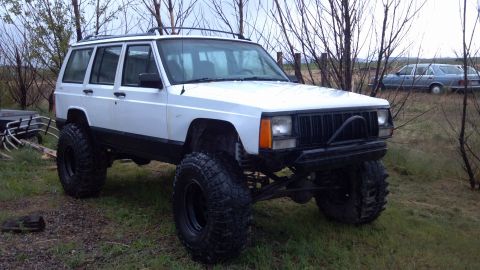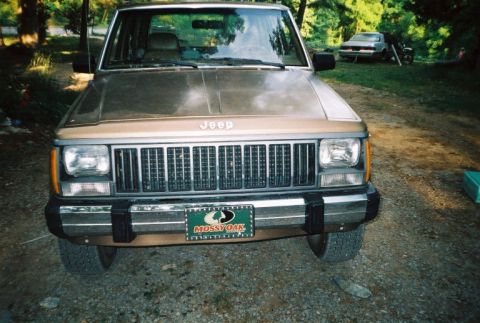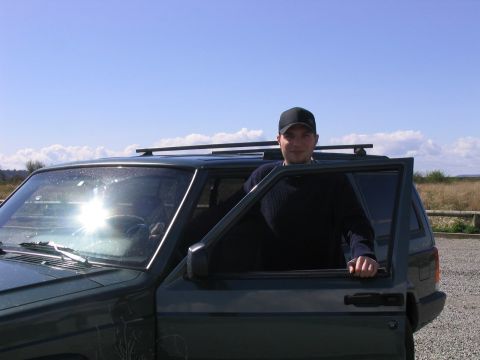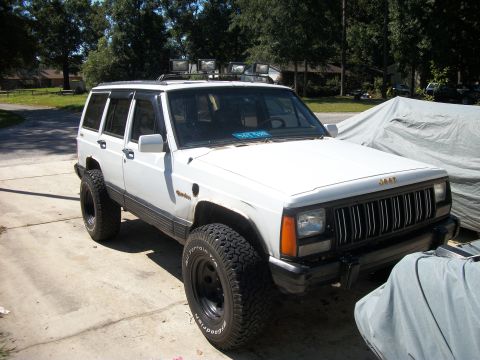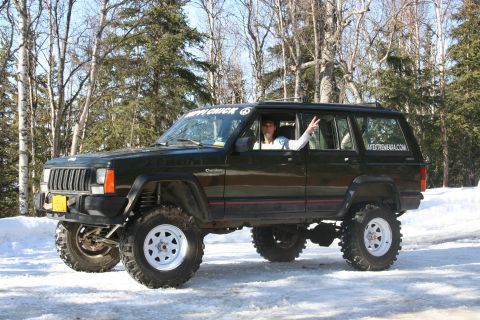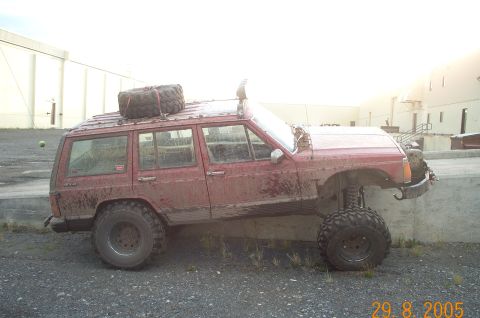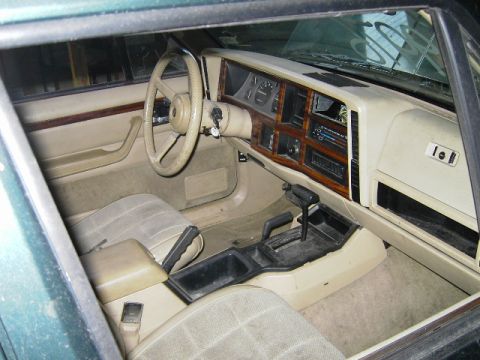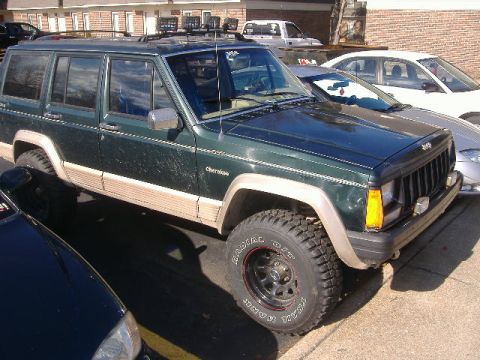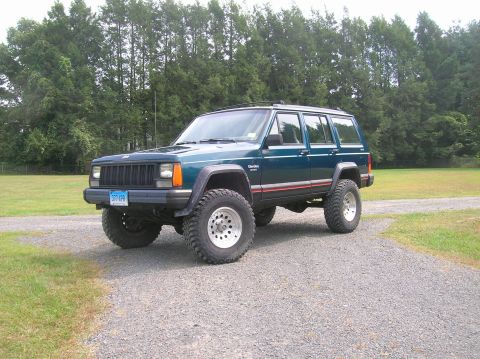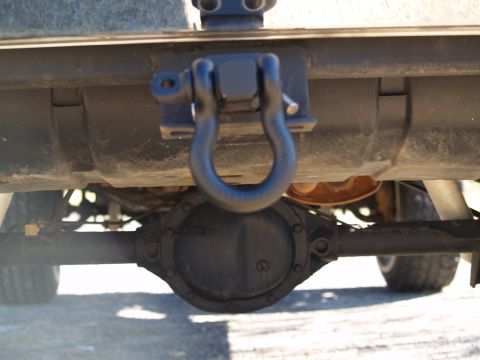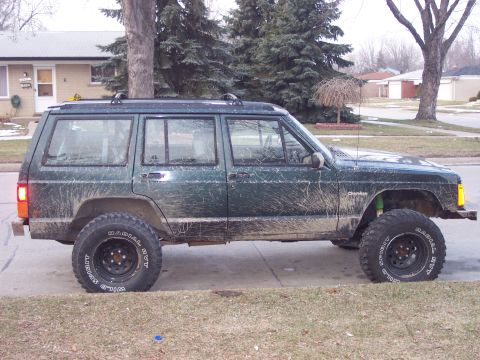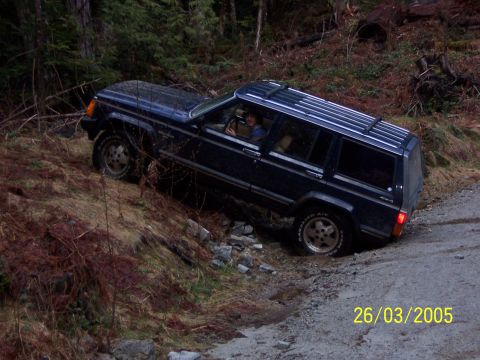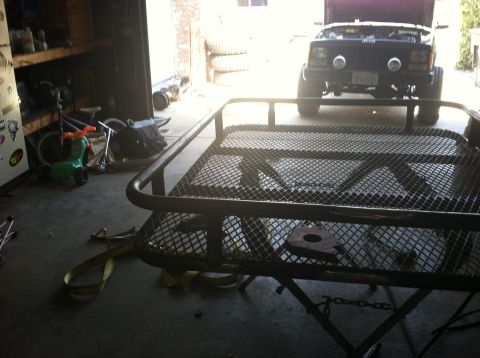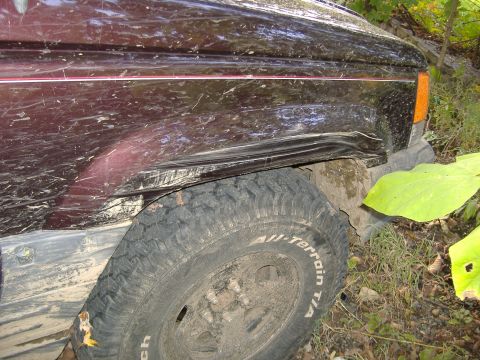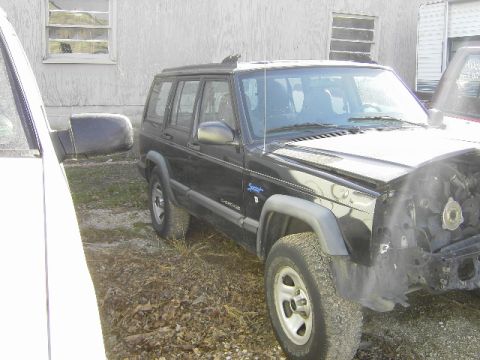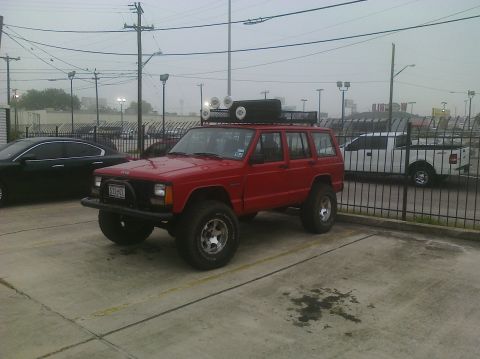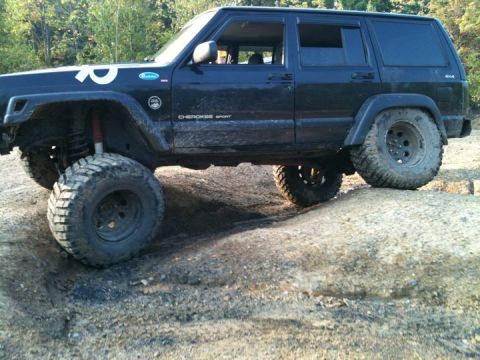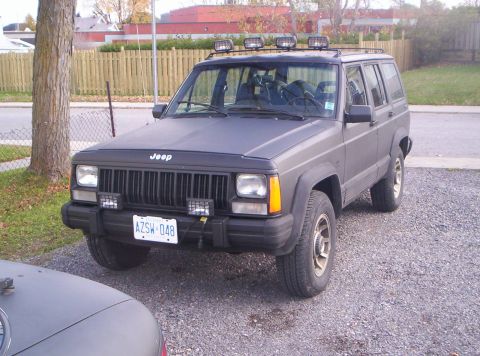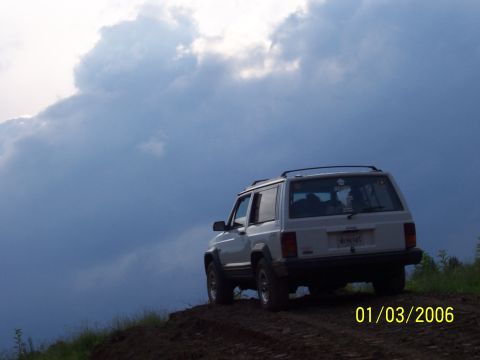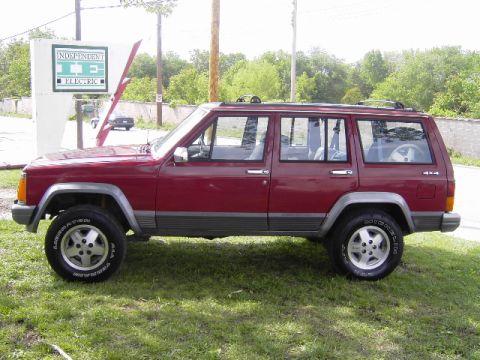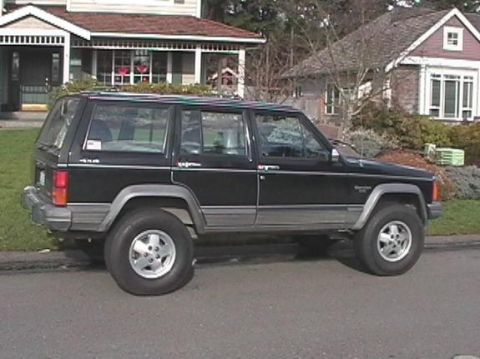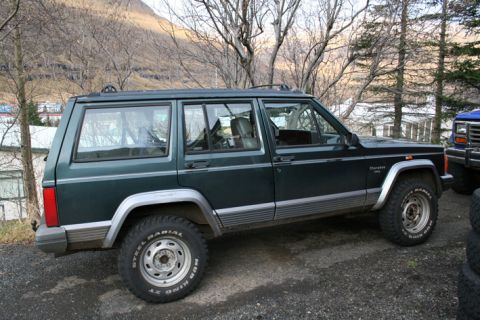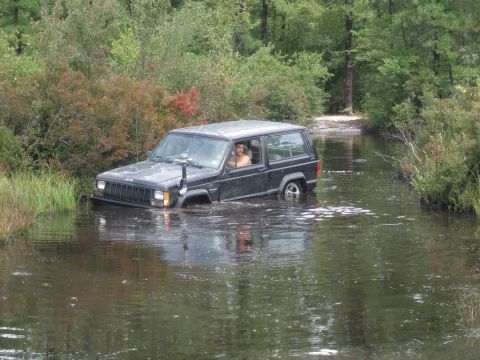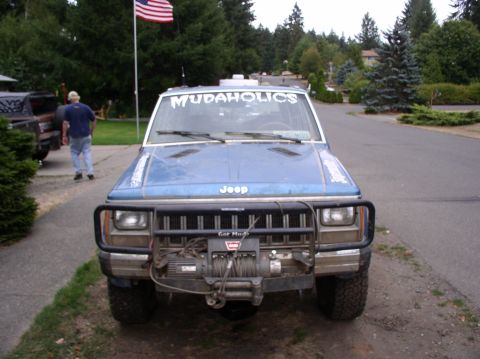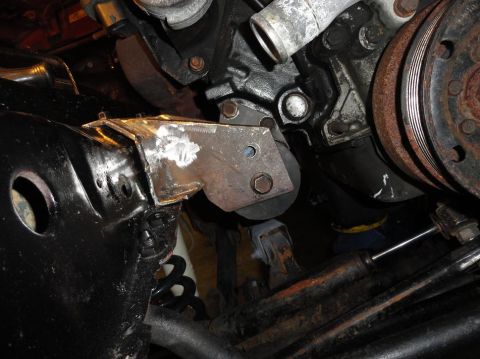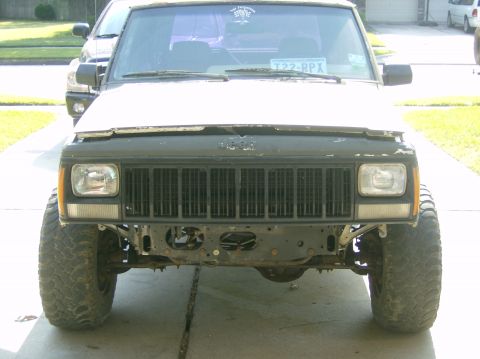
The Jeep Cherokee XJ (1984-2001) was a compact unibody 4x4 sold in two- and four-door bodies, roughly 1,200 pounds lighter than the full-size SJ Cherokee it replaced. Engines ran from a 2.5L AMC four and a 2.8L GM V6 (1984-1986) to the 4.0L inline-six introduced for 1987, rated 190 hp in High Output form from 1991. Command-Trac part-time and Selec-Trac full-time transfer cases were offered across the run, and a 1997 interior and exterior update carried the same platform through the 2001 model year.
Other Jeep Cherokee generations
Platform
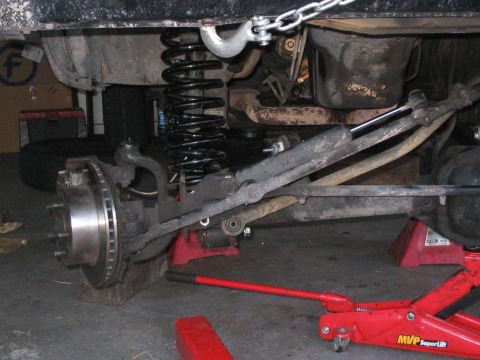
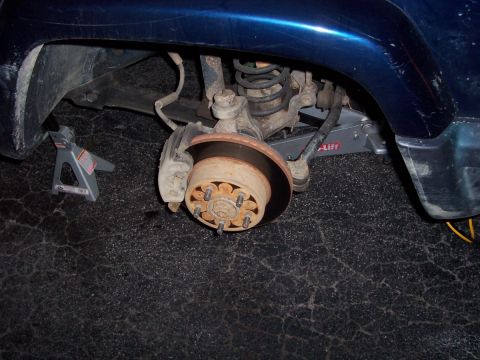
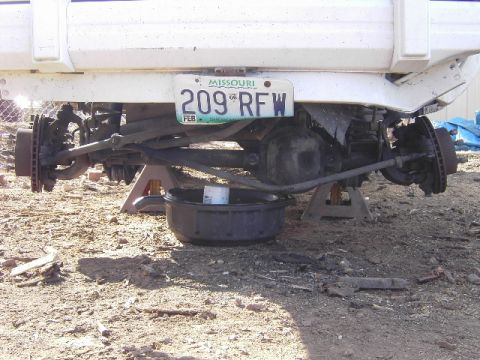
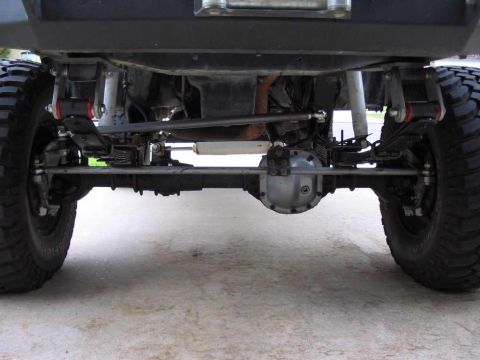
The 1984 Cherokee XJ was the first Jeep built on a unibody. Up front AMC used what it called Quadra-Link: a solid axle located by four control arms and coil springs, with leaf springs under the solid rear axle. The structure made the XJ far lighter than the outgoing full-size SJ Cherokee while keeping solid axles at both ends, which is why the platform still gets built into trail rigs today. Two-door and four-door bodies shared the same 101.4-inch wheelbase. The Comanche (MJ) pickup of 1986-1992 used the XJ front structure with a rear frame section under the bed.
Engines
- 2.5L AMC four: the base engine from 1984 through 2000. It made 105 hp with a carburetor, 117 hp with throttle-body injection for 1986 (121 hp from 1987), and 130 hp with multi-point injection from 1991, rerated to 125 hp for 1997-2000. The four was dropped for the final 2001 year.
- 2.8L GM V6 (1984-1986): the optional engine at launch, 110-115 hp. Slow and unloved; most were replaced in enthusiasts' hands.
- 2.1L Renault turbodiesel (mid-1980s): offered briefly in North America, mostly in the 1985-1987 window, with about 85 hp. Rare here, more common in export markets.
- 2.5L VM Motori turbodiesel (1994-2001): the later diesel, 114 hp, sold in export markets only and never offered in North America.
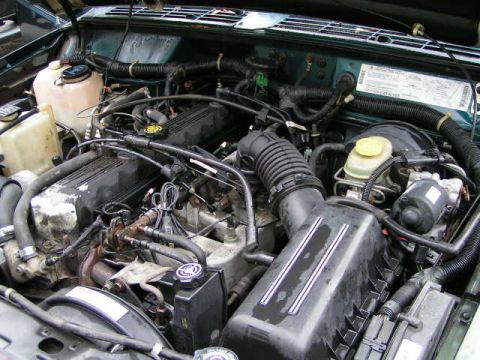
- 4.0L inline-six (1987-2001): the engine that defines the XJ. It used Renix (Renault-Bendix) engine management and made 173 hp in 1987, then 177 hp from 1988 through 1990. For 1991 Chrysler fitted its own multi-point injection and a better-flowing head and intake, creating the 4.0 High Output at 190 hp and 225 lb-ft. Ratings moved a few horsepower in later years (some sources list 193 hp for 2000-2001) but stayed at or near 190 hp through the end.
Drivetrain
Two four-wheel-drive systems were offered. Command-Trac is a part-time, shift-on-the-fly chain-drive transfer case (NP207 through 1987, then the NP231). Selec-Trac (NP228/NP229 in 1984-1986, NP242 from 1987) adds a full-time 4WD position with a center differential, so it can run in 4WD on dry pavement. Rear-drive XJs were also sold in volume. Front axles are Dana 30 on 4x4 models. The common rear axle is the Dana 35; a Dana 44 rear came in some 1987 to about 1990 trucks, usually with the towing package, and the Chrysler 8.25 began replacing the Dana 35 in 1991, becoming widespread by the late 1990s. The Dana 35 is the platform's known weak point under big tires.
Transmissions
Four-cylinder XJs used Aisin AX-4 and AX-5 manuals. Six-cylinder manuals were the Peugeot BA-10/5 from 1987, replaced during 1989 by the far stronger Aisin AX-15; the NV3550 took over for 2000. Early automatics were Chrysler TorqueFlite three-speeds behind the four and the GM V6, and the four kept a three-speed Chrysler automatic option (later the 30RH) to the end of four-cylinder production. From 1987 the 4.0 got the Aisin-Warner AW4 four-speed automatic, one of the most durable pieces on the truck.
Year-by-year highlights
- 1984: XJ launch, two- and four-door, 2.5 four or 2.8 GM V6.
- 1986: fuel injection (TBI) for the 2.5; Comanche pickup arrives as a separate model.
- 1987: 4.0L Renix six replaces the GM V6; AW4 automatic and NP242 Selec-Trac introduced; Limited trim added.
- 1991: 4.0 High Output, 190 hp, Chrysler engine management replaces Renix. The 2.5 also moves to multi-point injection.
- 1995: driver airbag standard.
- 1997: the one visible redesign of the run: new front and rear fascias, stamped steel liftgate replacing fiberglass, new dashboard and interior, stiffened structure. Mechanically it stayed a solid-axle XJ.
- 2001: final year, now 4.0-only after the four-cylinder and SE were dropped; the independent-front-suspension Liberty (KJ) replaced it for 2002.
Trims and variants
Early trims included the base Cherokee, Pioneer, and Chief, with Laredo added for 1985, plus an upmarket Wagoneer version of the XJ body sold through 1990. The Limited appeared for 1987 with leather and the 4.0 standard, ran through 1992, and returned for 1998. Sport became the volume enthusiast trim from 1988 onward. The Country ran from 1993 through 1997 as the woodgrain-and-chrome package, and Classic appeared for 1996 as a step between SE/Sport and Limited. The last years settled into SE, Sport, Classic, and Limited, with the SE going away alongside the four-cylinder for 2001.
Asked all the time
What engines did the Jeep Cherokee XJ come with?
The 1984-2001 Jeep Cherokee XJ launched with a 2.5L AMC four-cylinder, offered through 2000, and an optional 2.8L GM V6 (1984-1986). A 2.1L Renault turbodiesel was offered briefly in the mid-1980s, and export markets got a 2.5L VM Motori turbodiesel from 1994. From 1987 the option engine was the 4.0L inline-six: Renix-managed at 173-177 hp through 1990, then the 190 hp High Output from 1991. For 2001 the 4.0 was the only engine.
Which years of the Cherokee XJ are best to buy?
Most buyers look for a 1991-2001 Cherokee XJ with the 4.0 High Output six and the AW4 automatic or AX-15 manual. The 1997-2001 trucks add the updated interior and stiffer body; 1991-1996 trucks are simpler and often cheaper. The 1987-1990 Renix trucks are mechanically similar but their engine management is harder to diagnose.
What is the difference between Command-Trac and Selec-Trac on the Cherokee XJ?
On the 1984-2001 Jeep Cherokee XJ, Command-Trac (NP207, then NP231) is a part-time transfer case that should only run in 4WD on loose surfaces. Selec-Trac (NP228/NP229 early, NP242 from 1987) has a center differential and a full-time 4WD mode usable on dry pavement, plus part-time 4WD and low range.
What changed on the Jeep Cherokee XJ in 1997?
For 1997 the Jeep Cherokee XJ got its only major update: new front and rear exterior styling, a steel liftgate in place of the fiberglass one, a completely new dashboard and interior, and structural stiffening. The suspension, the 4.0L six, and the overall unibody platform carried over through 2001.
What rear axle does the Cherokee XJ have, and is the Dana 35 a problem?
Most 1984-2001 Cherokee XJs have a Dana 35 rear axle; many trucks from 1991 on carry the stronger Chrysler 8.25, and a Dana 44 rear came in some 1987 to about 1990 trucks, usually with the towing package. The Dana 35 is fine stock but is the accepted weak link once an XJ runs 33-inch or larger tires and hard trail use.
Is the Jeep Comanche the same as the Cherokee XJ?
The Jeep Comanche (MJ, 1986-1992) is the pickup sibling of the Cherokee XJ. It shares the XJ front structure, interior, and drivetrains, including the 4.0L six, but uses its own rear frame section under the bed and longer cargo layouts, so it counts as a separate model.
Technical Reference
Member-uploaded diagrams & documents for this generation. AI-classified; community-verified where badged.
Fuse & Relay Charts (2)
- 2000 Jeep Cherokee XJ Fuse Panel Diagram - Fuse Numbers, Amps & CircuitsThis document is a fuse panel chart listing 30 fuse/circuit breaker positions with their amperage ratings and the circuits they protect. Positions 1 through 27 are standard fuses, while positions CB 28, CB 29, and CB…
- Jeep Cherokee XJ Junction Block Diagram 8W-12 - Fuse & Relay LocationsThis document is page 8W-12-2 from a factory service manual wiring section (8W-12 Junction Block) for the Jeep XJ (Cherokee). It shows a labeled line-art diagram of the interior junction block (fuse block) as viewed…
Wiring Diagrams (1)
- Jeep XJ Cherokee / ZJ Ignition Switch 7-Way Connector Pinout & Wire ColorsThis document is a pinout reference for the ignition switch 7-way connector, apparently from a Jeep service manual covering both XJ (Cherokee) and ZJ (Grand Cherokee) platforms, as the wire color table has separate XJ…
Schematics (1)
- 1996 Jeep Cherokee Roof Lug Plate Schematic - Top & Side View SketchThis is a simple hand-made schematic sketch showing a "lug plate" in two views. The top view depicts a rectangular plate with three small holes (apparently mounting or fastener holes). The side view shows the plate's…
Exploded Parts (1)
- Ford Mustang Locking Steering Column Exploded Diagram - Lock Cylinder & SwitchThis document is a black-and-white exploded parts diagram of a locking steering column assembly, showing the components at the upper end of the column and how they fit together. The illustration identifies the turn…
Data/Spec Plates (1)
Blueprints (1)
- Rear Axle Housing End ID Chart - Ford, Chevy, Mopar, Dana 60 Flange DimensionsThis is a rear axle housing-end identification chart titled "IDENTIFY YOUR REAR AXLE." It instructs the reader to identify their rear end using three measurements: outside bearing diameter, housing flange dimensions…
The wall · registered 1984-2001 Cherokees
Sorted by depth of documentation. Click any vehicle to open its permanent record.