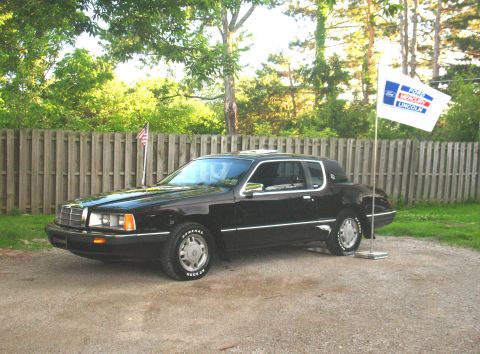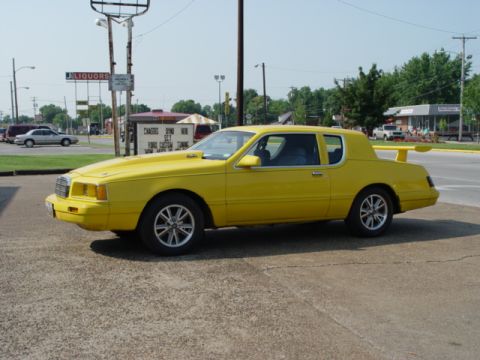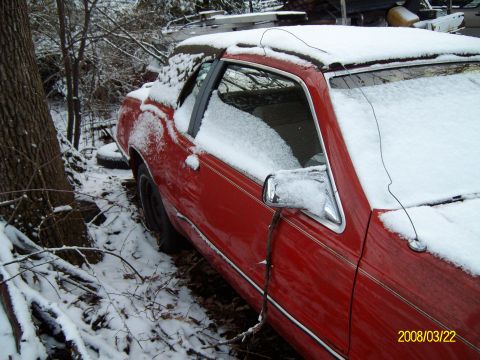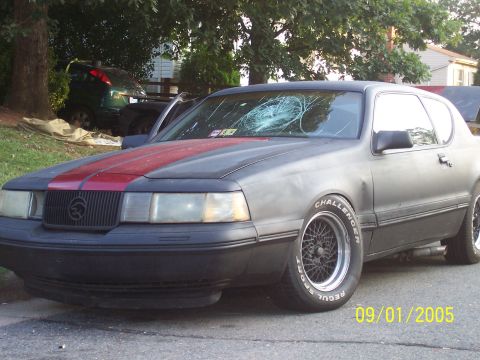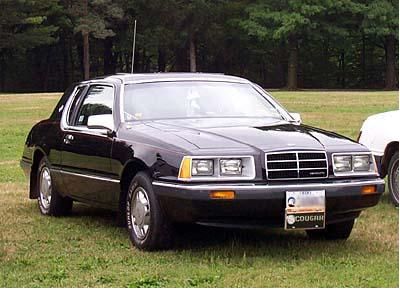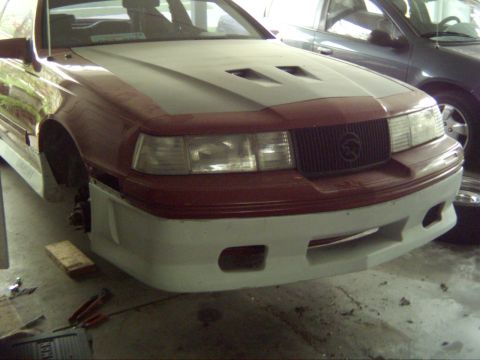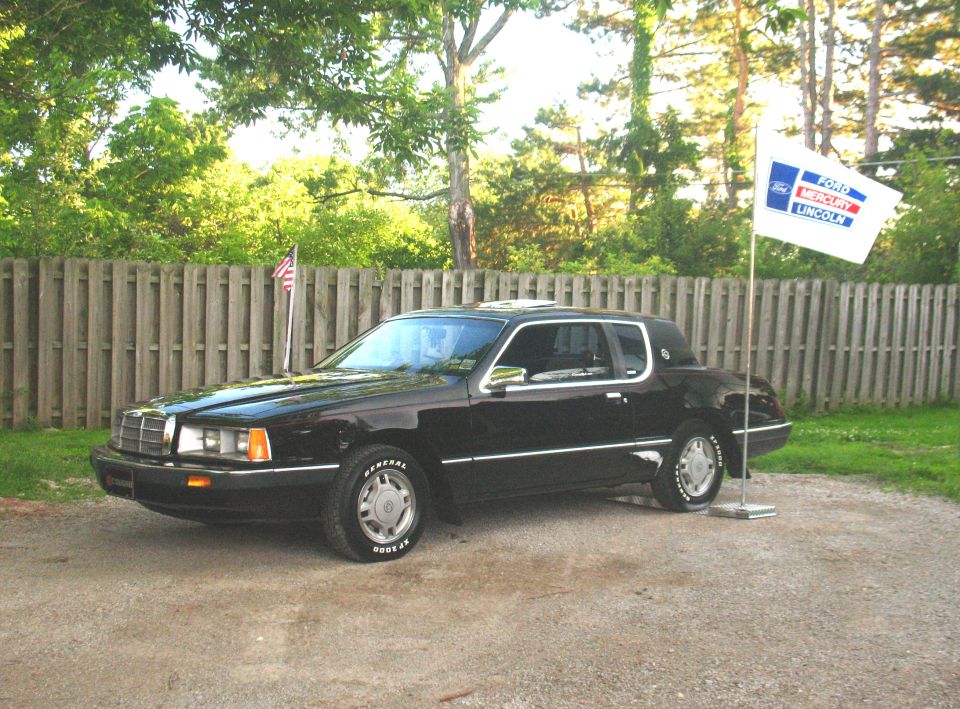
The sixth-generation Mercury Cougar (1983-1988) is the aero-bodied Fox platform coupe built alongside the ninth-generation Ford Thunderbird, primarily at Lorain, Ohio. It shares the Thunderbird's 104 inch wheelbase chassis (104.2 inches after a 1987 suspension revision) and rounded sheetmetal but keeps a formal, more upright rear window that makes the two easy to tell apart from behind. Base cars ran the 3.8L Essex V6 with the 5.0L V8 optional, while the XR-7 carried the 2.3L turbocharged four from 1984-1986 before switching to the 5.0L V8 for 1987-1988. A 1987 facelift brought flush composite headlamps and changed nearly every exterior panel.
Other Mercury Cougar generations
Platform
The 1983-1988 Mercury Cougar rides on Ford's rear-drive Fox platform, the same 104.0 inch wheelbase structure as the 1983-1988 Thunderbird; a 1987 suspension revision stretched the official figure to 104.2 inches. Most cars came out of the Lorain, Ohio plant, with some mid-1980s production also handled by Ford's Atlanta Assembly plant in Hapeville, Georgia. The two cars share doors, floorpan, suspension, and most of the interior hardware. The visual split is the roofline: the Thunderbird got a fastback-style rear glass, the Cougar an upright backlight with a squared-off quarter window. Suspension is the familiar Fox layout, modified MacPherson struts up front and a four-link coil-sprung live axle in back with anti-roll bars at both ends, so most Mustang and Thunderbird chassis parts and know-how carry over.
Engine lineup
- 3.8L Essex V6, standard on non-XR-7 Cougars all six years. Carbureted at 112 hp for 1983, then central fuel injection at 120 hp from 1984-1987, and finally multiport injection with an internal balance shaft at 140 hp for 1988. It is adequate and smooth but nothing more, and the early Essex has a reputation for head gasket trouble.
- 5.0L (302) V8, optional on GS and LS cars throughout the run. Central fuel injection at 130 hp from 1983-1985; for 1986 the engine picked up sequential port injection and 150 hp, then 155 hp for 1988 with a split dual exhaust.
- 2.3L turbocharged OHC four, exclusive to the XR-7 from 1984-1986. This is the Thunderbird Turbo Coupe engine, rated 145 hp, with 5-speed manual cars carrying a 155 hp rating for 1985-1986.
- 5.0L V8 in the XR-7, standard for 1987-1988, rated 150 hp in 1987 and 155 hp in 1988. The turbo four left the Cougar line after 1986 even though the Thunderbird Turbo Coupe kept it.
Drivetrain and transmissions
Every sixth-generation Cougar is rear-wheel drive. V6 cars used the C5 3-speed automatic as standard with the AOD 4-speed overdrive automatic optional; V8 cars got the AOD from the start, and by 1987 the AOD was the only transmission in the line. The turbo XR-7 came standard with a C3 3-speed automatic in 1984-1985 with the T-5 5-speed manual optional, then flipped for 1986 with the 5-speed standard and the automatic optional. The stick is the one to have since manual cars carried the higher 155 hp rating in 1985-1986. The 1987-1988 V8 XR-7 was automatic only with the AOD. Rear axles are the common Ford 7.5 inch unit, with Traction-Lok optional, except the 1988 XR-7, which got the stronger 8.8 inch axle, the only factory Cougar of this generation to carry it.
Year-by-year changes
- 1983: Full redesign onto the aero Fox body, coupe only, in base and LS trim (the base car was technically a GS but wore no badge). 112 hp carbureted 3.8L V6 standard, 130 hp 5.0L V8 optional. Mercury built 75,743, a third of them with the V8.
- 1984: XR-7 returns as the performance model with the 2.3L turbo four, blackout trim, and firmer suspension with a 3.45 Traction-Lok axle. Production hit 131,190.
- 1985: All-new interior with a modern dash; the XR-7 gained an analog gauge cluster with integrated boost gauge. Flat smoked taillights and a new grille outside, with 15 inch aluminum wheels on the XR-7.
- 1986: 5.0L V8 gains sequential port fuel injection, 150 hp. Center high-mount stop lamp added per federal requirement. The 5-speed became standard on the turbo XR-7 in its last year.
- 1987: Facelift that changed nearly every exterior panel: flush aero headlamps, a double-curve rear window, and quarter glass swept back to match the door glass angle. The GS was dropped, leaving LS and XR-7, and the XR-7 switched to the 150 hp 5.0L V8. A midyear 20th Anniversary Edition, an LS in Cabernet Red with gold badging and gold 15 inch wheels, marked two decades since the 1967 original.
- 1988: Final year on this body. The 3.8L V6 went to multiport injection and 140 hp, the 5.0L to 155 hp with dual exhaust. The XR-7 got monochromatic paint in Oxford White, Medium Scarlet, or Black plus the 8.8 inch axle, ahead of the all-new 1989 MN12 Cougar.
Trims and variants
The range ran the base GS (unbadged in 1983, dropped after 1986), the better-equipped LS, and from 1984 the XR-7. The XR-7 is the enthusiast pick both ways it was built: 1984-1986 turbo cars are the rarer and more involving drive, especially with the 5-speed, while 1987-1988 V8 cars are simpler to keep running and respond to the same inexpensive 302 parts as any Fox Mustang. The 1987 20th Anniversary Edition was a midyear appearance package on the LS and draws collector attention today. Villager wagons and other body styles were gone by this generation; every sixth-generation Cougar is a two-door coupe.
Asked all the time
What engines came in the 1983-1988 Mercury Cougar?
The 1983-1988 Mercury Cougar came standard with the 3.8L Essex V6, carbureted at 112 hp in 1983, 120 hp with central fuel injection from 1984-1987, and 140 hp with multiport injection in 1988. The optional 5.0L V8 made 130 hp with central fuel injection from 1983-1985, 150 hp after sequential port injection arrived for 1986, and 155 hp in 1988. The XR-7 used the 2.3L turbocharged four from the Thunderbird Turbo Coupe in 1984-1986, then switched to the 5.0L V8 for 1987-1988.
Is the sixth-generation Mercury Cougar the same car as the Thunderbird?
Mechanically, yes. The 1983-1988 Cougar and the 1983-1988 Ford Thunderbird share the 104 inch wheelbase Fox platform (104.2 inches from 1987), drivetrains, suspension, and most body structure, and were built in the same plants, primarily Lorain, Ohio. The Cougar's upright formal rear window versus the Thunderbird's sloped backlight is the main external difference.
Which years of the 1983-1988 Cougar had the turbo engine?
The Mercury Cougar XR-7 carried the 2.3L turbocharged OHC four in 1984, 1985, and 1986, rated 145 hp, with 5-speed manual cars carrying a 155 hp rating in 1985 and 1986. For 1987 the XR-7 dropped the turbo and went to the 5.0L V8.
What changed with the 1987 Mercury Cougar facelift?
For 1987 the sixth-generation Mercury Cougar received flush aero headlamps, a double-curve rear window, more steeply swept quarter glass, and new sheetmetal covering nearly every exterior panel, with the wheelbase officially at 104.2 inches. The base GS was dropped, the XR-7 traded the 2.3L turbo four for the 150 hp 5.0L V8, and a midyear 20th Anniversary Edition in Cabernet Red with gold trim marked twenty years since the original 1967 Cougar.
Which sixth-generation Cougar is best to buy today?
For driving interest, the 1984-1986 Cougar XR-7 turbo with the 5-speed is the rare pick, though turbo 2.3 parts and tuning knowledge matter. For easy ownership, a 1987-1988 XR-7 or 5.0L-equipped LS uses the same 302 V8 and AOD as countless Fox Fords, so parts are cheap and everywhere. Watch the 3.8L Essex V6 for head gasket failures.
Do Fox Mustang parts fit the 1983-1988 Mercury Cougar?
Much of it does. The 1983-1988 Cougar is a Fox platform car, so 5.0L engine parts, many suspension components, and the 7.5 inch rear axle hardware interchange or cross over with the Fox Mustang and 1983-1988 Thunderbird, though the Cougar's longer 104 inch wheelbase (104.2 from 1987) means some chassis pieces are Thunderbird/Cougar specific. The 1988 XR-7 is the exception on axles, with a factory 8.8 inch unit.
The wall · registered 1983-1988 Cougars
Sorted by depth of documentation. Click any vehicle to open its permanent record.