The registry
Mercury Registry: Models, Builds & Photos
Mercury was an automobile division of Ford Motor Company, created in 1938 by Edsel Ford, Henry Ford's son, to fill the price gap between mass-market Ford and luxury Lincoln. Launched with the 1939 Mercury Eight, the brand sold mid-priced sedans, coupes, wagons, muscle cars, and later SUVs, competing with GM's Buick, Oldsmobile, and Pontiac and with Chrysler's Dodge and DeSoto. Mercury peaked in the postwar decades, when its lead-sled coupes became customizer icons and its performance cars ran NASCAR, then declined into badge-engineered Fords with a shrinking identity. Ford announced Mercury's shutdown on June 2, 2010, and the final Mercury, a Grand Marquis, rolled off the St. Thomas, Ontario assembly line on January 4, 2011, ending the brand after 72 years.
Pick your model
Key facts
| Founded | 1938, Dearborn, Michigan, USA |
|---|---|
| Founders | Edsel Ford |
| Headquarters | Dearborn, Michigan, USA |
| Parent / successor | Ford Motor Company (division; sold through Lincoln-Mercury dealers from 1945) |
| Fate / status | Defunct 2011. Ford announced the shutdown on June 2, 2010; the last Mercury, a Grand Marquis, left the St. Thomas, Ontario line on January 4, 2011. |
| Best known for | Grand Marquis, Cougar, and the 1949-1951 "lead sled" Mercury Eight coupes |
| Registry presence | 886 vehicles / 34,524 photos documented by owners on SuperMotors |
1938-1945: Edsel Ford Invents a Middle Rung for Dearborn
Mercury exists because Edsel Ford spent most of the 1930s arguing with his father about a hole in the lineup. General Motors had built Alfred Sloan's price ladder, a brand for every rung of a customer's rising income, and Chrysler had Dodge and DeSoto, while Ford Motor Company offered a cheap Ford, an expensive Lincoln, and nothing between. Henry Ford resisted anything that complicated the company he had built around one car for everyman, but Edsel, company president since 1919 and the family's one genuine product man, won the argument. He announced the new division in 1938, and the first car, the 1939 Mercury Eight, reached dealers in late 1938 with a 239-cubic-inch flathead V8 priced around $916, roughly $150 above a comparable Ford DeLuxe and well below a Lincoln-Zephyr.
The name came from the Roman messenger god, reportedly chosen from more than a hundred candidates, and the positioning was explicit: a bigger, faster, better-trimmed Ford for buyers moving up. First-year sales of more than 65,000 cars validated Edsel's instinct immediately, and Mercury passed its 150,000th unit by the end of 1940. Then the window closed. Civilian production stopped in February 1942 for war work, and Edsel Ford died of cancer in May 1943 at age 49. The brand's founder never saw a postwar Mercury, and the division he created would spend the rest of its life run by men with less authority to protect it than he had.
1945-1957: Lincoln-Mercury, Henry Ford II's Reorganization, and the James Dean Coupe
In October 1945, Henry Ford II folded Mercury into a new Lincoln-Mercury Division, a structure that defined the brand's dealer network and its identity problem for the next 65 years. The young Ford heir, installed to rescue a company losing millions a month, brought in the Whiz Kids and ex-GM executives led by Ernest Breech to impose Sloan-style divisional discipline, and pairing Mercury with Lincoln gave the mid-priced brand upmarket showroom company instead of a Ford salesman's upsell.
The product that carried the era was the 1949 Mercury Eight, part of Ford's make-or-break 1949 redesign, the company's first true postwar cars. Its slab-sided, bathtub body made Mercury a sales success, roughly 300,000 cars in 1949 alone, and an accidental cultural one: the 1949-1951 coupes became the raw material of the lead-sled custom movement, chopped and channeled by builders like the Barris brothers, and a 1949 Mercury carried James Dean through Rebel Without a Cause in 1955. Mercury's flathead V8 was also the hot-rodder's upgrade over the Ford unit through the early 1950s.
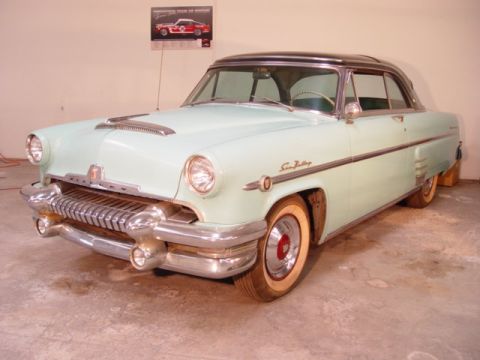
Success bred ambition. Mercury's Monterey, introduced for 1950 and a full series by 1952, anchored the lineup as the brand's volume car, and in 1955 the Montclair arrived as a glamour flagship to chase Buick. By mid-decade Mercury was regularly a top-ten American make. The prosperity convinced Ford management that the middle of the market could support even more brands, a conclusion that was about to go badly wrong.
1957-1960: The Edsel Disaster and the M-E-L Hangover
Mercury's worst wound of the 1950s was inflicted by its own parent. In 1955 Ford created a separate Mercury Division and then, for 1958, launched the Edsel brand, named for Mercury's founder, and reorganized everything into the Mercury-Edsel-Lincoln (M-E-L) Division. Edsel was supposed to give Ford a full GM-style ladder; instead it landed in the teeth of the 1958 recession, absorbed roughly $250 million to $350 million in losses, and was dead by November 1959. Mercury paid collateral damage: the Edsel fiasco consumed capital, cannibalized the same mid-priced buyers Mercury needed, and tainted the whole divisional strategy.
Mercury's own late-1950s cars compounded the problem. The 1957-1960 generation rode a unique body with dramatic styling, the Park Lane flagship and the Turnpike Cruiser show-car-for-the-street among them, exactly as the recession collapsed the mid-priced market that Buick, Oldsmobile, Dodge, and DeSoto were all fighting over. Mercury sales fell from about 286,000 in 1957 to roughly 133,000 in 1958, the make's lowest total in a decade. DeSoto died in 1961; Mercury survived, but the near-death experience set the pattern for the rest of its life. From 1961 the big Mercurys went back to sharing Ford bodyshells, and the brand never again got a full standalone platform of its own. Cost logic had beaten brand logic, permanently.
1960-1967: The Comet, Total Performance, and Mercury Goes Racing
The car that stabilized Mercury after the Edsel collapse was a compact originally developed to be an Edsel. The Comet, launched in March 1960 on a stretched Falcon platform, sold about 116,000 units in its short first year and quickly became the division's volume leader, proof that Mercury could live as an upscale interpretation of Ford's small cars rather than a shrunken Lincoln. Tellingly, the orphaned compact wore no Mercury badging at all in its first two years; it only formally became a Mercury for 1962.
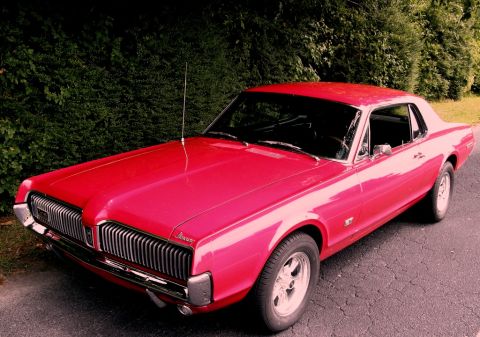
The 1960s also gave Mercury its most credible performance identity, driven by Henry Ford II's corporate Total Performance campaign after Ford walked away from the industry's racing ban in 1962. Mercury's Marauder fastbacks were built substantially to legalize slipperier rooflines for NASCAR, and the Cyclone carried the Comet's performance banner into the muscle-car wars, its aero-nosed Cyclone Spoiler II later part of the 1969-1970 NASCAR aero battles. The 100,000-mile Comet durability run at Daytona in late 1963, promoted heavily by Lincoln-Mercury for the 1964 model, was pure marketing engineering: the division was selling proof that a Mercury was more than a chromed Ford.
Behind it sat one of the strongest marketing operations Mercury ever had. Lincoln-Mercury general managers in this era answered to a resurgent Ford under Lee Iacocca's rising influence, and the division's Sign of the Cat campaigns late in the decade gave Mercury the most distinct advertising voice in its history. For roughly one decade, the brand knew exactly what it was: the performance-and-polish step up from Ford.
1967-1978: The Cougar, the Marquis, and the Brougham Gold Rush
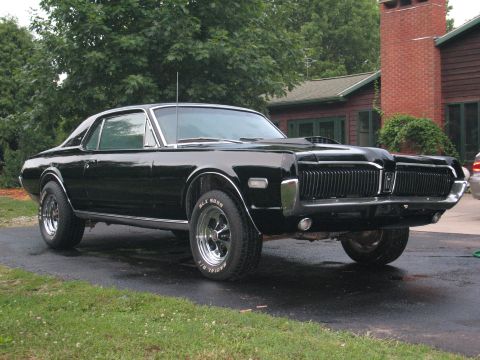
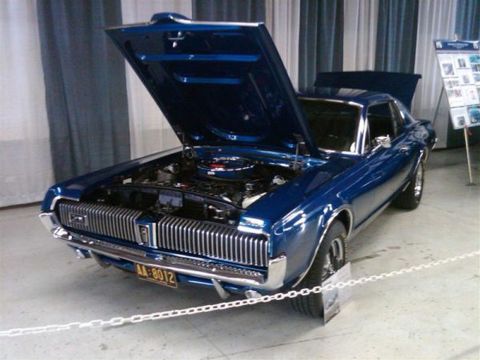
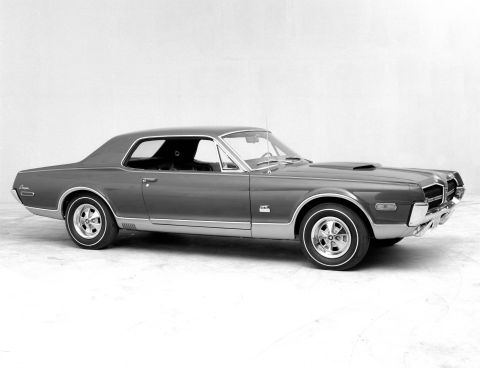
The 1967 Cougar was the best decision Mercury made in its middle age. Built on a stretched Mustang platform at Lee Iacocca's Ford but styled and trimmed as a European-flavored gentleman's coupe, it won Motor Trend's 1967 Car of the Year and sold about 150,000 units in its first year, at times approaching 40 percent of the division's volume. The Cougar demonstrated the formula that worked for Mercury when anything did: take a Ford platform, add length, sound insulation, and restraint, and charge for the difference.
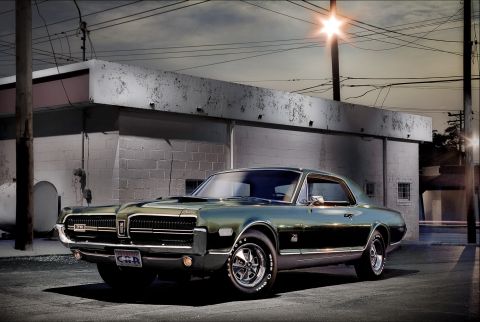
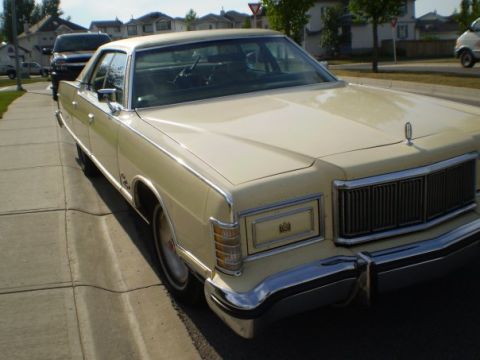
The same logic scaled up. The Marquis, introduced for 1967 and famous for the Cartier-watch and diamond-cutter ride-quality commercials of the early 1970s, became Mercury's big-car standard-bearer, with the Colony Park wagon as its wood-paneled suburban companion and the Grand Marquis name appearing as its top trim in 1975 before becoming a standalone model in 1983. As the muscle market died under insurance surcharges and the 1973 oil embargo, the Cougar itself was deliberately fattened into a personal-luxury car, and Mercury rode the 1970s brougham boom profitably.
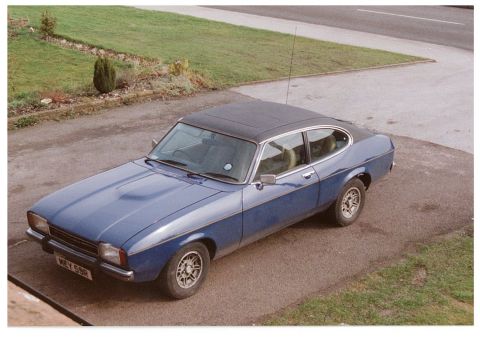
Lincoln-Mercury also became Ford's import channel, selling the German-built Capri from 1970, briefly the best-selling European import in America after the Volkswagen Beetle. The decade's sales were healthy, peaking at an all-time record near 580,000 in 1978, but the strategy carried a hidden cost: every Mercury was now a repackaged Ford or a captive import, and the engineering identity the Comet and Cyclone era had built quietly evaporated.
1978-1992: Downsizing, the Panther Platform, and the Sable's False Dawn
Mercury entered the 1980s strapped to Ford Motor Company's near-death experience. Ford lost about $3.3 billion between 1980 and 1982, and survival spending went to two programs that defined late Mercury. The first was the Panther platform: the downsized 1979 full-size cars that became the Grand Marquis in 1983, a body-on-frame V8 sedan that would outlive every plan made for it. The second was the aero revolution led by design chief Jack Telnack, whose rounded 1986 Ford Taurus came with a Mercury twin, the Sable, distinguished by its full-width lightbar front end, one of the last times a Mercury looked meaningfully different from its Ford sibling.
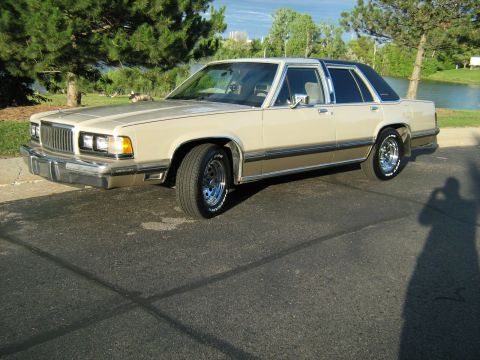
The Taurus program, a $3 billion bet, saved Ford and gave Mercury its last genuinely fashionable car; the Sable sold roughly 100,000 units a year in its early seasons. Below it, the Topaz and Tracer filled compact slots as lightly retrimmed Fords, and badge-engineered small cars like the Bobcat and the short-lived LN7 coupe had already shown how thin the differentiation had become. The pattern was now structural: Mercury received no unique platforms, no unique engines, and increasingly no unique sheetmetal beyond fascias. Dealers sold Mercurys to loyal, aging Ford customers who wanted nicer trim, and to Lincoln shoppers who could not stretch. That customer base was profitable and demographically doomed.
1992-2004: Jac Nasser's Empire Building and a Brand With No Mission
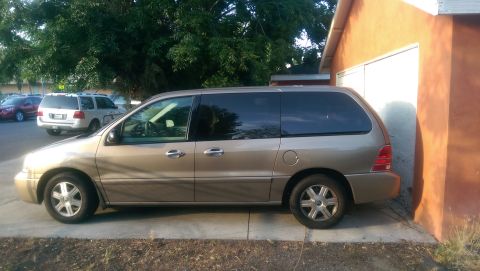
By the 1990s Mercury's strategic question, asked openly inside Ford, was what the brand was for, and no answer survived contact with the budget. The Ford 2000 globalization push under Alex Trotman and then Jacques Nasser's late-1990s acquisition spree, which added Volvo and Land Rover to a Premier Automotive Group already housing Jaguar and Aston Martin, directed capital and executive attention everywhere except Mercury. The division's 1990s lineup told the story: the Villager minivan was a joint venture built alongside the Nissan Quest, the Mystique was the American face of the over-budget global Mondeo program, and the Mountaineer, launched for 1997, was an Explorer in a nicer suit, created because SUV margins were the only growth in the building.
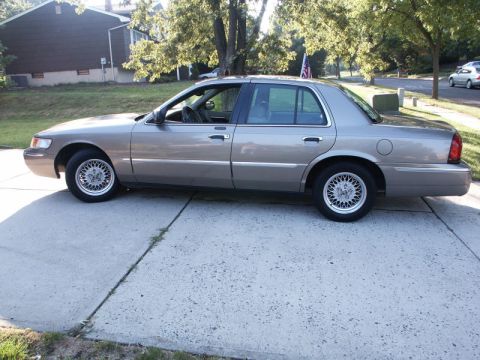
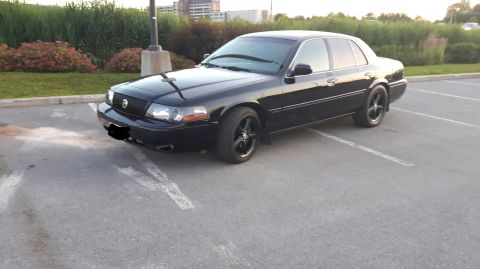
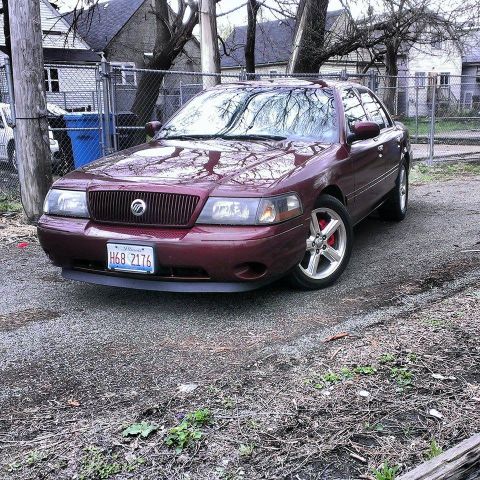
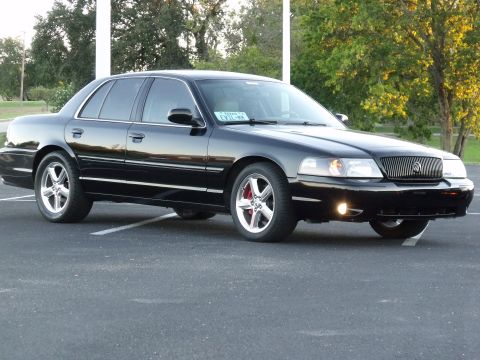
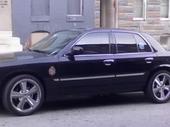
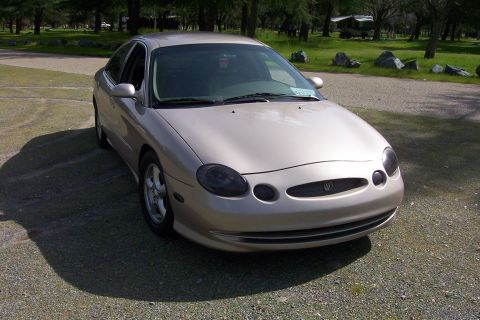
Mercury still moved metal, roughly 400,000 units a year at mid-decade, anchored above all by the Grand Marquis and its fleet-and-retiree constituency, whose average buyer age was widely reported in shutdown-era coverage to be approaching 70. An eleventh-hour attempt at image, the 2003-2004 Marauder, a blacked-out 302-horsepower Grand Marquis performance sedan, sold only about 11,000 units over two years, confirming that reviving a 1960s nameplate could not conjure buyers a brand had spent 30 years not cultivating. When Nasser was fired in October 2001 and Bill Ford took over a company again bleeding cash, Mercury had no champion left on the board.
2004-2011: Alan Mulally's One Ford and the Last Grand Marquis
Mercury died of arithmetic. Alan Mulally, hired from Boeing in September 2006 to rescue a Ford that would lose $12.7 billion that year, imposed the One Ford doctrine: fewer brands, fewer platforms, all capital behind the Blue Oval. Jaguar and Land Rover were sold in 2008, Volvo in 2010, and Mercury, whose late lineup consisted of the Milan, a rebadged Fusion, the Mariner, a rebadged Escape, plus the Sable, Mountaineer, and Grand Marquis, had no argument to make. Its U.S. share had fallen below one percent, roughly 92,000 sales in 2009 against a 1978 peak near 580,000, and studies Ford cited showed most Mercury intenders would simply buy a Ford instead. A late-2000s marketing push aimed at younger women, fronted by spokeswoman Jill Wagner, did not reverse Mercury's sales slide.
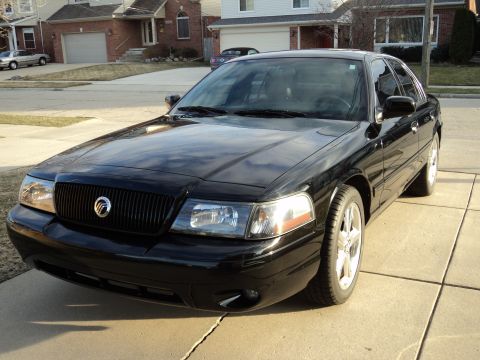
Ford announced the shutdown on June 2, 2010, over objections from Lincoln-Mercury dealers who lost their volume line. Production wound down through the fall, and the last Mercury ever built, a 2011 Grand Marquis, left the St. Thomas Assembly Plant in Ontario on January 4, 2011. The brand Edsel Ford created to give his father's company a middle class lasted 72 years and more than 21 million vehicles, and its epitaph was written decades before the end: a division denied its own engineering could market its way through good times but had nothing left to sell when the money ran out. The cars survive with enthusiasts; SuperMotors.net alone documents 886 registered Mercurys across 28 models with more than 34,000 photos, the lead sleds and Cougars still the customizer's raw material they became in 1950.
Leadership
| Leader | Tenure | Legacy |
|---|---|---|
| Edsel Ford | President, Ford Motor Company 1919-1943 | Conceived Mercury in 1938 as a mid-priced rung between Ford and Lincoln and pushed the 1939 Mercury Eight into production over his father's indifference. |
| Henry Ford II | President/CEO, Ford Motor Company 1945-1979 | Created the Lincoln-Mercury Division in October 1945, giving Mercury its own dealer network and postwar identity. |
| Ernest Breech | Executive VP, then chairman, Ford 1946-1960 | The ex-GM executive behind Henry Ford II's Sloan-style reorganization, which gave Mercury the divisional structure it kept for the rest of its life. |
| Benson Ford | Head of Lincoln-Mercury Division 1948-1956 | Edsel's second son ran Lincoln-Mercury through its strongest sales decade, including Mercury's record 1950s volumes. |
| E.T. "Bob" Gregorie | Ford chief designer 1935-1946 | Styled the original 1939 Mercury Eight under Edsel Ford's direction. |
| Lee Iacocca | Ford executive; president 1970-1978 | As Ford Division chief and later company president, drove the Total Performance 1960s that gave Mercury the Comet Cyclone and greenlit the 1967 Cougar, the brand's most successful distinct product. |
| Jacques Nasser | Ford CEO 1999-2001 | Presided over an acquisition-driven era during which Mercury's product plan stalled, its lineup increasingly badge-engineered Fords. |
| Alan Mulally | Ford CEO 2006-2014 | His One Ford consolidation ended the brand; Ford announced Mercury's shutdown on June 2, 2010. |
Timeline
| Year | Model or event | Detail |
|---|---|---|
| 1938 | Mercury founded | Edsel Ford creates the Mercury division in Dearborn to fill the price gap between Ford and Lincoln. |
| 1939 | Mercury Eight launched | The first Mercury, a 95-hp flathead V8 sedan and coupe line, sells over 65,000 units in its debut year. |
| 1943 | Death of Edsel Ford | Mercury's founder dies at 49, leaving the brand without its original champion. |
| 1945 | Lincoln-Mercury Division formed | Henry Ford II reorganizes the company and pairs Mercury with Lincoln in a standalone sales division. |
| 1949 | Postwar Mercury Eight | The slab-sided 1949-1951 coupes become customizer favorites; James Dean's 1949 Mercury in Rebel Without a Cause cements the "lead sled" image. |
| 1950 | Monterey introduced | Mercury's upmarket coupe trim becomes a standalone full-size nameplate in 1952. |
| 1957 | Turnpike Cruiser debuts; Edsel launched for 1958 | Mercury moves upmarket with the Turnpike Cruiser, and Ford launches the Edsel brand in September 1957, just as the mid-price market collapses. |
| 1958 | M-E-L division formed; Park Lane debuts | Ford folds Mercury into the Mercury-Edsel-Lincoln (M-E-L) division in January 1958; the Edsel flops in the recession, dragging the division into losses. |
| 1960 | Comet introduced | The Falcon-based compact, originally planned as an Edsel, becomes the division's volume savior with 116,000-plus first-year sales; it is not formally badged a Mercury until 1962. |
| 1963 | Marauder introduced | Fastback full-size Mercurys built for NASCAR homologation carry the brand into Total Performance racing. |
| 1964 | Cyclone introduced | The Comet Cyclone gives Mercury a muscle-car entry that later wins on NASCAR superspeedways. |
| 1967 | Cougar introduced | The Mustang-based luxury pony car wins Motor Trend Car of the Year and becomes Mercury's best-selling distinct product. |
| 1967 | Marquis introduced | Mercury's flagship full-size line opens the brougham era of hidden headlamps and padded vinyl roofs. |
| 1969 | Colony Park peak era | The woodgrain full-size wagon, sold since 1957, anchors Mercury's family-car image through the 1970s. |
| 1970 | Capri imported | Lincoln-Mercury dealers sell the European Ford Capri, briefly the best-selling import in America after the VW Beetle. |
| 1975 | Bobcat introduced | A rebadged Ford Pinto marks the start of Mercury's dependence on badge engineering at the small end. |
| 1978 | Zephyr introduced; record sales year | The Fox-platform Fairmont twin revives the old Lincoln-Zephyr name as Mercury posts its all-time sales record of about 580,000. |
| 1979 | Panther-platform Marquis | Downsized full-size Mercurys move to the body-on-frame Panther platform they will use for 32 years. |
| 1983 | Grand Marquis becomes standalone nameplate; Topaz introduced | The Grand Marquis, formerly a Marquis trim, begins its run as Mercury's best seller and longest-lived car. |
| 1986 | Sable introduced | The aero-styled Taurus twin with its lightbar grille is Mercury's last genuinely fresh design statement. |
| 1991 | Tracer second generation | The Mazda-based compact, first sold in 1988, typifies Mercury's shrinking differentiation. |
| 1993 | Villager introduced | A minivan co-developed with Nissan gives Mercury its first non-car product. |
| 1995 | Mystique introduced | The Contour twin from Ford's costly "world car" program sells poorly against its development budget. |
| 1997 | Mountaineer introduced | Mercury's Explorer-based SUV chases the truck boom under CEO-to-be Jacques Nasser's expansion push. |
| 2003 | Marauder revived | A blacked-out 302-hp Grand Marquis performance variant sells 11,052 units over two model years. |
| 2005 | Mariner and Milan-era lineup | The Escape-based Mariner arrives in 2005 and the Fusion-based Milan in 2006, Mercury's final new nameplates. |
| 2006 | Alan Mulally arrives | Mulally, hired from Boeing, launches the One Ford plan that concentrates capital on the Ford brand, leaving Mercury without future product. |
| 2010 | Shutdown announced | Ford announces on June 2, 2010 that Mercury production will end by the close of the year. |
| 2011 | Last Mercury built | The final Grand Marquis rolls off the St. Thomas, Ontario assembly line on January 4, 2011, ending the brand after 72 years. |
Asked all the time
Who founded Mercury?
Edsel Ford, Henry Ford's son and president of Ford Motor Company, created the Mercury division in 1938 to fill the price gap between mass-market Ford and luxury Lincoln. The first Mercury, the 1939 Mercury Eight, was styled under Ford design chief E.T. Gregorie.
Why did Mercury shut down?
Mercury's sales and identity had eroded for decades as its cars became lightly restyled Fords, and by 2010 the brand accounted for a small fraction of Ford's volume. Under Alan Mulally's One Ford consolidation, Ford announced on June 2, 2010 that it would retire Mercury, and the last car was built on January 4, 2011.
When did Mercury stop making cars?
Ford announced Mercury's shutdown on June 2, 2010, and the final Mercury, a Grand Marquis, rolled off the St. Thomas, Ontario assembly line on January 4, 2011.
What was Mercury's relationship to Ford and Lincoln?
Mercury was a division of Ford Motor Company, positioned in price between the Ford brand and Lincoln. From October 1945 it was paired with Lincoln in the Lincoln-Mercury Division, and Mercurys were sold through Lincoln-Mercury dealerships for the rest of the brand's life.
What was Mercury's best-selling car?
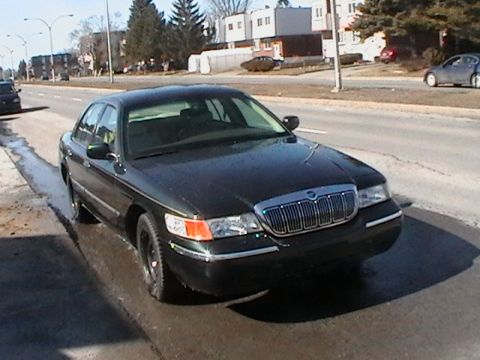
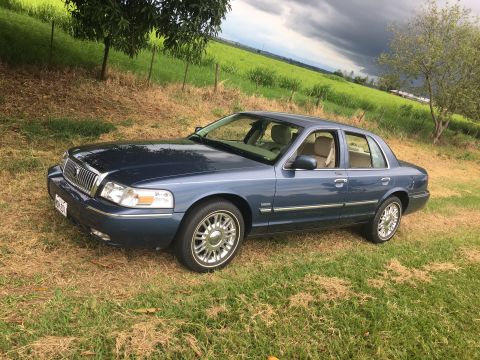
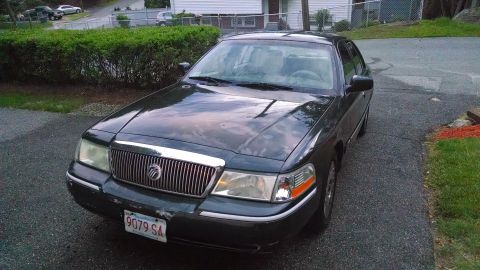
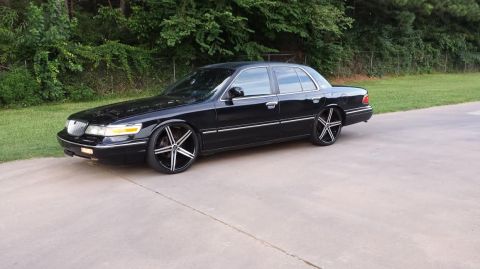
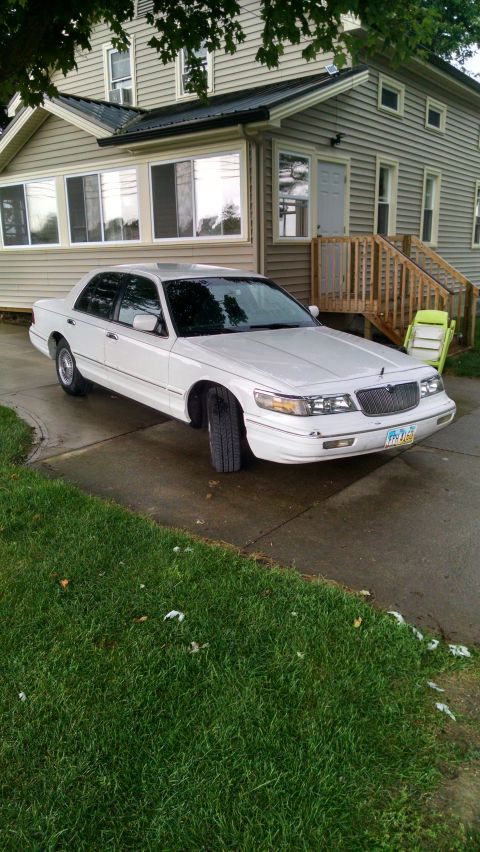
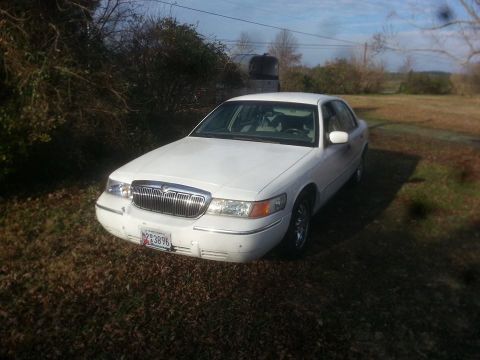
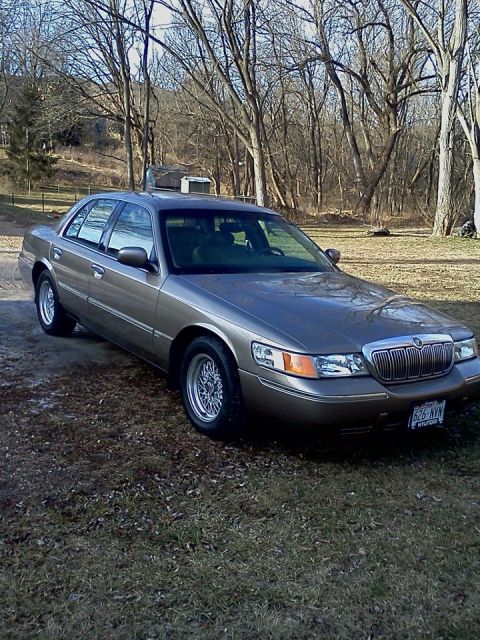
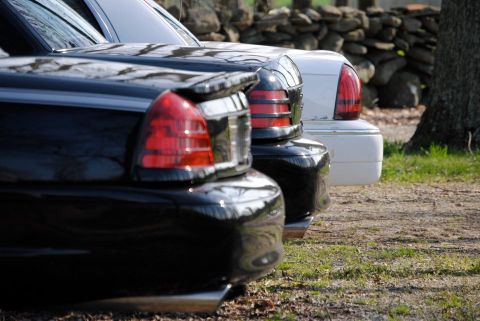
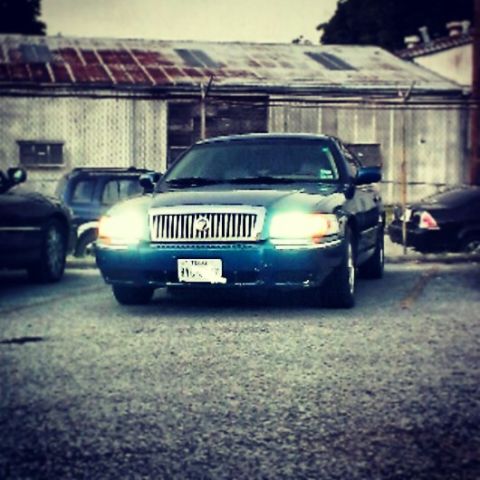
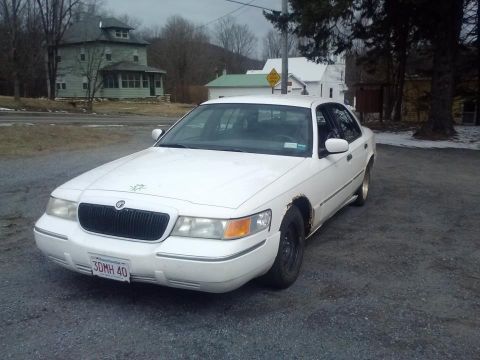
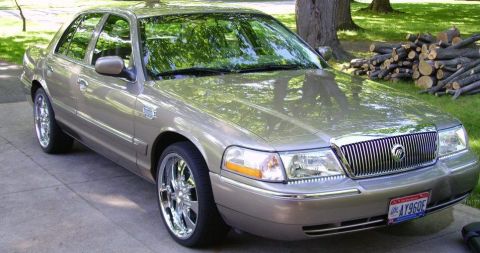
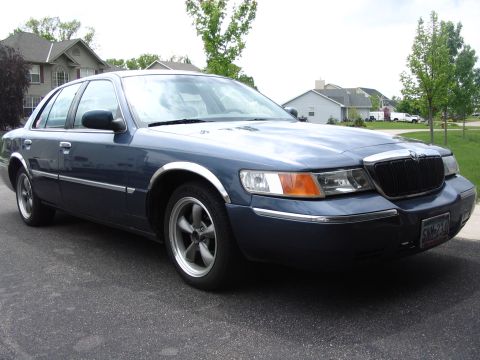
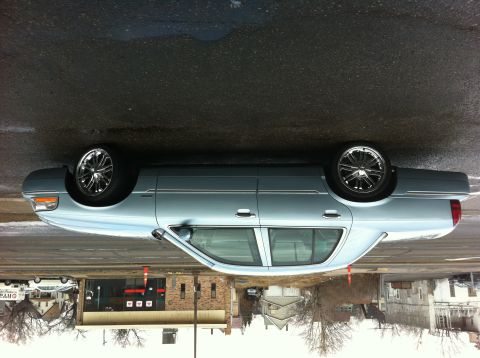
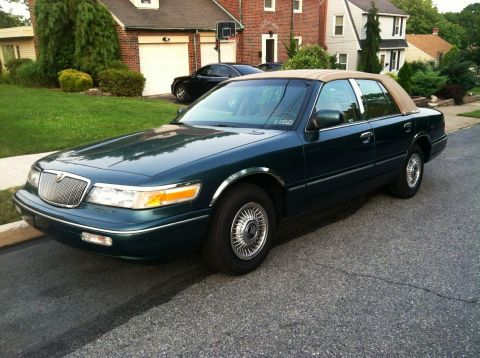
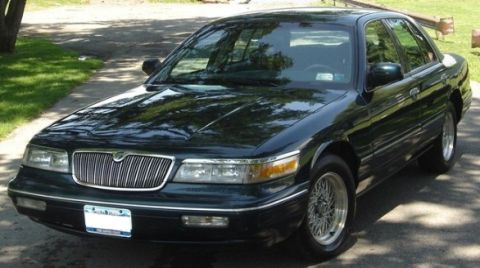
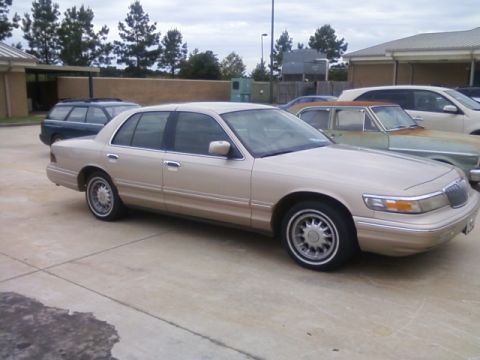
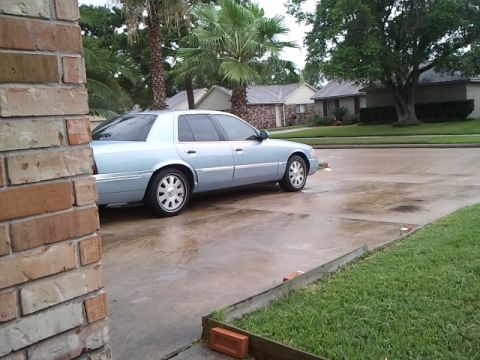
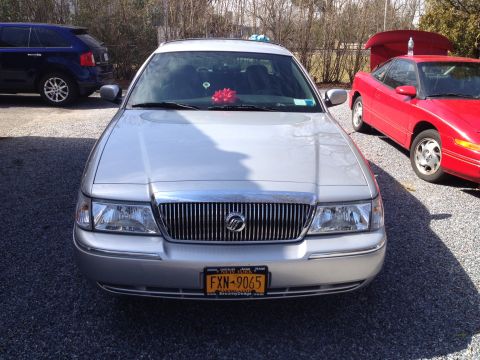
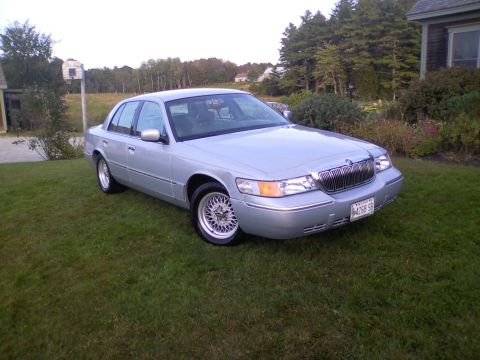
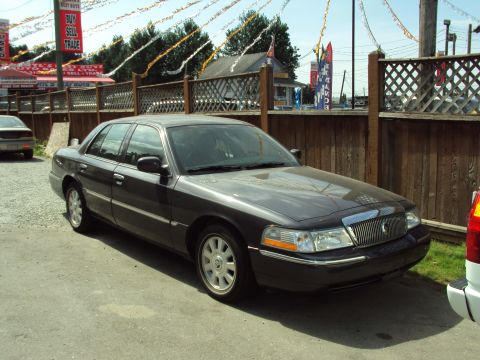
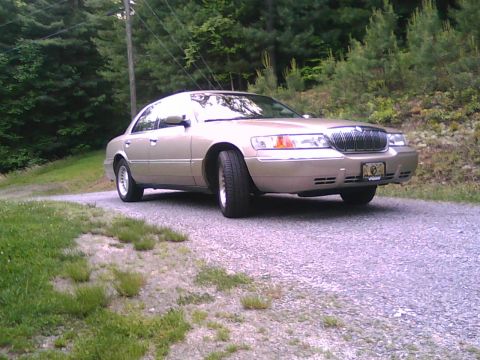
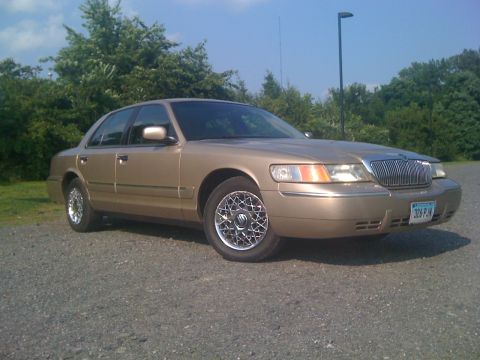
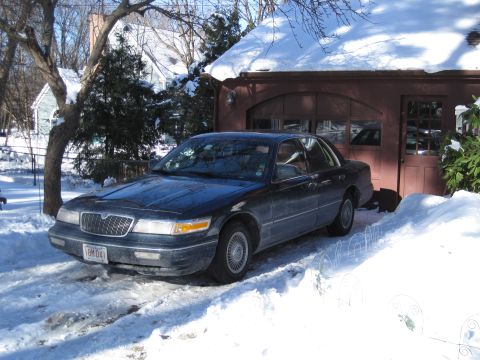
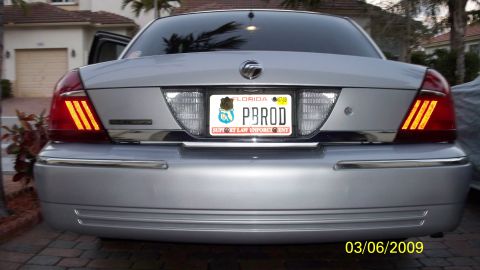
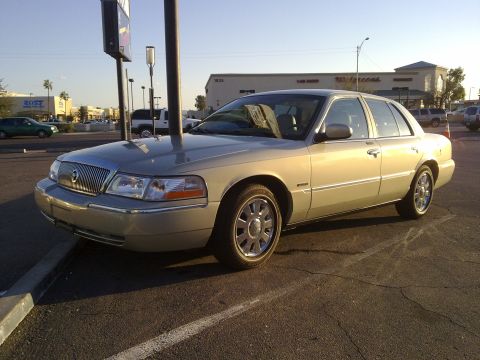
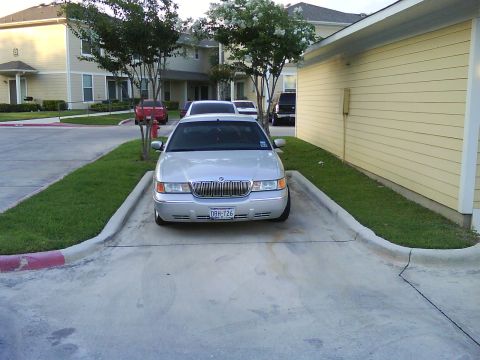
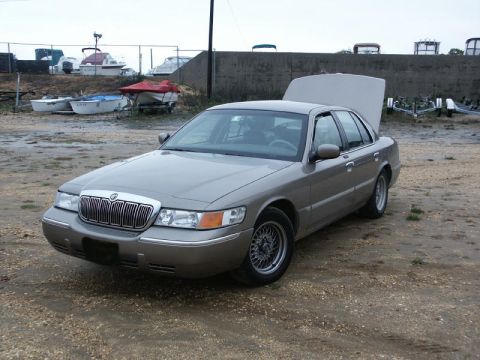
In the brand's later decades the Grand Marquis was Mercury's volume leader, built on the body-on-frame Panther platform from 1979 until 2011. It is also the most documented Mercury on SuperMotors, with 474 owner-registered vehicles.
Was Mercury involved in racing?
Yes. During Ford's Total Performance era of the 1960s, Mercury ran full-size Marauders and later Cyclone fastbacks in NASCAR, and Cougars competed in Trans-Am in 1967 with drivers including Dan Gurney and Parnelli Jones.
Why are old Mercurys called lead sleds?
Customizers in the late 1940s and 1950s favored the slab-sided 1949-1951 Mercury Eight coupes, chopping and lowering them with body seams filled in lead solder. James Dean's 1949 Mercury in Rebel Without a Cause made the look famous.
What does Mercury's connection to the Edsel brand mean?
In January 1958 Ford folded Mercury into the short-lived Mercury-Edsel-Lincoln (M-E-L) division to support the new Edsel brand, which had launched in September 1957. Edsel failed in the 1958 recession and was dropped in November 1959; Mercury absorbed the fallout, and the compact Comet, originally planned as an Edsel, launched in 1960 as Mercury's volume savior.
The wall
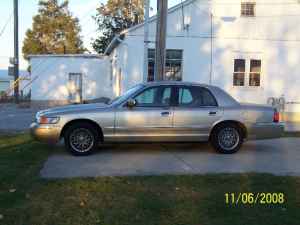
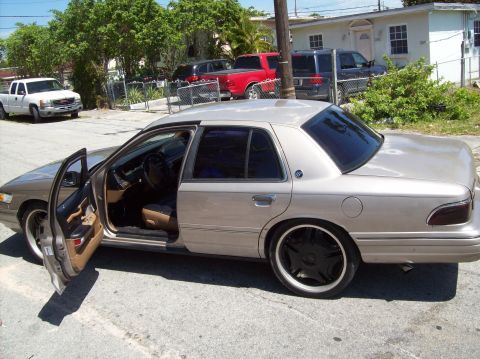
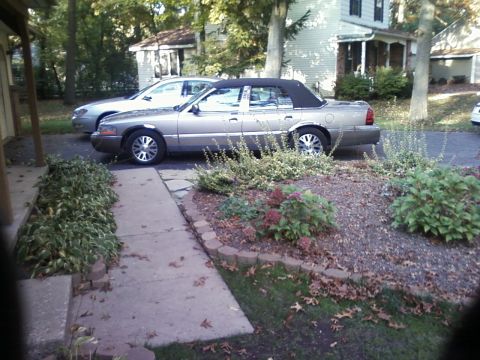
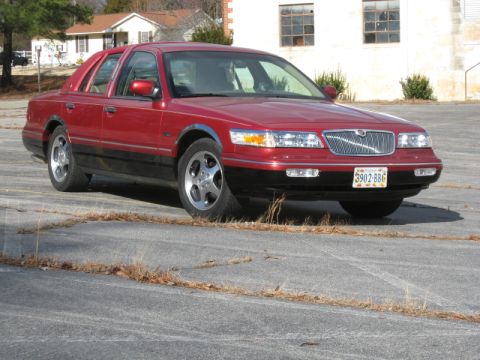
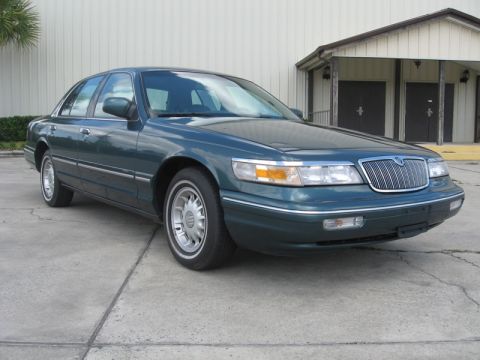
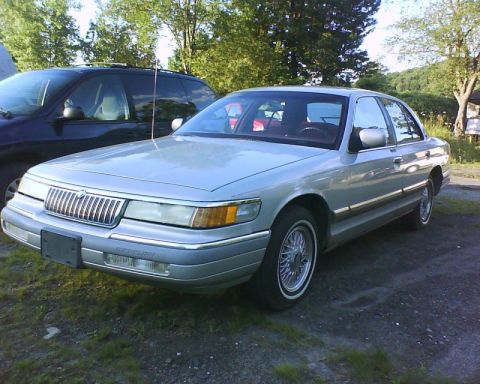
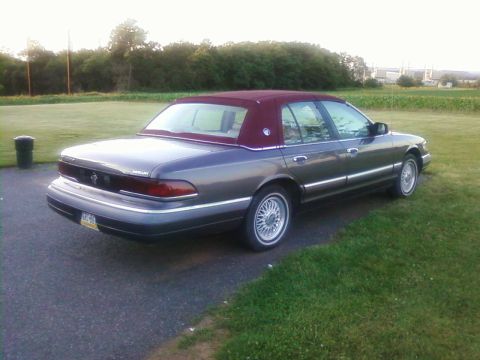
The most-documented Mercury vehicles in the registry, every photo by the owner.