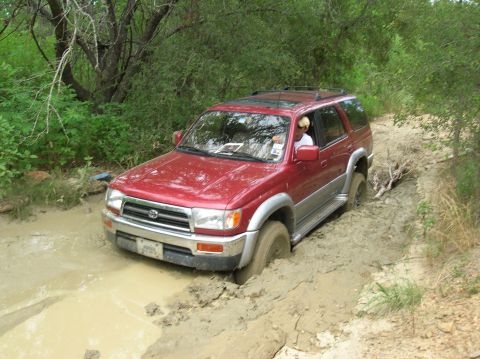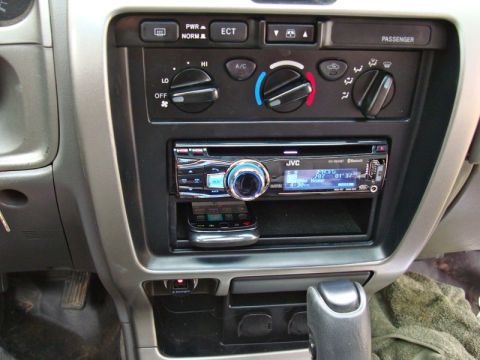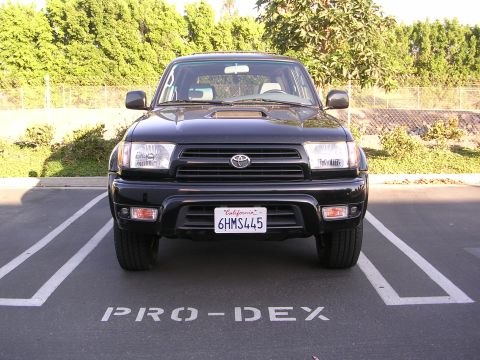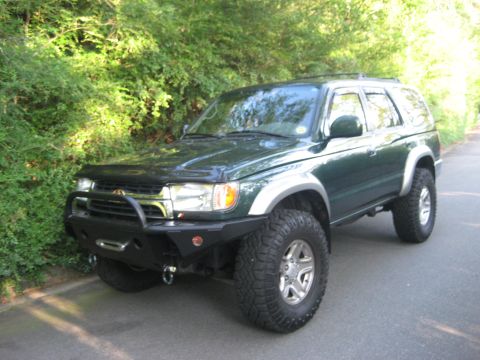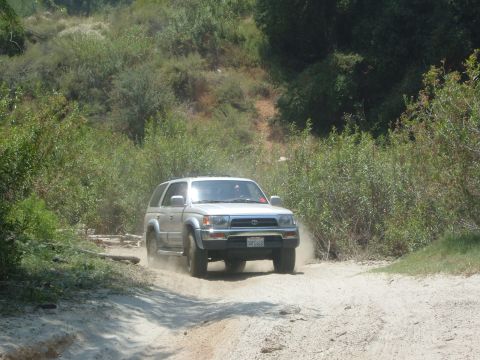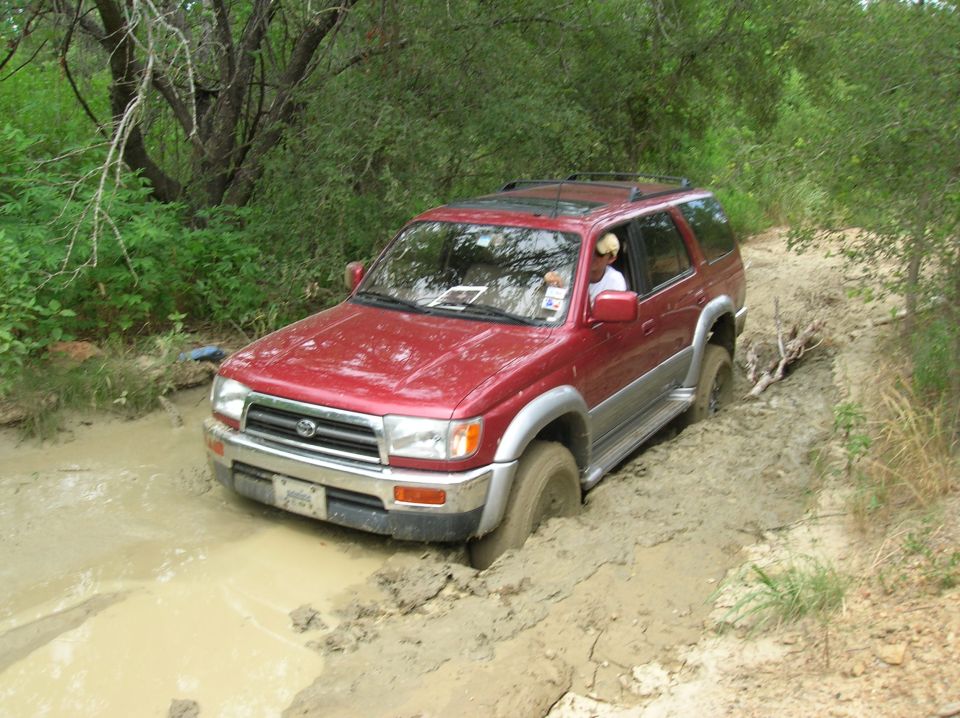
The third-generation Toyota 4Runner (1996-2002) is a body-on-frame midsize SUV offered with two engines: the 2.7 liter 3RZ-FE inline-four rated at 150 horsepower and the 3.4 liter 5VZ-FE V6 rated at 183 horsepower. It was sold in rear-wheel-drive and part-time four-wheel-drive configurations across base, SR5, and Limited trims, with a five-speed manual or four-speed automatic transmission.
Other Toyota 4Runner generations
Platform
The third-generation Toyota 4Runner (1996-2002) uses body-on-frame construction and shares its chassis architecture with the first-generation Toyota Tacoma (and the contemporary Land Cruiser Prado). It paired an independent front suspension with a coil-sprung four-link rear axle, replacing the leaf-sprung rear used on the previous 4Runner, and it was no longer offered as a two-door.
Engine lineup
- 2.7 liter 3RZ-FE inline-four: A 2,693 cc DOHC four-cylinder producing 150 horsepower and 177 lb-ft of torque. It was the base engine and was paired with rear-wheel drive or four-wheel drive.
- 3.4 liter 5VZ-FE V6: A 3,378 cc DOHC V6 producing 183 horsepower at 4,800 rpm and 217 lb-ft of torque at 3,600 rpm. This was the volume engine across SR5 and Limited trims.
Drivetrain
The 1996-2002 4Runner was offered in rear-wheel drive and part-time four-wheel drive. Four-wheel-drive models used a two-speed transfer case with high and low range. The Limited trim also offered a full-time four-wheel-drive system with a locking center differential.
Transmissions
Buyers could select a five-speed manual or a four-speed automatic transmission. Both engines were available with either gearbox in the earlier years, but the four-cylinder engine and the five-speed manual were phased out by the 2001 model year, after which the 3.4 liter V6 with the four-speed automatic was the only powertrain.
Year-by-year notable changes
- 1996: Introduction of the third generation, replacing the second-generation 4Runner, with the 3RZ-FE four and 5VZ-FE V6.
- 1999: A mid-cycle facelift brought a revised front fascia, updated headlamps, and a new front bumper, along with interior revisions.
- 2001: The 2.7 liter four-cylinder and the five-speed manual were discontinued, leaving the 3.4 liter V6 with the four-speed automatic as the sole powertrain.
- 2002: Final model year of the third generation before the fourth-generation 4Runner arrived for 2003.
Trims and variants
- Base: Entry model, available with the 2.7 liter four-cylinder.
- SR5: The mainstream trim, commonly equipped with the 3.4 liter V6 and additional convenience features.
- Limited: The top trim, featuring upgraded interior appointments and offering full-time four-wheel drive on four-wheel-drive models.
Asked all the time
What engines were available in the 1996-2002 4Runner?
Two engines were offered: a 2.7 liter 3RZ-FE inline-four rated at 150 horsepower and 177 lb-ft of torque, and a 3.4 liter 5VZ-FE V6 rated at 183 horsepower at 4,800 rpm with 217 lb-ft of torque.
What transmissions did the third-generation 4Runner use?
A five-speed manual and a four-speed automatic were available in the earlier years. The four-cylinder engine and the manual were phased out by the 2001 model year, after which the V6 paired only with the four-speed automatic.
What changed in 1999?
The 1999 model year received a mid-cycle facelift with a revised front fascia, updated headlamps, and a new front bumper, plus interior revisions, while the engine lineup carried over.
Which trims were offered?
The third-generation 4Runner was sold in base, SR5, and Limited trims. SR5 was the mainstream trim and typically carried the 3.4 liter V6, while Limited was the top trim and offered full-time four-wheel drive on four-wheel-drive models.
Did the third-generation 4Runner come with four-wheel drive?
Yes. It was available in rear-wheel drive and part-time four-wheel drive with a two-speed transfer case. Limited models could be equipped with a full-time four-wheel-drive system using a locking center differential.
The wall · registered 1996-2002 4Runners
Sorted by depth of documentation. Click any vehicle to open its permanent record.