The 2020 model year brought the sixth-generation Ford Explorer, a redesign that moved the midsize SUV to Ford's rear-wheel-drive-based CD6 unibody platform, shared with the Lincoln Aviator. This reversed the front-wheel-drive-based layout of the 2011-2019 Explorer: the sixth-generation Explorer is rear-wheel drive by default, with all-wheel drive available across the range. The base engine is a turbocharged 2.3-liter EcoBoost four-cylinder, rated at 300 horsepower, and a twin-turbocharged 3.0-liter EcoBoost V6 is offered in higher trims. The performance ST uses the 3.0-liter EcoBoost V6 tuned to 400 horsepower and 415 lb-ft of torque, the most powerful production Explorer to that point. The 2020 redesign also introduced the first Explorer hybrid, which pairs a 3.3-liter V6 with an electric motor for a combined output of about 318 horsepower. The sixth-generation Explorer keeps three rows of seating and has been offered in trims spanning the base, XLT, Limited, Platinum, and ST, with later additions such as ST-Line, Timberline, and King Ranch, plus hybrid versions of some trims through 2023. Ford refreshed the sixth-generation Explorer for the 2025 model year with revised styling, a new interior with updated technology, and a simplified trim lineup, and the generation has continued into the mid-2020s.
Other Ford Explorer generations
The 2020-2026 Ford Explorer at a glance
- Generation: sixth-generation Ford Explorer, redesigned for 2020
- Years: 2020 to the mid-2020s; the generation remains in production
- Platform: rear-wheel-drive-based CD6 unibody platform, shared with the Lincoln Aviator; rear-wheel drive by default with all-wheel drive available
- Engines: 2.3L EcoBoost I4 (300 hp); 3.0L EcoBoost twin-turbo V6; 3.3L hybrid V6 (about 318 hp combined, retail models through 2023)
- Performance trim: Explorer ST, with the 3.0L EcoBoost V6 tuned to 400 hp and 415 lb-ft
- Electrification: the first Explorer hybrid, a 3.3-liter V6 paired with an electric motor
- 2025 refresh: revised styling, a new interior with updated technology, and a simplified trim lineup
- Seating: three rows, seating up to seven
Ford Explorer 2020-2026 year by year
| Year | Ford Explorer changes | Engines offered |
|---|---|---|
| 2020 | Sixth-generation Ford Explorer arrives on the rear-wheel-drive-based CD6 platform; the 400-horsepower ST and the first Explorer hybrid join the lineup | 2.3L EcoBoost I4; 3.0L EcoBoost V6 (ST, 400 hp; Platinum); 3.3L hybrid V6 |
| 2021 | The 2021 Ford Explorer carried over the CD6 lineup with the 2.3-liter EcoBoost four, the 3.0-liter EcoBoost V6, and the hybrid | 2.3L EcoBoost I4; 3.0L EcoBoost V6 (ST, Platinum); 3.3L hybrid V6 |
| 2022 | The 2022 Ford Explorer continued the sixth-generation lineup with the EcoBoost engines and the hybrid | 2.3L EcoBoost I4; 3.0L EcoBoost V6 (ST, Platinum); 3.3L hybrid V6 |
| 2023 | The 2023 Ford Explorer carried over the sixth-generation lineup ahead of the 2025 refresh; 2023 was the final model year for the retail Explorer Hybrid | 2.3L EcoBoost I4; 3.0L EcoBoost V6 (ST, Platinum); 3.3L hybrid V6 |
| 2024 | The 2024 Ford Explorer carried over the pre-refresh sixth-generation design on the CD6 platform | 2.3L EcoBoost I4; 3.0L EcoBoost V6 (ST, Platinum) |
| 2025 | The Ford Explorer received a refresh for the 2025 model year with revised styling, a new interior with updated technology, and a simplified trim lineup | 2.3L EcoBoost I4; 3.0L EcoBoost V6 (ST, Platinum) |
| 2026 | The 2026 Ford Explorer continued the refreshed sixth-generation design; for the 2026 model year the 3.0-liter EcoBoost V6 output was revised with the adoption of a gasoline particulate filter | 2.3L EcoBoost I4; 3.0L EcoBoost V6 (ST, Platinum) |
Back to a rear-drive-based platform
The 2020 Ford Explorer moved the midsize SUV to Ford's rear-wheel-drive-based CD6 unibody platform, shared with the Lincoln Aviator. This reversed the layout of the 2011-2019 Explorer, which used a front-wheel-drive-based unibody platform. The sixth-generation Explorer is rear-wheel drive by default, with all-wheel drive available across the lineup. Ford described the rear-drive-based architecture as improving driving dynamics and enabling higher-performance variants, while the Explorer kept its three-row, seven-seat layout.
EcoBoost engines and the 400-horsepower ST
The sixth-generation Ford Explorer uses turbocharged EcoBoost engines. The base engine is a turbocharged 2.3-liter EcoBoost four-cylinder rated at 300 horsepower, and a twin-turbocharged 3.0-liter EcoBoost V6 is offered in higher trims. The performance variant is the Explorer ST, which uses the 3.0-liter EcoBoost V6 tuned to 400 horsepower and 415 lb-ft of torque, making it the most powerful production Explorer to that point. For the 2026 model year, the 3.0-liter EcoBoost V6 output was revised in connection with the adoption of a gasoline particulate filter.
The first Explorer hybrid
The 2020 redesign introduced the first hybrid in the Explorer's history. The Explorer Hybrid pairs a 3.3-liter V6 with an electric motor for a combined output of about 318 horsepower. Unlike a plug-in hybrid, the Explorer Hybrid is a conventional hybrid that does not require external charging. The hybrid was offered alongside the EcoBoost engines as a fuel-economy-oriented option through the 2023 model year, after which retail hybrid availability ended while hybrid power continued in the Police Interceptor Utility.
Trims and the 2025 refresh
The sixth-generation Ford Explorer has been offered in trims spanning the base, XLT, Limited, Platinum, and the performance ST, with later additions including ST-Line, Timberline, and King Ranch, along with the Hybrid offered through the 2023 model year. Ford refreshed the Explorer for the 2025 model year with revised exterior styling, a new interior with updated technology, including a larger infotainment display, and a simplified trim lineup of Active, ST-Line, ST, and Platinum; the 2023 and 2024 model years were carryover, pre-refresh years. The Police Interceptor Utility, the law-enforcement version of the Explorer, also continued on the sixth-generation platform.
Frequently asked questions
What platform is the 2020-2026 Ford Explorer built on?
The 2020-2026 Ford Explorer is built on Ford's rear-wheel-drive-based CD6 unibody platform, shared with the Lincoln Aviator. It is rear-wheel drive by default, with all-wheel drive available, reversing the front-wheel-drive-based layout of the 2011-2019 Explorer.
What engines does the sixth-generation Ford Explorer use?
The sixth-generation Ford Explorer uses a turbocharged 2.3-liter EcoBoost four rated at 300 horsepower, a twin-turbocharged 3.0-liter EcoBoost V6 in higher trims and the ST, and, through 2023, a 3.3-liter hybrid V6 with a combined output of about 318 horsepower.
How powerful is the Ford Explorer ST?
The Ford Explorer ST uses the twin-turbocharged 3.0-liter EcoBoost V6 tuned to 400 horsepower and 415 lb-ft of torque, making it the most powerful production Explorer to that point. The ST was introduced with the sixth generation for 2020.
Is there a hybrid Ford Explorer?
Yes. The sixth-generation Ford Explorer introduced the first Explorer hybrid for 2020. It pairs a 3.3-liter V6 with an electric motor for a combined output of about 318 horsepower and is a conventional hybrid that does not require external charging. Retail hybrid availability ended after the 2023 model year.
What changed in the 2025 Ford Explorer?
The 2025 Ford Explorer received a refresh of the sixth generation with revised exterior styling, a new interior with updated technology, including a larger infotainment display, and a simplified trim lineup, while continuing on the CD6 platform. The 2023 and 2024 model years were carryover, pre-refresh years.
Sources
- Ford factory specification sheets and press materials for the 2020-present Explorer
- Wikipedia, Ford Explorer (sixth generation) and Ford CD6 platform
- Ford Explorer ST and Explorer Hybrid powertrain references
Asked all the time
What platform is the 2020-2026 Ford Explorer built on?
The 2020-2026 Ford Explorer is built on Ford's rear-wheel-drive-based CD6 unibody platform, shared with the Lincoln Aviator. It is rear-wheel drive by default, with all-wheel drive available, reversing the front-wheel-drive-based layout of the 2011-2019 Explorer.
What engines does the sixth-generation Ford Explorer use?
The sixth-generation Ford Explorer uses a turbocharged 2.3-liter EcoBoost four rated at 300 horsepower, a twin-turbocharged 3.0-liter EcoBoost V6 in higher trims and the ST, and a 3.3-liter hybrid V6 with a combined output of about 318 horsepower.
How powerful is the Ford Explorer ST?
The Ford Explorer ST uses the twin-turbocharged 3.0-liter EcoBoost V6 tuned to 400 horsepower and 415 lb-ft of torque, making it the most powerful production Explorer to that point. The ST was introduced with the sixth generation for 2020.
Is there a hybrid Ford Explorer?
Yes. The sixth-generation Ford Explorer introduced the first Explorer hybrid for 2020. It pairs a 3.3-liter V6 with an electric motor for a combined output of about 318 horsepower and is a conventional hybrid that does not require external charging.
What changed in the 2025 Ford Explorer?
The 2025 Ford Explorer received a refresh of the sixth generation with revised exterior styling, a new interior with updated technology, including a larger infotainment display, and a simplified trim lineup, while continuing on the CD6 platform. The 2023 and 2024 model years were carryover, pre-refresh years.
Technical Reference
Member-uploaded diagrams & documents for this generation. AI-classified; community-verified where badged.
Exploded Parts (1)
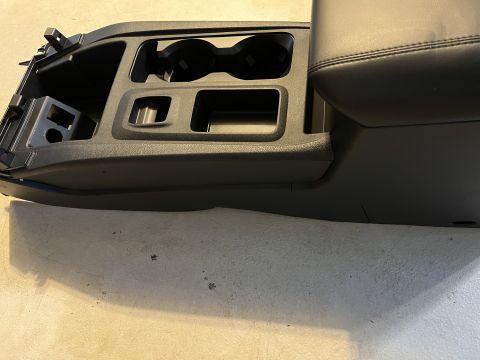
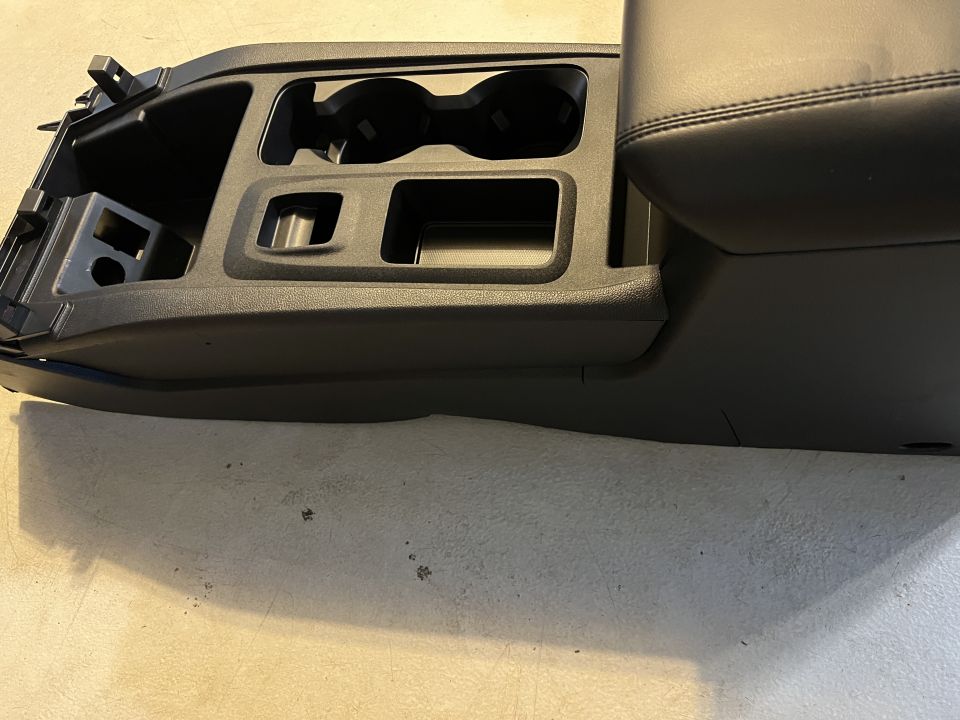
- 2020 Ford Explorer Console Exploded Parts Diagram - Part #4 Trim Panel CalloutThis document is an exploded parts diagram of what appears to be a vehicle center console assembly, showing fifteen numbered components (callouts 1 through 15) arranged around a main console body labeled as item 1. The…
The wall · registered 2020-2026 Explorers
Sorted by depth of documentation. Click any vehicle to open its permanent record.